Showing posts with label song inductees. Show all posts

Wednesday, May 10, 2023

Blues Hall of Fame: Song Inductees, 1983-2023

Blues Hall of Fame:

Song Inductees, 1983-2023

The Blues Hall of Fame, operated by the Blues Foundation, officially opened its doors in Memphis, Tennessee in 2015. However, they started in 1980 honoring performers, non-performers, literature, albums, and “Classics of Blues Recording: Singles or Album Tracks.” This page lists those songs which have been inducted since the first year in 1983 through the present.

Check other lists based on charts, sales, and airplay here.


Year of Induction: Performer “Song” (year released)

A

  • 2016: Billy Boy Arnold “I Wish You Would” (1955)
  • 2014: Kokomo Arnold “Milk Cow Blues” (1934)

B

  • 2022: Baby Face Leroy Trio “Rollin’ and Tumblin’” (1950)
  • 2022: Bobby "Blue" Bland “Further on Up the Road” (1957)
  • 2018: Booker T. & the MG's “Green Onions” (1962)
  • 2011: Eddie Boyd “Five Long Years” (1952)
  • 1991: Jackie Brenston & His Delta Cats “Rocket 88” (1951)
  • 2010: Big Bill Broonzy “Key to the Highway” (1941)
  • 1989: Charles Brown “Driftin' Blues” (1945)
  • 2005: Charles Brown “Black Night” (1951)
  • 2016: Charles Brown with Johnny Moore’s Three Blazers “Merry Christmas Baby” (1947)
  • 2022: Roy Brown & His Orchestra “Good Rockin' Tonight” (1948)
  • 2020: Ruth Brown “Mama He Treats Your Daughter Mean” (1953)
  • 2020: Willie Brown “Future Blues” (1930)

C

  • 1988: Leroy Carr “How Long, How Long Blues” (1928)
  • 2016: Leroy Carr & Scrapper Blackwell “Blues Before Sunrise” (1934)
  • 2019: Ray Charles “I Gotta Woman (aka "I've Got a Woman")” (1955)
  • 2020: Arthur "Big Boy" Crudup “That’s All Right, Mama” (1946)

D-E

  • 1994: Larry Davis “Texas Flood” (1958)
  • 2017: Bo Diddley “Bo Diddley” (1955)
  • 2018: Bo Diddley “I’m a Man” (1955)
  • 2006: Bill Doggett “Honky Tonk (Parts 1 & 2)” (1956)

F-G

  • 1993: Lowell Fulson “Reconsider Baby” (1954)
  • 2023: Lowell Fulson “Black Nights” (1965)

H-I

  • 2017: W.C. Handy “Father of the Blues” (1941)
  • 1997: Slim Harpo “Baby Scratch My Back” (1966)
  • 2014: Erskine Hawkins “After Hours” (1940)
  • 2020: Bertha “Chippie” Hill “Trouble in Mind” (1926)
  • 2000: Z.Z. Hill “Down Home Blues” (1981)
  • 1985: John Lee Hooker “Boogie Chillen” (1949)
  • 2009: John Lee Hooker “Boom Boom” (1962)
  • 2023: Lightnin' Hopkins “Mojo Hand” (1960)
  • 2007: Son House “Death Letter Blues” (1965)
  • 2017: Son House “Preachin’ Blues” (1930)
  • 2023: Son House “My Black Mama” (1930)
  • 1985: Howlin' Wolf “Smokestack Lightning” (1956)
  • 1991: Howlin' Wolf “The Killing Floor” (1964)
  • 2010: Howlin' Wolf “Spoonful” (1960)
  • 2013: Howlin' Wolf “How Many More Years” (1951)
  • 2017: Howlin' Wolf “I Ain’t Superstitious” (1962)
  • 2023: Howlin' Wolf “Little Red Rooster” (1961)

J

  • 1986: Little Walter Jacobs & His Night Cats “Juke” (1952)
  • 2008: Little Walter Jacobs “My Babe” (1955)
  • 1983: Elmore James “I Believe I'll Dust My Broom” (1952)
  • 2019: Elmore James “Shake Your Moneymaker” (1961)
  • 1991, 2019: Elmore James “The Sky Is Crying” (1960)
  • 2006: Skip James “Devil Got My Woman” (1931)
  • 2011: Skip James “Hard Time Killin’ Floor Blues” (1931)
  • 2010: Blind Lemon Jefferson “Matchbox Blues” (1927)
  • 2010: Little Willie John “Fever” (1956)
  • 1999: Blind Willie Johnson “Dark Was the Night, Cold Was the Ground” (1928)
  • 1983: Robert Johnson “Hell Hound on My Trail” (1937)
  • 1983: Robert Johnson “Sweet Home Chicago” (1936)
  • 1986: Robert Johnson “Cross Road Blues (aka ‘Crossroads’)” (1936)
  • 1989: Robert Johnson “Come on in My Kitchen” (1936)
  • 1990: Robert Johnson “Terraplane Blues” (1936)
  • 2011: Robert Johnson “A Love in Vain” (1937)
  • 1987: Tommy Johnson “Big Road Blues” (1928)
  • 2013: Tommy Johnson “Canned Heat Blues” (1928)
  • 1984: Eddie "Guitar Slim" Jones “The Things That I Used to Do” (1954)
  • 2009: Louis Jordan “Caldonia Boogie” (1945)
  • 2013: Louis Jordan “Let the Good Times Roll” (1946)

K-L

  • 1988: Albert King “Born Under a Bad Sign” (1967)
  • 2017: Albert King “I’ll Play the Blues for You” (1972)
  • 2018: Albert King “Crosscut Saw” (1966)
  • 1985: B.B. King “The Thrill Is Gone” (1969)
  • 2019: B.B. King “Every Day I Have the Blues” (1955)
  • 2020: B.B. King “Three O’Clock Blues” (1951)
  • 2022: B.B. King “Rock Me Baby” (1964)
  • 2007: Freddie King “Hideaway” (1961)
  • 2023: Freddie King “I’m Tore Down” (1961)

M-N

  • 2012: Magic Sam “All Your Love” (1957)
  • 1987: Percy Mayfield “Please Send Me Someone to Love” (1950)
  • 1992: Blind Willie McTell “Statesboro Blues” (1928)
  • 2013: Memphis Minnie “Me and My Chauffeur Blues” (1941)
  • 1983: Big Maceo Merriweather “Worried Life Blues” (1941)
  • 2009: The Mississippi Sheiks “Sitting on Top of the World” (1930)
  • 2007: Robert Nighthawk “Black Angel Blues” (1949)

O-P

  • 2002: St. Louis Jimmy Oden “Goin’ Down Slow” (1941)
  • 2013: Little Junior Parker “Mystery Train” (1953)
  • 1988: Charley Patton “Pony Blues” (1929)
  • 2014: Charley Patton “High Water Everywhere” (1930)
  • 2014: Robert Petway “Catfish Blues” (1941)

Q-R

  • 2018: Ma Rainey “See See Rider Blues” (1925)
  • 1990: Jimmy Reed “Big Boss Man” (1961)
  • 2004: Jimmy Reed “Baby What You Want Me to Do” (1960)
  • 2016: Jimmy Rogers “That's All Right” (1950)
  • 1994: Otis Rush “I Can't Quit You Baby” (1956)
  • 2008: Otis Rush “Double Trouble” (1958)
  • 2010: Otis Rush “All Your Love (I Miss Loving)” (1958)

S

  • 2008: Bessie Smith “Back Water Blues” (1927)
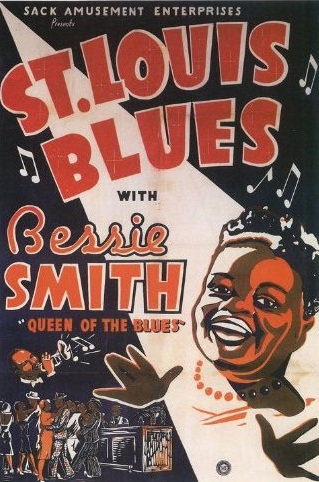
  • 2019: Bessie Smith & Louis Armstrong “St. Louis Blues” (1925)
  • 2012: Clarence "Pine Top" Smith “Pine Top’s Boogie Woogie” (1929)
  • 2016: Mamie Smith & Her Jazz Hounds “Crazy Blues” (1920)

T-U-V

  • 2012: Tampa Red “It Hurts Me Too (When Things Go Wrong)” (1940)
  • 2014: Tampa Red & Georgia Tom “It's Tight Like That” (1928)
  • 1995: Koko Taylor “Wang Dang Doodle” (1966)
  • 2003: Little Johnny Taylor “Part Time Love” (1963)
  • 2006: Willie Mae “Big Mama” Thornton “Hound Dog” (1953)
  • 2017: Tommy Tucker “Hi-Heel Sneakers” (1964)
  • 2001: Big Joe Turner “Shake, Rattle and Roll” (1954)
  • 2018: Joe Turner & Pete Johnson “Roll 'Em Pete” (1938)

W-X-Y-Z

  • 1983: T-Bone Walker “Call It Stormy Monday” (1947)
  • 1984: Muddy Waters “Hoochie Coochie Man” (1954)
  • 1984: Muddy Waters “Got My Mojo Working” (1957)
  • 1986: Muddy Waters “Mannish Boy” (1955)
  • 1989: Muddy Waters “Long Distance Call” (1951)
  • 2019: Muddy Waters “Rollin' Stone” (1950)
  • 1998: Junior Wells “Messin' with the Kid” (1960)
  • 1992: Big Joe Williams “Baby Please Don't Go” (1935)
  • 1990: Sonny Boy Williamson (#1) “Good Morning Little School Girl” (1937)
  • 1987: Sonny Boy Williamson (#2) “Help Me” (1963)
  • 1991: Sonny Boy Williamson (#2) “Nine Below Zero” (1951)
  • 1996: Sonny Boy Williamson (#2) “Don't Start Me Talkin'“ (1955)
  • 2022: Sonny Boy Williamson (#2) “Eyesight to the Blind” (1951)
  • 2011: Jimmy Witherspoon “Ain't Nobody's Business” (1949)

Resources/Related Links:


First posted 5/10/2023; last updated 9/11/2023.

Friday, July 22, 2022

Dave's Music Database Hall of Fame: Song Inductees

Dave’s Music Database


Hall of Fame

SONGS

Dave’s Music Database Hall of Fame was established January 22, 2019 in honor of the 10th anniversary of the DMDB blog. Every month, a class of music makers, albums, or songs are inducted. Here are the act inductee classes for songs so far:

All the songs which have been inducted are listed below, alphabetized by acts. Click on the song title to go to a detailed DMDB entry about it. Click on the highlighted month/year to see the song’s induction entry.


Resources:


Originally posted 1/22/2019; last updated 7/22/2022.

Friday, October 22, 2021

Dave's Music Database Hall of Fame: Song Inductees (October 2021)

Originally posted 10/22/2021.

In honor of the 10th anniversary of the DMDB blog on January 22, 2019, Dave’s Music Database launched its own Hall of Fame. This is the twelfth set of song inductees. These are the 10 highest-ranked songs that ranked within the top 50 of the DMDB’s list of the “Top Big Band Songs of All Time”. It does not include previously inducted songs such as Glenn Miller’s “In the Mood” and Artie Shaw’s “Stardust” and “Begin the Beguine.”

Fats Waller “Ain’t Misbehavin’” (1929)

Inducted October 2021 as “Top Big Band Songs”

Waller was “a New York City-born pianist and organ accompanist during the ‘20s…[who] broke through as one of the country’s most popular entertainers. PM “Ain’t Misbehavin’” was written for the 1929 all-black revue Hot Chocolates and debuted by Louis Armstrong, who credited the revue with launching his career. TY It was so popular it moved to Broadway RCG where it ran “for a very respectable 219 performances.” SS Read more.

Ted Lewis “On the Sunny Side of the Street” (1930)

Inducted October 2021 as “Top Big Band Songs”

This “cabaret and jazz standard” JA is a “metaphor for optimism.” TY In his book American Popular Song, author Alec Wilder calls it “one of the jazz musicians’ favorites…Singers, as well, love it as much for its extremely fine lyric.” SB In The NPR Curious Listener’s Guide to Popular Standards, Max Morath expresses a similar sentiment, saying the song “works both sides of the street, vocal and instrumental, with equal charm.” MM Read more.

Duke Ellington “Mood Indigo” (1931)

Inducted October 2021 as “Top Big Band Songs”

The clarinet solo was based on a melody called “Dreamy Blues.” Duke Ellington turned the structure upside down, “composing a song of his own on top of it.” DH Typically jazz songs were arranged with the clarinet, trumpet, and trombone from highest to lowest pitch, but Ellington flipped it around the other way. DH He recorded it for an October 1930 broadcast. He said “wads of mail came in raving about the new tune.” WK Read more.

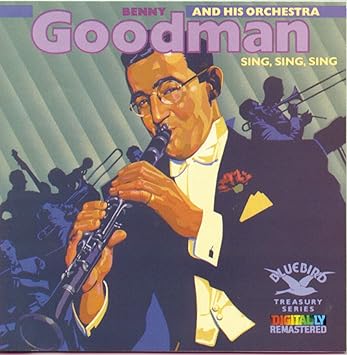
Benny Goodman “Sing Sing Sing (With a Swing)” (1938)

Inducted October 2021 as “Top Big Band Songs”

By the start of the Swing era in 1936, Benny Goodman was its king. “Sing, Sing, Sing” was his most renowned performance with solos by Benny as well as drummer Gene Krupa (on his last hit before leaving the band) and trumpeter Harry James. “Sing, Sing, Sing,” which Goodman called a “killer diller,” NPR’99 was the closer at the bandleader’s legendary Carnegie Hall concert on January 16, 1938. It was the first time jazz comprised a full concert instead of being part of a larger show SS and marked the birthplace of the legitimacy of the genre. NPR’99 Read more.

Ella Fitzgerald with Chick Webb’s Orchestra “A-Tisket, A-Tasket” (1938)

Inducted October 2021 as “Top Big Band Songs”

“A-Tisket, A-Tasket” began life as an American children’s rhyming game in 1879. In 1938, Ella Fitzgerald and Al Feldman adapted it into a song with very little change to the lyrics. In a 1973 lecture series at Harvard, Leonard Bernstein said that research showed the song’s melodic motif “is the same all over the world, wherever children tease each other. On every continent, in ever culture, it is one of the few musical universals.” TY Read more.

Tommy Dorsey with Frank Sinatra & the Pied Pipers “I’ll Never Smile Again” (1940)

Inducted October 2021 as “Top Big Band Songs”

Ruth Lowe was a pianist with Ina Ray Hutton’s all-girl orchestra when she composed this song about the death of her husband, just a few months after their marriage. TY She staked out Tommy Dorsey in September 1939 and got Carmen Mastren, the band’s guitarist, to give her demo a listen. SS Dorsey wasn’t initially passed but took a stab at it when Frank Sinatra came on board. SS It became his first #1 song. Read more.

Duke Ellington “Take the ‘A’ Train” (1941)

Inducted October 2021 as “Top Big Band Songs”

Billy Strayhorn was a hopeful pianist and composer in 1938. NPR His rearrangement of the Duke’s song “Sophisticated Lady” sufficiently impressed Ellington to invite Strayhorn to New York. TC Ellington gave directions to his house in New York, starting with “take the ‘A’ train.” WK Along the way, Strayhorn turned the directions into a song. TC It became Ellington’s signature song and one of the all-time best-loved jazz standards. Read more.

Glenn Miller “Chattanooga Choo Choo” (1941)

Inducted October 2021 as “Top Big Band Songs”

The team of Mack Gordon and Harry Warren wrote the song while travelling on the Southern Railway. It didn’t refer to a particular train, but Chattanooga, Tennessee, had been on the route for most trains passing through the American South since 1880. WK The song was used in the film Sun Valley Serenade, sung by members of Glenn Miller’s band. Miller’s recording became his biggest hit after “In the Mood” and the first recording formally certified as a million seller. PM Read more.

Woody Herman “Blues in the Night (My Mama Done Tol’ Me)” (1941)

Inducted October 2021 as “Top Big Band Songs”

Composer Harold Arlen and lyricist Johnny Mercer were approached to write a song for a movie about a jazz quintet riding the rails in search of its big break. Arlen wrote a melody after analyzing blues songs and Mercer penned four pages of lyrics. When they finished, Mercer called Margaret Whiting, who’d sung the pair’s songs “That Old Black Magic” and “Come Rain or Come Shine.” She told Mercer she had guests for dinner, but he and Arlen could come over later. When Mercer found out the guests included Judy Garland, Mickey Rooney, and Mel Tormé, he announced, “My God, we’re coming right over.” After they played the song, Rooney said, “That’s the greatest thing I’ve ever heard.” SB Read more.

Les Brown with Doris Day “Sentimental Journey” (1945)

Inducted October 2021 as “Top Big Band Songs”

When she first saw the sheet music, Doris Day commented, “What a lovely title,” to which Les Brown responded “Wait till you hear it.” SS “The song’s aching nostalgia struck a chord in a nation welcoming its boys back from the front lines,” TM becoming “one of a handful of songs that summed up romantic longing during World War II.” SS Will Friedwald called it “the definitive end-of-war song,” SS “a song that helped define an era.” SS Read more.

Thursday, July 22, 2021

Dave's Music Database Hall of Fame: Song Inductees (July 2021)

Originally posted 7/22/2021.

In honor of the 10th anniversary of the DMDB blog on January 22, 2019, Dave’s Music Database launched its own Hall of Fame. This is the eleventh set of song inductees. These are the 10 highest-ranked songs that make the DMDB’s list of the “Top 100 Vaudeville Songs of All Time”. It does not include previously inducted songs “You’re a Grand Old Flag” by Billy Murray, “Alexander’s Ragtime Band” by Arthur Collins and Bryon G. Harlan, “April Showers” and “Swanee” by Al Jolson, “Take Me Out to the Ball Game” by Billy Murray & the Haydn Quartet.

Arthur Collins “Bill Bailey, Won’t You Come Home” (1902)

Inducted July 2021 as “Top Vaudeville Songs”

This “early ragtime classic” RCG and “favorite of Dixie jazz bands” JA-22 became a “sing-along standard” RCG thanks to the ease with which it could be adapted to jazz or played on honky-tonk piano or banjo. RCG John Queen, a minstrel and songwriter introduced this instant hit. Arthur Collins, Dan Quinn, and Silas Leachman each took the song to the top 5 in 1902, but Collins’ version was the biggest. PM He was no stranger to the top, having landed there seven times before. This, however, was his biggest hit yet. Read more.

Billy Murray “Meet Me in St. Louis, Louis” (1904)

Inducted July 2021 as “Top Vaudeville Songs”

In 1904, the world shone a light on St. Louis. In celebration of the centential of the Louisiana Purchase, the U.S. “Gateway to the West” became the stage for two major parties – the World’s Fair and the third modern Olympic Games. Composer Kerry Mills and lyricist Andrew Sterling capitalized on the city’s popularity by penning what what would become the exposition’s theme song. RA Read more.

Haydn Quartet “Sweet Adeline (You’re the Flower of My Heart)” (1904)

Inducted July 2021 as “Top Vaudeville Songs”

As “the signature barbershop song,” DS “Sweet Adeline” may represent the sound of the first decade of the 20th century, WHC maybe even the first two decades, DS more than any other song. WHC The style of four-part male harmony with little or no musical accompaniment was popularized by groups like the Haydn Quartet who scored their sixth #1 with “Sweet Adeline,” the biggest hit of 1904. WHC Read more.

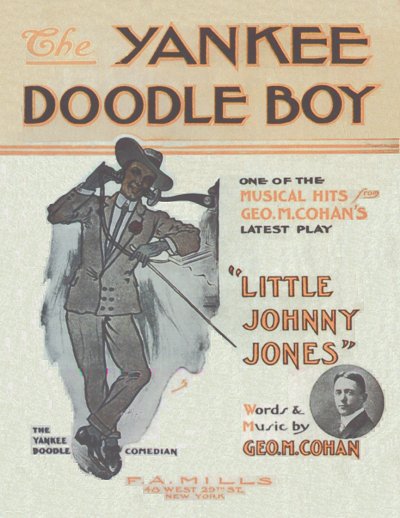
Billy Murray “Yankee Doodle Boy” (1905)

Inducted July 2021 as “Top Vaudeville Songs”

George M. Cohan “virtually invented musical comedy” LW predating future musical theatre greats like Jerome Kern, George Gershwin, and Richard Rodgers. His first two efforts at Broadway musicals flopped, but his third attempt, 1904’s Little Johnny Jones, was a hit PS producing “Give My Regards to Broadway” and “Yankee Doodle Boy.” PS Billy Murray’s recording of the latter gave the Victor record company its biggest seller up to that point. SS Read more.

Billy Murray “Give My Regards to Broadway” (1905)

Inducted July 2021 as “Top Vaudeville Songs”

George M. Cohan wrote, composed, produced, acted, and danced in the Broadway musical, Little Johnny Jones, inspired by real-life jockey Tod Sloan. The show featured “Give My Regards to Broadway” which “could only have been sung by an opinionated, cocky young man with a very high opinion of his own worth.” LW Cohan was a natural. Read more.

Bryon G. Harlan “School Days (When We Were a Couple of Kids)” (1907)

Inducted July 2021 as “Top Vaudeville Songs”

In the early 1900s, sentimental ballads were popular and songs like “Shine on, Harvest Moon,” “In the Shade of the Old Apple Tree,” and “School Days” “exemplified this musical style.” WHC These songs dominated sheet music sales, as they “could be sung in the parlor at home around the family piano.” WHC It “remains a singalong favorite.” JA Read more.

Harry Macdonough with Miss Walton “Shine on Harvest Moon” (1909)

Inducted July 2021 as “Top Vaudeville Songs”

Nora Bayes and husband Jack Norworth wrote what may be “the most recognized of the many ‘moon’ ballads.” RCG It was “decidedly old-fashioned and a product of twentieth century innocence.” RCG The duo introduced the song in Florenz Ziegfeld’s Follies of 1908. The couple didn’t last, divorcing in 1913 (the second of five marriages for Bayes!), SF but the song survived. Both performed it the rest of their lives and it became Bayes’ signature song. RCG Read more.

Billy Murray with the Haydn Quartet “By the Light of the Silvery Moon” (1910)

Inducted July 2021 as “Top Vaudeville Songs”

Edward Madden crafted the words for “By the Light of the Silvery Moon” around Gus Edwards “somewhat dreamy music that lends itself to soft shoe.” RCG Its “moon-June-croon rhymes” are “cliché by today’s standards,” RCG but were representative of the Tin Pan Alley era which dominated music in the early 1900s. Read more.

Sophie Tucker “Some of These Days” (1911)

Inducted July 2021 as “Top Vaudeville Songs”

This has been called “the most important turning point in Tin Pan Alley history” because it was completely different than other popular music of the day. RCG Canadian songwriter Shelton Brooks originally composed this blues number as a waltz, but integrated jazz into the song’s loose structure. As such, jazz musicians had a wide-open pallet on which to improvise. RCG Read more.

American Quartet “Moonlight Bay” (1912)

Inducted July 2021 as “Top Vaudeville Songs”

“Arguably the best moonlight song ever written,” PS “Moonlight Bay” “conjures up an entire lost era of a slower-paced America that…had plenty of time for gentle spooning in an unspoiled natural setting.” SS It is “a very durable song from Tin Pan Alley about an idyllic setting for romance.” RCG Read more.

Wednesday, January 22, 2020

Dave's Music Database: Song Inductees (January 2020)

Originally posted 1/22/2020.

In honor of the 10th anniversary of the DMDB blog on January 22, 2019, Dave’s Music Database launched its own Hall of Fame. This is the fifth set of song inductees. These are the ten most-recorded songs from 1890-1954, according to Pop Memories. See full list here. While the list is not focused on a specific act for each song, the inductees are the highest-rated versions of the song in Dave’s Music Database. Not listed here is previous inductee “White Christmas” by Bing Crosby.

Fred Astaire “Night and Day” (1932)

Inducted January 2020 as “Top 10 Most-Recorded Songs from 1890-1954.”

When it comes to standards, this song, which has been called “one of the greatest love ballads ever written,” NPR stands second only to “Star Dust.” MM Cole Porter, whose name is “almost a generic term for witty show songs,” LW wrote it for the Broadway musical Gay Divorce. After Fred Astaire performed it for the show and film, his recording became the first and most successful of seven charting versions between 1932 and 1946. PM Read more.

Bing Crosby “Silent Night” (1935)

Inducted January 2020 as “Top 10 Most-Recorded Songs from 1890-1954.”

Father Joseph Mohr wrote a poem called “Stille Nacht, Heilige Nacht” and his friend Franz Gruber worked it up for guitar SF for performance at the 1818 Christmas Eve service. Since then, it has been translated into more than 44 languages, WK and became the most recorded song of the first half of the 20th century. PM The best known version is the 1935 recording by Bing Crosby with sales estimated as high as 30 million. PM Read more.

Tommy Dorsey “All the Things You Are” (1939)

Inducted January 2020 as “Top 10 Most-Recorded Songs from 1890-1954.”

The Broadway musical comedy Very Warm for May was the last hurrah for famed composer Jerome Kern. Sadly, it was a commercial failure, closing after only 59 performances. SB However, “All the Things You Are” from the show became a #1 hit for Tommy Dorsey and was followed by two more charted version in 1940. In a 1964 Saturday Review poll, more composers named the song as their favorite than any other. TY Read more.

Marion Harris “Tea for Two” (1925)

Inducted January 2020 as “Top 10 Most-Recorded Songs from 1890-1954.”

This was introduced by Louise Groody and John Barker in the Broadway musical comedy No, No, Nanette. JA Marion Harris had the first charted version, taking it to #1 in 1925. It “is one of the most recorded standards of Tin Pan Alley,” JA having been covered by musicians as diverse as Russian classical composer Dmitri Shostakovich and jazz pianist Art Tatum (#18, 1939). Read more.

Coleman Hawkins “Body and Soul” (1940)

Inducted January 2020 as “Top 10 Most-Recorded Songs from 1890-1954.”

“Body and Soul” is “an all-time classic torch song” SF and “the most recorded jazz standard.” WK Multiple versions were recorded, but it was an instrumental version by Coleman Hawkins, who has been called “the father of the tenor saxophone,” NPR’09 which ranks highest. He showed “it was possible to modernize well-worn Tin Pan Alley standards” NPR and it “became one of the most important jazz recordings of all time.” JA Read more.

Billie Holiday “Summertime” (1936)

Inducted January 2020 as “Top 10 Most-Recorded Songs from 1890-1954.”

It has been widely reported and accepted for years that the Beatles’ “Yesterday” is the most recorded song of all time, but its four thousand or so recordings pale compared to the 67,000 of “Summertime,” GW written originally for folk opera Porgy and Bess. The only version to chart in the pre-rock era was Billie Holiday’s 1936 recording (#12). Broadway composer Stephen Sondheim called the lyrics for this and “My Man’s Gone Now” “the best lyrics in the musical theater.” WM Read more.

Vess Ossman “The Old Folks at Home (Swanee River)” (1900)

Inducted January 2020 as “Top 10 Most-Recorded Songs from 1890-1954.”

Stephen Foster wrote and published this minstrel song (also known as “Swanee River”) in 1851. It was the most popular song ever published at that time WM with sheet music sales estimated as high as 20 million. PM Nine versions charted between 1892 and 1937, with Len Spencer being first (#1, 1892). Vess Ossman, however, had the highest-ranked version with his #2 banjo instrumental take on the song. It became Florida’s state song in 1935. Read more.

Artie Shaw “Stardust” (1941)

Inducted January 2020 as “Top 10 Most-Recorded Songs from 1890-1954.”

Hoagy Carmichael’s first major songwriting success NRR was first written as “an up-tempo dance instrumental” NPR but Mitchell Parish added lyrics in 1929. Isham Jones took it to #1 in 1931, but Artie Shaw’s version was rated the favorite record of all time in a 1956 Billboad poll of disc jockeys. PM It has been recorded more than 2000 times LW in more than forty languages. RCG Read more.

Bessie Smith & Louis Armstrong “St. Louis Blues” (1925)

Inducted January 2020 as “Top 10 Most-Recorded Songs from 1890-1954.”

This has been called “the most important blues song ever written.” LW William Christopher Handy, who became known as “The Father of the Blues,” wrote it in 1914 after hearing a St. Louis woman complaining about her cheating husband. LW 15 versions charted over the next forty years. PM Marion Harris had the greatest success with it in 1920 (#1), PM but Bessie Smith’s version with Louis Armstrong is the highest ranked version. Read more.