Showing posts with label Ella Fitzgerald. Show all posts

Sunday, March 8, 2026

The Top 50 Jazz Musicians of All Time

Jazz:

Top 50 Acts

These are the top 50 jazz artists of all time according to Dave’s Music Database. The term “jazz” is used to incorporate instrumental jazz performed by small ensembles, big band jazz, vocal jazz, and traditional pop. That means this list includes musicians, singers, and band leaders. The list was determined by aggregating 17 best-of lists. Those acts appearing on 3 or more lists were re-ordered based on overall status in Dave’s Music Database.

See other lists of Acts/Music Makers by Genre.

1. Frank Sinatra
2. Benny Goodman
3. Louis Armstrong
4. Glenn Miller
5. Nat “King” Cole
6. Duke Ellington
7. Billie Holiday
8. Ella Fitzgerald
9. Miles Davis
10. Fats Waller

11. Bessie Smith
12. Artie Shaw
13. Count Basie
14. John Coltrane
15. Woody Herman
16. Herbie Hancock
17. Nina Simone
18. Thelonious Monk
19. Charles Mingus
20. Sarah Vaughan

21. Charlie Christian
22. Ferdinand “Jelly Roll” Morton
23. Charlie Parker
24. Dizzy Gillespie
25. Teddy Wilson
26. Dave Brubeck
27. Art Tatum
28. Lionel Hampton
29. Erroll Garner
30. Bill Evans

31. Stan Kenton 32. Oscar Peterson
33. Django Reinhardt
34. Max Roach
35. Stan Getz
36. Wes Montgomery
37. Sonny Rollins
38. Coleman Hawkins
39. Bud Powell
40. Scott Joplin

41. Keith Jarrett
42. Lester Young
43. Art Blakey
44. Ornette Coleman
45. Cannonball Adderley
46. Wayne Shorter
47. Benny Carter
48. John McLaughlin
49. McCoy Tyner
50. Jimmy Smith


Resources/Related Links:


First posted 12/23/2011; last updated 3/8/2026.

Saturday, February 28, 2026

Traditional Pop/Vocal Jazz: Top 25 Albums

Traditional Pop/Vocal Jazz:

The Top 25 Albums

While traditional pop and vocal jazz aren’t quite the same thing, they share a lot of commonalities. Traditional pop is considered a genre of music that generally pre-dates rock and roll in the 1950s and generally consists of artists performing standards from the American songbook. Crooners such as Frank Sinatra, Bing Crosby, and Perry Como are popular singers of the genre. Musically, the singers were frequently backed by swing bands.

Vocal jazz is a sub-genre of jazz in which a singer’s voice is used as an instrument, which includes techniques such as vocal improvisations and scatting in which the singer imitates the instruments. It emerged out of the New Orleans jazz tradition which was built on the field hollers and work songs of African-American slaves. Louis Armstrong, Ella Fitzgerald, Billie Holiday, and Sarah Vaughan are some of the genre’s most notable performers. Like traditional pop, it often leans on standards.

18 sources focused on the best traditional pop, vocal jazz, and standards albums were aggregtated to create this exclusive Dave’s Music Database list.

Check out other best-of-genre/category lists here.

1. Norah Jones Come Away with Me (2002)
2. Frank Sinatra Songs for Swingin’ Lovers! (1956)
3. Frank Sinatra In the Wee Small Hours (1955)
4. Ella Fitzgerald Sings the Cole Porter Songbook (1956)
5. Natalie Cole Unforgettable…With Love (1991)

6. Billie Holiday Lady in Satin (1958)
7. Judy Garland Judy at Carnegie Hall (live, 1961)
8. Ray Charles The Genius of Ray Charles (1959)
9. Frank Sinatra Sings for Only the Lonely (1958)
10. Louis Armstrong Plays W.C. Handy (1954)

11. Frank Sinatra Come Dance with Me (1959)
12. Frank Sinatra Come Fly with Me (1957)
13. Frank Sinatra September of My Years (1965)
14. Frank Sinatra A Swingin’ Affair (1957)
15. Ella Fitzgerald & Louis Armstrong Ella & Louis (1957)

16. John Coltrane & Johnny Hartman John Coltrane and Johnny Hartman (1963)
17. Ella Fitzgerald Sings the George and Ira Gershwin Songbook (box set: recorded 1959)
18. Chet Baker Chet Baker Sings (1954)
19. Frank Sinatra and Antonio Carlos Jobim Francis Albert Sinatra and Antonio Carlos Jobim (1967)
20. Frank Sinatra Songs for Young Lovers (1953)

21. Billie Holiday Lady Sings the Blues (1956)
22. Nina Simone Pastel Blues (1965)
23. Nina Simone Wild Is the Wind (1966)
24. Billie Holiday Songs for Distingué Lovers (1957)
25. Sarah Vaughan & Clifford Brown Sarah Vaughan with Clifford Brown (1955)


Resources and Related Links:


First posted 9/15/2024; last updated 2/28/2026.

Friday, June 6, 2025

Apollo Theater Walk of Fame

Apollo Theater Walk of Fame:

2006-2024

The famed Apollo Theater in Harlem, New York, dates back to the mid-19th century when Civil War General Edward Ferrero founded Apollo Hall as a dance hall and ballroom. In 1872, his lease expired and the building was converted to a theater. It closed shortly before the turn of the century, but the Apollo Theater resurfaced around 1913 in a new building at 253 West 125th Street. It declined again in the 1960s and ‘70s, but was revived in 1983. It gained fame over the years for featuring almost exclusively African-American performers.

Somewhere in the mid-2000s, the Apollo launched its own Walk of Fame (also called the Legends Hall of Fame). The first group looks to have been inducted in 2006 although other sources say the Walk of Fame wasn’t established until 2010. Even the official Apollo Theater website offers no details about the Walk of Fame so the list of inductees below has been compiled from various sources. The most recent inductee appears to be Clive Davis on June 6, 2025.

See other Hall of Fames.


Resources/Related Links:


First posted 6/13/2016; last updated 6/6/2026.

Saturday, February 22, 2025

Dave's Music Database Hall of Fame: Album Inductees (Feb. 2025)

The Top Traditional Pop/Jazz Albums

Originally posted 2/22/2025.

January 22, 2019 marked the 10-year anniversary of the DMDB blog. To honor that, Dave’s Music Database announced its own Hall of Fame. This month marks the 25th group of album inductees. These are the top 10 traditional pop/vocal jazz albums of all time (see the DMDB’s top 25 list here). Three were inducted in previous classes – Frank Sinatra’s Songs for Swingin’ Lovers, Judy Garland’s Judy at Carnegie Hall, and Norah Jones’ Come Away with Me.

See the full list of album inductees here.

Louis Armstrong Plays W.C. Handy (1954)

Inducted February 2025 as “Top Traditional Pop/Jazz Albums.”

AllMusic.com: “This recording was not only Louis Armstrong's finest record of the 1950s but one of the truly classic jazz sets.” He covers 11 songs written by W.C. Handy, including the notable “St. Louis Blues.” This is “essential music for all serious jazz collections.” Read more at Wikipedia.

Ray Charles The Genius of Ray Charles (1959)

Inducted February 2025 as “Top Traditional Pop/Jazz Albums.”

Ray Charles was one of the most influential singers of all time with “a revolutionary fusion of blues, jazz, R&B, and gospel.” RD The Genius of Ray Charles showed an artist “still in his twenties and signaled both his eagerness and ability to transcend genres at will.” RD It “comes on strong with a ravishing set of six big-band-flavored jazz numbers.” RD On the second side, “Charles turned in a more seductive direction and arrived at a roster of ballads backed by massive, swooning string sections.” RD Read more.

Natalie Cole Unforgettable…With Love (1991)

Inducted February 2025 as “Top Traditional Pop/Jazz Albums.”

Natalie Cole was born into music royalty as the daughter of Nat “King” Cole, a jazz crooner who charted more than 100 times in the 1940s, ‘50s, and ‘60s. She became a star in her own right, winning the Grammy for Best New Artist in 1976 and charting sixteen top-10 R&B hits in the ‘70s and ‘80s. However, she found her greatest success in 1991 when she recorded an album of songs her father had made famous. It won her the Grammy for Album of the Year and sold seven million copies in the U.S. Read more.

Ella Fitzgerald Sings the Cole Porter Songbook (1956)

Inducted February 2025 as “Top Traditional Pop/Jazz Albums.”

“Ella Fitzgerald was already the preeminent voice in the jazz world when she began what became her signature project in 1956; a series of recordings devoted to works by each of the great stage and screen composers of postwar America.” TM They “are all wonderful, but her natural wit and intelligence was at its most perfect” AZ on Sings the Cole Porter Songbook, the first collection. She “shines as the perfect interpreter of Cole Porter’s bittersweet love songs.” AM It “is a dream pairing of singer and song,” TM “arguably history’s finest jazz singer singing some of the best-written American pop standards.” AM Read more.

Billie Holiday Lady in Satin (1958)

Inducted February 2025 as “Top Traditional Pop/Jazz Albums.”

“Lady Day was in big trouble by 1958.” BL “Although not yet 43, she could have passed for 73.” AM “Her raspy singing reflected a lifetime riddled with abusive relationships, drug addiction and time spent in prison.” PM “The sweet tones of Holiday’s upper register were practically non-existent, but her voice remained an immovable force.” PM Lady in Satin is “as heartbreaking and necessary as it is gorgeous,” PM a “startling masterpiece rooted in tough times.” BL Without it, “there would simply have been no divas like Nina Simone or Janis Joplin crying their hearts out so uncompromisingly in the decades to come.” RD Read more.

Frank Sinatra In the Wee Small Hours (1955)

Inducted February 2025 as “Top Traditional Pop/Jazz Albums.”

Sinatra’s “break-up with Ava Gardner provided the perfect catalyst” TL for what has been hailed as “the all-time greatest break-up album.” RD “The wisecracking, finger-snapping Sinatra of popular legend is absent;” RD this is an “authoritative take on masculine loneliness.” TL It is also “one of the finest jazz albums of all time.” CAD and “considered by many to be the first concept album.” CAD Read more.

Frank Sinatra Sings for Only the Lonely (1958)

Inducted February 2025 as “Top Traditional Pop/Jazz Albums.”

“The sad songs come one after another on this album, Sinatra’s definitive ballad collection.” TMOnly the Lonely follows the same formula as his previous down albums, but the tone is considerably bleaker and more desperate.” AM The “world’s greatest saloon singer is in his element” TM playing the part of “a wounded Everyman…who lurk[s] in the lounge nursing their disappointment, bending the ear of the barkeep, seeking consolation in the woozy hues of jazz and cocktails.” TM “It’s a heartbreaking record, the ideal late-night album.” AM Read more.

Friday, October 22, 2021

Dave's Music Database Hall of Fame: Song Inductees (October 2021)

Originally posted 10/22/2021.

In honor of the 10th anniversary of the DMDB blog on January 22, 2019, Dave’s Music Database launched its own Hall of Fame. This is the twelfth set of song inductees. These are the 10 highest-ranked songs that ranked within the top 50 of the DMDB’s list of the “Top Big Band Songs of All Time”. It does not include previously inducted songs such as Glenn Miller’s “In the Mood” and Artie Shaw’s “Stardust” and “Begin the Beguine.”

Fats Waller “Ain’t Misbehavin’” (1929)

Inducted October 2021 as “Top Big Band Songs”

Waller was “a New York City-born pianist and organ accompanist during the ‘20s…[who] broke through as one of the country’s most popular entertainers. PM “Ain’t Misbehavin’” was written for the 1929 all-black revue Hot Chocolates and debuted by Louis Armstrong, who credited the revue with launching his career. TY It was so popular it moved to Broadway RCG where it ran “for a very respectable 219 performances.” SS Read more.

Ted Lewis “On the Sunny Side of the Street” (1930)

Inducted October 2021 as “Top Big Band Songs”

This “cabaret and jazz standard” JA is a “metaphor for optimism.” TY In his book American Popular Song, author Alec Wilder calls it “one of the jazz musicians’ favorites…Singers, as well, love it as much for its extremely fine lyric.” SB In The NPR Curious Listener’s Guide to Popular Standards, Max Morath expresses a similar sentiment, saying the song “works both sides of the street, vocal and instrumental, with equal charm.” MM Read more.

Duke Ellington “Mood Indigo” (1931)

Inducted October 2021 as “Top Big Band Songs”

The clarinet solo was based on a melody called “Dreamy Blues.” Duke Ellington turned the structure upside down, “composing a song of his own on top of it.” DH Typically jazz songs were arranged with the clarinet, trumpet, and trombone from highest to lowest pitch, but Ellington flipped it around the other way. DH He recorded it for an October 1930 broadcast. He said “wads of mail came in raving about the new tune.” WK Read more.

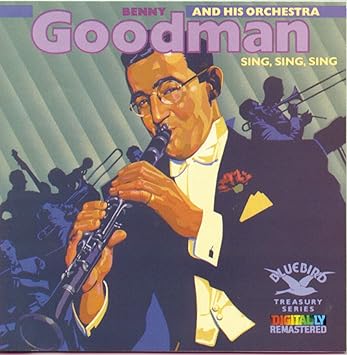
Benny Goodman “Sing Sing Sing (With a Swing)” (1938)

Inducted October 2021 as “Top Big Band Songs”

By the start of the Swing era in 1936, Benny Goodman was its king. “Sing, Sing, Sing” was his most renowned performance with solos by Benny as well as drummer Gene Krupa (on his last hit before leaving the band) and trumpeter Harry James. “Sing, Sing, Sing,” which Goodman called a “killer diller,” NPR’99 was the closer at the bandleader’s legendary Carnegie Hall concert on January 16, 1938. It was the first time jazz comprised a full concert instead of being part of a larger show SS and marked the birthplace of the legitimacy of the genre. NPR’99 Read more.

Ella Fitzgerald with Chick Webb’s Orchestra “A-Tisket, A-Tasket” (1938)

Inducted October 2021 as “Top Big Band Songs”

“A-Tisket, A-Tasket” began life as an American children’s rhyming game in 1879. In 1938, Ella Fitzgerald and Al Feldman adapted it into a song with very little change to the lyrics. In a 1973 lecture series at Harvard, Leonard Bernstein said that research showed the song’s melodic motif “is the same all over the world, wherever children tease each other. On every continent, in ever culture, it is one of the few musical universals.” TY Read more.

Tommy Dorsey with Frank Sinatra & the Pied Pipers “I’ll Never Smile Again” (1940)

Inducted October 2021 as “Top Big Band Songs”

Ruth Lowe was a pianist with Ina Ray Hutton’s all-girl orchestra when she composed this song about the death of her husband, just a few months after their marriage. TY She staked out Tommy Dorsey in September 1939 and got Carmen Mastren, the band’s guitarist, to give her demo a listen. SS Dorsey wasn’t initially passed but took a stab at it when Frank Sinatra came on board. SS It became his first #1 song. Read more.

Duke Ellington “Take the ‘A’ Train” (1941)

Inducted October 2021 as “Top Big Band Songs”

Billy Strayhorn was a hopeful pianist and composer in 1938. NPR His rearrangement of the Duke’s song “Sophisticated Lady” sufficiently impressed Ellington to invite Strayhorn to New York. TC Ellington gave directions to his house in New York, starting with “take the ‘A’ train.” WK Along the way, Strayhorn turned the directions into a song. TC It became Ellington’s signature song and one of the all-time best-loved jazz standards. Read more.

Glenn Miller “Chattanooga Choo Choo” (1941)

Inducted October 2021 as “Top Big Band Songs”

The team of Mack Gordon and Harry Warren wrote the song while travelling on the Southern Railway. It didn’t refer to a particular train, but Chattanooga, Tennessee, had been on the route for most trains passing through the American South since 1880. WK The song was used in the film Sun Valley Serenade, sung by members of Glenn Miller’s band. Miller’s recording became his biggest hit after “In the Mood” and the first recording formally certified as a million seller. PM Read more.

Woody Herman “Blues in the Night (My Mama Done Tol’ Me)” (1941)

Inducted October 2021 as “Top Big Band Songs”

Composer Harold Arlen and lyricist Johnny Mercer were approached to write a song for a movie about a jazz quintet riding the rails in search of its big break. Arlen wrote a melody after analyzing blues songs and Mercer penned four pages of lyrics. When they finished, Mercer called Margaret Whiting, who’d sung the pair’s songs “That Old Black Magic” and “Come Rain or Come Shine.” She told Mercer she had guests for dinner, but he and Arlen could come over later. When Mercer found out the guests included Judy Garland, Mickey Rooney, and Mel Tormé, he announced, “My God, we’re coming right over.” After they played the song, Rooney said, “That’s the greatest thing I’ve ever heard.” SB Read more.

Les Brown with Doris Day “Sentimental Journey” (1945)

Inducted October 2021 as “Top Big Band Songs”

When she first saw the sheet music, Doris Day commented, “What a lovely title,” to which Les Brown responded “Wait till you hear it.” SS “The song’s aching nostalgia struck a chord in a nation welcoming its boys back from the front lines,” TM becoming “one of a handful of songs that summed up romantic longing during World War II.” SS Will Friedwald called it “the definitive end-of-war song,” SS “a song that helped define an era.” SS Read more.

Wednesday, March 25, 2020

Top 100 Songs from 1930-1939

First posted 4/4/2012; last updated 3/25/2020.

Top 100 Songs of the Decade:

1930-1939

These are the top 100 songs from the 1930s according to Dave’s Music Database. Rankings are figured by combining sales figures, chart data, radio airplay, video airplay, streaming figures, awards, and appearances on best-of lists.

1. Over the Rainbow...Judy Garland (1939)
2. Night and Day...Fred Astaire with Leo Reisman (1932)
3. In the Mood...Glenn Miller (1939)
4. Cheek to Cheek...Fred Astaire with Leo Reisman (1935)
5. Stormy Weather (Keeps Rainin' All the Time)...Ethel Waters (1933)
6. Begin the Beguine...Artie Shaw (1938)
7. The Way You Look Tonight...Fred Astaire with Johnny Green (1936)
8. Pennies from Heaven...Bing Crosby with George Stoll (1936)
9. A-Tisket, A-Tasket...Ella Fitzgerald with Chick Webb (1938)
10. All the Things You Are...Tommy Dorsey with Jack Leonard (1939)

11. Silent Night...Bing Crosby (1935)
12. Smoke Gets in Your Eyes…Paul Whiteman with Bob Lawrence (1933)
13. Mood Indigo...Duke Ellington (1931)
14. I Got Rhythm...Red Nichols (1930)
15. Deep Purple...Larry Clinton with Bea Wain (1939)
16. Happy Days Are Here Again...Ben Selvin (1930)
17. God Bless America...Kate Smith (1939)
18. Brother, Can You Spare a Dime?...Rudy Vallee (1932)
19. Blue Moon…Glen Gray with Kenny Sargent (1935)
20. I’m in the Mood for Love...Little Jack Little (1935)

21. Strange Fruit...Billie Holiday (1939)
22. On the Sunny Side of the Street...Ted Lewis & His Band (1930)
23. Minnie the Moocher (The Ho De Ho Song)...Cab Calloway (1931)
24. Puttin’ on the Ritz...Harry Richman with Earl Burtnett & His Los Angeles Biltmore Hotel Orchestra (1930)
25. They Can’t Take That Away from Me...Fred Astaire with Johnny Green (1937)
26. The Last Round-Up...George Olsen with Joe Morrison (1933)
27. If I Didn’t Care...The Ink Spots (1939)
28. I’ve Got You Under My Skin...Ray Noble (1936)
29. Sweet Leilani...Bing Crosby with Lani McIntire & His Hawaiians (1937)
30. All or Nothing at All...Harry James with Frank Sinatra (1939)

31. The Peanut Vendor (El Manisero)...Don Azpiazu with Antonio Machin (1930)
32. Sophisticated Lady...Duke Ellington (1933)
33. In a Shanty in Old Shanty Town...Ted Lewis & His Band (1932)
34. Stein Song (University of Maine)...Rudy Vallee (1930)
35. Bei Mir Bist Du Schon (Means That You’re Grand)...The Andrews Sisters (1938)
36. Dinah…Bing Crosby & the Mills Brothers (1932)
37. All of Me...Louis Armstrong (1932)
38. Summertime…Billie Holiday (1936)
39. Moonlight Serenade...Glenn Miller (1939)
40. Goodnight, Sweetheart…Wayne King with Ernie Birchill (1931)

41. 42nd Street...Don Bestor with Dudley Mecum (1933)
42. Let’s Fall in Love...Eddy Duchin with Lew Sherwood (1934)
43. Lover…Paul Whiteman with Jack Fulton (1933)
44. I Can’t Get Started...Bunny Berigan (1938)
45. September Song...Walter Huston (1939)
46. Sing, Sing, Sing (With a Swing)...Benny Goodman (1938)
47. The Very Thought of You...Ray Noble with Al Bowlly (1934)
48. That Old Feeling...Shep Fields with Bob Goday (1937)
49. Winter Wonderland...Guy Lombardo (1934)
50. Wabash Cannonball...Roy Acuff & the Smoky Mountain Boys (1938)

51. Honeysuckle Rose...Thomas “Fats” Waller (1935)
52. Stars Fell on Alabama...Guy Lombardo with Carmen Lombardo (1934)
53. It Don’t Mean a Thing if It Ain’t Got That Swing...Duke Ellington (1932)
54. These Foolish Things Remind Me of You...Benny Goodman with Helen Ward (1936)
55. Lullaby of Broadway...The Dorsey Brothers with Bob Crosby (1935)
56. Jeepers Creepers...Al Donahue with Paula Kelly (1938)
57. How Deep Is the Ocean?...Guy Lombardo with Carmen Lombardo (1932)
58. Once in a While...Tommy Dorsey (1937)
59. September in the Rain…Guy & Carmen Lombardo (1937)
60. Lazy Bones…Ted Lewis (1933)

61. A Fine Romance (A Sarcastic Love Song)…Fred Astaire with Johnny Green & His Orchestra (1936)
62. My Reverie…Larry Clinton with Bea Wain (1938)
63. Isle of Capri…Ray Noble with Al Bowlly (1934)
64. South of the Border (Down Mexico Way)...Shep Fields with Hal Derwin (1939)
65. Out of Nowhere...Bing Crosby with Victor Young (1931)
66. Embraceable You...Red Nichols (1930)
67. June in January…Bing Crosby with George Stoll’s Orchestra (1934)
68. Whistle While You Work...The Seven Dwarfs (1938)
69. What Is This Thing Called Love?...Leo Reisman (1930)
70. Paradise…Leo Reisman with Frances Maddux (1932)

71. Red Sails in the Sunset…Guy & Carmen Lombardo (1935)
72. Where or When…Hal Kemp with Bob Allen (1937)
73. You Must Have Been a Beautiful Baby…Bing Crosby (1938)
74. The Continental (You Kiss While We’re Dancing)…Leo Reisman (1934)
75. Tumbling Tumbleweeds...Sons of the Pioneers (1934)
76. One O’Clock Jump...Count Basie (1937)
77. Little White Lies…Fred Waring with Clare Hanlon (1930)
78. The Old Spinning Wheel...Ray Noble with Al Bowlly (1933)
79. Sweet and Lovely…Gus Arnheim with Donald Novis (1931)
80. Goody Goody…Benny Goodman with Helen Ward (1936)

81. Beer Barrell Polka...Will Glahe (1939)
82. Dream a Little Dream of Me...Wayne King with Ernie Birchill (1931)
83. Alone…Tommy Dorsey with Cliff Weston (1936)
84. Three Little Words...Duke Ellington (1930)
85. And the Angels Sing …Benny Goodman with Martha Tilton (1939)
86. I’ll String Along with You…Ted Fio Rito with Muzzy Marcellino (1934)
87. Music, Maestro, Please...Tommy Dorsey with Edythe Wright (1938)
88. Thanks for the Memory…Shep Fields with Bob Goday (1937)
89. Love for Sale…Libby Holman with Dick Robertson (1931)
90. I Get a Kick Out of You...Johnny Green with Ethel Merman (1934)

91. When the Saints Go Marching In...Louis Armstrong (1939)
92. I Found a Million Dollar Baby in a Five and Ten Cent Store...Fred Waring with Clare Hanlon (1931)
93. You’re Getting to Be a Habit with Me…Bing Crosby with Guy Lombardo’s Orchestra (1933)
94. Cocktails for Two…Duke Ellington (1934)
95. Marie...Tommy Dorsey (1937)
96. Too Marvelous for Words…Bing Crosby with Jimmy Dorsey’s Orchestra (1937)
97. Brother, Can You Spare a Dime?...Bing Crosby with Lennie Hayton’s Orchestra (1932)
98. Exactly Like You...Ruth Etting (1930)
99. The Carioca…Enric Madriguera with Patricia Gillmore (1934)
100. Willow Weep for Me…Paul Whiteman with Irene Taylor (1932)

Sunday, September 22, 2019

Dave's Music Database Hall of Fame: Music Maker Inductees (September 2019)

Originally posted 9/22/2019; last updated 5/21/2021.

January 22, 2019 marked the 10-year anniversary of the DMDB blog! To honor that, Dave’s Music Database announced its own Hall of Fame. This month marks the third batch of music maker inductees. These are the top ten female artists according to the DMDB.

Mariah Carey (1970-)

Inducted September 2019 as a “Top Female Act.”

Referred to as the “Songbird Supreme” by the Guinness World Records, the 1990 Best New Artist Grammy winner is known for her five-octave vocal range. The Long Island native is the only artist to have her first five singles top the U.S. Billboard Hot 100 chart and is second only to the Beatles with 19 total chart-toppers. Her songs “One Sweet Day” (1995) and “We Belong Together” (2005) rank in the top 10 biggest #1 songs in the history of the Billboard charts. Read more.

Ella Fitzgerald (1917-1996)

Inducted September 2019 as a “Top Female Act.”

The most honored jazz singer of all time. Discovered after winning the Harlem Amateur Hour in 1934, she was hired by Chick Webb and in 1938 created a popular sensation with “A-Tisket, A-Tasket.” Following Chick’s death in 1939, Ella took over the band for three years. Winner of the Down Beat poll as top female vocalist more than 20 times, she remains among the undisputed royalty of 20th century popular music. Read more.

Aretha Franklin (1942-2018)

Inducted September 2019 as a “Top Female Act.”

R&B singer known as “The Queen of Soul.” Her father was a Baptist preacher and Aretha got her start in the church choir, first recording as a gospel artist from 1956-60. Signed with Columbia Records in 1960 and recorded secular music. Went to Atlantic Records in 1966 and Arista Records in 1980. Read more.

Billie Holiday (1915-1959)

Inducted September 2019 as a “Top Female Act.”

Blues singer known as the great “Lady Day.” Rivaled only by Ella Fitzgerald among all female jazz singers. Following her difficult early years she was discovered in 1933 by jazz critic John Hammond. She recorded one hit with Benny Goodman, then began her classic 1935-38 association with Teddy Wilson, accompanied by the top jazz musicians in the country. Billie also sang briefly in the late ‘30s with Count Basie and Artie Shaw. The 1972 movie Lady Sings the Blues was based on her life. Read more.

Whitney Houston (1963-2012)

Inducted September 2019 as a “Top Female Act.”

R&B/pop singer. Daughter of Cissy Houston and cousin of Dionne Warwick. Began singing career at age 11 with the gospel group New Hope Baptist Junior Choir. As a teen, worked as a backing vocalist for Chaka Khan and Lou Rawls. Pursued modeling career in 1981, appeaing in Glamour magazine and on the cover of Seventeen. Married singer Bobby Brown on 7/18/92. Starred in the movies The Bodyguard, Waiting to Exhale, and The Preacher’s Wife. Read more.

Ada Jones (1873-1922)

Inducted September 2019 as a “Top Female Act.”

She was born in the UK, but her family movied to Philadelphia when she was 6. She was one of the earliest female singers to be recorded. She made her first recordings in 1893 on wax cylinders for Edison Records. She frequently sang with Billy Murray. Read more.

Madonna (1958-)

Inducted September 2019 as a “Top Female Act.”

The best-selling female recording artist of all time. Dance-pop singer and record executive (Maverick Records) known as the “Queen of Pop.” She was known for her boundary-pushing videos, costumes, and overall image. She was also featured in movies, includingEvita (1996) which won her a Golden Globe Award for Best Actress. Read more.

Dolly Parton (1946-)

Inducted September 2019 as a “Top Female Act.”

Country singer/songwriter. She has charted more than 100 times on the country chart, making her the top female country artist of all time. One of the few people to receive Oscar, Grammy Tony, and Emmy nominations. She worked with Porter Wagoner as a duo from 1967-76 while also recording solo. Joined the Grand Ole Opry in 1969. She also starred in movies 9 to 5, Steel Magnolias, and more. Read more.

Diana Ross (1944-)

Inducted September 2019 as a “Top Female Act.”

She was born and raised in Detroit, Michigan, where she became the lead singer of The Supremes, the best-charting female group in U.S. history and Motown’s most successful act. She left the group in 1970, but continued to have success as a solo artist. She also won a Golden Globe for her performance in Lady Sings the Blues (1972). In 1993, the Guinness Book of World Records declared her the most successful female music artist in history. Read more.

Tina Turner (1939-)

Inducted September 2019 as a “Top Female Act.”

R&B/rock singer who found success as half of a duo with Ike Turner, to whom she was married from 1958-76. After a few overlooked solo efforts in the ‘70s, Tina returned with the album Private Dancer in 1984 and launched one of rock’s greatest comeback stories. The 12-time Grammy winner has been called “The Queen of Rock ‘n’ Roll” and sold more than 200 million records worldwide. Read more.
Resources and Related Links:

Thursday, May 30, 2019

Benny Goodman: Top 100 Songs

First posted 5/30/2012; updated 5/31/2019.

image from lessignnets.com

Jazz clarinetist and bandleader known as “The King of Swing” for ushering in more dance-oriented jazz, fueled by Fletcher Henderson’s arrangements, which appealed to teens. Born Benjamin David Goodman on 5/30/1909 in Chicago, Illinois. Died 6/13/1986. Was in a band by age 14. Worked with Isham Jones, Ted Lewis, Red Nichols, Ben Pollack (25-29), and Ben Selvin. Formed his own band in 1934. He launched the careers of many other jazz musicians including guitarist Charlie Christian and drummer Gene Krupa and was one of the first to lead integrated jazz groups. His 1/16/1938 Carnegie Hall concert in New York is, as All Music Guide’s Bruce Eder called it, “the single most important jazz or popular music concert in history.”

For a complete list of this act’s songs and albums honored by the DMDB, check out the DMDB Music Maker Encyclopedia entry.


Top 100 Songs

Dave’s Music Database lists are determined by song’s appearances on best-of lists as well as chart success, sales, radio airplay, streaming, and awards.

MB = Mildred Bailey, HF = Helen Forrest, DH = Dick Haymes, PL = Peggy Lee, MT = Martha Tilton, LT = Louise Tobin, HW = Helen Ward. Songs which peaked at #1 on the U.S. pop charts are noted (#1).

DMDB Top 1%:

1. Sing, Sing, Sing (With a Swing) (1938)
2. These Foolish Things Remind Me of You (w/ HW, 1936) #1
3. Taking a Chance on Love (w/ HF, 1943) #1
4. There’ll Be Some Changes Made (w/ LT, 1941) #1
5. Goody Goody (w/ HW, 1936) #1
6. And the Angels Sing (w/ MF, 1939) #1

DMDB Top 5%:

7. Moonglow (1934) #1
8. Darn That Dream (w/ MB, 1940) #1
9. Don’t Be That Way (1938) #1
10. Jersey Bounce (w/ PL, 1942) #1

11. Goodnight My Love (w/ Ella Fitzgerald, 1937) #1
12. The Glory of Love (w/ HW, 1936) #1
13. This Can’t Be Love (w/ MF, 1938)
14. Somebody Else Is Taking My Place (1942) #1
15. Why Don’t You Do Right? (w/ PL, 1943)
16. Stardust (1936)
17. Stompin’ at the Savoy (1936)
18. I Didn’t Know What Time It Was (w/ LT, 1939)
19. Ev’ry Time We Say Goodbye (w/ Peggy Mann, 1945)
20. You Turned the Tables on Me (w/ HW, 1936) #1

21. St. Louis Blues (1936)
22. Gotta Be This Or That (w/ Dottie Reid, 1945)
23. Blue Moon (w/ HW, 1935)
24. Blues in the Night (My Mama Done Tol’ Me) (w/ PL, 1942)
25. Body and Soul (1935)
26. It’s Been So Long (w/ HW, 1936) #1
27. Blue Skies (w/ Art Lund, 1946)

DMDB Top 10%:

28. Give Me the Simple Life (w/ Liza Morrow, 1946)
29. How High the Moon (w/ HF, 1940)
30. Symphony (w/ Liza Morrow, 1945)

31. This Year’s Kisses (w/ Margaret McRae, 1937) #1
32. I Let a Song Go Out of My Heart (w/ MF, 1938) #1
33. Goodbye (1936)
34. The Way You Look Tonight (w/ PL, 1942)
35. On a Slow Boat to China (1948) 36. Cabin in the Sky (w/ HF, 1943)
37. The Man I Love (1937)
38. After You’ve Gone (1935)
39. Exactly Like You (w/ Lionel Hampton, 1936)
40. How Deep Is the Ocean? (w/ PL, 1941)

41. Bei Mir Bist Du Schoen (Means That You’r-e Grand) (w/ MF, 1938)
42. What’s New? (w/ LT, 1939)
43. Idaho (w/ DH, 1942)
44. The Japanese Sandman (1935)
45. As Long As I Live (1941)
46. Love Me or Leave Me (original, 1934)
47. Love Me or Leave Me (new recording, 1936)
48. Scatter-Brain (w/ LT, 1939)
49. You Can’t Pull the Wool Over My Eyes (w/ HW, 1936)
50. Blue Orchids (w/ LT, 1939)

DMDB Top 20%:

51. I Thought about You (w/ MB, 1939)
52. Sometimes I’m Happy (1935)
53. Flying Home (1939)
54. King Porter Stomp (1935)
55. Intermezzo (Souvenir De Vienne) (w/ HF, 1941)
56. A Gal in Calico (w/ Eve Young, 1947)
57. I Got It Bad and That Ain’t Good (w/ PL, 1941)
58. It’s Only a Paper Moon (1945)
59. For Every Man There’s a Woman (w/ PL, 1948)
60. Please Be Kind (w/ MF, 1938)

61. I Know That You Know (1936)
62. You’re a Heavenly Thing (w/ HW, 1935)
63. Oh Babe! (1950)
64. China Boy (1936)
65. Afraid to Dream (w/ Betty Van, 1937)
66. The Dixieland Band (w/ HW, 1935)
67. We’ll Meet Again (w/ PL, 1942)
68. Serenade in Blue (w/ DH, 1942)
69. Yours (Quiereme Mucho) (w/ HF, 1941)
70. Basin Street Blues (1934)

71. Bob White (Whatcha Gonna Swing Tonight?) (w/ MF, 1937)
72. Rose of Washington Square (1939)
73. I Want to Be Happy (1937)
74. I Don’t Know Enough About You (w/ Art Lund, 1946)
75. My Sister and I (1941)
76. Basin Street Blues (1934)
77. Air Mail Special (w/ HF, 1941)
78. In a Sentimental Mood (1936)
79. Solo Flight (w/ Charlie Christian, 1941)
80. I’m Gonna Love That Guy (w/ Dottie Reid, 1945)

81. It Isn’t Fair (w/ Buddy Greco, 1950)
82. Can’t Teach My Old Heart New Tricks (w/ MF, 1937)
83. Jingle Bells (1935)
84. Wang Wang Blues (1941)
85. Close As Pages in a Book (w/ Jane Harvey, 1945)
86. Bugle Call Rag (1934)
87. The Flat Foot Floogee (1938)
88. Perfidia (Tonight) (w/ HF, 1941)
89. Clouds (w/ Ray Hendricks, 1935)
90. A String of Pearls (w/ PL, 1942)

91. Lullaby in Rhythm (1938)
92. Stompin’ at the Savoy (new recording, 1937)
93. Organ Grinder’s Swing (1936)
94. Eenie Meenie Miney Mo (w/ HW, 1935)
95. My Honey’s Lovin’ Arms (w/ MF, 1939)
96. Swingtime in the Rockies (1936)
97. No Other One (w/ HW, 1935)
98. I Was Lucky (w/ HW, 1935)
99. I Have Eyes (w/ MT, 1938)
100. I Ain’t Lazy, I’m Just Dreamin’ (w/ Jack Teagarden, 1934)


Awards:


Sunday, November 20, 2016

American Music Award of Merit

American Music Award of Merit:

1974-2016

After a four-year layoff, the American Music Award of Merit returned in 2008. The award was initiated in 1974 as one of the original awards for the first annual American Music Awards show, which was televised on February 19, 1974. The Hollywood Reporter says the award is given to artists “who have made truly exceptional contributions to the music industry.”

The award was given each year from 1974 to 2004. Then it was given again until 2008 and then there was an eight-year gap before it was given again, this time to Sting on November 20, 2016. As of June 6, 2026, the award has not been given again.

See other lifetime achievement awards.


Resources/Related Links:

First posted 11/23/2008; last updated 6/6/2026.

Friday, May 4, 2012

The first Grammys were held: May 4, 1959

image from themoneytimes.com

Frank Sinatra once described Elvis Presley, the man who in 1959 was responsible for nearly half the sales at RCA, as a “deplorable, a rancid-smelling aphrodisiac.” TO Apparently the Grammys agreed with Ol’ Blue Eyes. In 28 categories, Sinatra was nominated the most – 12 times. Elvis and his fellow rock musicians, received no nominations. As Variety magazine said, the complete absence of any rock titles was “a demonstrative brushoff to the prevailing trend in the pop field.” TO

The Grammy Awards were established in 1958 by the National Academy of Recording Arts and Sciences. The “Grammy” nickname is short for gramophone. The awards focused on “artistic achievement, technical proficiency and overall excellence instead of album sales or chart position.” LF “The award itself is a gold gramophone, symbolic of the first home record players, on a black base.” LF

525 people from the music industry attended that first ceremony on May 4, 1959 at a banquet ceremony at Los Angeles’ Beverly Hilton Hotel. Shockingly, there was no music on the program. The event was not televised. Paul Weston, the Grammy president, was still lining up presenters during dinner.

700 people filled out ballots. While prognasticators assumed Sinatra would be the big winner of the night, he was nearly shut out, only winning Best Album Cover for Only the Lonely. Instead, the night’s top honors went largely to non-rock-oriented pop titles. Domenico Modugno’s “Volare” won Record and Song of the Year. Henry Mancini’s television soundtrack The Music from Peter Gunn, which had topped the LP chart for 10 weeks, took the prize for Album of the Year. Mancini would become a Grammy regular, winning a total of 20 awards before his death in 1994.

Volare

Some of the other winners of the night included Ella Fitzgerald (Best Female Vocal Performance, Best Individual Jazz Performance) and Count Basie (Best Performance by a Dance Band, Best Jazz Performance Group). Despite Grammy leaders claim that the awards were about “artistic merit,” they handed out three awards to The Chipmunks. Check out a full list of the first year’s winners here.


Resources and Related Links:

Monday, May 15, 2006

Today in Music (1956): Ella Fitzgerald Sings the Cole Porter Songbook released

Sings the Cole Porter Songbook

Ella Fitzgerald


Released: May 15, 1956


Charted: July 28, 1956


Peak: 15 US, -- UK, -- CN, -- AU Click for codes to charts.


Sales (in millions): --


Genre: traditional pop/vocal jazz


Tracks, Disc 1:

  1. All Through the Night
  2. Anything Goes
  3. Miss Otis Regrets
  4. Too Darn Hot
  5. In the Still of the Night
  6. I Get a Kick Out of You
  7. Do I Love You?
  8. Always True to You in My Fashion
  9. Let’s Do It (Let’s Fall in Love)
  10. Just One of Those Things
  11. Ev’ry Time We Say Goodbye
  12. All of You
  13. Begin the Beguine
  14. Get Out of Town
  15. I Am in Love
  16. From This Moment On

Tracks, Disc 2:

  1. I Love Paris
  2. You Do Something to Me
  3. Ridin’ High
  4. Easy to Love
  5. It’s All Right with Me
  6. Why Can’t You Behave?
  7. What Is This Thing Called Love?
  8. You’re the Top
  9. Love for Sale
  10. It’s De-Lovely
  11. Night and Day
  12. Ace in the Hole
  13. So in Love
  14. I’ve Got You Under My Skin
  15. I Concentrate on You
  16. Don't Fence Me In


Total Running Time: 118:27

Rating:

4.664 out of 5.00 (average of 18 ratings)


Awards:

(Click on award to learn more).

About the Album:

“Ella Fitzgerald was already the preeminent voice in the jazz world when she began what became her signature project in 1956; a series of recordings devoted to works by each of the great stage and screen composers of postwar America.” TM They “are all wonderful, but her natural wit and intelligence was at its most perfect” AZ on Sings the Cole Porter Songbook, the first collection.

She “shines as the perfect interpreter of Cole Porter’s bittersweet love songs.” AM It “is a dream pairing of singer and song,” TM “arguably history’s finest jazz singer singing some of the best-written American pop standards.” AM

“Not only does it bubble over with the lucid phrasing and childlike playfulness that made Fitzgerald so beloved, it presents Porter’s songs…as a compelling body of work, to be appreciated apart from the narrative of a show. The songbooks were hits collections, in a sense, teaching millions about the legendary musical theater composers.” TM

“Fitzgerald illuminates the shapely contours of Porter’s melodies with understated elegance, and a technique that’s almost transparent. She leans into Porter’s inventive secondary themes as they float into different keys and moods, and approaches the tunes not as a jazz showoff but as a faithful interpreter.” TM

“Ella is joined by such luminaries as Bing Crosby, Judy Garland, and Billie Holiday.” AM “Fitzgerald varies the backing: She sings with just piano on Miss Otis Regrets; works with guitarist Barney Kessel and a rhythm section for I Concentrate on You; fronts a big band, arranged by Buddy Bregman, for several jaunty, whirling toe-tappers (among them a definitive reading of Easy to Love); and somehow manages to keep schmaltz at bay when singing with a studio orchestra on I Love Paris.” TM

“This collection is one of those rare albums that can be treated as a terrific introduction to a classic artist, as well as remaining a treasured recording for the most scholarly jazz aficionados.” AM “A true American music gem.” AZ


Notes:

The reissue adds alternates of “You’re the Top,” “I Concentrate on You,” and “Let’s Do It (Let’s Fall in Love).”

Reviews:


Related DMDB Links:


First posted 5/30/2008; last updated 3/1/2026.