Tuesday, February 27, 1996

Alanis Morissette released “Ironic”

Ironic

Alanis Morissette

Writer(s): Alanis Morissette, Glen Ballard (see lyrics here)


Released: February 27, 1996


First Charted: January 6, 1996


Peak: 4 US, 3 CB, 14 RR, 28 AC, 5 A40, 7 AA, 18 AR, 13 MR, 11 UK, 16 CN, 3 AU, 1 DF (Click for codes to charts.)


Sales (in millions): 0.6 US, 0.66 UK, 1.72 world (includes US + UK)


Airplay/Streaming (in millions): 1.0 radio, 298.52 video, 512.62 streaming

Awards:

Click on award for more details.

About the Song:

Alanis Morissette was a minor pop star in her native Canada in the early ‘90s, but exploded worldwide with her third album, Jagged Little Pill. She “first caught the attention of rock audiences in summer 1995 with the release of the furious, vengeful ‘You Oughta Know’” TB but Alanis “needed something gentler and more melodic to facilitate her mainstream breakthrough. ‘Ironic was just the ticket.” TB

“Ironic” was the third single from the album – and the third song for Alanis to top the alternative rock chart. It was one of five songs from the album to top the Canadian charts and her highest charting on the Billboard Hot 100. It won the Juno Award for Single of the Year and was nominated for Grammys for Record of the Year and Best Short Form Music Video. It was also nominated for six MTV Video Music Awards, winning three of them. The iconic video features Alanis driving through a winter landscape with three passengers – all played by Alanis.

The song garnered attention for the misuse of the word “ironic.” The Oxford English Dictionary describes it as “a figure of speech in which the intended meaning is the oppositie of that expressed by the words used,” WK which meant situations described in the song such as “rain on your wedding day” and “a traffic jam when you’re already late” weren’t irony, but bad luck. In a 2008 interview with The London Times, Alanis said “the dictionary now says [irony is also] a coincidence and bad luck – not that I don’t deserve a little slap on the writst for malapropism. I always tell people that I’m the smartest stupid person you’ll ever meet.” SF

The song’s co-writer, Glen Ballard, explained that he has a degree in English and knew their examples of irony weren’t “technically right, but I think it’s wonderful that everybody sort of jumped in on it and wanted to really define it as a literary term.” SF Salon.com’s Michael Reid Roberts defended the song as using situational irony, in which “the state of affairs…that seems deliberately contrary to what one expects.” WK

Ultimately, the song – whether or not it is technically accurate in its portrayals of irony – is an observation that “life has a funny…way of helping us out – in spite of all the bad stuff that we have to go through.” SF


Resources:


Related Links:


First posted 2/3/2021; last updated 1/18/2025.

Saturday, February 24, 1996

Oasis “Champagne Supernova” charted

Champagne Supernova

Oasis

This post has been moved here.

Monday, February 19, 1996

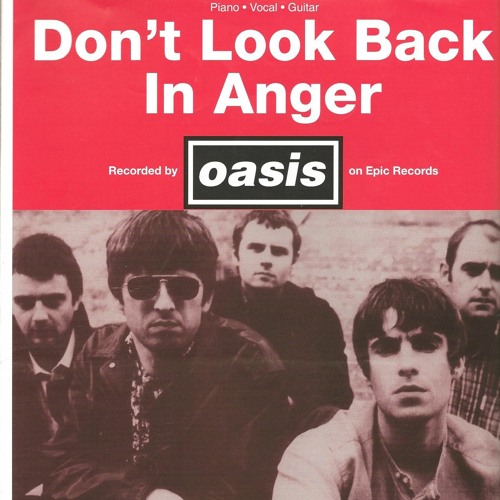
Oasis “Don’t Look Back in Anger” released

Don’t Look Back in Anger

Oasis

This post has been moved here.

Monday, February 12, 1996

Fugees released The Score

First posted 3/16/2008; updated 10/12/2020.

The Score

The Fugees


Released: February 12, 1996


Peak: 14 US, 18, 2 UK, 12 CN, 5 AU


Sales (in millions): 6.0 US, 1.5 UK, 20.0 world (includes US and UK)


Genre: hip-hop


Tracks:

Song Title (date of single release, chart peaks) Click for codes to singles charts.

  1. Red Intro
  2. How Many Mics
  3. Ready or Not (3/30/96, 69a US, 1 UK, 22a RB, 1 UK, 24 AU)
  4. Zealots
  5. The Beast
  6. Fu-Gee-La (12/30/95, 29 US, 13 RB, 21 UK, 43 AU, gold single)
  7. Family Business
  8. Killing Me Softly with His Song (3/2/96, 2a US, 1a RB, 30 AC, 1 UK, 1 AU)
  9. The Score
  10. The Mask
  11. Cowboys
  12. No Woman No Cry (6/15/96, 38a US, 58a RB, 2 UK, 20 AU)
  13. Manifest/Outro


Total Running Time: 60:52


The Players:

  • Wyclef Jean
  • Lauryn Hill
  • Pras Michel

Rating:

4.379 out of 5.00 (average of 16 ratings)


Quotable: “One of the most distinctive hip-hop albums of its era” – Steve Huey, All Music Guide


Awards:

About the Album:

“A breath of fresh air in the gangsta-dominated mid-‘90s, the Fugees’ breakthrough album, The Score, marked the beginning of a resurgence in alternative hip-hop. Its left-field, multi-platinum success proved there was a substantial untapped audience with an appreciation for rap music but little interest in thug life. The Score’s eclecticism, social consciousness, and pop smarts drew millions of latent hip-hop listeners back into the fold, showing just how much the music had grown up. It not only catapulted the Fugees into stardom, but also launched the productive solo careers of Wyclef Jean and Lauryn Hill, the latter of whom already ranks as one of the top female MCs of all time based on her work here.” AMG

“Not just a collection of individual talents, the Fugees’ three MCs all share a crackling chemistry and a wide-ranging taste in music. Their strong fondness for smooth soul and reggae is underscored by the two hit covers given slight hip-hop makeovers (Roberta Flack’s Killing Me Softly With His Song and Bob Marley’s No Woman, No Cry).” AMG

“Even when they’re not relying on easily recognizable tunes, their original material is powered by a raft of indelible hooks, especially the great Fu-Gee-La; there are also touches of blues and gospel, and the recognizable samples range from doo wop to Enya.” AMG

“Their protest tracks are often biting, yet tempered with pathos and humanity, whether they’re attacking racial profiling among police (The Beast), the insecurity behind violent posturing (Cowboys), or the inability of many black people in the Western Hemisphere to trace their familial roots (Family Business).” AMG

“Yeah, the Chinese restaurant skit is a little dicey, but on the whole, The Score balances intelligence and accessibility with an easy assurance, and ranks as one of the most distinctive hip-hop albums of its era.” AMG

Resources and Related Links:

Thursday, February 1, 1996

Today in Music (1896): Puccini's La Bohème premiered

2

La Bohème (The Bohemian Life)

Giacomo Puccini (composer)


Composed: 1896


First Performed: February 1, 1896


Peak: --


Sales (in millions): --


Genre: classical > opera


Parts/Movements:

    Act I:

  1. No. 1a, "Questo Mar Rosso"
  2. No. 1b, "Nei cieli bigi" (Rudolph)
  3. No. 1c, "Pensier profondo! Giusto color!"
  4. No. 1d, "Legna! Sigari! Bordo!"
  5. No. 1e, "Si pou? Chi e la? Benoit!"
  6. No. 1f, "Io resto per terminar l'articolo"
  7. No. 1g, "Non sono in vena. Chi e la?"
  8. No. 1h, "Si sente meglio? Si. Qui ce tanto freddo"
  9. No. 2, "Che gelida manina"
  10. No. 3, "Si. Mi chiamano Mimi"
  11. No. 4, "O soave fanciulla"

    Act II:

  12. No. 5, "Aranci, datteri!"
  13. No. 6a, "Chi guardi?"
  14. No. 6b, "Eccoci qui!"
  15. No. 7a, "Come un facchino"
  16. No. 7b, "Quando me'n vo' soletta la via" (Musetta's Waltz Song)

    Act III:

  17. No. 8, "Ohe, la, le guardie"
  18. No. 9, "Mimi?!... Speravo di trovarvi"
  19. No. 10a, "Marcello... Finalmente"
  20. No. 10b, "Mimi e una civetta"
  21. No. 11, "Donde lieta usci" (Mimi's Farewell)
  22. No. 12, "Addio dolce svegliare"

    Act IV:

  23. No. 13a, "In un coupe?"
  24. No. 13b, "O Mimi, tu piu non torni"
  25. No. 14, "Che ora sia?"
  26. No. 15, "Musetta!... C'e Mimi"
  27. No. 16, "Vecchia zimarra" (Coat Song)
  28. No. 17a, "Sono andati?"
  29. No. 17b, "Torno al nido"
  30. No. 17c, "Oh Dio! Mimi!"


Average Duration: 104:00

Rating:

4.411 out of 5.00 (average of 9 ratings)


Awards:

(Click on award to learn more).

About the Work:

“Opera began in the 1600s as an attempt to revive Greek tragedy, and it’s been a tug-of-war between words and music ever since. The opera world has suffered through works at both extremes – recklessly wordy narratives in search of musical anchor and gorgeous music lacking plot lines.” TM Giacomo Puccini “achieved a very happy medium” TM with La Bohème. His “musical decisions were informed by the necessities of the drama” TM and he offers “genuinely memorable melodies, songs that would be deeply affecting independent of any narrative.” TM >

The opera was inspired by the “nineteenth century cultural fad of Bohemianism” AM and the “theme of Parisian starving artists.” AM In 1893, Puccini was struck with the idea of composing an opera based on Henri Murger's novel Scènes de la vie de bohème. AM

The opera “begins on Christmas Eve in Paris’s Latin Quarter. The year is 1830, and the painter Marcello…and his roommate, the poet Rodolfo…are shivering because there’s no fuel to heat the fire.” TM “Rodolfo finds himself alone with neighbor Mimi, who’s looking for a light for her candle. By the end of Act 1…they’ve fallen in love.” TM As the opera progresses, he decides he’s no longer interested in her and in the fourth act the dying Mimi “hallucinates a glimpse into the hereafter.” TM

“Although contemporary critics received Puccini’s La Bohème coolly after its premiere…it was a hit with the public, and has endured as a favorite in the operatic repertoire.” AM

“Some of Puccini’s loveliest lyrical moments grace La Bohème. Rodolfo’s first aria Che gelida manina in Act One, introduces a primarily conjunct melody of touching simplicity, conveying the innocence of pure love. This melody returns at the end of Act One, as Mimì and Rodolfo exit, and again, in Act Four as Mimì, on her deathbed, reminisces with Rodolfo on their first encounter.” AM “This technique of associating music with characters incorporates timbral as well as thematic elements.” AM

“The magical, sustained string instrumentation…that announces Mimì’s entrance in Act One is also the principal color in the orchestral accompaniment of her signature aria. Classic Puccinian orchestration and harmonic language mark the depiction of daybreak that opens Act Three. Here, flutes in parallel fifths peck out a modal melody, punctuated at phrase ends by subtle, sustained upper strings over tremolo cellos. A harp solo adds a delicate brilliance to the sparse orchestral palette and foreshadows the hazy timbre of the off-stage women's chorus.” AM

“Puccini’s expressive use of the orchestra is linked most intimately with the drama in Act Four. After Schaunard tells Marcello of Mimì’s death, the orchestra drops out, leaving only a sustained A in the double bass to convey a sense of dramatic expectation and musical continuity. Even the soloists leave their songful world for one of spoken declamation until the orchestra explodes with C sharp minor triads in the brass, reflecting Rodolfo’s realization of Mimì’s death and accompanying his anguished cries.” AM

Reviews:


Related DMDB Links:


Last updated 2/24/2026.