Sunday, January 30, 2011

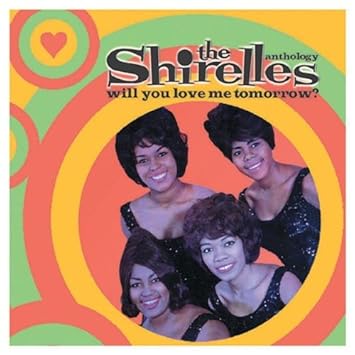
50 years ago: The Shirelles hit #1 with “Will You Love Me Tomorrow”

Will You Love Me Tomorrow

The Shirelles

Writer(s): Gerry Goffin/Carole King (see lyrics here)


First Charted: November 21, 1960


Peak: 12 US, 12 CB, 11 GR, 2 HR, 2 RB, 4 UK, 2 CN, 1 DF (Click for codes to singles charts.)


Sales (in millions): --


Airplay/Streaming (in millions): -- radio, 55.0 video, 76.46 streaming

Awards:

Click on award for more details.

About the Song:

Carole King started as a performer, turned to songwriting, and then returned to performing. Her songwriting success was marked by her pairing with Gerry Goffin, who aspired to Broadway while she was more interested in rock music. As she said, “I wrote music for his play, which never went anywhere, and he wrote lyrics for my rock & roll songs, which did go somewhere!” TC

The two married and both worked day jobs while writing on the side for Don Kirshner’s Aldon music. She had worked up a melody one day and when he came home from work, he added lyrics. As King said, “It was as if he’d been thinking of the lyric all day at work.” TC When Kirshner heard “Will You Love Me Tomorrow” he gave them a $10,000 advance and their career took off. Goffin and King secured an office in the famous Brill Building. They “represented a new, young generation of Tin Pan Alley writers with an intuitive feel for the newly established teen market.” LW They “became the most popular songwriting team of the decade.” TC

The song focused on “female teenage sexuality, a subject difficult to put into song without pandering and almost impossible to render with this much pathos.” MA A song about virginity was risqué in 1960. Not only is it implied that the man might not have feelings for her, but that by the end of the song the girl is going to say yes. HL Author Alan Lewens asserts that it was “the first popular song to deal with emotional issues from a female perspective.” LW

It was also the first #1 for a girl group RS500 and a black group at that. It succeeds thanks to “the catchiest of melodies, a sympathetic arrangement and a sensitive lead vocal” HL from lead singer Shirley Owens, who brings a “full, woman-like sensuality” TC to the song. She initially considered the song “too countryish” RS500 but the song’s production and “gospel-based call-and-response harmonies gave the sound an exciting quality.” HL The record is “a masterpiece of early sixties New York studio craft” MA and “perhaps the most lush of all the girl group classics.” MA


Resources:


First posted 4/16/2020; last updated 11/23/2022.

Sunday, January 23, 2011

Daryl Hall & John Oates: A Retrospective (1970-2002)

Daryl Hall & John Oates

A Retrospective: 1972-2002

Overview:

Active: 1970-2022. Daryl Hall and John Oates were a pop-rock blue-eyed-soul duo. Hall grew up in the suburbs of Philadelphia and knew the famed Philly soul-writing duo of Kenneth Gamble and Leon Huff. “They grew up together, finding work as session musicians in ‘60s Philly.” SG1 Hall led a white harmony group called the Temptones while he was a student at Temple University in Philadelphia. “Oates, another white Temple student, had his own group, the Masters.” SG1 They met in 1967 when they were playing with their separate bands at the Adelphia Ballroom. A gang fight broke out and the two scrambled for the freight elevator to get the heck out of there. RC

They signed with Atlantic Records in 1972, “just as the label was becoming a force in the emergence of Philadelphia soul.” MM Hall generally sang lead vocals while Oates played guitar and sang backing vocals. Their “first three albums didn’t sell, and only one of their first seven singles made it into the Hot 100 at all: 1973's ‘She’s Gone,’ which peaked at #60.” SG1

However, the duo’s fortunes changed in 1976. “They’d moved from Atlantic to RCA, and Todd Rundgren produced their self-titled album. Hall wrote the delicate, pretty ‘Sara Smile’ for his girlfriend at the time, and it took off, peaking at #4 and finally establishing Hall and Oates as hitmakers…That same year, a re-released "She's Gone" made it into the top 10, peaking at #7.” SG1

The duo landed their first #1 in 1977 with “Rich Girl” and five more chart-toppers followed in the 1980s. In the late 1980s, they passed the Everly Brothers as the #1 charting duo of the rock era. They had 29 Billboard top-40 hits, six of which went to #1.


The Players

  • Daryl Hall (born 10/11/1946 in Pottstown, Pennsylvania)
  • John Oates (born 4/7/1948 in New York City, New York)


Links

Awards

Compilations


Spotify Playlist

Here’s my Daryl Hall & John Oates 1973-2003 playlist at Spotify featuring all of the songs from any of the above compilations.

Under each album snapshot, songs featured on the anthologies are noted. Click for codes to charts.

The Top 50 Songs by Daryl Hall & John Oates

Dave’s Music Database lists are determined by song’s appearances on best-of lists, appearances on compilations and live albums by the featured act, and songs’ chart success, sales, radio airplay, streaming, and awards.

DMDB Top 2%:

1. Maneater (1982)
2. I Can’t Go for That (No Can Do) (1981)

DMDB Top 5%:

3. Kiss on My List (1980)
4. Rich Girl (1976)
5. She’s Gone (1973)
6. You Make My Dreams (1980)
7. Sara Smile (1975)
8. Everytime You Go Away (cover by Paul Young, 1985)
9. Private Eyes (1981)
10. Out of Touch (1984)

DMDB Top 10%:

11. You’ve Lost That Lovin’ Feelin’ (1980)
12. Say It Isn’t So (1983)
13. One on One (1982)
14. Adult Education (1983)
15. Method of Modern Love (1984)
16. The Way You Do the Things You Do/My Girl (live with David Ruffin & Eddie Kendricks, 1985)

DMDB Top 20%:

17. Family Man (1982)
18. Wait for Me (1979)
19. Did It in a Minute (1981)
20. Everything Your Heart Desires (1988)

21. Jingle Bell Rock (1983)
22. Dreamtime (Daryl Hall solo, 1986)
23. Your Imagination (1981)
24. So Close (1990)
25. Some Things Are Better Left Unsaid (1984)
26. It’s a Laugh (1978)
27. Back Together Again (1976)
28. Possession Obsession (1984)
29. How Does It Feel to Be Back (1980)

Beyond the DMDB Top 20%:

30. Do What You Want, Be What You Are (1976)

31. I Don’t Wanna Lose You (1978)
32. Missed Opportunity (1988)
33. Foolish Pride (Daryl Hall solo, 1986)
34. Don’t Hold Back Your Love (1990)
35. Downtown Life (1988)
36. Why Do Lovers Break Each Other’s Hearts? (1977)
37. I’m in a Philly Mood (Daryl Hall solo, 1993)
38. Everytime You Go Away (1980)
39. I’ll Be Around (2004)
40. Do It for Love (2002)

41. It’s Uncanny (1977)
42. Starting All Over Again (1990)
43. Philadelphia Freedom (1991)
44. Someone Like You (Daryl Hall solo, 1986)
45. Promise Ain’t Enough (1997)
46. Alone Too Long (1975)
47. The Sky Is Falling (1997)
48. Italian Girls (1982)
49. Running from Paradise (1979)
50. Man on a Mission (2003)

Rock ‘N’ Soul Part I

Daryl Hall & John Oates


Recorded: 1973-1983


Released: October 18, 1983

Peak: 7 US, 16 UK, 12 CN, 12 AU, 7 DF Click for codes to charts.


Sales (in millions): 2.0 US, -- UK, 2.20 world (includes US and UK)


Genre: pop/rock


Rating:

4.140 out of 5.00 (average of 16 ratings)

Tracks:

(1) Say It Isn’t So (2) Sara Smile (3) She’s Gone (4) Rich Girl (5) Kiss on My List (6) You Make My Dreams (7) Private Eyes (8) Adult Education (9) I Can’t Go for That (No Can Do) (10) Maneater (11) One on One (12) Wait for Me (live)


Total Running Time: 47:48


About the Album:

With only a dozen songs (including new songs “Say It Isn’t So” and “Adult Education”), the first Hall & Oates’ compilation misses some of the big hits, most notably their top-20 version of the Righteous Brothers’ “You’ve Lost That Lovin’ Feelin’” and the top-10 hits “Did It in a Minute” and “Family Man,” but otherwise gathers up the Hall & Oates’ highlights (including their five #1 songs up to that point) that the average fan would want.

She’s Gone

Daryl Hall & John Oates

Writer(s): Daryl Hall, John Oates


Released: Nov. 1973 (single), Abandoned Luncheonette (1973), Rock ‘N’ Soul Part 1 (compilation: 1973-83), The Singles (compilation: 1973-88), Looking Back: The Best of (compilation: 1973-91), The Essential Collection (compilation: 1973-91), Ultimate (compilation: 1973-2002)


First Charted: 1/26/1974


Peak: 7 BB, 6 CB, 6 GR, 10 HR, 6 AC, 93 RB, 5 CL, 42 UK, 7 CN, 52 AU, 10 DF Click for codes to charts.


Sales (in millions): --


Airplay/Streaming (in millions): -- radio, 38.5 video, 170.99 streaming

Awards:

(Click on award to learn more).

About the Song

Hall & Oates’ debut album, 1972’s Whole Oats, failed to chart any singles but the duo’s second album, Abandoned Luncheonette, gave the duo their first entry on the Billboard Hot 100. “She’s Gone” found the pair “at their most archetypically blue-eyed.” DT It initially peaked at #60. However, two events pushed the song to greater heights. First the group Tavares took the song to #1 on the R&B chart in 1974. Then Hall & Oates landed their first top-10 hit with “Sara Smile” in 1976. A rerelease of “She’s Gone” sent the song to a new peak of #7 the second time around.

John Oates explained the inspiration for the song. He met a girl in Greenwich Village at the Pink Teacup restaurant and asked if she wanted to get together. When she failed to show up, he started “singing a folky refrain about being stood up.” MM The chorus for “She’s Gone” emerged.

When Oates played it for Hall, Daryl wanted to infuse it with more R&B. He started coming up with lyrics for the verses that reflected his dissolving marriage. He’d married Bryna Lublin in 1969 but she left him in June 1973. SJ The song ends with John and Daryl “exchanging ‘She’s gones,’ like call-and-response” MM that set a “mood [that] was more of a shrug than the feeling of moving on.” MM

Las Vegas Turnaround (The Stewardess Song)

Daryl Hall & John Oates

Writer(s): John Oates


Released: Jan. 1974 (single), Abandoned Luncheonette (1973), Ultimate (compilation: 1973-2002)


Peak: -- Click for codes to charts.


Sales (in millions): --


Airplay/Streaming (in millions): -- radio, -- video, 7.05 streaming


About the Song

“This fleet-footed charmer came from a conversation John had with a couple of stewardesses who informed him they were on a ‘Las Vegas turnaround.” IA-23 He said, “I’d never heard that term before. They said, ‘That’s when we take a bunch of gambling fools to Las Vegas and back.’ My songwriting antenna went up and I though, ‘That’s a really cool thing to build a song around.’” IA-23-4

One of the two stewardesses was Sara “Sandy” Allen. She became Daryl’s girlfriend and “they maintained a relationship for the best part of thirty years.” IA-24

When the Morning Comes

Daryl Hall & John Oates

Writer(s): Daryl Hall


Released: May 1974 (single), Abandoned Luncheonette (1973), Ultimate (compilation: 1973-2002)


Peak: -- Click for codes to charts.


Sales (in millions): --


Airplay/Streaming (in millions): -- radio, -- video, 29.53 streaming

About the Song

“Immediately it’s clear that instead of deviating from the foul-soul style of [debut album] Whole Oats, they’re building on those early demos that led to that album…Where Whole Loats tracks had been understated and spruced up from the demos…this dual acoustic opener [for sophomore album Abandoned Luncheonette] is rich in sound.” IA-23

Although the song flopped as a single, “it was a clear signal of how far they’d already come.” IA-23 It is “a gorgeous realization of a bittersweet listlessness counterpointed against the easygoing optimism of simply accepting that ‘It’ll be all right, when the morning comes.’ Hall reaches for his falsetto and, towards the end, Christopher Bond comes in with some Mellotron to add texture.” IA-23

Camellia

Daryl Hall & John Oates

Writer(s): John Oates


Released: August 1975 (single), Daryl Hall & John Oates (1975), Ultimate (compilation: 1973-2002)


Peak: -- Click for codes to charts.


Sales (in millions): --


Airplay/Streaming (in millions): -- radio, -- video, 1.75 streaming


About the Song

After three unsuccessful albums with Atlantic Records, Hall & Oates moved to RCA. On their first day recording for their new label, the duo cut “Camellia,” the song picked as the lead single for the new album, the self-titled Daryl Hall & John Oates.

Oates said it was “immediately obvious that both the artists and producer knew exactly what they wanted musically, and what it was supposed to sound like.” IA-37 The song was “widely thought to have the album’s clearest hit potential – a delicious blue-eyed soul confection with a light touch belying its bittersweet undertones.” IA-37

Sadly, the song flopped “but it’s hard to hear why. Catchy and infectious, possessing some super harmonies, and with a wistful and relatable story, it deserved to be a perennial in the H&O canon.” IA-38

Sara Smile

Daryl Hall & John Oates

Writer(s): Daryl Hall, John Oates


Released: Daryl Hall & John Oates (1975), Rock ‘N’ Soul Part 1 (compilation: 1973-83), The Very Best of (compilation: 1975-84), The Singles (compilation: 1973-88), Looking Back: The Best of (compilation: 1973-91), The Essential Collection (compilation: 1973-91), Ultimate (compilation: 1973-2002)


First Charted: 1/31/1976


Peak: 4 BB, 6 CB, 9 GR, 10 HR, 7 RR, 18 AC, 23 RB, 2 CL, 22 CN, 8 DF Click for codes to charts.


Sales (in millions): 1.0 US


Airplay/Streaming (in millions): 2.0 radio, 62.7 video, 257.72 streaming

Awards:

(Click on award to learn more).

About the Song

In 1973, Daryl Hall met a stewardess named Sara (“Las Vegas Turnaround (The Stewardess Song)”). She became his girlfriend and co-songwriter. In the spring of 1975, Hall & Oates recorded “Sara Smile,” a ballad Hall wrote about her. He thought it “was a simplistic, beautiful little love song” IA-38 but didn’t like his singing on it. SJ

“Camellia” and “Alone Too Long” were both released as singles in support of the Daryl Hall & John Oates album, their first with RCA Records. The latter barely scraped the R&B chart at #98 and neither song reached the Billboard Hot 100. When Cleveland DJ Lynn Tolliver started playing “Sara Smile” in January 1976, RCA recognized the enthusiastic response and released it as a single. It became the first of many top-10 hits for the duo. SJ

The song “belies its surface’s emotional uncertainties, but feeds on them in the lyrical doubts that keep creeping in. It’s a song about infatuation, the first intense flush of passion and love, countered with insecurity and fear of loss. Hall much later described it as a ‘postcard to Sara Allen…a ‘having a great time, wish you were here’ kind of thing.” IA-39

Do What You Want, Be What You Are

Daryl Hall & John Oates

Writer(s): Daryl Hall, John Oates


Released: Bigger Than Both of Us (1976), Ultimate (compilation: 1973-2002)


First Charted: 10/30/1976


Peak: 39 BB, 55 CB, 36 GR, 41 HR, 23 RB, 31 Cl, 52 CN Click for codes to charts.


Sales (in millions): --


Airplay/Streaming (in millions): -- radio, -- video, 5.35 streaming


About the Song

In 2009, Hall & Oates released a box set named after this song. Daryl said the song “encapsulates the way I think. John and I are both very individualistic. We share a view and that is a unique view and it’s hard for me to describe what it is, but it’s not the same as most other people. I think we approach music that way. I’m not afraid to do things. Fear is one of those restrictive things that holds you back from fulfilment.” IA-46

Rich Girl

Daryl Hall & John Oates

Writer(s): Daryl Hall


Released: Bigger Than Both of Us (1976), Rock ‘N’ Soul Part 1 (compilation: 1973-83), The Very Best of (compilation: 1975-84), The Singles (compilation: 1973-88), Looking Back: The Best of (compilation: 1973-91), The Essential Collection (compilation: 1973-91), Ultimate (compilation: 1973-2002)


First Charted: 1/14/1977


Peak: 12 BB, 12 CB, 12 GR, 12 HR, 12 RR, 64 RB, 1 CL, 5 CN, 6 AU, 6 DF Click for codes to charts.


Sales (in millions): 1.0 US


Airplay/Streaming (in millions): 1.0 radio, 35.3 video, 1098.64 streaming

Awards:

(Click on award to learn more).

About the Song

Daryl Hall’s girlfriend, Sara Allen, told Circus magazine that Hall & Oates’ first #1 song isn’t about a girl at all, but “a rich boy: someone I knew in Chicago. Daryl loves to write songs about my old boyfriends.” IA-45 This one was about Victor Walker, Jr., whose father “owned the Walker Bros. Original Pancake House, a diner chain in Chicago, as well as a bunch of KFC franchises.” SG1 He visited Daryl and Sara’s apartment one night and Hall “thought that he was a spoiled weirdo who'd never face any consequences for his actions.” SG1 As he said, “This guy is out of his mind but he doesn’t have to worry about it because his father’s gonna bail him out any problems. But you can’t write ‘You’re a rich boy’ so I changed it to a girl.” IA-45

The line “It’s a bitch girl / But you’ve gone too far” was problematic. Hall said, “There were a lot of stations that switched the word, turned it backwards, bleeped it…It sounds so quaint now. We were maybe the first bunch of people to ever have a number one record that had a bleeped word.” IA-45

There were also bizarre claims that mass murderer David Berkowitz, known as Son of Sam, listened to “Rich Girl” as motivation. The problem with the story is that the first murder happened on July 29, 1976, and Bigger Than Both of Us, the album featuring “Rich Girl,” wasn’t released until August. IA-46

Back Together Again

Daryl Hall & John Oates

Writer(s): John Oates


Released: Bigger Than Both of Us (1976), Looking Back: The Best of (compilation: 1973-91), Ultimate (compilation: 1973-2002)


First Charted: 4/29/1977


Peak: 28 BB, 25 CB, 23 GR, 28 HR, 23 RR, 70 RB, 26 CL, 17 CN, 65 AU Click for codes to charts.


Sales (in millions): --


Airplay/Streaming (in millions): -- radio, -- video, 2.65 streaming


About the Song

“Back Together Again” was the third top-40 hit from Hall & Oates’ Bigger Than Both of Us, the duo’s second album for RCA. “This isn’t, as might be guessed at first glance, a self-congratulatory song title, but instead reflects John’s delight at the resurgence of 1960s legend Frankie Valli, both as a solo artist and with the Four Seasons.” IA-45

The song “is a validation that music isn’t ephemeral; that it lives on and thrives beyond the generation that first finds it: ‘Well, the kids are all grown up / But their records are still alive.’” IA-45 Oates said the song reflects his and Hall’s doo-wop roots: “I don’t think a lot of people recognize that for what it is: urban folk music. Doo-wop is not too distinct from the old blues field-holler but set in an urban context.” IA-45

It’s a Laugh

Daryl Hall & John Oates

Writer(s): Daryl Hall


Released: Along the Red Ledge (1978), The Very Best of (compilation: 1975-84), Ultimate (compilation: 1973-2002)


First Charted: 8/26/1978


Peak: 20 BB, 21 CB, 18 GR, 20 HR, 19 RR, 25 CL, 23 CN Click for codes to charts.


Sales (in millions): --


Airplay/Streaming (in millions): -- radio, -- video, 3.73 streaming


About the Song

“A breath of fresh air blows through the album opener and lead single. That’s partly from Charlie DeChant’s triumphant return after being missing in action since Bigger Than Both of Us, and from Hall rediscovering his mojo on a song that he declared himself to be ‘very proud of. That song is very real. It’s about a direct experience and it has some surprises in it in terms of the chord changes.’” IA-56

“John saw it as the Hall song he wished he’d written,” IA-56 saying, “That song has a tinge of anger to it, which I really like. The song is in two different keys. The verse is in a different key than the chorus…very unusual.” IA-56

“It’s arguably the best H&O breakup song – a plaintive cry lamenting the distance that’s developed in a long-term relationship.” IA-56 “It’s a brooding loss reflected as melancholy or loss wrapped up in nostalgia.” IA-56

I Don’t Wanna Lose You

Daryl Hall & John Oates

Writer(s): Daryl Hall, John Oates


Released: Along the Red Ledge (1978), Ultimate (compilation: 1973-2002)


First Charted: 12/9/1978


Peak: 42 BB, 44 CB, 38 GR, 43 HR, 49 AC, 32 CL, 43 CN Click for codes to charts.


Sales (in millions): --


Airplay/Streaming (in millions): -- radio, -- video, 0.88 streaming


About the Song

“A sharp string arrangement opens the song that was culled as the album’s second single. This came with a lot of expectation of finding the next ‘Rich Girl,’ only to have a modest chart impact.” IA-57 Hall said, “’I Don’t Wanna Lose You’ is a good one. It’s like, here it is, this Philly song: it had all the elements. I said, ‘This has gotta be a radio song,’ and it didn’t get any response whatsoever.” IA-57

Wait for Me

Daryl Hall & John Oates

Writer(s): Daryl Hall


Released: X-Static (1979), Rock ‘N’ Soul Part 1 (compilation: 1973-83), The Very Best of (compilation: 1975-84), The Singles (compilation: 1973-88), The Essential Collection (compilation: 1973-91), Ultimate (compilation: 1973-2002)


First Charted: 10/27/1979


Peak: 18 BB, 24 CB, 22 GR, 35 HR, 25 RR, 23 AC, 24 CL, 53 CN, 81 AU, 29 DF Click for codes to charts.


Sales (in millions): --


Airplay/Streaming (in millions): -- radio, -- video, 11.44 streaming


About the Song

“This bursts out like something from a Hollywood musical.” IA-62 The song is “an articulation of guilt and a plea for understanding and patience in a romance” IA-62 that must deal with “the strains and temptations of a musician’s life on the road.” IA-62

The song’s commentary about time running out can also be viewed as a commentary on Hall & Oates, who had “been mired in a run of releases that had failed to live up to expectations.” IA-62 It could be viewed as “a deliberation of whether to continue onwards that would culiminate in what they later viewed as the make-or-break Voices,” IA-62 the 1980 album that gave them four top-40 hits, including the #1 hit “Kiss on My List.”

The live version featured on Rock ‘N’ Soul Part 1 was recorded in March 1983 at the Montreal Forum.

How Does It Feel to Be Back

Daryl Hall & John Oates

Writer(s): John Oates


Released: Voices (1980), Ultimate (compilation: 1973-2002)


First Charted: 7/9/1980


Peak: 30 BB, 37 CB, 24 GR, 39 HR, 18 Cl, 48 AU, 22 DF Click for codes to charts.


Sales (in millions): --


Airplay/Streaming (in millions): -- radio, -- video, 2.01 streaming


About the Song

“Oates opens the decade’s first H&O album with a stomping track that seems to predict the decade’s sound: big, bold, confident and infused with a distinctive – even overblown – production style.” IA-66 “The track is a nod to new wave and a little towards AOR…It’s upbeat and passionate with catchy hooks.” IA-66

The song “reflected John’s decade-long relationship with model Nancy Hunter (who became his first wife) and the distance between them caused by their separate careers.” IA-66 He met the then-19-year-old at a Hall & Oates concert in 1978 in Minneapolis.

You’ve Lost That Lovin’ Feelin’

Daryl Hall & John Oates

Writer(s): Barry Mann, Phil Spector, Cynthia Weil


Released: Voices (1981), The Very Best of (compilation: 1975-84), The Singles (compilation: 1973-88), Looking Back: The Best of (compilation: 1973-91), Ultimate (compilation: 1973-2002)


First Charted: 9/26/1980


Peak: 12 BB, 10 CB, 4 GR, 10 HR, 4 RR, 15 AC, 5 CL, 55 UK, 96 CN, 8 DF Click for codes to charts.


Sales (in millions): --


Airplay/Streaming (in millions): -- radio, -- video, 21.02 streaming


About the Song

It takes some real cajones to tackle one of the most beloved songs of all time, but Hall & Oates do a decent job tackling this Righteous Brothers classic. This is a rare Hall & Oates track on which the pair share lead vocals. It’s “a perfect choice for the album and the duo that it almost feels strange they’d not covered it previously.” IA-69>/sup>

The song was an afterthought at the end of the recording sessions for the Voices album. Oates said they were at a record company album listening party and thought something was missing; the album needed one more song. He said, “After the party we went to eat at a local restaurant and that song came on. Went back to the studio and played and recorded it and finished it in one day.” IA-69

Read more about the original version of You’ve Lost That Lovin’ Feelin’.

Kiss on My List

Daryl Hall & John Oates

Writer(s): Daryl Hall, Janna Allen


Released: Voices (1980), Rock ‘N’ Soul Part 1 (compilation: 1973-83), The Very Best of (compilation: 1975-84), The Singles (compilation: 1973-88), Looking Back: The Best of (compilation: 1973-91), The Essential Collection (compilation: 1973-91), Ultimate (compilation: 1973-2002)


First Charted: 11/15/1980


Peak: 13 BB, 11 CB, 12 GR, 11 HR, 12 RR, 16 AC, 4 CL, 54 AR, 33 UK, 6 CN, 13 AU, 4 DF Click for codes to charts.


Sales (in millions): 1.0 US


Airplay/Streaming (in millions): 2.0 radio, 3.1 video, 135.01 streaming

Awards:

(Click on award to learn more).

About the Song

After reaching #1 in 1977 with “Rich Girl,” Hall & Oates weren’t able to match its success for several years. “Their singles pretty consistently lingered around the middle of the Hot 100.” SG2 In 1980, however, they “found a commercial sweet spot, and became one of the defining acts of the early-‘80s yuppie-pop era.” SG2

“When Hall and Oates first found success in the mid-‘70s, they did it with what amounted to a whitewashed take on Philly soul. That’s still the base sound on Voices, but there’s other stuff going on, too. There are synths and drum machines all over the place. The production is crisp and precise, with handclaps and backup harmonies landing at the exact moments where they'll have the most impact.” SG2

The album Voices “was a slow-burn hit” SG2 that started with the “How Does It Feel to Be Back” (#30), followed by a “jittery cover” SG2 of “You’ve Lost That Lovin’ Feelin’” (#12), originally by the Righteous Brothers. The third single, “Kiss on My List,” was the album’s breakthrough hit, reaching #1 nearly a year after the album was released. The song “cemented the 1970s experimental soulsters into the 1980s pop mainstream.” IA-68

Daryl Hall said that this is “an anti-love song. It means that your kiss is only on the list of the best things, it’s not the only thing. Every thinks it’s ‘I love you and without you I would die.’ It’s exactly the opposite of that.” SJ

Hall wrote the song with Jana Allen, the younger sister of his long-time girlfriend Sara Allen. She’d never written a song before SJ but “arrived in New York with the aim of making it as a songwriter and guitarist. Legend has it the song wasn’t intended for the album but was simply a demo from the sessions, to give Janna something to use as an example of her work.” IA-68

Hall said, “She had a little Wurlitzer in her apartment…She started singing things; it was very much the two of us writing together. We went back to New York and recorded the song as a demo for her on a four-track machine. But everyone loved it so much, we decided to put it on Voices." IA-68

“Hall sings the lead with a lusty sort of white-soul yarl, a slightly smoother version of what Michael McDonald was doing.” SG2 The song falls between “Hall and Oates’ slick pseudo-soul '70s and the chirpy early-‘80s style that they were in the process of adapting. It's a sharp and catchy and well-crafted song.” SG2

You Make My Dreams

Daryl Hall & John Oates

Writer(s): Daryl Hall, John Oates, Sara Allen


Released: Voices (1980), Rock ‘N’ Soul Part 1 (compilation: 1973-83), The Very Best of (compilation: 1975-84), The Singles (compilation: 1973-88), Ultimate (compilation: 1973-2002)


First Charted: 5/1/1981


Peak: 5 BB, 7 CB, 3 GR, 7 HR, 4 RR, 4 CL, 35 AR, 17 CN, 40 AU, 13 DF Click for codes to charts.


Sales (in millions): --


Airplay/Streaming (in millions): -- radio, -- video, 1458.73 streaming

Awards:

(Click on award to learn more).

About the Song

One of the fascinating effects of the streaming era is how an act’s biggest hits aren’t guaranteed to be the act’s most streamed hit. In the case of Hall & Oates, a couple of their #1 hits (“Rich Girl” and “Maneater”) have passed the billion streams mark, but the duo’s most streamed song is “You Make My Dreams.”

The song was the fourth single released from Hall & Oates’ 1980 Voices album. It was the duo’s fifth top-5 hit but became “their most recognizable song” IA-69 thanks to appearances in the movies The Wedding Singer and 500 Days of Summer.

Daryl said, “What’s happened to that song and the way the world embrace it, is absolutely astounding.” IA-69 John added, “It’s amazing, right? We couldn’t have predicted the impact it would have. It’s become tis anthemic feel-good thing. It took on a life of its own.” IA-69

Everytime You Go Away

Daryl Hall & John Oates

Writer(s): Daryl Hall


Released: Voices (1980), Looking Back: The Best of (compilation: 1973-91), Ultimate (compilation: 1973-2002)


Peak: 23 DF Click for codes to charts.


Sales (in millions): --


Airplay/Streaming (in millions): 2.0 radio, -- video, 14.79 streaming


About the Song

While Hall & Oates didn’t release this as a single, it ended up being a big hit for Paul Young, who recorded the song for his 1985 album The Secret of Association. His version went to #1 in the United States and #4 in the UK and became the ‘song that has really defined him.” IA-70

It is a “reinvention of the song, throwing piano, electric sitar, and fretless bass into the mix of what was previously…a much darker number.” IA-70 Young has “a less versatile voices” which “flips it into something sprightlier and anthemic, despite the downbeat lyrics.” IA-70

Private Eyes

Daryl Hall & John Oates

Writer(s): Daryl Hall, Sara Allen, Janna Allen, Warren Pash


Released: Private Eyes (1981), Rock ‘N’ Soul Part 1 (compilation: 1973-83), The Very Best of (compilation: 1975-84), The Singles (compilation: 1973-88), Looking Back: The Best of (compilation: 1973-91), The Essential Collection (compilation: 1973-91), Ultimate (compilation: 1973-2002)


First Charted: 8/28/1981


Peak: 12 BB, 11 CB, 12 GR, 12 HR, 12 RR, 33 AC, 33 AR, 32 UK, 6 CN, 17 AU, 6 DF Click for codes to charts.


Sales (in millions): 1.0 US


Airplay/Streaming (in millions): 1.0 radio, 41.0 video, 209.91 streaming

Awards:

(Click on award to learn more).

About the Song

“Hall and Oates may have been the first true MTV stars.” SG3 Even though they didn’t like making music videos, they “figured out how to get the most out of pairing simple, cartoonish imagery with songs that lingered in people’s brainpans.” SG3 The “instantly-memorable video” SG3 for “Private Eyes” “gets its point across in the simplest way imaginable: Hall, Oates, and their backing band members all dress up like old-timey gumshoes.” SG3 Hall stares “into the camera with his vivid blue eyes and his rooster haircut and his green hepcat suit.” SG3 “Oates plays the fool, mugging and willing himself to become a human cartoon character,” SG3 peering “at the camera through a magnifying glass. They sing the song. That’s it. It was enough.” SG3

“Lyrically, ‘Private Eyes’ is all about romantic obsession and intuition. Daryl Hall tells a girl that he can tell whether she’s lying, that he’s always watching her – not exactly the most romantic sentiment.” SG3 “She’s shady, and he’s suspicious.” SG3 “There’s something at least a little bit creepy about Hall using an upbeat pop song to tell a girl that he’s going to watch her every move.” SG3

“Musically, ‘Private Eyes’ fits the tone of the video. Hall and Oates had come from Philly soul, and there’s a whole lot of doo-wop in the way they layer up the backing vocals.” SG3 There’s a “case to be made for ‘Private Eyes’ being ‘Kiss on My List II.’” IA-74-5 Both songs are “cold and synthy and skeletal – tendencies that Hall and Oates presumably picked up from new wave.” SG3 They have “the same piano sound driving a feel-good vibe with a darker undertone in the lyrics.” IA-75

“Hall hits some big, buttery notes, but he never oversings, and he only shows off in little ways – ‘Private eh-hiiiiies’ – that serve the song. The track is also full of tiny, playful, attention-grabbing hooks, like those crowd-participation handclaps, or like the vocoder effect that hits the backing vocals near the end of the song.” SG3

Warren Pash, a Los Angeles musician, got the idea for the song’s chorus “when he saw a billboard for a 1980 Tim Conway/Don Knotts comedy called The Private Eyes.” SG3 He brought the idea to Jana Allen, who’d co-written “Kiss on My List.” They recorded a bare-bones demo version of the song. Although Jana intended to record the song, she decided it made more sense for Hall & Oates.

I Can’t Go for That (No Can Do)

Daryl Hall & John Oates

Writer(s): Daryl Hall, John Oates, Sara Allen


Released: Private Eyes (1981), Rock ‘N’ Soul Part 1 (compilation: 1973-83), The Very Best of (compilation: 1975-84), The Singles (compilation: 1973-88), Looking Back: The Best of (compilation: 1973-91), The Essential Collection (compilation: 1973-91), Ultimate (compilation: 1973-2002)


First Charted: 11/13/1981


Peak: 11 BB, 12 CB, 14 GR, 11 HR, 16 RR, 12 AC, 11 RB, 3 CL, 28 AR, 8 UK, 2 CN, 13 AU, 7 DF Click for codes to charts.


Sales (in millions): 1.0 US


Airplay/Streaming (in millions): 2.0 radio, 125.0 video, 244.37 streaming

Awards:

(Click on award to learn more).

About the Song

The music for “I Can’t Go for That” came together in about ten minutes. RC It grew out of a late-night session when nearly everyone had gone home, but Daryl Hall was “messing around with an early drum machine.” SG4 He yelled to Oates to “plug in his guitar and play a particular riff.” SG4 The next day, Hall and his girlfriend Sara Allen wrote some lyrics seemingly about “a guy who’s at a power-imbalance disadvantage but who doesn’t want to be pushed around anymore.” SG4

The phrase was one Hall “used when he felt pressured to along with the crowd against his own intuition.” RC Hall said the song is “really about the music business, about refusing to jump through all the hoops in front of him.” SG4 Hall said, “I felt very manipulated at the time, by management and the record business. Like a pawn.” SG4 “However, this “doesn’t sound like a song of music-business frustration. It doesn’t even sound like romantic frustration.” SG4

“It’s most definitely a song of the 1980s in its clean production sheen,” IA-76 even inspiring the bass line for Michael Jackson’s “Billie Jean.” IA-76 “I Can’t Go for That” features “a sleek and airless groove, a beat for Hall to ride.” SG4 It “is a song of tiny touches and flourishes, and all of those tiny touches work: The reverb on the drum machine, the sly itchiness of the guitar, the tingly keyboard wobbles. Hall’s voice is slick and controlled. He shimmies up and down the track. He sings little runs that let us know that he could oversing, but he also makes sure that he never actually does it. With the backing vocals come in on the chorus, they're dreamworld doo-wop. Hall sounds like he's dancing with them. Everything has just the right level of echo.” SG4

“Hall and Oates were the biggest act in the world during the pre-Thriller moment. Hall and Oates had gone to #1 with ‘Private Eyes’ in the fall of 1981, and then Olivia Newton-John's pop juggernaut ‘Physical’ had knocked them out of the top spot.” SG4 However, that song was unseated by none other than “I Can’t Go for That.” The duo even pulled off the rare feat of being a white act to hit #1 on the R&B chart.

Did It in a Minute

Daryl Hall & John Oates

Writer(s): Daryl Hall, Sara Allen


Released: Private Eyes (1981), The Very Best of (compilation: 1975-84), Ultimate (compilation: 1973-2002)


First Charted: 3/19/1982


Peak: 9 BB, 10 CB, 3 GR, 31 HR, 3 RR, 29 AC, 21 CL, 10 CN, 18 DF Click for codes to charts.


Sales (in millions): --


Airplay/Streaming (in millions): -- radio, -- video, 7.36 streaming


About the Song

“This frantic tale of the fizz of finding love at first sight” IA-77 “sounds for all the world like ‘Kiss on My List’ revisited.” IA-76 “Some hear the reliance on the ‘you did it, you did it, you did it’ refrain as being borrowed from Eric Carmen’s 1977 hit ‘She Did It,’ itself inspired by the Beach Boys’ ‘Do It Again.’” IA-76

Your Imagination

Daryl Hall & John Oates

Writer(s): Daryl Hall


Released: Private Eyes (1981), Ultimate (compilation: 1973-2002)


First Charted: 6/19/1982


Peak: 33 BB, 27 CB, 11 GR, 13 RR, 45 RB, 25 CL, 38 CN, 16 DF Click for codes to charts.


Sales (in millions): --


Airplay/Streaming (in millions): -- radio, -- video, 3.96 streaming


About the Song

“While during his marriage to Nancy Hunter, John would write songs reflecting his own paranoias about being apart in different time zones or countries, here Daryl gives quite the opposite viewpoint. It’s about a needy, jealous lover who is unpicking every word and letting their imagination run riot as to what he’s up to – though it suggests a lack of empathy when he claims he’s doing ‘nothing you could really say is wrong,’ placing a perceived misdemeanors as being a matter of perspective.” IA-78

Maneater

Daryl Hall & John Oates

Writer(s): Daryl Hall, John Oates, Sara Allen (see lyrics here)


Released: H2O (1982), Rock ‘N’ Soul Part 1 (compilation: 1973-83), The Very Best of (compilation: 1975-84), The Singles (compilation: 1973-88), Looking Back: The Best of (compilation: 1973-91), The Essential Collection (compilation: 1973-91), Ultimate (compilation: 1973-2002)


First Charted: 10/15/1982


Peak: 14 BB, 15 CB, 15 GR, 14 RR, 14 AC, 78 RB, 18 AR, 6 UK, 4, CN, 4 AU, 5 DF Click for codes to charts.


Sales (in millions): 1.0 US, 0.40 UK, 1.50 world (includes US + UK)


Airplay/Streaming (in millions): 2.0 radio, 409.0 video, 1215.50 streaming

Awards:

(Click on award to learn more).

About the Song

“Maneater” grew out of a reggae-tinged prototype Oates created with Edgar Winter. WK Hall changed the groove to a Motown thing. In fact, when Motown songwriter LaMont Dozier first heard the song, the introduction made him think the duo had done a cover of the Supremes’ “You Can’t Hurry Love.” FB The intros of the songs are close enough “that it would’ve been legally actionable if they’d done it today.” SG5

It was one of a handful of songs by the duo with a songwriting credit given to Sara Allen, Hall’s girlfriend. Hall said it was her idea to end the line after “she’s a maneater” whereas he’d originally had more written after that. He said her idea is what made the song come together. SF

Songfacts says the song is “about a very seductive woman with expensive tastes that she uses men to satisfy.” SF Hall said it was understandable that people assumed the lyrics were about a woman, but it was really about New York City in the early ‘80s. SG5 “New York City became the maneater, the city that would chew you up and spit you out.” SG5 He said, “It’s about greed, avarice, and spoiled richies. But we have it in the setting of a girl because it’s more relatable.” WK Despite Hall’s claims, lines like “The woman is wild, a she-cat tamed by the purr of a Jaguar” sure sounds more like it is about a woman.

Musically, like the duo’s previous #1 hit “I Can’t Go for That,” “Maneater” “does great things with brittle, itchy minimalism. The song has mood and momentum in equal measures. It surrounds that big Supremes beat with delay-drenched keyboard tones and icy, skanky guitar strokes.” SG5 “Charlie DeChant's saxophone solo, the closest thing that the song has to a bridge, is effective atmosphere – an eerily echoing growl-purr with its own sense of momentum and its own climax.” SG5 It was the biggest hit of the ‘80s to feature a sax solo. SF

“Hall & Oates didn’t really like making music videos, but music videos liked them.” SG5 “They were smooth and gawky in equal measure.” SG5 They were “white guys who knew how to move in their videos, making variations on Black music.” SG5 “Hall stares at the camera, his face half in shadow and his hair perfectly in place. He looks like a poster on a hairdresser's wall. John Oates and GE Smith are the comic relief – leaning into the camera, their eyes suspiciously darting all over the place, to hit the backing vocals. We don't see too much of the maneater herself – just some high heels prowling down a sidewalk, or a pair of eyes that fade into extreme close-up. Those eyes blur into the eyes of an actual panther.” SG5

Hall said, “It appeared for a second and a half in the video and probably cost $10,000.” SF The panther and a woman are juxtaposed with shots of the band in what appears to be an after-hours champagne room. SF The panther was leashed to the floor for the shoot but got loose at one point and roamed the rafters. Hall said this is when he left. SF

One on One

Daryl Hall & John Oates

Writer(s): Daryl Hall


Released: H2O (1982), Rock ‘N’ Soul Part 1 (compilation: 1973-83), The Very Best of (compilation: 1975-84), The Singles (compilation: 1973-88), Looking Back: The Best of (compilation: 1973-91), The Essential Collection (compilation: 1973-91), Ultimate (compilation: 1973-2002)


First Charted: 1/22/1983


Peak: 7 BB, 5 CB, 2 GR, 2 RR, 4 AC, 8 RB, 63 UK, 6 CN, 77 AU, 15 DF Click for codes to charts.


Sales (in millions): --


Airplay/Streaming (in millions): 2.0 radio, -- video, 39.49 streaming


About the Song

“This is all Daryl, deploying a silky, restrained vocal” IA-82 on a “smoochy smooth classic, in the vein of ‘Sara Smile.’” IA-82 “On the face of it, it reads as a word-weary plea for some space, private time and intimacy that’s been missing; finding the moment where ‘There’s nothing else but you and me.’ But being a Hall song, what’s on the surface isn’t quite what’s underneath, and it’s less about emotional connection than dissatisfaction and a need for change and renewal.” IA-82

It was “a reflection of the rootless way of life he’d experienced as a musician.” IA-82 As he said, “I was on the road, living this very transient life. You’re everywhere and you’re nowhere, and your domestic life – your concept of home – becomes very special. This song sort of describes that.” IA-82

Family Man

Daryl Hall & John Oates

Writer(s): Tim Cross, Rick Fenn, Mike Frye, Mike Oldfield, Morris Pert, Maggie Reilly


Released: H2O (1982), The Very Best of (compilation: 1975-84), The Singles (compilation: 1973-88), Looking Back: The Best of (compilation: 1973-91), The Essential Collection (compilation: 1973-91), Ultimate (compilation: 1973-2002)


First Charted: 4/29/1983


Peak: 6 BB, 10 CB, 5 GR, 7 RR, 36 AC, 81 RB, 15 UK, 49 AU, 15 DF Click for codes to charts.


Sales (in millions): --


Airplay/Streaming (in millions): -- radio, -- video, 18.20 streaming


About the Song

This is a “cover of the Mike Oldfield and Maggie Reilly song of a self-declared family man’s attempted solicitation by a prostitute, and a lyrical rethinking of the tale’s denouement.” IA-82 Oldfield’s version, which reached a modest #45 on the UK charts, is “a curious case of electronic minimalism leading into a strangely sparse-yet-cluttered pop tune. Daryl and John reconceive it as a soft rocker with a much more commercial posturing” IA-82 without the “sleazy grit of the original.” IA-82

In Oldfield’s version, “the man concedes that ‘if you push me too far, I just might.’” IA-82 Hall & Oates’ version adds a “new verse that says the family man had actually decided to acquire these services, that it was mostly a matter of building up courage.” IA-82 However, the man waited too long and the woman moved on to another target.

Say It Isn’t So

Daryl Hall & John Oates

Writer(s): Daryl Hall


Released: Rock ‘N’ Soul Part 1 (compilation: 1973-83), The Very Best of (compilation: 1975-84), The Singles (compilation: 1973-88), The Essential Collection (compilation: 1973-91), Ultimate (compilation: 1973-2002)


First Charted: 10/28/1983


Peak: 2 BB, 3 CB, 2 GR, 2 RR, 8 AC, 45 RB, 18 AR, 69 UK, 18 CN, 24 AU, 7 DF Click for codes to charts.


Sales (in millions): --


Airplay/Streaming (in millions): 1.0 radio, 29.0 video, 29.61 streaming


About the Song

This was one of two new songs featured on Hall & Oates’ first compilation. They nearly pulled off another #1 song with “Say It Isn’t So,” but it got stuck for four weeks behind the Paul McCartney and Michael Jackson juggernaut “Say, Say, Say.”

Adult Education

Daryl Hall & John Oates

Writer(s): Daryl Hall, John Oates, Sara Allen


Released: Rock ‘N’ Soul Part 1 (compilation: 1973-83), The Very Best of (compilation: 1975-84), The Singles (compilation: 1973-88), Looking Back: The Best of (compilation: 1973-91), The Essential Collection (compilation: 1973-91), Ultimate (compilation: 1973-2002)


First Charted: 2/17/1984


Peak: 8 BB, 12 CB, 3 GR, 5 RR, 50 RB, 23 AR, 63 UK, 18 CN, 94 AU, 9 DF Click for codes to charts.


Sales (in millions): --


Airplay/Streaming (in millions): -- radio, -- video, 22.38 streaming


About the Song

This was the second new song featured on the Hall & Oates’ compilation Rock ‘N’ Soul Part 1. Both songs were released as singles and reached the top 10.

The Very Best of

Daryl Hall & John Oates


Recorded: 1975-1984


Released: 1/23/2011

Peak: 34 US, -- UK, -- CN, -- AU Click for codes to charts.


Sales (in millions): 1.0 US, 0.1 UK, 1.10 world (includes US and UK)


Genre: pop/rock


Rating:

4.374 out of 5.00 (average of 21 ratings)

Awards:

(Click on award to learn more).

Tracks:

(1) Sara Smile (2) Rich Girl (3) It’s a Laugh (4) Wait for Me (5) You’ve Lost That Lovin’ Feelin’ (6) Kiss on My List (7) You Make My Dreams (8) Private Eyes (9) I Can’t Go for That (No Can Do) (10) Did It in a Minute (11) Maneater (12) One on One (13) Family Man (14) Say It Isn’t So (15) Adult Education (16) Out of Touch (17) Method of Modern Love (18) Some Things Are Better Left Unsaid


Total Running Time: 74:00


About the Album:

This is the go-to compilation for Hall & Oates. It covers 11 of the 12 songs from Rock ‘N’ Soul Part 1 and adds notable hits “It’s a Laugh,” “You’ve Lost That Lovin’ Feelin’,” “Did It in a Minute,” and “Family Man” which were overlooked on that compilation. This set also extends one more album with three hits from Big Bam Boom, including the #1 “Out of Touch” and top-5 “Method of Modern Love.” The greatest oversight is the omission of “She’s Gone.”

Out of Touch

Daryl Hall & John Oates

Writer(s): Daryl Hall, John Oates


Released: Big Bam Boom (1984), The Very Best of (compilation: 1975-84), The Singles (compilation: 1973-88), Looking Back: The Best of (compilation: 1973-91), The Essential Collection (compilation: 1973-91), Ultimate (compilation: 1973-2002)


First Charted: 9/28/1984


Peak: 12 BB, 12 BA, 3 CB, 12 GR, 11 RR, 8 AC, 24 RB 18 AR, 48 UK, 5 CN, 11 AU, 6 DF Click for codes to charts.


Sales (in millions): --


Airplay/Streaming (in millions): 1.0 radio, 44.0 video, 21.17 streaming

Awards:

(Click on award to learn more).

About the Song

In the early ‘80s, Hall & Oates landed several #1’s that mixed new wave with “yuppie pop.” SG6 By 1984, the music landscape was starting to change and “Daryl Hall’s slinky melodies weren't exactly suited for coked-out dance-pop thunder. But they still tried.” SG6 The duo “did everything they could to update and modernize their sound, to integrate the big drum boom of the moment. It worked out OK” SG6 as they pulled off what would end up their sixth and final #1 song with “Out of Touch.”

“The duo's voice gets lost a little bit in the streaky synths and triggered drum-thuds, but the sounds themselves are so cool that it almost doesn't matter. Big Bam Boom doesn't have the icy, minimal sharpness of Hall and Oates' best early-'80s music, but it pounds you into submission anyway.” SG6

“On paper, ‘Out of Touch’ is a song about a couple that’s drifting apart, losing the tenderness that once held them together.” SG6 However, it’s “possible to hear a certain anxiety about Hall and Oates’ place in the world in those lyrics. The last thing a successful pop duo wants to be is out of touch and out of time.” SG6

“The gently mocking melody still comes through the big, blobby bassline and the mechanized tick-tock of the beat. The hook isn’t one of those classic Hall earworms that’ll get stuck in your head whether you want it or not, but it does its job. Hall has enough swagger to shout-sing over the dance-club whomp without getting lost.” SG6

Method of Modern Love

Daryl Hall & John Oates

Writer(s): Daryl Hall, Joann Allen


Released: Big Bam Boom (1984), The Very Best of (compilation: 1975-84), The Singles (compilation: 1973-88), Looking Back: The Best of (compilation: 1973-91), The Essential Collection (compilation: 1973-91), Ultimate (compilation: 1973-2002)


First Charted: 12/4/1984


Peak: 5 BB, 9 CB, 4 GR, 5 RR, 18 AC, 21 RB, 42 AR, 21 UK, 7 CN, 56 AU, 16 DF Click for codes to charts.


Sales (in millions): --


Airplay/Streaming (in millions): -- radio, -- video, 10.43 streaming


About the Song

Daryl Hall said, “This record is more upfront. It’s got soul, energy. We’re playing around with our own history and what’s going on around us.” IA-90 John Oates said, “It’s our duty to stretch ourselves musically, and take our audience along.” IA-90

“The vocals are smooth, with Daryl almost as crooner. But otherwise, it’s wide-ranging and echoing style just feels at odds with Hall & Oates, like they’d stretched themselves a bit too far in trying to be flash and up-to-the-minute.” IA-90 “This one hasn’t the timelessness that some of their other songs of the period have assumed. It’s a little bit art rock, a little bit rap; a spell-a-long that leaves the listener working out what it is they are spelling…For a moment [it] just sounds like a jumble of letters. Odd.” IA-90

Some Things Are Better Left Unsaid

Daryl Hall & John Oates

Writer(s): Daryl Hall


Released: Big Bam Boom (1984), The Singles (compilation: 1973-88), The Very Best of (compilation: 1975-84), Ultimate (compilation: 1973-2002)


First Charted: 3/15/1985


Peak: 16 BB, 15 CB, 14 GR, 16 RR, 17 AC, 85 RB, 23 CN, 24 DF Click for codes to charts.


Sales (in millions): --


Airplay/Streaming (in millions): -- radio, -- video, 3.33 streaming


About the Song

“This is Daryl returning to a favorite theme of the rocky grounds love is often constructed upon. It’s a laconic, shimmering blue-eyed-soul/soft-rock crossover, which – though busy…with a messy middle eight built around what’s almost a mini drum solo – has a quietly understated sadness and sense of loss that is really appealing.” IA-90-1

Possession Obsession

Daryl Hall & John Oates

Writer(s): Daryl Hall, John Oates, Sara Allen


Released: Big Bam Boom (1984), Ultimate (compilation: 1973-2002)


First Charted: 6/1/1985


Peak: 30 BB, 29 CB, 26 GR, 28 RR, 8 AC, 69 RB, 42 CN, 37 DF Click for codes to charts.


Sales (in millions): --


Airplay/Streaming (in millions): -- radio, -- video, 3.42 streaming


About the Song

“Oates sings lead on this song that’s partly a reflection of the possession-hungry consumerist society that the decade was quickly becoming notorious for, thought the city-travelogue video – which features Oates as a taxi driver with varying passengers – suggest it’s much more about emotional possession. It’s a low-key…ending to a record that promised so much.” IA-91

Everything Your Heart Desires

Daryl Hall & John Oates

Writer(s): Daryl Hall


Released: Ooh Yeah! (1988), The Singles (compilation: 1973-88), Looking Back: The Best of (compilation: 1973-91), The Essential Collection (compilation: 1973-91), Ultimate (compilation: 1973-2002)


First Charted: 4/15/1988


Peak: 3 BB, 5 CB, 3 GR, 3 RR, 2 AC, 13 RB, 81 UK, 6 CN, 75 AU, 24 DF Click for codes to charts.


Sales (in millions): --


Airplay/Streaming (in millions): -- radio, -- video, 4.40 streaming


About the Song

It had been four years since Hall & Oates last released a studio album. In the interim, Daryl Hall released a solo album and landed himself a top-5 hit with “Dreamtime.” When the blue-eyed soul duo reunited it was with a new label, Arista. The new album’s lead single, “Everything Your Heart Desires,” was the last top-10 hit for Hall & Oates.

The song “sounds like a Voices reject – Daryl Hall by numbers; a pleasant but totally inconsequential ditty sung to a restless partner who sees the grass as always greener on the other side, or maybe a dominant personality whose mind is closed to his partner’s longings and aspirations.” IA-97

Missed Opportunity

Daryl Hall & John Oates

Writer(s): Daryl Hall, John Oates, Sara Allen


Released: Ooh Yeah! (1988), Ultimate (compilation: 1973-2002)


First Charted: 7/9/1988


Peak: 29 BB, 34 CB, 18 GR, 26 RR, 8 AC, 68 RB, 13 CN Click for codes to charts.


Sales (in millions): --


Airplay/Streaming (in millions): -- radio, -- video, 1.20 streaming


About the Song

“A wistful and regretful ode to things that might’ve been, with a tangible air of loss and melancholy.” IA-98 It is “a poignant delight” IA-98 “with nice harmonies and a good atmosphere.” IA-98 Although it is “very much a routine H&O number” IA-98 it “does very well for itself without breaking new ground or being distinctive.” IA-98

Downtown Life

Daryl Hall & John Oates

Writer(s): Daryl Hall, John Oates, Sara Allen, Rick Iantosca


Released: Ooh Yeah! (1988), Ultimate (compilation: 1973-2002)


First Charted: 10/1/1988


Peak: 31 BB, 33 CB, 27 GR, 32 RR, 53 CN Click for codes to charts.


Sales (in millions): --


Airplay/Streaming (in millions): -- radio, -- video, 0.63 streaming


About the Song

This is a “genuine stone-cold classic” IA-96 “full of funky rhythms. [It] has a muscular middle eight and catchy chorus harmonies where Daryl’s vocal asides are totally in synch with what’s happening around him.” IA-96

“For a band so associated with the Philadelphia sound, it’s a reminder that New York has an equal influence on Hall and Oates.” IA-96 Oates said, “Our roots are in Philadelphia, but our music came from New York.” IA-96 This song is “New York in all its glory, with the focus on the vibrancy of city life after the sun goes down.” IA-96

“Rumour has it that ‘Downtown Life’ was originally written for the movie Beverly Hills Cop II but withdrawn for Hall & Oates to use instead.” IA-97

The Singles

Daryl Hall & John Oates


Recorded: 1973-1988


Released: June 2, 2008

Peak: -- US, 29 UK, -- CN, -- AU Click for codes to charts.


Sales (in millions): -- US, 0.10 UK


Genre: pop/rock


Rating:

3.603 out of 5.00 (average of 11 ratings)

Tracks:

(1) Maneater (2) I Can’t Go for That (No Can Do) (3) She’s Gone (4) Family Man (5) Out of Touch (6) Method of Modern Love (7) Private Eyes (8) Sara Smile (9) Wait for Me (10) You’ve Lost That Lovin’ Feelin’ (11) Kiss on My List (12) You Make My Dreams (13) One on One (14) Say It Isn’t So (15) Adult Education (16) Some Things Are Better Left Unsaid (17) Everything Your Heart Desires (18) Rich Girl


Total Running Time: 77:22


About the Album:

This compilation overlaps with others on this page and suffers from being presented in non-chronological order.

So Close

Daryl Hall & John Oates

Writer(s): Daryl Hall, George Green, Jon Bon Jovi, Danny Kortchmar


Released: Change of Season (1990), Looking Back: The Best of (compilation: 1973-91), The Essential Collection (compilation: 1973-91), Ultimate (compilation: 1973-2002)


First Charted: 9/28/1990


Peak: 11 BB, 12 CB, 6 GR, 9 RR, 6 AC, 69 UK, 4 CN, 15 DF Click for codes to charts.


Sales (in millions): --


Airplay/Streaming (in millions): -- radio, -- video, 4.06 streaming


About the Song

This is “another one of those wistful glances into the past” IA-103 with “’what might have been’ lyrics that Hall had been played with as far back as Abandoned Luncheonette.” IA-103

Don’t Hold Back Your Love

Daryl Hall & John Oates

Writer(s): Gerald O’Brien, Richard Page, David Tyson


Released: Change of Season (1990), Ultimate (compilation: 1973-2002)


First Charted: 12/29/1990


Peak: 41 BB, 33 CB, 23 GR, 34 RR, 4 AC, 10 CN Click for codes to charts.


Sales (in millions): --


Airplay/Streaming (in millions): -- radio, -- video, 1.67 streaming


About the Song

This may be an “example of the label interference Hall had bemoaned in regard to their Arista contract, given that they took the unusual step of releasing someone else’s song as a single.” IA-104 Daryl “seems to be phoning it in.” IA-104 The website Coffee for Two said “it sounds exactly like mid-‘80s detritus spruced up for the dawn of the ‘90s…[the duo had to know they were working with material that was dismal compared to the pop wonders that fuelled their heyday.” IA-105

Starting All Over Again

Daryl Hall & John Oates

Writer(s): Phillip Mitchell


Released: Change of Season (1990), Looking Back: The Best of (compilation: 1973-91), The Essential Collection (compilation: 1973-91), Ultimate (compilation: 1973-2002)


First Charted: 5/11/1991


Peak: 10 AC, 14 CN Click for codes to charts.


Sales (in millions): --


Airplay/Streaming (in millions): -- radio, -- video, 1.29 streaming


About the Song

This is Hall & Oates’ “homage to the sort of records they’d always loved, a soul standard” IA-103 originally recorded by Mel & Tim in 1972 for Stax Records. “There’s a genuine honesty and touching sense of heart about this very authentic cover version. In his memoir, John all but confirms that part of the reason for choosing to do this one was in resonance with where he and Daryl were at this point, discarding the successes and the image that they’d cultivated in the 1980s and starting, indeed, all over again with something different.” IA-103

Looking Back – The Best of

Daryl Hall & John Oates


Recorded: 1973-1991


Released: 1991

Peak: -- US, 9 UK, -- CN, -- AU Click for codes to charts.


Sales (in millions): --


Genre: pop/rock


Rating:

3.726 out of 5.00 (average of 11 ratings)

Tracks:

(1) She’s Gone (2) Sara Smile (3) Rich Girl (4) Back Together Again (5) You’ve Lost That Lovin’ Feelin’ (6) Kiss on My List (7) Everytime You Go Away (8) Private Eyes (9) I Can’t Go for That (No Can Do) (10) Maneater (11) One on One (12) Family Man (13) Adult Education (14) Out of Touch (15) Method of Modern Love (16) Everything Your Heart Desires (17) So Close (18) Starting All Over Again


Total Running Time: 74:39


About the Album:

It’s nice to see “Everytime You Go Away” (which wasn’t a hit for Hall & Oates, but was a #1 for Paul Young) show up on a compilation and “Back Together Again” was a top-40 hit usually omitted from other collections. However, this set also skips some major hits, including top-10s “Did It in a Minute,” “You Make My Dreams,” and “Say It Isn’t So.”

The Essential Collection

Daryl Hall & John Oates


Recorded: 1973-1991


Charted: October 6, 2001

Peak: 34 US, 26 UK, -- CN, -- AU Click for codes to charts.


Sales (in millions): --


Genre: pop/rock


Rating:

3.504 out of 5.00 (average of 10 ratings)

Tracks:

(1) Sara Smile (2) She’s Gone (3) Rich Girl (4) Wait for Me (5) Kiss on My List (6) I Can’t Go for That (No Can Do) (7) Private Eyes (8) Maneater (9) One on One (10) Family Man (11) Say It Isn’t So (12) Adult Education (13) Out of Touch (14) Method of Modern Love (15) Everything Your Heart Desires (16) So Close (17) Starting All Over Again (18) I Can’t Go for That (No Can Do) (Hoax Remix Radio Edit)


About the Album:

This European-only release covered 13 of the songs featured on The Very Best of and added hits “She’s Gone,” “Everything Your Heart Desires,” and “So Close.”

Promise Ain’t Enough

Daryl Hall & John Oates

Writer(s): Daryl Hall, John Oates, Porter Howell, Dwayne O’Brien


Released: Marigold Sky (1997), Ultimate (compilation: 1973-2002)


First Charted: 9/6/1997


Peak: 6 AC, 29 CN Click for codes to charts.


Sales (in millions): --


Airplay/Streaming (in millions): -- radio, -- video, 1.81 streaming


About the Song

“Hall and Oates took most of the '90s off, and they went through some personal things. Hall broke up with his longtime romantic partner and frequent songwriting collaborator Sara Allen. In 1993, Jana Allen, Sara's sister and another frequent Hall co-writer, died of leukemia at the age of 36. By the time Hall and Oates came back with a new album…they were legacy artists.” SG6

The duo were seven years removed from 1990’s Change of Seasons and their last top-40 hit “So Close.” “Promise Ain’t Enough” was chosen as the first single because it felt like “a return to 1970s Hall & Oates.” IA-113 Unfortunately, it didn’t return the duo to their glory days, failing to even make the Billboard Hot 100. However, it was embraced at adult contemporary radio.

is “principally an Oates song, co-written with Howell and O’Brien from the Nashville country band Little Texas.” IA-113 “It’s an easygoing love song…that might reflect the point John had reached in his life. He talked of how he was ‘thinking about getting married when I came up with the idea for the song.’” IA-113

Do It for Love

Daryl Hall & John Oates

Writer(s): Daryl Hall, John Oates, Billy Mann, Paul Pesco


Released: Do It for Love (2003), Ultimate (compilation: 1973-2002)


First Charted: 6/1/2002


Peak: 12 AC Click for codes to charts.


Sales (in millions): --


Airplay/Streaming (in millions): -- radio, -- video, 2.42 streaming


About the Song

This song was first released on the compilation VH1 Behind the Music: The Daryl Hall and John Oates Collection in 2002. It is largely an “unimaginative roll call of the usual suspects [although] it did end with a tantalizing glimpse of new material that would finds its way onto Do It for Love,” IA-116 the 2003 album from Hall & Oates.

Ultimate (aka “The Essential”)

Daryl Hall & John Oates


Recorded: 1973-2002


Released: March 16, 2004

Peak: 63 US, -- UK, -- CN, -- AU Click for codes to charts.


Sales (in millions): -- US, 0.10 UK


Genre: pop/rock


Rating:

4.012 out of 5.00 (average of 10 ratings)

Tracks, Disc 1:

(1) She’s Gone (2) Las Vegas Turnaround (The Stewardess Song) (3) When the Morning Comes (4) Camellia (5) Sara Smile (6) Do What You Want, Be What You Are (7) Rich Girl (8) Back Together Again (9) It’s a Laugh (10) I Don’t Wanna Lose You (11) Wait for Me (12) How Does It Feel to Be Back (13) You’ve Lost That Lovin’ Feelin’ (14) Kiss on My List (15) You Make My Dreams (16) Everytime You Go Away (17) Private Eyes (18) I Can’t Go for That (No Can Do) (19) Did It in a Minute (20) Your Imagination

Tracks, Disc 2:

(1) Maneater (2) One on One (3) Family Man (4) Say It Isn’t So (5) Adult Education (6) Out of Touch (7) Method of Modern Love (8) Some Things Are Better Left Unsaid (9) Possession Obsession (10) Everything Your Heart Desires (11) Missed Opportunity (12) Downtown Life (13) So Close (14) Don’t Hold Back Your Love (15) Starting All Over Again (16) Promise Ain’t Enough (17) Do It for Love


Total Running Time: 156:00


About the Album:

Two-disc retrospectives often feel padded because most artists simply don’t have enough hits to justify a collection of 30-40 “greatest hits.” Hall & Oates, however, had 34 Billboard Hot 100 hits, 29 of which reached the top 40, sixteen of which went top 10, and six which went all the way to #1. That means that even casual fans will know the brunt of the material here.

This collection actually includes some hits completely neglected by other compilations featured on this page, including top-40 hits “Do What You Want, Be What You Are,” “How Does It Feel to Be Back,” “Your Imagination,” “Possession Obsession,” “Missed Opportunity,” and “Downtown Life.”

This set also covers more years than any of the other compilations covered on this page as it stretches to 2002, more than a decade past some of the other compilations (albeit only two songs represent post-1991).

Resources/References:


Related DMDB Links:


First posted 9/20/2026; last updated 9/27/2026.