Tuesday, November 30, 2004

Mojo – Icons: The Greatest Music Stars of All Time

image from ebay.com

This special issue of the British music magazine Mojo ranked the greatest music stars of all time. Here’s the list:

  1. John Lennon
  2. Elvis Presley
  3. David Bowie
  4. Keith Richards
  5. Kurt Cobain
  6. Madonna
  7. Bono
  8. Bob Marley
  9. Joe Strummer
  10. Bob Dylan

  11. Morrissey
  12. Johnny Cash
  13. Liam Gallagher
  14. Paul McCartney
  15. Eminem
  16. Freddie Mercury
  17. Mick Jagger
  18. Robbie Williams
  19. Jimi Hendrix
  20. Tupac (“2pac”) Shakur

  21. Kylie Minogue
  22. Thom Yorke
  23. Noel Gallagher
  24. Michael Stipe
  25. George Harrison
  26. Bruce Springsteen
  27. Sid Vicious
  28. Elton John
  29. Kate Bush
  30. Syd Barrett

  31. Marvin Gaye
  32. Rod Stewart
  33. Britney Spears
  34. George Michael
  35. 50 Cent
  36. Ian Brown
  37. Jack White
  38. Justin Timberlake
  39. John “Johnny Rotten” Lydon
  40. James Hetfield

  41. Michael Jackson
  42. Neil Young
  43. Marc Bolan
  44. Dave Grohl
  45. Axl Rose
  46. Pete Townshend
  47. Missy “Misdemeanor” Elliott
  48. James Brown
  49. Richey Edwards
  50. Lemmy Kilmister

  51. Jim Morrison
  52. Christina Aguilera
  53. Jimmy Page
  54. Prince
  55. Iggy Pop
  56. Shane MacGowan
  57. Elvis Costello
  58. Ozzy Osbourne
  59. Stevie Wonder
  60. Nick Drake

  61. Aretha Franklin
  62. Joey Ramone
  63. Ian Curtis
  64. Robert Smith
  65. Chris Martin
  66. Phil Lynott
  67. Slash
  68. Keith Moon
  69. Chuck Berry
  70. Slyvester “Sly Stone” Stewart

  71. Jeff Buckley
  72. Gram Parsons
  73. Ray Charles
  74. Simon LeBon
  75. PJ Harvey
  76. Angus Young
  77. Brian Wilson
  78. Jerry Dammer
  79. Frank Sinatra
  80. Marilyn Manson

  81. Elliott Smith
  82. Eric Clapton
  83. Frank Black (aka “Black Francis”)
  84. Beyonce
  85. Lou Reed
  86. Tom Waits
  87. Pete Doherty
  88. Billie Joe Armstrong
  89. Janis Jopline
  90. Siouxsie Sioux

  91. Ringo Starr
  92. Anthony Kiedis
  93. Paul Weller
  94. Snoop Doggy Dogg
  95. Courtney Love
  96. Dusty Springfield
  97. Bjork
  98. Buddy Holly
  99. John Lee Hooker
  100. New York Dolls

Resources:
  • Listal.com: Mojo’s Icons (lists all 50 with comments and essential recordings)

Saturday, November 27, 2004

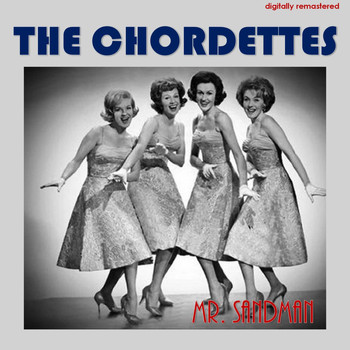
50 years ago: The Chordettes’ “Mr. Sandman” hit #1

Mr. Sandman

The Chordettes

Writer(s): Pat Ballard (see lyrics here)


First Charted: October 11, 1954


Peak: 17 US, 18 HP, 17 CB, 13 HR, 11 UK, 14 AU, 2 DF (Click for codes to charts.)


Sales (in millions): 1.0 US


Airplay/Streaming (in millions): -- radio, 79.3 video, 109.04 streaming

Awards:

Click on award for more details.

About the Song:

This “vocal group favorite” DJ was written by Pat Ballard, the music editor of College Humor. TY2 It was first recorded by Vaughn Monroe and released in 1954 as the B-side of “They Were Doin’ the Mambo.” WK It was followed by multiple covers in late 1954 and early 1955 by the Four Aces (#5 US, #9 UK), Buddy Morrow (#20 US), the Lancers (#28 US), Dicky Valentine (#5 UK), Chet Atkins (#13 CW), and Max Bygraves (#16 UK). There were later chart versions by Bert Kaempfert (1968, #12 AC) and Emmylou Harris (1981, #10 CW, #37 US). The Andrews Sisters, Marvin Gaye, Bette Midler, and the Supremes have also recorded the song.

However, the Chordettes had the first – and most successful – charting version. Theirs topped the Billboard, Cashbox, and Your Hit Parade charts. The Chordettes were a female vocal group comprised of Carol Buschmann, Lynn Evans, Jinny Osborn, and Nancy Overton. They formed in Sheboygan, Wisconsin. They were known for their “barbershop-type close harmony…with a doo wop and pop twist.” DD They were “the stylistic bridge between the barbershop harmony vocalizing of predecessors such as the Andrews Sisters and the rhythm & blues pop of the Shirelles.” TB

“Mr. Sandman” is “an excellent example of their main form, singing close harmony a cappella with minimal accompaniment.” SF This was the first chart hit for the foursome. They went on to reach the top 40 on the Billboard pop charts eight more times, including four top-10 hits. Their next biggest hit was “Lollipop,” which reached #2.

Their version features an iconic male voice in the third verse in simply responding, “Yes?” one time after the quartet sings “Mr. Sandman.” The voice was supplied by Archie Bleyer, the founder of Cadence Records, the company which released the Chordettes’ version of the song. WK The version by the Four Aces is featured in the movie Back to the Future when Marty, played by Michael J. Fox, first realizes he’s in 1955. WK


Resources:


First posted 9/8/2021; last updated 3/23/2023.

Friday, November 26, 2004

Kelly Clarkson “Since U Been Gone” charted

Since U Been Gone

Kelly Clarkson

Writer(s): Max Martin, Lukasz “Dr. Luke” Gottwald (see lyrics here)


Released: November 16, 2004


First Charted: November 26, 2004


Peak: 2 US, 17 RR, 22 AC, 2 A40, 5 UK, 4 CN, 3 AU, 21 DF (Click for codes to charts.)


Sales (in millions): 2.74 US, 1.2 UK, 4.23 world (includes US + UK)


Airplay/Streaming (in millions): 0.7 radio, 120.96 video, 585.45 streaming

Awards:

Click on award for more details.

About the Song:

Kelly Clarkson was born in 1982 in Forth Worth, Texas. She shot to fame as the winner of the first season of television’s American Idol talent contest in 2002. Her debut single, “A Moment Like This,” topped the Billboard Hot 100 and became the biggest selling song of the year. The song was featured on her debut album, 2003’s Thankful, which topped the album chart and sold over two million copies.

She went with a more pop-rock sound for her second studio album, 2004’s Breakaway. It sold six million copies in the U.S. on the strength of four top-ten singles. The most successful of these was “Since U Been Gone,” “an uptempo pop rock and power pop ballad that infuses electronic sounds with a mixture of a soft and loud pop rock sound.” WK It peaked at #2 on the Billboard Hot 100.

The songwriters/producers Max Martin and Dr. Luke were both involved in the song. Max Martin previously worked on Britney Spears’ “Baby One More Time” and Backstreet Boys’ “I Want It That Way” and later on #1 hits for Taylor Swift (“We Are Never Ever Getting Back Together,” “Shake It Off,” “Blank Space”) and Pink (“So What,” “Raise Your Glass”). This was Dr. Luke’s first hit although he and Martin later collaborated on #1 hits by Katy Perry (“I Kissed a Girl,” “California Gurls,” “Roar,” “Dark Horse”). Dr. Luke would go on to work on #1 hits by Flo Rida (“Right Round”), Ke$ha (“Tik Tok”), Pitbull (“Timber”), and Miley Cyrus (“Wrecking Ball”).

The song is written “from a woman’s point of view where she expresses her sense of relief with the end of her troubled relationship.” WK It was inspired by the Yeah Yeah Yeahs’ 2003 song “Maps.” Dr. Luke explained that he and Martin were listening to more alternative and indie music and loved this song, but thought it lacked a pop chorus so they essentially wrote their own version WK with a “big, juicy chorus.” SF

Martin had Pink in mind for the song, but she turned it down. Then Hilary Duff rejected it because she couldn’t reach the higher notes. WK Clive Davis, the chief creative artist at Sony (Clarkson’s label) convinced the writers to give the song to Clarkson. SF They were reluctant because they were wanting to move in a more rock direction, but after hearing the stronger rock influence of her nearly finished album, they agreed. WK Even then, Clarkson added heavier guitar and drums to the song. WK

Rohin of Blogcritics called the song “almost one of the best pieces of throwaway pop in recent history.” WK NPR Music’s Stephen Thompson said it was “one of the decade’s finest pop anthems.” WK Billboard’s Gary Trust said it was a defining song of the 2000s and a blueprint for female pop songs. WK


Resources:


Related Links:


First posted 8/6/2023.

Tuesday, November 16, 2004

Neil Young: A Retrospective (1966-1992)

Neil Young

A Retrospective: 1966-1992

Born: November 12, 1945

Where: Toronto, Canada

Overview

“After Neil Young left the Californian folk-rock band Buffalo Springfield in 1968, he slowly established himself as one of the most influential and idiosyncratic singer/songwriters of his generation. Young's body of work ranks second only to Bob Dylan in terms of depth, and he was able to sustain his critical reputation, as well as record sales, for a longer period of time than Dylan, partially because of his willfully perverse work ethic. From the beginning of his solo career in the late '60s until the late '90s, he never stopped writing, recording, and performing; his official catalog only represented a portion of his work, since he kept countless tapes of unreleased songs in his vaults. Just as importantly, Young continually explored new musical territory, from rockabilly and the blues to electronic music. But these stylistic exercises only gained depth when compared to his two primary styles: gentle folk and country-rock, and crushingly loud electric guitar rock, which he frequently recorded with the Californian garage band Crazy Horse. Throughout his career, Young alternated between these two extremes, and both proved equally influential; there were just as many singer/songwriters as there were grunge and country-rock bands claiming to be influenced by Neil Young. Despite his enormous catalog and influence, Young continued to move forward, writing new songs and exploring new music. That restless spirit ensured that he was one of the few rock veterans as vital in his old age as he was in his youth.” AM

“Born in Toronto, Canada, Neil Young moved to Winnipeg with his mother following her divorce from his sports-journalist father. Young began playing music in high school. Not only did he play in garage rock outfits like the Esquires, but he also played in local folk clubs and coffeehouses, where he eventually met Joni Mitchell and Stephen Stills. During the mid-'60s, he returned to Toronto, where he played as a solo folk act.” AM

Buffalo Springfield

“By 1966, he joined the Mynah Birds, which also featured bassist Bruce Palmer and Rick James. The group recorded a couple of singles for Motown that were ignored. Frustrated by his lack of success, Young moved to Los Angeles in his Pontiac hearse, taking Palmer along as support. Shortly after they arrived in L.A., they happened to meet Stills, and they formed Buffalo Springfield, who quickly became one of the leaders of the Californian folk-rock scene. Despite the success of Buffalo Springfield, the group was plagued with tension, and Young quit the band several times before finally leaving to become a solo artist in May of 1968.” AM

Solo

“Hiring Elliot Roberts as his manager, Young signed with Reprise Records and released his eponymous debut album in early 1969. By the time the album was released, he had begun playing with a local band called the Rockets, which featured guitarist Danny Whitten, bassist Billy Talbot, and drummer Ralph Molina. Young renamed the group Crazy Horse and had them support him on his second album, Everybody Knows This Is Nowhere, which was recorded in just two weeks. Featuring such Young staples as Cinnamon Girl and Down by the River , the album went gold.” AM

CSNY

“Following the completion of the record, he began jamming with Crosby, Stills & Nash, eventually joining the group for their spring 1970 album, Déjà Vu. Although he was now part of Crosby, Stills & Nash, Young continued to record as a solo artist, releasing After the Gold Rush at the end of the year. After the Gold Rush, with its accompanying single Only Love Can Break Your Heart, established Young as a solo star, and fame only increased through his association with CSNY.” AM

Number One

“Although Crosby, Stills, Nash & Young were a very successful act, they were also volatile, and they had split by the spring 1971 release of the live 4 Way Street. The following year, Young had his first number one album with the mellow country-rock of Harvest, which also featured his first (and only) number one single, Heart of Gold. Instead of embracing his success, he spurned it, following it with the noisy, bleak live film Journey Through the Past. Both the movie and the soundtrack received terrible reviews, as did the live album Time Fades Away, a record recorded with the Stray Gators that was released in 1973.” AM

The Dark Period, But Critically Acclaimed

“Both Journey Through the Past and Time Fades Away signaled that Young was entering a dark period in his life, but they only scratched the surface of his anguish. Inspired by the overdose deaths of Danny Whitten in 1972 and his roadie Bruce Berry the following year, Young wrote and recorded the bleak, druggy Tonight's the Night late in 1973, but declined to release it at the time. Instead, he released On the Beach, which was nearly as harrowing, in 1974; Tonight's the Night finally appeared in the spring of 1975. By the time of its release, Young had recovered, as indicated by the record's hard-rocking follow-up, Zuma, an album recorded with Crazy Horse and released later that year.” AM

The Wandering Years

“Young's focus began to wander in 1976, as he recorded the duet album Long May You Run with Stephen Stills and then abandoned his partner midway through the supporting tour. The following year he recorded the country-rock-oriented American Stars 'n Bars, which featured vocals by Nicolette Larson, who was also prominent on 1978's Comes a Time. Prior to the release of Comes a Time, Young scrapped the country-rock album Homegrown and assembled the triple-album retrospective Decade.” AM

Rejuvanation

“At the end of 1978, he embarked on an arena tour called Rust Never Sleeps, which was designed as a showcase for new songs. Half of the concert featured Young solo, the other half featured him with Crazy Horse. That was the pattern that Rust Never Sleeps, released in the summer of 1979, followed. The record was hailed as a comeback, proving that Young was one of the few rock veterans who attacked punk rock head-on. That fall he released the double album Live Rust and the live movie Rust Never Sleeps.” AM

…And Back to So-So

“Rust Never Sleeps restored Young to his past glory, but he perversely decided to trash his goodwill in 1980 with Hawks & Doves, a collection of acoustic songs that bore the influence of conservative, right-wing politics. In 1981, Young released the heavy rock album Re*ac*tor, which received poor reviews. Following its release, he left Reprise for the fledgling Geffen Records, where he was promised lots of money and artistic freedom. Young decided to push his Geffen contract to the limit, releasing the electronic Trans, where his voice was recorded through a computerized vocoder, later that year. The album and its accompanying, technology-dependent tour were received with bewildered, negative reviews. The rockabilly of Everybody’s Rockin' (1983) was equally scorned, and Young soon settled into a cult audience for the mid-‘80s.” AM

“Over the course of the mid-'80s, Young released three albums that were all stylistic exercises. In 1985, he released the straight country Old Ways, which was followed by the new wave-tinged Landing on Water the following year. He returned to Crazy Horse for 1987's Life, but by that time, he and Geffen had grown sick of each other, and he returned to Reprise in 1988. His first album for Reprise was the bluesy, horn-driven This Note's for You, which was supported by an acclaimed video that satirized rock stars endorsing commercial products. At the end of the year, he recorded a reunion album with Crosby, Stills & Nash called American Dream, which was greeted with savagely negative reviews.” AM

The Godfather of Grunge

“American Dream didn't prepare any observer for the critical and commercial success of 1989's ,i>Freedom, which found Young following the half-acoustic/half-electric blueprint of Rust Never Sleeps to fine results. Around the time of its release, Young became a hip name to drop in indie rock circles, and he was the subject of a tribute record titled The Bridge in 1989. The following year, Young reunited with Crazy Horse for Ragged Glory, a loud, feedback-drenched album that received his strongest reviews since the '70s. For the supporting tour, Young hired the avant rock band Sonic Youth as his opening group, providing them with needed exposure while earning him hip credibility within alternative rock scenes. On the advice of Sonic Youth, Young added the noise collage EP Arc as a bonus to his 1991 live album, Weld.” AM

“Weld and the Sonic Youth tour helped position Neil Young as an alternative and grunge rock forefather, but he decided to abandon loud music for its 1992 follow-up, Harvest Moon. An explicit sequel to his 1972 breakthrough, Harvest Moon became Young's biggest hit in years, and he supported the record with an appearance on MTV Unplugged, which was released the following year as an album. Also in 1993, Geffen released the rarities collection Lucky Thirteen. The following year, he released Sleeps with Angels, which was hailed as a masterpiece in some quarters. Following its release, Young began jamming with Pearl Jam, eventually recording an album with the Seattle band in early 1995. The resulting record, Mirror Ball, was released to positive reviews in the summer of 1995, but it wasn't the commercial blockbuster it was expected to be; due to legal reasons, Pearl Jam's name was not allowed to be featured on the cover.” AM

No Slowing Down for the New Millennium

“In the summer of 1996, he reunited with Crazy Horse for Broken Arrow and supported it with a brief tour. That tour was documented in Jim Jarmusch's 1997 film The Year of the Horse, which was accompanied by a double-disc live album. In 1999, Young reunited with Crosby, Stills & Nash for the first time in a decade, supporting their Looking Forward LP with the supergroup's first tour in a quarter century. A new solo effort, Silver & Gold, followed in the spring of 2000. In recognition of his 2000 summer tour, Young released the live album Road Rock, Vol. 1 the following fall, showcasing a two-night account of Young's performance at the Red Rocks Amphitheater in Morrison, CO, in September 2000. A DVD version titled Red Rocks Live was issued that December, including 12 tracks initially unavailable on Road Rock, Vol. 1. His next studio project was his most ambitious yet, a concept album about small-town life titled Greendale that he also mounted as a live dramatic tour and indie film.” AM

“In early 2005, Young was diagnosed with a potentially deadly brain aneurysm. Undergoing treatment didn’t slow him down, however, as he continued to write and record his next project. The acoustically based Prairie Wind appeared in the fall, with the concert film Heart of Gold, based around the album and directed by Jonathan Demme, released the following year. 2006 also saw the release of the controversial CD/DVD Living with War, a collection of protest songs against the war in Iraq.” AM Two more studio albums followed in the next few years, but the holy grail for Neil Young fans was the released of The Archives Vol. 1 1963-1972, a massive box set which Young had referenced as far back as 1988.


Resume


Links

Awards

Studio Albums

Compilations


Spotify Playlist

Here’s my Neil Young 1966-2006 Spotify playlist featuring all the songs from Decade, Lucky Thirteen, and Greatest Hits plus personal choices presented chronologically.

Under each album snapshot, songs featured on the anthologies are noted. If the song charted, the date of the song’s release or first chart appearance and its chart peaks are noted in parentheses. Click for codes to charts.

Buffalo Springfield

Buffalo Springfield

Released: October 1966


Peak: 80 US, -- UK, -- CN, -- AU Click for codes to charts.


Sales (in millions): --, 7.45 EAS


Genre: classic rock


Rating:

3.700 out of 5.00 (average of 19 ratings)

Tracks:

  1. For What It’s Worth (Dec. ’66 single) **
  2. Go and Say Goodbye
  3. Sit Down, I Think I Love You
  4. Leave
  5. Nowadays Clancy Can’t Even Sing (Aug. ’66 single)
  6. Hot Dusty Roads
  7. Everybody’s Wrong
  8. Flying on the Ground Is Wrong
  9. Burned (Nov. ’66 single) D
  10. Do I Have to Come Right Out and Say It
  11. Baby Don’t Scold Me *
  12. Out of My Mind
  13. Pay the Price

* on original 1966 release, ** on March 1967 release


About the Album:

Comments here.

Again

Buffalo Springfield

Released: October 30, 1967


Peak: 44 US, -- UK, -- CN, -- AU Click for codes to charts.


Sales (in millions): --, 2.67 EAS


Genre: classic rock/folk rock


Rating:

4.037 out of 5.00 (average of 23 ratings)

Awards:

(Click on award to learn more).

Tracks:

  1. Mr. Soul D
  2. A Child’s Claim to Fame
  3. Everydays
  4. Expecting to Fly D
  5. Bluebird
  6. Hung Upside Down
  7. Sad Memory
  8. Good Time Boy
  9. Rock & Roll Woman
  10. Broken Arrow D


About the Album:

Go to the DMDB page for more about this album.

Last Time Around

Buffalo Springfield

Released: July 30, 1968


Peak: 42 US, -- UK, -- CN, -- AU Click for codes to charts.


Sales (in millions): --


Genre: classic rock


Rating:

3.131 out of 5.00 (average of 17 ratings)

Tracks:

  1. On the Way Home
  2. It’s So Hard to Wait
  3. Pretty Girl Why
  4. Four Days Gone
  5. Carefree Country Day
  6. Special Care
  7. The Hour of Not Quite Rain
  8. Questions
  9. I Am a Child D
  10. Merry-Go-Round
  11. Uno Mundo
  12. Kind Woman


About the Album:

Comments here.

Neil Young

Neil Young

Released: November 12, 1968


Peak: -- US, -- UK, -- CN, -- AU Click for codes to charts.


Sales (in millions): -- US, -- UK, 2.0 world (includes US + UK)


Genre: classic rock


Rating:

3.464 out of 5.00 (average of 13 ratings)

Tracks:

  1. The Emperor of Wyoming
  2. The Loner (2/21/69, 46 CL) D
  3. If I Could Have Her Tonight
  4. I’ve Been Waiting for You
  5. The Old Laughing Lady (49 CL) D
  6. String Quartet from Whiskey Boot Hill
  7. Here We Are in the Years
  8. What Did You Do to My Life?
  9. I’ve Loved Her So Long
  10. The Last Trip to Tulsa


About the Album:

After three albums with Buffalo Springfield, Neil Young released his first solo album.

Everybody Knows This Is Nowhere

Neil Young & Crazy Horse


Released: May 14, 1969


Peak: 34 US, -- UK, 32 CN, -- AU Click for codes to charts.


Sales (in millions): 2.40 US, 0.60 UK, 3.50 world (includes US and UK), 5.88 EAS


Genre: classic rock


Rating:

4.326 out of 5.00 (average of 20 ratings)

Awards:

(Click on award to learn more).

Tracks:

  1. Cinnamon Girl D, GH
  2. Everybody Knows This Is Nowhere
  3. Round & Round (It Won’t Be Long)
  4. Down by the River D, GH
  5. The Losing End (When You’re On)
  6. Running Dry (Requiem for the Rockets)
  7. Cowgirl in the Sand D, GH


About the Album:

Go to the DMDB page for more about this album.

Déjà Vu

Crosby, Stills, Nash & Young


Released: March 11, 1970


Peak: 11 US, 5 UK, 1 CN, 12 AU, 16 DF Click for codes to charts.


Sales (in millions): 8.0 US, -- UK, 13.5 world (includes US and UK), 24.78 EAS


Genre: folk rock/classic rock


Rating:

4.492 out of 5.00 (average of 39 ratings)

Tracks:

  1. Carry On/Questions
  2. Teach Your Children
  3. Almost Cut My Hair
  4. Helpless D, GH
  5. Woodstock
  6. Déjà Vu
  7. Our House
  8. 4 + 20
  9. Country Girl
  10. Everybody I Love You


About the Album:

“By the time of their first tour, which included the Woodstock festival, [CSN] had added Young, also a veteran of Buffalo Springfield, who maintained a solo career.” AM The Woodstock festival was only “their second public performance. A half-dozen songs from their set appear on the 'Woodstock' (1970) and 'Woodstock Two' (1971) concert soundtracks.” RH

“Déjà Vu, was a chart-topping hit in 1970.” AM It was “a more eclectic and electric endeavor in which the group expanded with the addition of [not only] Neil Young…[but] the rhythm section of Dallas Taylor and Greg Reeves.” RH

Go to the DMDB page for more about this album, including awards and details about each song.

After the Gold Rush

Neil Young


Released: August 31, 1970


Peak: 8 US, 7 UK, 5 CN, 13 AU, 12 DF Click for codes to charts.


Sales (in millions): 2.5 US, 0.6 UK, 5.5 world (includes US and UK)


Genre: classic rock


Rating:

4.541 out of 5.00 (average of 28 ratings)

Awards:

(Click on award to learn more).

Tracks:

  1. Tell Me Why
  2. After the Gold Rush D, GH
  3. Only Love Can Break Your Heart GH
  4. Southern Man D, GH
  5. Till the Morning Comes
  6. Oh, Lonesome Me
  7. Don’t Let It Bring You Down
  8. Birds
  9. When You Dance I Can Really Love
  10. I Believe in You D
  11. Cripple Creek Ferry


About the Album:

Go to the DMDB page for more about this album.

Harvest

Neil Young


Released: February 14, 1972


Peak: 12 US, 11 UK, 12 CN, 11 AU, 1 DF Click for codes to charts.


Sales (in millions): 4.3 US, 0.9 UK, 16.1 world (includes US and UK), 23.82 EAS


Genre: classic rock/folk rock


Rating:

4.281 out of 5.00 (average of 29 ratings)

Awards:

(Click on award to learn more).

Tracks:

  1. Out on the Weekend
  2. Harvest D
  3. A Man Needs a Maid D
  4. Heart of Gold D, GH
  5. Are You Ready for the Country?
  6. Old Man D, GH
  7. There’s a World
  8. Alabama
  9. The Needle and the Damage Done D, GH
  10. Words (Between the Lines of Age)


About the Album:

Go to the DMDB page for more about this album.

Tonight’s the Night

Neil Young

Recorded: 3/7/70 to 12/5/73

Released: June 20, 1975


Peak: 25 US, 48 UK, 12 CN, 42 AU Click for codes to charts.


Sales (in millions): -- US, 0.06 UK, 1.0 world (includes US + UK)


Genre: classic rock


Rating:

4.142 out of 5.00 (average of 24 ratings)

Awards:

(Click on award to learn more).

Tracks:

  1. Tonight’s the Night D
  2. Speakin’ Out
  3. World on a String
  4. Borrowed Tune
  5. Come on Baby, Let’s Go Downtown
  6. Mellow My Mind
  7. Roll Another Number (For the Road)
  8. Albuquerque
  9. New Mama
  10. Lookout Joe
  11. Tired Eyes D
  12. Tonight’s the Night, Pt. 2


About the Album:

Go to the DMDB page for more about this album.

On the Beach

Neil Young

Released: July 16, 1974


Peak: 16 US, 42 UK, 13 CN, 34 AU Click for codes to charts.


Sales (in millions): 0.50 US, 0.06 UK, 2.0 world (includes US + UK), 2.31 EAS


Genre: classic rock


Rating:

4.127 out of 5.00 (average of 28 ratings)

Awards:

(Click on award to learn more).

Tracks:

  1. Walk On D
  2. See the Sky about to Rain
  3. Revolution Blues
  4. For the Turnstiles D
  5. Vampire Blues
  6. On the Beach
  7. Motion Pictures
  8. Ambulance Blues


About the Album:

Go to the DMDB page for more about this album.

Zuma

Neil Young & Crazy Horse

Released: November 10, 1975


Peak: 25 US, 44 UK, 69 CN, 44 AU Click for codes to charts.


Sales (in millions): 0.50 US, 0.06 UK, 1.50 world (includes US + UK), 2.45 EAS


Genre: classic rock


Rating:

3.600 out of 5.00 (average of 23 ratings)

Awards:

(Click on award to learn more).

Tracks:

  1. Don’t Cry No Tears
  2. Danger Bird
  3. Pardon My Heart
  4. Lookin’ for a Love
  5. Barstool Blues
  6. Stupid Girl
  7. Drive Back
  8. Cortez the Killer D
  9. Through My Sails


About the Album:

Go to the DMDB page for more about this album.

Long May You Run

The Stills-Young Band

Released: September 20, 1976


Peak: 26 US, 12 UK, 26 CN, 16 AU Click for codes to charts.


Sales (in millions): 0.50 US, 0.06 UK


Genre: classic rock


Rating:

3.242 out of 5.00 (average of 14 ratings)

Tracks:

  1. Long May You Run (1976 single, charted 7/3/93, 28 CL, 34 AR, 71 UK, 28 CN, 9 DF) D
  2. Make Love to You
  3. Midnight on the Bay (12/18/76, 48 CL)
  4. Black Coral
  5. Ocean Girl
  6. Let It Shine
  7. 12/8 Blues (All the Same)
  8. Fontainebleau
  9. Guardian Angel


About the Album:

After Crosby, Stills, Nash & Young toured in 1974, there was an attempt to make another album together. The quartet ended up splitting into two camps with David Crosby and Graham Nash resuming their partnership they’d developed on albums as a duo while the ex-Buffalo Springfield members Stephen Stills and Neil Young found themselves working together again as the Stills-Young Band.

American Stars ‘n ‘Bars

Neil Young & Crazy Horse

Recorded: 12/13/74 to 4/4/77

Released: June 13, 1977


Peak: 21 US, 17 UK, 16 CN, 21 AU Click for codes to charts.


Sales (in millions): 0.50 US, 0.06 UK, 1.50 world (includes US + UK), 2.69 EAS


Genre: classic rock


Rating:

3.099 out of 5.00 (average of 23 ratings)

Awards:

(Click on award to learn more).

Tracks:

  1. The Old Country Waltz [2:58] (recorded 4/4/77)
  2. Saddle Up the Palomino [3:00] (recorded 4/4/77)
  3. Hey Babe [3:35] (recorded 4/4/77, single: June ‘77)
  4. Hold Back the Tears [4:18] (recorded 4/4/77)
  5. Bite the Bullet [3:30] (recorded 4/4/77)
  6. Star of Bethlehem [2:42] (recorded 12/13/74) D
  7. Will to Love [7:11] (recorded 4/25/76)
  8. Like a Hurricane [8:20] (recorded 11/29/75, single: Aug. ’77, 4 CL) D, GH
  9. Homegrown [2:20] (recorded 11/19/75)


About the Album:

This album was an interesting mix of old and new with five songs recorded in 1977 with Crazy Horse and four other songs pulled from recordings from 1974 to 1976.

Decade

Neil Young


Recorded: 1966-1976


Released: October 28, 1977

Peak: 43 US, 46 UK, 47 CN, 21 AU Click for codes to charts.


Sales (in millions): 1.0 US, 0.30 UK, 2.50 world (includes US and UK)


Genre: classic rock


Rating:

4.640 out of 5.00 (average of 20 ratings)

Awards:

(Click on award to learn more).

Tracks, Disc 1:

(1) Down to the Wire (2) Burned (3) Mr. Soul (4) Broken Arrow (5) Expecting to Fly (6) Sugar Mountain (7) I Am a Child (8) The Loner (9) The Old Laughing Lady (10) Cinnamon Girl (11) Down by the River (12) Cowgirl in the Sand (13) I Believe in You (14) After the Gold Rush (15) Southern Man (16) Helpless

Tracks, Disc 2:

(1) Ohio (2) Soldier (3) Old Man (4) A Man Needs a Maid (5) Harvest (6) Heart of Gold (7) Star of Bethlehem (8) The Needle and the Damage Done (9) Tonight’s the Night (10) Tired Eyes (11) Walk On (12) For the Turnstiles (13) Winterlong (14) Deep Forbidden Lake (15) Like a Hurricane (16) Love Is a Rose (17) Cortez the Killer (18) Campaigner (19) Long May You Run


Total Running Time: 144:22


About the Album:

“A great summation of the Flannel Man’s first 10 years. Even in those days, Young wore lots of hats: Buffalo Springfield country rocker, hit-making folk singer, and pre-alternative thrasher.” EW’93 “Given the quirkiness of Neil Young's recording career…it is a relief to report that this two-disc compilation is so conventional and so satisfying…It includes songs performed by Buffalo Springfield, Crosby, Stills, Nash & Young, and the Stills-Young Band, as well as solo work.” AM-D

In addition to five unreleased songs, Decade offers such key tracks as the Springfield’s Mr. Soul, Broken Arrow, and I Am a Child; Sugar Mountain, a song that had appeared only as a single before; Cinnamon Girl, Down by the River, and Cowgirl in the Sand from Everybody Knows This Is Nowhere; Southern Man and the title track from After the Gold Rush; and Old Man and the chart-topping Heart of Gold from Harvest. This is the material that built Young's reputation between 1966 and 1972.” AM-D

“He is more idiosyncratic with the later material, including the blockbusters Like a Hurricane and Cortez the Killer but mixing in more unreleased recordings as the set draws to a close.” AM-D

“He seems intent on making the album a listenable one that will appeal to a broad base of fans, and he succeeds despite the exclusion of much of the harrowing work of 1973-1975. Nevertheless, the album is an ideal sampler for new listeners.” AM-D


Tracks Not on Previously Noted Albums:

  • Down to the Wire D
  • Sugar Mountain (recorded 11/10/68, released 2/21/69 as B side of “The Loner,” 10 CL, 13 DF) D
  • Ohio (CSNY, 1970) D, GH
  • Soldier (recorded 11/15/71) D
  • Winterlong (recorded 11/28/73, 49 CL) D
  • Love Is a Rose (recorded 6/16/74, 44 CL, 13 DF) D
  • Deep Forbidden Lake (recorded 12/13/74, 49 CL) D
  • Campaigner (recorded 8/11/76, 49 CL) D

Lucky Thirteen

Neil Young


Recorded: 1982-1988


Released: January 6, 1993

Peak: -- US, 69 UK, -- CN, -- AU Click for codes to charts.


Sales (in millions): --


Genre: classic rock veteran


Rating:

3.020 out of 5.00 (average of 18 ratings)

Tracks:

  1. Sample and Hold (from Trans, 1982) LT
  2. Transformer Man (original version from Trans, 1982) LT
  3. Depression Blues (recorded 1983, original version from Old Ways, 1985) LT
  4. Get Gone (recorded live 9/18/1983) LT
  5. Don’t Take Your Love Away from Me (recorded live 9/18/1983) LT
  6. Once an Angel (from Old Ways, 1985) LT
  7. Where Is the Highway Tonight? (from Old Ways, 1985) LT
  8. Hippie Dream (from Landing on Water, 1986) LT
  9. Pressure (from Landing on Water, 1986) LT
  10. Around the World (from Life, 1987) LT
  11. Mideast Vacation (from Life, 1987) LT
  12. Ain’t It the Truth (recorded live 4/23/1988) LT
  13. This Note’s for You (original version from This Note’s for You, 1988) LT


Total Running Time: 64:04


About the Album:

Neil Young has released very few compilations over his long career. 1977 saw the double-disc retrospective Decade and in 2004, he released Greatest Hits. The latter primarily focused on the ‘70s and then leapfrogged over most of Young’s output from the 1980s. This collection, Lucky Thirteen, hits the sweet spot right between the two, focusing on his 1980s recordings. Dedicated fans will be happy with the unreleased material. Casual fans aren’t going to find much here that is familiar.

Greatest Hits

Neil Young


Recorded: 1969-1992


Released: November 16, 2004

Peak: 27 US, 45 UK, 21 CN, 25 AU Click for codes to charts.


Sales (in millions): 0.50 US, 0.03 UK, 2.12 world (includes US and UK)


Genre: classic rock


Rating:

4.454 out of 5.00 (average of 20 ratings)

Awards:

(Click on award to learn more).

Tracks:

(1) Down by the River (2) Cowgirl in the Sand (3) Cinnamon Girl (4) Helpless (5) After the Gold Rush (6) Only Love Can Break Your Heart (7) Southern Man (8) Ohio (9) The Needle and the Damage Done (10) Old Man (11) Heart of Gold (12) Like a Hurricane (13) Comes a Time (14) Hey Hey My My (Into the Black) (15) Rockin’ in the Free World (16) Harvest Moon


Total Running Time: 76:07


About the Album:

Artists of Neil Young’s caliber usually have a flood of compilations on the market. Not so this time. In 1977, Young released the excellent two-disc retrospective Decade which captured the highlights of his years with Buffalo Springfield, CSNY, and as a solo artist from 1966 to 1976. In 1993, he released Lucky Thirteen which spotlighted the 1980s, not exactly prime hit-making years for him. This collection features 11 songs that were already on Decade and highlights just four songs released after that collection, skipping over the material covered by Lucky Thirteen.


Tracks Not on Previously Noted Albums:

  • Comes a Time (from Comes a Time, 1978) GH
  • Hey Hey My My (Into the Black) (from Rust Never Sleeps, 1979) GH
  • Rockin’ in the Free World (from Freedom, 1989) GH
  • Harvest Moon (from Harvest Moon, 1992) GH

Resources/References:


Related DMDB Links:


First posted 2/19/2010; last updated 9/13/2026.