Showing posts with label RIAA songs of the century. Show all posts

Thursday, March 21, 2019

50 years ago: Frank Sinatra charted with “My Way”

My Way

Frank Sinatra

Writer(s): Jacques Revaux (music), Giles Thibaut and Claude François (original French lyrics), Paul Anka (English lyrics) (see lyrics here)


First Charted: March 21, 1969


Peak: 27 US, 29 CB, 17 GR, 28 HR, 2 AC, 5 UK, 28 CN, 1 DF (Click for codes to singles charts.)


Sales (in millions): -- US, 1.05 UK


Airplay/Streaming (in millions): 3.0 radio, 286.8 video, 314.67 streaming

Awards:

Click on award for more details.

About the Song:

“My Way” originated as a song composed by Jacques Revaux in 1967. It originally was called “For Me” and had English lyrics about a couple falling out of love. Revaux shopped the demo around to Petula Clark, Claude François, and others. François worked with Giles Thibaut to give the song new French lyrics. The song was retitled “Comme d’habitude” (“As Usual”). It was released in November 1967 and reached the top of the French pop chart. WK

Paul Anka heard the song on the radio while on holiday in France. He liked it so much that he bought adaptation, recording, and publishing rights for one dollar, under the condition that the composers of the melody retained royalty rights. After Anka had dinner with Frank Sinatra in Florida and Sinatra announced that he was quitting the business, Anka re-wrote the original song with Sinatra in mind. He said as he wrote it he thought, “If Frank were writing this, what would he say?” WK

Sinatra recorded the song on December 30, 1968. It was released as a single in early 1969 and while it only reached #27 on the Billboard Hot 100, it became his signature song. It peaked at #5 in the UK, but set a record for spending 108 weeks in the top 40 WK and became the most popular song to play at funerals in the UK. LW According to Sinatra’s daughter Tina, he came to hate the song, thinking it was self-serving and self-indulgent. WK

Other artists who have charted with the song include Brook Benton (#25 RB, 1970), Dorothy Squires (#10 UK, 1970), Elvis Presley (#22 US, 6 AC, 2 CW, 9 UK, 1973), Sid Vicious (#7 UK, 1978), and Shane MacGowan (#29 UK, 1996). David Bowie, Aretha Franklin, Pearl Jam, the Platters, and Nina Simone are among the other artists to record the song.


Resources:


Related Links:


First posted 11/25/2022.

Monday, July 21, 2008

50 years ago: Eddie Cochran “Summertime Blues” charted

Summertime Blues

Eddie Cochran

Writer(s): Eddie Cochran, Jerry Capehart (see lyrics here)


First Charted: July 21, 1958


Peak: 8 US, 11 CB, 8 GR, 13 HR, 11 RB, 18 UK, 10 CN, 1 DF (Click for codes to charts.)


Sales (in millions): --


Airplay/Streaming (in millions): 3.0 radio, 4.1 video, 81.99 streaming

Awards:

Click on award for more details.

About the Song:

Eddie Cochran was born in Oklahoma City in 1938. He was killed in a car accident in 1960 at 21 years old. Despite his short career, he became a rock ‘n’ roll icon, helped by “the fact that he looked the part more perfectly than anybody but Elvis.” DM He started out recording country and rockabilly songs with the unrelated Hank Cochran SS before teaming with songwriter Jerry Capehart. They scored a top 20 hit in 1957 with “Sittin’ in the Balcony” but then struggled to come up with another hit.

At a session in March 1958, the came up with the idea for the song. As Capehart said, “There had been a lot of songs about summer, but none about the hardships of summer.” SF Cochran sings about the woes of having to get a job to have pocket money, missing out on a date with his girlfriend because his boss schedules him to work late, and his father attacking his son for laziness and subsequently not letting him use the car.

Cochran recorded the song that May with the intent for it to be the B-side of “Love Again,” a song composed by seventeen-year-old Sharon Sheeley, Cochran’s eventual girlfriend. His record company wanted to promote him as “a crooning teen idol,” hence the choice of the ballad as the A-side, SF but it was “Summertime Blues” which became the hit. “Like many of the best songs of the rock ‘n ‘ roll era, ‘Summertime Blues’ was a success thanks to its simplicity and honesty.” TB This was a teenage anthem when “teenagers were still docile.” HL

One of the signatures of the song is the overdubbed bass voice Cochran takes on to simulate out-of-touch adults like his father, boss, and Congressman. SS The voice was inspired by the Kingfish character on radio show Amos ‘n Andy and the overdubbing technique had been pioneered by Les Paul. “The record’s multitracked percussion and guitar sounds accentuate its impact.” SS

That “killer acoustic guitar riff is the heart and soul of the song.” SS Author Dave Thompson called Cochran’s “the riff maker” and noted his influence on “Jimmy Page, Pete Townshend and the next generation.” DT “Would Pete Townshend have created ‘My Generation’ if it wasn’t for this song?” HL

The song has been covered by Blue Cheer (#14 US, 3 CN, 1968), Johnny Chester (#30 AU, 1959), Johnny Hallyday (#1 in France, 1975), Alan Jackson (#1 CW, 1994), Joan Jett & the Blackhearts, Olivia Newton-John, Rush (#30 AR, 2004), Brian Setzer, T-Rex, and the Who (#27 US, 38 UK, 1970).


Resources:


First posted 4/5/2023; last updated 4/14/2023.

Saturday, November 27, 2004

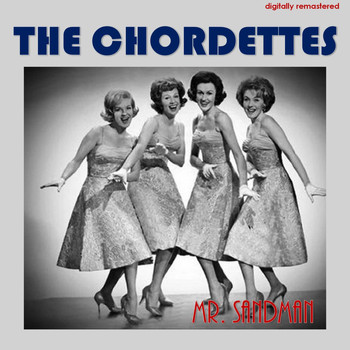
50 years ago: The Chordettes’ “Mr. Sandman” hit #1

Mr. Sandman

The Chordettes

Writer(s): Pat Ballard (see lyrics here)


First Charted: October 11, 1954


Peak: 17 US, 18 HP, 17 CB, 13 HR, 11 UK, 14 AU, 2 DF (Click for codes to charts.)


Sales (in millions): 1.0 US


Airplay/Streaming (in millions): -- radio, 79.3 video, 109.04 streaming

Awards:

Click on award for more details.

About the Song:

This “vocal group favorite” DJ was written by Pat Ballard, the music editor of College Humor. TY2 It was first recorded by Vaughn Monroe and released in 1954 as the B-side of “They Were Doin’ the Mambo.” WK It was followed by multiple covers in late 1954 and early 1955 by the Four Aces (#5 US, #9 UK), Buddy Morrow (#20 US), the Lancers (#28 US), Dicky Valentine (#5 UK), Chet Atkins (#13 CW), and Max Bygraves (#16 UK). There were later chart versions by Bert Kaempfert (1968, #12 AC) and Emmylou Harris (1981, #10 CW, #37 US). The Andrews Sisters, Marvin Gaye, Bette Midler, and the Supremes have also recorded the song.

However, the Chordettes had the first – and most successful – charting version. Theirs topped the Billboard, Cashbox, and Your Hit Parade charts. The Chordettes were a female vocal group comprised of Carol Buschmann, Lynn Evans, Jinny Osborn, and Nancy Overton. They formed in Sheboygan, Wisconsin. They were known for their “barbershop-type close harmony…with a doo wop and pop twist.” DD They were “the stylistic bridge between the barbershop harmony vocalizing of predecessors such as the Andrews Sisters and the rhythm & blues pop of the Shirelles.” TB

“Mr. Sandman” is “an excellent example of their main form, singing close harmony a cappella with minimal accompaniment.” SF This was the first chart hit for the foursome. They went on to reach the top 40 on the Billboard pop charts eight more times, including four top-10 hits. Their next biggest hit was “Lollipop,” which reached #2.

Their version features an iconic male voice in the third verse in simply responding, “Yes?” one time after the quartet sings “Mr. Sandman.” The voice was supplied by Archie Bleyer, the founder of Cadence Records, the company which released the Chordettes’ version of the song. WK The version by the Four Aces is featured in the movie Back to the Future when Marty, played by Michael J. Fox, first realizes he’s in 1955. WK


Resources:


First posted 9/8/2021; last updated 3/23/2023.