Showing posts with label Vaughn Monroe. Show all posts

Monday, September 6, 2021

Billboard: Disc Jockey Hits, 1944-1958

Billboard’s Disc Jockey Hits:

1944-1958

Billboard magazine started its disc jockey hits chart in 1944. It tracked which songs were played the most on radio stations across the country. The chart ran until 1958 when it was merged with data from the best sellers and jukebox hits into the Billboard Hot 100. These, however, were the biggest #1 songs on the Disc Jockey Hits chart. All songs which spent three weeks or more at #1 are listed here. Ties are broken by songs’ overall Dave’s Music Database points.

See other chart-based lists here and specific Billboard lists here.


    17 weeks:

  1. Francis Craig with Bob Lamm “Near You” (1947)


    12 weeks:

  2. Vaughn Monroe “Riders in the Sky (A Cowboy Legend)” (1949)
  3. Jo Stafford “You Belong to Me” (1952)
    11 weeks:

  4. Ted Weems with Elmo Tanner “Heartaches” (1947)
    10 weeks:

  5. Johnnie Ray & the Four Lads “Cry” (1951)
  6. The McGuire Sisters “Sincerely” (1954)
  7. Eileen Barton “If I Knew You Were Comin’ I’d’ve Baked a Cake” (1950)
    9 weeks:

  8. Les Paul & Mary Ford “How High the Moon” (1951)
  9. Perry Como “Till the End of Time” (1945)
  10. Guy Mitchell “Singing the Blues” (1956)
  11. Percy Faith with Felicia Sanders “Where Is Your Heart (Song from “Moulin Rouge”)” (1953)
  12. Kay Starr “Wheel of Fortune” (1952)
  13. The Crew-Cuts “Sh-Boom” (1954)
  14. Frankie Carle with Marjorie Hughes “Rumors Are Flying” (1946)
    8 weeks:

  15. Elvis Presley “Don’t Be Cruel” (1956)
  16. Patti Page “Tennessee Waltz” (1950)
  17. The Weavers with Gordon Jenkins’ Orchestra “Goodnight Irene” (1950)
  18. Nat “King” Cole “Mona Lisa” (1950)
  19. Nat “King” Cole with Frank DeVol’s Orchestra “Nature Boy” (1948)
  20. Vaughn Monroe’s Orchestra “Ballerina” (1947)

  21. Tonny Bennett with Percy Faith’s Orchestra “Because of You” (1951)
  22. Kitty Kallen with Jack Pleis’ Orchestra “Little Things Mean a Lot” (1954)
  23. Eddy Howard “To Each His Own” (1946)
  24. Gogi Grant “Thw Wayward Wind” (1956)
  25. Perry Como with Mitchell Ayres Orchestra “If (They Made Me a King)” (1951)
  26. Eddy Howard “Sin (It’s No Sin)” (1951)
  27. The Ames Brothers with Hugo Winterhalter’s Orchestra “You You You” (1953)
  28. Rosemary Clooney “Come on-a My House” (1951)
  29. Frankie Carle & Marjorie Hughes “Oh What It Seemed to Be” (1946)
  30. Dinah Shore “The Gypsy” (1946)
    7 weeks:

  31. Les Brown with Doris Day “Sentimental Journey” (1945)
  32. Elvis Presley “All Shook Up” (1957)
  33. Bing Crosby & the Andrews Sisters “Don’t Fence Me In” (1944)
  34. Pat Boone “Love Letters in the Sand” (1957)
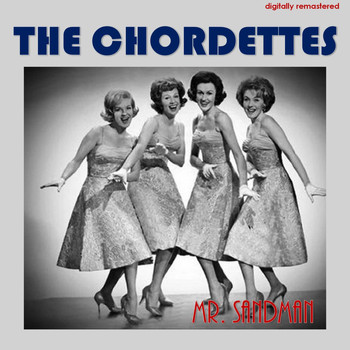
  35. The Chordettes “Mr. Sandman” (1954)
  36. Russ Morgan & the Skylarks “Cruising Down the River on a Sunday Afternoon” (1949)

  37. Frankie Laine with Jud Conlon’s Rhythmaires “That Lucky Old Sun” (1949)
  38. Patti Page “The Doggie in the Window” (1953)
  39. Peggy Lee with Dave Barbour’s Orchestra “Manana Is Soon Enough for Me” (1948)
  40. Perry Como with Hugo Winterhalter’s Orchestra “Wanted” (1954)
  41. Eddie Fisher with Hugo Winterhalter’s Orchestra “O Mein Papa (Oh My Papa)” (1953)
  42. Tony Bennett with Percy Faith’s Orchestra “Rags to Riches” (1953)
  43. Georgia Gibbs “Kiss of Fire” (1952)
    6 weeks:

  44. Tennessee Ernie Ford “Sixteen Tons” (1955)
  45. Mitch Miller “The Yellow Rose of Texas” (1955)
  46. Jo Mercer with the Pied Pipers “On the Atchison, Topeka and Santa Fe” (1945)
  47. Vaughn Monroe “There! I’ve Said It Again” (1945)
  48. Nat “King” Cole “I Love You for Sentimental Reasons” (1946)
  49. The Four Aces “Love is a Many Splendored Thing” (1955)
  50. Vera Lynn with Ronald Shaw’s Orchestra “Auf Wiederseh'n Sweetheart” (1952)

  51. Frankie Laine & the Muleskinners “Mule Train” (1949)
  52. Evelyn Knight & the Stardusters “A Little Bird Told Me” (1948)
  53. Dean Martin “Memories Are Made of This” (1955)
  54. Teresa Brewer with Jack Pleis’ Orchestra “Till I Waltz Again with You” (1952)
  55. Pat Boone “April Love” (1957)
  56. Kay Kyser with Gloria Wood “Woody Woodpecker” (1948)
  57. Bing Crosby with Carmen Cavallaro’s Orchestra “I Can’t Begin to Tell You” (1945)
  58. Joni James “Why Don’t You Believe Me” (1952)
  59. Tab Hunter “Young Love” (1956)
  60. Buddy Clark with Mitchell Ayres’ Orchestra “Peg O’ My Heart” (1947)
    5 weeks:

  61. Bill Haley & the Comets “We’re Gonna Rock Around the Clock” (1954)
  62. The Everly Brothers “All I Have to Do Is Dream” (1958)
  63. Elvis Presley “Love Me Tender” (1956)
  64. Dinah Shore & Her Harper Valley Boys “Buttons and Bows” (1948)
  65. Vaughn Monroe “Let It Snow! Let It Snow! Let It Snow!” (1945)
  66. Perez “Prez” Prado “Cherry Pink and Apple Blossom White” (1955)
  67. The Andrews Sisters with Gordon Jenkin’s Orchestra “I Can Dream, Can’t I?” (1949)
  68. Margaret Whiting “A Tree in the Meadow” (1948)
  69. Debbie Reynolds “Tammy” (1957)
  70. Les Baxter “The Poor People of Paris” (1956)
  71. Doris Day with Buddy Clark and George Siravo’s Orchestra “Love Somebody” (1948)
  72. Patti Page with Harry Geller’s Orchestra “All My Love (Bolero)” (1950)
  73. Phil Harris with Walter Scharf’s Orchestra “The Thing” (1950)
    4 weeks:

  74. Pee Wee Hunt “Twelfth Street Rag” (1948)
  75. THe Everly Brothers “Wake Up Little Susie” (1957)
  76. Doris Day “Secret Love” (1954)
  77. Art Mooney “I’m Looking Over a Four-Leaf Clover” (1948)
  78. Nat “King” Cole “Too Young” (1951)
  79. Vic Damone “You’re Breaking My Heart” (1949)
  80. Rosemary Clooney with Buddy Cole “Hey There” (1954)

  81. Frank Sinatra “Five Minutes More” (1946)
  82. Sheb Wooley “The Purple People Eater” (1958)
  83. Joan Weber “Let Me Go, Lover!” (1954)
  84. Laurie London “He’s Got the Whole World in His Hands” (1957)
  85. Perry Como with Henri Rene’s Orchestra “No Other Love” (1953)
  86. Jimmie Rodgers “Honeycomb” (1957)
  87. The McGuire Sisters “Sugartime” (1957)
    3 weeks:

  88. Elvis Presley “Heartbreak Hotel” (1956)
  89. Danny & The Juniors “At the Hop” (1957)
  90. Les Paul with Mary Ford “Vaya Con Dios (May God Be with You)” (1953)
  91. Elvis Presley “Let Me Be Your Teddy Bear” (1957)

  92. The Platters “My Prayer (Avant de Mourir)” (1956)
  93. Bill Hayes “The Ballad of Davy Crockett” (1955)
  94. Perry Como & the Ramblers with Mitchell Ayres’ Orchestra “Don't Let the Stars Get in Your Eyes” (1952)
  95. Spike Jones & His City Slickers with George Rock “All I Want for Christmas Is My Two Front Teeth” (1948)
  96. Al Martino “Here in My Heart” (1952)
  97. Les Brown with Doris Day “My Dreams Are Getting Bigger All the Time” (1945)
  98. Eddie Fisher with Sally Sweetland & Hugo Winterhalter’s Orchestra “I'm Walking Behind You” (1953)
  99. Morris Stoloff & His Orchestra “Moonglow and Theme from ‘Picnic’” (1956)
  100. Jo Stafford “Make Love to Me!” (1954)

Resources and Related Links:


First posted 9/6/2021.

Saturday, November 27, 2004

50 years ago: The Chordettes’ “Mr. Sandman” hit #1

Mr. Sandman

The Chordettes

Writer(s): Pat Ballard (see lyrics here)


First Charted: October 11, 1954


Peak: 17 US, 18 HP, 17 CB, 13 HR, 11 UK, 14 AU, 2 DF (Click for codes to charts.)


Sales (in millions): 1.0 US


Airplay/Streaming (in millions): -- radio, 79.3 video, 109.04 streaming

Awards:

Click on award for more details.

About the Song:

This “vocal group favorite” DJ was written by Pat Ballard, the music editor of College Humor. TY2 It was first recorded by Vaughn Monroe and released in 1954 as the B-side of “They Were Doin’ the Mambo.” WK It was followed by multiple covers in late 1954 and early 1955 by the Four Aces (#5 US, #9 UK), Buddy Morrow (#20 US), the Lancers (#28 US), Dicky Valentine (#5 UK), Chet Atkins (#13 CW), and Max Bygraves (#16 UK). There were later chart versions by Bert Kaempfert (1968, #12 AC) and Emmylou Harris (1981, #10 CW, #37 US). The Andrews Sisters, Marvin Gaye, Bette Midler, and the Supremes have also recorded the song.

However, the Chordettes had the first – and most successful – charting version. Theirs topped the Billboard, Cashbox, and Your Hit Parade charts. The Chordettes were a female vocal group comprised of Carol Buschmann, Lynn Evans, Jinny Osborn, and Nancy Overton. They formed in Sheboygan, Wisconsin. They were known for their “barbershop-type close harmony…with a doo wop and pop twist.” DD They were “the stylistic bridge between the barbershop harmony vocalizing of predecessors such as the Andrews Sisters and the rhythm & blues pop of the Shirelles.” TB

“Mr. Sandman” is “an excellent example of their main form, singing close harmony a cappella with minimal accompaniment.” SF This was the first chart hit for the foursome. They went on to reach the top 40 on the Billboard pop charts eight more times, including four top-10 hits. Their next biggest hit was “Lollipop,” which reached #2.

Their version features an iconic male voice in the third verse in simply responding, “Yes?” one time after the quartet sings “Mr. Sandman.” The voice was supplied by Archie Bleyer, the founder of Cadence Records, the company which released the Chordettes’ version of the song. WK The version by the Four Aces is featured in the movie Back to the Future when Marty, played by Michael J. Fox, first realizes he’s in 1955. WK


Resources:


First posted 9/8/2021; last updated 3/23/2023.

Friday, March 30, 2001

Today in Music (1951): “On Top of Old Smoky” charted for first time

On Top of Old Smoky

traditional

Writer(s): traditional (see lyrics here)


First Published: ?


First Charted: March 30, 1951 (The Weavers)


Peak: 2 BB, 12 HP, 12 CB (The Weavers) (Click for codes to charts.)


Sales (in millions): 1.0 (Weavers)


Airplay/Streaming (in millions): -- radio, 27.30 video, 1.14 streaming

Awards (overall):

Click on award for more details.


Awards (Weavers):

About the Song:

The origins of “On Top of Old Smoky” are unclear, but it is believed to date back to the 1840s. AN It is a classic example of a song that was passed down through the generations. The lyrics are associated with the Smoky (Smokey) Mountains that run along the borders of Tennessee and North Carolina..

During World War I, English folklorist Cecil Sharp, with assistance from Maud Karpeles, did field recodings in the Appalachian Mountains and collected a version recorded by Miss Memory Shelton in Alleghany, Madison County, North Carolina, on July 29, 1916. WK According to AllNurseryRhymes.com, the earliest known recorded version of the song dates back to 1911 and is credited to an artist known as Belden. AN

George Reneau is credited with making the first commercial recoding of the song in 1925. WK Its greatest chart success came in 1951 when versions of the song charted by The Weavers and Terry Gilkyson (#2 PM), Vaughn Monroe (#8 PM), and Burl Ives with Percy Faith’s Orchestra (#10 PM). It topped the Cash Box and Your Hit Parade pop charts and ranked in both publications’ top tens for the year. TY2

It has also been recorded by Libby Holman (1942), Minnie Pearl & Pee Wee King (1947), Hank Williams (1951), Eddy Arnold (1955), Pete Seeger (1957), Red Foley (1959), Mitch Miller (1959), Bing Crosby (1961), Connie Francis (1961), Harry Belafonte (1962), The Chipmunks (1962), Abba (1978), and others. SH The tune has also been used for the song called “The Little Mohee.” WK A parody of the song, “On Top of Spaghetti,” was recorded by Tom Glazer in 1963.


Resources:


Related Links:


First posted 11/30/2025.

Friday, May 14, 1999

Today in Music (1949): Vaughn Monroe hit #1 with “Ghost Riders in the Sky”

Ghost Riders in the Sky (A Cowboy Legend)

Vaughn Monroe

Writer(s): Stan Jones (see lyrics here)


First Charted: April 23, 1949


Peak: 112 BB, 111 BA, 112 DJ, 110 JB, 18 GA, 12 HP, 112 SM, 15 AU (Click for codes to charts.)


Sales (in millions): 1.0 US


Airplay/Streaming (in millions): -- radio, 3.66 video, 1.90 streaming

Awards:

Click on award for more details.

About the Song:

Stan Jones was a forest ranger who wrote songs on the side. SF He wrote this “country and cowboy-style song” WK in the summer of 1948 based on a story he’d heard at 12-years old by an old cowboy friend. WK The following year, the song gave the charts “a rustic, outdoors bias.” TY1 Vaughn Monroe (#1), Peggy Lee (#2), Bing Crosby (#14), and Burl Ives (#21) all charted with versions of the song on the U.S. pop charts. PM Monroe’s version wasn’t just a #1, but the the biggest pop song of 1949 CPM and the biggest of Monroe’s nine chart toppers. It was also one of three songs of his to sell a million copies. PM

The song serves up a “folk tale” WK of “cowboy hell.” SF A cowboy has a vision of “a herd of red-eyed cows” TY1 “thundering across the sky, being chased by the spirits of damned cowboys. One warns him that if he does not change his ways, he will be doomed to join them,” WK “doomed to chase the Devil’s cattle for all eternity.” SF

The song, which is also sometimes known as “Riders in the Sky,” “Ghost Riders,” and “A Cowboy Legend” has been recorded at least 50 times by artists including Johnny Cash, Spike Jones, Frankie Laine, and Marty Robbins. WK Gene Autry sang it in the movie of the same name in 1949. WK Jones recorded it on his own 1957 album Creakin’ Leather. WK Through the ‘60s, ‘70s, and ‘80s, other versions by the Ramrods, Lawrence Welk, the Baja Marimba Band, the Outlaws, and Duane Eddy also charted. The Ramrods top-40 instrumental-version was the highest charting.

“The melody is based on the song ‘When Johnny Comes Marching Home,’” WK and, “according to Robby Krieger, it inspired the classic Doors song ‘Riders on the Storm.’” WK It also inspired the Marvel Comics Western character Ghost Rider who was later renamed Phantom Rider. WK


Resources:


Related Links:


Last updated 9/8/2021; updated 5/15/2025.