Showing posts with label top songs pre-recorded music history. Show all posts

Sunday, April 23, 2023

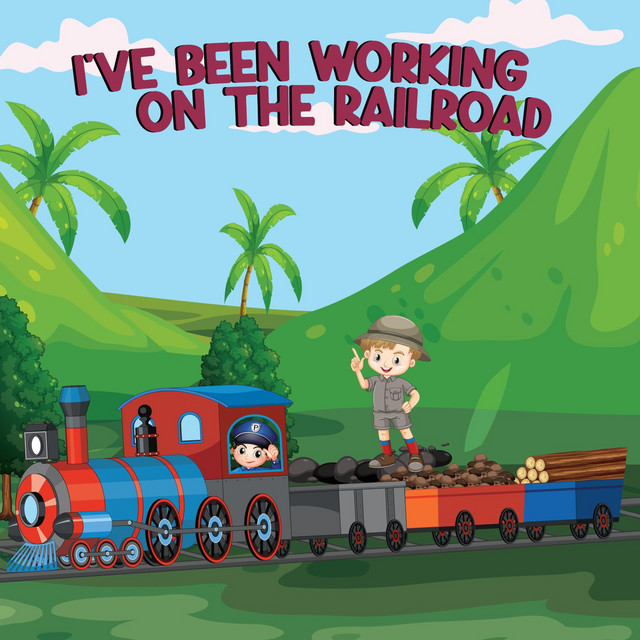
Today in Music (1923): “I’ve Been Working on the Railroad” first known recording released

I’ve Been Working on the Railroad

traditional

Writer(s): unknown (see lyrics here)


First published: 1894


First Known Recording Released: April 23, 1923


Peak: -- (Click for codes to charts.)


Sales (in millions): 1.0 (sheet music)


Airplay/Streaming (in millions): -- radio, 50.93 video, 13.13 streaming (multiple versions)

Awards:

Click on award for more details.

About the Song:

The American folk song “I’ve Been Working on the Railroad” was first published in 1894 as “Levee Song” in Carmina Princetonia, a book of Princeton University songs. WK The lyrics were adapted over the years to reflect the change of using slaves first to build levees and later to build railroads. The New Fangled Dad blog asserts that “Levee Song” “was minstrel dialect and features what would now be offensive references to cotton bales, the N-word, getting out of jail, and someone, um, let's just say getting fresh with an enslaved black woman and disgracing her man.” ND The first known recording was done in 1923 by the Shannon Quartet. WK

The melody for the opening line may have been inspired by the overture of the 1846 operetta Poet and Peasant by Austrian composer Franz von Suppé. WK Another part of the song where the lyrics “someone’s in the kitchen with Dinah” takes its melody from “Old Joe, or Somebody in the House with Dinah.” That music was credited to J.H. Cave as early as the 1830s in London. WK The name “Dinah” even has ties to the Bible and the book of Genesis, where it was used as a generic name for slave women or African-American women. WK Yet another section of the song may have been adapted from “Goodnight, Ladies,” written by E.P. Christy in 1847. WK In short, it is what the New Fangled Dad blog calls “a racist, pirated, jammed together mess of Americana.” ND

LingoKids.com described the song as being “about a time where railroads had a large role in the development of the United States. As one of the main types of transportation, trains had a huge impact on the country’s growth. Many people worked on the railroads and told their stories through a myriad of folk songs.” LK This song tells “the story of one of these railroad workers, who worked there all day, from very early in the morning.” LK

In 1904, alternate lyrics were written for the song when it was adapted as “The Eyes of Texas,” the University of Texas (Austin and El Paso) spirit song. WK


Resources:


First posted 11/26/2025.

Sunday, October 1, 2017

This Month in Music (1917): "Old MacDonald Had a Farm" published in Tommy's Tunes

Old MacDonald Had a Farm

Thomas d’Urfey (music), Frederick Thomas Nettleingham (words)

Writer(s): Thomas d’Urfey (m), Frederick Thomas Nettleingham (w) (see lyrics here)


First Published: 1706


First Charted: September 1, 1958 (The Chargers)


Peak: 25 BB, 32 CB, 22 HR, 11 UK (Sinatra) (Click for codes to charts.)


Sales (in millions): --


Airplay/Streaming (in millions): -- radio, 7073.96 (combined versions) video, 105.06 streaming (combined versions)

Awards:

Click on award for more details.

About the Song:

AmericanSongwriter.com’s Jacob Uitti says the children’s tune “Old MacDonald Had a Farm” (also known as “Old MacDonald”) “might very well be the most famous song of all time.” AS Each verse celebrates another farm animal, inviting the singer to make the appropriate animal noises. As Uitti says, the song has universal appeal because “Every country has farms. Every country has animals,” AS “not to mention the joy children have in making barnyard animal noises.” AS

The earliest version of the song dates to 1706. WK The writer and composer Thomas d’Urfey wrote the song “In the Fields in Frost and Snow” for an opera, either The Kingdom of the Birds or Wonders of the Sun. TA It is unclear if he based his work on a traditional song that already existed.

The music, specifically in the chorus, was a precursor to “Old MacDonald.” LA d’Urfey’s version also introduced the idea of animals making noises within the song. LA It became a popular folk song in the United Kingdom and America AS resulting in various version including “The Farmyard Song” (1880s), “Father’s Wood I O” (1906), and “The Farmyard” (1908). In October 1917, Frederick Thomas Nettleingham published the book Tommy’s Tunes which included a variation of the song called “Ohio” which features a farmer named “Old Macdougal” and includes animal noises from horses, dogs, chickens, and more. WK

The earliest recorded version of “Old MacDonald Had a Farm” is by Sam Patterson’s Trio in 1925. WK Gid Tanner & His Skillet Lickers recorded the song in 1927. WK The Chargers had the first charted version of the song in 1958, reaching #95 on the Billboard Hot 100. Two years later, Frank Sinatra had the most successful version of the song, peaking at #25.

In the 21st century, versions of the song by CoCoMelon and Bounce Patrol have logged more than two billion YouTube viewing each. Combined version of the song rack up more than seven billion views, behind only Pinkfong’s “Baby Shark” and Luis Fonsi’s “Despacito” as the most watched songs on YouTube.


Resources:


Related Links:


First posted 2/7/2025.

Wednesday, May 23, 2012

"Twinkle, Twinkle Little Star" is added to National Recording Registry

Twinkle Twinkle Little Star

Jane Taylor (lyrics), traditional (music)

Writer(s): Jane Taylor (words), traditional (music) (see lyrics here)


Published: 1806


First Charted: --


Peak: --


Sales (in millions): --


Airplay/Streaming (in millions): -- radio, 2143.66 video, 2143.66 streaming (multiple versions)

Awards:

Click on award for more details.


The Alphabet Song (ABC Song)

Charles Bradlee (lyrics), traditional (music)

Writer(s): unknown (words), traditional (music) (see lyrics here)


First Published: 1824


Copyrighted: February 3, 1834


First Charted: --


Peak: --


Sales (in millions): --


Airplay/Streaming (in millions): -- radio, 1723.0 video, 75.18 streaming (multiple versions)

Awards:

Click on award for more details.


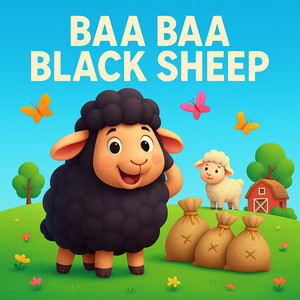
Baa Baa Black Sheep

unknown (lyrics), traditional (music)

Writer(s): unknown (words), traditional (music) (see lyrics here)


First Published: 1744


Copyrighted: October 25, 1879


First Charted: --


Peak: --


Sales (in millions): --


Airplay/Streaming (in millions): -- radio, 4364.72 video, 177.64 streaming (multiple versions)

Awards:

Click on award for more details.

About the Songs:

Jane Taylor, an English poet, wrote a five-stanza poem called “The Star.” It was published in London in 1806 in Rhymes for the Nursery, a collection of poems Jane and her sister Ann. In 1838, it was published as the song “Twinkle, Twinkle Little Star” in The Singing Master: First Class Tune Book. WK Generally, people only sing the first stanza of the original poem. The song is now in the public domain.

The poem was set to a French melody called “Ah! Vous diraj-je, Maman” (“Oh! Shall I tell you, Mama”), written by an unknown composer in 1761. It has been suggested it may even date back as far as 1740. The song, without words, first appeared in Les Amusements d’une Heure et Demy, a collection of music for garden parties published by a man named Boüin. There is, however, no evidence that he wrote the song. BR

The original melody has often been misattributed to composer Wolfgang Amadeus Mozart. There’s even a myth that he wrote the tune as a child, but that isn’t true. BR He did, however, create a twelve-bar variation of the tune for solo piano in the early 1780s. Composers Haydn and Liszt have also integrated the piece into their works. Lewis Caroll created a parody of the tune in his 1865 novel Alice’s Adventures in Wonderland.

The tune was also the basis for “The Alphabet Song (aka “The ABC Song),” published in the 1824 issue of “Musikalischer Haus-Frend”). It was copyrighted by Boston music publisher Charles Bradlee on February 3, 1834. WBM It has become the go-to song for teaching the alphabet to preschoolers in English-speaking countries.

The melody was also used for “Baa Baa Black Sheep.” It was first printed as a nursery rhyme around 1744. In The Real Personages of Mother Goose, published in 1930, Katheine Elwes Thomas suggests the rhyme was a reference to heavy taxation on wool. WK2 It has also been suggested that the rhyme had a connection to the slave trade in the Southern United States, but there has been no evidence to support that. WK2 It wasn’t until 1879 that it was copyrighted after being set to music and appearing in Nursery Songs and Games. WBM

The song has also played a significant role in music history. The German-born Emile Berliner invented a microphone in 1877 and sold the patent to Alexander Graham Bell. That same year, Thomas Edison invented the phonograph. Berliner would continue to develop technology to allow for recordings to be made and reproduced. He secured a licensing agreement with a German doll manufacturer called Kämmer & Reinhardt to mass produce discs to be played on a gramophone. The first known selections, believed to be of Berliner himself, featured recitations of “The Lord’s Prayer” and “Twinkle, Twinkle Little Star.” NRR The recordings have been inducted into the National Recording Registry.

“Twinkle, Twinkle Little Star” has been used in studies to research child development in “vocal pitch accuracy, perception of intervals, contour and key, to grow self-esteem in the classroom, in music therapy for feeding and sleeping in premature infants, and as a method to encourage children to compose and improvise music.” RNZ


Resources:


First posted 12/17/2023; last updated 11/30/2025.

Tuesday, April 25, 2006

“Buffalo Gals” version by Bruce Springsteen released

Buffalo Gals (Will You Come Out Tonight)

Cool White

Writer(s): Cool White (see lyrics here)


Published: 1844


First Charted: --


Peak: -- (Click for codes to charts.)


Sales (in millions): --


Airplay/Streaming (in millions): -- radio, 1.81 video, 1.80 streaming

Awards:

Click on award for more details.

About the Song:

The traditional American song “Buffalo Gals” was published in 1844 as “Lubly Fan” by the minstrel John Hodges, aka Cool White. The phrase was mock African dialect, common to minstrel performances, for “Lovely Fanny.” BA WK The lyics reference girls who danced at bas, concert-hall-dives, and brothels in the Canal distict at Buffalo, New York. WK

Alan Jabbour, a fiddler and folklorist, traced the song’s melody to “Midnight Serenade.” That song was first published in G.P. Knauff’s 1839 book Virginia Reels, Selected and Arranged for the Piano Forte. BA The song likely ciculated orally before it was published but, as often was the case in that time, a song’s authorship went to the first person to transcribe and publish the song. BA

The Ethiopian Serenaders published “Philadelphia Gals” in 1845 with a similar melody and lyrics and as “Buffalo Gals” in 1848. BA At the time, touring performers would often change the name of a song to appeal to the local audiences. BA It was also performed as a fiddle tun under other names including “Round Town Gals,” “Round Town Girls,” and “Alabama Gals.” BA

The song has been recorded, under many of the various titles, at least 238 times according to SecondHandSongs.com by artists including the Byrds, Fiddlin’ John Carson, the Chieftains, the Chipmunks, Bing Crosby, Bobby Darin, Bill Haley, Burl Ives, Leadbelly, Louis Prima, Jimmie Rodgers, Pete Seeger, and Bruce Spingsteen.


Resources:


Related Links:


First posted 12/2/2025.