Showing posts with label top mainstream rock songs. Show all posts

Monday, August 8, 2005

Nickelback “Photograph” released

Photograph

Nickelback

Writer(s): Chad Kroeger, Mike Kroeger, Ryan Peake, Daniel Adair (see lyrics here)


Released: August 8, 2005


First Charted: August 20, 2005


Peak: 2 BB, 11 DG, 3 RR, 16 AC, 118 A40, 17 AR, 3 MR, 18 UK, 3 CN, 3 AU, 14 DF (Click for codes to charts.)


Sales (in millions): 2.0 US, 0.6 UK, 2.69 world (includes US + UK)


Airplay/Streaming (in millions): 0.50 radio, 360.80 video, 377.58 streaming

Awards:

Click on award for more details.

About the Song:

Poor Nickelback. They’ve become the punching bag of rock and roll in the 21st century. Sure, they aren’t exactly the equivalent of Beethoven, but it’s hard to grasp how a band who’ve sold more than 40 million albums have been ridiculed like they were a flash-in-the-pan one-hit wonder. The band was formed in 1995 by the Kroeger brothers Chad (vocals, guitar) and Mike (bass) with their cousin Brandon (drums) and Ryan Peake (rhythm guitar). The band cycled through a few drummers before Daniel Adair landed the job in 2005.

The group landed a #1 hit with “How You Remind Me” from their third album, 2001’s Silver Side Up. Their next album, 2003’s The Long Road, gaven them another top-10 hit. Their commercial peak, however, came in 2005. The band exploded in 2005 with their fifth album, All the Right Reasons. it sold 18 million copies worldwide and gave the band three more top-10 hits with “Photograph,” “Far Away,” and “Rockstar.”

The song “is about reviewing the memories - missed and forgotten - from the band's childhood in Hanna, Alberta. The lyrics are a chronicle of real events and personal landmarks lead singer Chad Kroeger recalled as he wrote it.” SF He said, “It’s just nostalgia, growing up in a small town, and you can’t go back to your childhood. Saying goodbye to friends that you’ve drifted away from, where you grew up, where you went to school, who you hung out with and the dumb stuff you used to do as a kid, the first love – all of those things. Everyone has one or two of those memories that they are fond of, so this song is really just the bridge for all that.” WK

The video was shot in Hanna, Alberta, with the band revisiting old stomping grounds. The photograph which Chad holds up in the video was the inspiration for the song. The picture is of him and Joey Moi, the band’s producer, at a New Year’s Eve party. In the song he says, “What the hell’s on Joey’s head?” It’s a chiller for champagne. SF The shot of Chad holding up the photo has become a meme with people substituting other images in the photograph.


Resources:


Related Links:


First posted 1/27/2026.

Saturday, November 29, 1997

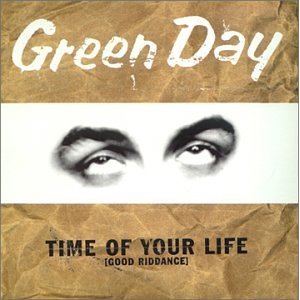
Green Day charted with “Time of Your Life”

Good Riddance (Time of Your Life)

Green Day

Writer(s): Billie Joe Armstrong, Mike Dirnt, Tré Cool (see lyrics here)


Released: December 23, 1997


First Charted: November 29, 1997


Peak: 11a US, 12 RR, 11 A40, 4 AA, 7 AR, 2 MR, 11 UK, 5 CN, 2 AU, 1 DF (Click for codes to singles charts.)


Sales (in millions): 5.0 US, 0.6 UK, 5.75 world (includes US + UK)


Airplay/Streaming (in millions): 0.8 radio, 101.30 video, 471.26 streaming

Awards:

Click on award for more details.

About the Song:

The punk-rock trio Green Day formed in 1987 in California. After two independently released albums, they made their major label debut in 1994 with Dookie. The blockbuster sold more than 10 million copies fueled by three chart-topping songs at alternative rock radio. The follow-up, 1995’s Insomniac, wasn’t as big, but still sold two million copies and produced two top-10 alternative rock hits. The next album, 1997’s Nimrod, followed the same pattern with two million more in sales and two more alternative rock hits. The second of those was “Good Riddance (Time of Your Life),” which spent thirteen weeks at #2.

The band’s singer, Billie Joe Armstrong, wrote the song in 1993 about his girlfriend, Amanda. She moved to Ecuador to live with her family and continue with her schooling. SF He wrote the song about his anger regarding her leaving, calling it “Good Riddance.” He said it was “about trying to be cool, accepting that, in life, people go in different directions.” SF

He shared it with his bandmates during the Dookie sessions, but its “mellow, contemplative lyrics with acoustic music” WK were too sonically different than the punk style of that album. They took another stab at it during the Nimrod sessions, adding strings to the song. It became a hit, but it also resulted in a high rate of returns at record stores from fans who thought it was too different than what they expected. SF

The band was surprised to find that it became a staple at high school proms. Many graduating seniors interpreted the lyrics as a nostalgic reflection of their time in school. In 2015, Rolling Stone magazine named it one of the 20 best graduation songs of the past 20 years. WK


Resources:


First posted 11/1/2022.


Saturday, February 24, 1996

Oasis “Champagne Supernova” charted

Champagne Supernova

Oasis

This post has been moved here.

Saturday, November 25, 1995

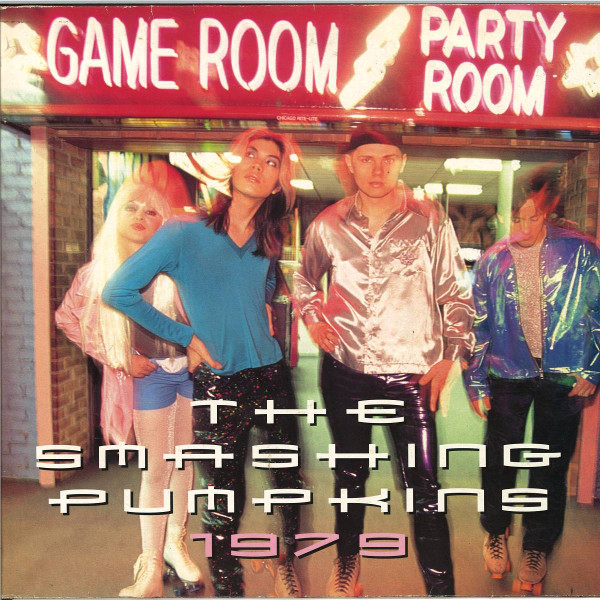
Smashing Pumpkins “1979” charted

1979

Smashing Pumpkins

Writer(s): Billy Corgan (see lyrics here)


Released: January 23, 1996


First Charted: November 25, 1995


Peak: 9a US, 11 CB, 7 GR, 9 RR, 30 A40, 3 AA, 12 AR, 11 MR, 16 UK, 2 CN, 16 AU, 7 DF (Click for codes to charts.)


Sales (in millions): 0.5 US, 0.4 UK


Airplay/Streaming (in millions): 0.6 radio, 221.8 video, 411.49 streaming

Awards:

Click on award for more details.

About the Song:

The Smashing Pumpkins were an alternative rock band who formed in 1988 in Chicago, Illinois. Their debut album, Gish, was released in 1991. It flew under the radar, peaking at #146, but eventually selling a million copies. Their second album, 1993’s Siamese Dream, was a huge leap forward, selling four million copies and reaching #10 on the Billboard album chart.

In 1995, they released Mellon Collie and the Infinite Sadness, a double album that saw the group reach #1 on the album chart and achieve diamond certification for ten million in sales. The lead single, “Bullet with Butterfly Wings,” gave the group their first entry (#22) on the Billboard Hot 100 and was the first of five alternative-rock top-ten hits from the album. It was the second single, “1979,” which gave the group their biggest hit. It reached #1 on the alternative-rock chart and #12 on the Billboard Hot 100 (#9 airplay).

Frontman Billy Corgan wrote a version of the song long before it appeared on Mellon Collie. SF It started as a song called “Strolling” and ended up the last of 56 songs written for consideration for the album. WK Flood, the album’s producer, didn’t think it was good enough and gave Corgan 24 hours to make it work. SF

That night Corgan spent four hours writing “a nostalgic coming-of-age story.” WK He considered the year 1979, when he turned twelve, to be “his transition into adolescence” WK and eventually being in high school “and having adult responsibilities like a car and job, but still being very much a youth and dependent on his parents.” SF Flood immediately approved and Corgan considered it “the most personally important song” WK on the album.

The song was nominated for Grammys for Record of the Year and Best Rock Performance by a Duo or Group with Vocal.


Resources:


Related Links:


First posted 4/20/2023.


Saturday, March 25, 1989

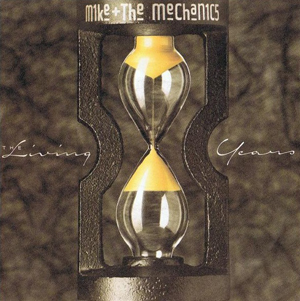
Mike + the Mechanics “The Living Years” hit #1

The Living Years

Mike + the Mechanics

Writer(s): Brian Robertson, Mike Rutherford (see lyrics here)


Released: December 27, 1988


First Charted: December 31, 1988


Peak: 11 US, 12 CB, 2 GR, 2 RR, 14 AC, 5 AR, 2 UK, 12 CN, 11 AU, 1 DF (Click for codes to charts.)


Sales (in millions): -- US, 0.4 UK


Airplay/Streaming (in millions): -- radio, 23.6 video, 79.63 streaming

Awards:

Click on award for more details.

About the Song:

Guitarist, bassist, and songwriter Mike Rutherford made his name with Genesis, but at the height of their success formed Mike + the Mechanics as a side project. Their 1985 self-titled debut produced the top-ten hits “Silent Running” and “All I Need Is a Miracle.” Rutherford returned to Genesis and they peeled off five top-ten hits from their 1986 Invisible Touch album. Another Mechanics album followed in 1988 and produced an unlikely chart-topper about “losing one’s father before having the chance to say what is in one’s heart.” FB

Rutherford’s father, William, had been in the Navy and served in World War II as well as the Korean War. He and Mike didn’t get along well. William even tried to ban his son from playing guitar, but eventually came around when Mike joined Genesis and even bought some equipment for him and let the band stay at his house. SG

Still, the two never had a close relationship. Mike said, “Fathers and sons of my generation just didn’t say things like ‘I love you’ to each other.” SG Mike was on tour with Genesis when his father died. He flew home for the funeral and then back to America in time for the next Genesis show. Rutherford’s third child was born a year later. In a weird coincidence, B.A. Robertson, with whom Rutherford had written “Silent Running,” also experienced the death of his father in 1986 and the birth of his son soon after. Between them, they crafted “The Living Years.”

Paul Carrack sang lead, as he had on “Silent Running.” He previously reached the top ten in the 1970s with Ace and the song “How Long.” He also sang “Tempted” for Squeeze in 1981. Carrack could relate to the song’s theme about losing one’s father as his own dad had died when Paul was 11. Carrack sings “in a sort of soulful bleat, but he never goes too crazy with it…The song’s chorus is a big, booming thing with a whole kids’ choir…But the quieter verses are what give the song its power.” SG Author Steve Sullivan calls it Carrack’s “finest performance ever.” SS The song has “a sleek sort of calm to it.”SG It “expresses important truths in an eloquent, moving way without succumbing to mawkishness.” SS


Resources:

  • FB Fred Bronson (2007). The Billboard Book of Number One Hits (4th edition). Billboard Books: New York, NY. Page 723.
  • SG Stereogum (6/30/2021). “The Number Ones” by Tom Breihan
  • SS Steve Sullivan (2013). Encyclopedia of Great Popular Song Recordings (Volumes I & II). Scarecrow Press: Lanham, Maryland. Page 574.


Related Links:


First posted 12/26/2022; last updated 1/13/2023.

Friday, October 26, 1984

Don Henley “The Boys of Summer” released

The Boys of Summer

Don Henley

This post has been moved here.

Saturday, January 21, 1984

Yes hit #1 with “Owner of a Lonely Heart”

Owner of a Lonely Heart

Yes

This post has been moved here.