Showing posts with label top alternative rock songs. Show all posts

Saturday, August 25, 2001

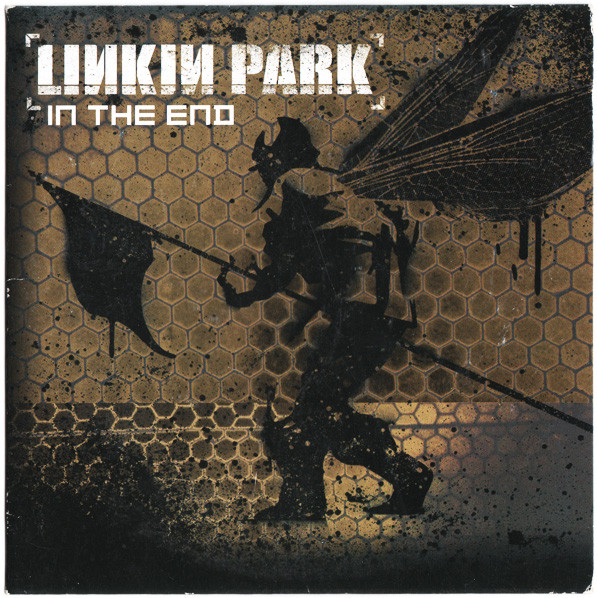
Linkin Park “In the End” charted

In the End

Linkin Park

Writer(s): Brad Delson, Chester Bennington, Joe Hahn, Mike Shinoda, Rob Bourdon (see lyrics here)


Released: October 9, 2001


First Charted: August 25, 2001


Peak: 2 US, 16 RR, 15 A40, 3 AR, 15 MR, 8 UK, 2 CN, 4 AU, 5 DF (Click for codes to charts.)


Sales (in millions): 4.0 US, 1.2 UK, 5.66 world (includes US + UK)


Airplay/Streaming (in millions): 0.7 radio, 1400.0 video, 1615.11 streaming

Awards:

Click on award for more details.

About the Song:

Linkin Park formed in Agoura Hills, California in 1996. Their debut, 2000’s Hybrid Theory, has sold more than 27 million worldwide and become a foundational album in the nu metal scene. Four singles were released from the album with “In the End,” the last one, being the most successful. It is one of the group’s three songs to reach the top 10 on the Billboard Hot 100, peaking at #2. It was the first of ten top-40 hits for the group.

“In the End” has become Linkin Park’s signatur song and the first nu-metal song to pass one billion streams on Spotify. WK Critics have complimented the piano riff and rapping from Mike Shinoda. In 2015, the song topped Kerrang! magazine’s list of rock songs. WK

The song was about Chester Bennington, the group’s lead singer, and his childhood struggles with being picked on. SF Shinoda said, “There’s a weird battle with hopelessness…that the song is really about…What’s so odd…is its almost talking about these things and saying ‘I don’t have any answers.’” SF

Bennington initially opposed its inclusion on Hybrid Theory. WK He said later he realized choosing singles wasn’t his strong suit “so I leave that to other people who are actually talented at somehow picking songs people are going to like the most.” SF By contrast, Shinoda thought the song showcased Linkin Park’s range of skills because “it contrasted with the more aggressive tunes in their catalog.” SF


Resources:


Related Links:


First posted 7/25/2023.

Saturday, November 29, 1997

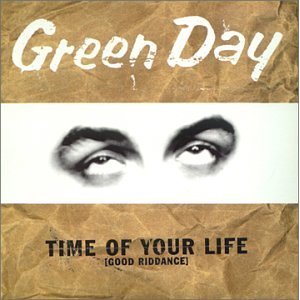
Green Day charted with “Time of Your Life”

Good Riddance (Time of Your Life)

Green Day

Writer(s): Billie Joe Armstrong, Mike Dirnt, Tré Cool (see lyrics here)


Released: December 23, 1997


First Charted: November 29, 1997


Peak: 11a US, 12 RR, 11 A40, 4 AA, 7 AR, 2 MR, 11 UK, 5 CN, 2 AU, 1 DF (Click for codes to singles charts.)


Sales (in millions): 5.0 US, 0.6 UK, 5.75 world (includes US + UK)


Airplay/Streaming (in millions): 0.8 radio, 101.30 video, 471.26 streaming

Awards:

Click on award for more details.

About the Song:

The punk-rock trio Green Day formed in 1987 in California. After two independently released albums, they made their major label debut in 1994 with Dookie. The blockbuster sold more than 10 million copies fueled by three chart-topping songs at alternative rock radio. The follow-up, 1995’s Insomniac, wasn’t as big, but still sold two million copies and produced two top-10 alternative rock hits. The next album, 1997’s Nimrod, followed the same pattern with two million more in sales and two more alternative rock hits. The second of those was “Good Riddance (Time of Your Life),” which spent thirteen weeks at #2.

The band’s singer, Billie Joe Armstrong, wrote the song in 1993 about his girlfriend, Amanda. She moved to Ecuador to live with her family and continue with her schooling. SF He wrote the song about his anger regarding her leaving, calling it “Good Riddance.” He said it was “about trying to be cool, accepting that, in life, people go in different directions.” SF

He shared it with his bandmates during the Dookie sessions, but its “mellow, contemplative lyrics with acoustic music” WK were too sonically different than the punk style of that album. They took another stab at it during the Nimrod sessions, adding strings to the song. It became a hit, but it also resulted in a high rate of returns at record stores from fans who thought it was too different than what they expected. SF

The band was surprised to find that it became a staple at high school proms. Many graduating seniors interpreted the lyrics as a nostalgic reflection of their time in school. In 2015, Rolling Stone magazine named it one of the 20 best graduation songs of the past 20 years. WK


Resources:


First posted 11/1/2022.


Saturday, August 2, 1997

Foo Fighters “Everlong” charted

Everlong

Foo Fighters

Writer(s): Dave Grohl (see lyrics here)


Released: August 18, 1997


First Charted: August 2, 1997


Peak: 42 BA, 4 AR, 3 MR, 18 UK, 45 AU, 1 DF (Click for codes to charts.)


Sales (in millions): 2.0 US, 1.2 UK, 5.03 world (includes US + UK)


Airplay/Streaming (in millions): -- radio, 375.70 video, 1101.32 streaming

Awards:

Click on award for more details.

About the Song:

Dave Grohl had already cemented himself a role in rock history as the drummer for Nirvana from 1990 to 1994. However, after Kurt Cobain, the band’s lead singer and guitarist, committed suicide, it appeared Grohl had likely reached his peak. After all, Nirvana had been celebrated as one of the most influential bands in history. There was nowhere to go but down.

Grohl, however, demonstrated that he was more than just a guitarist when he took up a new project. Initially he formed Foo Fighters as a one-man project but when the 1995 self-titled album went platinum and spawned three top-10 alternative rock hits, he assembled a band that would eventually make him one of the rare two-time Rock and Roll Hall of Fame inductees.

The second album, 1997’s The Colour and the Shape, was a full-fledged band effort which reached #10 on the U.S. album charts and went double platinum. It generated three more top-10 alternative rock hits, including “Everlong.” It would come to be known as the Foo Fighters’ signature song, WK having been performed in all but four of the band’s four full-length concerts for a total of more than 1000 performances. WK

It is “a song of undying love, apparently written in the darkest hour of all.” DT He’d been frozen out of his bank account, DT was going through a divorce from photographer Jennifer Youngblood, and was homeless, SF sleeping in a sleeping bag at a friend’s house. Two members of the band were on the verge of quitting. SF

Grohl wrote the song in 45 minutes, inspired by his romance with Louise Post of the band Veruca Salt. He said, “That song’s about a girl that I’d fallen in love with and it was basically about being connected to someone so much, that not only do you love them physically and spiritually, but when you sing along with them you harmonize perfectly.” WK


Resources:


Related Links:


First posted 4/11/2024.

Saturday, July 16, 1994

Green Day “Basket Case” charted

Basket Case

Green Day

Writer(s): Billie Joe Armstrong (see lyrics here)


Released: February 1, 1994 (as album cut)


Released: November 29, 1994 (as single)


First Charted: July 16, 1994


Peak: 26 BA, 23 GR, 20 RR, 9 AR, 15 MR, 7 UK, 12 CN, 85 AU, 10 DF (Click for codes to charts.)


Sales (in millions): -- US, 1.2 UK, 1.88 world (includes US + UK)


Airplay/Streaming (in millions): -- radio, 370.30 video, 1023.99 streaming

Awards:

Click on award for more details.

About the Song:

Green Day formed in 1987 in California. The punk rock trio exploded in 1994 with Dookie, their major-label debut that sold over ten million copies domestically. It churned out three alternative rock chart-toppers, all of which made the Billboard top 40 airplay chart as well. It was one of the decade’s most influential albums in how it introduced pop-punk to the mainstream.

The album’s first single, “Longview,” captured the slacker ‘90s vibe and a sense of irreverence with its ode to boredom and masturbation. As the follow-up, however, “Basket Case” proved to be something more. “A supremely snooty – and supremely catchy – burst of radio-friendly punk that offered throw-yourself-around guitars and a breeziness that belied the fact that for once Billie Joe Armstrong wasn’t singing about masturbation. Instead, this was Armstrong in serious mode, wondering if the panic attacks he suffered meant he was cracking up.” XFM

Armstrong was suffering from anxiety and what would be later diagnosed as panic disorders. He said, “The only way I could know what the hell was going on was to write a song about it.” WK He said he wrote the original lyrics while on crystal meth, but then discarded them and re-approached the song, leading to “a powerful anthem about mental health” SF and what he called “an anthem for weirdos.” SF

British music critic James Masterson said the song “could potentially open the door for a flood of the post-Nirvana young American rock bands.” WK Music Week called it “the Generation X-flag-wavers’ splenetic slice of Bay Area punk.” WK Pierre Bouvier, from fellow-pop-punk band Simple Plan, said, “’Bakset Case’…took that style and really blew up in a way that had never been done before.” SF In 2006, BBC Radio 1 listeners ranked it the greatest punk song of all time. WK


Resources:


Related Links:


First posted 4/10/2024.