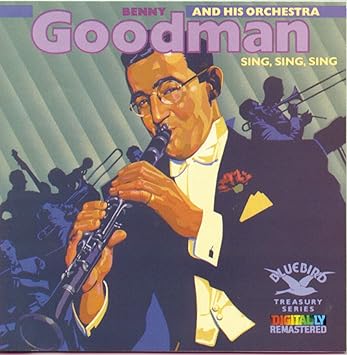
Showing posts with label Benny Goodman. Show all posts

Tuesday, June 23, 2026

Big Band Leaders: Top 50+

Big Band Leaders:

Top 50+

Big band was a popular form of music in the first half of the 20th century. It was essentially a jazz orchestra, typically comprised of ten or more musiicans including saxophonists, trumpeters, trombonists, and a rhythm section which might tconsist of guitar, piano, double bass, and drums. By the mid-1930s, swing music, which had a more supple feel than early jazz, became increasingly popular. On the charts, such bands were generally credited to the bandleaders with featured vocalists noted.

This list focuses on those most popular band leaders. It was comprised by aggregating 16 lists focused on the best big band leaders of all time. The list here includes all individuals appearing on 4 or more lists.

See other lists of Acts/Music Makers by Categories.


15 lists:

1. Benny Goodman
2. Count Basie

13 lists:

3. Glenn Miller
4. Duke Ellington

10 lists:

5. Artie Shaw

9 lists:

6. Tommy Dorsey
7. Cab Calloway

8 lists:

8. Louis Armstrong
9. Jimmy Dorsey
10. Harry James
11. Woody Herman

7 lists:

12. Gene Krupa
13. Chick Webb

6 lists:

14. Lionel Hampton
15. 20. Earl Hines

5 lists:

16. Fats Waller
17. Eddy Duchin
18. Kay Kyser
19. Glen Gray
20. Bob Crosby
21. Ozzie Nelson
22. Buddy Rich
23. Fletcher Henderson
24. Jimmie Lunceford
25. Jack Teagarden
26. Charlie Spivak

4 lists:

27. Paul Whiteman
28. Sammy Kaye
29. Isham Jones
30. Freddy Martin

31. Louis Jordan
32. Hal Kemp
33. Ray Noble
34. Russ Morgan
35. Horace Heidt
36. Ted Weems
37. Dizzy Gillespie
38. Stan Kenton
39. Benny Carter
40. Les Brown

41. Frankie Carle
42. Xavier Cugat
43. Bunny Berigan
44. Will Bradley
45. Andy Kirk
46. Red Norvo
47. Claude Thornhill
48. Eddie DeLange
49. Erskine Hawkins
50. Ina Ray Hutton

51. Tony Pastor
52. Jan Savitt


Resources/Related Links:


First posted 6/23/2026.

Tuesday, August 1, 2023

On This Day in Music (1942): The American Federation of Musicians’ Strike

August 1, 1942

The American Federation of Musicians Strike

On August 1, 1942, the American Federation of Musicians went on strike against the major American recording companies over disagreements regarding royalty payments. This meant no union musician could record for any record company, WK but it did not prohibit performances on live radio shows or in concert. WK While the move was seen as advantageous for musicians who wanted payment each time their songs were played in jukeboxes or on radio, PBS FCC chair James Fly suggested the 60% of the country’s radio stations could go out of business. DB

As the ban approached, numerous artists rushed to get in last-minute recordings in July 1942. Among them were Count Basie, Bing Crosby, Jimmy Dorsey, Tommy Dorsey, Duke Ellington, Judy Garland, Benny Goodman, Guy Lombardo, and Glenn Miller. WK

When this stockpile was exhausted, record companies turned to older recordings – some as far back as the dawn of the recording era in the mid-1920s. One of the most successful releases was Harry James’ “All Or Nothing at All”, which featured Frank Sinatra before he became famous. WK

After October 27, 1943, special recordings known as V-Discs were exempt as they were intended for the armed forces and not the general public. WK In addition, some record companies, including Decca and Capitol, caved that 1943 while Victor and Columbia, the two largest companies, held out until November 11, 1944. WK

One unintended consequence of the strike was the hastening of the swing era’s decline and the rise of the “sing era” as the music industry shifted from a focus on big bands to singers. WK The ban only applied to musicians; singers were not union members. Therefore, they could still record a cappella songs consisting of vocal quartets or soloists backed by choruses. PBS As historian Peter Soderbergh put it, “Until the war most singers were props. After the war they became the stars and the role of the bands was gradually subordinated.” WK


For more important days in music history, check out the Dave’s Music Database history page.

Resources and Related Links:


First posted 8/1/2011; updated 8/24/2023.

Tuesday, May 10, 2022

Broadcasting Hall of Fame

Broadcasting Hall of Fame:

1977-2022

The Broadcasting Hall of Fame is sponsored by the National Association of Broadcasters. At the website, the description about the hall merely says, “The NAB Broadcasting Hall of Fame recognizes radio and television personalities or programs that have earned a place in broadcasting history.” It has been given annually since 1977. This page notes those musically-oriented inductees, all of which were in the radio category.

See other Hall of Fames.


Music-Related Recipients:


Resources/Related Links:


First posted 5/10/2022.

Friday, October 22, 2021

Dave's Music Database Hall of Fame: Song Inductees (October 2021)

Originally posted 10/22/2021.

In honor of the 10th anniversary of the DMDB blog on January 22, 2019, Dave’s Music Database launched its own Hall of Fame. This is the twelfth set of song inductees. These are the 10 highest-ranked songs that ranked within the top 50 of the DMDB’s list of the “Top Big Band Songs of All Time”. It does not include previously inducted songs such as Glenn Miller’s “In the Mood” and Artie Shaw’s “Stardust” and “Begin the Beguine.”

Fats Waller “Ain’t Misbehavin’” (1929)

Inducted October 2021 as “Top Big Band Songs”

Waller was “a New York City-born pianist and organ accompanist during the ‘20s…[who] broke through as one of the country’s most popular entertainers. PM “Ain’t Misbehavin’” was written for the 1929 all-black revue Hot Chocolates and debuted by Louis Armstrong, who credited the revue with launching his career. TY It was so popular it moved to Broadway RCG where it ran “for a very respectable 219 performances.” SS Read more.

Ted Lewis “On the Sunny Side of the Street” (1930)

Inducted October 2021 as “Top Big Band Songs”

This “cabaret and jazz standard” JA is a “metaphor for optimism.” TY In his book American Popular Song, author Alec Wilder calls it “one of the jazz musicians’ favorites…Singers, as well, love it as much for its extremely fine lyric.” SB In The NPR Curious Listener’s Guide to Popular Standards, Max Morath expresses a similar sentiment, saying the song “works both sides of the street, vocal and instrumental, with equal charm.” MM Read more.

Duke Ellington “Mood Indigo” (1931)

Inducted October 2021 as “Top Big Band Songs”

The clarinet solo was based on a melody called “Dreamy Blues.” Duke Ellington turned the structure upside down, “composing a song of his own on top of it.” DH Typically jazz songs were arranged with the clarinet, trumpet, and trombone from highest to lowest pitch, but Ellington flipped it around the other way. DH He recorded it for an October 1930 broadcast. He said “wads of mail came in raving about the new tune.” WK Read more.

Benny Goodman “Sing Sing Sing (With a Swing)” (1938)

Inducted October 2021 as “Top Big Band Songs”

By the start of the Swing era in 1936, Benny Goodman was its king. “Sing, Sing, Sing” was his most renowned performance with solos by Benny as well as drummer Gene Krupa (on his last hit before leaving the band) and trumpeter Harry James. “Sing, Sing, Sing,” which Goodman called a “killer diller,” NPR’99 was the closer at the bandleader’s legendary Carnegie Hall concert on January 16, 1938. It was the first time jazz comprised a full concert instead of being part of a larger show SS and marked the birthplace of the legitimacy of the genre. NPR’99 Read more.

Ella Fitzgerald with Chick Webb’s Orchestra “A-Tisket, A-Tasket” (1938)

Inducted October 2021 as “Top Big Band Songs”

“A-Tisket, A-Tasket” began life as an American children’s rhyming game in 1879. In 1938, Ella Fitzgerald and Al Feldman adapted it into a song with very little change to the lyrics. In a 1973 lecture series at Harvard, Leonard Bernstein said that research showed the song’s melodic motif “is the same all over the world, wherever children tease each other. On every continent, in ever culture, it is one of the few musical universals.” TY Read more.

Tommy Dorsey with Frank Sinatra & the Pied Pipers “I’ll Never Smile Again” (1940)

Inducted October 2021 as “Top Big Band Songs”

Ruth Lowe was a pianist with Ina Ray Hutton’s all-girl orchestra when she composed this song about the death of her husband, just a few months after their marriage. TY She staked out Tommy Dorsey in September 1939 and got Carmen Mastren, the band’s guitarist, to give her demo a listen. SS Dorsey wasn’t initially passed but took a stab at it when Frank Sinatra came on board. SS It became his first #1 song. Read more.

Duke Ellington “Take the ‘A’ Train” (1941)

Inducted October 2021 as “Top Big Band Songs”

Billy Strayhorn was a hopeful pianist and composer in 1938. NPR His rearrangement of the Duke’s song “Sophisticated Lady” sufficiently impressed Ellington to invite Strayhorn to New York. TC Ellington gave directions to his house in New York, starting with “take the ‘A’ train.” WK Along the way, Strayhorn turned the directions into a song. TC It became Ellington’s signature song and one of the all-time best-loved jazz standards. Read more.

Glenn Miller “Chattanooga Choo Choo” (1941)

Inducted October 2021 as “Top Big Band Songs”

The team of Mack Gordon and Harry Warren wrote the song while travelling on the Southern Railway. It didn’t refer to a particular train, but Chattanooga, Tennessee, had been on the route for most trains passing through the American South since 1880. WK The song was used in the film Sun Valley Serenade, sung by members of Glenn Miller’s band. Miller’s recording became his biggest hit after “In the Mood” and the first recording formally certified as a million seller. PM Read more.

Woody Herman “Blues in the Night (My Mama Done Tol’ Me)” (1941)

Inducted October 2021 as “Top Big Band Songs”

Composer Harold Arlen and lyricist Johnny Mercer were approached to write a song for a movie about a jazz quintet riding the rails in search of its big break. Arlen wrote a melody after analyzing blues songs and Mercer penned four pages of lyrics. When they finished, Mercer called Margaret Whiting, who’d sung the pair’s songs “That Old Black Magic” and “Come Rain or Come Shine.” She told Mercer she had guests for dinner, but he and Arlen could come over later. When Mercer found out the guests included Judy Garland, Mickey Rooney, and Mel Tormé, he announced, “My God, we’re coming right over.” After they played the song, Rooney said, “That’s the greatest thing I’ve ever heard.” SB Read more.

Les Brown with Doris Day “Sentimental Journey” (1945)

Inducted October 2021 as “Top Big Band Songs”

When she first saw the sheet music, Doris Day commented, “What a lovely title,” to which Les Brown responded “Wait till you hear it.” SS “The song’s aching nostalgia struck a chord in a nation welcoming its boys back from the front lines,” TM becoming “one of a handful of songs that summed up romantic longing during World War II.” SS Will Friedwald called it “the definitive end-of-war song,” SS “a song that helped define an era.” SS Read more.

Thursday, April 22, 2021

Jazz: Top 100 Songs of All Time

Jazz:

Top 100 Songs

This is an aggregate of 30 lists (see sources at the bottom of the page) focused on the best jazz songs of all time. Many of these were not originally jazz compositions and have higher-ranked versions in Dave’s Music Database. As such, the listings here are not necessarily the most popular versions of the song, but the one attributed specifically to a jazz artist.

Click here to see other genre-specific song lists.

1. Ella Fitzgerald & Louis Armstrong “Summertime” (1957)
2. Dave Brubeck “Take Five” (1961)
3. Duke Ellington “Take the ‘A’ Train” (1941)
4. Coleman Hawkins “Body and Soul” (1940)
5. Thelonious Monk “‘Round Midnight” (1947)
6. Miles Davis “So What” (1959)
7. Louis Armstrong “What a Wonderful World” (1967)
8. Stan Getz with Joao Gilberto “The Girl from Ipanema” (1964)
9. Dizzy Gillespie “A Night in Tunisia” (1946)
10. Cannonball Adderley “Autumn Leaves” (1958)

11. Benny Goodman “Sing, Sing, Sing (With a Swing)” (1938)
12. Billie Holiday “Strange Fruit” (1939)
13. Frank Sinatra “Fly Me to the Moon (In Other Words)” (1964)
14. Ray Charles “Georgia on My Mind” (1960)
15. Erroll Garner Trio “Misty” (1954)
16. Glenn Miller “In the Mood” (1939)
17. Miles Davis “All Blues” (1959)
18. John Coltrane “Acknowledgement (A Love Supreme, Part I)” (1965)
19. John Coltrane “My Favorite Things” (1960)
20. Miles Davis “Blue in Green” (1959)

21. Weather Report “Birdland” (1977)
22. Fats Waller “Ain’t Misbehavin’” (1929)
23. Duke Ellington “Sophisticated Lady” (1933)
24. Duke Ellington & John Coltrane “In a Sentimental Mood” (1962)
25. Bessie Smith & Louis Armstrong “St. Louis Blues” (1925)
26. Duke Ellington “Mood Indigo“ (1931)
27. Louis Armstrong “West End Blues” (1928)
28. Count Basie Orchestra “One O’Clock Jump” (1937)
29. Art Blakey & the Jazz Messengers “Moanin’” (1958)
30. Etta James “At Last” (1961)

31. Benny Goodman “Stompin’ at the Savoy” (1936)
32. Duke Ellington “Satin Doll” (1953)
33. John Coltrane “Giant Steps” (1959)
34. Dizzy Gillespie “All the Things You Are” (1945)
35. Louis Armstrong “On the Sunny Side of the Street” (1933)
36. Artie Shaw “Stardust” (1941)
37. Dizzy Gillespie “Salt Peanuts” (1945)
38. Duke Ellington “It Don’t Mean a Thing if It Ain’t Got That Swing” (1932)
39. Glenn Miller “Moonlight Serenade” (1939)
40. Louis Armstrong “I Got Rhythm” (1932)

41. Dizzy Gillespie “Manteca” (1947)
42. Peggy Lee “Fever” (1957)
43. Cab Calloway “Minnie the Moocher” (1931)
44. Ella Fitzgerald “The Man I Love” (1959)
45. Ella Fitzgerald “Mack the Knife“ (1960)
46. Artie Shaw “Begin the Beguine” (1938)
47. Ella Fitzgerald “Night and Day” (1956)
48. Herbie Hancock “Watermelon Man” (1962)
49. Duke Ellington “Caravan” (1937)
50. Count Basie “April in Paris” (1955)

51. Paul Whitman with George Gershwin “Rhapsody in Blue” (1924)
52. John Coltrane & Johnny Hartman “Lush Life” (1963)
53. Louis Armstrong “Sweet Georgia Brown” (1955)
54. Billie Holiday “God Bless the Child” (1941)
55. Louis Armstrong “All of Me” (1932)
56. Ella Fitzgerald with the Daydreamers “How High the Moon” (1947)
57. Art Tatum “Tea for Two” (1939)
58. Natalie Cole with Nat “King” Cole “Unforgettable” (1991)
59. Glenn Miller “The Nearness of You” (1940)
60. Norah Jones “Don’t Know Why” (2002)

61. Charlie Parker with Miles Davis & Dizzy Gillespie “Ko-Ko” (1945)
62. Louis Armstrong “When the Saints Go Marching In” (1939)
63. Ella Fitzgerald & Louis Armstrong “Cheek to Cheek” (1956)
64. Ferdinand “Jelly Roll” Morton “King Porter Stomp” (1923)
65. Billie Holiday “The Way You Look Tonight” (1936)
66. Fats Waller “Honeysuckle Rose” (1935)
67. Ella Fitzgerald “Someone to Watch Over Me” (1958)
68. Ray Charles “Come Rain or Come Shine” (1960)
69. Henry Mancini with Audrey Hepburn “Moon River” (1961)
70. Ella Fitzgerald with Chick Webb “A-Tisket, A-Tasket” (1938)

71. Bill Withers with Grover Washington, Jr. “Just the Two of Us” (1981)
72. Dizzy Gillespie “I Can’t Get Started” (1945)
73. Louis Armstrong “I’m in the Mood for Love” (1935)
74. Billie Holiday “Lover Man (Oh, Where Can You Be?)” (1945)
75. Benny Goodman “Moonglow” (1934)
76. Louis Armstrong “Hello Dolly!” (1964)
77. Benny Goodman with Mildred Bailey “Darn That Dream” (1940)
78. Woody Herman “Blues in the Night (My Mama Done Tol’ Me)” (1941)
79. Pee Wee Hunt “Twelfth Street Rag” (1948)
80. Nat “King” Cole “Mona Lisa” (1950)

81. Woody Herman “Laura” (1945)
82. Nat “King” Cole “Straighten Up and Fly Right” (1944)
83. Artie Shaw “Dancing in the Dark” (1941)
84. Bobby McFerrin “Don’t Worry Be Happy” (1988)
85. Lionel Hampton “Flying Home” (1942)
86. Frank Sinatra “One for My Baby and One for the Road” (1949)
87. Dinah Washington “What a Diff’rence a Day Makes” (1959)
88. Ella Fitzgerald “But Not for Me” (1959)
89. Tommy Dorsey “Opus One” (1943)
90. Charlie Barnet & His Orchestra “Cherokee (Indian Love Song)” (1939)

91. Duke Ellington “Perdido” (1942)
92. Chet Baker “My Funny Valentine” (1953)
93. Woody Herman “I’ll Remember April” (1942)
94. George Benson “On Broadway” (live, 1978)
95. George Benson “This Masquerade” (1976)
96. Stan Kenton “Artistry in Rhythm” (1944)
97. Herb Alpert “Rise” (1979)
98. Stan Getz & Charlie Bird “Desafinado” (1962)
99. Louis Armstrong “Potato Head Blues” (1927)
100. Django Reinhardt & Stephane Grappelli with the Quintet of the Hot Club of France “Nuages” (1940)


Resources and Related Links:

First posted 3/3/2011; last updated 4/22/2021.

Monday, April 19, 2021

Big Band: Top 100 Songs

Big Band:

Top 100 Songs

Big Band, or Swing music, was especially popular in the 1930s and ‘40s. They were generally jazz-oriented orchestras led by such dominant names as Jimmy Dorsey, Tommy Dorsey, Duke Ellington, Benny Goodman, and Glenn Miller. In fact, more than 20 of these songs also appear on the DMDB’s Top 100 Jazz Songs list.

This list was created by aggregating 21 lists focused on big band songs.

Click here to see other genre-specific song lists.

1. Duke Ellington “Take the ‘A’ Train” (1941)
2. Benny Goodman “Sing, Sing, Sing (With a Swing)” (1938)
3. Glenn Miller “In the Mood” (1939)
4. Glenn Miller “A String of Pearls” (1942)
5. Glenn Miller with Tex Beneke & the Four Modernaires “Chattanooga Choo Choo” (1941)
6. Artie Shaw “Begin the Beguine” (1938)
7. Artie Shaw “Stardust” (1941)
8. Glenn Miller “Tuxedo Junction” (1940)
9. The Andrews Sisters with Vic Schoen’s Orchestra “Boogie Woogie Bugle Boy” (1941)
10. Tommy Dorsey with Frank Sinatra “I’ll Never Smile Again” (1940)

11. Glenn Miller “Moonlight Serenade” (1939)
12. Fats Waller “Ain’t Misbehavin’” (1929)
13. Benny Goodman “Stompin’ at the Savoy” (1936)
14. Jimmy Dorsey with Bob Eberly “Tangerine” (1942)
15. Tommy Dorsey “Opus One” (1945)
16. Les Brown’s Orchestra with Doris Day “Sentimental Journey” (1945)
17. Count Basie “One O’Clock Jump” (1937)
18. Woody Herman “At the Woodchoppers’ Ball” (1939)
19. Jimmy McHugh and Dorothy Fields “On the Sunny Side of the Street” (1930)
20. Bobby Darin “Mack the Knife” (1959)

21. Bing Crosby with John Scott Trotter’s Orchestra “I’ll Be Seeing You” (1944)
22. Duke Ellington with Ivie Anderson “It Don’t Mean a Thing if It Ain’t Got That Swing” (1932)
23. Rosemary Clooney “Tenderly” (1952)
24. Cab Calloway “Minnie the Moocher (The Ho Do Ho Song)” (1931)
25. Duke Ellington “Perdido” (1942)
26. Fred Astaire with Leo Reisman’s Orchestra “Night and Day” (1932)
27. Coleman Hawkins “Body and Soul” (1940)
28. Glenn Miller “Pennsylvania 6-5000” (1940)
29. Billie Holiday with Camarata’s Orchestra “Lover Man (Oh, Where Can You Be?)” (1945)
30. Woody Herman “Blues in the Night (My Mama Done Tol’ Me)” (1941)

31. Tommy Dorsey “I’m Getting Sentimental Over You” (1936)
32. Glen Gray “Sunrise Serenade” (1939)
33. Charlie Barnet “Skyliner” (1944)
34. Lionel Hampton “Flying Home” (1940)
35. Benny Goodman “Moonglow” (1934)
36. Jimmy Dorsey with Bob Eberly & Helen O’Connell “Green Eyes (Aquellos Ojos Verdes)” (1941)
37. Glenn Miller with Tex Beneke & Marion Hutton “I’ve Got a Gal in Kalamazoo” (1942)
38. Charlie Barnet “Cherokee (Indian Love Song)” (1939)
39. Duke Ellington “Caravan” (1937)
40. Harry James “You Made Me Love You (I Didn't Want to Do It)” (1941)

41. Bing Crosby “White Christmas” (1942)
42. Judy Garland “Over the Rainbow” (1939)
43. Billie Holiday “Summertime” (1936)
44. The Andrews Sisters “Bei Mir Bist Du Schoen (Means That You're Grand)” (1938)
45. Ella Fitzgerald with Chick Webb “A-Tisket, A-Tasket” (1938)
46. Bunny Berigan “I Can’t Get Started” (1938)
47. Marion Harris “The Man I Love” (1928)
48. Paul Whiteman “Oh, Lady Be Good” (1925)
49. Duke Ellington “Mood Indigo“ (1931)
50. Count Basie “April in Paris” (1956)

51. Billie Holiday “God Bless the Child” (1941)
52. Cab Calloway “Hep! Hep! The Jumpin’ Jive” (1939)
53. Harry James with Frank Sinatra “All or Nothing at All” (1939)
54. Walter Huston “September Song” (1939)
55. Duke Ellington “Satin Doll” (1953)
56. Benny Goodman with Peggy Lee “Why Don’t You Do Right?” (1943)
57. Glenn Miller with Marion Hutton, Tex Beneke, & the Modernaires “Don’t Sit Under the Apple Tree with Anyone Else But Me” (1942)
58. Tommy Dorsey with the Pied Pipers “Let’s Get Away from It All” (1941)
59. Duke Ellington “Solitude” (1934)
60. Paul Whiteman “Song of India” (1921)

61. Benny Goodman “Don’t Be That Way” (1938)
62. Count Basie “Jumpin’ at the Woodside” (1938)
63. Tommy Dorsey with Jo Stafford & Sy Oliver “Yes Indeed!” (1941)
64. Teddy Wilson “Sweet Lorraine” (1935)
65. Johnny Mercer with Jo Stafford & the Pied Pipers “Candy” (1945)
66. Glenn Miller “Skylark” (1942)
67. Ethel Waters “Stormy Weather (Keeps Rainin' All the Time)” (1933)
68. Tommy Dorsey with Jack Leonard “All the Things You Are” (1939)
69. The Andrews Sisters “Rum and Coca-Cola” (1945)
70. Larry Clinton with Bea Wain “Deep Purple” (1939)

71. Artie Shaw “Frenesi” (1940)
72. Jelly Roll Morton “King Porter Stomp” (1923)
73. Dick Haymes with Victor Young’s Orchestra “It Might As Well Be Spring” (1945)
74. Nat “King” Cole with Frank DeVol’s Orchestra “Nature Boy” (1948)
75. Hal Kemp with Bob Allen “Where or When” (1937)
76. Ella Fitzgerald & the Delta Rhythm Boys “It’s Only a Paper Moon” (1945)
77. Roger Wolfe Kahn “Sometimes I’m Happy” (1927)
78. Dooley Wilson “As Time Goes By” (1942)
79. Nat “King” Cole “Straighten Up and Fly Right” (1944)
80. Artie Shaw “Dancing in the Dark” (1941)

81. Nat “King” Cole “Get Your Kicks on Route 66” (1946)
82. Johnny Mercer & the Pied Pipers “On the Atchison, Topeka and Santa Fe” (1945)
83. Judy Garland with Georgie Stoll’s Orchestra “The Trolley Song” (1944)
84. Tommy Dorsey with Jack Leonard “Marie” (1937)
85. Glenn Miller with Ray Eberle “Fools Rush in Where Angels Fear to Tread” (1940)
86. Benny Goodman with Martha Tilton “And the Angels Sing” (1939)
87. Fred Astaire with Leo Reisman’s Orchestra “Cheek to Cheek” (1935)
88. Jimmy McHugh and Dorothy Fields “I’m in the Mood for Love” (1935)
89. Earl Burtnett with Harry Richman “Puttin’ on the Ritz” (1930)
90. Paul Whitman with George Gershwin “Rhapsody in Blue” (1924)

91. Kate Smith “The Last Time I Saw Paris” (1940)
92. Duke Ellington “Sophisticated Lady” (1933)
93. Perry Como with Russel Case’s Orchestra “If I Loved You” (1945)
94. The Ink Spots “Don’t Get Around Much Anymore” (1943)
95. Horace Heidt with Larry Cotton, Donna Wood, & Don Juans “I Don’t Want to Set the World on Fire’ (1941)
96. Harry James with Helen Forrest “I’ve Heard That Song Before” (1943)
97. Benny Goodman with Helen Forrest “Taking a Chance on Love” (1940)
98. Louis Jordan “Choo Choo Ch’ Boogie” (1946)
99. Tommy Dorsey with Frank Sinatra “Oh, Look at Me Now” (1941)
100. Nat “King” Cole “The Christmas Song (Chestnuts Roasting on an Open Fire)” (1946)


Resources and Related Links:

First posted 4/18/2021; last updated 4/19/2021.

Friday, December 11, 2020

Today in Music (1920): Paul Whiteman hit #1 with “The Japanese Sandman”

The Japanese Sandman

Paul Whiteman

Writer(s): Richard A. Whiting (music), Ray Egan (words) (see lyrics here)


First Charted: November 13, 1920


Peak: 12 PM, 2 GA (Click for codes to charts.)


Sales (in millions): 2.0 US, 1.0 sheet music, 3.0 total


Airplay/Streaming (in millions): -- radio, 0.29 video, -- streaming

Awards:

Click on award for more details.

About the Song:

“During the ’20s, transportation was still primitive enough that to most people the Orient was excitingly exotic and distant. Tin Pan Alley adapted authentic Far Eastern music to appeal to Americans, who accepted it as genuine.” TY2 “The song is about a sandman from Japan who exchanges yesterdays for tomorrows. By doing so…“he’ll bring you tomorrow, just to start a life anew.” WK

“The first verse of the song asks us to stretch our imaginations ‘for the moment and come with me…over the western sea.’ There we will find a Japanese lady singing a lullyaby to her baby. The chorus continues by telling us the ‘Japanese Sandman’ is ‘sneaking on with the dew’ and ‘taking ‘every sorrow of the day that is through.’ This sandman is ‘just an old second hand man trading new days for old.’” TY2

Paul Whiteman’s instrumental recording of the song was the first to chart and the most successful, reaching #1 in 1920. “The Japanese Sandman” was the flip side of “Whispering,” Whiteman’s first chart entry. The songs “established Paul Whiteman and his orchestra as major show business personalities.” TY2 Whiteman was “the most popular bandleader of the pre-swing era” PM charting more than 200 songs from 1920 to 1954. Both songs went to #1 – a feat Whiteman would accomplish thirty more times. PM

There were other charted versions by Nora Bayes (#7, 1921), Ben Selvin (#15, 1921), and Benny Goodman (#10, 1935). PM Although Whiteman’s version charted before Bayes, she first popularized the song on vaudeville. TY2 The song gained attention again in 1967 when it was featured in the movie musical Thoroughly Modern Millie, starring Julie Andrews. It has also been featured in Destination Tokyo (1940), Belles on Their Toes (1952), They Shoot Horses, Don’t They? (1969), Bringing Out the Dead (1999), and The Imaginarium of Doctor Parnassus. WK


Resources:


Related Links:


First posted 5/13/2025.

Monday, June 22, 2020

Dave's Music Database Hall of Fame: Music Maker Inductees (June 2020)

Top 20 Pre-Rock-Era Acts

Originally posted 6/22/2020.

January 22, 2019 marked the 10-year anniversary of the DMDB blog! To honor that, Dave’s Music Database announced its own Hall of Fame. This sixth batch of music maker inductees celebrates the top Pre-Rock-Era Acts, as determined by rankings in Joel Whitburn’s Pop Memories 1890-1954 (see the list here). These are the top 20 from that list, minus previous inductees, which included Henry Burr, Arthur Collins, Bing Crosby, Tommy Dorsey, Byron Harlan, Guy Lombardo, Billy Murray, Frank Sinatra, and Paul Whiteman. See the full list of music maker inductees here.

The Andrews Sisters (active 1938-1951)

Inducted June 2020 as “Top 20 Pre-Rock-Era Act.”

The most popular female vocal group of the pre-rock era. The trio of Patty, Maxene, and LaVerne appeared in many '40s movies and their unmistakable sound helped define the wartime. Had six #1 songs, including “Bei Mir Bist Du Schöen (Means That You’re Grand),” “Ferryboat Serenade,” “Shoo-Shoo Baby,” “Rum and Coca Cola,” “I Can Dream, Can’t I?,” and “I Wanna Be Loved.” However, they are probably best remembered for “Boogie Woogie Bugle Boy.” Read more.

Perry Como (1912-2001)

Inducted June 2020 as “Top 20 Pre-Rock-Era Act.”

Italian-American traditional pop crooner born Pierino Ronald Como in Canonsburg, PA. Left his hometown barber shop to sing with Freddie Carlone’s local band in 1933; about four years later Ted Weems hired him as a featured vocalist. When the Weems band broke up in 1942, he secured a local CBS radio show. Once he started recording the following year there was no stopping him. Como’s relaxed style and romantic vocals made his TV series a popular favorite from the early ‘50s to 1963. His version of “Some Enchanted Evening” is featured in the DMDB book The Top 100 Songs of the Pre-Rock Era, 1890-1953. Read more.

Jimmy Dorsey (1904-1957)

Inducted June 2020 as “Top 20 Pre-Rock-Era Act.”

Bandleader born in Shenandoah, PA. Used his vast skills as alto-saxophonist and clarinetist with a multitude of bands during the late ‘20s and early ‘30s. He and his brother Tommy Dorsey played with others and each other as the Dorsey Brothers before Jimmy struck out on his own in 1935. “Amapola (Pretty Little Poppy),” “Tangerine,” and “Besame Mucho” are in the DMDB’s top 1% of songs. Read more.

Benny Goodman (1909-1986)

Inducted June 2020 as “Top 20 Pre-Rock-Era Act.”

Jazz clarinetist and bandleader born in Chicago, Illinois. Known as "The King of Swing" for ushering in more dance-oriented jazz. Was in a band by age 14. Worked with multiple noted artists before forming his own band in 1934. He launched the careers of many other jazz musicians including guitarist Charlie Christian and drummer Gene Krupa and was one of the first to lead integrated jazz groups. His 1/16/1938 Carnegie Hall concert in New York is, as All Music Guide’s Bruce Eder called it, “the single most important jazz or popular music concert in history.” Read more.

Al Jolson (1886-1950)

Inducted June 2020 as “Top 20 Pre-Rock-Era Act.”

Jazz singer born Asa Yoelson in St. Petersburg, Russia. One of the greatest popular entertainers in American history, becoming a star with minstrel shows, vaudeville, Broadway, and movies, specifically in 1927’s The Jazz Singer, which ushered in the age of sound motion pictures. “You Made Me Love You, I Didn't Want to Do It,” “Rock-a-Bye Your Baby with a Dixie Melody,” “Swanee,” “April Showers,” and “Sonny Boy” are featured in the DMDB book The Top 100 Songs of the Pre-Rock Era, 1890-1953. Read more.

Sammy Kaye (1910-1987)

Inducted June 2020 as “Top 20 Pre-Rock-Era Act.”

Jazz/big band leader born Samuel Zamocay, Jr. in Lakewood, Ohio. Durable leader of popular “sweet” dance band with the slogan “Swing and Sway with Sammy Kaye.” Also clarinet and alto saxman, as well as a composer (“Remember Pearl Harbor”). His song “Daddy” is in the DMDB’s top 1% of songs. Read more.

Ted Lewis (1890-1971)

Inducted June 2020 as “Top 20 Pre-Rock-Era Act.”

Bandleader, clarinetist, and singer born Theodore Friedman in Circleville, Ohio. Sometime songwriter (his theme “When My Baby Smiles at Me”) whose showmanship was honed during early years in vaudeville. His famous slogan was “Is everybody happy?” “On the Sunny Side of the Street” is featured in the DMDB book The Top 100 Songs of the Pre-Rock Era, 1890-1953. Read more.

Harry Macdonough (1871-1931)

Inducted June 2020 as “Top 20 Pre-Rock-Era Act.”

Tenor singer born John Scantlebury MacDonald in Ontario, Canada. Second only to Henry Burr among the great ballad singers of recordings’ pioneer pre-1920 era. Worked with the Edison Male Quartette, Haydn Quartet, Orpheus Quartet, Lyric Quartet, and Victor Light Opera Co. Was a top record company executive after World War I. “Shine on, Harvest Moon” and “Down by the Old Mill Stream” are featured in the DMDB book The Top 100 Songs of the Pre-Rock Era, 1890-1953. Read more.

Glenn Miller (1904-1944)

Inducted June 2020 as “Top 20 Pre-Rock-Era Act.”

Jazz/big band leader born Alton Glenn Miller on 3/1/1904 in Clarinda, IA. Led of the most universally beloved of all big bands. Played trombone and did arrangements for others before starting his own band in 1937. He enlisted in the Army Air Force in September 1942, and formed the war’s most famous service band. Died on 12/15/1944 when his plane was lost over the English Channel. “In the Mood” and “Chattanooga Choo Choo” are featured in the DMDB book The Top 100 Songs of the Pre-Rock Era, 1890-1953. Read more.

Peerless Quartet (active 1907-1928)

Inducted June 2020 as “Top 20 Pre-Rock-Era Act.”

All-time great vocal group which began as the Columbia Male Quartet. Members included Henry Burr, Albert Campbell, Steve Porter, Frank Stanley, Arthur Collins, John Meyer, and Frank Croxton. Their song “Let Me Call You Sweetheart” is featured in the DMDB book The Top 100 Songs of the Pre-Rock Era, 1890-1953. Read more.

Charles Adams Prince (1869-1937)

Inducted June 2020 as “Top 20 Pre-Rock-Era Act.”

Band leader, pianist and celesta player. Musical director of Columbia Records from the turn of the century to the early 1920s. During that period, his band accompanied virtually every singer recording for Columbia. His orchestra charted 82 times between 1905 and 1923, including the #1 hits “Ballin’ the Jack” (DMDB’s 1914 song of the year), “Hello, Hawaii, How Are You?,” and a version of “The Star-Spangled Banner.” Read more.

Ben Selvin (1898-1980)

Inducted June 2020 as “Top 20 Pre-Rock-Era Act.”

Jazz/big band leader and violinist. His 2000+ recordings were more than any other bandleader. He charted more than 100 times, including eight #1 hits. “Dardanella,” “Blue Skies,” and “Happy Days Are Here Again” are featured in the DMDB book The Top 100 Songs of the Pre-Rock Era, 1890-1953. Read more.

Thursday, May 30, 2019

Benny Goodman: Top 100 Songs

First posted 5/30/2012; updated 5/31/2019.

image from lessignnets.com

Jazz clarinetist and bandleader known as “The King of Swing” for ushering in more dance-oriented jazz, fueled by Fletcher Henderson’s arrangements, which appealed to teens. Born Benjamin David Goodman on 5/30/1909 in Chicago, Illinois. Died 6/13/1986. Was in a band by age 14. Worked with Isham Jones, Ted Lewis, Red Nichols, Ben Pollack (25-29), and Ben Selvin. Formed his own band in 1934. He launched the careers of many other jazz musicians including guitarist Charlie Christian and drummer Gene Krupa and was one of the first to lead integrated jazz groups. His 1/16/1938 Carnegie Hall concert in New York is, as All Music Guide’s Bruce Eder called it, “the single most important jazz or popular music concert in history.”

For a complete list of this act’s songs and albums honored by the DMDB, check out the DMDB Music Maker Encyclopedia entry.


Top 100 Songs

Dave’s Music Database lists are determined by song’s appearances on best-of lists as well as chart success, sales, radio airplay, streaming, and awards.

MB = Mildred Bailey, HF = Helen Forrest, DH = Dick Haymes, PL = Peggy Lee, MT = Martha Tilton, LT = Louise Tobin, HW = Helen Ward. Songs which peaked at #1 on the U.S. pop charts are noted (#1).

DMDB Top 1%:

1. Sing, Sing, Sing (With a Swing) (1938)
2. These Foolish Things Remind Me of You (w/ HW, 1936) #1
3. Taking a Chance on Love (w/ HF, 1943) #1
4. There’ll Be Some Changes Made (w/ LT, 1941) #1
5. Goody Goody (w/ HW, 1936) #1
6. And the Angels Sing (w/ MF, 1939) #1

DMDB Top 5%:

7. Moonglow (1934) #1
8. Darn That Dream (w/ MB, 1940) #1
9. Don’t Be That Way (1938) #1
10. Jersey Bounce (w/ PL, 1942) #1

11. Goodnight My Love (w/ Ella Fitzgerald, 1937) #1
12. The Glory of Love (w/ HW, 1936) #1
13. This Can’t Be Love (w/ MF, 1938)
14. Somebody Else Is Taking My Place (1942) #1
15. Why Don’t You Do Right? (w/ PL, 1943)
16. Stardust (1936)
17. Stompin’ at the Savoy (1936)
18. I Didn’t Know What Time It Was (w/ LT, 1939)
19. Ev’ry Time We Say Goodbye (w/ Peggy Mann, 1945)
20. You Turned the Tables on Me (w/ HW, 1936) #1

21. St. Louis Blues (1936)
22. Gotta Be This Or That (w/ Dottie Reid, 1945)
23. Blue Moon (w/ HW, 1935)
24. Blues in the Night (My Mama Done Tol’ Me) (w/ PL, 1942)
25. Body and Soul (1935)
26. It’s Been So Long (w/ HW, 1936) #1
27. Blue Skies (w/ Art Lund, 1946)

DMDB Top 10%:

28. Give Me the Simple Life (w/ Liza Morrow, 1946)
29. How High the Moon (w/ HF, 1940)
30. Symphony (w/ Liza Morrow, 1945)

31. This Year’s Kisses (w/ Margaret McRae, 1937) #1
32. I Let a Song Go Out of My Heart (w/ MF, 1938) #1
33. Goodbye (1936)
34. The Way You Look Tonight (w/ PL, 1942)
35. On a Slow Boat to China (1948) 36. Cabin in the Sky (w/ HF, 1943)
37. The Man I Love (1937)
38. After You’ve Gone (1935)
39. Exactly Like You (w/ Lionel Hampton, 1936)
40. How Deep Is the Ocean? (w/ PL, 1941)

41. Bei Mir Bist Du Schoen (Means That You’r-e Grand) (w/ MF, 1938)
42. What’s New? (w/ LT, 1939)
43. Idaho (w/ DH, 1942)
44. The Japanese Sandman (1935)
45. As Long As I Live (1941)
46. Love Me or Leave Me (original, 1934)
47. Love Me or Leave Me (new recording, 1936)
48. Scatter-Brain (w/ LT, 1939)
49. You Can’t Pull the Wool Over My Eyes (w/ HW, 1936)
50. Blue Orchids (w/ LT, 1939)

DMDB Top 20%:

51. I Thought about You (w/ MB, 1939)
52. Sometimes I’m Happy (1935)
53. Flying Home (1939)
54. King Porter Stomp (1935)
55. Intermezzo (Souvenir De Vienne) (w/ HF, 1941)
56. A Gal in Calico (w/ Eve Young, 1947)
57. I Got It Bad and That Ain’t Good (w/ PL, 1941)
58. It’s Only a Paper Moon (1945)
59. For Every Man There’s a Woman (w/ PL, 1948)
60. Please Be Kind (w/ MF, 1938)

61. I Know That You Know (1936)
62. You’re a Heavenly Thing (w/ HW, 1935)
63. Oh Babe! (1950)
64. China Boy (1936)
65. Afraid to Dream (w/ Betty Van, 1937)
66. The Dixieland Band (w/ HW, 1935)
67. We’ll Meet Again (w/ PL, 1942)
68. Serenade in Blue (w/ DH, 1942)
69. Yours (Quiereme Mucho) (w/ HF, 1941)
70. Basin Street Blues (1934)

71. Bob White (Whatcha Gonna Swing Tonight?) (w/ MF, 1937)
72. Rose of Washington Square (1939)
73. I Want to Be Happy (1937)
74. I Don’t Know Enough About You (w/ Art Lund, 1946)
75. My Sister and I (1941)
76. Basin Street Blues (1934)
77. Air Mail Special (w/ HF, 1941)
78. In a Sentimental Mood (1936)
79. Solo Flight (w/ Charlie Christian, 1941)
80. I’m Gonna Love That Guy (w/ Dottie Reid, 1945)

81. It Isn’t Fair (w/ Buddy Greco, 1950)
82. Can’t Teach My Old Heart New Tricks (w/ MF, 1937)
83. Jingle Bells (1935)
84. Wang Wang Blues (1941)
85. Close As Pages in a Book (w/ Jane Harvey, 1945)
86. Bugle Call Rag (1934)
87. The Flat Foot Floogee (1938)
88. Perfidia (Tonight) (w/ HF, 1941)
89. Clouds (w/ Ray Hendricks, 1935)
90. A String of Pearls (w/ PL, 1942)

91. Lullaby in Rhythm (1938)
92. Stompin’ at the Savoy (new recording, 1937)
93. Organ Grinder’s Swing (1936)
94. Eenie Meenie Miney Mo (w/ HW, 1935)
95. My Honey’s Lovin’ Arms (w/ MF, 1939)
96. Swingtime in the Rockies (1936)
97. No Other One (w/ HW, 1935)
98. I Was Lucky (w/ HW, 1935)
99. I Have Eyes (w/ MT, 1938)
100. I Ain’t Lazy, I’m Just Dreamin’ (w/ Jack Teagarden, 1934)


Awards: