Showing posts with label Harry MacDonough. Show all posts

Monday, October 2, 2023

Vaudeville: Top 100 Songs

Vaudeville:

Top 100 Songs

Vaudeville was a theatrical genre which emerged in France at the end of the 19th century. They were generally comedies interspersed with songs. The format was popular in the United States from the early 1880s through the early 1930s, but became more of a series of separate acts grouped together on a bill. They could be comprised of singers, dancers, comedians, one-act plays, and circus acts.

This effort to put together a list of the top vaudeville songs of all time is based on only a handful of sources (see the bottom of the page). As such, someone with actual expertise on vaudeville may quibble with songs on this list and I welcome their input and hope they can turn me on to more sources. As it is, I took the songs referenced in the sources below and listed them here based on their overall status in Dave’s Music Database.

It should be noted that the versions listed here which ever ranked highest in Dave’s Music Database although many of these songs were introduced on vaudeville by different performers than those who had hit recordings with them.

Click here to see other genre-specific song lists.

1. Arthur Collins with Bryon G. Harlan “Alexander’s Ragtime Band” (1911)
2. Al Jolson “Swanee” (1920)
3. Billy Murray & the Haydn Quartet “Take Me Out to the Ball Game” (1908)
4. Billy Murray “You’re a Grand Old Flag (aka “The Grand Old Rag”)” (1906)
5. Al Jolson “April Showers” (1922)
6. Haydn Quartet “Sweet Adeline (You’re the Flower of My Heart)” (1904)
7. Billy Murray “Give My Regards to Broadway” (1905)
8. American Quartet “Moonlight Bay” (1912)
9. Harry MacDonough with Elise Stevenson (as Miss Walton) “Shine on, Harvest Moon” (1909)
10. Billy Murray with the Haydn Quartet “By the Light of the Silvery Moon” (1910)

11. Arthur Collins “Bill Bailey, Won’t You Please Come Home” (1902)
12. Billy Murray “Meet Me in St. Louis, Louis” (1904)
13. Bryon G. Harlan “School Days (When We Were a Couple of Kids)” (1907)
14. Sophie Tucker “Some of These Days” (1911)
15. Marion Harris “After You’ve Gone” (1919)
16. Billy Murray “Yankee Doodle Boy” (1905)
17. Arthur Collins with Bryon G. Harlan “Darktown Strutters’ Ball” (1918)
18. Al Jolson “Rock-a-Bye Your Baby with a Dixie Melody” (1918)
19. American Quartet with Billy Murray “Casey Jones” (1910)
20. Bryon G. Harlan “My Gal Sal” (1907)

21. Harry MacDonough “Down by the Old Mill Stream” (1911)
22. Henry Burr “I Wonder Who’s Kissing Her Now” (1909)
23. Bryon G. Harlan “Wait Till the Sun Shines, Nellie” (1906)
24. Haydn Quartet “Put on Your Old Grey Bonnet” (1909)
25. George J. Gaskin “After the Ball” (1893)
26. Van & Schenk “For Me and My Gal” (1917)
27. Gene Austin “My Melancholy Baby” (1928)
28. Gene Austin “Bye Bye Blackbird” (1926)
29. Henry Burr (as Irving Gillette) “In the Shade of the Old Apple Tree” (1905)
30. Louis Armstrong “All of Me” (1932)

31. Billy Jones “Yes! We Have No Bananas” (1923)
32. Knickerbocker Quartet “Pack Up Your Troubles in Your Old Kit Bag and Smile, Smile, Smile” (1917)
33. Heidelberg Quintet “Waiting for the Robert E. Lee” (1912)
34. Prince’s Orchestra “Ballin’ the Jack” (1914)
35. Peerless Quartet “I Didn’t Raise My Boy to Be a Soldier” (1915)
36. Eddie Cantor “If You Knew Susie Like I Knew Susie” (1925)
37. Paul Whiteman “My Mammy” (1921)
38. Heidelberg Quintet “By the Beautiful Sea” (1914)
39. Wendell Hall “It Ain’t Gonna Rain No Mo’” (1924)
40. Charles Harrison “I’m Always Chasing Rainbows” (1918)

41. Paul Whiteman “The Japanese Sandman” (1920)
42. Victor Military Band “Poor Butterfly” (1917)
43. John Steel “A Pretty Girl Is Like a Melody” (1919)
44. Bert Williams “Nobody” (1906)
45. J.W. Myers “On a Sunday Afternoon” (1902)
46. Ada Jones with Billy Murray & the American Quartet “Come, Josephine, in My Flying Machine” (1911)
47. Henry Burr “M-O-T-H-E-R (A Word That Means the World to Me)” (1916)
48. Arthur Collins “Hello Ma Baby” (1899)
49. Henry Burr “My Buddy” (1922)
50. Elsie Baker (aka “Edna Brown”) “I Love You Truly” (1912)

51. Fanny Brice with the Rosario Bourdon Orchestra “My Man (Mon Homme)” (1922)
52. Jan Garber with Benny Davis “Baby Face” (1926)
53. Ray Miller “The Sheik of Araby” (1921)
54. Ted Lewis “All by Myself” (1921)
55. Ted Lewis “When My Baby Smiles at Me” (1920)
56. Arthur Collins & Bryon G. Harlan “Put Your Arms Around Me, Honey (I Never Knew Any Girl Like You)” (1911)
57. Paul Whiteman “Wang Wang Blues” (1920)
58. Billy Murray “Pretty Baby” (1916)
59. Ed Gallagher & Al Shean “Mr. Gallagher and Mr. Shean” (1922)
60. Fanny Brice with the Rosario Bourdon Orchestra “Second Hand Rose” (1922)

61. Arthur Collins “Under the Bamboo Tree” (1902)
62. Nora Bayes “How Ya Gonna Keep ‘Em Down on the Farm After They’ve Seen Paree?” (1919)
63. Arthur Collins & Bryon G. Harlan “Down Where the Wurzburger Flows” (1919)
64. Bob Roberts “Ragtime Cowboy Joe” (1912)
65. Charles Harrison “I’ll Be with You in Apple Blossom Time” (1920)
66. Paul Whiteman with the Rhythm Boys “Side by Side” (1927)
67. Richard Jose “Silver Threads Among the Gold” (1904)
68. Bryon G. Harlan & Frank Stanley “Blue Bell” (1904)
69. Benny Krueger “I Cried for You” (1923)
70. Prince’s Orchestra “The Memphis Blues” (1914)

71. Paul Whiteman “Parade of the Wooden Soldiers” (1923)
72. Peerless Quartet “I Want a Girl Just Like the Girl Who Married Dear Old Dad” (1911)
73. George Alexander “Mighty Like a Rose (aka “Mighty Lak a Rose”)” (1903)
74. Peerless Quartet “Way Down Yonder in New Orleans” (1922)
75. Ben Pollack & Franklyn Baur “Sweet Sue, Just You” (1928)
76. Bert Williams “Play That Barber-Shop Chord” (1910)
77. Henry Burr & Arthur Campbell “The Trail of the Lonesome Pine” (1913)
78. Paul Whiteman “Linger Awhile” (1924)
79. Harry MacDonough “The Mansion of Aching Hearts” (1902)
80. Billy Murray “Come Take a Trip in My Air Ship” (1905)

81. Len Spencer “Ta-Ra-Ra Boom-De-Ay” (1892)
82. Ada Jones “Row Row Row!” (1913)
83. Paul Whiteman with Jack Fulton “In a Little Spanish Town (‘Twas on a Night Like This)” (1927)
84. Arthur Collins “Any Rags?” (1903)
85. Harry MacDonough “Absence Makes the Heart Grow Fonder” (1901)
86. Red Nichols “Ida! Sweet As Apple Cider” (1927)
87. American Quartet “When You Wore a Tulip and I Wore a Big Red Rose” (1914)
88. Cecil Fanning “A Perfect Day” (1911)
89. Sophie Tucker “I Ain’t Got Nobody” (1927)
90. Bert Williams “He’s a Cousin of Mine” (1907)

91. Henry Burr “I’m Sorry I Made You Cry” (1918)
92. American Quartet “Chinatown, My Chinatown” (1915)
93. Frank Stanley & Elise Stevenson “Good Evening, Caroline” (1909)
94. Blossom Seely “Alabamy Bound” (1925)
95. Peerless Quartet “If I Had My Way (I’d Live Among the Gypsies)” (1914)
96. Billy Murray “Under the Anheuser Busch” (1904)
97. McKinney’s Cotton Pickers with George Thomas “If I Could Be with You One Hour Tonight” (1930)
98. Bessie Smith “Baby Won’t You Please Come Home” (1923)
99. John McCormack “Moonlight and Roses” (1925)
100. Arthur Fields “Ja Da (Ja Da, Ja Da, Jing Jing Jing)” (1919)


Resources and Related Links:

First posted 4/3/2021; last updated 10/2/2023.

Thursday, December 15, 2022

USA: #1 Pop Songs, 1900-1909

USA’s #1 Pop Songs:

1900-1909

These are the #1 pop songs on the United States pop charts from 1900 to 1909. Songs could have hit #1 on either of these charts:

Numbers following the letter codes indicate how many weeks the song spent at #1 on that chart. Links go to specific lists of the biggest songs of all time for that chart. The Gardner charts are monthly and not weekly so the #of weeks has been generated by multiplying the song’s number of months at #1 by 4. Also, the Gardner book indicates only the song title and not a specific artist so the artists identified here are the ones that have the highest ranked Dave’s Music Database version, hit #1 on the Billboard chart as well, and/or are spotlighted as the top version by Gardner.

Click here to access a full list of #1 songs from 1890 to present. See other chart-based lists here.


1900:

  1. 1/1: Arthur Collins “I’d Leave My Happy Home for You” (GA: 8, SM: 4)
  2. 2/3: Arthur Collins “Mandy Lee” (BB: 6)
  3. 3/1: Steve Porter “A Bird in a Gilded Cage” (GA: 8, BB: 6, SM: 5)
  4. 3/17: George J. Gaskin “When Chloe Sings a Song” (BB: 3)
  5. Mar: Jere Mahoney “A Bird in a Gilded Cage” (GA: 8, BB: 5)
  6. 4/17: Jere Mahoney “When You Were Sweet Sixteen” (BB: 5)
  7. 5/15: Bryon G. Harlan “The Blue and the Gray (The Mother’s Gift to Her Country)” (GA: 16, SM: 6)
  8. 7/28: Len Spencer “Ma Tiger Lily” (BB: 5)
  9. 8/15: Dan Quinn “Strike Up the Band, Here Comes a Sailor” (GA: 4, SM: 2)
  10. 9/1: Arthur Collins “Ma Tiger Lily” (BB: 6)
  11. 9/15: Joseph Natus “The Fatal Rose of Red” (GA: 4, SM: 2)
  12. 10/13: Haydn Quartet “Because” (BB: 4)
  13. 10/15: Harry MacDonough “I Can’t Tell You Why I Love You But I Do” (GA: 8, SM: 3)
  14. 11/10: George J. Gaskin “When You Were Sweet Sixteen” (BB: 8)
  15. 12/1: Jere Mahoney “For Old Times’ Sake” (GA: 4, SM: 2)

1901:

  1. 1/5: Albert Campbell “Ma Blushin’ Rosie” (BB: 7)
  2. 2/1: Arthur Collins & Joe Natus “Coon! Coon! Coon!” (GA: 4, SM: 3)
  3. 2/23: John Philip Sousa “The Stars and Stripes Forever” (BB: 3)
  4. 3/15: Big Four Quartet “Goodbye Dolly Gray” (GA: 12, SM: 7, BB: 3)
  5. 3/16: S.H. Dudley “When Reuben Comes to Town” (BB: 3)
  6. 5/11: Harry MacDonough with Grace Spencer “Tell Me, Pretty Maiden” (BB: 7)
  7. 6/29: Bryon G. Harlan with Frank Stanley, Joe Belmont, & the Florodora Girls “Tell Me, Pretty Maiden” (BB: 3)
  8. 7/10: Bryon G. Harlan “Hello Central, Give Me Heaven” (GA: 12, BB: 5, SM: 3)
  9. 7/20: Cal Stewart “Jim Lawson’s Horse Trade with Deacon Witherspoon” (BB: 3)
  10. 8/1: S.H. Dudley & Harry MacDonough “Sweet Annie Moore” (SM: 1)
  11. 9/14: J.W. Myers “In the Shade of the Palm” (BB: 1)
  12. 9/21: Cal Stewart “Uncle Josh's Huskin' Bee Dance” (BB: 3)
  13. 10/1: Bert Williams & George Walker “Good Morning, Carrie” (BB: 5, SM: 4)
  14. 10/12: Harry MacDonough “The Tale of a Bumblebee” (BB: 4)
  15. Oct: Dan Quinn “Good Evening, Carrie” (GA: 8, BB: 3)
  16. 11/9: Harry MacDonough “Absence Makes the Heart Grow Fonder” (BB: 3)
  17. 12/1: Harry MacDonough “I’ll Be with You When the Roses Bloom Again” (GA: 4, SM: 2)
  18. 12/21: Will Denny “Any Old Place I Can Hang My Hat Is Home Sweet Home to Me” (BB: 4)

1902:

  1. 1/1: Sousa’s Band “Creole Belles” (SM: 6)
  2. Jan: Metropolitan Orchestra “Creole Bells” GA: 12)
  3. 3/1: Len Spencer “The Arkansaw Traveler” (BB: 11)
  4. 4/1: J.W. Myers “Way Down Yonder in the Cornfield (Alabama)” (GA: 4, SM: 1)
  5. 4/15: J. Aldrich Libbey “On a Sunday Afternoon” (SM: 6)
  6. 5/10: J.W. Myers “On a Sunday Afternoon” (GA: 12, BB: 6)
  7. 6/21: J.W. Myers “Way Down in Old Indiana” (BB: 5)
  8. 7/15: Dan Quinn “Rip Van Winkle Was a Lucky Man” (SM: 1)
  9. 7/26: Arthur Collins “Bill Bailey, Won’t You Please Come Home” (BB: 8, GA: 4)
  10. 8/1: Arthur Collins “Please Go ‘Way and Let Me Sleep” (GA: 4, SM: 2)
  11. 9/1: Dan Quinn “Bill Bailey, Won’t You Please Come Home” (SM: 1)
  12. 9/15: Harry MacDonough “In the Good Old Summertime” (SM: 5)
  13. 9/20: Bryon G. Harlan “The Mansion of Aching Hearts” (BB: 3)
  14. 10/11: Harry MacDonough “The Mansion of Aching Hearts” (BB: 4)
  15. 11/8: J.W. Myers “In the Good Old Summertime” (BB: 7)
  16. 12/1: Dan Quinn “Mr. Dooley” (GA: 4, SM: 2)
  17. 12/27: Arthur Collins “Under the Bamboo Tree” (GA: 12, SM: 6, BB: 3)

1903:

  1. 1/1: Arthur Collins & Bryon G. Harlan “Down Where the Wurzburger Flows” (BB: 5, GA: 4, SM: 2)
  2. 2/21: Mina Hickman “Come Down Ma Evening Star” (BB: 5)
  3. 3/28: Haydn Quartet “In the Good Old Summertime” (GA: 8, BB: 6)
  4. 5/1: Harry MacDonough “Hiawatha (His Song to Minnehaha)” (GA: 12, SM: 6, BB: 4)
  5. 5/9: John Philip Sousa’s Band with Harry MacDonough & S.H. Dudley “In the Good Old Summertime” (GA: 8, BB: 4)
  6. 6/6: Harry MacDonough with John Bieling “In the Sweet Bye and Bye” (BB: 4)
  7. 8/1: Henry Burr “Come Down Ma Evening Star” (BB: 4)
  8. 8/29: Cal Stewart “Uncle Josh on an Automobile” (BB: 4)
  9. 8/1: Mina Hickman “Congo Love Song” (GA: 8, SM: 5)
  10. 9/26: Arthur Collins & Bryon G. Harlan “Hurrah for Baffin’s Bay” (BB: 5)
  11. 10/15: Bryon G. Harlan “Always in the Way” (GA: 8, SM: 3)
  12. 10/31: Arthur Collins “Goodbye Eliza Jane” (BB: 4)
  13. 12/1: Billy Murray “Bedelia” (SM: 7, BB: 3)
  14. 12/5: Arthur Collins “Any Rags?” (BB: 5)

1904:

  1. 1/9: Haydn Quartet “Bedelia” (GA: 12, BB: 7)
  2. 3/15: Billy Murray “Navajo” (GA: 8, BB: 5, SM: 3)
  3. 3/19: Richard Jose “Silver Threads Among the Gold” (BB: 4)
  4. May: Bryon G. Harlan & Frank Stanley “Blue Bell” (GA: 12, BB: 3)
  5. May: Haydn Quartet with Harry MacDonough “Blue Bell” (GA: 12, SM: 5, BB: 4)
  6. 7/9: Corinne Morgan with Haydn Quartet “Toyland” (BB: 2)
  7. 7/15: Billy Murray “Meet Me in St. Louis, Louis” (BB: 9, GA: 8, SM: 4)
  8. 9/15: Billy Murray “Come Take a Trip in My Airship” (GA: 4, BB: 4, SM: 2)
  9. 9/24: Bryon G. Harlan “All Aboard for Dreamland” (BB: 2)
  10. 10/8: Billy Murray “Alexander (Don't You Love Your Baby No More?)” (BB: 3)
  11. 10/29: Haydn Quartet “Sweet Adeline (You’re the Flower of My Heart)” (BB: 10)
  12. 10/15: Mina Hickman “Goodbye Little Girl, Goodbye” (GA: 4, SM: 3)
  13. 12/1: Billy Murray “Teasing (I Was Only Teasing You)” (SM: 1)
  14. 12/15: Bob Roberts “I May Be Crazy, But I Ain't No Fool” (GA: 4, SM: 1)
  15. 12/24: Columbia Male Quartet “Sweet Adeline (You’re the Flower of My Heart)” (BB: 3)

1905:

  1. 1/1: Bob Roberts “Back Back Back to Baltimore” (GA: 8, SM: 4)
  2. 2/25: Billy Murray “Yankee Doodle Boy” (aka “I’m a Yankee Doodle Dandy”) (GA: 8, BB: 8, SM: 3)
  3. 4/15: Henry Burr (as Irving Gillette) “In the Shade of the Old Apple Tree” (GA: 16, SM: 8, BB: 7)
  4. 6/10: Arthur Collins “The Preacher and the Bear” (BB: 11)
  5. 7/15: Billy Murray “Give My Regards to Broadway” (BB: 5)
  6. 8/15: Ada Jones “Keep a Little Cosey Corner in Your Heart for Me” (SM: 1)
  7. 9/30: Corinne Morgan with Haydn Quartet “Dearie” (GA: 4, BB: 2)
  8. 9/1: Arthur Collins “My Irish Molly-O” (GA: 4, SM: 2)
  9. 10/1: Bryon G. Harlan “Would You Care?” (GA: 8, SM: 4)
  10. 10/14: Billy Murray “In My Merry Oldsmobile” (BB: 7)
  11. 12/1: Bryon G. Harlan “Wait Till the Sun Shines, Nellie” (GA: 12, SM: 6)
  12. 12/2: Bryon G. Harlan “Where the Morning Glories Twine Around the Door” (BB: 5)

1906:

  1. 1/6: Billy Murray “Everybody Works But Father” (BB: 3)
  2. 1/27: Corinne Morgan with the Haydn Quartet “How'd You Like to Spoon with Me?” (BB: 2)
  3. 2/10: Bryon G. Harlan “Wait Till the Sun Shines, Nellie” (BB: 9)
  4. 2/24: Harry Tally “Wait Till the Sun Shines, Nellie” (BB: 1)
  5. 3/1: Harry MacDonough “Dearie” (SM: 3)
  6. 4/15: Haydn Quartet with Harry MacDonough “Will You Love Me in December As You Do in May?” (GA: 8, SM: 3)
  7. 4/21; Corinne Morgan “So Long Mary” (BB: 3)
  8. 5/12: Billy Murray “You’re a Grand Old Flag (aka “The Grand Old Rag”)” (BB: 10, GA: 8, SM: 3)
  9. 7/15: Ada Jones “Waiting at the Church (My Wife Won't Let Me)” (GA: 8, SM: 4)
  10. 7/21: Bert Williams “Nobody” (BB: 9)
  11. 9/15: Billy Murray & the Haydn Quartet “Waltz Me Around Again, Willie” (SM: 5)
  12. 9/22: Bryon G. Harlan “The Good Old U.S.A.” (BB: 4)
  13. 10/20: Albert Campbell “Love Me and the World Is Mine” (BB: 3, SM: 1)
  14. 11/10: Henry Burr “Love Me and the World Is Mine” (BB: 7)
  15. 12/1: Bryon G. Harlan “Won't You Come Over to My House?” (GA: 4, SM: 1)
  16. 12/29: Bert Williams “Let It Alone” (BB: 2)

1907:

  1. 1/1: Arthur Collins & Byron G. Harlan “Arrah Wanna” (SM: 4)
  2. 1/12: Albert Collins & Bryon G. Harlan “Camp Meetin’ Time” (BB: 2)
  3. 1/26: Bert Williams “He’s a Cousin of Mine” (BB: 2)
  4. Jan: Billy Murray with the Haydn Quartet “Arrah Wanna” (GA: 8)
  5. 2/12: Bryon G. Harlan “My Gal Sal” (BB: 10)
  6. 3/1: Helen Trix “The Bird on Nellie’s Hat” (GA: 4, SM: 2)
  7. 4/1: Vesta Victoria “Poor John!” (SM: 2)
  8. 4/20: Ada Jones “I Just Can't Make My Eyes Behave” (BB: 2)
  9. Apr: Ada Jones “Poor John!” (GA: 4)
  10. 5/1: Billy Murray “San Antonio (Cowboy Song)” (SM: 2)
  11. 5/4: Harry MacDonough with Elise Stevenson “Because You’re You” (BB: 2)
  12. 5/18: Bryon G. Harlan “School Days (When We Were a Couple of Kids)” (GA: 20, BB: 11, SM: 9)
  13. May: Billy Murray “San Antonio (Cowboy Song)” (GA: 4)
  14. 8/3: Bryon G. Harlan “Nobody’s Little Girl” (BB: 3)
  15. 8/24: Enrico Caruso “Pagliacci, Act I: Vesti La Giubba (On with the Play) (new version)” (BB: 4)
  16. 9/21: Billy Murray “Harrigan” (BB: 9, SM: 6, GA: 2)
  17. 11/23: Ada Jones & Billy Murray “Let's Take an Old-Fashioned Walk” (BB: 6)

1908:

  1. 1/4: Harry MacDonough “My Dear” (BB: 5)
  2. 1/15: Bryon G. Harlan “Two Blue Eyes (Two Little Baby Shoes)” (GA: 4, SM: 1)
  3. 2/1: Billy Murray “The Best I Get Is Much Obliged to You” (SM: 1)
  4. 2/8: Billy Murray “Under Any Old Flag at All” (BB: 6)
  5. 2/15: Elise Stevenson & Harry MacDonough “I Love You So (Merry Widow Waltz)” (SM: 3)
  6. Feb: Victor Orchestra “I Love You So (Merry Widow Waltz)” (GA: 8)
  7. 3/21: Alan Turner “As Long As the World Rolls On” (BB: 6)
  8. 4/1: Billy Murray “I'm Afraid to Come Home in the Dark” (GA: 8, SM: 3)
  9. 5/2: Ada Jones & Billy Murray “Wouldn't You Like to Have Me for a Sweetheart?” (BB: 3)
  10. 5/15: Victor Orchestra “The Glow-Worm” (GA: 8, SM: 6, BB: 5)
  11. 6/27: Lucy Isabell Marsh “The Glow-Worm” (GA: 8, BB: 5)
  12. 8/1: Elise Stevenson “Are You Sincere?” (BB: 4)
  13. 8/29: Ada Jones & Billy Murray “When We Are M-A-R-R-I-E-D” BB: 4)
  14. Aug: Billy Murray with the Haydn Quartet “Take Me Out to the Ball Game” (GA: 8, BB: 7)
  15. 9/15: Harvey Hindermeyer “Take Me Out to the Ball Game” (GA: 8, BB: 7, SM: 2)
  16. 9/15: Arthur Collins & Byron G. Harlan “Down in Jungle Town” (SM: 1)
  17. 9/26: Ada Jones & Billy Murray “Cuddle Up a Little Closer, Lovey Mine” (BB: 5)
  18. 10/1: Haydn Quartet with Harry MacDonough “Sunbonnet Sue” (GA: 16, SM: 8, BB: 5)

1909:

  1. 1/23: Frank Stanley & Elise Stevenson “Good Evening, Caroline” (BB: 5)
  2. 2/1: Eddie Morton “The Right Church But the Wrong Pew” (SM: 3)
  3. 2/27: Arthur Collns & Bryon G. Harlan “The Right Church But the Wrong Pew” (BB: 6)
  4. Feb: Arthur Collins & Bryon G. Harlan “The Right Church But the Wrong Pew” (GA: 4)
  5. 3/15: Harry MacDonough & Miss Walton “Shine on, Harvest Moon” (GA: 12, BB: 9, SM: 5)
  6. 6/1: Arthur Collins & Byron G. Harlan “Yip-I-Addy-I-Ay!” (SM: 4)
  7. 6/12: Ada Jones & Billy Murray “Shine on, Harvest Moon” (GA: 12, BB: 5)
  8. June: Blanche Ring “Yip-I-Addy-I-Ay!” (GA: 8)
  9. 7/13: Henry Burr “To the End of the World with You” (BB: 3)
  10. 8/1: Ada Jones “My Pony Boy” (GA: 4, SM: 2)
  11. 8/7: Ada Jones & the Victor Light Opera “The Yama Yama Man” (BB: 5)
  12. 9/1: Henry Burr “I Wonder Who’s Kissing Her Now” (GA: 8, BB: 8, SM: 4)
  13. 11/1: Blanche Ring “I've Got Rings on My Fingers” (GA: 4, BB: 2, SM: 2)
  14. 11/20: Ada Jones “I've Got Rings on My Fingers” (GA: 4, BB: 4)
  15. 12/1: Billy Murray with the Haydn Quartet “By the Light of the Silvery Moon” (GA: 12, BB: 9, SM: 6)
  16. 12/18: Haydn Quartet “Put on Your Old Grey Bonnet” (BB: 11, GG: 3)

Resources/Related Links:


Last updated 12/15/2022.

Thursday, July 22, 2021

Dave's Music Database Hall of Fame: Song Inductees (July 2021)

Originally posted 7/22/2021.

In honor of the 10th anniversary of the DMDB blog on January 22, 2019, Dave’s Music Database launched its own Hall of Fame. This is the eleventh set of song inductees. These are the 10 highest-ranked songs that make the DMDB’s list of the “Top 100 Vaudeville Songs of All Time”. It does not include previously inducted songs “You’re a Grand Old Flag” by Billy Murray, “Alexander’s Ragtime Band” by Arthur Collins and Bryon G. Harlan, “April Showers” and “Swanee” by Al Jolson, “Take Me Out to the Ball Game” by Billy Murray & the Haydn Quartet.

Arthur Collins “Bill Bailey, Won’t You Come Home” (1902)

Inducted July 2021 as “Top Vaudeville Songs”

This “early ragtime classic” RCG and “favorite of Dixie jazz bands” JA-22 became a “sing-along standard” RCG thanks to the ease with which it could be adapted to jazz or played on honky-tonk piano or banjo. RCG John Queen, a minstrel and songwriter introduced this instant hit. Arthur Collins, Dan Quinn, and Silas Leachman each took the song to the top 5 in 1902, but Collins’ version was the biggest. PM He was no stranger to the top, having landed there seven times before. This, however, was his biggest hit yet. Read more.

Billy Murray “Meet Me in St. Louis, Louis” (1904)

Inducted July 2021 as “Top Vaudeville Songs”

In 1904, the world shone a light on St. Louis. In celebration of the centential of the Louisiana Purchase, the U.S. “Gateway to the West” became the stage for two major parties – the World’s Fair and the third modern Olympic Games. Composer Kerry Mills and lyricist Andrew Sterling capitalized on the city’s popularity by penning what what would become the exposition’s theme song. RA Read more.

Haydn Quartet “Sweet Adeline (You’re the Flower of My Heart)” (1904)

Inducted July 2021 as “Top Vaudeville Songs”

As “the signature barbershop song,” DS “Sweet Adeline” may represent the sound of the first decade of the 20th century, WHC maybe even the first two decades, DS more than any other song. WHC The style of four-part male harmony with little or no musical accompaniment was popularized by groups like the Haydn Quartet who scored their sixth #1 with “Sweet Adeline,” the biggest hit of 1904. WHC Read more.

Billy Murray “Yankee Doodle Boy” (1905)

Inducted July 2021 as “Top Vaudeville Songs”

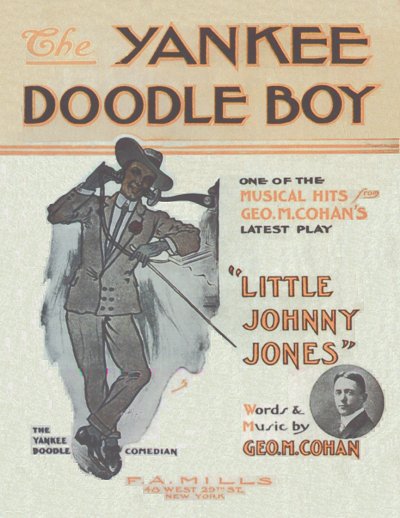
George M. Cohan “virtually invented musical comedy” LW predating future musical theatre greats like Jerome Kern, George Gershwin, and Richard Rodgers. His first two efforts at Broadway musicals flopped, but his third attempt, 1904’s Little Johnny Jones, was a hit PS producing “Give My Regards to Broadway” and “Yankee Doodle Boy.” PS Billy Murray’s recording of the latter gave the Victor record company its biggest seller up to that point. SS Read more.

Billy Murray “Give My Regards to Broadway” (1905)

Inducted July 2021 as “Top Vaudeville Songs”

George M. Cohan wrote, composed, produced, acted, and danced in the Broadway musical, Little Johnny Jones, inspired by real-life jockey Tod Sloan. The show featured “Give My Regards to Broadway” which “could only have been sung by an opinionated, cocky young man with a very high opinion of his own worth.” LW Cohan was a natural. Read more.

Bryon G. Harlan “School Days (When We Were a Couple of Kids)” (1907)

Inducted July 2021 as “Top Vaudeville Songs”

In the early 1900s, sentimental ballads were popular and songs like “Shine on, Harvest Moon,” “In the Shade of the Old Apple Tree,” and “School Days” “exemplified this musical style.” WHC These songs dominated sheet music sales, as they “could be sung in the parlor at home around the family piano.” WHC It “remains a singalong favorite.” JA Read more.

Harry Macdonough with Miss Walton “Shine on Harvest Moon” (1909)

Inducted July 2021 as “Top Vaudeville Songs”

Nora Bayes and husband Jack Norworth wrote what may be “the most recognized of the many ‘moon’ ballads.” RCG It was “decidedly old-fashioned and a product of twentieth century innocence.” RCG The duo introduced the song in Florenz Ziegfeld’s Follies of 1908. The couple didn’t last, divorcing in 1913 (the second of five marriages for Bayes!), SF but the song survived. Both performed it the rest of their lives and it became Bayes’ signature song. RCG Read more.

Billy Murray with the Haydn Quartet “By the Light of the Silvery Moon” (1910)

Inducted July 2021 as “Top Vaudeville Songs”

Edward Madden crafted the words for “By the Light of the Silvery Moon” around Gus Edwards “somewhat dreamy music that lends itself to soft shoe.” RCG Its “moon-June-croon rhymes” are “cliché by today’s standards,” RCG but were representative of the Tin Pan Alley era which dominated music in the early 1900s. Read more.

Sophie Tucker “Some of These Days” (1911)

Inducted July 2021 as “Top Vaudeville Songs”

This has been called “the most important turning point in Tin Pan Alley history” because it was completely different than other popular music of the day. RCG Canadian songwriter Shelton Brooks originally composed this blues number as a waltz, but integrated jazz into the song’s loose structure. As such, jazz musicians had a wide-open pallet on which to improvise. RCG Read more.

American Quartet “Moonlight Bay” (1912)

Inducted July 2021 as “Top Vaudeville Songs”

“Arguably the best moonlight song ever written,” PS “Moonlight Bay” “conjures up an entire lost era of a slower-paced America that…had plenty of time for gentle spooning in an unspoiled natural setting.” SS It is “a very durable song from Tin Pan Alley about an idyllic setting for romance.” RCG Read more.

Monday, June 22, 2020

Dave's Music Database Hall of Fame: Music Maker Inductees (June 2020)

Top 20 Pre-Rock-Era Acts

Originally posted 6/22/2020.

January 22, 2019 marked the 10-year anniversary of the DMDB blog! To honor that, Dave’s Music Database announced its own Hall of Fame. This sixth batch of music maker inductees celebrates the top Pre-Rock-Era Acts, as determined by rankings in Joel Whitburn’s Pop Memories 1890-1954 (see the list here). These are the top 20 from that list, minus previous inductees, which included Henry Burr, Arthur Collins, Bing Crosby, Tommy Dorsey, Byron Harlan, Guy Lombardo, Billy Murray, Frank Sinatra, and Paul Whiteman. See the full list of music maker inductees here.

The Andrews Sisters (active 1938-1951)

Inducted June 2020 as “Top 20 Pre-Rock-Era Act.”

The most popular female vocal group of the pre-rock era. The trio of Patty, Maxene, and LaVerne appeared in many '40s movies and their unmistakable sound helped define the wartime. Had six #1 songs, including “Bei Mir Bist Du Schöen (Means That You’re Grand),” “Ferryboat Serenade,” “Shoo-Shoo Baby,” “Rum and Coca Cola,” “I Can Dream, Can’t I?,” and “I Wanna Be Loved.” However, they are probably best remembered for “Boogie Woogie Bugle Boy.” Read more.

Perry Como (1912-2001)

Inducted June 2020 as “Top 20 Pre-Rock-Era Act.”

Italian-American traditional pop crooner born Pierino Ronald Como in Canonsburg, PA. Left his hometown barber shop to sing with Freddie Carlone’s local band in 1933; about four years later Ted Weems hired him as a featured vocalist. When the Weems band broke up in 1942, he secured a local CBS radio show. Once he started recording the following year there was no stopping him. Como’s relaxed style and romantic vocals made his TV series a popular favorite from the early ‘50s to 1963. His version of “Some Enchanted Evening” is featured in the DMDB book The Top 100 Songs of the Pre-Rock Era, 1890-1953. Read more.

Jimmy Dorsey (1904-1957)

Inducted June 2020 as “Top 20 Pre-Rock-Era Act.”

Bandleader born in Shenandoah, PA. Used his vast skills as alto-saxophonist and clarinetist with a multitude of bands during the late ‘20s and early ‘30s. He and his brother Tommy Dorsey played with others and each other as the Dorsey Brothers before Jimmy struck out on his own in 1935. “Amapola (Pretty Little Poppy),” “Tangerine,” and “Besame Mucho” are in the DMDB’s top 1% of songs. Read more.

Benny Goodman (1909-1986)

Inducted June 2020 as “Top 20 Pre-Rock-Era Act.”

Jazz clarinetist and bandleader born in Chicago, Illinois. Known as "The King of Swing" for ushering in more dance-oriented jazz. Was in a band by age 14. Worked with multiple noted artists before forming his own band in 1934. He launched the careers of many other jazz musicians including guitarist Charlie Christian and drummer Gene Krupa and was one of the first to lead integrated jazz groups. His 1/16/1938 Carnegie Hall concert in New York is, as All Music Guide’s Bruce Eder called it, “the single most important jazz or popular music concert in history.” Read more.

Al Jolson (1886-1950)

Inducted June 2020 as “Top 20 Pre-Rock-Era Act.”

Jazz singer born Asa Yoelson in St. Petersburg, Russia. One of the greatest popular entertainers in American history, becoming a star with minstrel shows, vaudeville, Broadway, and movies, specifically in 1927’s The Jazz Singer, which ushered in the age of sound motion pictures. “You Made Me Love You, I Didn't Want to Do It,” “Rock-a-Bye Your Baby with a Dixie Melody,” “Swanee,” “April Showers,” and “Sonny Boy” are featured in the DMDB book The Top 100 Songs of the Pre-Rock Era, 1890-1953. Read more.

Sammy Kaye (1910-1987)

Inducted June 2020 as “Top 20 Pre-Rock-Era Act.”

Jazz/big band leader born Samuel Zamocay, Jr. in Lakewood, Ohio. Durable leader of popular “sweet” dance band with the slogan “Swing and Sway with Sammy Kaye.” Also clarinet and alto saxman, as well as a composer (“Remember Pearl Harbor”). His song “Daddy” is in the DMDB’s top 1% of songs. Read more.

Ted Lewis (1890-1971)

Inducted June 2020 as “Top 20 Pre-Rock-Era Act.”

Bandleader, clarinetist, and singer born Theodore Friedman in Circleville, Ohio. Sometime songwriter (his theme “When My Baby Smiles at Me”) whose showmanship was honed during early years in vaudeville. His famous slogan was “Is everybody happy?” “On the Sunny Side of the Street” is featured in the DMDB book The Top 100 Songs of the Pre-Rock Era, 1890-1953. Read more.

Harry Macdonough (1871-1931)

Inducted June 2020 as “Top 20 Pre-Rock-Era Act.”

Tenor singer born John Scantlebury MacDonald in Ontario, Canada. Second only to Henry Burr among the great ballad singers of recordings’ pioneer pre-1920 era. Worked with the Edison Male Quartette, Haydn Quartet, Orpheus Quartet, Lyric Quartet, and Victor Light Opera Co. Was a top record company executive after World War I. “Shine on, Harvest Moon” and “Down by the Old Mill Stream” are featured in the DMDB book The Top 100 Songs of the Pre-Rock Era, 1890-1953. Read more.

Glenn Miller (1904-1944)

Inducted June 2020 as “Top 20 Pre-Rock-Era Act.”

Jazz/big band leader born Alton Glenn Miller on 3/1/1904 in Clarinda, IA. Led of the most universally beloved of all big bands. Played trombone and did arrangements for others before starting his own band in 1937. He enlisted in the Army Air Force in September 1942, and formed the war’s most famous service band. Died on 12/15/1944 when his plane was lost over the English Channel. “In the Mood” and “Chattanooga Choo Choo” are featured in the DMDB book The Top 100 Songs of the Pre-Rock Era, 1890-1953. Read more.

Peerless Quartet (active 1907-1928)

Inducted June 2020 as “Top 20 Pre-Rock-Era Act.”

All-time great vocal group which began as the Columbia Male Quartet. Members included Henry Burr, Albert Campbell, Steve Porter, Frank Stanley, Arthur Collins, John Meyer, and Frank Croxton. Their song “Let Me Call You Sweetheart” is featured in the DMDB book The Top 100 Songs of the Pre-Rock Era, 1890-1953. Read more.

Charles Adams Prince (1869-1937)

Inducted June 2020 as “Top 20 Pre-Rock-Era Act.”

Band leader, pianist and celesta player. Musical director of Columbia Records from the turn of the century to the early 1920s. During that period, his band accompanied virtually every singer recording for Columbia. His orchestra charted 82 times between 1905 and 1923, including the #1 hits “Ballin’ the Jack” (DMDB’s 1914 song of the year), “Hello, Hawaii, How Are You?,” and a version of “The Star-Spangled Banner.” Read more.

Ben Selvin (1898-1980)

Inducted June 2020 as “Top 20 Pre-Rock-Era Act.”

Jazz/big band leader and violinist. His 2000+ recordings were more than any other bandleader. He charted more than 100 times, including eight #1 hits. “Dardanella,” “Blue Skies,” and “Happy Days Are Here Again” are featured in the DMDB book The Top 100 Songs of the Pre-Rock Era, 1890-1953. Read more.

Thursday, March 26, 2020

Top 100 Songs from 1900-1909

First posted 4/4/2012; last updated 3/26/2020.

Top 100 Songs of the Decade:

1900-1909

These are the top 100 songs from the first ten years of the 20th century according to Dave’s Music Database. Rankings are figured by combining sales figures, chart data, radio airplay, video airplay, streaming figures, awards, and appearances on best-of lists.

1. You’re a Grand Old Flag (aka “The Grand Old Rag”)…Billy Murray (1906)
2. Take Me Out to the Ball Game…Haydn Quartet (1908)
3. Sweet Adeline (You’re the Flower of My Heart)…Haydn Quartet (1904)
4. In the Good Old Summertime…Haydn Quartet (1903)
5. Give My Regards to Broadway…Billy Murray (1905)
6. Meet Me in St. Louis Louis…Billy Murray (1904)
7. Yankee Doodle Boy…Billy Murray (1905)
8. School Days (When We Were a Couple of Kids)…Byron Harlan (1907)
9. Bill Bailey Won’t You Please Come Home…Arthur Collins (1902)
10. Shine on Harvest Moon…Harry MacDonough with Miss Walton (1909)

11. My Gal Sal…Byron Harlan (1907)
12. I Wonder Who’s Kissing Her Now…Henry Burr (1909)
13. Wait Till the Sun Shines Nellie…Byron Harlan (1906)
14. Put on Your Old Grey Bonnet…Haydn Quartet (1909)
15. In My Merry Oldsmobile…Billy Murray (1905)
16. The Glow-Worm…Victor Orchestra (1908)
17. In the Shade of the Old Apple Tree…Henry Burr (1905)
18. Harrigan…Billy Murray (1907)
19. The Old Folks at Home (Swanee River)…Vess Ossman (1900)
20. The Preacher and the Bear…Arthur Collins (1905)

21. Nobody…Bert Williams (1906)
22. On a Sunday Afternoon…J.W. Myers (1902)
23. Tell Me Pretty Maiden…Harry MacDonough with Grace Spencer (1901)
24. Bedelia…Haydn Quartet (1904)
25. A Bird in a Gilded Cage…Steve Porter (1900)
26. Hello Central Give Me Heaven…Byron Harlan (1901)
27. When You Were Sweet Sixteen…George J. Gaskin (1900)
28. Hiawatha (His Song to Minnehaha)…Harry MacDonough (1903)
29. Listen to the Mocking Bird…Frank Stanley & Corrine Morgan (1904)
30. Pagliacci, Act I: Vesti La Giubba (On with the Play) (LEONCAVALLO)…Enrico Caruso (1907)

31. Toyland…Haydn Quartet with Corrine Morgan (1904)
32. Love Me and the World Is Mine…Henry Burr (1906)
33. Auld Lang Syne…Frank Stanley (1907)
34. Arkansaw Traveler…Len Spencer (1902)
35. Cuddle Up a Little Closer, Lovey Mine…Billy Murray & Ada Jones (1908)
36. Under the Bamboo Tree…Arthur Collins (1902)
37. Down Where the Wurzburger Flows…Arthur Collins & Byron Harlan (1903)
38. Silver Threads Among the Gold…Richard Jose (1904)
39. Sunbonnet Sue…Haydn Quartet (1908)
40. Blue Bell…Byron Harlan with Frank Stanley (1904)

41. Navajo…Billy Murray (1904)
42. Goodbye, Dolly Gray…Big Four Quartet (1901)
43. Ma Blushin’ Rosie…Albert Campbell (1900)
44. I’ve Got Rings on My Fingers…Ada Jones (1909)
45. In the Sweet Bye and Bye…Harry MacDonough with John Bieling (1903)
46. As Long As the World Rolls On…Alan Turner (1908)
47. The Right Church But the Wrong Pew…Arthur Collins with Byron Harlan (1909)
48. Come Down, Ma Evening Star…Mina Hickman (1903)
49. Maple Leaf Rag…U.S. Marine Band (1907)
50. In the Good Old Summertime…J.W. Myers (1902)

51. The Mansion of Aching Hearts…Harry MacDonough (1902)
52. Mighty Like a Rose (aka “Mighty Lak a Rose”)…George Alexander (1903)
53. Good Morning, Carrie…Bert Williams with George Walker (1902)
54. Any Rags?...Arthur Collins (1903)
55. Come Take a Trip in My Air-Ship…Billy Murray (1905)
56. Everybody Works But Father…Billy Murray (1905)
57. Ma Tiger Lily…Arthur Collins (1900)
58. In the Good Old Summertime…John Philip Sousa’s Band with Harry Macdonough & S.H. Dudley (1902)
59. The Yama Yama Man…Ada Jones with the Victor Light Orchestra Co. (1909)
60. Are You Sincere?...Elise Stevenson (1908)

61. The Good Old U.S.A….Byron Harlan (1906)
62. I Love a Lassie (My Scotch Bluebell)…Harry Lauder (1907)
63. Shine on Harvest Moon…Ada Jones & Billy Murray (1909)
64. Any Old Place I Hang My Hat Is “Home Sweet Home”…Will Denny (1901)
65. The Glow-Worm…Lucy Isabelle Marsh (1908)
66. Where the Morning Glories Twine Around the Door…Byron Harlan (1905)
67. Good Evening, Caroline…Frank Stanley with Elise Stevenson (1909)
68. Hurrah for Baffin’s Bay…Arthur Collins & Byron Harlan (1903)
69. Take Me Out to the Ball Game…Edward Meeker (1908)
70. Way Down in Old Indiana…J.W. Myers (1902)

71. Absence Makes the Heart Grow Fonder…Harry MacDonough (1901)
72. How’d You Like to Spoon with Me?...Corrine Morgan with the Haydn Quartet (1906)
73. Goodbye, Eliza Jane…Arthur Collins (1903)
74. So Long, Mary…Corrine Morgan (1906)
75. The Tale of a Bumble Bee…Harry MacDonough (1901)
76. Under Any Old Flag at All…Billy Murray (1908)
77. The Old Folks at Home (Swanee River)…Louise Homer (1905)
78. The Old Folks at Home (Swanee River)…Haydn Quartet (1904)
79. Take Me Out to the Ball Game…Harvey Hindermeyer (1908)
80. When Chloe Sings a Song…George J. Gaskin (1900)

81. Alexander (Don’t You Love Your Baby No More?)…Billy Murray (1904)
82. Dear Old Girl…J.W. Myers (1903)
83. When We Are M-A-R-R-I-E-D…Ada Jones & Billy Murray (1908)
84. He’s a Cousin of Mine…Bert Williams (1907)
85. Waiting at the Church (My Wife Won’t Let Me)…Ada Jones (1906)
86. I Just Can’t Make My Eyes Behave…Ada Jones (1903)
87. To the End of the World with You…Henry Burr (1909)
88. Sweet Adeline (You’re the Flower of My Heart)…Columbia Male Quartet (1904)
89. Red Wing (An Indian Fable)…Frank Stanley with Henry Burr (1907)
90. Let’s Take an Old-Fashioned Walk…Ada Jones with Billy Murray (1907)

91. Nobody’s Little Girl…Byron Harlan (1907)
92. Dearie…Corrine Morgan with the Haydn Quartet (1905)
93. Always in the Way…Byron Harlan (1903)
94. Camp Meetin’ Time…Arthur Collins & Byron Harlan (1906)
95. Under the Anhauser Bush…Arthur Collins & Byron Harlan (1904)
96. Anchors Aweigh…U.S. Naval Academy Band (1906)
97. Daddy’s Little Girl…Byron Harlan (1906)
98. My Wild Irish Rose…Haydn Quartet with Harry MacDonough (1907)
99. A Coon Band Contest…Vess Ossman (1900)
100. I Can’t Tell You Why I Love You But I Do…Harry MacDonough (1900)

Friday, September 7, 2018

100 years ago: Joseph C. Smith hit #1 with “Smiles”

Smiles

Joseph C. Smith's Orchestra and Harry MacDonough

Writer(s): Lee Roberts (music), J. Will Callahan (words) (see lyrics here)


First Charted: August 10, 1918


Peak: 11 US, 112 GA, 114 SM (Click for codes to charts.)


Sales (in millions): 3.0 (sheet music)


Airplay/Streaming (in millions): -- radio, 0.02 video, -- streaming

Awards:

Click on award for more details.

About the Song:

This “wartime morale booster” TY2 was introduced in the revue The Passing Show of 1918 by Nell Carrington and a chorus of girls. TY2 Part of the song’s popularity may be attributed to it being a song that came out during the Great War, but wasn’t directly about it. It gave “soldiers and their loved ones back home a break from the war.” TY2

Composer Lee Roberts was at a convention and heard a lecture on the value of a smile in business. He wrote a melody along with some suggested lyrics, including the line “There are smiles that make us happy and smiles that make us blue” and sent it to J. Will Callahan. He expanded it into a full song.

“Smiles” “was a break from the military marching music of the past few years and was very modern for its era allowing the showcasing of the musicians with a vocalist secondary to the overall sound of the record, a style that would dominate the first half of the decade of the 1920s.” SM

Joseph C. Smith’s Orchestra took the song to #1 in 1918. “Joseph Cyrus Smith was born in New York City in 1883 and before the war, he was leader of his own dance band which had a residency at the Plaza Hotel in New York.” SM His version featured vocals from Harry MacDonough. SM There were also versions that year from Henry Burr & Albet Campbell (#3) and Lambert Murphy (#5). PM The song was used in several movies, including Applause (1929), For Me and My Girl (1942), The Dolly Sisters (1945), Somebody Loves Me (1952), and The Eddy Duchin Story (1956).


Resources:


Related Links:


First posted 3/20/2023.

Friday, November 20, 2015

100 years ago: “They Didn’t Believe Me” hit #1

They Didn’t Believe Me

Harry MacDonough with Olive Kline (as Alice Green)

Writer(s): Herbert Reynolds, Jerome Kern (see lyrics here)


First Charted: November 13, 1915


Peak: 17 US (Click for codes to singles charts.)


Sales (in millions): 2.0 (sheet music)


Airplay/Streaming (in millions): -- radio, -- video, -- streaming

Awards:

Click on award for more details.

About the Song:

Jerome Kern, best known for the landmark musical Show Boat, was “one of the most important pioneering composers of American Popular Song.” PS Born in New York City in 1885, Kern was the son of an upper-middle class family. He got a Master of Music degree at Germany’s Heidleberg University and started writing for Broadway shows by the time he was 19. PS

Over the next eight years, he wrote about 100 songs for roughly thirty Broadway musicals and wrote three full, unsuccessful musical scores. SS His style integrated “vaudeville, minstrel songs, ragtime and ‘coon’ songs” LW “into Broadway theatre songs, something new and intrinsicially American.” LW He hit paydirt in 1914 with The Girl from Utah after several failed stage productions. He wrote eight songs for the adaptation of an English opera, one of which was “They Didn’t Believe Me.” It was Kern’s first hit song and “may well be his best,” PS marking his “graduation to the status of major composer from that of a ‘mere’ pop tunesmith.” SS

“The song is held to be the earliest on the cannon of showtunes, or standards, which have become to be known as ‘American Popular Song.’” LW David Ewen said this song “stands out with beacon-like brilliance. Kern no longer submitted meekly to the song conventions of the day, but bent them to his own creative needs.” SS The song is “a model for the “thirty-two bar Tin Pan Alley ballad that became standard for the time. While not exactly slangy it is written in a conversational tone, [such as] ‘And I’m cert’nly goin’ to tell them;’ it is almost spoken yet remains sung.” RCG

Michael Rourke wrote the lyrics for “They Didn’t Believe Me.” He was born in England and moved to the United States to become a press agaent. Around the start of World War I, he changed his name to Herbert Reynolds for unknown reasons. He had provided lyrics to a dozen or so of Kern’s earlier songs under his original name. This was written under his new name and “the words work perfectly with Kern’s melody, which feels tender, and natural, and still sounds fresh today.” LW

The song became a #1 song in 1915 in the hands of Harry MacDonough and Olive Kline. In 1916, Grace Kerns & Reed Miller took it to #8 and Walter Van Brunt & Gladys Rice reached #9. Morton Downey had a #15 hit with it in 1934. PM Dinah Shore sang it in the 1946 Kern biopic Till the Clouds Roll By and Mario Lanza and Kathryn Grayson tackled it in the 1949 movie, That Midnight Kiss. PS Bing Crosby, Tommy Dorsey, Johnny Mercer, and Barbra Streisand were among the others who recorded the song. RCG


Resources:


Related Links:


First posted 11/20/2014; last updated 11/23/2022.