Showing posts with label Ada Jones. Show all posts

Thursday, December 15, 2022

USA: #1 Pop Songs, 1900-1909

USA’s #1 Pop Songs:

1900-1909

These are the #1 pop songs on the United States pop charts from 1900 to 1909. Songs could have hit #1 on either of these charts:

Numbers following the letter codes indicate how many weeks the song spent at #1 on that chart. Links go to specific lists of the biggest songs of all time for that chart. The Gardner charts are monthly and not weekly so the #of weeks has been generated by multiplying the song’s number of months at #1 by 4. Also, the Gardner book indicates only the song title and not a specific artist so the artists identified here are the ones that have the highest ranked Dave’s Music Database version, hit #1 on the Billboard chart as well, and/or are spotlighted as the top version by Gardner.

Click here to access a full list of #1 songs from 1890 to present. See other chart-based lists here.


1900:

  1. 1/1: Arthur Collins “I’d Leave My Happy Home for You” (GA: 8, SM: 4)
  2. 2/3: Arthur Collins “Mandy Lee” (BB: 6)
  3. 3/1: Steve Porter “A Bird in a Gilded Cage” (GA: 8, BB: 6, SM: 5)
  4. 3/17: George J. Gaskin “When Chloe Sings a Song” (BB: 3)
  5. Mar: Jere Mahoney “A Bird in a Gilded Cage” (GA: 8, BB: 5)
  6. 4/17: Jere Mahoney “When You Were Sweet Sixteen” (BB: 5)
  7. 5/15: Bryon G. Harlan “The Blue and the Gray (The Mother’s Gift to Her Country)” (GA: 16, SM: 6)
  8. 7/28: Len Spencer “Ma Tiger Lily” (BB: 5)
  9. 8/15: Dan Quinn “Strike Up the Band, Here Comes a Sailor” (GA: 4, SM: 2)
  10. 9/1: Arthur Collins “Ma Tiger Lily” (BB: 6)
  11. 9/15: Joseph Natus “The Fatal Rose of Red” (GA: 4, SM: 2)
  12. 10/13: Haydn Quartet “Because” (BB: 4)
  13. 10/15: Harry MacDonough “I Can’t Tell You Why I Love You But I Do” (GA: 8, SM: 3)
  14. 11/10: George J. Gaskin “When You Were Sweet Sixteen” (BB: 8)
  15. 12/1: Jere Mahoney “For Old Times’ Sake” (GA: 4, SM: 2)

1901:

  1. 1/5: Albert Campbell “Ma Blushin’ Rosie” (BB: 7)
  2. 2/1: Arthur Collins & Joe Natus “Coon! Coon! Coon!” (GA: 4, SM: 3)
  3. 2/23: John Philip Sousa “The Stars and Stripes Forever” (BB: 3)
  4. 3/15: Big Four Quartet “Goodbye Dolly Gray” (GA: 12, SM: 7, BB: 3)
  5. 3/16: S.H. Dudley “When Reuben Comes to Town” (BB: 3)
  6. 5/11: Harry MacDonough with Grace Spencer “Tell Me, Pretty Maiden” (BB: 7)
  7. 6/29: Bryon G. Harlan with Frank Stanley, Joe Belmont, & the Florodora Girls “Tell Me, Pretty Maiden” (BB: 3)
  8. 7/10: Bryon G. Harlan “Hello Central, Give Me Heaven” (GA: 12, BB: 5, SM: 3)
  9. 7/20: Cal Stewart “Jim Lawson’s Horse Trade with Deacon Witherspoon” (BB: 3)
  10. 8/1: S.H. Dudley & Harry MacDonough “Sweet Annie Moore” (SM: 1)
  11. 9/14: J.W. Myers “In the Shade of the Palm” (BB: 1)
  12. 9/21: Cal Stewart “Uncle Josh's Huskin' Bee Dance” (BB: 3)
  13. 10/1: Bert Williams & George Walker “Good Morning, Carrie” (BB: 5, SM: 4)
  14. 10/12: Harry MacDonough “The Tale of a Bumblebee” (BB: 4)
  15. Oct: Dan Quinn “Good Evening, Carrie” (GA: 8, BB: 3)
  16. 11/9: Harry MacDonough “Absence Makes the Heart Grow Fonder” (BB: 3)
  17. 12/1: Harry MacDonough “I’ll Be with You When the Roses Bloom Again” (GA: 4, SM: 2)
  18. 12/21: Will Denny “Any Old Place I Can Hang My Hat Is Home Sweet Home to Me” (BB: 4)

1902:

  1. 1/1: Sousa’s Band “Creole Belles” (SM: 6)
  2. Jan: Metropolitan Orchestra “Creole Bells” GA: 12)
  3. 3/1: Len Spencer “The Arkansaw Traveler” (BB: 11)
  4. 4/1: J.W. Myers “Way Down Yonder in the Cornfield (Alabama)” (GA: 4, SM: 1)
  5. 4/15: J. Aldrich Libbey “On a Sunday Afternoon” (SM: 6)
  6. 5/10: J.W. Myers “On a Sunday Afternoon” (GA: 12, BB: 6)
  7. 6/21: J.W. Myers “Way Down in Old Indiana” (BB: 5)
  8. 7/15: Dan Quinn “Rip Van Winkle Was a Lucky Man” (SM: 1)
  9. 7/26: Arthur Collins “Bill Bailey, Won’t You Please Come Home” (BB: 8, GA: 4)
  10. 8/1: Arthur Collins “Please Go ‘Way and Let Me Sleep” (GA: 4, SM: 2)
  11. 9/1: Dan Quinn “Bill Bailey, Won’t You Please Come Home” (SM: 1)
  12. 9/15: Harry MacDonough “In the Good Old Summertime” (SM: 5)
  13. 9/20: Bryon G. Harlan “The Mansion of Aching Hearts” (BB: 3)
  14. 10/11: Harry MacDonough “The Mansion of Aching Hearts” (BB: 4)
  15. 11/8: J.W. Myers “In the Good Old Summertime” (BB: 7)
  16. 12/1: Dan Quinn “Mr. Dooley” (GA: 4, SM: 2)
  17. 12/27: Arthur Collins “Under the Bamboo Tree” (GA: 12, SM: 6, BB: 3)

1903:

  1. 1/1: Arthur Collins & Bryon G. Harlan “Down Where the Wurzburger Flows” (BB: 5, GA: 4, SM: 2)
  2. 2/21: Mina Hickman “Come Down Ma Evening Star” (BB: 5)
  3. 3/28: Haydn Quartet “In the Good Old Summertime” (GA: 8, BB: 6)
  4. 5/1: Harry MacDonough “Hiawatha (His Song to Minnehaha)” (GA: 12, SM: 6, BB: 4)
  5. 5/9: John Philip Sousa’s Band with Harry MacDonough & S.H. Dudley “In the Good Old Summertime” (GA: 8, BB: 4)
  6. 6/6: Harry MacDonough with John Bieling “In the Sweet Bye and Bye” (BB: 4)
  7. 8/1: Henry Burr “Come Down Ma Evening Star” (BB: 4)
  8. 8/29: Cal Stewart “Uncle Josh on an Automobile” (BB: 4)
  9. 8/1: Mina Hickman “Congo Love Song” (GA: 8, SM: 5)
  10. 9/26: Arthur Collins & Bryon G. Harlan “Hurrah for Baffin’s Bay” (BB: 5)
  11. 10/15: Bryon G. Harlan “Always in the Way” (GA: 8, SM: 3)
  12. 10/31: Arthur Collins “Goodbye Eliza Jane” (BB: 4)
  13. 12/1: Billy Murray “Bedelia” (SM: 7, BB: 3)
  14. 12/5: Arthur Collins “Any Rags?” (BB: 5)

1904:

  1. 1/9: Haydn Quartet “Bedelia” (GA: 12, BB: 7)
  2. 3/15: Billy Murray “Navajo” (GA: 8, BB: 5, SM: 3)
  3. 3/19: Richard Jose “Silver Threads Among the Gold” (BB: 4)
  4. May: Bryon G. Harlan & Frank Stanley “Blue Bell” (GA: 12, BB: 3)
  5. May: Haydn Quartet with Harry MacDonough “Blue Bell” (GA: 12, SM: 5, BB: 4)
  6. 7/9: Corinne Morgan with Haydn Quartet “Toyland” (BB: 2)
  7. 7/15: Billy Murray “Meet Me in St. Louis, Louis” (BB: 9, GA: 8, SM: 4)
  8. 9/15: Billy Murray “Come Take a Trip in My Airship” (GA: 4, BB: 4, SM: 2)
  9. 9/24: Bryon G. Harlan “All Aboard for Dreamland” (BB: 2)
  10. 10/8: Billy Murray “Alexander (Don't You Love Your Baby No More?)” (BB: 3)
  11. 10/29: Haydn Quartet “Sweet Adeline (You’re the Flower of My Heart)” (BB: 10)
  12. 10/15: Mina Hickman “Goodbye Little Girl, Goodbye” (GA: 4, SM: 3)
  13. 12/1: Billy Murray “Teasing (I Was Only Teasing You)” (SM: 1)
  14. 12/15: Bob Roberts “I May Be Crazy, But I Ain't No Fool” (GA: 4, SM: 1)
  15. 12/24: Columbia Male Quartet “Sweet Adeline (You’re the Flower of My Heart)” (BB: 3)

1905:

  1. 1/1: Bob Roberts “Back Back Back to Baltimore” (GA: 8, SM: 4)
  2. 2/25: Billy Murray “Yankee Doodle Boy” (aka “I’m a Yankee Doodle Dandy”) (GA: 8, BB: 8, SM: 3)
  3. 4/15: Henry Burr (as Irving Gillette) “In the Shade of the Old Apple Tree” (GA: 16, SM: 8, BB: 7)
  4. 6/10: Arthur Collins “The Preacher and the Bear” (BB: 11)
  5. 7/15: Billy Murray “Give My Regards to Broadway” (BB: 5)
  6. 8/15: Ada Jones “Keep a Little Cosey Corner in Your Heart for Me” (SM: 1)
  7. 9/30: Corinne Morgan with Haydn Quartet “Dearie” (GA: 4, BB: 2)
  8. 9/1: Arthur Collins “My Irish Molly-O” (GA: 4, SM: 2)
  9. 10/1: Bryon G. Harlan “Would You Care?” (GA: 8, SM: 4)
  10. 10/14: Billy Murray “In My Merry Oldsmobile” (BB: 7)
  11. 12/1: Bryon G. Harlan “Wait Till the Sun Shines, Nellie” (GA: 12, SM: 6)
  12. 12/2: Bryon G. Harlan “Where the Morning Glories Twine Around the Door” (BB: 5)

1906:

  1. 1/6: Billy Murray “Everybody Works But Father” (BB: 3)
  2. 1/27: Corinne Morgan with the Haydn Quartet “How'd You Like to Spoon with Me?” (BB: 2)
  3. 2/10: Bryon G. Harlan “Wait Till the Sun Shines, Nellie” (BB: 9)
  4. 2/24: Harry Tally “Wait Till the Sun Shines, Nellie” (BB: 1)
  5. 3/1: Harry MacDonough “Dearie” (SM: 3)
  6. 4/15: Haydn Quartet with Harry MacDonough “Will You Love Me in December As You Do in May?” (GA: 8, SM: 3)
  7. 4/21; Corinne Morgan “So Long Mary” (BB: 3)
  8. 5/12: Billy Murray “You’re a Grand Old Flag (aka “The Grand Old Rag”)” (BB: 10, GA: 8, SM: 3)
  9. 7/15: Ada Jones “Waiting at the Church (My Wife Won't Let Me)” (GA: 8, SM: 4)
  10. 7/21: Bert Williams “Nobody” (BB: 9)
  11. 9/15: Billy Murray & the Haydn Quartet “Waltz Me Around Again, Willie” (SM: 5)
  12. 9/22: Bryon G. Harlan “The Good Old U.S.A.” (BB: 4)
  13. 10/20: Albert Campbell “Love Me and the World Is Mine” (BB: 3, SM: 1)
  14. 11/10: Henry Burr “Love Me and the World Is Mine” (BB: 7)
  15. 12/1: Bryon G. Harlan “Won't You Come Over to My House?” (GA: 4, SM: 1)
  16. 12/29: Bert Williams “Let It Alone” (BB: 2)

1907:

  1. 1/1: Arthur Collins & Byron G. Harlan “Arrah Wanna” (SM: 4)
  2. 1/12: Albert Collins & Bryon G. Harlan “Camp Meetin’ Time” (BB: 2)
  3. 1/26: Bert Williams “He’s a Cousin of Mine” (BB: 2)
  4. Jan: Billy Murray with the Haydn Quartet “Arrah Wanna” (GA: 8)
  5. 2/12: Bryon G. Harlan “My Gal Sal” (BB: 10)
  6. 3/1: Helen Trix “The Bird on Nellie’s Hat” (GA: 4, SM: 2)
  7. 4/1: Vesta Victoria “Poor John!” (SM: 2)
  8. 4/20: Ada Jones “I Just Can't Make My Eyes Behave” (BB: 2)
  9. Apr: Ada Jones “Poor John!” (GA: 4)
  10. 5/1: Billy Murray “San Antonio (Cowboy Song)” (SM: 2)
  11. 5/4: Harry MacDonough with Elise Stevenson “Because You’re You” (BB: 2)
  12. 5/18: Bryon G. Harlan “School Days (When We Were a Couple of Kids)” (GA: 20, BB: 11, SM: 9)
  13. May: Billy Murray “San Antonio (Cowboy Song)” (GA: 4)
  14. 8/3: Bryon G. Harlan “Nobody’s Little Girl” (BB: 3)
  15. 8/24: Enrico Caruso “Pagliacci, Act I: Vesti La Giubba (On with the Play) (new version)” (BB: 4)
  16. 9/21: Billy Murray “Harrigan” (BB: 9, SM: 6, GA: 2)
  17. 11/23: Ada Jones & Billy Murray “Let's Take an Old-Fashioned Walk” (BB: 6)

1908:

  1. 1/4: Harry MacDonough “My Dear” (BB: 5)
  2. 1/15: Bryon G. Harlan “Two Blue Eyes (Two Little Baby Shoes)” (GA: 4, SM: 1)
  3. 2/1: Billy Murray “The Best I Get Is Much Obliged to You” (SM: 1)
  4. 2/8: Billy Murray “Under Any Old Flag at All” (BB: 6)
  5. 2/15: Elise Stevenson & Harry MacDonough “I Love You So (Merry Widow Waltz)” (SM: 3)
  6. Feb: Victor Orchestra “I Love You So (Merry Widow Waltz)” (GA: 8)
  7. 3/21: Alan Turner “As Long As the World Rolls On” (BB: 6)
  8. 4/1: Billy Murray “I'm Afraid to Come Home in the Dark” (GA: 8, SM: 3)
  9. 5/2: Ada Jones & Billy Murray “Wouldn't You Like to Have Me for a Sweetheart?” (BB: 3)
  10. 5/15: Victor Orchestra “The Glow-Worm” (GA: 8, SM: 6, BB: 5)
  11. 6/27: Lucy Isabell Marsh “The Glow-Worm” (GA: 8, BB: 5)
  12. 8/1: Elise Stevenson “Are You Sincere?” (BB: 4)
  13. 8/29: Ada Jones & Billy Murray “When We Are M-A-R-R-I-E-D” BB: 4)
  14. Aug: Billy Murray with the Haydn Quartet “Take Me Out to the Ball Game” (GA: 8, BB: 7)
  15. 9/15: Harvey Hindermeyer “Take Me Out to the Ball Game” (GA: 8, BB: 7, SM: 2)
  16. 9/15: Arthur Collins & Byron G. Harlan “Down in Jungle Town” (SM: 1)
  17. 9/26: Ada Jones & Billy Murray “Cuddle Up a Little Closer, Lovey Mine” (BB: 5)
  18. 10/1: Haydn Quartet with Harry MacDonough “Sunbonnet Sue” (GA: 16, SM: 8, BB: 5)

1909:

  1. 1/23: Frank Stanley & Elise Stevenson “Good Evening, Caroline” (BB: 5)
  2. 2/1: Eddie Morton “The Right Church But the Wrong Pew” (SM: 3)
  3. 2/27: Arthur Collns & Bryon G. Harlan “The Right Church But the Wrong Pew” (BB: 6)
  4. Feb: Arthur Collins & Bryon G. Harlan “The Right Church But the Wrong Pew” (GA: 4)
  5. 3/15: Harry MacDonough & Miss Walton “Shine on, Harvest Moon” (GA: 12, BB: 9, SM: 5)
  6. 6/1: Arthur Collins & Byron G. Harlan “Yip-I-Addy-I-Ay!” (SM: 4)
  7. 6/12: Ada Jones & Billy Murray “Shine on, Harvest Moon” (GA: 12, BB: 5)
  8. June: Blanche Ring “Yip-I-Addy-I-Ay!” (GA: 8)
  9. 7/13: Henry Burr “To the End of the World with You” (BB: 3)
  10. 8/1: Ada Jones “My Pony Boy” (GA: 4, SM: 2)
  11. 8/7: Ada Jones & the Victor Light Opera “The Yama Yama Man” (BB: 5)
  12. 9/1: Henry Burr “I Wonder Who’s Kissing Her Now” (GA: 8, BB: 8, SM: 4)
  13. 11/1: Blanche Ring “I've Got Rings on My Fingers” (GA: 4, BB: 2, SM: 2)
  14. 11/20: Ada Jones “I've Got Rings on My Fingers” (GA: 4, BB: 4)
  15. 12/1: Billy Murray with the Haydn Quartet “By the Light of the Silvery Moon” (GA: 12, BB: 9, SM: 6)
  16. 12/18: Haydn Quartet “Put on Your Old Grey Bonnet” (BB: 11, GG: 3)

Resources/Related Links:


Last updated 12/15/2022.

Sunday, September 22, 2019

Dave's Music Database Hall of Fame: Music Maker Inductees (September 2019)

Originally posted 9/22/2019; last updated 5/21/2021.

January 22, 2019 marked the 10-year anniversary of the DMDB blog! To honor that, Dave’s Music Database announced its own Hall of Fame. This month marks the third batch of music maker inductees. These are the top ten female artists according to the DMDB.

Mariah Carey (1970-)

Inducted September 2019 as a “Top Female Act.”

Referred to as the “Songbird Supreme” by the Guinness World Records, the 1990 Best New Artist Grammy winner is known for her five-octave vocal range. The Long Island native is the only artist to have her first five singles top the U.S. Billboard Hot 100 chart and is second only to the Beatles with 19 total chart-toppers. Her songs “One Sweet Day” (1995) and “We Belong Together” (2005) rank in the top 10 biggest #1 songs in the history of the Billboard charts. Read more.

Ella Fitzgerald (1917-1996)

Inducted September 2019 as a “Top Female Act.”

The most honored jazz singer of all time. Discovered after winning the Harlem Amateur Hour in 1934, she was hired by Chick Webb and in 1938 created a popular sensation with “A-Tisket, A-Tasket.” Following Chick’s death in 1939, Ella took over the band for three years. Winner of the Down Beat poll as top female vocalist more than 20 times, she remains among the undisputed royalty of 20th century popular music. Read more.

Aretha Franklin (1942-2018)

Inducted September 2019 as a “Top Female Act.”

R&B singer known as “The Queen of Soul.” Her father was a Baptist preacher and Aretha got her start in the church choir, first recording as a gospel artist from 1956-60. Signed with Columbia Records in 1960 and recorded secular music. Went to Atlantic Records in 1966 and Arista Records in 1980. Read more.

Billie Holiday (1915-1959)

Inducted September 2019 as a “Top Female Act.”

Blues singer known as the great “Lady Day.” Rivaled only by Ella Fitzgerald among all female jazz singers. Following her difficult early years she was discovered in 1933 by jazz critic John Hammond. She recorded one hit with Benny Goodman, then began her classic 1935-38 association with Teddy Wilson, accompanied by the top jazz musicians in the country. Billie also sang briefly in the late ‘30s with Count Basie and Artie Shaw. The 1972 movie Lady Sings the Blues was based on her life. Read more.

Whitney Houston (1963-2012)

Inducted September 2019 as a “Top Female Act.”

R&B/pop singer. Daughter of Cissy Houston and cousin of Dionne Warwick. Began singing career at age 11 with the gospel group New Hope Baptist Junior Choir. As a teen, worked as a backing vocalist for Chaka Khan and Lou Rawls. Pursued modeling career in 1981, appeaing in Glamour magazine and on the cover of Seventeen. Married singer Bobby Brown on 7/18/92. Starred in the movies The Bodyguard, Waiting to Exhale, and The Preacher’s Wife. Read more.

Ada Jones (1873-1922)

Inducted September 2019 as a “Top Female Act.”

She was born in the UK, but her family movied to Philadelphia when she was 6. She was one of the earliest female singers to be recorded. She made her first recordings in 1893 on wax cylinders for Edison Records. She frequently sang with Billy Murray. Read more.

Madonna (1958-)

Inducted September 2019 as a “Top Female Act.”

The best-selling female recording artist of all time. Dance-pop singer and record executive (Maverick Records) known as the “Queen of Pop.” She was known for her boundary-pushing videos, costumes, and overall image. She was also featured in movies, includingEvita (1996) which won her a Golden Globe Award for Best Actress. Read more.

Dolly Parton (1946-)

Inducted September 2019 as a “Top Female Act.”

Country singer/songwriter. She has charted more than 100 times on the country chart, making her the top female country artist of all time. One of the few people to receive Oscar, Grammy Tony, and Emmy nominations. She worked with Porter Wagoner as a duo from 1967-76 while also recording solo. Joined the Grand Ole Opry in 1969. She also starred in movies 9 to 5, Steel Magnolias, and more. Read more.

Diana Ross (1944-)

Inducted September 2019 as a “Top Female Act.”

She was born and raised in Detroit, Michigan, where she became the lead singer of The Supremes, the best-charting female group in U.S. history and Motown’s most successful act. She left the group in 1970, but continued to have success as a solo artist. She also won a Golden Globe for her performance in Lady Sings the Blues (1972). In 1993, the Guinness Book of World Records declared her the most successful female music artist in history. Read more.

Tina Turner (1939-)

Inducted September 2019 as a “Top Female Act.”

R&B/rock singer who found success as half of a duo with Ike Turner, to whom she was married from 1958-76. After a few overlooked solo efforts in the ‘70s, Tina returned with the album Private Dancer in 1984 and launched one of rock’s greatest comeback stories. The 12-time Grammy winner has been called “The Queen of Rock ‘n’ Roll” and sold more than 200 million records worldwide. Read more.
Resources and Related Links:

Saturday, May 25, 2019

Billy Murray: Top 100 Songs

First posted 11/26/2017; updated 5/25/2019.

Tenor singer known as “The Denver Nightingale.” Born William Thomas Murray on 5/25/1877 to Irish immigrants in Philadelphia, PA. His family moved to Denver, Colorado in 1882. Died 8/17/1954. His popularity lasted through the first quarter of the 20th century, a time when, what he called his “hammering” style of shouting into an acoustic recording horn, was the technology prior to the rise of the electric microphone, which ushered in the era of crooners.

He joined a vaudeville troupe in 1893 and performed in minstrel shows early in his career. He started recording regularly in New York in 1903. He became the definitive interpreter of George M. Cohan, recording the hit version of nearly every Cohan song from 1905 on. In addition to his solo recordings, he worked with the Haydn Quartet (1898-1914), Columbia Comedy Trio (1907), with Ada Jones (1907-22), American Quartet (1910-25?) and the Heidelberg Quintet (1911-15).

Murray has eight songs (“You’re a Grand Old Flag,” “Take Me Out to the Ball Game,” “Give My Regards to Broadway,” “By the Light of the Silvery Moon,” Meet Me in St. Louis, Louis,” “Yankee Doodle Boy,” “Casey Jones,” and “In My Merry Oldsmobile”) featured in the DMDB book The Top 100 Songs of the Pre-Rock Era, 1890-1953.

For a complete list of this act’s songs and albums honored by the DMDB, check out the DMDB Music Maker Encyclopedia entry.


Top 100 Songs

Dave’s Music Database lists are determined by song’s appearances on best-of lists as well as chart success, sales, radio airplay, streaming, and awards.

AQ = American Quartet, HQ = Haydn Quartet, AJ = Ada Jones. Songs which hit the top of the U.S. pop charts are noted (#1).

DMDB Top 1%:

1. You’re a Grand Old Flag (aka “The Grand Old Rag”) (1906) #1
2. Take Me Out to the Ball Game (w/ HQ, 1908) #1
3. Give My Regards to Broadway (1905) #1
4. By the Light of the Silvery Moon (w/ HQ, 1910) #1
5. Meet Me in St. Louis, Louis (1904) #1
6. Yankee Doodle Boy (1905) #1
7. Casey Jones (w/ AQ, 1910) #1
8. In My Merry Oldsmobile (1905) #1
9. Harrigan (1907) #1

10. Oh, You Beautiful Doll (w/ AQ, 1911) #1
11. Come Josephine in My Flying Machine (w/ AJ, 1911) #1
12. Pretty Baby (1916) #1
13. Cuddle Up a Little Closer, Lovey Mine (w/ AJ, 1908) #1
14. That Old Gang of Mine (w/ Ed Smalle, 1923) #1
15. Navajo (1904) #1
16. K-K-K-Katy (Stammering Song) (1918)
17. Be My Little Baby Bumble Bee (w/ AJ, 1912) #1

DMDB Top 5%:

18. Everybody Works But Father (1905) #1
19. Come Take a Trip in My Air Ship (1905) #1
20. Let’s Take an Old-Fashioned Walk (w/ AJ, 1907) #1

21. I Love a Piano (1916) #1
22. Alexander’s Ragtime Band (1911)
23. Shine on, Harvest Moon (w/ AJ, 1909) #1
24. Under the Anheuser Busch (1904)
25. Alexander (Don’t You Love Your Baby No More?) (1904) #1
26. Under Any Old Flag at All (1908) #1
27. When We Are M-A-R-R-I-E-D (w/ AJ, 1908) #1
28. Teasing (I Was Only Teasing You) (1904)
29. Waltz Me Around Again, Willie (w/ HQ, 1906)
30. Forty-Five Minutes from Broadway (1906)

31. I’ll See You in C-U-B-A (1920)
32. He’d Have to Get Under, Get Out to Get Under, to Fix Up His Automobile (1914)
33. Play a Simple Melody (w/ Edna Brown, 1916)
34. Bedelia (1904) #1
35. Carrie (Carrie Marry Harry) (1910) #1
36. Make Believe (w/ AJ, 1908)
37. No Wedding Bells for Me (1907)
38. All Alone (w/ AJ, 1911)
39. Down by the O-hi-O (I’ve Got the Sweetest Little O, My! O!) (w/ Billy Jones, 1921)
40. Camptown Races (Gwine to Run All Night) (1911)

41. I’m Afraid to Come Home in the Dark (1908)
42. Cheyenne (Shy Anne) (1906)
43. The Gaby Glide (1912)
44. He’s a Devil in His Own Home Town (1914)
45. College Life (1906)
46. I’ve Taken Quite a Fancy to You (w/ AJ, 1908)
47. He Goes to Church on Sunday (1907)
48. Smarty (w/ AJ, 1908)
49. Over There (1917)
50. Wouldn’t You Like to Have Me for a Sweetheart? (w/ AJ, 1908) #1

51. Up in a Cocoanut Tree (1903)
52. When You’re All Dressed Up and No Place to Go (1914)
53. What Do You Want to Make Those Eyes at Me For? (w/ AJ, 1917)
54. It Looks Like a Big Night Tonight (1908)
55. For Me and My Gal (1917)
56. San Antonio (Cowboy Song) (1907)
57. What’s the Matter with Father? (1910)
58. Won’t You Be My Honey? (w/ AJ, 1907)
59. Bagdad (1913)
60. The Vamp (w/ Joseph C. Smith & Harry MacDonough, 1919)

61. They Were All Out of Step But Jim (1918)
62. I’m Awfully Glad I Met You (w/ AJ, 1909)
63. I Wonder Who’s Kissing Her Now (1910)
64. Tessie (You Are the Only Only) (1903)
65. I Can’t Do the Sum (1904)
66. On San Francisco Bay (1907)
67. Take Me Around Again (1907)
68. Not Because Your Hair Is Curly (1906)

DMDB Top 10%:

69. I Wish I Had a Girl (1909)
70. It Had to Be You (w/ Aileen Stanley, 1924)

71. Yes! We Have No Bananas (w/ Great White Way Orchestra, 1923)
72. Just As We Used To (1919)
73. There’s No Moon Like the Honeymoon (w/ AJ, 1908)
74. Any Place the Old Flag Flies (1912)
75. The Twentieth Century Rag (1914)
76. Alcoholic Blues (1919)
77. Take Me Up with You, Dearie (w/ HQ, 1909)
78. After You’ve Gone (w/ Gladys Rice, 1919)
79. Ain’t It Funny What a Difference a Few Hours Can Make (1904)
80. The Little Ford Rambled Right Along (1915)

81. Keep on Smiling (w/ HQ, 1908)
82. Streets of New York (1907)
83. Dance of the Grizzly Bear (w/ AQ, 1911)
84. Because I’m Married Now (1907)
85. Any Little Girl That’s a Nice Girl Is the Right Little Girl for Me (w/ the AQ, 1910)
86. The Wedding Glide (w/ AJ, 1912)
87. My Sweetie Went Away (w/ Ed Salle, 1923)
88. Bon Bon Buddy (1908)
89. The Game of Peek-a-Boo (I’d Like to See a Little More of You) (1907)
90. It’s Nice to Have a Sweetheart (w/ AJ, 1907)

91. Dixie Land, I Love You (1909)
92. Stumbling (1922)
93. Yankee Doodle Blues (w/ Ed Smalle, 1922)
94. It’s Great to Be a Soldier Man (1907)
95. Hello Hawaii, How Are You? (1916)
96. I Wonder Where My Baby Is Tonight (w/ Henry Burr, 1926)
97. The Hat My Father Wore on St. Patrick’s Day (w/ HQ, 1909)
98. Hinky Dinky Parlay Voo (Mademoiselle from Armentieres) (w/ Ed Smalle, 1924)
99. Keep on the Sunny Side (1906)
100. Are You from Dixie? ‘Cause I’m from Dixie Too (w/ Irving Kaufman, 1916)


Awards:


Tuesday, July 15, 2014

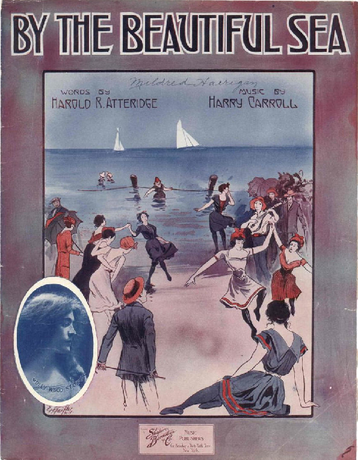
100 years ago: “By the Beautiful Sea” hit #1

By the Beautiful Sea

Heidelberg Quintet

Writer(s): Harold R. Atteridge (words), Harry Carroll (music) (see lyrics here)


First Charted: July 15, 1914


Peak: 16 US, 112 GA, 110 SM (Click for codes to charts.)


Sales (in millions): 1.0 (sheet music)


Airplay/Streaming (in millions): -- radio, 0.17 video, -- streaming

Awards:

Click on award for more details.

About the Song:

“This was a story about a happy couple, Joe and Jane who love the summer and anything that Joe suggests, Jane would always think it was best for her, so he’d get his Ford, holler all aboard and off they would go for day out by the beautiful sea…It was only in verse two that their sordid little affair came to light.” SM While extramarital affairs were nothing new, it was “surprising…that the subject was part of a poular song.” TY2

The Stanford Four introduced the song in vaudeville. DJ To publicize the song, the publisher hired a group of boys in sailor suits to perform the song at Coney Island. TY2 The song was further popularized by Muriel Window who integrated the song into the revue The Passing Show of 1914. TY2 It went on to chart three times in 1914. Prince’s Orchestra took the song to #6 and there were chart-topping version by Ada Jones & Billy Watkins as well as by the Heidelberg Quuintet. PM The latter was the first to chart and spent more weeks at #1.

“By the Beautiful Sea” was the second #1 song for the Heidelberg Quintet, but their lineup was different than when they hit #1 with “Waiting on the Robert E. Lee.” Billy Murray, Steve Porter, William F. Hooley (all members of the American Quartet as well), and Will Oakland were all still members but John Bieling had been replaced by Robert Armour. “The vocals on this song were dominated by Billy Murray with all the other members joining in background harmonies only. Will Oakland’s high counter tenor voice could not be heard at all.” SM

The song was also used in the films The Story of Vernon and Irene Castle (1939), Coney Island (1943), Atlantic City (1944), and Some Like It Hot (1959). DJ Judy Garland and Gene Kelly performed it in the 1942 movie For Me and My Gal. TY2


Resources:


First posted 2/27/2023.

Wednesday, August 17, 2011

Billy Murray, the biggest selling sensation of the pioneer era, dies: August 17, 1954


Check the Dave’s Music Database Facebook page for daily music-related posts. Also check out books by Dave Whitaker, including the collection of past blog entries, No One Needs 21 Versions of “Purple Haze”…And Other Essays from a Musical Obsessive.


He was born in Philadelphia, Pennysylvania on May 25, 1877 and raised in Denver, Colorado. His death on August 17, 1954, marked a last hurrah for the pre-1920s pioneer era of music. He has been called the most sensational record seller of that time. At a time before radio ruled the waves and recording technology remained primitive, Billy Murray’s success gave the fledgling recording industry the credibility to develop into a popular form of entertainment. “In an era dominated by the operatically-influenced singing style, he helped to popularize a more natural approach. He was an incredibly versatile artist” JL whose “records serve as excellent representatives of the music and events of American culture.” DN The recording careers of other 20th century musical giants such as Bing Crosby, Elvis Presley, Frank Sinatra, and the Beatles pale in comparison.

He charted more than 200 hits and 30 number ones are songs as a solo artist and as lead with the Haydn Quartet, the American Quartet, the Columbia Comedy Trio, and the Heidelberg Quintet. He also recorded numerous duets with Ada Jones. Among those songs are a number of classics which make the Dave’s Music Database list of the top 1000 songs of the 20th century. These include “Meet Me in St. Louis, Louis” (1904), “In My Merry Oldsmobile” (1905), “Take Me Out to the Ball Game” (with the Haydn Quartet, 1908), “By the Light of the Silvery Moon” (with the Haydn Quartet, 1910), “Casey Jones” (with the American Quartet, 1910), “Come, Josephine, in My Flying Machine” (with the American Quartet & Ada Jones, 1911), “Oh, You Beautiful Doll” (with the American Quartet, 1911), and “K-K-K-Katy (The Stammering Song)” (1918).

He recorded many of the definitive versions of songs from famed songwriter George M. Cohan. Among them are five which make the Dave’s Music Database list of the top 1000 songs of the 20th century. Those are “Yankee Doodle Boy” (1905), “Give My Regards to Broadway” (1905), “You’re a Grand Old Flag” (1906), “Harrigan” (1907), and “Over There” (with the American Quartet, 1917). The first two are also in the Grammy Hall of Fame while “Flag” is also in the Library of Congress’ National Recording Registry.


Murray’s highest-ranked song according to the DMDB


Resources and Related Links:


Tuesday, March 15, 2011

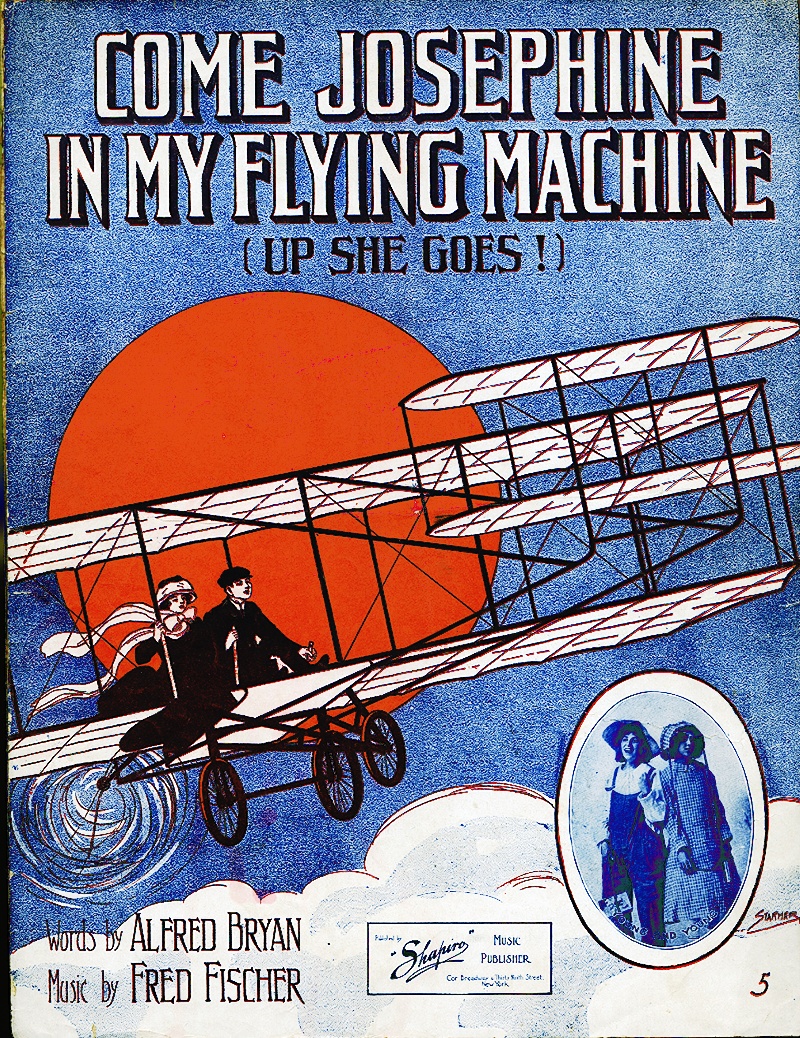
100 years ago: “Come Josephine in My Flying Machine” hit #1

Come Josephine in My Flying Machine

Ada Jones with Billy Murray & the American Quartet

Writer(s): Fred Fisher (music), Alfred Bryan (words) (see lyrics here)


First Charted: March 15, 1911


Peak: 13 US, 11 GA, 14 SM (Click for codes to charts.)


Sales (in millions): 1.0 (sheet music)


Airplay/Streaming (in millions): -- radio, 0.36 video, 0.08 streaming

Awards:
Click on award for more details.

About the Song:

“The song was about the joys of going up in the sky in an aeroplane” SM and captured the “innocent romance and wonder with which early air travel was viewed.” SS In 1911, “flying machines” were still “very much a novelty;” SM it had only been eight years previous that the Wright Brothers launched the first powered flight. Billy Murray celebrated that event with his song “Come Take a Trip in My Airship,” a #1 song in 1905.

The song exemplified “a shifting tide away from the conservative, rural/small-town orientation that reinforced trust family and traditional values, and toward a modern, urbanized approach that questioned the old ways.” SS It was allegedly based on Josephine Sarah Magner, who may have been the first woman parachutist in 1905. WK

The lyricist was Canadian Alfred Bryan, who also wrote the major 1915 hit “I Didn’t Raise My Boy to Be a Soldier.” This was the first major hit for composer Fred Fisher, who also went on to have success with “Peg O’ My Heart” (1913), “Dardanella” (1919), and “Chicago” (1922).

The song was introduced by Blanche Ring in vaudeville DJ and first recorded by Harry Tally. SM Her version reached #1 in 1911 while his got to #7 that same year. PM Ada Jones also topped the charts with her collaboration with the American Quartet and Billy Murray that featured a “breezy, light-hearted singing style.” TY2 She and Murray also recorded a slightly different version with extra verses and choruses.

The song was revived in 1939 when Fred Astaire sang it in the movie The Story of Vernon and Irene Castle and again in 1949 for the Fred Fisher biopic Oh, You Beautiful Doll. DJ Leonardo DiCaprio sang a snippet of the song to Kate Winslet in the 1997 blockbuster Titanic.


Resources:


Related Links:


First posted 2/26/2023.

Friday, April 23, 2010

100 years ago: “By the Light of the Silvery Moon” hit #1

By the Light of the Silvery Moon

Billy Murray & the Haydn Quartet

Writer(s): Edward Madden, Gus Edwards (see lyrics here)


First Charted: December 1909


Peak: 19 US, 13 GA, 16 SM (Click for codes to singles charts.)


Sales (in millions): 1.0 (sheet music)


Airplay/Streaming (in millions): -- radio, -- video, -- streaming

Awards:

Click on award for more details.

About the Song:

Edward Madden crafted the words for “By the Light of the Silvery Moon” around Gus Edwards’ “somewhat dreamy music that lends itself to soft shoe.” RCG The song had much the same sentiment as “Shine On, Harvest Moon” from a year earlier. In “Silvery Moon,” the singer wishes for a silvery moon by which to spoon with his girl, hoping he can croon a love song to her and she’ll agree to marry him in June. Its “moon-June-croon rhymes” are “cliché by today’s standards,” RCG but were representative of the Tin Pan Alley era which dominated music in the early 1900s.

The song first surfaced in vaudeville in the School Boys and Girls revue. Child star Georgie Price, a member of Gus Edwards, troup of children, sang it. TY2 Lillian Lorraine also interporolated it into the Ziegfeld Follies of 1909. TY2 In 1909 and 1910, three versions of the song charted. The Peerless Quartet and Ada Jones each got to #2, but Billy Murray’s recording with the Haydn Quartet hit #1 and was one of the top five hits of the decade. TY2 On their version, Murray sang the verses, slow and deliberately, and the quartet came in on the chorus. SM

As big as their song was – it spent 9 weeks at the summit – it wasn’t the biggest hit for either Murray or the Haydn Quartet. In 1909, the Haydn Quartet peaked at #1 for eleven weeks with “Put on Your Old Grey Bonnett.” Murray’s biggest hit was just around the corner – just a couple months later, his take on “Casey Jones” with the American Quartet would also spend eleven weeks on top. PM

“Silvery Moon” proved to have stamina, hitting #12 for Ray Noble in 1942 PM and becoming a glee club and barbershop quartet standard. RCG It was also in the movies Ruggles of Red Gap (1935), The Story of Vernon and Irene Castle (1939), The Birth of the Blues (1941), Babes on Broadway (1942), Hello, Frisco, Hello (1943), Sunbonnet Sue (1945), The Jolson Story (1946), Always Leave Them Laughing (1949), and Two Weeks with Love (1950). TY2 In 1953, Doris Day and Gordon MacRae sang the song in the movie musical .


Resources:


Related Links:


First posted 4/23/2012; last updated 12/15/2022.