Showing posts with label Doris Day. Show all posts

Friday, October 22, 2021

Dave's Music Database Hall of Fame: Song Inductees (October 2021)

Originally posted 10/22/2021.

In honor of the 10th anniversary of the DMDB blog on January 22, 2019, Dave’s Music Database launched its own Hall of Fame. This is the twelfth set of song inductees. These are the 10 highest-ranked songs that ranked within the top 50 of the DMDB’s list of the “Top Big Band Songs of All Time”. It does not include previously inducted songs such as Glenn Miller’s “In the Mood” and Artie Shaw’s “Stardust” and “Begin the Beguine.”

Fats Waller “Ain’t Misbehavin’” (1929)

Inducted October 2021 as “Top Big Band Songs”

Waller was “a New York City-born pianist and organ accompanist during the ‘20s…[who] broke through as one of the country’s most popular entertainers. PM “Ain’t Misbehavin’” was written for the 1929 all-black revue Hot Chocolates and debuted by Louis Armstrong, who credited the revue with launching his career. TY It was so popular it moved to Broadway RCG where it ran “for a very respectable 219 performances.” SS Read more.

Ted Lewis “On the Sunny Side of the Street” (1930)

Inducted October 2021 as “Top Big Band Songs”

This “cabaret and jazz standard” JA is a “metaphor for optimism.” TY In his book American Popular Song, author Alec Wilder calls it “one of the jazz musicians’ favorites…Singers, as well, love it as much for its extremely fine lyric.” SB In The NPR Curious Listener’s Guide to Popular Standards, Max Morath expresses a similar sentiment, saying the song “works both sides of the street, vocal and instrumental, with equal charm.” MM Read more.

Duke Ellington “Mood Indigo” (1931)

Inducted October 2021 as “Top Big Band Songs”

The clarinet solo was based on a melody called “Dreamy Blues.” Duke Ellington turned the structure upside down, “composing a song of his own on top of it.” DH Typically jazz songs were arranged with the clarinet, trumpet, and trombone from highest to lowest pitch, but Ellington flipped it around the other way. DH He recorded it for an October 1930 broadcast. He said “wads of mail came in raving about the new tune.” WK Read more.

Benny Goodman “Sing Sing Sing (With a Swing)” (1938)

Inducted October 2021 as “Top Big Band Songs”

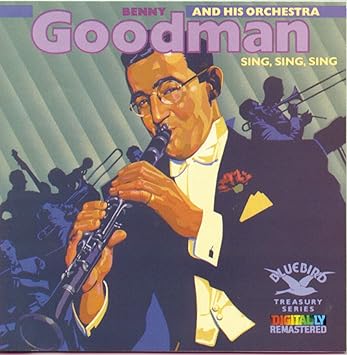
By the start of the Swing era in 1936, Benny Goodman was its king. “Sing, Sing, Sing” was his most renowned performance with solos by Benny as well as drummer Gene Krupa (on his last hit before leaving the band) and trumpeter Harry James. “Sing, Sing, Sing,” which Goodman called a “killer diller,” NPR’99 was the closer at the bandleader’s legendary Carnegie Hall concert on January 16, 1938. It was the first time jazz comprised a full concert instead of being part of a larger show SS and marked the birthplace of the legitimacy of the genre. NPR’99 Read more.

Ella Fitzgerald with Chick Webb’s Orchestra “A-Tisket, A-Tasket” (1938)

Inducted October 2021 as “Top Big Band Songs”

“A-Tisket, A-Tasket” began life as an American children’s rhyming game in 1879. In 1938, Ella Fitzgerald and Al Feldman adapted it into a song with very little change to the lyrics. In a 1973 lecture series at Harvard, Leonard Bernstein said that research showed the song’s melodic motif “is the same all over the world, wherever children tease each other. On every continent, in ever culture, it is one of the few musical universals.” TY Read more.

Tommy Dorsey with Frank Sinatra & the Pied Pipers “I’ll Never Smile Again” (1940)

Inducted October 2021 as “Top Big Band Songs”

Ruth Lowe was a pianist with Ina Ray Hutton’s all-girl orchestra when she composed this song about the death of her husband, just a few months after their marriage. TY She staked out Tommy Dorsey in September 1939 and got Carmen Mastren, the band’s guitarist, to give her demo a listen. SS Dorsey wasn’t initially passed but took a stab at it when Frank Sinatra came on board. SS It became his first #1 song. Read more.

Duke Ellington “Take the ‘A’ Train” (1941)

Inducted October 2021 as “Top Big Band Songs”

Billy Strayhorn was a hopeful pianist and composer in 1938. NPR His rearrangement of the Duke’s song “Sophisticated Lady” sufficiently impressed Ellington to invite Strayhorn to New York. TC Ellington gave directions to his house in New York, starting with “take the ‘A’ train.” WK Along the way, Strayhorn turned the directions into a song. TC It became Ellington’s signature song and one of the all-time best-loved jazz standards. Read more.

Glenn Miller “Chattanooga Choo Choo” (1941)

Inducted October 2021 as “Top Big Band Songs”

The team of Mack Gordon and Harry Warren wrote the song while travelling on the Southern Railway. It didn’t refer to a particular train, but Chattanooga, Tennessee, had been on the route for most trains passing through the American South since 1880. WK The song was used in the film Sun Valley Serenade, sung by members of Glenn Miller’s band. Miller’s recording became his biggest hit after “In the Mood” and the first recording formally certified as a million seller. PM Read more.

Woody Herman “Blues in the Night (My Mama Done Tol’ Me)” (1941)

Inducted October 2021 as “Top Big Band Songs”

Composer Harold Arlen and lyricist Johnny Mercer were approached to write a song for a movie about a jazz quintet riding the rails in search of its big break. Arlen wrote a melody after analyzing blues songs and Mercer penned four pages of lyrics. When they finished, Mercer called Margaret Whiting, who’d sung the pair’s songs “That Old Black Magic” and “Come Rain or Come Shine.” She told Mercer she had guests for dinner, but he and Arlen could come over later. When Mercer found out the guests included Judy Garland, Mickey Rooney, and Mel Tormé, he announced, “My God, we’re coming right over.” After they played the song, Rooney said, “That’s the greatest thing I’ve ever heard.” SB Read more.

Les Brown with Doris Day “Sentimental Journey” (1945)

Inducted October 2021 as “Top Big Band Songs”

When she first saw the sheet music, Doris Day commented, “What a lovely title,” to which Les Brown responded “Wait till you hear it.” SS “The song’s aching nostalgia struck a chord in a nation welcoming its boys back from the front lines,” TM becoming “one of a handful of songs that summed up romantic longing during World War II.” SS Will Friedwald called it “the definitive end-of-war song,” SS “a song that helped define an era.” SS Read more.

Monday, October 26, 2020

Top 100 Songs from 1940-1949

First posted 4/4/2012; last updated 10/26/2020.

Top 100 Songs of the Decade:

1940-1949

These are the top 100 songs from the 1940s according to Dave’s Music Database. Rankings are figured by combining sales figures, chart data, radio airplay, video airplay, streaming figures, awards, and appearances on best-of lists.

Check out other “songs of the decade” lists here.

1. “White Christmas” Bing Crosby with the Ken Darby Singers (1942)
2. “Stardust” Artie Shaw (1941)
3. “Rudolph, the Red-Nosed Reindeer” Gene Autry (1949)
4. “Sentimental Journey” Les Brown with Doris Day (1945)
5. “Paper Doll” The Mills Brothers (1943)
6. “As Time Goes By” Dooley Wilson (1942)
7. “Near You” Francis Craig with Bob Lamm (1947)
8. “I’ll Never Smile Again” Tommy Dorsey with Frank Sinatra & The Pied Pipers (1940)
9. “Chattanooga Choo Choo” Glenn Miller with Tex Beneke & the Four Modernaires (1941)
10. “The Christmas Song” Nat “King” Cole (1946)

11. “Riders in the Sky (A Cowboy Legend)” Vaughn Monroe (1949)
12. “Swinging on a Star” Bing Crosby with John Scott Trotter’s Orchestra & the Williams Brothers Quartet (1944)
13. “Body and Soul” Coleman Hawkins (1940)
14. “Buttons and Bows” Dinah Shore and Her Harper Valley Boys (1948)
15. “When You Wish Upon a Star” Cliff Edwards (1940)
16. “Peg O’ My Heart” The Harmonicats (1947)
17. “I’ll Be Seeing You” Bing Crosby with John Scott Trotter’s Orchestra (1944)
18. “Frenesi” Artie Shaw (1940)
19. “The Gypsy” The Ink Spots (1946)
20. “I’ve Heard That Song Before” Harry James with Helen Forrest (1943)

21. “Blues in the Night (My Mama Done Tol’ Me)” Woody Herman (1941)
22. “Some Enchanted Evening” Perry Como (1949)
23. “For Me and My Gal” Judy Garland & Gene Kelly (1942)
24. “Don’t Fence Me In” Bing Crosby with the Andrews Sisters (1944)
25. “Take the ‘A’ Train” Duke Ellington (1941)
26. “Twelfth Street Rag” Pee Wee Hunt (1948)
27. “Nature Boy” Nat “King” Cole with Frank DeVol (1948)
28. “Till the End of Time” Perry Como (1945)
29. “This Land Is Your Land” Woody Guthrie (1944)
30. “You’ll Never Know” Dick Haymes with the Song Spinners (1943)

31. “That Old Black Magic” Glenn Miller with Skip Nelson (1943)
32. “Rum and Coca-Cola” The Andrews Sisters (1945)
33. “Amapola (Pretty Little Poppy)” Jimmy Dorsey with Bob Eberly & Helen O’Connell (1941)
34. “Ac-Cent-Tchu-ate the Positive” Johnny Mercer with the Pied Pipers (1945)
35. “Heartaches” Ted Weems with Elmo Tanner (1947)
36. “Pistol Packin’ Mama” Al Dexter (1943)
37. “Let It Snow! Let It Snow! Let It Snow!” Vaughn Monroe (1945)
38. “Besame Mucho (Kiss Me Much)” Jimmy Dorsey with Bob Eberly & Kitty Kallen (1944)
39. “Ballerina” Vaughn Monroe (1947)
40. “I’m Looking Over a Four-Leaf Clover” Art Mooney (1948)

41. “Sunday, Monday or Always” Bing Crosby with the Ken Darby Singers (1943)
42. “I’ll Get By As Long As I Have You” Harry James with Dick Haymes (1944)
43. “Cruising Down the River” Blue Barron & His Orchestra (1949)
44. “On the Atchison, Topeka and Santa Fe” Johnny Mercer with the Pied Pipers (1945)
45. “I’m So Lonesome I Could Cry” Hank Williams (1949)
46. “Jingle, Jangle, Jingle” Kay Kyser with Harry Babbitt & Julie Conway (1942)
47. “Moonlight Cocktail” Glenn Miller with Ray Eberle & The Modernaires (1942)
48. “I’ve Got a Gal in Kalamazoo” Glenn Miller with Tex Beneke & Marion Hutton (1942)
49. “People Will Say We’re In Love” Bing Crosby with Trudy Erwin (1943)
50. “Oh What It Seemed to Be” Frankie Carle with Marjorie Hughes (1946)

51. “There! I’ve Said It Again” Vaughn Monroe (1945)
52. “That Lucky Old Sun” Frankie Laine with Judd Conlon’s Rhythmaires, Harry Geller’s Orchestra, & Carl Fischer Orchestra (1949)
53. “I Love You for Sentimental Reasons” The Nat “King” Cole Trio (1946)
54. “Tangerine” Jimmy Dorsey’s Orchestra with Bob Eberly & Helen O’Connell (1942)
55. “Daddy” Sammy Kaye (1941)
56. “Boogie Woogie Bugle Boy” The Andrews Sisters (1941)
57. “God Bless the Child” Billie Holiday (1941)
58. “Tuxedo Junction” Glenn Miller (1940)
59. “The Trolley Song” Judy Garland (1944)
60. “Fools Rush in Where Angels Fear to Tread” Glenn Miller (1940)

61. “The Woodpecker Song” Glenn Miller with Marion Hutton (1940)
62. “It Might As Well Be Spring” Dick Haymes (1945)
63. “There Are Such Things” Tommy Dorsey with Frank Sinatra & The Pied Pipers (1942)
64. “Don’t Sit Under the Apple Tree with Anyone Else But Me” Glenn Miller with Tex Beneke & the Modernaires (1942)
65. “Manana Is Soon Enough for Me” Peggy Lee (1948)
66. “To Each His Own” Eddy Howard (1946)
67. “Smoke! Smoke! Smoke! That Cigarette” Tex Williams (1947)
68. “Taking a Chance on Love” Benny Goodman with Helen Forrest (1940)
69. “Now Is the Hour (Māori Farewell Song)” Bing Crosby with the Ken Darby Singers (1948)
70. “Long Ago and Far Away” Helen Forrest with Dick Haymes (1944)

71. “You’re Breaking My Heart” Vic Damone (1949)
72. “Shoo-Shoo Baby” The Andrews Sisters (1943)
73. “I’ll Be Home for Christmas” Bing Crosby with John Scott Trotter’s Orchestra (1943)
74. “Green Eyes (Aquellos Ojos Verdes)” Jimmy Dorsey with Bob Eberly & Helen O’Connell (1941)
75. “There’ll Be Some Changes Made” Benny Goodman with Louise Tobim (1941)
76. “Move on Up a Little Higher” Mahalia Jackson (1948)
77. “You Always Hurt the One You Love” The Mills Brothers (1944)
78. “Santa Claus Is Coming to Town” Bing Crosby with the Andrews Sisters (1947)
79. “Don’t Get Around Much Anymore” The Ink Spots (1943)
80. “If I Loved You” Perry Como (1945)

81. “Boogie Chillen” John Lee Hooker (1949)
82. “A Tree in the Meadow” Margaret Whiting (1948)
83. “Dream (When You’re Feeling Blue)” The Pied Pipers with Paul Weston (1945)
84. “My Funny Valentine” Hal McIntyre with Ruth Gaylor (1945)
85. “I Can Dream, Can’t I?” The Andrews Sisters (1949)
86. “Mule Train” Frankie Laine & the Muleskinners (1949)
87. “A Little Bird Told Me” Evelyn Knight & Stardusters (1948)
88. “I Had the Craziest Dream” Harry James with Helen Forrest (1943)
89. “Laura” Woody Herman (1945)
90. “I’ll Walk Alone” Dinah Shore (1944)

91. “You Are My Sunshine” Jimmie Davis (1940)
92. “Imagination” Glenn Miller (1940)
93. “Maria Elena” Jimmy Dorsey with Bob Eberly (1941)
94. “Praise the Lord and Pass the Ammunition ” Kay Kyser with Glee Club (1942)
95. “Five Minutes More” Frank Sinatra (1946)
96. “Oh What a Beautiful Mornin’” Bing Crosby with Trudy Erwin & the Sportsment Glee Club (1943)
97. “It’s Been a Long, Long Time” Bing Crosby with the Les Brown Trio (1945)
98. “On a Slow Boat to China” Kay Kyser with Harry Babbitt & Gloria Wood (1948)
99. “Baby, It’s Cold Outside” Johnny Mercer with Margaret Whiting (1949)
100. “A String of Pearls” Glenn Miller (1942)

Saturday, February 16, 2019

100 years ago: "Till We Meet Again" charted for the first time

Till We Meet Again

Henry Burr & Albert Campbell

Writer(s): Richard A. Whiting (music)/ Raymond B. Egan (lyrics) (see lyrics here)


First Charted: February 15, 1919


Peak: 19 US, 112 GA, 112 SM (Click for codes to charts.)


Sales (in millions): 5.0 (sheet music)


Airplay/Streaming (in millions): -- radio, -- video, -- streaming

Awards:

Click on award for more details.

About the Song:

Henry Burr was one of the most successful recording artists of the first quarter of the 20th century, landing 15 songs at #1 as a solo artist. However, he also regularly worked with Albert Campbell (who sent three songs to the top on his own) and they landed another seven songs atop the charts. “Till We Meet Again” was their most successful pairing. PM

This “heartfelt farewell of a beau who promises to return and wed his love” RCG was “the most successful of all the ballads of the First World War,” RCG selling 5 million in sheet music. The United States had already entered the war when Richard Whiting and Raymond Egan penned this waltz. However, they threw it away because they disliked it. Luckily, their secretary heard the song, liked it, salvaged it from the trash, and sent it to the publisher. RCG

In 1919, five versions of the song charted – Nicholas Orlando’s Orchestra and the duo of Charles Hart & Lewis James also went to #1 with it, but Burr & Campbell had the most successful version (9 weeks at #1). Vernon Dalhart & Gladys Rice took their duet to the top 10, as did Prince’s Orchestra. PM

World War II saw the song revived and recorded by Kay Starr, Rosemary Clooney, Patti Page, Mitch Miller, and Jaye P. Morgan. RCG Doris Day and Gordon MacRae performed it for the 1951 film On Moonlight Bay. DJ The song was also played for years at the adjournment of the United States Congress. RCG


Resources:


Related Links:


First posted 2/15/2012; last updated 2/27/2023.

Friday, March 16, 2012

100 years ago: “Moonlight Bay” hit #1

Moonlight Bay

American Quartet

Writer(s): Edward Madden, Percy Wenrich (see lyrics here)


First Charted: March 9, 1912


Peak: 18 US, 112 GA, 18 SM, 2 DF (Click for codes to charts.)


Sales (in millions): 1.0 (sheet music)


Airplay/Streaming (in millions): -- radio, 0.16 video, -- streaming

Awards:

Click on award for more details.

About the Song:

“Arguably the best moonlight song ever written,” PS “Moonlight Bay” “conjures up an entire lost era of a slower-paced America that…had plenty of time for gentle spooning in an unspoiled natural setting.” SS It is “a very durable song from Tin Pan Alley about an idyllic setting for romance.” RCG

Edward Madden, who also wrote “By the Light of the Silvery Moon,” penned the lyrics about “sailing across the bay at night in the moonlight while losing one’s heart to true love.” RCG The music was written by Percy Wenrich, “one of the era’s specialists in sentimental ballads.” SS. He came from a musical family wrote a number of hits in the rag genre and performed with his wife, Dolly Connelly, in vaudeville. PS

It was Connelly who introduced the song in vaudeville and took it to #3 on the U.S. pop charts in 1912. It also became a “huge barbershop-quartet song as exemplified by the American Quartet,” JA who made the tune the biggest hit of 1912. CPM

The song was revived by Alice Faye in the 1943 film On Moonlight Bay and again in 1951 in a Doris Day and Gordon MacRae film of the same name. The song has appeared many times in Looney Tunes and Merrie Melodies shorts featuring Porky Pig and Daffy Duck. WK In 1951, Bing and Gary Crosby took their version of the song to #14. JA


Resources:


Related Links:


Last updated 3/19/2023.