Showing posts with label Fats Waller. Show all posts

Saturday, October 22, 2022

Top 100 Songs from 1920-1929

Top 100 Songs of the Decade:

1920-1929

These are the top 100 songs from the 1920s according to Dave’s Music Database. Rankings are figured by combining sales figures, chart data, radio airplay, video airplay, streaming figures, awards, and appearances on best-of lists.

Check out other “songs of the decade” lists here.

1. Bessie Smith with Louis Armstrong “St. Louis Blues” (1925)
2. Al Jolson “Swanee” (1920)
3. Gene Austin “My Blue Heaven” (1927)
4. Thomas “Fats” Waller “Ain’t Misbehavin’” (1929)
5. Paul Whiteman “Whispering” (1920)
6. Al Jolson "April Showers” (1922)
7. Marion Harris “Tea for Two” (1925)
8. Vernon Dalhart “The Prisoner’s Song” (1925)
9. Ben Selvin “Dardanella” (1920)
10. Isham Jones “It Had to Be You” (1924)

11. Paul Whiteman with Bing Crosby “Ol’ Man River” (1928)
12. Cliff Edwards “I Can’t Give You Anything But Love” (1928)
13. George Olsen with Fran Frey, Bob Rice & Edward Joyce “Always” (1926)
14. Al Jolson “Sonny Boy” (1928)
15. Ben Selvin “Blue Skies” (1927)
16. Van & Schenck “Ain’t We Got Fun?” (1921)
17. Gertrude Lawrence “Someone to Watch Over Me” (1927)
18. Paul Whiteman” Three O’Clock in the Morning” (1922)
19. Ben Bernie “Sweet Georgia Brown” (1925)
20. Nick Lucas “Tip-Toe Thru the Tulips with Me” (1929)

21. Paul Whiteman with George Gershwin “Rhapsody in Blue” (1924)
22. Van & Schenck “Carolina in the Morning” (1923)
23. Gene Austin “My Melancholy Baby” (1928)
24. Al Jolson with Isham Jones “California, Here I Come” (1924)
25. Bessie Smith “Down Hearted Blues” (1923)
26. Gene Austin “Bye Bye, Blackbird” (1926)
27. Gene Austin with Billy Carpenter “Yes Sir! That’s My Baby” (1925)
28. Marion Harris “The Man I Love” (1928)
29. Paul Whiteman “My Mammy” (1921)
30. Cliff Edwards “Singin’ in the Rain” (1929)

31. Billy Jones “Yes! We Have No Bananas” (1923)
32. Eddie Cantor “If You Knew Susie Like I Know Susie” (1925)
33. Wendall Hall “It Ain’t Gonna Rain No Mo’” (1924)
34. Paul Whiteman with Franklyn Baur “Valencia (A Song of Spain)” (1926)
35. Ben Selvin “Manhattan” (1925)
36. Paul Whiteman “What’ll I Do?” (1924)
37. Eddie Cantor “Makin’ Whoopee” (1929)
38. Eddie Cantor “Margie” (1921)
39. Paul Whiteman “The Japanese Sandman” (1920)
40. Isham Jones with Ray Miller & Frank Bessinger “I’ll See You in My Dreams” (1925)

41. Ben Bernie with Scrappy Lambert & Billy Hillpot “Ain’t She Sweet?” (1927)
42. Paul Whiteman “Somebody Loves Me” (1924)
43. Arthur Gibbs & His Gang “Charleston” (1924)
44. Fanny Brice “My Man (Mon Homme)” (1922)
45. Gene Austin with Nat Shilkret & Viola Klaiss “Ramona” (1928)
46. Al Jolson “All Alone” (1925)
47. Paul Whiteman with Jack Fulton, Charles Gaylord, & Austin Young “The Birth of the Blues” (1926)
48. Al Jolson “Toot, Toot, Tootsie! (Goo’bye)” (1922)
49. Marion Harris “Look for the Silver Lining” (1921)
50. Whisperin’ Jack Smith “Me and My Shadow” (1927)

51. George Olsen “Who?” (1926)
52. Jan Garber with Benny Davis “Baby Face” (1926)
53. Ruth Etting “Love Me or Leave Me” (1929)
54. Henry Burr “My Buddy” (1922)
55. Isham Jones “Wabash Blues” (1921)
56. Ted Lewis & His Band “When My Baby Smiles at Me” (1920)
57. Ethel Waters “Am I Blue?” (1929)
58. Jimmie Rodgers “Blue Yodel #1 (T for Texas)” (1928)
59. Ray Miller & His Orchestra “The Sheik of Araby” (1922)
60. Ted Lewis “All by Myself” (1921)

61. Al Jolson “I’m Sitting on Top of the World” (1926)
62. Paul Whiteman “Wang Wang Blues” (1920)
63. Ted Weems “Somebody Stole My Gal” (1924)
64. Mamie Smith & Her Jazz Hounds “Crazy Blues” (1920)
65. Ben Selvin “Chicago (That Toddlin’ Town)” (1922)
66. Ed Gallagher & Al Shean “Mr. Gallagher and Mr. Shean – ‘Positively, Mr. Gallagher?’” (1922)
67. Guy Lombardo with Weston Vaughan “Charmaine!” (1927)
68. Louis Armstrong “West End Blues” (1928)
69. Billy Murray with Ed Smalle “That Old Gang of Mine” (1923)
70. Fanny Brice “Second Hand Rose” (1922)

71. Charles Harrison “I’ll Be with You in Apple Blossom Time” (1920)
72. Paul Whiteman “Parade of the Wooden Soldiers” (1923)
73. Paul Whiteman “Stumbling” (1922)
74. Rudy Vallee “Honey” (1929)
75. Paul Whiteman “Say It with Music” (1921)
76. Gene Austin “Carolina Moon” (1929)
77. Fred Waring with Tom Waring “Ah! Sweet Mystery of Life” (1928)
78. Gene Austin with Nat Shilkret’s Orchestra “Five Foot Two, Eyes of Blue” (1926)
79. Isham Jones “Swingin’ Down the Lane” (1923)
80. Marion Harris “I’m Just Wild about Harry” (1922)

81. Paul Whiteman with Jack Fulton, Charles Gaylord, & Austin Young “Among My Souvenirs” (1928)
82. Al Jolson “When the Red, Red Robin Comes Bob, Bob, Bobbin’ Along” (1926)
83. Ben Bernie with Arthur Fields “Sleepy Time Gal” (1926)
84. John Steel “The Love Nest” (1920)
85. The Carter Family “Wildwood Flower” (1928)
86. Louise Homer “America the Beautiful” (1925)
87. Maurice Chevalier “Louise” (1929)
88. Benny Krueger “I Cried for You” (1923)
89. Paul Whiteman with the Rhythm Boys “Side by Side” (1927)
90. Paul Whiteman “Linger Awhile” (1924)

91. Paul Whiteman “Hot Lips (He's Got Hot Lips When He Plays Jazz)” (1922)
92. Helen Kane with Leonard Joy’s Orchestra “I Wanna Be Loved by You” (1928)
93. Vincent Lopez “I Want to Be Happy” (1924)
94. Al Jolson “Avalon” (1920)
95. Peerless Quartet “Way Down Yonder in New Orleans” (1922)
96. Ben Pollack with Franklyn Baur “Sweet Sue, Just You” (1928)
97. Paul Whiteman with Jack Fulton “Lover, Come Back to Me” (1929)
98. Paul Whiteman “Oh, Lady Be Good” (1925)
99. Aileen Stanley “Everybody Loves My Baby” (1925)
100. Leo Reisman with Ran Weeks “With a Song in My Heart” (1929)


Resources/Related Links:


First posted 4/4/2012; last updated 10/22/2022.

Wednesday, December 22, 2021

Dave's Music Database Hall of Fame: Music Maker Inductees (December 2021)

Top 20 Jazz Acts

Originally posted 12/22/2021.

January 22, 2019 marked the 10-year anniversary of the DMDB blog! To honor that, Dave’s Music Database announced its own Hall of Fame. This twelfth class of music maker inductees is comprised of the top jazz acts (see the full top 50 list here). That includes traditional pop and vocal jazz singers as well as jazz musicians and bandleaders. These are the top 20 from that list, minus previous inductees Ella Fitzgerald, Benny Goodman, Billie Holiday, Glenn Miller, and Frank Sinatra.

See the full list of music maker inductees here.

Louis Armstrong (1901-1971)

Inducted December 2021 as a “Top 20 Jazz Act”

Jazz singer, trumpeter, and bandleader born in Corona, Queens, NY. Nicknamed “Satchmo.” He has been inducted into the Big Band/Jazz Hall of Fame and Downbeat Jazz Hall of Fame. His version of “St. Louis Blues” with Bessie Smith is a DMDB Hall of Fame inductee and in the DMDB book The Top 100 Songs of the Pre-Rock Era. That song, “West End Blues,” “All of Me,” “Hello, Dolly!,” and “What a Wonderful World” rank in the top 1% of all time. The latter is also featured in the DMDB book The Top 100 Songs of the Rock Era. His box set, The Complete Hot Five and Hot Seven Recordings, ranks as one of the top 1000 albums of all time. Read more.

Count Basie (1904-1984)

Inducted December 2021 as a “Top 20 Jazz Act”

Jazz/big band leader and pianist born William James Basie in Red Bank, NJ. Learned to play the organ from Fats Waller. One of only seven recipients of both the Grammy Lifetime Achievement Award and Trustees Award. He has been inducted into the Big Band/Jazz Hall of Fame and Downbeat Jazz Hall of Fame. “One O'Clock Jump” and “April in Paris” rank in the top 1% of all time. Read more.

Nat “King” Cole (1919-1965)

Inducted December 2021 as a “Top 20 Jazz Act”

Traditional pop singer and pianist born Nathaniel Adams Coles in Montgomery, AL. Inductee in the Rock and Roll Hall of Fame, Big Band/Jazz Hall of Fame and Downbeat Jazz Hall of Fame. He is also a recipient of the Grammy Lifetime Achievement Award. “The Christmas Song (Chestnuts Roasting on an Open Fire)” and “Mona Lisa” are in the DMDB book The Top 100 Songs of the Pre-Rock Era. Those two, along with “I Love You for Sentimental Reasons,” “Nature Boy,” and “Too Young” also rank in the top 1% of all time. After his death, his daughter recorded his famous “Unforgettable” song with him as a duet. It is also in the top 1% and won Grammys for Record and Song of the Year. Read more.

John Coltrane (1926-1967)

Inducted December 2021 as a “Top 20 Jazz Act”

Jazz musician born in Hamlet, NC. He has been inducted into the Big Band/Jazz Hall of Fame and Downbeat Jazz Hall of Fame. The songs “Giant Steps,” “My Favorite Things,” “In a Sentimental Mood,” “Lush Life,” and “Acknowledgement (A Love Supreme, Part 1)” all rank in the top 100 jazz songs. His album, A Love Supreme, is in the DMDB book The Top 100 Albums of All Time. That album and Giant Steps both rank in the top 1000 albums of all time. Read more.

Miles Davis (1926-1991)

Inducted December 2021 as a “Top 20 Jazz Act”

Jazz musician born in Alton, IL. Inductee in the Rock and Roll Hall of Fame, Big Band/Jazz Hall of Fame and Downbeat Jazz Hall of Fame. He is also a recipient of the Grammy Lifetime Achievement Award. The songs “So What,” “Blues in Green,” and “All Blues” rank in the top 100 jazz songs. All three are featured on Kind of Blue, which is featured in the DMDB book The Top 100 Albums of All Time. That album, as well as Birth of the Cool, Sketches of Spain, In a Silent Way, and Bitches Brew rank in the top 1000 albums of all time. He has been inducted into the Big Band/Jazz Hall of Fame and Downbeat Jazz Hall of Fame. Read more.

Duke Ellington (1899-1974)

Inducted December 2021 as a “Top 20 Jazz Act”

Jazz/big band leader and pianist born Edward Kennedy Ellington in Washington, D.C. One of only seven recipients of both the Grammy Lifetime Achievement Award and Trustees Award. He has also been inducted into the Songwriters Hall of Fame, Big Band/Jazz Hall of Fame and Downbeat Jazz Hall of Fame. He also won the Pulitzer Prize. “Mood Indigo” and “Take the ‘A’ Train” are DMDB Hall of Fame inductees and are both in the DMDB book The Top 100 Songs of the Pre-Rock Era. Those songs, as well as “It’ Don’t Mean a Thing if It Ain’t Got That Swing” and “Sophisticated Lady” the top 1% of all time. His box set The Blanton-Webster Band and live album At Newport rank in the top 1000 albums of all time. Read more.

Herbie Hancock (1940-)

Inducted December 2021 as a “Top 20 Jazz Act”

Hancock was a jazz pianist born in Chicago in 1940. He has been inducted into the Big Band/Jazz Hall of Fame and Downbeat Jazz Hall of Fame. He is a recipient of the Grammy Lifetime Achievement Award and a Kennedy Center Honoree. His albums Maiden Voyage and Head Hunters have both been inducted into the Grammy Hall of Fame and River: The Joni Letters won the Grammy for Album of the Year. Read more.

Woody Herman (1913-1987)

Inducted December 2021 as a “Top 20 Jazz Act”

Jazz/big band leader, clarinetist, and composer born in 1913 in Milwaukee. He has been inducted into the Big Band/Jazz Hall of Fame and Downbeat Jazz Hall of Fame. Also a recipient of the Grammy Lifetime Achievement Award. “Blues in the Night (My Mama Done Tol’ Me)” is featured in the DMDB book The Top 100 Songs of the Pre-Rock Era. “At the Woodchopper’s Ball,” “Early Autumn,” and “Four Brothers” are in the Grammy Hall of Fame. Read more.

Charles Mingus (1922-1979)

Inducted December 2021 as a “Top 20 Jazz Act”

Jazz pianist, bassist, and composer born 1922 in Nogales, Arizona. He has been inducted into the Big Band/Jazz Hall of Fame and Downbeat Jazz Hall of Fame. Also a recipient of the Grammy Lifetime Achievement Award. Mingus Dynasty and Ah Um are in the Grammy Hall of Fame. The latter is also in the National Recording Registry. Read more.

Thelonious Monk (1917-1982)

Inducted December 2021 as a “Top 20 Jazz Act”

Jazz pianist born in Rocky Mount, NC. He has been inducted into the Big Band/Jazz Hall of Fame and Downbeat Jazz Hall of Fame. He is a recipient of the Grammy Lifetime Achievement Award and won the Pulitzer Prize. His song “Round Midnight” is in the Grammy Hall of Fame, one of the top 100 jazz songs, and ranks in the top 1% of all time. His albums Genius of Modern Music Vol. 1, Genius of Modern Music, Vol. 2, and Brilliant Corners are all in the Grammy Hall of Fame. Read more.

Artie Shaw (1910-2004)

Inducted December 2021 as a “Top 20 Jazz Act”

Jazz clarinetist and bandleader born in 1910 in New York City. He has been inducted into the Big Band/Jazz Hall of Fame and Downbeat Jazz Hall of Fame. Also a recipient of the Grammy Lifetime Achievement Award. “Begin the Beguine,” “Frenesi,” and “Stardust” are featured in the DMDB book The Top 100 Songs of the Pre-Rock Era. Read more.

Nina Simone (1933-2003)

Inducted December 2021 as a “Top 20 Jazz Act”

Jazz/blues singer born 1933 in Tryon, North Carolina. Inductee in the Rock and Roll Hall of Fame, Big Band/Jazz Hall of Fame, and Downbeat Jazz Hall of Fame. Also a recipient of the Grammy Lifetime Achievement Award. “I Loves You, Porgy” and “To Be Young, Gifted, and Black” are in the Grammy Hall of Fame. “Mississippi Goddam” is in the National Recording Registry. Read more.

Bessie Smith (1894-1937)

Inducted December 2021 as a “Top 20 Jazz Act”

Blues singer born in Chattanooga, TN. Known as “The Empress of the Blues.” Inductee in the Rock and Roll Hall of Fame, Blues Hall of Fame, Big Band/Jazz Hall of Fame and Downbeat Jazz Hall of Fame. Recipient of the Grammy Lifetime Achievement Award. Her version of “St. Louis Blues” with Louis Armstrong is a DMDB Hall of Fame inductee and in the DMDB book The Top 100 Songs of the Pre-Rock Era. That song and “Down Hearted Blues” rank in the top 1% of all time. Her compilation The Essential ranks as one of the top 1000 albums of all time. Read more.

Sarah Vaughan (1924-1990)

Inducted December 2021 as a “Top 20 Jazz Act”

Jazz singer born 1924 in Newark, New Jersey. Inductee in the Big Band/Jazz Hall of Fame and Downbeat Jazz Hall of Fame. Also a recipient of the Grammy Lifetime Achievement Award. “If You Could See Me Now” and “Tenderly” are in the Grammy Hall of Fame, as is her self-titled 1954 album. Read more.

Fats Waller (1904-1943)

Inducted December 2021 as a “Top 20 Jazz Act”

Jazz/big band songwriter and pianist born Thomas Wright Waller in New York, NY. Inducted into the Songwriters Hall of Fame, Big Band/Jazz Hall of Fame and Downbeat Jazz Hall of Fame. Also a recipient of the Grammy Lifetime Achievement Award. “Ain’t Misbehavin’” is a DMDB Hall of Fame inductee and in the DMDB book The Top 100 Songs of the Pre-Rock Era. That song and “Honeysuckle Rose” rank in the top 1% of all time. Both of those songs and “Jitterbug Waltz” are in the Grammy Hall of Fame. Read more.
 

Friday, October 22, 2021

Dave's Music Database Hall of Fame: Song Inductees (October 2021)

Originally posted 10/22/2021.

In honor of the 10th anniversary of the DMDB blog on January 22, 2019, Dave’s Music Database launched its own Hall of Fame. This is the twelfth set of song inductees. These are the 10 highest-ranked songs that ranked within the top 50 of the DMDB’s list of the “Top Big Band Songs of All Time”. It does not include previously inducted songs such as Glenn Miller’s “In the Mood” and Artie Shaw’s “Stardust” and “Begin the Beguine.”

Fats Waller “Ain’t Misbehavin’” (1929)

Inducted October 2021 as “Top Big Band Songs”

Waller was “a New York City-born pianist and organ accompanist during the ‘20s…[who] broke through as one of the country’s most popular entertainers. PM “Ain’t Misbehavin’” was written for the 1929 all-black revue Hot Chocolates and debuted by Louis Armstrong, who credited the revue with launching his career. TY It was so popular it moved to Broadway RCG where it ran “for a very respectable 219 performances.” SS Read more.

Ted Lewis “On the Sunny Side of the Street” (1930)

Inducted October 2021 as “Top Big Band Songs”

This “cabaret and jazz standard” JA is a “metaphor for optimism.” TY In his book American Popular Song, author Alec Wilder calls it “one of the jazz musicians’ favorites…Singers, as well, love it as much for its extremely fine lyric.” SB In The NPR Curious Listener’s Guide to Popular Standards, Max Morath expresses a similar sentiment, saying the song “works both sides of the street, vocal and instrumental, with equal charm.” MM Read more.

Duke Ellington “Mood Indigo” (1931)

Inducted October 2021 as “Top Big Band Songs”

The clarinet solo was based on a melody called “Dreamy Blues.” Duke Ellington turned the structure upside down, “composing a song of his own on top of it.” DH Typically jazz songs were arranged with the clarinet, trumpet, and trombone from highest to lowest pitch, but Ellington flipped it around the other way. DH He recorded it for an October 1930 broadcast. He said “wads of mail came in raving about the new tune.” WK Read more.

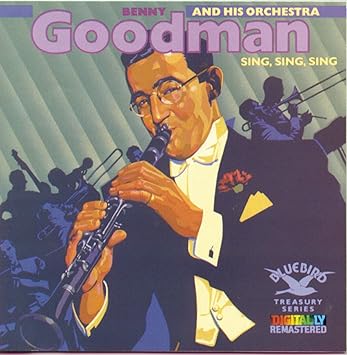
Benny Goodman “Sing Sing Sing (With a Swing)” (1938)

Inducted October 2021 as “Top Big Band Songs”

By the start of the Swing era in 1936, Benny Goodman was its king. “Sing, Sing, Sing” was his most renowned performance with solos by Benny as well as drummer Gene Krupa (on his last hit before leaving the band) and trumpeter Harry James. “Sing, Sing, Sing,” which Goodman called a “killer diller,” NPR’99 was the closer at the bandleader’s legendary Carnegie Hall concert on January 16, 1938. It was the first time jazz comprised a full concert instead of being part of a larger show SS and marked the birthplace of the legitimacy of the genre. NPR’99 Read more.

Ella Fitzgerald with Chick Webb’s Orchestra “A-Tisket, A-Tasket” (1938)

Inducted October 2021 as “Top Big Band Songs”

“A-Tisket, A-Tasket” began life as an American children’s rhyming game in 1879. In 1938, Ella Fitzgerald and Al Feldman adapted it into a song with very little change to the lyrics. In a 1973 lecture series at Harvard, Leonard Bernstein said that research showed the song’s melodic motif “is the same all over the world, wherever children tease each other. On every continent, in ever culture, it is one of the few musical universals.” TY Read more.

Tommy Dorsey with Frank Sinatra & the Pied Pipers “I’ll Never Smile Again” (1940)

Inducted October 2021 as “Top Big Band Songs”

Ruth Lowe was a pianist with Ina Ray Hutton’s all-girl orchestra when she composed this song about the death of her husband, just a few months after their marriage. TY She staked out Tommy Dorsey in September 1939 and got Carmen Mastren, the band’s guitarist, to give her demo a listen. SS Dorsey wasn’t initially passed but took a stab at it when Frank Sinatra came on board. SS It became his first #1 song. Read more.

Duke Ellington “Take the ‘A’ Train” (1941)

Inducted October 2021 as “Top Big Band Songs”

Billy Strayhorn was a hopeful pianist and composer in 1938. NPR His rearrangement of the Duke’s song “Sophisticated Lady” sufficiently impressed Ellington to invite Strayhorn to New York. TC Ellington gave directions to his house in New York, starting with “take the ‘A’ train.” WK Along the way, Strayhorn turned the directions into a song. TC It became Ellington’s signature song and one of the all-time best-loved jazz standards. Read more.

Glenn Miller “Chattanooga Choo Choo” (1941)

Inducted October 2021 as “Top Big Band Songs”

The team of Mack Gordon and Harry Warren wrote the song while travelling on the Southern Railway. It didn’t refer to a particular train, but Chattanooga, Tennessee, had been on the route for most trains passing through the American South since 1880. WK The song was used in the film Sun Valley Serenade, sung by members of Glenn Miller’s band. Miller’s recording became his biggest hit after “In the Mood” and the first recording formally certified as a million seller. PM Read more.

Woody Herman “Blues in the Night (My Mama Done Tol’ Me)” (1941)

Inducted October 2021 as “Top Big Band Songs”

Composer Harold Arlen and lyricist Johnny Mercer were approached to write a song for a movie about a jazz quintet riding the rails in search of its big break. Arlen wrote a melody after analyzing blues songs and Mercer penned four pages of lyrics. When they finished, Mercer called Margaret Whiting, who’d sung the pair’s songs “That Old Black Magic” and “Come Rain or Come Shine.” She told Mercer she had guests for dinner, but he and Arlen could come over later. When Mercer found out the guests included Judy Garland, Mickey Rooney, and Mel Tormé, he announced, “My God, we’re coming right over.” After they played the song, Rooney said, “That’s the greatest thing I’ve ever heard.” SB Read more.

Les Brown with Doris Day “Sentimental Journey” (1945)

Inducted October 2021 as “Top Big Band Songs”

When she first saw the sheet music, Doris Day commented, “What a lovely title,” to which Les Brown responded “Wait till you hear it.” SS “The song’s aching nostalgia struck a chord in a nation welcoming its boys back from the front lines,” TM becoming “one of a handful of songs that summed up romantic longing during World War II.” SS Will Friedwald called it “the definitive end-of-war song,” SS “a song that helped define an era.” SS Read more.

Monday, April 19, 2021

Big Band: Top 100 Songs

Big Band:

Top 100 Songs

Big Band, or Swing music, was especially popular in the 1930s and ‘40s. They were generally jazz-oriented orchestras led by such dominant names as Jimmy Dorsey, Tommy Dorsey, Duke Ellington, Benny Goodman, and Glenn Miller. In fact, more than 20 of these songs also appear on the DMDB’s Top 100 Jazz Songs list.

This list was created by aggregating 21 lists focused on big band songs.

Click here to see other genre-specific song lists.

1. Duke Ellington “Take the ‘A’ Train” (1941)
2. Benny Goodman “Sing, Sing, Sing (With a Swing)” (1938)
3. Glenn Miller “In the Mood” (1939)
4. Glenn Miller “A String of Pearls” (1942)
5. Glenn Miller with Tex Beneke & the Four Modernaires “Chattanooga Choo Choo” (1941)
6. Artie Shaw “Begin the Beguine” (1938)
7. Artie Shaw “Stardust” (1941)
8. Glenn Miller “Tuxedo Junction” (1940)
9. The Andrews Sisters with Vic Schoen’s Orchestra “Boogie Woogie Bugle Boy” (1941)
10. Tommy Dorsey with Frank Sinatra “I’ll Never Smile Again” (1940)

11. Glenn Miller “Moonlight Serenade” (1939)
12. Fats Waller “Ain’t Misbehavin’” (1929)
13. Benny Goodman “Stompin’ at the Savoy” (1936)
14. Jimmy Dorsey with Bob Eberly “Tangerine” (1942)
15. Tommy Dorsey “Opus One” (1945)
16. Les Brown’s Orchestra with Doris Day “Sentimental Journey” (1945)
17. Count Basie “One O’Clock Jump” (1937)
18. Woody Herman “At the Woodchoppers’ Ball” (1939)
19. Jimmy McHugh and Dorothy Fields “On the Sunny Side of the Street” (1930)
20. Bobby Darin “Mack the Knife” (1959)

21. Bing Crosby with John Scott Trotter’s Orchestra “I’ll Be Seeing You” (1944)
22. Duke Ellington with Ivie Anderson “It Don’t Mean a Thing if It Ain’t Got That Swing” (1932)
23. Rosemary Clooney “Tenderly” (1952)
24. Cab Calloway “Minnie the Moocher (The Ho Do Ho Song)” (1931)
25. Duke Ellington “Perdido” (1942)
26. Fred Astaire with Leo Reisman’s Orchestra “Night and Day” (1932)
27. Coleman Hawkins “Body and Soul” (1940)
28. Glenn Miller “Pennsylvania 6-5000” (1940)
29. Billie Holiday with Camarata’s Orchestra “Lover Man (Oh, Where Can You Be?)” (1945)
30. Woody Herman “Blues in the Night (My Mama Done Tol’ Me)” (1941)

31. Tommy Dorsey “I’m Getting Sentimental Over You” (1936)
32. Glen Gray “Sunrise Serenade” (1939)
33. Charlie Barnet “Skyliner” (1944)
34. Lionel Hampton “Flying Home” (1940)
35. Benny Goodman “Moonglow” (1934)
36. Jimmy Dorsey with Bob Eberly & Helen O’Connell “Green Eyes (Aquellos Ojos Verdes)” (1941)
37. Glenn Miller with Tex Beneke & Marion Hutton “I’ve Got a Gal in Kalamazoo” (1942)
38. Charlie Barnet “Cherokee (Indian Love Song)” (1939)
39. Duke Ellington “Caravan” (1937)
40. Harry James “You Made Me Love You (I Didn't Want to Do It)” (1941)

41. Bing Crosby “White Christmas” (1942)
42. Judy Garland “Over the Rainbow” (1939)
43. Billie Holiday “Summertime” (1936)
44. The Andrews Sisters “Bei Mir Bist Du Schoen (Means That You're Grand)” (1938)
45. Ella Fitzgerald with Chick Webb “A-Tisket, A-Tasket” (1938)
46. Bunny Berigan “I Can’t Get Started” (1938)
47. Marion Harris “The Man I Love” (1928)
48. Paul Whiteman “Oh, Lady Be Good” (1925)
49. Duke Ellington “Mood Indigo“ (1931)
50. Count Basie “April in Paris” (1956)

51. Billie Holiday “God Bless the Child” (1941)
52. Cab Calloway “Hep! Hep! The Jumpin’ Jive” (1939)
53. Harry James with Frank Sinatra “All or Nothing at All” (1939)
54. Walter Huston “September Song” (1939)
55. Duke Ellington “Satin Doll” (1953)
56. Benny Goodman with Peggy Lee “Why Don’t You Do Right?” (1943)
57. Glenn Miller with Marion Hutton, Tex Beneke, & the Modernaires “Don’t Sit Under the Apple Tree with Anyone Else But Me” (1942)
58. Tommy Dorsey with the Pied Pipers “Let’s Get Away from It All” (1941)
59. Duke Ellington “Solitude” (1934)
60. Paul Whiteman “Song of India” (1921)

61. Benny Goodman “Don’t Be That Way” (1938)
62. Count Basie “Jumpin’ at the Woodside” (1938)
63. Tommy Dorsey with Jo Stafford & Sy Oliver “Yes Indeed!” (1941)
64. Teddy Wilson “Sweet Lorraine” (1935)
65. Johnny Mercer with Jo Stafford & the Pied Pipers “Candy” (1945)
66. Glenn Miller “Skylark” (1942)
67. Ethel Waters “Stormy Weather (Keeps Rainin' All the Time)” (1933)
68. Tommy Dorsey with Jack Leonard “All the Things You Are” (1939)
69. The Andrews Sisters “Rum and Coca-Cola” (1945)
70. Larry Clinton with Bea Wain “Deep Purple” (1939)

71. Artie Shaw “Frenesi” (1940)
72. Jelly Roll Morton “King Porter Stomp” (1923)
73. Dick Haymes with Victor Young’s Orchestra “It Might As Well Be Spring” (1945)
74. Nat “King” Cole with Frank DeVol’s Orchestra “Nature Boy” (1948)
75. Hal Kemp with Bob Allen “Where or When” (1937)
76. Ella Fitzgerald & the Delta Rhythm Boys “It’s Only a Paper Moon” (1945)
77. Roger Wolfe Kahn “Sometimes I’m Happy” (1927)
78. Dooley Wilson “As Time Goes By” (1942)
79. Nat “King” Cole “Straighten Up and Fly Right” (1944)
80. Artie Shaw “Dancing in the Dark” (1941)

81. Nat “King” Cole “Get Your Kicks on Route 66” (1946)
82. Johnny Mercer & the Pied Pipers “On the Atchison, Topeka and Santa Fe” (1945)
83. Judy Garland with Georgie Stoll’s Orchestra “The Trolley Song” (1944)
84. Tommy Dorsey with Jack Leonard “Marie” (1937)
85. Glenn Miller with Ray Eberle “Fools Rush in Where Angels Fear to Tread” (1940)
86. Benny Goodman with Martha Tilton “And the Angels Sing” (1939)
87. Fred Astaire with Leo Reisman’s Orchestra “Cheek to Cheek” (1935)
88. Jimmy McHugh and Dorothy Fields “I’m in the Mood for Love” (1935)
89. Earl Burtnett with Harry Richman “Puttin’ on the Ritz” (1930)
90. Paul Whitman with George Gershwin “Rhapsody in Blue” (1924)

91. Kate Smith “The Last Time I Saw Paris” (1940)
92. Duke Ellington “Sophisticated Lady” (1933)
93. Perry Como with Russel Case’s Orchestra “If I Loved You” (1945)
94. The Ink Spots “Don’t Get Around Much Anymore” (1943)
95. Horace Heidt with Larry Cotton, Donna Wood, & Don Juans “I Don’t Want to Set the World on Fire’ (1941)
96. Harry James with Helen Forrest “I’ve Heard That Song Before” (1943)
97. Benny Goodman with Helen Forrest “Taking a Chance on Love” (1940)
98. Louis Jordan “Choo Choo Ch’ Boogie” (1946)
99. Tommy Dorsey with Frank Sinatra “Oh, Look at Me Now” (1941)
100. Nat “King” Cole “The Christmas Song (Chestnuts Roasting on an Open Fire)” (1946)


Resources and Related Links:

First posted 4/18/2021; last updated 4/19/2021.

Sunday, April 29, 2012

Duke Ellington: His Top 50 Songs

image from biography.com

The man who is called “perhaps the most important talent in American popular music history” by Pop Memories 1890-1954 was born on April 29, 1899. The jazz bandleader and pianist was born Edward Kennedy Ellington in Washington D.C. He died on may 24, 1974.

He was still in his teens when he formed his first band and by 1923 had headed to New York at the suggestion of Fats Waller. Ellington began a five-year association with the famed Cotton Club in 1927. PM Pop Memories described his work from the early 1930s as the time when his “unparalleled genius as a jazz band composer became unmistakable.” PM He charted more than 70 songs from 1927 to 1954 on the Billboard pop and R&B charts.

In celebration, here are his top 50 songs as determined by an aggregate of multiple best-of lists, sales figures, chart data, and awards. Songs which hit #1 on the Billboard pop charts (#1 HT) and R&B charts (#1 RB) are noted, as are seven songs which are ranked by Dave’s Music Database in the top 1000 songs of all time (DMDB 1000) and another 11 which are in the Grammy Hall of Fame (GHoF).

Mood Indigo

1. Mood Indigo (1931) DMDB 1000 GHoF
2. Sophisticated Lady (1933) DMDB 1000
3. Take the “A” Train (1941) DMDB 1000 GHoF
4. Three Little Words (with the Rhythm Boys, 1930) #1 HT DMDB 1000
5. It Don’t Mean a Thing if It Ain’t Got That Swing (with Ivie Anderson, 1932) DMDB 1000 GHoF
6. Don’t Get Around Much Anymore (Never No Lament) (1940) #1 RB DMDB 1000 GHoF
7. Cocktails for Two (1934) #1 HT DMDB 1000 GHoF
8. Stormy Weather (Keeps Rainin’ All the Time) (1933)
9. In the Shade of the Old Apple Tree (1933)
10. Diga-Diga-Doo (with Irving Mills, 1928)

Sophisticated Lady

11. Solitude (1934)
12. Caravan (1937) GHoF
13. I Let a Song Go Out of My Heart (1938) #1 HT
14. Do Nothin’ Till You Hear from Me (1940) #1 RB GHoF
15. Black and Tan Fantasy (1928) GHoF
16. In a Sentimental Mood (1935)
17. I’m Beginning to See the Light (with Joya Sherrill, 1945)
18. Limehouse Blues (1931)
19. Rose Room in Sunny Roseland (1932)
20. I Got It Bad and That Ain’t Good (with Ivie Anderson, 1941)

Take the “A” Train

21. Satin Doll (1953)
22. Moon Glow (1934)
23. Accent on Youth (1935)
24. Perdido (1942)
25. Blue Again (with Sid Garry, 1931)
26. Doin’ the New Low Down (with Irving Mills, 1928)
27. Sentimental Lady (1942) #1 RB
28. Main Stern (1942) #1 RB
29. Diminuendo and Crescendo in Blue (1956) GHoF
30. Rockin’ in Rhythm (1931)

Three Little Words

31. Cotton (with Ivie Anderson, 1935)
32. Ko-Ko (1940) GHoF
33. Love Is Like a Cigarette (with Ivie Anderson, 1936)
34. East St. Louis Toodle Oo (1927)
35. You, You, Darlin’ (with Herb Jeffries, 1940)
36. Ring Dem Bells (with Cootie Williams, 1930)
37. A Slip of the Lip Can Sink a Ship (with Ray Nance, 1942) #1 RB
38. The Saddest Tale (1934)
39. I’m Satisfied (with Ivie Anderson, 1933)
40. Drop Me Off at Harlem (1933)

It Don’t Mean a Thing if It Ain’t Got That Swing

41. Creole Rhapsody (instrumental, 1931)
42. Black Beauty (1928)
43. Black, Brown and Beige (1944) GHoF
44. The Blues I Love to Sing (with Adelaide Hall, 1927)
45. Merry-Go-Round (1935)
46. Lambeth Walk (1938)
47. I’m Just a Lucky So and So (with Al Hibbler, 1945)
48. Oh Babe! Maybe Someday (1936)
49. Scattin’ at the Kit-Kat (1937)
50. If You Were in My Place, What Would You Do? (with Ivie Anderson, 1938)


Awards:

Resources and Related Links:

Friday, September 18, 1987

50 years ago: Count Basie charts with "One O'Clock Jump"

One O’Clock Jump

Count Basie

Writer(s): Count Basie


First Charted: September 18, 1937


Peak: 12 US (Click for codes to singles charts.)


Sales (in millions): -- US, -- UK, -- world (includes US + UK)


Airplay/Streaming (in millions): -- radio, 1.075 video, -- streaming

Awards:

Click on award for more details.

About the Song:

Count Basie and his Orchestra crafted this instrumental jazz “landmark of the big band Swing Era” NRR around a head arrangement, an approach in which a song was developed through rehearsal and memorized without being written down. NRR The approach let musicians focus on the rhythmic drive NRR which was the main thrust of Basie’s and other Kansas City dance bands. Such songs were known as “stomps” and “shouts” or, in this case, a “jump”. TC

The approach also allowed soloists a lot of freedom. In “One O’Clock Jump”, extraordinary players like Lester Young, Herschel Evans, and Buck Clayton are allowed a showcase their interplay of brass and reeds. NRR

The song grew out of a rearrangement of Fats Waller’s “Six or Seven Times” TC and became a song originally called “Blue Ball”, TC which showcased the band’s ties to the blues. However, when Basie & crew were scheduled to perform the song for a radio broadcast, the announced balked at the risqué name so Basie retitled it “One O’Clock Jump”. TC

Basie was the first to chart with the song in 1937. The following year, Harry James and Benny Goodman had top 10 versions with it. However, the song has become known as “Basie’s signature theme, and the band played it at the end of their performances for more than 50 years.” NPR As a demonstration of this instrumental’s staying power and ability to cross genres, country group Asleep at the Wheel won a Grammy in 1978 for best country instrumental performance. TY Neil Peart, the drummer with progressive rock group Rush, used it to conclude his solos in concert from 2002 to 2004. WK


Resources:


Related Links:


First posted 9/18/2011; last updated 8/16/2022.

Thursday, November 1, 1979

On This Day (1929): Fats Waller releases “Ain’t Misbehavin’”

Ain’t Misbehavin’

Fats Waller

Writer(s): Fats Waller, Harry Brooks, Andy Razaf (see lyrics here)


Released: November 1, 1929


First Charted: November 9, 1929


Peak: 17 US, 11 GA (Click for codes to charts.)


Sales (in millions): --


Airplay/Streaming (in millions): -- radio, 7.74 video, 13.82 streaming

Awards:

Click on award for more details.

About the Song:

“Waller, a New York City-born pianist and organ accompanist during the ‘20s, collaborated on several Broadway musical scores…[and] broke through as one of the country’s most popular entertainers due to his playful, high-spirited vocals, and distinctive stride piano style, and jazz accompaniment. PM

“Ain’t Misbehavin’” was written for the 1929 all-black revue Hot Chocolates and debuted by Louis Armstrong, who credited the revue with launching his career. TY It was so popular it moved to Broadway, RCG where Armstrong made his bring-the-house-down debut. JA It ran “for a very respectable 219 performances, seventh best out of the thirty-four musicals that opened in 1929.” SS

Armstrong also recorded the song JA and charted with it (#7) in 1929, as did Leo Reisman (#2), Bill Robinson with Irving Mills (#8), Gene Austin (#9), and Ruth Etting (#16). However, it was Waller’s own piano solo version (#17) which became the classic. JA Waller would sing the song with Ada Brown in the film Stormy Weather (1943) JA and it was featured in 1951’s The Strip (1951). MM

In 1937, Teddy Wilson took the song back to the top 10. Ray Charles, Nat “King” Cole, Billie Holiday, Earth Kitt, Kay Starr, Dinah Washington, and Hank Williams Jr. also recorded the song. RCG Comedian George Burns made it his signature song, announcing to his partner Gracie Allen that he “could sing a million songs” to which she’d reply, “Yeah, but you only know one.” Then George would start singing the jingle for whoever was sponsoring his radio show, but it would turn into “Ain’t Misbehavin’.” RCG


Resources:


First posted 11/1/2016; last updated 9/5/2023.