Showing posts with label best jazz songs. Show all posts

Monday, November 15, 2010

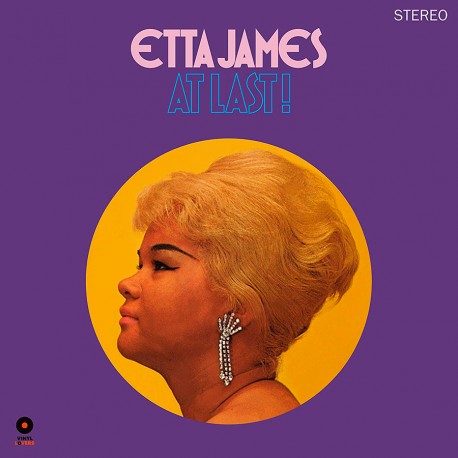
50 years ago: Etta James “At Last” released

At Last

Etta James

Writer(s): Harry Warren (music), Mack Gordon (lyrics) (see lyrics here)


Released: November 15, 1960


First Charted: January 9, 1961


Peak: 47 US, 30 CB, 30 HR, 2 RB, 69 UK, 72 AU, 1 DF (Click for codes to singles charts.)


Sales (in millions): 1.0 US, 0.6 UK


Airplay/Streaming (in millions): -- radio, 76.9 video, 330.31 streaming

Awards:

Click on award for more details.

About the Song:

The song “At Last” was written by Mack Gordon and Harry Warren, who also wrote “Chattanooga Cho Choo.” It was initially intended for the film Sun Valley Serenade, but studio head Darryl Zanuck thought there were already “too many big ones in this. Let’s save one for the next.” WK The vocal version of the song by John Payne and Lynn Bari was deleted from the film, but an instrumental version by the Glenn Miller Orchestra remained.

The vocal version was then introduced in the 1942 movie Orchestra Wives. This one also featured the Glenn Miller Orchestra, this time with vocals by Ray Eberle and Lynn Bari. Miller took a newly recorded version of the song, which still featured Eberle on vocals, to #2 on the Billboard charts that year. A decade later, Ray Anthony’s Orchestra would take it to #2 again on the Billboard charts with Tommy Mercer on vocals.

The song’s most noted version, however, was recorded by R&B singer Etta James in 1960. It is “the definitive version and her crowning achievement.” NRR Her version was based on an arrangement by Riley Hampton that improvised on the original melody. WK “One is most struck by James’s throaty vocal…but she never oversells the vocal. Instead she works her voice well with the timbre of the music, interjecting just enough romantic longing.” NRR

The song marked a change of labels for Etta James from Modern to Chess/Argo. It was also a change of direction for her. As she said, “I was no longer a teenager. I was twenty-two and sophisticated.” NRR She’d previously had hits with what she called “quickie teenage rockin’, humping and bumping ditties.” NRR Leonard Chess thought she “was a classy ballad singer and saw pop crossover potential in her; it was his decision to back her with violin orchestrations for the song.” SF Harvey Fuqua, formerly of the Moonglows and her boyfriend at the time, started playing standards for her and she “saw in that music the mysterious life that my mother had led when I was a little girl.” NRR

Celine Dion reached #16 on the adult contemporary chart with her version from her 2002 album A New Day Has Come. Beyoncé portrayed Etta James in the 2008 film Cadillac Records and performed the song on the soundtrack. It won a Grammy for Best Traditional R&B Vocal Performance. It also reached #67 on the Billboard Hot 100 and #79 on the R&B chart. She also sang it during Barack and Michelle Obama’s first dance at the Neighborhood Ball on the night of his Presidential inauguration.


Resources:


Related Links:


First posted 7/14/2022; last updated 11/4/2022.


Saturday, October 29, 2005

50 years ago: “Autumn Leaves” hit #1

10/29/1955: “Autumn Leaves” hit #1

Autumn Leaves (Les Feuilles Mortes)

Roger Williams

Writer(s): Joseph Kosma (music), Jacques Prévert (words – French), Johnny Mercer (words – English) (see lyrics here)


First Charted: August 1, 1955


Peak: 14 US, 13 HP, 13 CB, 13 HR (Click for codes to singles charts.)


Sales (in millions): 2.0 US


Airplay/Streaming (in millions): -- radio, 0.12 video, -- streaming

Autumn Leaves (Les Feuilles Mortes)

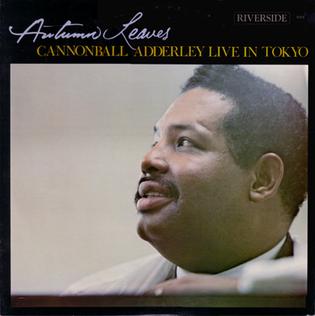
Cannonball Adderley


Recorded: March 9, 1958


Released: August 1958


First Charted: --


Peak: -- (Click for codes to singles charts.)


Sales (in millions): -- US, -- UK, -- world (includes US + UK)


Airplay/Streaming (in millions): -- radio, 6.4 video, -- streaming

Awards (Williams’ version): (Click on award for more details).

Awards (Adderley’s version): (Click on award for more details).

About the Song:

“Autumn Leaves” was originally written in 1945 as “Les Feuilles Mortes (The Dead Leaves)” by Hungarian composer Joseph Korma with French lyrics by Jacques Prévert. It was written as a choreographed duo for the ballet Le Rendez-Vous. It was introduced, without words, by Roland Petit in 1945 and copyrighted the next year. CJ

The next year Marcel Carné used it in his film Les Portes de la Nuite (Gates of the Night) It was sung briefly in the film by Yves Montand, CJ who also recorded the song in 1950, WK and again by Irène Joachim. CJ Cora Vaucaire was the first to sing the song in public and recorded it in 1947. CJ

Michael Golden from Capitol’s music publishing department loved the song and asked Johnny Mercer to write English lyrics for it. CJ The new version, titled “Autumn Leaves,” was recorded in July 1950 by Jo Stafford. WK Bing Crosby and Artie Shaw also recorded it that year. During the 1950s, it would also be covered by Nat “King” Cole and Frank Sinatra. WK Mercer later said he made more money from “Autumn Leaves” than any other song he wrote. CJ

The song had its first chart success in the United States in 1955 with versions by Steve Allen, the Ray Charles Singers, Jackie Gleason, Mitch Miller, and Victor Young all reaching the Billboard pop charts. HT However, the most successful version was the “majestic instrumental reading” AMG by pianist Roger Williams which went to #1 in 1955.

The song also became a favorite of jazz musicians. Cannonball Adderly and Miles Davis, Duke Ellington, Erroll Garner, and Stan Getz were among those to record the song in the 1950s. Jazz historian Philippe Baudoin called it “the most important non-American standard,” noting that it is “the eighth most-recorded tune by jazzmen,” CJ having been recorded around 1400 times. CJ


Resources and Related Links:

First posted 4/22/2021.

Friday, August 28, 1998

On This Day (1948): “Twelfth Street Rag” hit #1 more than 30 years after published

Twelfth Street Rag

Pee Wee Hunt

Writer(s): Euday L. Bowman, Andy Razaf (lyrics – NA - instrumental)


First Charted: June 28, 1948


Peak: 18 US, 2 GA (Click for codes to charts.)


Sales (in millions): 1.0 U.S.


Airplay/Streaming (in millions): -- radio, 0.68 video, 0.11 streaming

Awards:

Click on award for more details.

About the Song:

“Twelfth Street Rag” has an interesting history. It was first published in 1914 as a piano rag TY by composer Euday L. Bowman. Years earlier, he was walking down 12th street with a friend known as “Raggedy Ed” who said he planned to open a pawn shop on the street. Bowman supposedly shot back that if his friend got rich from the shop, then Bowman would write a song to make himself rich. WK Since the song has become “the most recorded rag of all time,” JA it would be fair to assume Bowman succeeded. No word on the pawn shop.

Actually, Bowman took more than 15 years to write down the music, finally selling it in 1913 to Jenkins Music Company. They thought the arrangement was too difficult and hired C.E. Wheeler to simplify it. WK In 1916, James S. Sumner added lyrics TY and Earl Fuller got the song on the charts for the first time the following year, taking it to #7. Ted Lewis revived the song in 1923, reaching #14. In 1927, Bennie Moten and Louis Armstrong recorded it. WK In 1929, Spencer Williams added new lyrics. TY In 1935, the song charted for a third time – this time with a #19 version by Fats Waller.

The song still wasn’t done transforming. Andy Razaf added new lyrics once again in 1942, TY but it would be another six years before it charted again. This time, however, it had its greatest success. Pee Wee Hunt and his orchestra decided to record the song for Capitol Records. It went on to become one of the biggest records to date for the company, TY selling more than three million and becoming the biggest-selling ragtime song of all time. JA

The song charted two more times by Frankie Carle (#10, 1948) and Liberace (#23, 1954). PM The song was given yet another life when Big Tiny Little’s 1959 recording of the song became the theme for The Joe Franklin Show in the UK. WK The song also made appearances in the movie The English Patient (1996) and in the cartoon series SpongeBob SquarePants. WK


Resources:


First posted 8/28/2016; last updated 9/6/2023.

Friday, November 21, 1997

Today in Music (1947): Thelonious Monk recorded “Round Midnight”

‘Round Midnight

Thelonious Monk

Writer(s): Thelonious Monk, Cootie Williams, Bernie Hanighen (see lyrics here)


Recorded: November 21, 1947


First Charted: --


Peak: -- (Click for codes to charts.)


Sales (in millions): --


Airplay/Streaming (in millions): -- radio, 6.04 video, 43.27 streaming

Awards:

Click on award for more details.

About the Song:

“Jazz is often romanticized as the sound of the city at night when the bustle has died down…but few of its composers ever managed to capture that last call feeling, and none did it quite like Thelonious Monk.” NPR “Round Midnight” is, according to JazzStandards.com, “the most-recorded jazz standard written by any jazz musician.” JS Jazz legend Herbie Hancock called it “a cornerstone in the whole evolution of jazz.” NPR It has even been called the “National Anthem of Jazz.” JS

Pianist Thelonious Monk wrote the “darkly beautiful ballad with an after-hours feel” JS around 1940 or 1941. Monk’s producer, Harry Colomby, claims an early version may have been written as far back as 1936 when Monk was 19. WK In the book Thelonious Monk: His Life and Music, Thomas Fitterling says he wrote it even earlier when he was 18. JS

Regardless of when he wrote it, Monk didn’t copyright it until September 24, 1943 under the title “I Need You So” with lyrics he wrote. WK He didn’t record it himself until November 21, 1947, WK by which time it was already well known NPR Trumpeter Cootie Williams recorded the song on August 22, 1944, after being persuaded by pianist Bud Powell. WK There are different accounts as to whether or not Williams modified the song, but he ended up with a writing credit. JS

New lyrics were added by Bernie Hanighen, a songwriter and producer, and published on November 27, 1944, under the title “Grand Finale.” WK Jackie Paris introduced this new vocal version in 1949. JS In 1946, trumpeter Dizzy Gillespie embellished the song JS with a new intro that was originally the end of his arrangement of “I Can’t Get Started.” WK It became a standard part of the song. JS

Miles Davis recorded the song several times in the ‘50s and it became one of his signature songs. WK His “show-stopping performance of the song at the 1955 Newport Jazz Festival” JS was considered a major turning point for the song, Davis, and the world of jazz in general because it introduced the song to the jazz public at large. JS By the end of the ‘50s, the song “was firmly entrenched as a jazz standard” NPR thanks to Davis and versions by Dexter Gordon and Sarah Vaughan. NPR


Resources:


Related Links:


First posted 4/21/2021; last updated 5/13/2025.