Showing posts with label best big band songs. Show all posts

Thursday, November 26, 1992

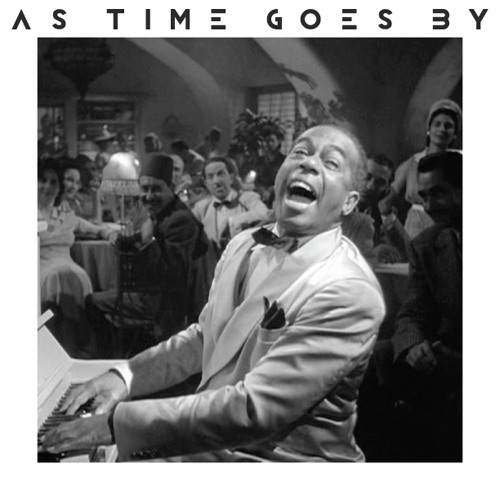
Today in Music (1942): “As Time Goes By” immortalized by Casablanca

As Time Goes By

Rudy Vallee

Writer(s): Herman Hupfield (see lyrics here)


First Charted: September 19, 1931


Peak: 14 PM, 14 HP, 18 GA, 7 DF (Click for codes to charts.)


Sales (in millions): -- US, -- UK, -- world (includes US + UK)


Airplay/Streaming (in millions): -- radio, 0.15 video, 0.46 streaming

As Time Goes By

Dooley Wilson


Released: November 26, 1942


First Charted: --


Peak: 14 HP, 18 GA, 2 DF (Click for codes to charts.)


Sales (in millions): --


Airplay/Streaming (in millions): -- radio, 13.7 video, 15.12 streaming

Awards (Rudy Vallee’s version):

Click on award for more details.


Awards (Dooley Wilson’s version):

About the Song:

Herman Hupfield was a 26-year-old Tin Pan Alley writer when he composed this unforgettable ballad in 1931. NPR Originally the song was sung by Frances Williams JA in the Broadway musical Everybody’s Welcome. MM Rudy Vallee (#15) and Jacques Renard (#13) each charted with versions in 1931. PM

The song took on a new life more than a decade later in the film Casablanca in 1942. Dooley Wilson played the song in a North African bar in the war-time Humphrey Bogart-Ingrid Bergman war-time classic. The song was “too sentimental…and…too backward-looking” DS but perfect “for its moment, both in the narrative of Casablanca, where its misty truisms of love and loyalty thaw Bogart’s iced-over soul, and in the larger narrative of America herself..meet[ing] the challenge of producing the materials and manpower to win two wars at the two ends of the earth.” DS

Because of a musicians’ strike, Wilson couldn’t release his recording, but Vallee and Renard’s versions were re-released, hitting #1 and #3 respectively. PM The song was a hit again in 1952 with Ray Anthony’s #10 version. Wilson performed the song again on screen in 1972 in the movie Play It Again, Sam. The song also showed up in What’s Up Doc?, Blue Skies Again, and Round Midnight.

In 1994, British television sit-com used the song as its title and theme song. JA A rendition by Jimmy Durante was featured in the Tom Hanks-Meg Ryan film Sleepless in Seattle. Other versions were recorded and performed by Louis Armstrong, Tony Bennett, Rosemary Clooney, Bing Crosby, Bob Dylan, Billie Holiday, Harry Nilsson, Carly Simon, Frank Sinatra, Rod Stewart, and Barbra Streisand. The song came in at #2 on the American Film Institute’s 2004 list of the top 100 movie songs of all time.


Resources:


Related Links:


Last updated 5/15/2025.

Friday, February 14, 1992

Today in Music (1942): Woody Herman hits #1 with “Blues in the Night”

Blues in the Night (My Mama Done Tol’ Me)

Woody Herman

Writer(s): Johnny Mercer, Harold Arlen (see lyrics here)


First Charted: December 6, 1941


Peak: 11 US, 12 HP, 1 GA, 11 SM (Click for codes to charts.)


Sales (in millions): --


Airplay/Streaming (in millions): -- radio, 0.16 video, 0.77 streaming

Awards (Woody Herman):

Click on award for more details.


Awards (Frank Sinatra):


Awards (Ella Fitzgerald):

About the Song:

Composer Harold Arlen and lyricist Johnny Mercer were approached to write a song for a movie about a jazz quintet riding the rails in search of its big break. There was a scene in which the band members ended up in jail and needed to sing a blues song. Arlen wrote a melody after analyzing recordings of blues songs and then Mercer penned four pages of lyrics. Arlen rarely suggested changes to Mercer’s lyrics, but recommended that the line “my mama done tol’ me” be moved to the beginning. It became the song’s subtitle. SB

When they finished the song, Mercer called singer Margaret Whiting, who’d sung the pair’s songs “That Old Black Magic” and “Come Rain or Come Shine.” She told Mercer she had guests for dinner, but he and Arlen could come over later to share the song. When Mercer found out the guests included Judy Garland, Mickey Rooney, and Mel Tormé, he announced, “My God, we’re coming right over.” After they played the song, Garland asked them to play it again and Rooney said, “That’s the greatest thing I’ve ever heard.” SB

The producers of the movie were taken with the song as well – so much so that they changed the name of the movie from Hot Nocturne to Blues in the Night. TY1 Jimmie Lunceford’s band introduced the song in the movie and took it to #4 on the charts. It charted six times in 1941 and 1942. Dinah Shore (#4) had her first million-seller with the song TY1 and Cab Calloway (#8), Artie Shaw (#10), and Benny Goodman (#20) also had success with the song. In 1952, Rosemary Clooney charted with the song again (#17). Frank Sinatra and Ella Fitzgerald also recorded the song. The latter two version are in Steve Sullivan’s Encyclopedia of Great Popular Song Recordings along with Woody Herman’s.

It was Herman who had the most successful recording of the song. He was born Woodrow Charles Herman in 1913 in Milwaukee, Wisconsin. He started as a sideman and singer with Isham Jones’ orchestra from 1934-36, specializing in clarinet and saxophone. SM After Jones retired, Herman fronted his own band and became, in the words of writer Will Friedwald, “the most successful…talent scout in the history of jazz.” SS His initial plan was to record “Blues in the Night” as an instrumental but in a cab ride to the recording session, Mercer taught him the lyrics. SS Mercer and Arlen sat in on the session and reported satisfaction with his performance. SS


Resources:


Related Links:


First posted 2/14/2016; last updated 1/31/2024.