Showing posts with label Rudy Vallee. Show all posts

Thursday, November 26, 1992

Today in Music (1942): “As Time Goes By” immortalized by Casablanca

As Time Goes By

Rudy Vallee

Writer(s): Herman Hupfield (see lyrics here)


First Charted: September 19, 1931


Peak: 14 PM, 14 HP, 18 GA, 7 DF (Click for codes to charts.)


Sales (in millions): -- US, -- UK, -- world (includes US + UK)


Airplay/Streaming (in millions): -- radio, 0.15 video, 0.46 streaming

As Time Goes By

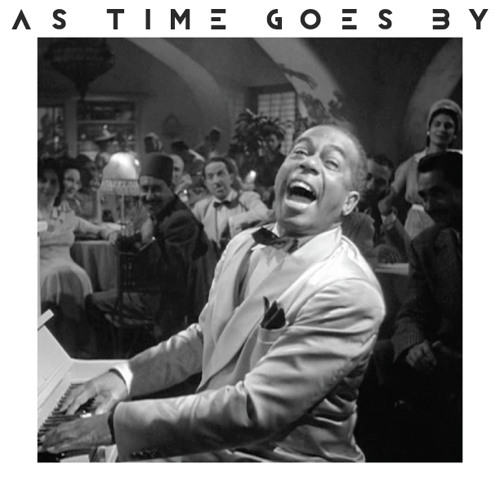
Dooley Wilson


Released: November 26, 1942


First Charted: --


Peak: 14 HP, 18 GA, 2 DF (Click for codes to charts.)


Sales (in millions): --


Airplay/Streaming (in millions): -- radio, 13.7 video, 15.12 streaming

Awards (Rudy Vallee’s version):

Click on award for more details.


Awards (Dooley Wilson’s version):

About the Song:

Herman Hupfield was a 26-year-old Tin Pan Alley writer when he composed this unforgettable ballad in 1931. NPR Originally the song was sung by Frances Williams JA in the Broadway musical Everybody’s Welcome. MM Rudy Vallee (#15) and Jacques Renard (#13) each charted with versions in 1931. PM

The song took on a new life more than a decade later in the film Casablanca in 1942. Dooley Wilson played the song in a North African bar in the war-time Humphrey Bogart-Ingrid Bergman war-time classic. The song was “too sentimental…and…too backward-looking” DS but perfect “for its moment, both in the narrative of Casablanca, where its misty truisms of love and loyalty thaw Bogart’s iced-over soul, and in the larger narrative of America herself..meet[ing] the challenge of producing the materials and manpower to win two wars at the two ends of the earth.” DS

Because of a musicians’ strike, Wilson couldn’t release his recording, but Vallee and Renard’s versions were re-released, hitting #1 and #3 respectively. PM The song was a hit again in 1952 with Ray Anthony’s #10 version. Wilson performed the song again on screen in 1972 in the movie Play It Again, Sam. The song also showed up in What’s Up Doc?, Blue Skies Again, and Round Midnight.

In 1994, British television sit-com used the song as its title and theme song. JA A rendition by Jimmy Durante was featured in the Tom Hanks-Meg Ryan film Sleepless in Seattle. Other versions were recorded and performed by Louis Armstrong, Tony Bennett, Rosemary Clooney, Bing Crosby, Bob Dylan, Billie Holiday, Harry Nilsson, Carly Simon, Frank Sinatra, Rod Stewart, and Barbra Streisand. The song came in at #2 on the American Film Institute’s 2004 list of the top 100 movie songs of all time.


Resources:


Related Links:


Last updated 5/15/2025.

Friday, November 19, 1982

50 years ago: “Brother, Can You Spare a Dime?” charted

Brother, Can You Spare a Dime?

Bing Crosby with Lennie Hayton’s Orchestra

Writer(s): E.Y. “Yip” Harburg, J. Gorney (see lyrics here)


First Charted: November 19, 1932


Peak: 12 US, 8 GA, 9 DF (Click for codes to singles charts.)


Sales (in millions): --


Airplay/Streaming (in millions): -- radio, -- video, -- streaming

Brother, Can You Spare a Dime?

Rudy Vallee


First Charted: November 26, 1932


Peak: 12 US, 8 GA, 6 DF (Click for codes to singles charts.)


Sales (in millions): --


Airplay/Streaming (in millions): -- radio, 0.2 video, -- streaming

Awards (Bing Crosby):

Click on award for more details.


Awards (Rudy Vallee):

About the Song:

“Brother, Can You Spare a Dime?” is “probably the song most associated with the Great Depression.” JA When it was released, thirteen million Americans – a quarter of the working population – were out of work, a ripple effect created by the 1929 stock market crash. LW Mainstream pop songs largely steered clear of the uncomfortable subject area, but when E.Y. “Yip” Harburg was penning tunes for Broadway revue New Americana, the topic was unavoidable. SS

The “deeply political” SS Harburg, who also wrote the classic Wizard of Oz tune “Over the Rainbow,” crafted lyrics which were simultaneously tongue-in-cheek and illustrative of his social consciousness. TY Along with Ira Gershwin, Oscar Hammerstein, and Lorenz Hart, he was a gifted lyricist born around the turn of the century who was inspired by Gilbert and Sullivan’s light operettas. LW Unlike most of his contemporaries, though, Harburg wrote songs which spoke to the underprivledged who hadn’t benefited from the American dream. LW

Harburg knew he wanted to write about the bread lines he’d seen throughout New York City. SS Composer Jay Gorney said that he and Harburg were walking in Central Park and were approached by a well-dressed man who said, “Buddy, can you spare a dime?” SS The idea for the song was born. Harburg tapped President Roosevelt’s campaign imagery of the Forgotten Man as the focal point for the song. SS

Rex Weber performed the song in the revue while standing in a bread line. TY The show opened on October 5, 1932, and three weeks later, Bing Crosby recorded it. SS-39 A week after his version charted, Vallee followed suit. Both songs topped the charts for two weeks, with Rudy’s version unseating Bing’s. Rudy’s is the higher-ranked version according to Dave’s Music Database.


Resources:

  • DMDB Encyclopedia entry for Rudy Vallee
  • DMDB Encyclopedia entry for Bing Crosby
  • DMDB Encyclopedia entry for E.Y. “Yip” Harburg
  • JA David A. Jasen (2002). A Century of American Popular Music: 2000 Best-Loved and Remembered Songs (1899-1999). Routledge: Taylor & Francis, Inc. Page 28.
  • LW Alan Lewens (2001). Popular Song – Soundtrack of the Century. Billboard Books: New York, NY. Page 66.
  • SS Steve Sullivan (2013). Encyclopedia of Great Popular Song Recordings (Volumes I & II). Scarecrow Press: Lanham, Maryland. Pages 37-8.
  • TY Don Tyler (1985). Hit Parade 1920-1955. New York, NY: Quill. Page 63.


Related Links:


First posted 11/19/2016; last updated 11/22/2022.