Showing posts with label best songs pre-rock era book. Show all posts

Monday, November 12, 2018

100 years ago: "Tiger Rag" hit #1

Tiger Rag

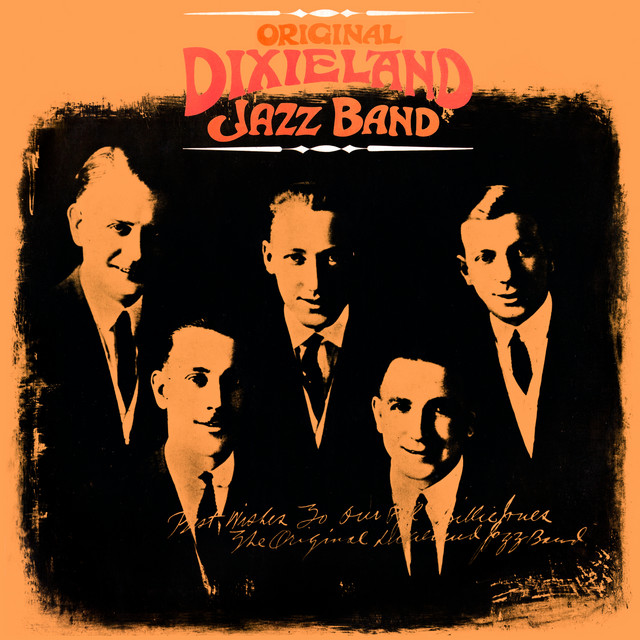
Original Dixieland Jazz Band

Writer(s): Harry DeCosta, Original Dixieland Jazz Band (see lyrics here)


First Charted: August 17, 1918


Peak: 12 US, 15 GA (Click for codes to charts.)


Sales (in millions): --


Airplay/Streaming (in millions): -- radio, 0.36 video, 1.56 streaming

Awards (Original Dixieland Jazz Band):

Click on award for more details.


Awards (Mills Brothers):

About the Song:

“Tiger Rag” has been called “the very first jazz standard” LW and “the most famous Dixieland jazz standard” JA with hundreds of versions being played and recorded over the years. The Original Dixieland Jazz Band wrote the song and introduced it in vaudeville and on record, JA although Jelly Roll Morton has claimed he originated the piece. JA

The band’s leader, cornetist Nick LaRocca, claimed the group invented Dixieland jazz. While most historians disagree, the group did stir interest in the new art form of jazz. NRR Also, it is possible LaRocca was the first to pair the words “Dixieland” and “jazz” together to describe jazz played in a southern style. LW

They were the first jazz band to be recorded. The common belief is that it was because they were white. LW They lacked an outstanding player for solos LW and were “not the best ensemble of its day,” NRR but they displayed enthusiasm and a sense of fun. LW

As was common in the first half of the 20th century, the song had multiple chart versions. Eight versions charted from 1918 to 1952. Notable renditions included Ted Lewis (#8, 1923), Ray Noble (#6, 1934), and Les Paul with Mary Ford (#2, 1952). In 1931, the Mills Brothers charted the most successful version with a four week stay at #1. PM Still, the legendary Louis Armstrong regarded the Original Dixieland Jazz Band’s version as the best. LW


Resources:


First posted 8/17/2014; last updated 9/6/2023.

Sunday, December 17, 2017

90 Years Ago Today: "My Blue Heaven" hit #1

My Blue Heaven

Gene Austin

Writer(s): Walter Donaldson (music), George Whiting (lyrics) (see lyrics here)


First Charted: December 3, 1927


Peak: 113 US, 18 GA, 18 SM, 2 DF (Click for codes to charts.)


Sales (in millions): 6.0 US (includes 1 million in sheet music sales)


Airplay/Streaming (in millions): -- radio, 0.15 video, -- streaming

My Blue Heaven

Fats Domino


First Charted: March 31, 1956


Peak: 19 US, 14 CB, 18 HR, 5 RB, 2 DF (Click for codes to charts.)


Sales (in millions): 2.0 US (includes 1 million in sheet music sales)


Airplay/Streaming (in millions): -- radio, 0.9 video, -- streaming

Awards (Gene Austin):

Click on award for more details.


Awards (Fats Domino):

Click on award for more details.

About the Song:

Eddie Cantor introduced this song in the Ziegfeld Follies of 1927. DJ Austin and Paul Whiteman both had #1 versions of the song that year; two more top ten versions came the next year. The song was also a notable hit for New Orleans R&B singer and pianist Fats Domino nearly 30 years later when he had a #5 R&B hit and #19 pop hit with it. “The song was revived as a title theme song for a minor musical drama starring Betty Grable and Dan Dailey in 1950, and forty years later for a Steve Martin comedy about a small-time gangster who is relocated as part of a witness protection program.” DJ

However, Austin’s version is the biggest, selling over 5 million copies, making it one of the ten best sellers of the first half of the century, PM-631 the biggest song of 1927, CPM and the second biggest non-holiday record seller of the entire pre-1955 era. PM In the wake of the song’s initial success, Gene Austin reportedly bought a yacht which he named ‘My Blue Heaven’. Sales of the song skyrocketed when, on his first trek out, the boat was caught in a hurricane and rumor had it that he’d drowned. DS

His tenor voice has been credited as the onset of the crooner revolution. DS Blogger Jonathan Bogart called Austin “the stuffiest, squarest popular singer around,” DS saying that Austin would serve up “unimaginative…but serviceable” DS “standard-issue Tin Pan Alley…fluff.” DS For “Heaven,” Austin demonstrated “how deeply jazz had soaked into the collective unconscious of popular entertainment” DS with his “wordless warble…in the middle of the song.” DS The producers also tacked some fake birdsong on to the last chorus, a hint of the “the future of artificial sound in pop music.” DS


Resources:


Related Links:


First posted 12/17/2013; last updated 3/20/2023.