Showing posts with label Jelly Roll Morton. Show all posts

Monday, November 12, 2018

100 years ago: "Tiger Rag" hit #1

Tiger Rag

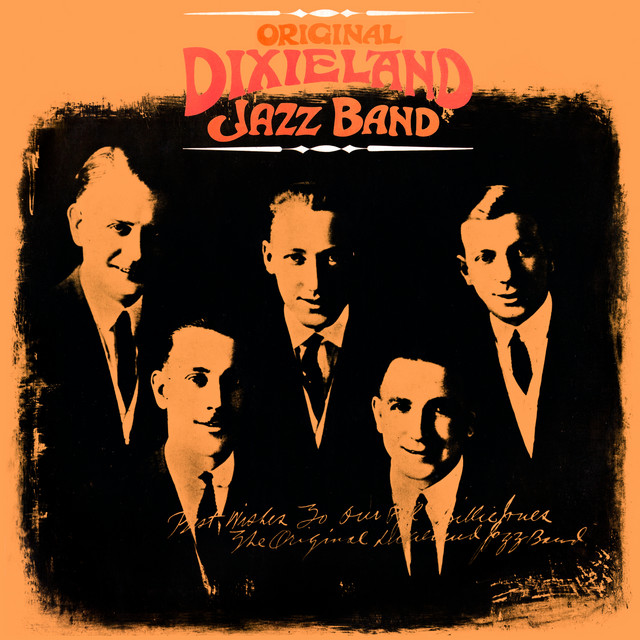
Original Dixieland Jazz Band

Writer(s): Harry DeCosta, Original Dixieland Jazz Band (see lyrics here)


First Charted: August 17, 1918


Peak: 12 US, 15 GA (Click for codes to charts.)


Sales (in millions): --


Airplay/Streaming (in millions): -- radio, 0.36 video, 1.56 streaming

Awards (Original Dixieland Jazz Band):

Click on award for more details.


Awards (Mills Brothers):

About the Song:

“Tiger Rag” has been called “the very first jazz standard” LW and “the most famous Dixieland jazz standard” JA with hundreds of versions being played and recorded over the years. The Original Dixieland Jazz Band wrote the song and introduced it in vaudeville and on record, JA although Jelly Roll Morton has claimed he originated the piece. JA

The band’s leader, cornetist Nick LaRocca, claimed the group invented Dixieland jazz. While most historians disagree, the group did stir interest in the new art form of jazz. NRR Also, it is possible LaRocca was the first to pair the words “Dixieland” and “jazz” together to describe jazz played in a southern style. LW

They were the first jazz band to be recorded. The common belief is that it was because they were white. LW They lacked an outstanding player for solos LW and were “not the best ensemble of its day,” NRR but they displayed enthusiasm and a sense of fun. LW

As was common in the first half of the 20th century, the song had multiple chart versions. Eight versions charted from 1918 to 1952. Notable renditions included Ted Lewis (#8, 1923), Ray Noble (#6, 1934), and Les Paul with Mary Ford (#2, 1952). In 1931, the Mills Brothers charted the most successful version with a four week stay at #1. PM Still, the legendary Louis Armstrong regarded the Original Dixieland Jazz Band’s version as the best. LW


Resources:


First posted 8/17/2014; last updated 9/6/2023.

Tuesday, July 17, 1973

50 years ago: Jelly Roll Morton recorded “King Porter Stomp”

King Porter Stomp

Jelly Roll Morton

Writer(s): Ferdinand "Jelly Roll" Morton (see lyrics here)


Recorded: July 17, 1923


First Charted: --


Peak: -- US (Click for codes to singles charts.)


Sales (in millions): -- US, -- UK, -- world (includes US + UK)


Airplay/Streaming (in millions): -- radio, 0.61 video, -- streaming

Awards (Jelly Roll Morton’s version): (Click on award for more details).

Awards (Benny Goodman’s version): (Click on award for more details).

About the Song:

Ferdinand “Jelly Roll” Morton was a teenager playing piano in clubs in his hometown of New Orleans when he wrote “King Porter Stomp,” NPR which he says was the result of him combining three or four tunes in 1905. SS In 1907, he started playing piano at venues around the country. A piano player in Florida named Porter King was particularly taken with Morton’s composition so Morton named it after him. SS

Morton deliberately avoided publishing his “three-minute masterpiece if ever there were one” SS so he could keep it to himself, using it to beat competitors in piano duels. The “ferocious right-hand synocpations and relentless left-hand rhythms represented one of the first clear-cut distillations of swing rhythm.” SS The song “incorporates a wide range of musical and cultural elements that were part of that scene, from ragtime and blues to classical and parlor songs, and to African and Caribbean music.” NPR Morton “was pointing the way for at least two decades of musical evolution yet to come.” SS

Morton finally recorded the song at his first second-ever studio session on July 17, 1923. It was issued as a piano solo on Gennett 5289. SS He also cut a duet version with King Oliver in 1924 and recorded another version in April 1926. SS It was adopted by others with Chares Creath’s Jazz-o-Maniacs recording it in 1925 and Fletcher Henderson in 1928. SS In 1935, Benny Goodman’s version became a top-10 hit. Some historians have gone as far as to mark August 21, 1935 – the date Goodman performed the song at his band’s legendary git at the Palomar Ballroom in Los Angeles – as the birth of the Swing Era. WB

Sadly, Morton wasn’t earning anything from it since his publisher wasn’t paying him royalties and the practically all-white ASCAP publishing association wouldn’t grant him membership. SS


Resources and Related Links:

First posted 4/23/2021.