Showing posts with label ragtime. Show all posts

Wednesday, September 6, 2023

Ragtime: Top 50 Songs

Ragtime:

Top 50 Songs

Ragtime music was a largely piano-based form of music which reached its widest widest popularity between the mid-1890s and World War I. Its primary characteristic is, according to OxfordMusicOnline.com, “its ragged – i.e., syncopated rhythm.” OM This was, as ParlorSongs.com says, “usually in 2/4 time, over a regular, march tempo bass line.” PS The genre is significant as a predecessor to jazz.

16 lists were aggregated together (see sources at the bottom of the page). All songs appearing on 2+ lists were then sorted by overall DMDB points. The top 50 songs were then sorted by the most points on the ragtime lists. As to how the songs are listed – first up are the songwriters, followed by the title of the song and the year the song was introduced. When relevant, the performer(s) with the highest-ranked version of the song are listed in italics.

Ragtime purists will quibble with songs such as “Alexander’s Ragtime Band” that don’t adhere to strict definitions. I offer no apologies for such inclusions, as this list is meant to celebrate those tunes which introduced and shaped the craft as well as those which popularized the genre by integrating elements of ragtime.

Click here to see other genre-specific song lists.

“The Entertainer,” as performed by Marvin Hamlisch in the 1973 movie ‘The Sting’

1. Scott Joplin “Maple Leaf Rag” (1899)
2. Scott Joplin “The Entertainer” (1902)
3. Tom Turpin “Harlem Rag” (1897)
4. Eubie Blake “Charleston Rag” (1899)
5. Euday L. Bowman “Twelfth Street Rag” (1916): Pee Wee Hunt, 1948
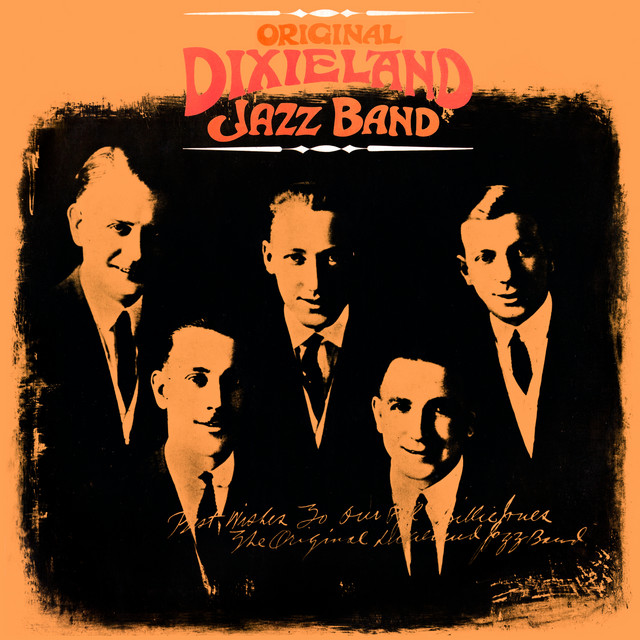
6. Harry DeCosta, Original Dixieland Jazz Band “Tiger Rag” (1918)
7. Charles L. Johnson “Dill Pickles Rag” (1906): Arthur Pryor’s Band, 1910
8. James Scott “Climax Rag” (1913): Jelly Roll Morton, 1914
9. Irving Berlin “Alexander’s Ragtime Band” (1911): Arthur Collins & Bryon G. Harlan, 1911
10. Percy Wenrich “Peaches and Cream Rag” (1905): Len Spencer & Ada Jones, 1905

11. Scott Joplin “Elite Syncopations” (1902)
12. James Scott “Frog Legs Rag” (1906)
13. Joseph Lamb “Top Liner Rag” (1916)
14. Scott Joplin “Sunflower Slow Drag” (1901)
15. Scott Joplin “Weeping Willow” (1903)
16. Henry Lodge “Temptation Rag” (1909): Prince’s Orchestra, 1910
17. Hughie Cannon, Johnnie Queen “Bill Bailey, Won’t You Please Come Home” (1902): Arthur Collins, 1902
18. Ferdinand “Jelly Roll” Morton “King Porter Stomp” (1923)
19. Kerry & F.A. Mills “At a Georgia Camp Meeting” (1897): Dan Quinn, 1898
20. Grant Clarke, Lewis F. Muir, & Maurice Abrahams “Ragtime Cowboy Joe” (1912): Bob Roberts, 1912

21. Ben R. Harney “Mister Johnson, Turn Me Loose” (1896)
22. W.C. Handy, George A. Norton, Charles Tobias, Peter DeRose “The Memphis Blues” (1912): Prince’s Orchestra, 1914
23. Abe Holzmann “Smoky Mokes” (1899): Len Spencer, 1899
24. Zez Confrey “Kitten on the Keys” (1921)
25. Charles Hunter “Tickled to Death” (1899)
26. Kerry & F.A. Mills “Whistling Rufus” (1899): Vess Ossman, 1899
27. Joseph E. Howard, Ida Emerson “Hello Ma Baby” (1899): Arthur Collins, 1899
28. Nat. D. Ayer, Seymour Brown “Oh, You Beautiful Doll” (1911): Billy Murray & American Quartet, 1911
29. Theodore August Metz, Joe Hayden “A Hot Time in the Old Town” (1896): Dan Quinn, 1896
30. Bob Cole, J. Rosamond Johnson, James Weldon Johnson “Under the Bamboo Tree” (1902): Arthur Collins, 1902

31. Theodore Havermeyer Northrup “The Louisiana Rag” (1897)
32. John Philip Sousa “The Washington Post March” (1889): United States Marine Band, 1890)
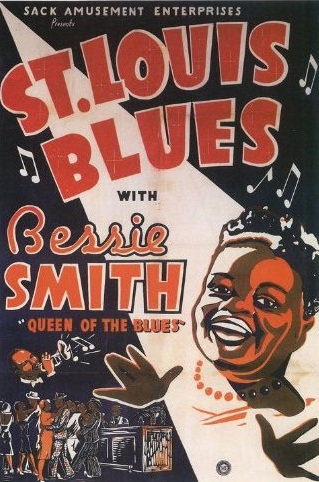
33. W.C. Handy “St. Louis Blues” (1914): Bessie Smith & Louis Armstrong, 1925
34. James Reese Europe “Castle House Rag” (1914)
35. Spencer Williams, Jack Palmer “Everybody Loves My Baby” (1924): Aileen Stanley, 1925
36. Thomas Turpin “St. Louis Rag” (1903): Vess Ossman, 1905
37. James Reese Europe, Ford Dabney “The Castle Walk” (1914): Irene & Vernon Castle, 1914
38. traditional “Turkey in the Straw” (1820): Billy Golden, 1891 (1891)
39. Scott Joplin “Bethena (Ragtime Waltz)” (1905)
40. Scott Joplin “Swipesy Cake Walk” (1900)

41. Cecil Macklin “Tres Moutarde (Too Much Mustard)” (1911): Victor Military Band, 1911
42. George Sidney, J. Bodewell Lampe “Creole Belles” (1900): Metropolitan Orchestra, 1902
43. Thomas S. Allen “Any Rags?” (1903): Arthur Collins, 1903
44. W.C. Handy, Walter Hirsch “Joe Turner Blues” (1915): Prince’s Orchestra, 1916
45. Robert S. Roberts, Gene Jefferson “I’m Certainly Living a Ragtime Life” (1900): Fannie Midgely, 1900
46. Irving Berlin “That International Rag” (1913): Victor Military Band, 1914
47. Irving Berlin “I Want to Go Back to Michigan (Down on the Farm)” (1914): Eldia Morris, 1914
48. Tom Turpin “The Buffalo Rag” (1904): Vess Ossman, 1906
49. Scott Joplin “Scott Joplin’s New Rag” (1912)
50. Theron C. Bennett “St. Louis Tickle” (1904): Vess Ossman, 1910


Resources and Related Links:

First posted 4/16/2021; last updated 9/6/2023.

Monday, November 12, 2018

100 years ago: "Tiger Rag" hit #1

Tiger Rag

Original Dixieland Jazz Band

Writer(s): Harry DeCosta, Original Dixieland Jazz Band (see lyrics here)


First Charted: August 17, 1918


Peak: 12 US, 15 GA (Click for codes to charts.)


Sales (in millions): --


Airplay/Streaming (in millions): -- radio, 0.36 video, 1.56 streaming

Awards (Original Dixieland Jazz Band):

Click on award for more details.


Awards (Mills Brothers):

About the Song:

“Tiger Rag” has been called “the very first jazz standard” LW and “the most famous Dixieland jazz standard” JA with hundreds of versions being played and recorded over the years. The Original Dixieland Jazz Band wrote the song and introduced it in vaudeville and on record, JA although Jelly Roll Morton has claimed he originated the piece. JA

The band’s leader, cornetist Nick LaRocca, claimed the group invented Dixieland jazz. While most historians disagree, the group did stir interest in the new art form of jazz. NRR Also, it is possible LaRocca was the first to pair the words “Dixieland” and “jazz” together to describe jazz played in a southern style. LW

They were the first jazz band to be recorded. The common belief is that it was because they were white. LW They lacked an outstanding player for solos LW and were “not the best ensemble of its day,” NRR but they displayed enthusiasm and a sense of fun. LW

As was common in the first half of the 20th century, the song had multiple chart versions. Eight versions charted from 1918 to 1952. Notable renditions included Ted Lewis (#8, 1923), Ray Noble (#6, 1934), and Les Paul with Mary Ford (#2, 1952). In 1931, the Mills Brothers charted the most successful version with a four week stay at #1. PM Still, the legendary Louis Armstrong regarded the Original Dixieland Jazz Band’s version as the best. LW


Resources:


First posted 8/17/2014; last updated 9/6/2023.

Saturday, June 13, 2015

On This Day (1925): Bessie Smith and Louis Armstrong charted with “St. Louis Blues”

St. Louis Blues

W.C. Handy

Writer(s): W.C. Handy (see lyrics here)


Composed: 1914


First Charted: November 24, 1923


Peak: 9 PM (Click for codes to charts.)


Sales (in millions): 1.0 (sheet music)


Airplay/Streaming (in millions): -- radio, -- video, -- streaming

St. Louis Blues

Marion Harris


First Charted: August 28, 1920


Peak: 13 PM, 16 GA (Click for codes to charts.)


Sales (in millions): 1.0 (sheet music)


Airplay/Streaming (in millions): -- radio, -- video, -- streaming

St. Louis Blues

Bessie Smith & Louis Armstrong


First Charted: June 13, 1925


Peak: 3 PM (Click for codes to charts.)


Sales (in millions): 1.0 (sheet music)


Airplay/Streaming (in millions): -- radio, 1.57 video, 1.35 streaming

Awards (W.C. Handy):

Click on award for more details.


Awards (Al Bernard, 1919):

Awards (Marion Harris, 1920):

Awards (Smith & Armstrong, 1925):

Awards (Louis Armstrong, 1930):


Awards (Milton Brown, 1935):

About the Song:

Not only is this the most recorded blues song of all time DJ and maybe the most recorded American song of all time, PM but is has been called “the most important blues song ever written.” LW William Christopher Handy, who became known as “The Father of the Blues,” was a bandleader who performed to mixed race audiences throughout the southern United States. As jug bands gained in popularity, he was driven to compose music in a similar style, LW most notably with “St. Louis Blues,” a lyric he claims he was inspired to write after hearing a St. Louis woman complaining about her cheating husband. LW

He wrote the song in 1914, a time when the popular songs of Tin Pan Alley began fusing “with folklore to explore the blues, the form that led to the full-fledged birth of American jazz.” NPR Handy tapped into Afro-Spanish rhythms he picked up on trips to Cuba LW and mixed “the ‘humour of a coon’ song, the syncopation of ragtime, and the spirit of a Negro spiritual, and call[ed] it the blues.” RCG The great theatrical producer Florenz Ziegfeld credited Handy with putting black bands on the previously all-white map of Broadway in New York. RCG

The song didn’t take off until Sophie Tucker incorporated it into her vaudeville act. TY2 It went on to chart fifteen times over the next forty years PM generating $25,000 a year, which by today’s standards would make Handy a billionaire. LW Prince’s Orchestra first hit with it in 1916 (#4), but Marion Harris had the greatest success with it in 1920 (#1). PM The best-selling version was by the Original Dixieland Jazz band in 1921. DJ In 1925, Bessie Smith’s version with Louis Armstrong on cornet hit #3 and it is the highest ranked version according to Dave’s Music Database. The Mills Brothers hit #2 in 1932. PM In 1935, Milton Brown & His Brownies recorded what music historian Steve Sullivan called “the best of all country versions of the W.C. Handy blues classic.” SS

Among others to record it were Bing Crosby, Benny Goodman, Duke Ellington, Guy Lombardo, Lena Horne, Dinah Shore, Johnny Mercer, and Pearl Bailey. RCG The song has been featured in more than 25 Hollywood films, including the 1958 biopic St. Louis Blues, in which Nat “King” Cole plays Handy and sings his signature song. RCG

The song was successful outside of America as well. It was said to be one of Queen Elizabeth II’s favorites. In the 1930s, Ethiopian soldiers used it as an anthem when fighting off Italian invaders. SS


Resources:


Related Links:


First posted 11/24/2011; last updated 9/7/2023.