Showing posts with label Maple Leaf Rag. Show all posts

Wednesday, September 6, 2023

Ragtime: Top 50 Songs

Ragtime:

Top 50 Songs

Ragtime music was a largely piano-based form of music which reached its widest widest popularity between the mid-1890s and World War I. Its primary characteristic is, according to OxfordMusicOnline.com, “its ragged – i.e., syncopated rhythm.” OM This was, as ParlorSongs.com says, “usually in 2/4 time, over a regular, march tempo bass line.” PS The genre is significant as a predecessor to jazz.

16 lists were aggregated together (see sources at the bottom of the page). All songs appearing on 2+ lists were then sorted by overall DMDB points. The top 50 songs were then sorted by the most points on the ragtime lists. As to how the songs are listed – first up are the songwriters, followed by the title of the song and the year the song was introduced. When relevant, the performer(s) with the highest-ranked version of the song are listed in italics.

Ragtime purists will quibble with songs such as “Alexander’s Ragtime Band” that don’t adhere to strict definitions. I offer no apologies for such inclusions, as this list is meant to celebrate those tunes which introduced and shaped the craft as well as those which popularized the genre by integrating elements of ragtime.

Click here to see other genre-specific song lists.

“The Entertainer,” as performed by Marvin Hamlisch in the 1973 movie ‘The Sting’

1. Scott Joplin “Maple Leaf Rag” (1899)
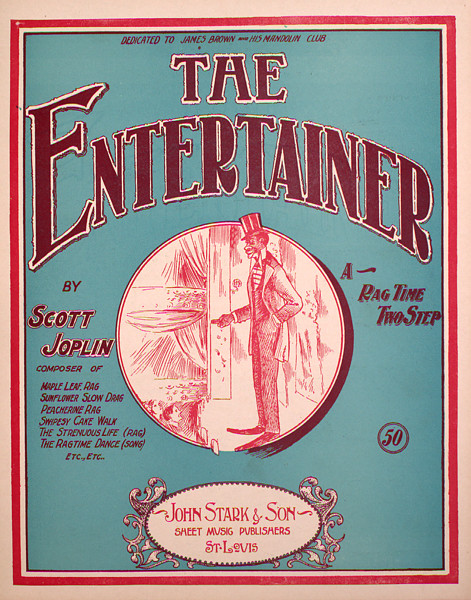
2. Scott Joplin “The Entertainer” (1902)
3. Tom Turpin “Harlem Rag” (1897)
4. Eubie Blake “Charleston Rag” (1899)
5. Euday L. Bowman “Twelfth Street Rag” (1916): Pee Wee Hunt, 1948
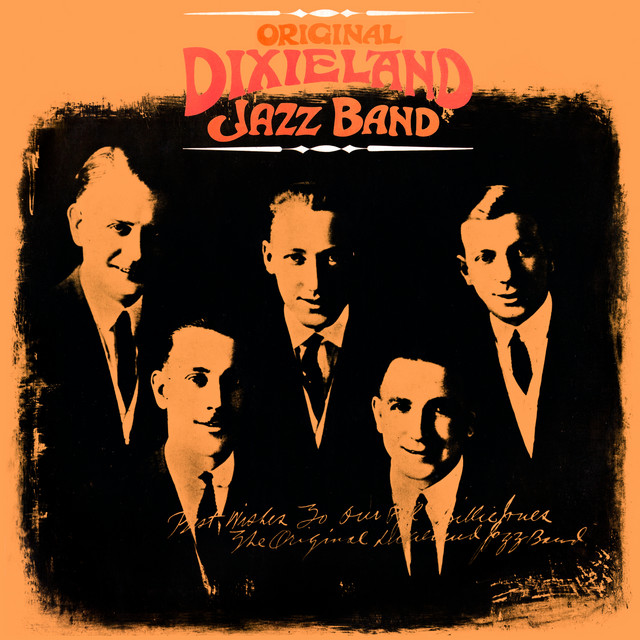
6. Harry DeCosta, Original Dixieland Jazz Band “Tiger Rag” (1918)
7. Charles L. Johnson “Dill Pickles Rag” (1906): Arthur Pryor’s Band, 1910
8. James Scott “Climax Rag” (1913): Jelly Roll Morton, 1914
9. Irving Berlin “Alexander’s Ragtime Band” (1911): Arthur Collins & Bryon G. Harlan, 1911
10. Percy Wenrich “Peaches and Cream Rag” (1905): Len Spencer & Ada Jones, 1905

11. Scott Joplin “Elite Syncopations” (1902)
12. James Scott “Frog Legs Rag” (1906)
13. Joseph Lamb “Top Liner Rag” (1916)
14. Scott Joplin “Sunflower Slow Drag” (1901)
15. Scott Joplin “Weeping Willow” (1903)
16. Henry Lodge “Temptation Rag” (1909): Prince’s Orchestra, 1910
17. Hughie Cannon, Johnnie Queen “Bill Bailey, Won’t You Please Come Home” (1902): Arthur Collins, 1902
18. Ferdinand “Jelly Roll” Morton “King Porter Stomp” (1923)
19. Kerry & F.A. Mills “At a Georgia Camp Meeting” (1897): Dan Quinn, 1898
20. Grant Clarke, Lewis F. Muir, & Maurice Abrahams “Ragtime Cowboy Joe” (1912): Bob Roberts, 1912

21. Ben R. Harney “Mister Johnson, Turn Me Loose” (1896)
22. W.C. Handy, George A. Norton, Charles Tobias, Peter DeRose “The Memphis Blues” (1912): Prince’s Orchestra, 1914
23. Abe Holzmann “Smoky Mokes” (1899): Len Spencer, 1899
24. Zez Confrey “Kitten on the Keys” (1921)
25. Charles Hunter “Tickled to Death” (1899)
26. Kerry & F.A. Mills “Whistling Rufus” (1899): Vess Ossman, 1899
27. Joseph E. Howard, Ida Emerson “Hello Ma Baby” (1899): Arthur Collins, 1899
28. Nat. D. Ayer, Seymour Brown “Oh, You Beautiful Doll” (1911): Billy Murray & American Quartet, 1911
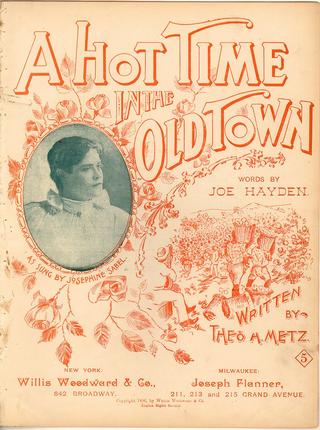
29. Theodore August Metz, Joe Hayden “A Hot Time in the Old Town” (1896): Dan Quinn, 1896
30. Bob Cole, J. Rosamond Johnson, James Weldon Johnson “Under the Bamboo Tree” (1902): Arthur Collins, 1902

31. Theodore Havermeyer Northrup “The Louisiana Rag” (1897)
32. John Philip Sousa “The Washington Post March” (1889): United States Marine Band, 1890)
33. W.C. Handy “St. Louis Blues” (1914): Bessie Smith & Louis Armstrong, 1925
34. James Reese Europe “Castle House Rag” (1914)
35. Spencer Williams, Jack Palmer “Everybody Loves My Baby” (1924): Aileen Stanley, 1925
36. Thomas Turpin “St. Louis Rag” (1903): Vess Ossman, 1905
37. James Reese Europe, Ford Dabney “The Castle Walk” (1914): Irene & Vernon Castle, 1914
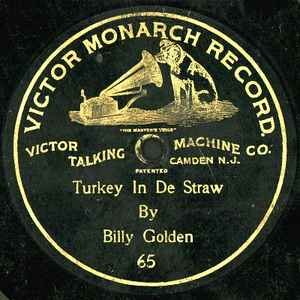
38. traditional “Turkey in the Straw” (1820): Billy Golden, 1891 (1891)
39. Scott Joplin “Bethena (Ragtime Waltz)” (1905)
40. Scott Joplin “Swipesy Cake Walk” (1900)

41. Cecil Macklin “Tres Moutarde (Too Much Mustard)” (1911): Victor Military Band, 1911
42. George Sidney, J. Bodewell Lampe “Creole Belles” (1900): Metropolitan Orchestra, 1902
43. Thomas S. Allen “Any Rags?” (1903): Arthur Collins, 1903
44. W.C. Handy, Walter Hirsch “Joe Turner Blues” (1915): Prince’s Orchestra, 1916
45. Robert S. Roberts, Gene Jefferson “I’m Certainly Living a Ragtime Life” (1900): Fannie Midgely, 1900
46. Irving Berlin “That International Rag” (1913): Victor Military Band, 1914
47. Irving Berlin “I Want to Go Back to Michigan (Down on the Farm)” (1914): Eldia Morris, 1914
48. Tom Turpin “The Buffalo Rag” (1904): Vess Ossman, 1906
49. Scott Joplin “Scott Joplin’s New Rag” (1912)
50. Theron C. Bennett “St. Louis Tickle” (1904): Vess Ossman, 1910


Resources and Related Links:

First posted 4/16/2021; last updated 9/6/2023.

Saturday, January 22, 2022

Dave's Music Database Hall of Fame: Song Inductees (January 2022)

Originally posted 1/22/2022.

In honor of the 10th anniversary of the DMDB blog on January 22, 2019, Dave’s Music Database launched its own Hall of Fame. This is the 13th set of song inductees. These are the ten highest-ranked songs in Dave’s Music Database which are featured on the DMDB list of the top 50 ragtime songs of all time. Previous inductees to appear on this list include “Bill Bailey, Won’t You Come Home” by Arthur Collins, “St. Louis Blues” by Bessie Smith and Louis Armstrong, and “Alexander’s Ragtime Band” by Arthur Collins & Byron Harlan.

Billy Golden “Turkey in the Straw” (1891)

Inducted January 2022 as “Top Ragtime Songs”

The melody of “Turkey in the Straw” grew out of song in the 1830s called “Zip Coon” which may have come from a British song “The Old Rose Tree” which was published in 1795. It has been given new lyrics more than once and its authorship is disputed. Vaudeville comedian Billy Golden was the first to chart with the song in 1891, taking it to #1. It has since been called “the classical American rural tune” by Carl Sandburg and was even used in the 1928 Disney animated short Steamboat Willie, which introduced the characters of Mickey and Minnie Mouse. Read more.

Dan Quinn “A Hot Time in the Old Town” (1896)

Inducted January 2022 as “Top Ragtime Songs”

It became a battle cry for the Spanish-American War, was the original theme song for the Looney Tunes cartoon, and was featured in the ground-breaking musical Show Boat as well as the film classic Citizen Kane. The Joker sings it in 1989’s Batman. The music was composed by August Metz with the title inspired by seeing children setting a fire near the tracks as his minstrel troupe’s train pulled into Old Town, Louisiana. Joe Hayden, a singer in the company, added lyrics a few years later. Read more.

Arthur Collins “Hello Ma Baby” (1899)

Inducted January 2022 as “Top Ragtime Songs”

“Hello Ma Baby” was one of the first mainstream songs to use ragtime-styled syncopation. SS Arthur Collins, who was known as “King of the Ragtime Singers,” SF recorded his chart-topping version in 1899. It was also known as a coon song, a genre characterized by racist lyrics and caricatures of African-Americans. It did, however, also help introduce secular black music into the commercial mainstream. Read more.

Scott Joplin “Maple Leaf Rag” (1899)

Inducted January 2022 as “Top Ragtime Songs”

The DMDB ranks “Maple Leaf Rag” as the #1 ragtime song, a “musical innovation [that] was key to the development of jazz.” LW Music historian Steve Sullivan called it “the essence of ragtime.” SS It became “the model for ragtime compositions” WK and the first rag to sell more than a million copies of sheet music. Read more.

Arthur Collins “Under the Bamboo Tree” (1902)

Inducted January 2022 as “Top Ragtime Songs”

“Bamboo” was about a dusky maiden with royal blood who lived in the jungle. She met a Zulu from Matabooloo and he waited for her every morning underneath a bamboo tree. Eventually he asks her to be his queen. Robert Cole and J. Rosamond Johnson introduced the song in their popular vaudeville act. They performed it at a party and Broadway actress and singer Marie Cahill took a liking to it, WK interpolating it into the 1902 Broadway musical Sally in Our Alley. Arthur Collins recorded the first chart version that year and took it to #1. Read more.

Scott Joplin “The Entertainer” (1902)

Inducted January 2022 as “Top Ragtime Songs”

Scott Joplin was “the first classical trained black composer to become a household name in America.” SF His music was at the forefront of the ragtime movement. He published his ragtime classic “The Entertainer” in 1902. The song was initially sold as sheet music and, in the 1910s, as a piano roll. WK It enjoyed its greatest success when it was featured in the 1973 movie The Sting. Marvin Hamlisch’s recording was a surprise hit, reaching #3 on the Billboard Hot 100 and winning an Oscar for Best Original Song Score and Adaptation. Read more.

Billy Murray & the American Quartet “Oh, You Beautiful Doll” (1911)

Inducted January 2022 as “Top Ragtime Songs”

“The definition of beauty or attractiveness has changed over the years.” TY2 In 1900, “the Florodora girls were considered the epitome of feminine allure. The six girls were 5 feet 4 inches tall and weighed 130 pounds each.” TY2 The American Quartet had a #1 hit with the song. Read more.

Charles Adams Prince’s Orchestra “The Memphis Blues” (1914)

Inducted January 2022 as “Top Ragtime Songs”

W.C. Handy’s ‘The Memphis Blues” was one of the first blues songs ever published and “the first to make a significant impact on the music industry.” SS He originally wrote it as a campaigning song for Edward Crump in his bid for mayor of Memphis in 1909 and published it in 1912. Orchestra recorded the first version of the song to reach the charts in 1914. Read more.

Original Dixieland Jazz Band “Tiger Rag” (1918)

Inducted January 2022 as “Top Ragtime Songs”

“Tiger Rag” has been called “the very first jazz standard” LW and “the most famous Dixieland jazz standard.” JA The Original Dixieland Jazz Band wrote the song and introduced it in vaudeville and on record. JA They were the first jazz band to be recorded. The song had multiple chart versions but the legendary Louis Armstrong regarded the Original Dixieland Jazz Band’s version as the best. LW Read more.

Pee Wee Hunt “Twelfth Street Rag” (1948)

Inducted January 2022 as “Top Ragtime Songs”

“Twelfth Street Rag” was first published in 1914 as a piano rag TY by composer Euday L. Bowman. It became “the most recorded rag of all time.” JA However, it took him more than 15 years to write down the music. It underwent several lyrical transformations before experiencing its greatest success in 1948 when Pee Wee Hunt and his orchestra recorded it and it sold more than three million copies to become the biggest-selling ragtime song of all time. JA Read more.

Tuesday, August 10, 1999

On This Day (1899): “Maple Leaf Rag” published

Maple Leaf Rag

Scott Joplin

Writer(s): Scott Joplin (music), Sydney Brown (words) (see lyrics here)


Published: August 10, 1899


First Charted: --


Peak: -- (Click for codes to charts.)


Sales (in millions): 1.0 (sheet music)


Airplay/Streaming (in millions): -- radio, 17.6 video, 5.68 streaming

Awards (Scott Joplin):

Click on award for more details.


Awards (U.S. Marine Band):


Awards (Vess Ossman):

About the Song:

Scott Joplin was a black pianist from Texas. His mother worked as a servant in a white household where he had access to a piano. He later received classical training. He left home as a teen to hit the road as a musician. He popularized a playing style known as ragtime in which he played a beat with the left hand and melody with the right hand. In their book They All Played Ragtime, Rudi Blesh and Harriet Janis called it the “most exciting, most infectiously lilting music ever heard.” SS

With its “fabulously infectious melody,” SS Scott Joplin’s “Maple Leaf Rag” “is the essence of ragtime,” SS becoming “the model for ragtime compositions by subsequent composers.” WK Ragtime was a “musical innovation [that] was key to the development of jazz” LW and “an important influence in the development of popular music in the first two or three decades of the century.” LW The musical form got its start with banjo playing, but was then adapted to piano and became widely popular as the instrumental gained widespread popularity as a staple in American homes in the late 19th century.

It was the first rag to sell more than a million copies of sheet music and “spawned a host of songs with the word ‘rag’ in the title.” LW The title came from the Maple Leaf club in Sedalia, Missouri – “the world capital of ragtime.” SS Joplin first visited the city as a touring musician in 1894 and took up permanent residence there a decade later. WK

In 1903, the song was published again with lyrics by Sydney Brown. WK Wilbur Sweatman, a black clarinetist, appears to be the first to record the song either that year or the next. SS He recorded it with a six-piece band for the Metropolitan Music Store in Minneapolis. SS The first widely available commercial recording was made in October 1906 by the U.S. Marine Band. SS Their version charted in March 1907, reaching #2. Four months later, banjo player Vess Ossman hit the charts with his version, coming in one rung lower but becoming the more celebrated version. Before his death in 1917, Joplin made some piano rolls but otherwise he never made any commercial recordings.


Resources:


First posted 9/5/2023.