


 |
Originally posted 1/22/2022. In honor of the 10th anniversary of the DMDB blog on January 22, 2019, Dave’s Music Database launched its own Hall of Fame. This is the 13th set of song inductees. These are the ten highest-ranked songs in Dave’s Music Database which are featured on the DMDB list of the top 50 ragtime songs of all time. Previous inductees to appear on this list include “Bill Bailey, Won’t You Come Home” by Arthur Collins, “St. Louis Blues” by Bessie Smith and Louis Armstrong, and “Alexander’s Ragtime Band” by Arthur Collins & Byron Harlan. |
Billy Golden “Turkey in the Straw” (1891)Inducted January 2022 as “Top Ragtime Songs” |
| The melody of “Turkey in the Straw” grew out of song in the 1830s called “Zip Coon” which may have come from a British song “The Old Rose Tree” which was published in 1795. It has been given new lyrics more than once and its authorship is disputed. Vaudeville comedian Billy Golden was the first to chart with the song in 1891, taking it to #1. It has since been called “the classical American rural tune” by Carl Sandburg and was even used in the 1928 Disney animated short Steamboat Willie, which introduced the characters of Mickey and Minnie Mouse. Read more. | 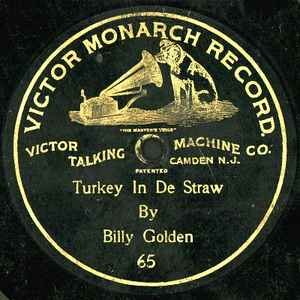 |
Dan Quinn “A Hot Time in the Old Town” (1896)Inducted January 2022 as “Top Ragtime Songs” |
| It became a battle cry for the Spanish-American War, was the original theme song for the Looney Tunes cartoon, and was featured in the ground-breaking musical Show Boat as well as the film classic Citizen Kane. The Joker sings it in 1989’s Batman. The music was composed by August Metz with the title inspired by seeing children setting a fire near the tracks as his minstrel troupe’s train pulled into Old Town, Louisiana. Joe Hayden, a singer in the company, added lyrics a few years later. Read more. | 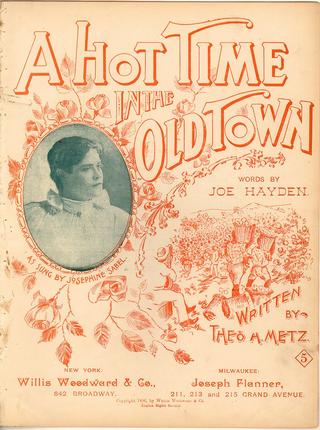 |
Arthur Collins “Hello Ma Baby” (1899)Inducted January 2022 as “Top Ragtime Songs” |
| “Hello Ma Baby” was one of the first mainstream songs to use ragtime-styled syncopation. SS Arthur Collins, who was known as “King of the Ragtime Singers,” SF recorded his chart-topping version in 1899. It was also known as a coon song, a genre characterized by racist lyrics and caricatures of African-Americans. It did, however, also help introduce secular black music into the commercial mainstream. Read more. |  |
Scott Joplin “Maple Leaf Rag” (1899)Inducted January 2022 as “Top Ragtime Songs” |
| The DMDB ranks “Maple Leaf Rag” as the #1 ragtime song, a “musical innovation [that] was key to the development of jazz.” LW Music historian Steve Sullivan called it “the essence of ragtime.” SS It became “the model for ragtime compositions” WK and the first rag to sell more than a million copies of sheet music. Read more. |  |
Arthur Collins “Under the Bamboo Tree” (1902)Inducted January 2022 as “Top Ragtime Songs” |
| “Bamboo” was about a dusky maiden with royal blood who lived in the jungle. She met a Zulu from Matabooloo and he waited for her every morning underneath a bamboo tree. Eventually he asks her to be his queen. Robert Cole and J. Rosamond Johnson introduced the song in their popular vaudeville act. They performed it at a party and Broadway actress and singer Marie Cahill took a liking to it, WK interpolating it into the 1902 Broadway musical Sally in Our Alley. Arthur Collins recorded the first chart version that year and took it to #1. Read more. |  |
Scott Joplin “The Entertainer” (1902)Inducted January 2022 as “Top Ragtime Songs” |
| Scott Joplin was “the first classical trained black composer to become a household name in America.” SF His music was at the forefront of the ragtime movement. He published his ragtime classic “The Entertainer” in 1902. The song was initially sold as sheet music and, in the 1910s, as a piano roll. WK It enjoyed its greatest success when it was featured in the 1973 movie The Sting. Marvin Hamlisch’s recording was a surprise hit, reaching #3 on the Billboard Hot 100 and winning an Oscar for Best Original Song Score and Adaptation. Read more. | 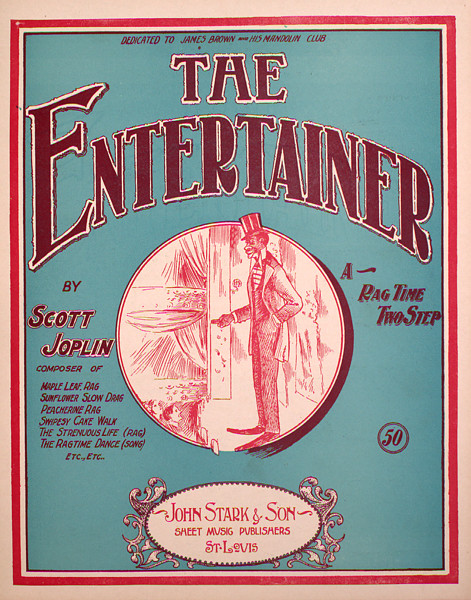 |
Billy Murray & the American Quartet “Oh, You Beautiful Doll” (1911)Inducted January 2022 as “Top Ragtime Songs” |
| “The definition of beauty or attractiveness has changed over the years.” TY2 In 1900, “the Florodora girls were considered the epitome of feminine allure. The six girls were 5 feet 4 inches tall and weighed 130 pounds each.” TY2 The American Quartet had a #1 hit with the song. Read more. |  |
Charles Adams Prince’s Orchestra “The Memphis Blues” (1914)Inducted January 2022 as “Top Ragtime Songs” |
| W.C. Handy’s ‘The Memphis Blues” was one of the first blues songs ever published and “the first to make a significant impact on the music industry.” SS He originally wrote it as a campaigning song for Edward Crump in his bid for mayor of Memphis in 1909 and published it in 1912. Orchestra recorded the first version of the song to reach the charts in 1914. Read more. |  |
Original Dixieland Jazz Band “Tiger Rag” (1918)Inducted January 2022 as “Top Ragtime Songs” |
| “Tiger Rag” has been called “the very first jazz standard” LW and “the most famous Dixieland jazz standard.” JA The Original Dixieland Jazz Band wrote the song and introduced it in vaudeville and on record. JA They were the first jazz band to be recorded. The song had multiple chart versions but the legendary Louis Armstrong regarded the Original Dixieland Jazz Band’s version as the best. LW Read more. | 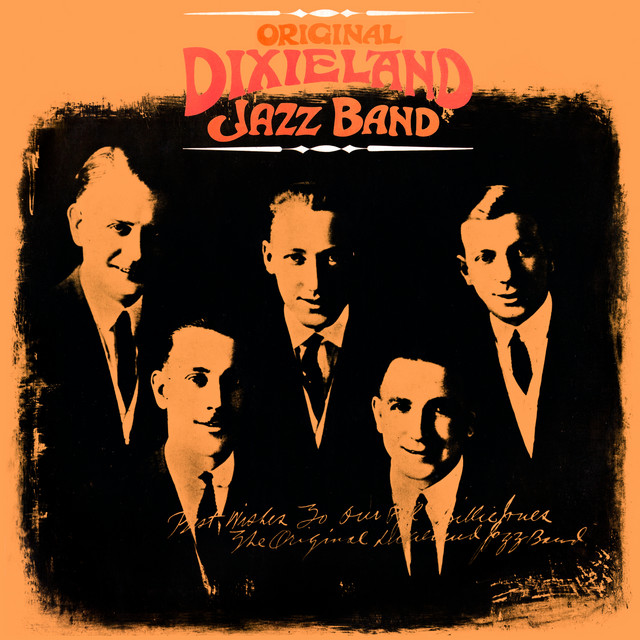 |
Pee Wee Hunt “Twelfth Street Rag” (1948)Inducted January 2022 as “Top Ragtime Songs” |
| “Twelfth Street Rag” was first published in 1914 as a piano rag TY by composer Euday L. Bowman. It became “the most recorded rag of all time.” JA However, it took him more than 15 years to write down the music. It underwent several lyrical transformations before experiencing its greatest success in 1948 when Pee Wee Hunt and his orchestra recorded it and it sold more than three million copies to become the biggest-selling ragtime song of all time. JA Read more. |  |


