Showing posts with label blues hall of fame. Show all posts

Wednesday, May 7, 2025

Blues Hall of Fame

Blues Hall of Fame:

1980-2025

As stated on the website, the Blues Hall of Fame “is a historical record of those who have made the Blues timeless through performance, documentation, and recording.” It was launched by the Blues Foundation in 1980. Inductee categories include performers, non-performers, songs, albums, and literature.

See other Hall of Fames.

The following performers and non-performers have been inducted.


A

  • The Aces (2018)
  • Mary Katherine Aldin (2022, non-performer)
  • Bill “Hoss” Allen (1994, non-performer)
  • Luther Allison (1998)
  • Clifford Antone (2009, non-performer)
  • Billy Boy Arnold (2012)
  • Moe Asch (2019, non-performer)

B

  • Dave Bartholomew (2007)
  • Count Basie (2019)
  • Ralph Bass (2003, non-performer)
  • Carey Bell (2023)
  • Lurrie Bell (2024)
  • William Bell (2025)
  • Al Benson (2018, non-performer)
  • Chuck Berry (1985)
  • Big Maybelle (2011)
  • Bihari Brothers (2006, non-performer)
  • Elvin Bishop (2016)
  • Otis Blackwell (2022, non-performer)
  • Scrapper Blackwell (2024)
  • Bobby “Blue” Bland (1981)
  • Blind Blake (1990)
  • Mike Bloomfield (2012)
  • Lucille Bogan (2022)
  • Booker T. & the MG’s (2019)
  • Eddie Boyd (2021)
  • Jimmy Bracken (2011, non-performer)
  • Billy Branch (2021)
  • Bruce Bromberg (2011, non-performer)
  • Lonnie Brooks (2010)
  • Big Bill Broonzy (1980)
  • Charles Brown (1996)
  • Clarence “Gatemouth” Brown (1999)
  • Roy Brown (1981)
  • Ruth Brown (2002)
  • Tommy Brown (2015)
  • R.L. Burnside (2014)
  • Paul Butterfield (2006)

C

  • Gus Cannon (2010)
  • Leroy Carr (1982)
  • Vivian Carter (2011, non-performer)
  • Ray Charles (1982)
  • Samuel Charters (2011, non-performer)
  • Clifton Chenier (1989)
  • Leonard Chess (1995, non-performer)
  • Phil Chess (1995, non-performer)
  • Eric Clapton (2015)
  • Dave Clark (2013, non-performer)
  • Otis Clay (2013)
  • Eddy Clearwater (2016)
  • Albert Collins (1986)
  • Johnny Copeland (2017)
  • James Cotton (2006)
  • Tommy Couch, Sr. (2016, non-performer)
  • Ida Cox (2019)
  • Robert Cray (2011)
  • Pee Wee Crayton (2019)
  • Arthur “Big Boy” Crudup (1994)

D

  • Reverend Gary Davis (2009)
  • Walter Davis (2005)
  • Sugar Pie Desanto (2024)
  • Bo Diddley (2004)
  • Willie Dixon (1980)
  • Fats Domino (2003)
  • Georgia Tom Dorsey (2018)
  • Dr. John (2007)
  • Champion Jack Dupree (1993)

E

  • David “Honeyboy” Edwards (1996)
  • Ahmet Ertegün (2007, non-performer)
  • Sleepy John Estes (1991)
  • David Evans (2023, non-performer)

F

  • William R. Ferris (2024, non-performer)
  • Aretha Franklin (2019)
  • Blind Boy Fuller (2004)
  • Lowell Fulson (1993)

G

  • Bob Geddins (2025, non-performer)
  • Henry Glover (2013, non-performer)
  • Henry Gray (2017)
  • Peter Guralnick (2010, non-performer)
  • Buddy Guy (1985)

H

  • John Hammond (2008, non-performer)
  • John Hammond, Jr. (2011)
  • W. C. Handy (2010)
  • Slim Harpo (1985)
  • Wynonie Harris (1994)
  • Jessie Mae Hemphill (2025)
  • Billie Holiday (1991)
  • Earl Hooker (2013)
  • John Lee Hooker (1980)
  • Lightnin’ Hopkins (1980)
  • Big Walter Horton (1982)
  • Son House (1980)
  • Howlin’ Wolf (1980)
  • Alberta Hunter (2011)
  • Mississippi John Hurt (1988)
  • J. B. Hutto (1985)

I

  • Bruce Iglauer (1997, non-performer)

J

  • Elmore James (1980)
  • Etta James (2001)
  • Skip James (1992)
  • Blind Lemon Jefferson (1980)
  • Little Willie John (2022)
  • Blind Willie Johnson (2025)
  • Buddy Johnson (2012)
  • Ella Johnson (2012)
  • Jimmy Johnson (2016)
  • Lonnie Johnson (1990)
  • Robert Johnson (1980)
  • Syl Johnson (2021)
  • Tommy Johnson (1986)
  • Willie Johnson (2017)
  • Eddie “Guitar Slim” Jones (2007)
  • Louis Jordan (1983)

K

  • Mike Kappus (2014, non-performer)
  • Junior Kimbrough (2023)
  • Albert King (1983)
  • B. B. King (1980)
  • Freddie King (1982)
  • Bob Koester (1996, non-performer)

L

  • Denise LaSalle (2011)
  • Latimore (2017)
  • Bettye LaVette (2021)
  • Sam Lay (2018)
  • Lead Belly (1986)
  • Mike Leadbitter (2009, non-performer)
  • J. B. Lenoir (2011)
  • Lazy Lester (2012)
  • Furry Lewis (2012)
  • Lil’ Ed & the Blues Imperials (2024)
  • Horst Lippmann (2012, non-performer)
  • Little Milton (1988)
  • Little Richard (2015)
  • Little Walter (1980)
  • Robert Lockwood, Jr. (1989)
  • Alan Lomax (1994, non-performer)
  • John Lomax (1994, non-performer)

M

  • Magic Sam (1982)
  • Magic Slim (2017)
  • Taj Mahal (2009)
  • Cosimo Matassa (2013, non-performer)
  • John Mayall (2016)
  • Percy Mayfield (1987)
  • Jimmy McCracklin (2008)
  • Fred McDowell (1991)
  • Brownie McGhee (1997)
  • Lillian Shedd McMurry (1998, non-performer)
  • Big Jay McNeely (2014)
  • Jay McShann (1988)
  • Blind Willie McTell (1981)
  • Lester Melrose (1999, non-performer)
  • Memphis Jug Band (2016)
  • Memphis Minnie (1980)
  • Memphis Slim (1989)
  • Big Maceo Merriweather (2002)
  • Amos Milburn (2010)
  • Roy Milton (2006)
  • Mississippi Sheiks (2008)
  • Little Brother Montgomery (2013)
  • Matt "Guitar" Murphy (2012)
  • Charlie Musselwhite (2010)

N

  • Theresa Needham (2001, non-performer)
  • Robert Nighthawk (1983)
  • Gene Nobles (1994, non-performer)

O

  • Odetta (2024)
  • Jim O’Neal (2002, non-performer)
  • Paul Oliver (2008, non-performer)
  • Johnny Otis (2000)

P-Q

  • Robert Palmer (2001, non-performer)
  • Little Junior Parker (2001)
  • Charley Patton (1980)
  • “Sunshine” Sonny Payne (2010, non-performer)
  • Ralph Peer (2020, non-performer)
  • Pinetop Perkins (2003)
  • Esther Phillips (2023)
  • Sam Phillips (1998, non-performer)
  • Doc Pomus (2012, non-performer)
  • Bob Porter (2009, non-performer)
  • John Primer (2023)
  • Professor Longhair (1981)
  • Snooky Pryor (2023)

R

  • Ma Rainey (1983)
  • Bonnie Raitt (2010)
  • Fritz Rau (2012, non-performer)
  • Jimmy Reed (1980)
  • John Richbourg (1994, non-performer)
  • Don Robey (2014, non-performer)
  • Bobby Robinson (2006, non-performer)
  • Fenton Robinson (2023)
  • Jimmie Rodgers (2013)
  • Jimmy Rogers (1995)
  • Art Rupe (2007, non-performer)
  • Bobby Rush (2006)
  • Otis Rush (1984)
  • Jimmy Rushing (2024)

S

  • Son Seals (2009)
  • Eddie Shaw (2014
  • Johnny Shines (1992)
  • Dick Shurman (2014, non-performer)
  • Bessie Smith (1980)
  • George “Harmonica” Smith (2021)
  • Mamie Smith (2018)
  • Otis Spann (1980)
  • Pervis Spann (2012, non-performer)
  • H. C. Speir (2005, non-performer)
  • Victoria Spivey (2021)
  • Mavis Staples (2017)
  • Roebuck “Pops” Staples (2018)
  • Wolf Stephenson (2016, non-performer)
  • Frank Stokes (2012)
  • Chris Strachwitz (1999, non-performer)
  • Bob Stroger (2025)
  • Hubert Sumlin (2008)
  • Sunnyland Slim (1991)
  • Roosevelt Sykes (1999)

T-U

  • Tampa Red (1981)
  • Eddie Taylor (1987)
  • Hound Dog Taylor (1984)
  • Johnnie Taylor (2022)
  • Koko Taylor (1997)
  • Sonny Terry (1986)
  • Sister Rosetta Tharpe (2007)
  • Irma Thomas (2009)
  • Rufus Thomas (2001)
  • Big Mama Thornton (1984)
  • Allen Toussaint (2012)
  • Henry Townshend (2025)
  • Ike Turner (2005)
  • Big Joe Turner (1983)

V

  • Amy van Singel (2017, non-performer)
  • Stevie Ray Vaughan (2000)
  • Eddie “Cleanhead” Vinson (2014)

W-X-Y-Z

  • Joe Lous Walker (2013)
  • T-Bone Walker (1980)
  • Sippie Wallace (2003)
  • Dinah Washington (2003)
  • Dick Waterman (2000, non-performer)
  • Muddy Waters (1980)
  • Johnny “Guitar” Watson (2008)
  • Pete Welding (1996, non-performer)
  • Junior Wells (1998)
  • Jerry Wexler (2006, non-performer)
  • Peetie Wheatstraw (2008)
  • Bukka White (1990)
  • Josh White (2023)
  • Big Joe Williams (1992)
  • Jody Williams (2013)
  • J. Mayo Williams (2004, non-performer)
  • Robert “Pete” Williams (2014)
  • Sonny Boy Williamson I (1980)
  • Sonny Boy Williamson II (1980)
  • Johnny Winter (1988)
  • Jimmy Witherspoon (2008)
  • John W. Work III (2011, non-performer)
  • O.V. Wright (2024)

Resources/Related Links:


First posted 3/1/2017; last updated 5/7/2025.

Wednesday, May 10, 2023

Blues Hall of Fame: Song Inductees, 1983-2023

Blues Hall of Fame:

Song Inductees, 1983-2023

The Blues Hall of Fame, operated by the Blues Foundation, officially opened its doors in Memphis, Tennessee in 2015. However, they started in 1980 honoring performers, non-performers, literature, albums, and “Classics of Blues Recording: Singles or Album Tracks.” This page lists those songs which have been inducted since the first year in 1983 through the present.

Check other lists based on charts, sales, and airplay here.


Year of Induction: Performer “Song” (year released)

A

  • 2016: Billy Boy Arnold “I Wish You Would” (1955)
  • 2014: Kokomo Arnold “Milk Cow Blues” (1934)

B

  • 2022: Baby Face Leroy Trio “Rollin’ and Tumblin’” (1950)
  • 2022: Bobby "Blue" Bland “Further on Up the Road” (1957)
  • 2018: Booker T. & the MG's “Green Onions” (1962)
  • 2011: Eddie Boyd “Five Long Years” (1952)
  • 1991: Jackie Brenston & His Delta Cats “Rocket 88” (1951)
  • 2010: Big Bill Broonzy “Key to the Highway” (1941)
  • 1989: Charles Brown “Driftin' Blues” (1945)
  • 2005: Charles Brown “Black Night” (1951)
  • 2016: Charles Brown with Johnny Moore’s Three Blazers “Merry Christmas Baby” (1947)
  • 2022: Roy Brown & His Orchestra “Good Rockin' Tonight” (1948)
  • 2020: Ruth Brown “Mama He Treats Your Daughter Mean” (1953)
  • 2020: Willie Brown “Future Blues” (1930)

C

  • 1988: Leroy Carr “How Long, How Long Blues” (1928)
  • 2016: Leroy Carr & Scrapper Blackwell “Blues Before Sunrise” (1934)
  • 2019: Ray Charles “I Gotta Woman (aka "I've Got a Woman")” (1955)
  • 2020: Arthur "Big Boy" Crudup “That’s All Right, Mama” (1946)

D-E

  • 1994: Larry Davis “Texas Flood” (1958)
  • 2017: Bo Diddley “Bo Diddley” (1955)
  • 2018: Bo Diddley “I’m a Man” (1955)
  • 2006: Bill Doggett “Honky Tonk (Parts 1 & 2)” (1956)

F-G

  • 1993: Lowell Fulson “Reconsider Baby” (1954)
  • 2023: Lowell Fulson “Black Nights” (1965)

H-I

  • 2017: W.C. Handy “Father of the Blues” (1941)
  • 1997: Slim Harpo “Baby Scratch My Back” (1966)
  • 2014: Erskine Hawkins “After Hours” (1940)
  • 2020: Bertha “Chippie” Hill “Trouble in Mind” (1926)
  • 2000: Z.Z. Hill “Down Home Blues” (1981)
  • 1985: John Lee Hooker “Boogie Chillen” (1949)
  • 2009: John Lee Hooker “Boom Boom” (1962)
  • 2023: Lightnin' Hopkins “Mojo Hand” (1960)
  • 2007: Son House “Death Letter Blues” (1965)
  • 2017: Son House “Preachin’ Blues” (1930)
  • 2023: Son House “My Black Mama” (1930)
  • 1985: Howlin' Wolf “Smokestack Lightning” (1956)
  • 1991: Howlin' Wolf “The Killing Floor” (1964)
  • 2010: Howlin' Wolf “Spoonful” (1960)
  • 2013: Howlin' Wolf “How Many More Years” (1951)
  • 2017: Howlin' Wolf “I Ain’t Superstitious” (1962)
  • 2023: Howlin' Wolf “Little Red Rooster” (1961)

J

  • 1986: Little Walter Jacobs & His Night Cats “Juke” (1952)
  • 2008: Little Walter Jacobs “My Babe” (1955)
  • 1983: Elmore James “I Believe I'll Dust My Broom” (1952)
  • 2019: Elmore James “Shake Your Moneymaker” (1961)
  • 1991, 2019: Elmore James “The Sky Is Crying” (1960)
  • 2006: Skip James “Devil Got My Woman” (1931)
  • 2011: Skip James “Hard Time Killin’ Floor Blues” (1931)
  • 2010: Blind Lemon Jefferson “Matchbox Blues” (1927)
  • 2010: Little Willie John “Fever” (1956)
  • 1999: Blind Willie Johnson “Dark Was the Night, Cold Was the Ground” (1928)
  • 1983: Robert Johnson “Hell Hound on My Trail” (1937)
  • 1983: Robert Johnson “Sweet Home Chicago” (1936)
  • 1986: Robert Johnson “Cross Road Blues (aka ‘Crossroads’)” (1936)
  • 1989: Robert Johnson “Come on in My Kitchen” (1936)
  • 1990: Robert Johnson “Terraplane Blues” (1936)
  • 2011: Robert Johnson “A Love in Vain” (1937)
  • 1987: Tommy Johnson “Big Road Blues” (1928)
  • 2013: Tommy Johnson “Canned Heat Blues” (1928)
  • 1984: Eddie "Guitar Slim" Jones “The Things That I Used to Do” (1954)
  • 2009: Louis Jordan “Caldonia Boogie” (1945)
  • 2013: Louis Jordan “Let the Good Times Roll” (1946)

K-L

  • 1988: Albert King “Born Under a Bad Sign” (1967)
  • 2017: Albert King “I’ll Play the Blues for You” (1972)
  • 2018: Albert King “Crosscut Saw” (1966)
  • 1985: B.B. King “The Thrill Is Gone” (1969)
  • 2019: B.B. King “Every Day I Have the Blues” (1955)
  • 2020: B.B. King “Three O’Clock Blues” (1951)
  • 2022: B.B. King “Rock Me Baby” (1964)
  • 2007: Freddie King “Hideaway” (1961)
  • 2023: Freddie King “I’m Tore Down” (1961)

M-N

  • 2012: Magic Sam “All Your Love” (1957)
  • 1987: Percy Mayfield “Please Send Me Someone to Love” (1950)
  • 1992: Blind Willie McTell “Statesboro Blues” (1928)
  • 2013: Memphis Minnie “Me and My Chauffeur Blues” (1941)
  • 1983: Big Maceo Merriweather “Worried Life Blues” (1941)
  • 2009: The Mississippi Sheiks “Sitting on Top of the World” (1930)
  • 2007: Robert Nighthawk “Black Angel Blues” (1949)

O-P

  • 2002: St. Louis Jimmy Oden “Goin’ Down Slow” (1941)
  • 2013: Little Junior Parker “Mystery Train” (1953)
  • 1988: Charley Patton “Pony Blues” (1929)
  • 2014: Charley Patton “High Water Everywhere” (1930)
  • 2014: Robert Petway “Catfish Blues” (1941)

Q-R

  • 2018: Ma Rainey “See See Rider Blues” (1925)
  • 1990: Jimmy Reed “Big Boss Man” (1961)
  • 2004: Jimmy Reed “Baby What You Want Me to Do” (1960)
  • 2016: Jimmy Rogers “That's All Right” (1950)
  • 1994: Otis Rush “I Can't Quit You Baby” (1956)
  • 2008: Otis Rush “Double Trouble” (1958)
  • 2010: Otis Rush “All Your Love (I Miss Loving)” (1958)

S

  • 2008: Bessie Smith “Back Water Blues” (1927)
  • 2019: Bessie Smith & Louis Armstrong “St. Louis Blues” (1925)
  • 2012: Clarence "Pine Top" Smith “Pine Top’s Boogie Woogie” (1929)
  • 2016: Mamie Smith & Her Jazz Hounds “Crazy Blues” (1920)

T-U-V

  • 2012: Tampa Red “It Hurts Me Too (When Things Go Wrong)” (1940)
  • 2014: Tampa Red & Georgia Tom “It's Tight Like That” (1928)
  • 1995: Koko Taylor “Wang Dang Doodle” (1966)
  • 2003: Little Johnny Taylor “Part Time Love” (1963)
  • 2006: Willie Mae “Big Mama” Thornton “Hound Dog” (1953)
  • 2017: Tommy Tucker “Hi-Heel Sneakers” (1964)
  • 2001: Big Joe Turner “Shake, Rattle and Roll” (1954)
  • 2018: Joe Turner & Pete Johnson “Roll 'Em Pete” (1938)

W-X-Y-Z

  • 1983: T-Bone Walker “Call It Stormy Monday” (1947)
  • 1984: Muddy Waters “Hoochie Coochie Man” (1954)
  • 1984: Muddy Waters “Got My Mojo Working” (1957)
  • 1986: Muddy Waters “Mannish Boy” (1955)
  • 1989: Muddy Waters “Long Distance Call” (1951)
  • 2019: Muddy Waters “Rollin' Stone” (1950)
  • 1998: Junior Wells “Messin' with the Kid” (1960)
  • 1992: Big Joe Williams “Baby Please Don't Go” (1935)
  • 1990: Sonny Boy Williamson (#1) “Good Morning Little School Girl” (1937)
  • 1987: Sonny Boy Williamson (#2) “Help Me” (1963)
  • 1991: Sonny Boy Williamson (#2) “Nine Below Zero” (1951)
  • 1996: Sonny Boy Williamson (#2) “Don't Start Me Talkin'“ (1955)
  • 2022: Sonny Boy Williamson (#2) “Eyesight to the Blind” (1951)
  • 2011: Jimmy Witherspoon “Ain't Nobody's Business” (1949)

Resources/Related Links:


First posted 5/10/2023; last updated 9/11/2023.

Friday, December 20, 2019

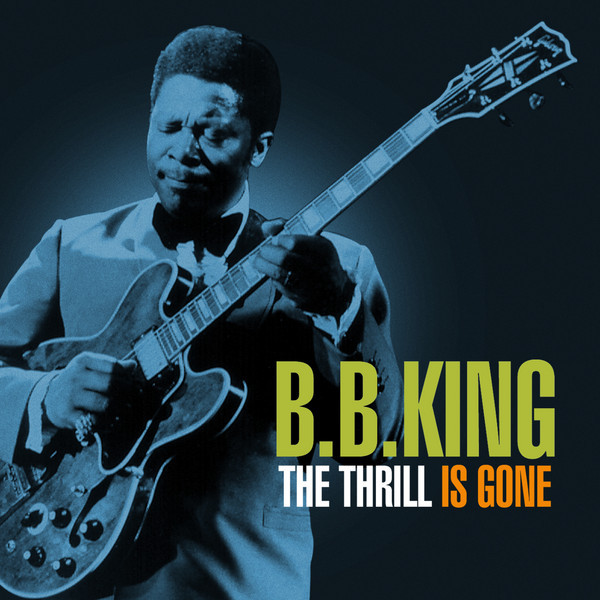
On This Day (1969): B.B. King “The Thrill Is Gone” charted

The Thrill Is Gone

B.B. King

Writer(s): Rick Darnell, Roy Hawkins (see lyrics here)


First Charted: December 20, 1969


Peak: 15 BB, 15 CB, 14 GR, 13 HR, 3 RB, 2 CL, 2 DF (Click for codes to charts.)


Sales (in millions): --


Airplay/Streaming (in millions): -- radio, 225.54 video, 141.75 streaming

Awards:

Click on award for more details.

About the Song:

Legendary blues singer and guitarist B.B. King was born Riley B. King on 9/16/1925 in Itta Beena, Mississippi. In 1946, he moved to Memphis where he learned guitar from Bukka White and Robert Lockwood, Jr. He first recorded for Bullet in 1949. He was nicknamed “The Beatle Street Blues Boy,” later shortened to “Blues Boy,” while working on a Memphis radio show from 1949 to 1950. RB

“His strong, emotionally expressive tenor was a powerful weapon from the start.” SS “If he were nothing but a blues singer, B.B. King would still rank among the all-time greats. But of course, he is also among the most influential blues guitarists who ever lived.” SS From 1951 to 1992, King reached the R&B charts 76 times, including four chart-toppers early in his career. He managed over thirty entries on the Billboard Hot 100. “The Thrill Is Gone” came two decades into his career and while he had a half dozen more successful R&B chart entries, it was his most successful pop hit.

“It became an across-the-board smash the likes of which blues hadn’t seen in years – and has not seen since.” SS Rock critic Dave Marsh speculated that it mibht be “the last great blues record.” DM “Its success boosted King to another level of the entertainment industry, as he soon became a familiar face on television and in concert halls around the world.” BH He was already the highest-earning blues artist in the country; now he was a living legend. SS

“The Thrill Is Gone” actually dates back to 1951 when the original version was recorded by California bluesman Roy Hawkins. It was “a very good, slow blues ballad accompanied by piano and mournful saxophone; nice, but not one for the ages.” SS In King’s hands, however, it became “a modern blues epic.” SS

“Produced and co-engineered with a contemporary edge by Bill Szymczyk (who later helped shape the sound of the Eagles), the session placed B.B. with a sympathetic crew of young New York studio musicians. The addition of tasteful strings enhanced rather than sugar-coated the song’s mood of sadness and loss.” BH Atop it all is King’s “magnificent growl of mingled rage and bereavement.” DM


Resources:


Related Links:


First posted 9/11/2023.

Monday, July 31, 2017

This Month in Music (1967): Albert King released the Born Under a Bad Sign album

Born Under a Bad Sign

Albert King


Released: July 1967


Recorded: March 3, 1966 to June 9, 1967


Peak: --


Sales (in millions): 0.5 US


Genre: blues


Tracks:

Song Title (date of single release, chart peaks) Click for codes to charts.

  1. Born Under a Bad Sign (8/26/67, #49 RB)
  2. Crosscut Saw (1/7/67, #34 RB)
  3. Kansas City
  4. Oh, Pretty Woman
  5. Down Don’t Bother Me
  6. The Hunter
  7. I Almost Lost My Mind
  8. Personal Manager
  9. Laundromat Blues (6/26/66, #29 RB)
  10. As the Years Go Passing By
  11. The Very Thought of You

Rating:

3.812 out of 5.00 (average of 10 ratings)


Quotable:

“One of the very greatest electric blues albums of all time” – Stephen Thomas Erlewine, All Music Guide

Awards:

(Click on award to learn more).

About the Album:

“Albert King recorded a lot in the early ‘60s, including some classic sides, but they never quite hit the mark. They never gained a large audience, nor did they really capture the ferocity of his single-string leads. Then he signed with Stax in 1966 and recorded a number of sessions with the house band, Booker T. & the MG’s, and everything just clicked.” STE They gave King “crossover appeal” WK with their “sleek, soulful sound,” WK “providing an excellent contrast to his tightly wound lead guitar, allowing to him to unleash a torrent of blistering guitar runs that were profoundly influential, not just in blues, but in rock & roll. STE Eric Clapton, Jimi Hendrix, and Stevie Ray Vaughan have acknowledged how King influenced them. WK

Born Under a Bad Sign collected singles released in 1966 and 1967 as well as additional studio cuts. WK “The concentration of singles gives the album a consistency – these were songs devised to get attention – but, years later, it’s astounding how strong this catalog of songs is: Born Under a Bad Sign, Crosscut Saw, Oh Pretty Woman, The Hunter, Personal Manager, and Laundromat Blues form the very foundation of Albert King’s musical identity and legacy.” STE

“The songs are exceptional and the performances are rich, from King’s dynamic playing to the Southern funk of the MG’s. It was immediately influential at the time and, over the years, it has only grown in stature as one of the very greatest electric blues albums of all time.” STE “It was the great divide of modern blues, the point at which the music was rescued from slipping into derivative obscurity.” WK


Notes:

In 1998, Sundazed Records reissued the album with two additional bonus tracks, both written by Albert King. Those tracks are the rare mono single B-sides Funk-Shun and Overall Junction, which originally appeared on the Stax singles ‘Laundromat Blues’ and ‘Oh, Pretty Woman,’ respectively.” WK

Resources and Related Links:


First posted 11/13/2008; last updated 3/18/2024.

Saturday, May 26, 2012

On This Day (1962): John Lee Hooker “Boom Boom” charted

Boom Boom

John Lee Hooker

Writer(s): John Lee Hooker (see lyrics here)


First Charted: May 26, 1962


Peak: 60 BB, 70 HR, 16 RB, 19 CL, 16 UK, 1 DF (Click for codes to charts.)


Sales (in millions): --


Airplay/Streaming (in millions): -- radio, 41.8 video, 83.26 streaming

Awards:

Click on award for more details.

About the Song:

Blues great John Lee Hooker had his first recording session in 1948. “Boogie Chillen,” recorded during that session, was released the following year and topped the R&B chart on its way toward selling a million copies. However, it wasn’t until 1962’s “Boom Boom” that Hooker had his one and only entry on the pop charts. It would also be his final appearance on the R&B charts. In the 1980s and ‘90s, he would have success with albums with a host of guest rock stars.

Hooker achieved his first hits recording on his own in Detroit, “playing guitar and stomping his feet.” BH However, on hs “bad-man theme, ‘Boom Boom,’” BH “the stomping rhythm” BH was provided by James Jamerson (bass), Benny Benjamin (drums), and Joe Hunter (piano). The trio were none other than the famed Motown session men known as the Funk Brothers.

The song was inspired by Luilla, a bartender at the Apex Bar in Detroit where Hooker used to play. As he said, “I’d always be late and whenever I’d come in she’d point at me and say, ‘Boom Boom, you’re late again. And she kept saying that. It dawned on me that that was a good name for a song. Then one night she said, ‘Boom Boom, I’m gonna shoot you down.’ She gave me a song but she didn’t know it.” SF

After he recorded the song and the Animals covered it, he said, “The barmaid felt pretty good. She went around telling everybody I got John Lee to write that song. I gave her some bread for it, too, so she was pretty happy.” SF Others to record the song included Big Head Todd & the Monsters, Buddy Guy, the Oak Ridge Boys, Them, Muddy Waters, and the Yardbirds. SH Hooker performed the song in the 1980 movie The Blues Brothers. It was his only movie appearance.


Resources:


Related Links:


First posted 9/11/2023.

Friday, March 17, 2006

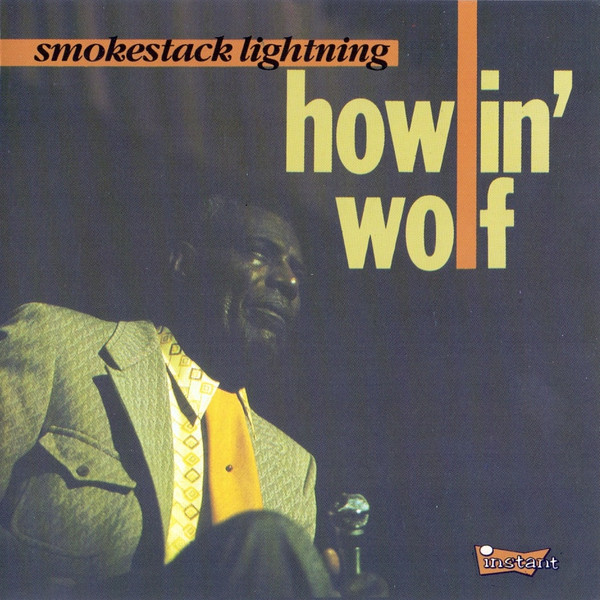
On This Day (1956): Howlin’ Wolf “Smokestack Lightning” charted

Smokestack Lightning

Howlin’ Wolf

Writer(s): Chester Burnett (see lyrics here)


First Charted: March 17, 1956


Peak: 8 RB, 42 UK, 4 DF (Click for codes to charts.)


Sales (in millions): --


Airplay/Streaming (in millions): -- radio, 36.90 video, 64.93 streaming

Awards:

Click on award for more details.

About the Song:

Howlin’ Wolf was a menancing presence – 6’ 3”, 300 pounds, and size 14 feet. He had “a ferocious vocal power” SS to match, making him “one of the reigning gods of postwar Chicago blues.” SS He was born Chester Arthur Burnett on June 10, 1910 in West Point, Mississippi. He learned to play guitar from legendary blues man Charley Patton.

His maternal grandmother nicknamed him “Wolf” when he was a child, a moniker which his biographers said suited him perfectly. He was “a musician who roamed by himself: a lone wolf. His unusual blue-gray eyes, so like a wolf’s, seemed to glare right through people rather than at them.” SS He was also “a proverbial wolf with women” and “his lupine howl gave him the aura of some unsettled creature of the night.” SS Thanks to numerous childhood bouts with tonsilitis which damaged his vocal cords, his “voice sounded like he subsisted on a diet of broken glass…washed down…with kerosene.” SS

Howlin’ Wolf was already 41 years when Sam Phillips heard him on a Memphis radio show and produced his double-sided debut single “How Many More Years” and “Moanin’ at Midnight” in 1951. Phillips leased the tracks to Chess Records and soon Howlin’ Wolf was working out of Chicago. That same year he recorded “Crying at Daybreak,” an early version of “Smokestack Lightning.” SS It was a song he’d been performing since the early 1930s. It was partially inspired by Charley Patton’s “Moon Going Down,” which used the phrase “smoke light lightning” in reference to a river boat. SS

The song may owes a debt to “Stop and Listen Blues,” a 1930 song by the Mississippi Sheiks that included the line “crying, smokestack black baby; the bells it shine like gold.” SS Howlin’ Wolf employed a similar line – “The smokestack is black and the bell, it shines like gold” – in “Smokestack Lightning.”

In 1954, Howlin’ Wolf re-recorded “Crying at Daybreak” as “Smokestack Lightning.” “While the band stayed on the same chord throughout the song, the tension never relented on this arresting performance from Wolf, Willie Johnson and company.” BH Wolf’s recording featured the famed Willie Dixon Chess session player on bass.

Still, it would be two more years before it was released as a single. Then “the Wolf’s quintessential howling cry rode a hypnotic pounding beat all the way to the Top Ten of Billboard’s rhythm & blues charts.” BH Lightning struck twice as eight years later, Howlin’ Wolf found himself on the UK charts at#42 with the song.


Resources:


Related Links:


First posted 9/10/2023.