 | Blues:Top 100 Acts |

DavesMusicDatabase.com is devoted to ranking, rating, and reviewing music of all genres and eras. The DMDB blog serves up album and song reviews, best-of lists, music history snapshots, and music-related essays.

|

|

|

|

|

|

|

|

|

|

|

|
Showing posts with label Robert Johnson. Show all posts
Showing posts with label Robert Johnson. Show all posts
Monday, March 16, 2026


Tuesday, March 19, 2024
Top 50 Blues Albums of All Time
|
| Blues:The Top 50 Albums |
This list started as a post on the DMDB Facebook page (Top 10 Blues and Blues/Rock Albums) on 2/23/2010. The list has since been expanded by aggregating more than 50 lists focused on blues and blues/rock albums. This list focuses on those albums which scored higher on the blues lists. Albums which made three or more lists were then sorted by overall status in Dave’s Music Database. Check out other best-of-genre/category lists here. 
1. Robert Johnson The Complete Recordings (compilation: 1936-37, released 1990)
11. Eric Clapton: From the Cradle (1994)
21. Howlin’ Wolf The Chess Box (compilation: 1951-73, released 1991)
31. Memphis Minnie Bumble Bee: The Essential Recordings (compilation: 1929-41, released 1997)
41. Mississippi Fred McDowell I Do Not Play No Rock and Roll (1969) * These were initially released as two separate albums, but are now typically packaged together. Resources and Related Links:
Lists Focused on Blues Albums:
First posted 9/10/2018; last updated 3/19/2024. |
Friday, October 27, 2023
Aural Fixation: What Is Rock and Roll?
 | Aural Fixation:What Is Rock and Roll? |
 |
“Aural Fixation” is a music-themed column I wrote for PopMatters.com from 2011-2013. They are no longer online there, but I have reformatted them here at the DMDB blog with additional videos, photos, and links, such as where to buy referenced albums. I have also used the title “Aural Fixation” for any essays I have written outside of PopMatters.com as well. To see the essays, check out the Dave’s Music Database Aural Fixation page. You can also purchase the essays in book format here. |
Read the comments section of any Facebook post from the Rock and Roll Hall of Fame and you’ll be hammered with incessant whining about who has been overlooked for induction and, more annoyingly, who has been inducted that doesn’t belong. I challenged – politely, I might add – one of these complainers to offer his definition of rock and roll. This perfectly reasonable request worked him into a frenzy involving name-calling, trolling my Facebook page, and bashing hip-hop. You know what he didn’t do? Define rock and roll. He isn’t alone in his hell-bent agenda to play gate keeper for admission to the rock and roll big top. His inability to explain his vetting criteria, sadly, is par for the course. The arguments are generally no more sophisticated than “rap isn’t rock and roll” or “well, you know it when you hear it.” To be fair, the reason these self-appointed rock purists can’t offer a perfect definition is that one doesn’t exist. Rock and roll is generally defined as a genre which emerged out of the 1950s as an amalgam of R&B, country, blues, gospel, folk, and other genres. It is typically associated with a gravelly-voiced lead singer spitting out simple melodies and lyrics backed by electrically-amplified instruments such as guitar alongside a heavy beat provided by drums and bass. However, the wheels then start falling off immediately. Let’s look at the very first class of Rock and Roll Hall of Fame inductees in 1986, which included architects of the genre such as Elvis Presley, Chuck Berry, and Buddy Holly. Would anyone argue they aren’t rock and roll? Of course not. Let’s key in on Elvis for a moment, however. He cranked out undisputed classics of the genre with songs like “Hound Dog,” “Don’t Be Cruel,” “Heartbreak Hotel,” and “Jailhouse Rock.” Let’s analyze a few of his biggest post-‘50s songs, however. “It’s Now Or Never” was based on the Italian operatic song “O Sole Mio” from the 1890s. “Are You Lonesome Tonight” was a traditional pop ballad which originated in the 1920s. “Crying in the Chapel” was a country gospel song first recorded in 1953. These are just three songs by the undisputed King of Rock and Roll which taken individually might not fit the conventional idea of rock and roll. How rigid are we going to be in adhering to the idea that rock is a guitar-driven genre? The first class of inductees included Jerry Lee Lewis and Little Richard whose instrument of choice was piano. Is anyone going to say “Great Balls of Fire” and “Tutti Frutti” aren’t quintessential rock songs? Let’s analyze two other inductees that year – Jimmie Rodgers and Robert Johnson. The former has been called the Father of Country Music and the latter is a blues legend. The Hall sent an important message from the onset – rock music doesn’t exist in a vacuum. It was born – and continues to grow – out of multiple genres. In the decades since the emergence of rock and roll, it became such a dominant force in shaping commercial music that the term “rock” became almost synonymous with the term “pop.” That means rock has absorbed pretty much every popular trend in music for roughly three quarters of a century. So what can we conclude? Rock and roll is driven by guitar. Or not. It focuses on upbeat songs from the 1950s and later. Or not. It is a separate entity from other genres. Or not. The problem in defining any genre of music is there are no absolutes. Rock and roll, in fact, may defy boundaries more than any other genre. Part of its character since its infancy is its rebellious nature, its proclivity for not sticking to the rules. Whining and complaining about something not fitting into one’s conventional ideas is about as un-rock-and-roll as it gets. For more essays, check out the Dave’s Music Database Aural Fixation page. Resources and Related Links:
First posted 10/27/2023. |

Monday, September 11, 2023
Top 100 Blues Songs of All Time
|
| Blues:Top 100 Songs |
This list was compiled by aggregating 38 lists focused on blues songs. The top 100 songs according to the aggregate of the lists were then re-ranked based on overall points in Dave’s Music Database. The aggregated list and the Dave’s Music Database rankings were then average together for the final result. In most cases, only one version of a song is listed below. Exceptions include Robert Johnson’s “I Believe I’ll Dust My Broom” and its even more iconic cover by Elmore James as well as Robert Johnson’s “Crossroads” and its classic-rock cover by Cream. Click here to see other genre-specific song lists.
1. Muddy Waters “Mannish Boy” (1955)
11. Albert King “Born Under a Bad Sign” (1967)
21. Guitar Slim “The Things That I Used to Do” (1954)
31. Muddy Waters “Rollin’ Stone” (1950)
41. Muddy Waters “I Just Want to Make Love to You” (1954)
51. Leroy Carr with Scrapper Blackwell “How Long, How Long Blues” (1928)
61. Clarence Carter “Slip Away” (1968)
71. Buddy Guy “Damn Right, I’ve Got the Blues” (1991)
81. John Lee Hooker “I’m in the Mood” (1951)
91. The Paul Butterfield Blues Band “Born in Chicago” (1965) Resources/Related Links:
First posted 8/19/2015; last updated 9/11/2023. |
Friday, July 22, 2022
Dave's Music Database Hall of Fame: Song Inductees (July 2022)
 |
Originally posted July 22, 2022. In honor of the 10th anniversary of the DMDB blog on January 22, 2019, Dave’s Music Database launched its own Hall of Fame. This is the 15th set of song inductees. These songs all appear in the Dave’s Music Database list of the Top 100 Blues Songs and have been inducted into the Blues Hall of Fame. |
John Lee Hooker “Boogie Chillen’” (1949)Inducted July 2022 as “Blues Songs” |
| John Lee Hooker “was born in 1917 at ground zero of the blues, Clarksdale, Mississippi.” TC He learned his playing style from his stepfather, Will Moore. He said of his first release, “Boogie Chillen,” that it was a guitar boogie like what his father played down south. BH It was the first “down-home electric blues record” to top the R&B charts. BH Read more. |  |
John Lee Hooker “Boom Boom” (1962)Inducted July 2022 as “Blues Songs” |
| Blues great John Lee Hooker first found success with 1949’s “Boogie Chillen,” a #1 R&B hit recorded at his first recording session. However, it wasn’t until 1962’s “Boom Boom” – a song on which he was accompanied by the famed Motown session men known as the Funk Brothers – that Hooker had his sole entry on the pop charts. It would also be his final appearance on the R&B charts. It was inspired by Luilla, a bartender at the Apex Bar in Detroit where Hooker used to play. She’d say, “Boom Boom, you’re late again” when he arrived. As he said, “She gave me a song but she didn’t know it.” SF Read more. |
Howlin Wolf “Smokestack Lightnin’” (1956)Inducted July 2022 as “Blues Songs” |
| Chester Arthur Burnett was nicknamed “Wolf” by his maternal grandmother; a title he would more than grow into with his menacing adult frame of 6’ 3” and 300 pounds and a voice which made it sound “like he subsisted on a diet of broken glass…washed down…with kerosene.” SS He first recorded “Smokestack Lightning” as “Crying at Daybreak” in 1951, but it was a song he’d performed since the early 1930s. Lightning finally struck for him when the re-recorded version hit the top 10 on the R&B charts in 1956. Read more. | 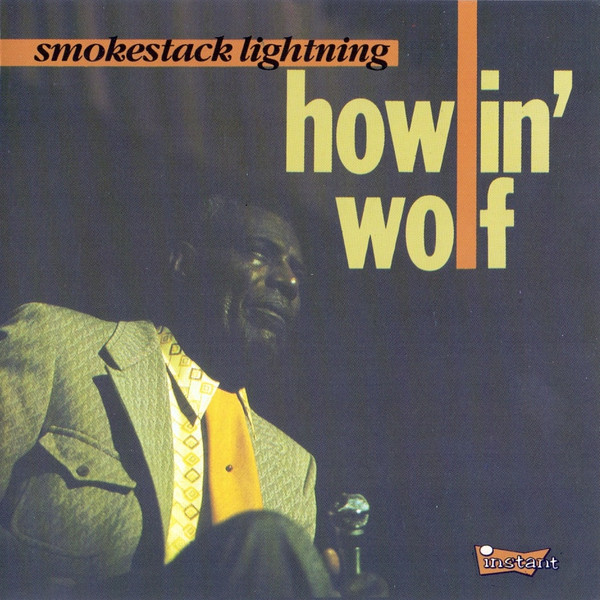 |
Robert Johnson “Cross Road Blues” (1936)Inducted July 2022 as “Blues Songs” |
| Robert Johnson has often been called “The Father of the Blues.” His most important song may well be “Cross Road Blues,” not just because it became a staple for Eric Clapton but it promotes one of the greatest legends in rock and roll. According to the legend, Johnson acquired masterful guitar playing skills overnight, supposedly because he went to the crossroads (an intersection of rural roads) and sold his soul to the Devil. However, Johnson “sings nary a word about devil-dealing” BH in “Cross Road Blues;” rather he is trying unsuccessfully to hitch a ride at the crossroads. Read more. | 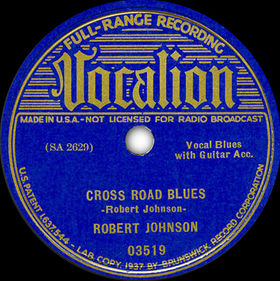 |
Robert Johnson “Hell Hound on My Trail” (1937)Inducted July 2022 as “Blues Songs” |
| Blues historian Ted Gioia said “Hell Hound on My Trail” might be Johnson’s greatest work. WK This is a showcase for “a disturbing vision of a blues poet haunted by spirits, doomed to die before he would ever see the fruits of an alleged deal with the devil.” BH Johnson proved to be “a master synthesizer, pulling together bits and pieces of existing material and infusing them with something entirely his own.” SS Read more. | 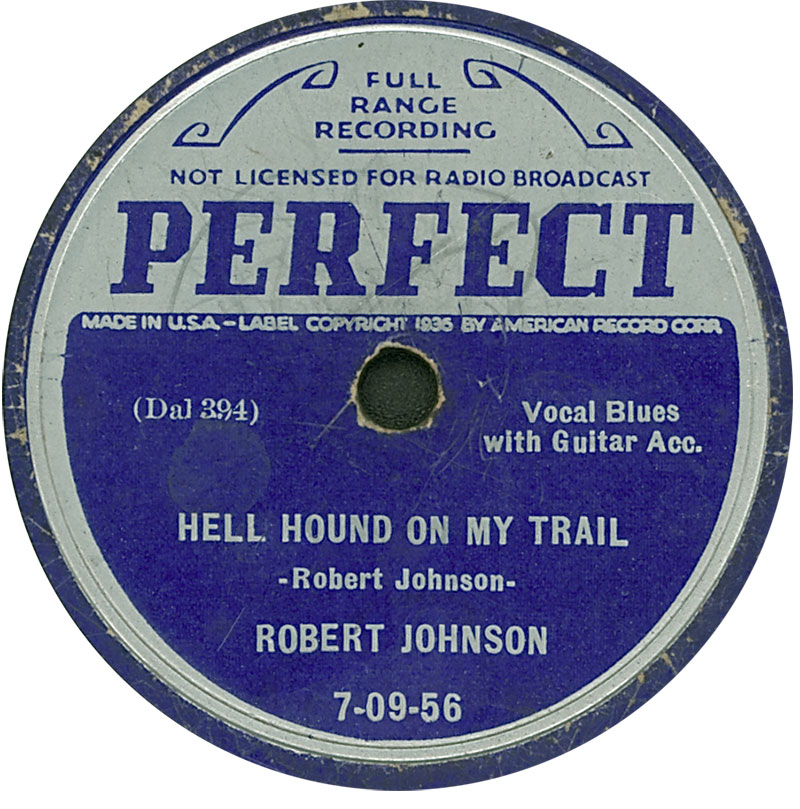 |
B.B. King “The Thrill Is Gone” (1969)Inducted July 2022 as “Blues Songs” |
| Legendary blues singer and guitarist B.B. King reached the R&B charts 76 times from 1951 to 1992, including four chart-toppers early in his career. While he had a half dozen more successful R&B chart entries than “The Thrill Is Gone” it was his biggest hit on the Billboard Hot 10. The song is a cover of a 1951 slow, blues ballad by Roy Hawkins but in King’s hands it became “a modern blues epic.” SS Rock critic Dave Marsh speculated that it might be “the last great blues record.” DM Read more. | 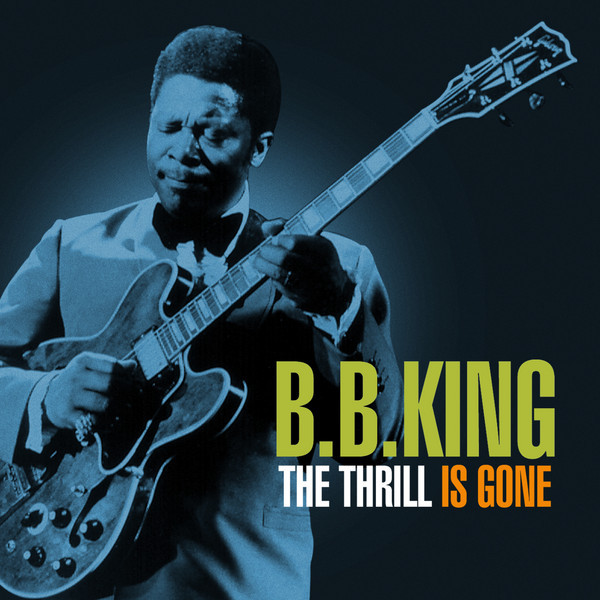 |
Clarence “Pine Top” Smith “Pine Top’s Boogie Woogie” (1929)Inducted July 2022 as “Blues Songs” |
| This “rhythmical, driving piano tune” SS is credited “with laying the foundation for the boogie woogie craze.” BH The form is marked by “a bass melody…repeated over and over while the upper voice melody and chord structure change above it.” TY2 Clarence “Pine Top” Smith started playing “Pine Top’s Boogie Woogie” at rent-parties in the black ghettos of Chicago. TY2 He took the term “boogie woogie” from his background in dance. SS Read more. |  |
T-Bone Walker “Call It Stormy Monday” (1947)Inducted July 2022 as “Blues Songs” |
| Aaron Thibeaux “T-Bone” Walker is often called “the father of electric blues.” SS He “deeply influenced virtually every guitarist during the decade following World War II” SS with his blend of blues and jazz guitar. UP It was “Call It Stormy Monday” “that made him a legend.” SS It is “one of the most influential records not only in blues history, but in guitar history.” BH “It became a song that virtually every blues band had to know; in fact, it was also required learning for countless jazz, soul, pop, and rock performers who may have had no other blues songs in their entire repertoires.” BH Read more. | 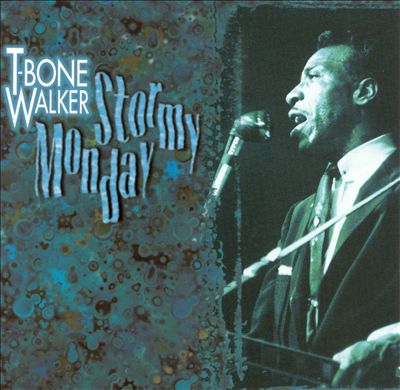 |
Muddy Waters “Hoochie Coochie Man” (1954)Inducted July 2022 as “Blues Songs” |
| Music historian Steve Sullivan called Muddy Waters “the mighty rock upon which the foundation of postwar Chicago blues was constructed” SS and “Hoochie Coochie Man” was his “defining song.” SS It was the first of many Willie Dixon songs recorded by Waters. It was the biggest hit of Waters’ career, reaching #3 on the R&B chart, but “its influence on rock music in general is incalculable.” LW Read more. | 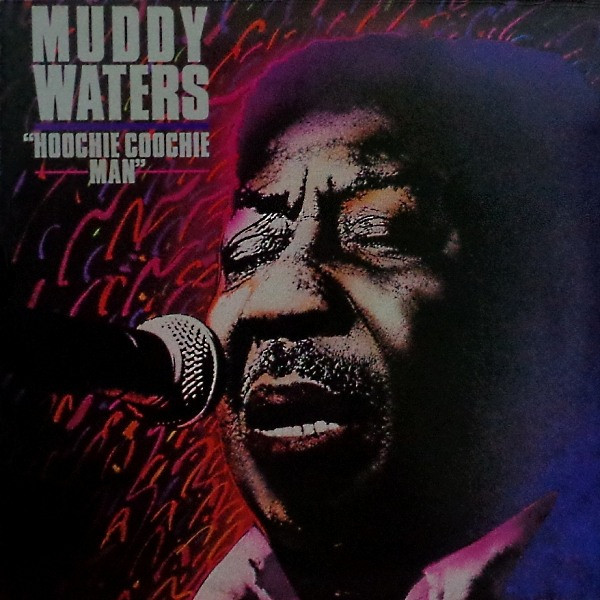 |
Bo Diddley “I’m a Man” / Muddy Waters “Mannish Boy” (1955)Inducted July 2022 as “Blues Songs” |
| “I’m a Man” was the first song recorded by Bo Diddley and it became the B-side of his debut single, the eponymous “Bo Diddley” which topped the R&B chart. The song was inspired by “Hoochie Coochie Man” by Muddy Waters, who then recorded “Mannish Boy” as a remake/answer song, mocking Diddley’s younger age. “Coming from Waters, a mature adult figure with a voice that booms like God’s, virtually the same words are far more leering and imposing. Waters isn’t kidding around; he is a man and his sexual boasts and demands aren’t fantasies, they’re real.” DM Read more. |  |
Tuesday, March 22, 2022
Dave's Music Database Hall of Fame: Music Maker Inductees (March 2022)
|
Top 10 Blues ActsOriginally posted 3/22/2022. January 22, 2019 marked the 10-year anniversary of the DMDB blog! To honor that, Dave’s Music Database announced its own Hall of Fame. This thirteenth class of music maker inductees is comprised of the top 10 blues acts of all time (see the full list here). These are the top 10 from that list, minus previous inductees Eric Clapton and Bessie Smith. |
Buddy Guy (1936-)Inducted March 2022 as a “Top 10 Blues Act” |
| Blues guitarist born in Lettsworth, Louisiana. Blues Hall of Fame and Rock and Roll Hall of Fame inductee. Also a recipient of the Grammy Lifetime Achievement Award and a Kennedy Center Honoree. “Damn Right I’ve Got the Blues” ranks as one of the top 100 blues songs of all time and author Tom Moon features the album of the same name in his book 1000 Recordings to Hear Before You Die. Read more. |  |
John Lee Hooker (1917-2001)Inducted March 2022 as a “Top 10 Blues Act” |
| Blues singer, songwriter, and guitarist born in Clarksdale, Mississippi. Blues Hall of Fame and Rock and Roll Hall of Fame inductee. Also a recipient of the Grammy Lifetime Achievement Award and Rhythm & Blues Foundation Pioneer Award . He charted nine times on the R&B chart, reaching #1 with “Boogie Chillen’” and “I’m in the Mood.” The former has been inducted into the Blues Hall of Fame, Grammy Hall of Fame (as has “Boom Boom”), and National Recording Registry. His compilation The Legendary Modern Recordings ranks as one of the top 50 blues albums and The Folklore of John Lee Hooker was Mojo magazine’s Album of the Year. Read more. |  |
Howlin’ Wolf (1910-1976)Inducted March 2022 as a “Top 10 Blues Act” |
| Blues singer and guitarist born in White Station, Mississippi. Blues Hall of Fame and Rock and Roll Hall of Fame inductee. He reached the top 10 four times on the R&B chart, including the songs “How Many More Years” and “Smokestack Lightning,” which are 2 of his 6 songs featured in the Blues Hall of Fame. His compilations Moanin’ in the Moonlight and Howlin' Wolf (aka ‘The Rockin' Chair Album’) are in the top 1000 albums of all time. Read more. |  |
Robert Johnson (1911-1938)Inducted March 2022 as a “Top 10 Blues Act” |
| Blues singer and guitarist born in Hazlehurst, Mississippi. Inductee in the Blues Hall of Fame, Rock and Roll Hall of Fame, R&B Hall of Fame, and Downbeat Jazz Hall of Fame. Also a recipient of the Grammy Lifetime Achievement Award. “Cross Road Blues” ranks in the the top 1% of all time. It’s one of six songs in the Blues Hall of Fame, including “Sweet Home Chicago” (both of which are in the Grammy Hall of Fame). Two of the others are “Hell Hound on My Trail” and “A Love in Vain.” Those four are also in the the Rock and Roll Hall of Fame’s top 500 songs of all time. The Complete Recordings is featured in the DMDB book The Top 100 Albums of the 20th Century. Read more. |  |
Albert King (1923-1992)Inducted March 2022 as a “Top 10 Blues Act” |
| Blues guitarist born in Indianola, Mississippi. Blues Hall of Fame and Rock and Roll Hall of Fame inductee. He reached the R&B chart 19 times. “Crosscut Saw,” “Born Under a Bad Sign,” and “I’ll Play the Blues for You” are all in the Blues Hall of Fame. His album Born Under a Bad Sign ranks in the top 1% of all time and is in the Blues Hall of Fame, Grammy Hall of Fame, and the National Recording Registry. Read more. |  |
B.B. King (1925-2015)Inducted March 2022 as a “Top 10 Blues Act” |
| Blues singer and guitarist born it Itta Bena, Mississippi. Inductee in the Blues Hall of Fame, Rock and Roll Hall of Fame R&B Hall of Fame, Big Band/Jazz Hall of Fame, and Downbeat Jazz Hall of Fame. Also a recipient of the Grammy Lifetime Achievement Award and Kennedy Center Honoree. He reached the R&B chart 76 times, including #1 four times. One of those was “Three O’Clock Blues,” which was also inducted into the Blues Hall of Fame, as was “Every Day I Have the Blues” and “The Thrill Is Gone.” The latter three are also in the Grammy Hall of Fame. Live at the Regal is one of the top 1000 albums of all time. It’s also in the Blues Hall of Fame, Grammy Hall of Fame, and the National Recording Registry. Read more. |  |
Stevie Ray Vaugahn (1954-1990)Inducted March 2022 as a “Top 10 Blues Act” |
| Blues-rock guitarist and singer born in Dallas, Texas. Blues Hall of Fame and Rock and Roll Hall of Fame inductee. He reached the mainstream rock chart 19 times, including #1 with “Crossfire.” “Texas Flood” and “Pride and Joy” rank in the DMDB’s top 100 blues songs of all time. The latter is also in the Rock and Roll Hall of Fame’s top 500 songs of all time. Texas Flood is one of the top 1000 albums of all time and is in the Grammy Hall of Fame. Read more. |  |
Muddy Waters (1913-1983)Inducted March 2022 as a “Top 10 Blues Act” |
| Blues singer, guitarist, and harmonica player born in Rolling Fork, Mississippi. Inductee in the Blues Hall of Fame, Rock and Roll Hall of Fame, R&B Hall of Fame, and Downbeat Jazz Hall of Fame. Also a recipient of the Grammy Lifetime Achievement Award. He reached the top 10 on the R&B charts 14 times. He has six songs in the the Blues Hall of Fame and four in the Grammy Hall of Fame; “Rollin’ Stone,” “Hoochie Coochie Man,” and “Got My Mojo Working” are in both. At Newport is one of the top 1000 albums of all time. Read more. |  |
Friday, February 22, 2019
Dave’s Music Database Hall of Fame Album Inductees (Feb. 2019)
|
Originally posted 2/22/2019. January 22, 2019 marked the 10-year anniversary of the DMDB blog! To honor that, Dave’s Music Database announced its own Hall of Fame! The first 12 inductees were the “Songs of the Decade” from the 1900s through the 2010s (see here). Now, a month later, the DMDB inducts the first batch of albums – the top albums from each decade from the 1930s through the 2010s. Note: click on an album title to see its more complete DMDB page and referenced footnotes. |
Robert Johnson The Complete Recordings (recorded 1936-37, released 1990)Inducted February 2019 as an “Album of the Decade.” |
| “If you are starting your blues collection from the ground up, be sure to make this your very first purchase.” A-J This Mississippi-born blues singer, guitarist, and harmonica player was only 27 when he died, leaving a mere 29 songs captured in two series of recording sessions. Despite his slim body of work, the Rock and Roll Hall of Fame called it “the bedrock upon which modern blues and rock and roll were built.” RH Rolling Stones’ guitarist Keith Richards said, “You want to know how good the blues can get? Well, this is it.” RJ Eric Clapton called him “the most important blues singer that ever lived.” WK Read more. | |
Richard Rodgers & Oscar Hammerstein II (composers) South Pacific (cast album, 1949)Inducted February 2019 as an “Album of the Decade.” |
| Richard Rodgers and Oscar Hammerstein II’s South Pacific is “one of the most beloved musicals ever to hit the stage.” PL “Critical response to the Broadway opening…was probably as uniformly ecstatic as for any show in history.” MK It amassed 1,925 performances on Broadway A-C and another 802 in London. MK Its nearly five-year Broadway run was “longer than any musical before it except Rodgers & Hammerstein’s Oklahoma!.” A-C The accompanying cast album spent 69 weeks atop the Billboard charts – the most weeks spent at #1 in the chart’s history. Read more. |  |
Miles Davis Kind of Blue (1959)Inducted February 2019 as an “Album of the Decade.” |
| “Kind of Blue has been called the most famous and influential jazz recording of all time.” NO It “became a how-to of jazz recordings, a standard by which all others would be judged” RV and “has influenced generations of jazz and other musicians.” YN “Many consider this recording to be one of the most important jazz recordings of any era.” NRR This Grammy Hall of Fame and National Recording Registry inductee is the the top jazz album of all time, according to the DMDB. Read more. |  |
The Beatles Sgt. Pepper’s Lonely Hearts Club Band (1967)Inducted February 2019 as an “Album of the Decade.” |
| Some argue there are better Beatles’ albums, “yet no album is as historically important as this. After Sgt. Pepper, there were no rules to follow.” A-B It “changed the course of popular music forever” CD with “its ambition, conceptual unity, drug references, elaborate cover art, [and] bizarre sound effects.” RS’97 It “led serious music lovers, many ‘classical snobs’ included, to finally recognize rock music” GS “as actual art.” BA “Many people who had never bought a rock record bought Sgt. Pepper’s.” VH1 Read more. |  |
Pink Floyd The Dark Side of the Moon (1973)Inducted February 2019 as an “Album of the Decade.” |
| With Dark Side of the Moon, Pink Floyd delivered an album that concentrated their psychedelic sound into a cohesive collection of songs about madness. The conceptual work achieved the rare trifecta of out-of-the-gate success (their first #1 album in the U.S.), long-term chart stature (a record-setting 14 years+ on the Billboard album chart) and near-reverential critical acclaim. It has been inducted into the Grammy Hall of Fame and National Recording Registry. Read more. |  |
Michael Jackson Thriller (1982)Inducted February 2019 as an “Album of the Decade.” |
| Fueled by the unprecedented feat of seven top-ten singles, Thriller became the world’s all-time biggest-selling album. It gave Jackson a level of superstardom on par with the Beatles and Elvis Presley. Videos for “Billie Jean,” “Beat It,” and “Thriller” made him the most iconic artist of the MTV generation. Thriller created the template to be followed by any future act aspiring to achieve a blockbuster, juggernaut album. Read more. |  |
Nirvana Nevermind (1991)Inducted February 2019 as an “Album of the Decade.” |
| Nirvana “planted the alternative flag on the Iwo Jima of American consciousness” CS with their “guitar-heavy blend of bubblegum punk.” SK If the sound of grunge feels overly “familiar now, it’s only because thousands of rock records that followed it were trying very hard to cop its style.” DW Nevermind served as a “foundation for most of the rock…of the ‘90s…loud, distorted guitars; raging, sometime screaming vocals; and lyrics that range from the pessimistic, to the positive, and to the apathetic.” JC Read more. |  |
Eminem The Marshall Mathers LP (2000)Inducted February 2019 as an “Album of the Decade.” |
| “On his masterful second album, The Marshall Mathers LP, A-E Eminem “blurs the line between autobiography and cartoons in hilarious and vulgar high-velocity rhymes.” UT “He doesn’t offer any apologies if you can’t sort the fact from the fiction. As an artist, he’s supposed to create his own world, and with this terrific second effort, he certainly has. It may be a world that is as infuriating as it is intriguing, but it is without question his own, which is far more than most of his peers are able to accomplish.” A-E Read more. |  |
Adele 21 (2011)Inducted February 2019 as an “Album of the Decade.” |
| In his 2011 review of this Album of the Year Grammy winner, Consequence of Sound’s Nick Freed prophetically said, “Pop music should take more cues from…this album…Adele should be the future of the radio, and in the near future she will be.” NF Her sophomore outing showcases her “titanic vocal ability” A-A and extends her talents as a “bluesy pop diva with a singer/songwriter’s soul.” A-A Even as she reveals her “seemingly bottomless capacity for heartbreak,” A-A she avoids “the pitfalls of sappiness and triteness that can easily come with the lovelorn.” NF Read more. |  |
Thursday, August 25, 2011
Rock 'n' Roll 101: How to Handle a Dead Star
Originally published in my "Aural Fixation" column on PopMatters.com on Aug. 25, 2011. See original post here.

image from popmatters.com
April 10, 1994 was my 27th birthday. That same week my generation’s greatest musical icon – Nirvana’s Kurt Cobain – ended his life with the same number of candles on his recent birthday cake. The music press went into high gear reporting the shock of Cobain’s tragic ending while simultaneously reflecting on its inevitability. After all, he was a troubled soul with a history of substance abuse, failed rehab stints, overdoses, and suicide attempts.
It didn’t take long before finger pointing began. In their grief, family, friends, and fans were reluctant to accept that their loved one died by his own hand. It was easier to blame someone else. Cobain’s marriage to Courtney Love was less than idyllic and she was loathed by many in the Nirvana community. This made her an obvious scapegoat. Eventually, conspiracy theorists floated the idea that Cobain’s death wasn’t a suicide at all, but that Love had him murdered.
While the music community mourned the loss of one of its giants, the spin moved on to Cobain’s legacy. He’d only lived long enough to spearhead three proper studio albums with Nirvana, but in the process was hailed as a revolutionary who’d birthed a new genre of music. Should he be immortalized alongside other musical icons who died at age 27? Was it fair to utter his name in the same breath as Jimi Hendrix, Janis Joplin, Jim Morrison, Brian Jones, and Robert Johnson?
These are all plays straight out of the Rock ‘n’ Roll 101 handbook, specifically the chapter on how to handle a rock star who checks out in his or her prime. It goes like this. First, express shock over Young Rock Star’s death and report on the outpouring of love and respect from the musical community. While that reality is still sinking in, switch gears completely and report on the inevitability of said Rock Star’s demise. After all, in light of his or her habits and lifestyle, who didn’t see this coming?
Next, the public wants answers. Not only should they be offered gory and gruesome details as if this were an episode of CSI or some other crime investigation show, but supplied with detailed exploits of the Young Rock Star’s last days.
The fans also need a target upon whom to vent their anger. Why wasn’t the record company babysitting its star more? Shouldn’t the family have done more to intervene? How about that destructive relationship? Sure the Young Rock Star may have exhibited every sign of a death wish, but can’t we ultimately blame someone else for this?
With Young (now Dead) Rock Star barely in the grave, it’s time to focus on his or her legacy. After all, our beloved hero has been dead for days! It’s about time we move on and figure out our idol’s place in the whole of musical history. How should this Dead Young Rock Star be remembered? Also, to generate controversy, plenty of press should be afforded to detractors who callously lambast Young Rock Star as overrated.
The final matter is two-fold: 1) how can Dead Young Rock Star be immortalized with such a slim discography and; 2) how can record companies shamelessly profit on Dead Young Rock Star’s death by raiding the vaults for unreleased material?
Amy Winehouse’s recent death required anyone associated with the recording industry or music journalism to dust off their Rock ‘n’ Roll 101 manuals. A quick overview shows her story to be eerily reminiscent of Cobain’s. Tabloids salivated over her exploits with substance abuse, failed rehab attempts, and a not quite two-car-garage-and-picket-fence marriage to Blake Fielder-Civil. It didn’t take long before Winehouse’s father publicly blamed his daughter’s death on the ex-husband because he had introduced Amy to drugs.
Conflicting accounts emerged regarding events in the days leading up to her death. Had she gone on a drug-buying spree just the night before? Had a physician just proclaimed her to be in good health? Did she die because she was fighting so hard to overcome her demons that her body collapsed from alcohol withdrawl? Posing these questions naturally draws out anyone who ever partied with Winehouse, sat in on a recording session, or hung out with her in a seedy bar. All of them weigh in with their takes on what she was really like.
Even with the public still grieving, talk turned to Winehouse’s status in Rock ‘n’ Roll Heaven. Does she deserve enshrinement alongside other musicians who passed on to that great gig in the sky, with only 27 years on planet Earth?
The matter of her slim two-album discography led detractors to say no. The jazzy Frank (2003) was critically hailed, but certainly not considered a game changer. The 2006 follow-up, Back to Black, was hailed as a landmark of both retro-soul and neo-soul. No, I’m not sure how it can be both, either. Whatever it is genre-wise, is Back to Black truly deserving of the “classic album” tag?
Whatever title was latched to her sound, it became the consensus that Winehouse launched a wave of white, British, female R&B/pop singers like Adele, Duffy, and Florence & the Machine.
Finally, there’s the “What will the record companies do next?” route. Winehouse hadn’t been dead a week before stories flooded the Internet about what was or wasn’t in the vaults that might see the light of day. Depending on the account, there’s the “let’s respect the family’s wishes” angle or the idea that if there’s a tape of Winehouse farting, let’s release it to the public – you know, because we deserve to hear it all.
Are there three albums worth of material? Is it just a handful of demos? When someone recently broke into her house, how much music did they steal? Will something be released before the end of the year? I think of the song “Paint a Vulgar Picture” by the Smiths: “At the record company meeting/ On their hands a dead star/ And oh, the plans they weave/ And oh, the sickening greed.”
What gets overlooked amidst the sensationalism are detailed expositions on what led to the tragedy. Why does our entertainment culture salivate over both the construction and destruction of its stars? Is the same quality that drives attention seekers to the spotlight what also causes them to self-destruct?
History is littered with artistic geniuses who could barely run their personal lives even as the world worshiped them. The urge to create is often a double-edged sword saddled with a propensity to destroy. Our greatest musical legends are often troubled souls who likely would have had difficult lives in or out of the limelight.
Through it all, however, we should never lose sight of some basics. The Rock ‘n’ Roll 101 Handbook doesn’t acknowledge that its Dead Young Rock Stars had parents, siblings, spouses, children, and friends. They had their problems but were adored by millions. They made music which touched people’s souls and changed people’s lives. The Kurt Cobains, Amy Winehouses, and other musical geniuses who walked this planet for far too short a time deserve to be embraced. They were flawed, but they were also beloved.
R.I.P., Dead Young Rock Stars.
Monday, June 20, 2011
The Final Recordings of Robert Johnson: June 20, 1937
This post has been consolidated with another similar post and moved here.
Monday, November 13, 2006
Time Magazine’s All-TIME 100 Albums
| First posted 11/13/2006; updated 8/13/2020. |
 | Time Magazine:All-TIME 100 Albums |
This list, created by Time magazine, was not a ranked list. Instead, it was presented in chronological order. However, compilations were listed by release year, meaning a collection like Sam Cooke’s Portrait of a Legend 1951-1964 is listed as a 2003 release. Dave’s Music Database has adjusted that so that such albums are listed by the final year covered by the collection (in the case of Cooke, 1964) instead of the release date. After all, it is a bit odd to see artists like Sam Cooke and Hank Williams, who’ve been dead for more than four decades, show up with new millennium releases. Note: you can click on an album title to go to a DMDB page for more about that album. If you click on TIME after the album title, that will take you to the article from the Time magazine list about that album. Also, check out annual picks for album of the year.
1. Robert Johnson King of the Delta Blues Singers (archives: 1936-37, released 1961) TIME
8. Ray Charles Modern Sounds in Country and Western Music (1962) TIME
21. The Jimi Hendrix Experience Are You Experienced? (1967) TIME
31. Simon & Garfunkel Bridge Over Troubled Water (1970) TIME
41. The Who Who’s Next (1971) TIME
51. Elton John Goodbye Yellow Brick Road (1973) TIME
63. AC/DC Back in Black (1980) TIME
71. Paul Simon Graceland (1986) TIME
81. R.E.M. Out of Time (1991) TIME
91. Oasis (What’s the Story) Morning Glory (1995) TIME
96. Eminem The Marshall Mathers LP (2000) TIME Resources and Related Links:
|
Subscribe to:
Posts (Atom)