Showing posts with label Mannish Boy. Show all posts

Monday, September 11, 2023

Top 100 Blues Songs of All Time

Blues:

Top 100 Songs

This list was compiled by aggregating 38 lists focused on blues songs. The top 100 songs according to the aggregate of the lists were then re-ranked based on overall points in Dave’s Music Database. The aggregated list and the Dave’s Music Database rankings were then average together for the final result.

In most cases, only one version of a song is listed below. Exceptions include Robert Johnson’s “I Believe I’ll Dust My Broom” and its even more iconic cover by Elmore James as well as Robert Johnson’s “Crossroads” and its classic-rock cover by Cream.

Click here to see other genre-specific song lists.

1. Muddy Waters “Mannish Boy” (1955)
2. John Lee Hooker “Boogie Chillen” (1949)
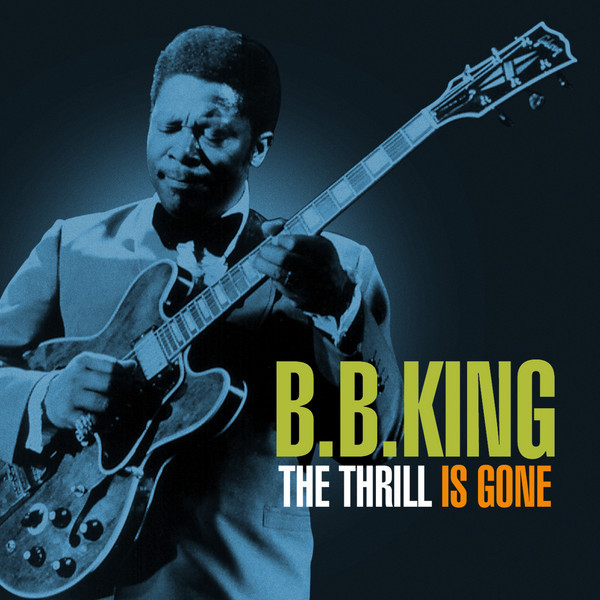
3. B.B. King “The Thrill Is Gone” (1969)
4. Muddy Waters “Hoochie Coochie Man” (1954)
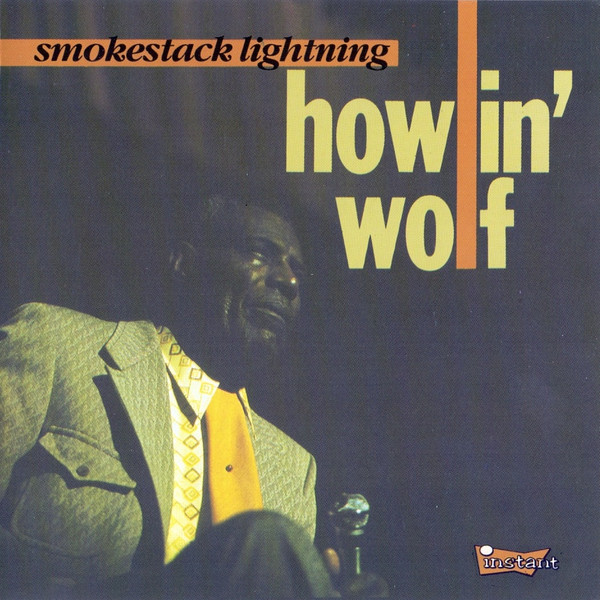
5. Howlin’ Wolf “Smokestack Lightning” (1956)
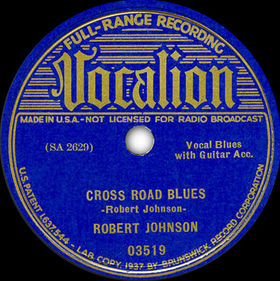
6. Robert Johnson “Cross Road Blues (aka ‘Crossroads’)” (1936)
7. T-Bone Walker “Call It Stormy Monday” (1948)
8. John Lee Hooker “Boom Boom” (1962)
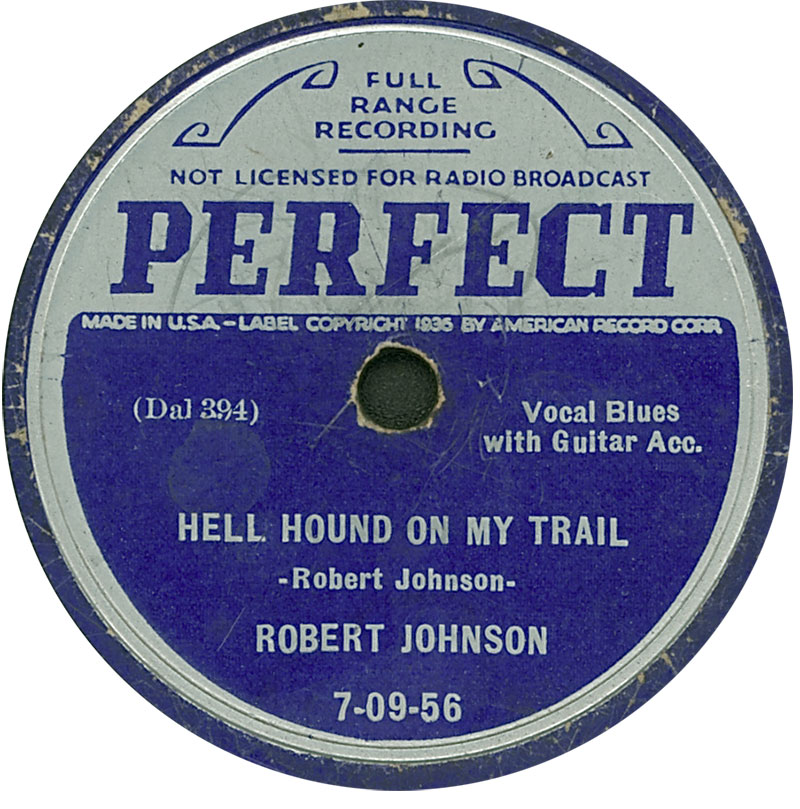
9. Robert Johnson “Hell Hound on My Trail” (1937)
10. Elmore James “I Believe I’ll Dust My Broom” (1952)

11. Albert King “Born Under a Bad Sign” (1967)
12. Robert Johnson “Sweet Home Chicago” (1936)
13. Bessie Smith & Jimmie Cox “Nobody Knows You When You’re Down and Out” (1929)
14. Elmore James “The Sky Is Crying” (1960)
15. Little Walter “Juke” (1952)
16. Clarence “Pine Top” Smith “Pine Top’s Boogie Woogie” (1929)
17. Muddy Waters “Got My Mojo Working” (1956)
18. Big Joe Williams “Baby Please Don’t Go” (1941)
19. Sonny Boy Williamson #1 “Good Morning Little School” (1937)
20. Howlin’ Wolf “How Many More Years” (1951)

21. Guitar Slim “The Things That I Used to Do” (1954)
22. Otis Rush “I Can’t Quit You Baby” (1956)
23. Etta James “At Last” (1960)
24. Mamie Smith “Crazy Blues” (1920)
25. The Jimi Hendrix Experience “Red House” (1967)
26. Blind Willie McTell “Statesboro Blues” (1927)
27. Bo Diddley “I’m a Man” (1955)
28. Canned Heat “On the Road Again” (1968)
29. Big Bill Broonzy “Key to the Highway” (1941)
30. Robert Johnson “Come on in My Kitchen” (1937)

31. Muddy Waters “Rollin’ Stone” (1950)
32. Stevie Ray Vaughan & Double Trouble “Pride and Joy” (1983)
33. Muddy Waters “I Can’t Be Satisfied” (1948)
34. Little Walter “My Babe” (1955)
35. Robert Johnson “Love in Vain” (1937)
36. Charley Patton “Pony Blues” (1929)
37. Big Mama Thornton “Hound Dog” (1953)
38. Cream “Crossroads” (live, 1969)
39. B.B. King “Every Day I Have the Blues” (1955)
40. Gary Moore “Still Got the Blues” (1990)

41. Muddy Waters “I Just Want to Make Love to You” (1954)
42. Lowell Fulson “Reconsider Baby” (1954)
43. Roosevelt Sykes “Forty Four Blues” (1929)
44. Freddie King “Hideaway” (1961)
45. Howlin’ Wolf “Spoonful” (1960)
46. Elmore James “Shake Your Moneymaker” (1961)
47. Slim Harpo “I’m a King Bee” (1957)
48. Ma Rainey “See See Rider Blues” (1925)
49. The Mississippi Sheiks “Sitting on Top of the World” (1930)
50. Louis Jordan “Let the Good Times Roll” (1946)

51. Leroy Carr with Scrapper Blackwell “How Long, How Long Blues” (1928)
52. Blind Willie Johnson “Dark Was the Night, Cold Was the Ground” (1928)
53. Magic Sam “All Your Love” (1957)
54. Koko Taylor “Wang Dang Doodle” (1965)
55. Blind Lemon Jefferson “Black Snake Moan” (1927)
56. Freddie King “I’m Tore Down” (1961)
57. Robert Petway “Catfish Blues” (1941)
58. Junior Wells with Buddy Guy “Messin’ with the Kid” (1970)
59. Wilson Pickett “Mustang Sally” (1966)
60. Blind Lemon Jefferson “Matchbox Blues” (1927)

61. Clarence Carter “Slip Away” (1968)
62. B.B. King “Three O’Clock Blues” (1951)
63. John Lee Hooker “One Bourbon, One Scotch, One Beer” (1966)
64. Howlin’ Wolf “The Killing Floor” (1964)
65. Son House “Death Letter Blues” (1930)
66. Robert Johnson “I Believe I’ll Dust My Broom” (1936)
67. Big Mama Thornton “Ball and Chain” (1968)
68. Bobby “Blue” Bland “Further on Up the Road” (1957)
69. W.C. Handy “The Memphis Blues” (1912)
70. Jimmy Reed “Big Boss Man” (1960)

71. Buddy Guy “Damn Right, I’ve Got the Blues” (1991)
72. Skip James “Devil Got My Woman” (1931)
73. Fleetwood Mac “Black Magic Woman” (1968)
74. Howlin’ Wolf “The Little Red Rooster” (1961)
75. Robert Johnson “Me and the Devil Blues” (1937)
76. Canned Heat “Going Up the Country” (1968)
77. Eddie Boyd “Five Long Years” (1952)
78. Sonny Boy Williamson II “Help Me” (1963)
79. Louis Jordan “I Know What You’re Putting Down” (1946)
80. T-Bone Walker “Mean Old World” (1942)

81. John Lee Hooker “I’m in the Mood” (1951)
82. Etta James “I’d Rather Go Blind” (1968)
83. Robert Johnson “Stop Breakin’ Down” (1937)
84. Tampa Red with Georgia Tom “It’s Tight Like That” (1928)
85. Albert Collins “If Trouble Was Money” (1984)
86. Elmore James “One Way Out” (1961)
87. Big Joe Williams “Blues on Highway 49” (1935)
88. Elmore James “It Hurts Me Too” (1965)
89. Stevie Ray Vaughan & Double Trouble “Texas Flood” (1983)
90. Howlin’ Wolf “I Ain’t Superstitious” (1961)

91. The Paul Butterfield Blues Band “Born in Chicago” (1965)
92. Memphis Slim “Messin’ Around” (1948)
93. Hound Dog Taylor “Give Me Back My Wig” (1971)
94. Howlin’ Wolf “Back Door Man” (1960)
95. B.B. King “How Blue Can You Get?” (1963)
96. Sonny Boy Williamson II “Eyesight to the Blind” (1951)
97. Robert Johnson “Travelling Riverside Blues” (1937)
98. Roy Brown “Hard Luck Blues” (1950)
99. Son House “Preachin’ Blues” (1930)
100. Muddy Waters “You Shook Me” (1962)


Resources/Related Links:


First posted 8/19/2015; last updated 9/11/2023.

Friday, July 22, 2022

Dave's Music Database Hall of Fame: Song Inductees (July 2022)

Originally posted July 22, 2022.

In honor of the 10th anniversary of the DMDB blog on January 22, 2019, Dave’s Music Database launched its own Hall of Fame. This is the 15th set of song inductees. These songs all appear in the Dave’s Music Database list of the Top 100 Blues Songs and have been inducted into the Blues Hall of Fame.

John Lee Hooker “Boogie Chillen’” (1949)

Inducted July 2022 as “Blues Songs”

John Lee Hooker “was born in 1917 at ground zero of the blues, Clarksdale, Mississippi.” TC He learned his playing style from his stepfather, Will Moore. He said of his first release, “Boogie Chillen,” that it was a guitar boogie like what his father played down south. BH It was the first “down-home electric blues record” to top the R&B charts. BH Read more.

John Lee Hooker “Boom Boom” (1962)

Inducted July 2022 as “Blues Songs”

Blues great John Lee Hooker first found success with 1949’s “Boogie Chillen,” a #1 R&B hit recorded at his first recording session. However, it wasn’t until 1962’s “Boom Boom” – a song on which he was accompanied by the famed Motown session men known as the Funk Brothers – that Hooker had his sole entry on the pop charts. It would also be his final appearance on the R&B charts. It was inspired by Luilla, a bartender at the Apex Bar in Detroit where Hooker used to play. She’d say, “Boom Boom, you’re late again” when he arrived. As he said, “She gave me a song but she didn’t know it.” SF Read more.

Howlin Wolf “Smokestack Lightnin’” (1956)

Inducted July 2022 as “Blues Songs”

Chester Arthur Burnett was nicknamed “Wolf” by his maternal grandmother; a title he would more than grow into with his menacing adult frame of 6’ 3” and 300 pounds and a voice which made it sound “like he subsisted on a diet of broken glass…washed down…with kerosene.” SS He first recorded “Smokestack Lightning” as “Crying at Daybreak” in 1951, but it was a song he’d performed since the early 1930s. Lightning finally struck for him when the re-recorded version hit the top 10 on the R&B charts in 1956. Read more.

Robert Johnson “Cross Road Blues” (1936)

Inducted July 2022 as “Blues Songs”

Robert Johnson has often been called “The Father of the Blues.” His most important song may well be “Cross Road Blues,” not just because it became a staple for Eric Clapton but it promotes one of the greatest legends in rock and roll. According to the legend, Johnson acquired masterful guitar playing skills overnight, supposedly because he went to the crossroads (an intersection of rural roads) and sold his soul to the Devil. However, Johnson “sings nary a word about devil-dealing” BH in “Cross Road Blues;” rather he is trying unsuccessfully to hitch a ride at the crossroads. Read more.

Robert Johnson “Hell Hound on My Trail” (1937)

Inducted July 2022 as “Blues Songs”

Blues historian Ted Gioia said “Hell Hound on My Trail” might be Johnson’s greatest work. WK This is a showcase for “a disturbing vision of a blues poet haunted by spirits, doomed to die before he would ever see the fruits of an alleged deal with the devil.” BH Johnson proved to be “a master synthesizer, pulling together bits and pieces of existing material and infusing them with something entirely his own.” SS Read more.

B.B. King “The Thrill Is Gone” (1969)

Inducted July 2022 as “Blues Songs”

Legendary blues singer and guitarist B.B. King reached the R&B charts 76 times from 1951 to 1992, including four chart-toppers early in his career. While he had a half dozen more successful R&B chart entries than “The Thrill Is Gone” it was his biggest hit on the Billboard Hot 10. The song is a cover of a 1951 slow, blues ballad by Roy Hawkins but in King’s hands it became “a modern blues epic.” SS Rock critic Dave Marsh speculated that it might be “the last great blues record.” DM Read more.

Clarence “Pine Top” Smith “Pine Top’s Boogie Woogie” (1929)

Inducted July 2022 as “Blues Songs”

This “rhythmical, driving piano tune” SS is credited “with laying the foundation for the boogie woogie craze.” BH The form is marked by “a bass melody…repeated over and over while the upper voice melody and chord structure change above it.” TY2 Clarence “Pine Top” Smith started playing “Pine Top’s Boogie Woogie” at rent-parties in the black ghettos of Chicago. TY2 He took the term “boogie woogie” from his background in dance. SS Read more.

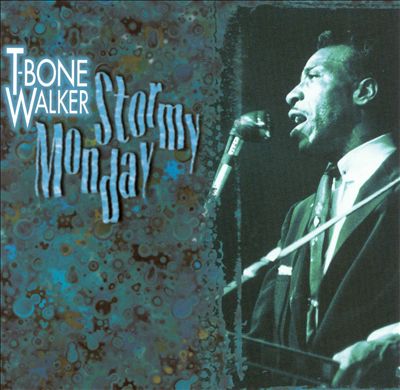
T-Bone Walker “Call It Stormy Monday” (1947)

Inducted July 2022 as “Blues Songs”

Aaron Thibeaux “T-Bone” Walker is often called “the father of electric blues.” SS He “deeply influenced virtually every guitarist during the decade following World War II” SS with his blend of blues and jazz guitar. UP It was “Call It Stormy Monday” “that made him a legend.” SS It is “one of the most influential records not only in blues history, but in guitar history.” BH “It became a song that virtually every blues band had to know; in fact, it was also required learning for countless jazz, soul, pop, and rock performers who may have had no other blues songs in their entire repertoires.” BH Read more.

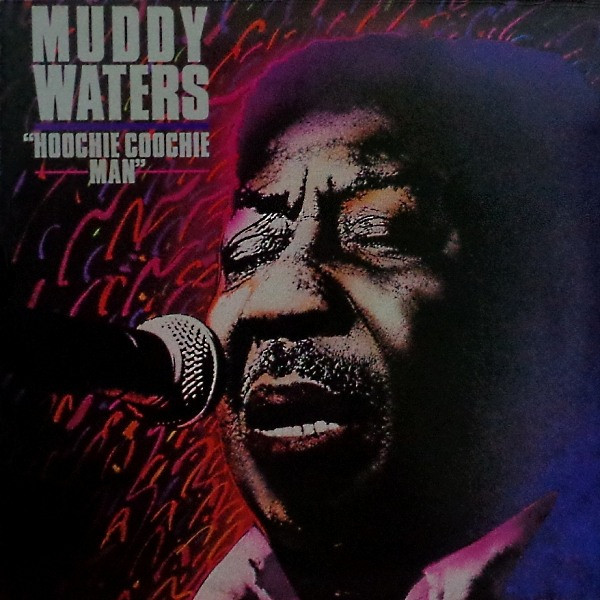
Muddy Waters “Hoochie Coochie Man” (1954)

Inducted July 2022 as “Blues Songs”

Music historian Steve Sullivan called Muddy Waters “the mighty rock upon which the foundation of postwar Chicago blues was constructed” SS and “Hoochie Coochie Man” was his “defining song.” SS It was the first of many Willie Dixon songs recorded by Waters. It was the biggest hit of Waters’ career, reaching #3 on the R&B chart, but “its influence on rock music in general is incalculable.” LW Read more.

Bo Diddley “I’m a Man” / Muddy Waters “Mannish Boy” (1955)

Inducted July 2022 as “Blues Songs”

“I’m a Man” was the first song recorded by Bo Diddley and it became the B-side of his debut single, the eponymous “Bo Diddley” which topped the R&B chart. The song was inspired by “Hoochie Coochie Man” by Muddy Waters, who then recorded “Mannish Boy” as a remake/answer song, mocking Diddley’s younger age. “Coming from Waters, a mature adult figure with a voice that booms like God’s, virtually the same words are far more leering and imposing. Waters isn’t kidding around; he is a man and his sexual boasts and demands aren’t fantasies, they’re real.” DM Read more.

Saturday, May 7, 2005

On This Day (1955): Bo Diddley charted with “I’m a Man”

I’m a Man

Bo Diddley

Writer(s): Bo Diddley (see lyrics here)


Released: April 1955


First Charted: May 7, 1955


Peak: 6 BB, 12 RB, 3 DF (Click for codes to charts.)


Sales (in millions): --


Airplay/Streaming (in millions): -- radio, 1.8 video, 34.41 streaming

Mannish Boy

Muddy Waters

Writer(s): Bo Diddley, Mel London, Muddy Waters (see lyrics here)


Released: June 1955


First Charted: July 30, 1955


Peak: 5 RB, 51 UK, 3 DF (Click for codes to charts.)


Sales (in millions): --


Airplay/Streaming (in millions): -- radio, 38.77 video, 79.28 streaming

Awards (I’m a Man):

Click on award for more details.

Awards (Mannish Boy):

About the Song:

“The bold, brash blues declaration” BH “I’m a Man” was the first song recorded by Bo Diddley and it became the B-side of his debut single, the eponymous “Bo Diddley.” “I’m a Man” is “the essential beat personified,” DM “one more in that long line of pounding, hypnotic Bo benders, an unequivocal statement of fact.” DT It features “his manipulation and modernization of Delta blues imagery,” DM inspired by Muddy Waters’ “Hoochie Coochie Man,” WK a song written by Chess Records’ songwriter and session player Willie Dixon.

Dixon played on “Hoochie Cooche Man” and “I’m a Man.” The connections between Waters and Diddley don’t stop there, though. Lyrically, “I’m a Man” doesn’t travel “far from a couple of the country-blues standards that Waters had himself brought from Mississippi and modernized.” DM Waters “almost singlehandedly figured out how to electrify rural Mississippi Delta Blues” DM which ranks him “among the master innovators of recorded American popular music.” DM

Just months after Bo Diddley topped the R&B chart with “Bo Diddley” / “I’m a Man,” Waters put his own spin on the latter. He recorded “Mannish Boy” as an answer song to “I’m a Man.” Waters’ new title for the song was “a play on words on Bo Diddley’s younger age.” WK It was credited to Bo, Muddy, and and Mel London, a Chicago songwriter who went on to run several blues labels. The song featured Junior Wells on harmonica.

It was “a solid stop-time followup” BH to “I’m a Man” as well as his own “Hoochie Coochie Man.” Waters “picks up Bo’s basic beat, but he slows the tempo.” DM “Coming from Waters, a mature adult figure with a voice that booms like God’s, virtually the same words are far more leering and imposing. Waters isn’t kidding around; he is a man and his sexual boasts and demands aren’t fantasies, they’re real.” DM

The song was recorded as a “mostly vain attempt to peddle Muddy’s music to a white audience…Yet no matter how cold-hearted its origins, Muddy found a way to dominate the track straight through” DM and serve up something “that the rock and roll tradition should be very proud to claim.” DM Of course, Bo Diddley’s original “I’m a Man” has still left its stamp on rock music as well. Two Rock and Roll Hall of Fame inductees have recorded “I’m a Man” – the Yardbirds and The Who.


Resources:


Related Links:


First posted 9/7/2023.

Tuesday, March 25, 1997

Muddy Waters compilation, His Best 1947-55, released

The Best of/His Best 1947-55

Muddy Waters


Released: April 1958 B, March 25, 1997 H


Recorded: 1948-54 B, 1947-55 H


Peak: --


Sales (in millions): --


Genre: blues


B The Best of
H His Best 1947-1955


Tracks:

Song Title (Writers) [time] (date of single release, chart peaks) Click for codes to charts.

    1. I Can’t Be Satisfied (9/18/48, #11 RB) B
    2. I Feel Like Going Home (9/18/48, B-side of “Satisfied”)
    3. Train Fare Home (1948)
    4. Rollin’ and Tumblin’ (1950)
    5. Rollin’ Stone (1950) B
    6. Louisiana Blues (1/13/51, #10 RB) B
    7. Long Distance Call (4/14/51, #8 RB) B
    8. Honey Bee (7/14/51, #10 RB) B
    9. Still a Fool (11/24/51, #9 RB) B
    10. She Moves Me (2/23/52, #10 RB) B
    11. Standing Around Crying (1952) B
    12. Mad Love (I Want You to Love Me) (11/21/53, #6 RB) B
    13. Baby Please Don’t Go (1953)
    14. Hoochie Coochie Man (3/13/54, #3 RB) B
    15. I Just Want to Make Love to You (6/5/54, #4 RB) B
    16. I’m Ready (10/23/54, #4 RB) B
    17. Mannish Boy (6/30/55, #5 RB)
    18. Young Fashioned Ways (1955)
    19. Sugar Sweet (1955)
    20. Trouble No More (1955)

    All of the above tracks are featured on His Best 1947-1955 (H). Tracks featured on Best of are noted by B

Rating:

4.398 out of 5.00 (average of 11 ratings)


Quotable:

“Perfect country blues” – Ken Hohman, Amazon.com

Awards H:

(Click on award to learn more).

About the Album:

Muddy Waters was born McKinley Morganfield in 1913 in Mississippi. He grew up on a plantation and learned to play guitar and harmonica. In 1941, Alan Lomax recorded him for the Library of Congress. Two years later, Waters moved to Chicago to become a full-time professional musician, first recording with Aristocrat from 1947 to 1950 and Chess from 1950 to 1971. He became known as the “father of modern Chicago blues.”

His first chart appearance came in 1948 when I Can’t Be Satisfied reached #11 on the R&B chart. After signing with Chess, he landed fourteen top-ten hits on that chart from 1950 to 1958. In 1958, Chess Records released a Muddy Waters’ greatest hits collection simply entitled The Best of Muddy Waters. It compiled a dozen songs which were initially issued as singles from 1948 to 1954. Most appeared on Billboard magazine’s R&B charts. It was the first Muddy Waters album and only the third album released by Chess on the LP (long-playing) format. WK In 1983, it was inducted into the Blues Hall of Fame.

Nearly 40 years later, as part of their 50th anniversary series, Chess released a new compilation (His Best 1947-55) JH which covered all the songs on the original Best of collection plus another eight songs. This includes ten of his songs which reached the top-ten on the R&B chart.

These songs represent Waters from his formative years through his peak. Listeners are “in for a lot of terrific bottleneck slide guitar work as well as electric Chicago blues.” KH These “tracks are spare, haunting and, quite frankly, perfect country blues.” KH “I Can’t Be Satisfied, Rollin’ and Tumblin’, I’m Ready, and Mannish Boy are simply beyond reproach.” KH The latter song and “Hoochie Coochie Man have sparked endless imitations over the years – and…nobody has played them better since.” KH

Resources and Related Links:


Other Related DMDB Pages:


First posted 9/7/2018; last updated 3/17/2024.