Showing posts with label Hoochie Coochie Man. Show all posts

Saturday, July 3, 2010

Today in Music (1960): Muddy Waters performed at Newport

At Newport

Muddy Waters


Released: November 15, 1960


Recorded: July 3, 1960


Peak: --


Sales (in millions): --


Genre: blues


Tracks:

Song Title (Writers) [time] (date of single release, chart peaks) Click for codes to charts.

  1. I Got My Brand on You
  2. I’m Your Hoochie Coochie Man (3/13/54, #3 RB)
  3. Baby Please Don’t Go
  4. Soon Forgotten
  5. Tiger in Your Tank
  6. I Feel So Good
  7. I’ve Got My Mojo Working
  8. I’ve Got My Mojo Working, Pt. 2
  9. Goodbye Newport Blues

Rating:

4.365 out of 5.00 (average of 15 ratings)


Quotable:

“A great breakthrough moment in blues history, where the jazz audience opened its ears and embraced Chicago blues.” – Cub Koda & Bruce Eder, All Music Guide

Awards:

(Click on award to learn more).

About the Album:

This was “a great breakthrough moment in blues history.” AMG “Though his ‘50s recordings…revolutionized modern blues, it wasn’t until his raw, plugged-in steer blew up the Newport Folk Festival that whites in America gave Muddy (and the blues) proper respect.” VB “This was many white folks’ first exposure” BL “to live recorded blues.” AMG It was also significant because “the jazz audience opened its ears and embraced Chicago blues.” AMG

As “one of the earliest recordings of Waters’ electric band, Newport found the former McKinley Morganfield in needle-sharp form with his mojo working overtime.” BL That band included Otis Spann, James Cotton, and guitarist Pat Hare. AMG “Kicking off the album with a version of I’ve Got My Brand on You that positively burns the relatively tame (in comparison) studio take, Waters heads full bore through impressive versions of Hoochie Coochie Man, Big Bill Broonzy’s Feel So Good, and Tiger in Your Tank.” AMG This set “literally had ‘em dancing in the aisles by the set closer, a rippling version of Got My Mojo Working, reprised again in a short encore version.” AMG

“This album was in print almost continuously on vinyl for 20-plus years, and MCA reissued it in a fair CD version in 1986…but the real edition of this album to get is the March 2001 remastering from MCA. Transferred in high-resolution digital audio, it brings up the bass overall and the details of just about every aspect of the playing, as well as moving Muddy’s singing several layers forward in the mix, so that one gets a very vivid stage ambience.” AMG

What’s most significant, perhaps, is that this is “still pretty damn impressive some 40-plus years down the line.” AMG This is “maximum mojo for yo’ moolah.” BL The album is, in a word, “immortal.” VB


Notes:

A 2001 CD reissue added “four studio sides cut by the same group a month prior to the concert – none hold a candle to the live material, but they do fill in a few holes in Muddy’s U.S. discography. The new notes by Mary Katherine Aldin also give a much better picture of the background of the show and Muddy’s performance.” AMG

Resources and Related Links:


Other Related DMDB Pages:


First posted 7/3/2012; last updated 3/17/2024.

Saturday, March 13, 2004

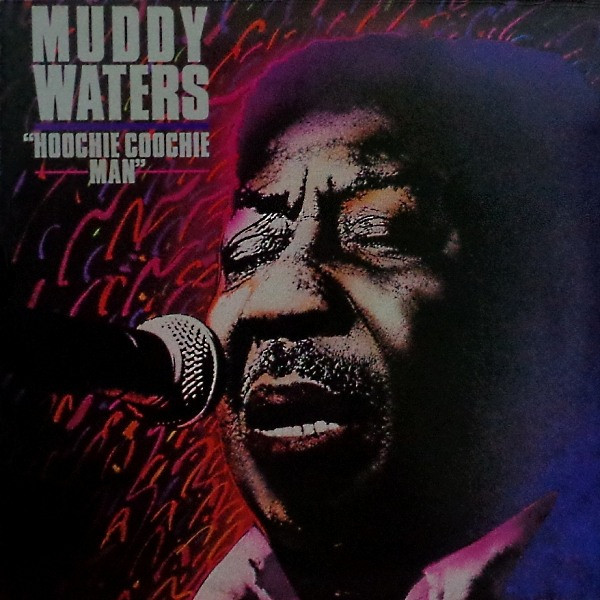
On This Day (1954): Muddy Waters “Hoochie Coochie Man” charted

Hoochie Coochie Man

Muddy Waters

Writer(s): Willie Dixon (see lyrics here)


Recorded: January 7, 1954


First Charted: March 13, 1954


Peak: 3 RB, 3 DF (Click for codes to charts.)


Sales (in millions): --


Airplay/Streaming (in millions): -- radio, 7.76 video, 30.54 streaming

Awards:

Click on award for more details.

About the Song:

Music historian Steve Sullivan called Muddy Waters “the mighty rock upon which the foundation of postwar Chicago blues was constructed.” SS Chicago blues was the term for “urban blues music that came about as southern blacks moved north to find work in the industrial heartland of America. Adapted from the more rural delta blues of the Mississippi, it was originally played on acoustic guitars with whatever accompaniment was available.” LW

Waters was born McKinley Morganfield in the Mississippi Delta on April 4, 1913. He moved to Chicago in 1946 after being discovered by Alan Lomax and John Work while making field recordings for the Library of Congress. He started recording for Chess Records, which linked him to Willie Dixon, a top songwriter and session player for the label.

Dixon came to Zanzibar, a Chicago club, to see Muddy play and pitched his song “Hoochie Coochie Man” to Waters. They ran it down together in the men’s room. It was the first of many Dixon songs recorded by Waters and became Waters’ “defining song.” SS It “built on Muddy’s already-established charisma to build him an even more powerful macho image.” BH

The song “is raw sex, with no concessions to gentility.” LW The term “hoochie coochie” was a reference to “a belly dance that scandalized prurient Americans in the late 19th century.” BH It’s also blues slang for vagina. LW The song also conjured up “the powers of hoodoo magic” BH and was, as Muddy sang, a number to “make pretty women jump and shout.” BH

The song was the biggest hit of Waters’ career, reaching #3 on the R&B chart, but “its influence on rock music in general is incalculable.” LW It has been widely covered by artists as diverse as Jimi Hendrix, Chuck Berry, and jazzy organist Jimmy Smith as well as multiple Chicago blues artists. BH


Resources:


Related Links:


First posted 9/10/2023.

Tuesday, March 25, 1997

Muddy Waters compilation, His Best 1947-55, released

The Best of/His Best 1947-55

Muddy Waters


Released: April 1958 B, March 25, 1997 H


Recorded: 1948-54 B, 1947-55 H


Peak: --


Sales (in millions): --


Genre: blues


B The Best of
H His Best 1947-1955


Tracks:

Song Title (Writers) [time] (date of single release, chart peaks) Click for codes to charts.

    1. I Can’t Be Satisfied (9/18/48, #11 RB) B
    2. I Feel Like Going Home (9/18/48, B-side of “Satisfied”)
    3. Train Fare Home (1948)
    4. Rollin’ and Tumblin’ (1950)
    5. Rollin’ Stone (1950) B
    6. Louisiana Blues (1/13/51, #10 RB) B
    7. Long Distance Call (4/14/51, #8 RB) B
    8. Honey Bee (7/14/51, #10 RB) B
    9. Still a Fool (11/24/51, #9 RB) B
    10. She Moves Me (2/23/52, #10 RB) B
    11. Standing Around Crying (1952) B
    12. Mad Love (I Want You to Love Me) (11/21/53, #6 RB) B
    13. Baby Please Don’t Go (1953)
    14. Hoochie Coochie Man (3/13/54, #3 RB) B
    15. I Just Want to Make Love to You (6/5/54, #4 RB) B
    16. I’m Ready (10/23/54, #4 RB) B
    17. Mannish Boy (6/30/55, #5 RB)
    18. Young Fashioned Ways (1955)
    19. Sugar Sweet (1955)
    20. Trouble No More (1955)

    All of the above tracks are featured on His Best 1947-1955 (H). Tracks featured on Best of are noted by B

Rating:

4.398 out of 5.00 (average of 11 ratings)


Quotable:

“Perfect country blues” – Ken Hohman, Amazon.com

Awards H:

(Click on award to learn more).

About the Album:

Muddy Waters was born McKinley Morganfield in 1913 in Mississippi. He grew up on a plantation and learned to play guitar and harmonica. In 1941, Alan Lomax recorded him for the Library of Congress. Two years later, Waters moved to Chicago to become a full-time professional musician, first recording with Aristocrat from 1947 to 1950 and Chess from 1950 to 1971. He became known as the “father of modern Chicago blues.”

His first chart appearance came in 1948 when I Can’t Be Satisfied reached #11 on the R&B chart. After signing with Chess, he landed fourteen top-ten hits on that chart from 1950 to 1958. In 1958, Chess Records released a Muddy Waters’ greatest hits collection simply entitled The Best of Muddy Waters. It compiled a dozen songs which were initially issued as singles from 1948 to 1954. Most appeared on Billboard magazine’s R&B charts. It was the first Muddy Waters album and only the third album released by Chess on the LP (long-playing) format. WK In 1983, it was inducted into the Blues Hall of Fame.

Nearly 40 years later, as part of their 50th anniversary series, Chess released a new compilation (His Best 1947-55) JH which covered all the songs on the original Best of collection plus another eight songs. This includes ten of his songs which reached the top-ten on the R&B chart.

These songs represent Waters from his formative years through his peak. Listeners are “in for a lot of terrific bottleneck slide guitar work as well as electric Chicago blues.” KH These “tracks are spare, haunting and, quite frankly, perfect country blues.” KHI Can’t Be Satisfied, Rollin’ and Tumblin’, I’m Ready, and Mannish Boy are simply beyond reproach.” KH The latter song and “Hoochie Coochie Man have sparked endless imitations over the years – and…nobody has played them better since.” KH

Resources and Related Links:


Other Related DMDB Pages:


First posted 9/7/2018; last updated 3/17/2024.

Saturday, April 30, 1983

Muddy Waters died: April 30, 1983

Originally posted April 30, 2012.

McKinley Morganfield, better known as Muddy Waters, was born on 4/4/1915 in Rolling Fork, Mississippi. Some sources indicate his birth year as 1913, but the bio on MuddyWaters.com cites 1915. He died on April 30, 1983.

Waters ranks second only to Robert Johnson as the top blues acts of all time. Waters was pivotal in the development of the Chicago blues style. He taught himself to play harmonica in the early 1920s and picked up guitar in the early 1930s.

Among his most significant songs are “I Feel Like Going Home” (1948), “Rollin’ Stone” (1950), “Hoochie Coochie Man” (1954), and “Got My Mojo Working” (1957). All have been inducted into the Grammy Hall of Fame. The latter three and “Mannish Boy” also made the Rock and Roll Hall of Fame’s list of the 500 Songs That Shaped Rock and Roll. “Hoochie Coochie” is also in the National Recording Registry of the Library of Congress and made NPR’s list of the Most Important American Musical Works of the 20th Century. “Mojo” is also among the RIAA’s selections for the RIAA’s 365 songs of the 20th century.

Hoochie Coochie Man

Best of (1954), Down on Stovall’s Plantation (1966), McKinley Morganfield (aka “Muddy Waters”) (1971), The Chess Box (1972), Can’t Get No Grindin’ (1973), and The Complete Plantation Recordings (1993) are all Blues Hall of Fame inductees. In addition, Time magazine named The Anthology 1947-1972 (1947-72) one of the Top 100 Albums of All Time.

His most celebrated album is At Newport, a live album from 1960. It makes the DMDB’s lists of top 1000 albums of all time, Top 10 Blues Albums of All Time, and the top 50 live albums of all time. It also ranks as one of the 100 Greatest American Albums according to Blender magazine and one of the 100 Essential Albums of the Century according to Vibe magazine.


Awards:


Resources and Related Links: