Showing posts with label top blues songs. Show all posts

Monday, November 17, 2014

On This Day (1914): “The Memphis Blues” charted for the first time

The Memphis Blues

Charles Adams Prince’s Orchestra

Writer(s): W.C. Handy (music), George A. Norton (words) (see lyrics here)


Recorded: July 24, 1914


Released: October 1914


First Charted: November 7, 1914


Peak: 4 PM, 17 GA (Click for codes to charts.)


Sales (in millions): --


Airplay/Streaming (in millions): -- radio, -- video, -- streaming

Awards (W.C. Handy):

Click on award for more details.


Awards (Prince’s Orchestra):


Awards (Victor Military Band):


About the Song:

W.C. Handy’s ‘The Memphis Blues” was one of the first blues songs ever published and “the first to make a significant impact on the music industry.” SS Handy originally wrote the piece as “Mr. Crump” as a means of campaigining for Edward Crump in his bid for mayor of Memphis in 1909. He became the head of one of the most dominant political machines in the nation, ruling Memphis until he died in 1954. SS

The song may have derived from “Mama Don’t Allow No Easy Talking Here” by Willie Perry and Susie Johnson, a Memphis-based husband-and-wife black vaudeville comedy team. SS Their publishing company threatened to prosecute anyone using their songs, a warning that may have been directed at Handy. However, no action was taken even though Johnson insisted years later that the song was stolen from her. SS

Handy published an instrumental version of the song on September 28, 1912. He self-published it again with lyrics by the end of the year. He eventually sold the rights for $50 to New York music publisher TY2 Thomas C. Bennett and George A. Norton gave it new lyrics. George “Honey Boy” Evans, a white minstrel entertainer, then started performing the song around the country and it eventually became a hit. SS Because he’d sold the rights, Handy wouldn’t see any roylaties from the song until the copyright expierned 28 years later and reverted back to him. Handy has since been christened with the moniker “The Father of the Blues.” SS

The chart version by Charles Adams Prince’s Orchestra reached #4 in 1914. He was born in San Francisco in 1869 and traveled with circuses and minstrel shows for several years before beginning a recording career and becoming the musical director of Columbia Records from the turn of the century through the early 1920s. PM He had 82 chart entries from 1905 to 1923, including three chart toppers.

Music historian Steve Sullivan says Prince’s rendition is “a very straightforward instrumental arrangement in the carefully structured style of the time, without any improvisation, but with the luxury of a fairly extended playing time (close to four minutes), it conveys the song’s beauty and distinctiveness.” SS

Prince made his recording nine days after the first recorded version by the Victor Military Band (#9 PM, 1914), but Prince’s version showed up on the charts first and has been deemed “the first hit recording of a blues song.” PM Other chart versions followed by Arthur Collins & Byron Harlan (#8 PM, 1915), Ted Lewis (#9 PM, 1927), and Harry James (#15 PM, 1944). “The Memphis Blues” has also been featured in the movie musicals Belle of the Nineties (1934) and The Birth of the Blues (1941).


Resources:


First posted 9/6/2023.

Sunday, May 2, 2010

50 years ago: Elmore James “The Sky Is Crying” hit the R&B chart

The Sky Is Crying

Elmore James

Writer(s): Elmore James (see lyrics here)


Released: March 1960


First Charted: May 2, 1960


Peak: 15 RB (Click for codes to charts.)


Sales (in millions): --


Airplay/Streaming (in millions): -- radio, -- video, 24.78 streaming

The Sky Is Crying

Stevie Ray Vaughan & Double Trouble


Recorded: 1984


First Charted: November 9, 1991


Peak: 2 AR, 6 DF (Click for codes to charts.)


Sales (in millions): --


Airplay/Streaming (in millions): -- radio, 12.06 video, -- streaming

Awards (Elmore James):

Click on award for more details.


Awards (Stevie Ray Vaughan):

Click on award for more details.

About the Song:

Blues singer/songwriter and guitarist Elmore James was born in 1918 in Mississippi. He earned the nickname “King of the Slide Guitar,” offering up interpretations of blues standards like “Dust My Broom,” “Crossroads,” “It Hurts Me Too,” “Rollin’ and Tumblin,’” and “Every Day I Had the Blues.” He also penned some blues classics, most notably “The Sky Is Crying” – one of his four entries on the R&B charts.

Writer Gayle Dean Wardlow wrote that “they mythical stature given to James is quickly growing to equal that of Robert Johnson.” SS Critic Robert Palmer ranks James with Muddy Waters, Howlin’ Wolf, and a few others as “the recorded pinnacle of Chicago blues.” SS

Music historian Steve Sullivan said specifically of “The Sky Is Crying” that it is James’ “greatest original piece” SS and is “among the most electrifying blues recordings of the postwar Chicago era.” SS Record producer Bobby Robinson said it is “a magnificent vehicle for both Elmore’s emotion-packed blues vocal and his ringing slide guitar.” WK

The song has become a blues standard recorded and performed by other blues greatest like Freddie King, Albert King, Eric Clapton, George Thorogood, and Stevie Ray Vaughan. Vaughan’s version was recorded in 1984 during sessions for the Couldn’t Stand the Weather album. It was released posthumously in 1991 as the title song from an archival album and reached #2 on the album rock chart. Critic Dan Forte said, “Stevie tips his Clint Eastwood hat to two of his idols: Elmore James…and Albert King…whose influence is evident in every likc and bend.” WK


Resources:


First posted 1/14/2023.

Saturday, March 13, 2004

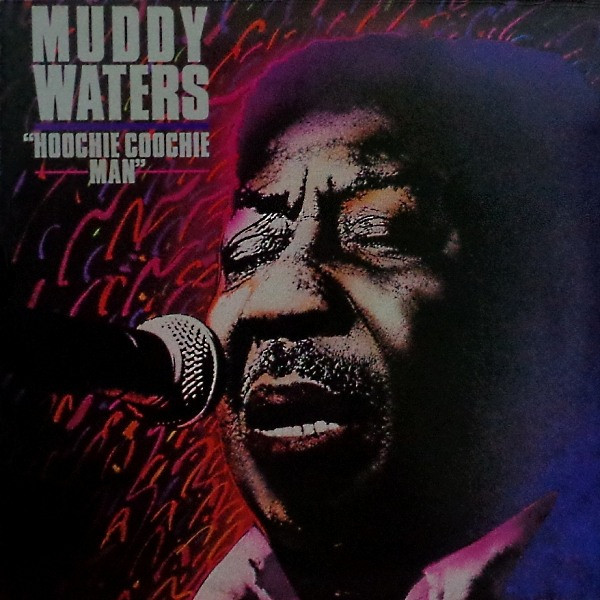
On This Day (1954): Muddy Waters “Hoochie Coochie Man” charted

Hoochie Coochie Man

Muddy Waters

Writer(s): Willie Dixon (see lyrics here)


Recorded: January 7, 1954


First Charted: March 13, 1954


Peak: 3 RB, 3 DF (Click for codes to charts.)


Sales (in millions): --


Airplay/Streaming (in millions): -- radio, 7.76 video, 30.54 streaming

Awards:

Click on award for more details.

About the Song:

Music historian Steve Sullivan called Muddy Waters “the mighty rock upon which the foundation of postwar Chicago blues was constructed.” SS Chicago blues was the term for “urban blues music that came about as southern blacks moved north to find work in the industrial heartland of America. Adapted from the more rural delta blues of the Mississippi, it was originally played on acoustic guitars with whatever accompaniment was available.” LW

Waters was born McKinley Morganfield in the Mississippi Delta on April 4, 1913. He moved to Chicago in 1946 after being discovered by Alan Lomax and John Work while making field recordings for the Library of Congress. He started recording for Chess Records, which linked him to Willie Dixon, a top songwriter and session player for the label.

Dixon came to Zanzibar, a Chicago club, to see Muddy play and pitched his song “Hoochie Coochie Man” to Waters. They ran it down together in the men’s room. It was the first of many Dixon songs recorded by Waters and became Waters’ “defining song.” SS It “built on Muddy’s already-established charisma to build him an even more powerful macho image.” BH

The song “is raw sex, with no concessions to gentility.” LW The term “hoochie coochie” was a reference to “a belly dance that scandalized prurient Americans in the late 19th century.” BH It’s also blues slang for vagina. LW The song also conjured up “the powers of hoodoo magic” BH and was, as Muddy sang, a number to “make pretty women jump and shout.” BH

The song was the biggest hit of Waters’ career, reaching #3 on the R&B chart, but “its influence on rock music in general is incalculable.” LW It has been widely covered by artists as diverse as Jimi Hendrix, Chuck Berry, and jazzy organist Jimmy Smith as well as multiple Chicago blues artists. BH


Resources:


Related Links:


First posted 9/10/2023.

Friday, January 8, 1999

On This Day (1949): John Lee Hooker “Boogie Chillen” charted

Boogie Chillen

John Lee Hooker

Writer(s): John Lee Hooker (see lyrics here)


Recorded: November 3, 1948


First Charted: January 8, 1949


Peak: 11 RB, 4 DF (Click for codes to charts.)


Sales (in millions): --


Airplay/Streaming (in millions): -- radio, 36.9 video, 20.57 streaming

Awards:

Click on award for more details.

About the Song:

John Lee Hooker “was born in 1917 at ground zero of the blues, Clarksdale, Mississippi.” TC Will Moore, his stepfather, occasionally played with Charley Patton SS and was considered “one of the pioneering blues players in the Delta at that time.” TC Hooker said, “What I’m playing now, that’s what he taught me to play, his style.” TC

Hooker left the Delta and headed for Detroit in 1943. He started as a janitor and played music on the side. It took five years, but he eventually met a local record distributor named Bernie Besman who decided to record him. He employed some unusual techniques such as putting a speaker in a toilet bowl to get an echo effect and putting a microphone by a plank board where Hooker’s foot tapped in time. SS

“Boogie Chillen” was recorded at the end of that demo session. Hooker explained the inspiration for the song, saying he’d been walking down Hastings Street in Deroit and dropped into Henry’s Swing Club. He liked what he heard and shouted, “Boogie, chillen!” SS He said the resulting song was was a guitar boogie like what his father played down south. BH It was the first “down-home electric blues record” to top the R&B charts, which inspired record companies to find more of “the new electric generation of country bluesmen.” BH

The music was characterized by “heavily syncopated guitar that just sits in a groove while John Lee growls over the top.” TC It “was closer to rock & roll than blues; it had the pronounced beat of the hormonally pumped white music.” TC Hooker became a favorite of British bands like the Animals in the 1960s. In America, bands like “Canned Heat and ZZ Top made careers out of essentially recycling Hooker’s boogie.” TC


Resources:


Related Links:


First posted 9/10/2023.