Showing posts with label Willie Dixon. Show all posts

Wednesday, January 11, 2012

Today in Music (1962): Howlin' Wolf released his second album

1/11/1962: Howlin Wolf Moanin’ in the Moonlight/Howlin’ Wolf released

Moanin’ in the Moonlight/Howlin’ Wolf (aka “The Rocking Chair Album”)

Howlin’ Wolf


Released: 1959 M, Jan. 11, 1962 R


Recorded: 1951-58 M, 1957-62 R


Peak: --


Sales (in millions): --


Genre: blues


M Moanin’ in the Moonlight
R Howlin’ Wolf (aka “The Rockin’ Chair Album”)


Tracks M:

Song Title (date of single release, chart peaks) Click for codes to charts.

  1. How Many More Years (8/15/51, #4 RB)
  2. Moanin’ at Midnight (8/15/51, #10 RB)
  3. All Night Boogie (All Night Long) (1953 single)
  4. No Place to Go (1954 single)
  5. Baby How Long (1954 single)
  6. Evil (1954 B-side of “Baby How Long”, #43 RB in 1969)
  7. Forty-Four (1954 B-side of “I’ll Be Around”)
  8. Smokestack Lightning (3/17/56, #8 RB, #42 UK)
  9. I Asked for Water (She Gave Me Gasoline) (11/10/56, #8 RB)
  10. Somebody in My Home (1957 single)
  11. Moanin’ for My Baby (1958 B-side)
  12. I’m Leaving You (1958 single)

Tracks R:

  1. Tell Me (1960 single)
  2. Who’s Been Talking? (1960 B-side of “Tell Me”)
  3. Spoonful (1960 single)
  4. Howlin’ for My Baby (1960, B-side of “Spoonful”)
  5. Wang Dang Doodle (1960 single)
  6. Back Door Man (1960 B-side of “Wang Dang Doodle”)
  7. Down in the Bottom (1961 single)
  8. Little Baby (1961 B-side of “Down in the Bottom”)
  9. The Red Rooster (1961 single)
  10. Shake for Me (1961 B-side of “Red Rooster”)
  11. You’ll Be Mine (1962 single)
  12. Goin’ Down Slow (1962 B-side of “You’ll Be Mine”)

Rating:

4.565 out of 5.00 (average of 17 ratings)


Quotable:

“The cream of Wolf’s Chicago blues work.” – Stephen Cook, All Music Guide

Awards:

(Click on award to learn more).

About the Album:

Howlin’ Wolf’s first two albums, Moanin’ in the Moonlight (1959) and Howlin’ Wolf (The Rockin’ Chair Album) (1962) weren’t so much albums as compilations since both were collections covering several years of Wolf’s career. In the CD era, the two albums have been packaged together as one release.

Moanin’ in the Moonlight served as Howlin’ Wolf’s debut album, gathering a dozen of his Chess singles from 1951 to 1958. “The arrangements and the instrumental accompaniments, particularly the guitar, harmonica and piano, capture the fullest the concept of ‘blue tonality.’” PA

Moanin’ in the Moonlight and How Many More Years, were recorded in July 1951 in Memphis, Tennessee at Sam Phillip’s Memphis Recording Service and, after being sold to Chess Records, were released as singles in August 1951. WK-M The former “is a mood piece which captures the eerie, lonesome atmosphere of an isolated dwelling, is hard to match.” PA The latter, “with its strongly-marked piano figure, changes the pace and atmosphere entirely, for it presents the point of view of the man who finds his nagging wife too much to bear.” PA

All Night Boogie was recorded in Memphis in 1953 and was also sold to Chess Records. It “is an uptempo blues with a rollicking beat which bellies the essential sadness of the theme: that of the man who wakes up and finds his ‘baby’ gone.” PA

The remainder of the songs “were recorded in Chicago, Illinois and produced by either the Chess brothers and/or Willie Dixon.” WK-M Among them is Smokestack Lightnin’, which has probably become the best-known song by Howlin’ Wolf. It is “a powerful side with a world of flavor, presents a picture of anguish as the man asks his ‘baby’ where she stayed during the night.” PA

The collection included a couple of other songs which hit the R&B charts. I Asked for Water (She Gave Me Gasoline). was the fourth top-ten R&B single for the Chicago blues singer/guitarist/harmonicist. Evil was initially released in 1954, but didn’t chart until 1969. It “is sung in Howlin’ Wolf’s best shouting style. The lyric is vastly interesting and entertaining – being a catalog of things to be suspicious of, if one is to persevere a happy home. The piano here, particularly the right hand, is of amazing flexibilty.” PA

Howlin’ Wolf’s second eponymously-titled album gathered another dozen previously-released singles, this time from the late ’50s and early ‘60s. “Because of the illustration on its sleeve (by Don Bronstein), the album is often called The Rockin' Chair Album, a nickname even added to the cover on some reissue pressings of the LP.” WK-R

Some of these songs have become well-known covers for other artists, including Koko Taylor’s cover of Wang Dang Doodle (1966, #4 RB). In 1963, Sam Cooke re-recorded The Red Rooster as “Little Red Rooster” (#7 RB, #11 US) and the Rolling Stones recorded it the following year, taking it all the way to #1 in the UK. Led Zeppelin’s “Whole Lotta Love” tapped lyrics from Shake for Me and Back Door Man. WK-R Cream covered Spoonful.

When, in 2012, Rolling Stone named it one of the 500 greatest albums of all time, they described it as “an outrageous set of sex songs written by Willie Dixon.” WK-R In addition to his writing talents, Dixon, who was the Chess house producer, lent his bass-playing talents while Hubert Sumlin played guitar. SC The album, which Mojo magazine ranked as the third greatest guitar album of all time in 2004, WK-R “qualifies as one of pinnacles of early electric blues and is an essential album for any quality blues collection.” SC

Both albums have been inducted into the Blues Hall of Fame. Combined, the two albums capture “the cream of Wolf’s Chicago blues work.” SC


Notes:

Moanin’ in the Moonlight and Howlin’ Wolf (The Rockin’ Chair Album) were initially released as separated albums, but were paired together in the CD era as one package. Note: the track listing above has been re-ordered based on when the songs were released.

Resources and Related Links:


Other Related DMDB Pages:


First posted 11/13/2008; last updated 3/17/2024.

Sunday, November 15, 2009

40 Years Ago: Led Zeppelin chart with “Whole Lotta Love”

Whole Lotta Love

Led Zeppelin

Writer(s): John Bonham, Willie Dixon, John Paul Jones, Jimmy Page, Robert Plant (see lyrics here)


Released: November 7, 1969


First Charted: November 14, 1969


Peak: 4 US, 2 CB, 5 GR, 4 HR, 1 CL, 21 UK, 2 CN, 12 AU, 1 DF (Click for codes to charts.)


Sales (in millions): 1.0 US, 0.4 UK, 1.4 world (includes US + UK)


Airplay/Streaming (in millions): -- radio, 169.25 video, -- streaming

Awards:

Click on award for more details.

About the Song:

“Whole Lotta Love” can be traced back to a 1962 Willie Dixon song, although he wasn’t credited until 1985. Dixon was a Chicago blues songwriter who penned the song “You Need Love” in 1962 for Muddy Waters. The Small Faces, a British rock band, covered the song as “You Need Loving” on their debut album in 1966. According to Steve Marriott, the band’s singer and guitarist, future Led Zeppelin members Jimmy Page and Robert Plant came to some of their gigs and expressed interest in the song. WK

Jimmy Page was the guitarist in the Yardbirds in the late 1960s. When the group folded, Page set about creating a group originally dubbed “The New Yardbirds” which included Plant on vocals. The group eventually settled on the monker “Led Zeppelin” and set about “jamming on the blues standards they loved, stretching them out into psychedelic orgies.” RS500 On its first two albums, Led Zeppelin covered “You Shook Me,” “I Can’t Quit You, Baby,” and “Bring It on Home” – all by Willie Dixon. RS500

The band’s reworking of “You Need Love” bore similarities to the Small Faces’ version. Marriott pointed out that Plant “sang it the same, phrased it the same, even the stops at the end were the same.” WK However, it wasn’t until Dixon brought legal action in 1985 that he got a rightful share of the credit. RS500 The band settled out of court for an undisclosed amount and, on subsequent releases, included Dixon’s name in the credits. WK Dixon used the money to set up a program which provided instruments for schools. SF

Plant also tossed in lines from “Shake for Me” and “Back Door Man,” a pair of Dixon songs written for Howlin’ Wolf. RS500 The band also borrows a phrase from Blind Lemon Jefferson and Robert Johnson, in asking to have one’s lemon squeezed “till the juice runs down my leg.” RP-124

Page developed the riff in the summer of 1968 on his houseboat on the River Thames in England, although bassist John Paul Jones said it came out of improvisation on stage during their song “Dazed and Confused.” WK In 2014, a BBC radio listeners’ poll rated “Whole Lotta Love” as having the greatest guitar riff of all time. WK The song was also rated in the top 5 on similar lists from Q magazine and VH1. WK


Resources:


Related Links:


Last updated 12/27/2022.

Saturday, March 13, 2004

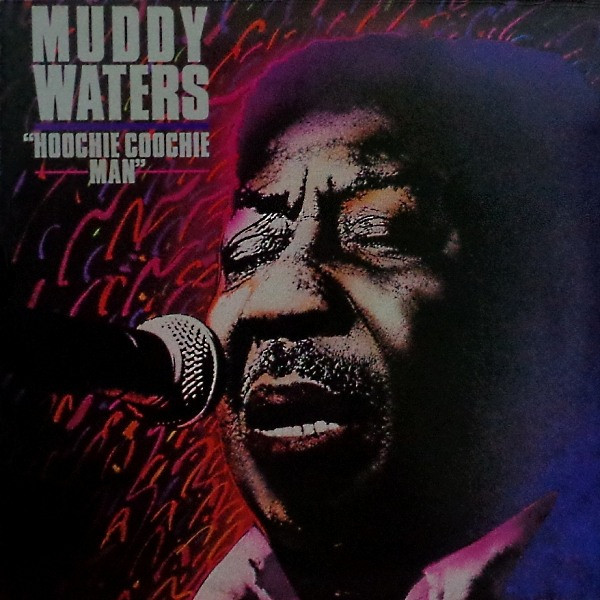
On This Day (1954): Muddy Waters “Hoochie Coochie Man” charted

Hoochie Coochie Man

Muddy Waters

Writer(s): Willie Dixon (see lyrics here)


Recorded: January 7, 1954


First Charted: March 13, 1954


Peak: 3 RB, 3 DF (Click for codes to charts.)


Sales (in millions): --


Airplay/Streaming (in millions): -- radio, 7.76 video, 30.54 streaming

Awards:

Click on award for more details.

About the Song:

Music historian Steve Sullivan called Muddy Waters “the mighty rock upon which the foundation of postwar Chicago blues was constructed.” SS Chicago blues was the term for “urban blues music that came about as southern blacks moved north to find work in the industrial heartland of America. Adapted from the more rural delta blues of the Mississippi, it was originally played on acoustic guitars with whatever accompaniment was available.” LW

Waters was born McKinley Morganfield in the Mississippi Delta on April 4, 1913. He moved to Chicago in 1946 after being discovered by Alan Lomax and John Work while making field recordings for the Library of Congress. He started recording for Chess Records, which linked him to Willie Dixon, a top songwriter and session player for the label.

Dixon came to Zanzibar, a Chicago club, to see Muddy play and pitched his song “Hoochie Coochie Man” to Waters. They ran it down together in the men’s room. It was the first of many Dixon songs recorded by Waters and became Waters’ “defining song.” SS It “built on Muddy’s already-established charisma to build him an even more powerful macho image.” BH

The song “is raw sex, with no concessions to gentility.” LW The term “hoochie coochie” was a reference to “a belly dance that scandalized prurient Americans in the late 19th century.” BH It’s also blues slang for vagina. LW The song also conjured up “the powers of hoodoo magic” BH and was, as Muddy sang, a number to “make pretty women jump and shout.” BH

The song was the biggest hit of Waters’ career, reaching #3 on the R&B chart, but “its influence on rock music in general is incalculable.” LW It has been widely covered by artists as diverse as Jimi Hendrix, Chuck Berry, and jazzy organist Jimmy Smith as well as multiple Chicago blues artists. BH


Resources:


Related Links:


First posted 9/10/2023.

Tuesday, November 22, 1988

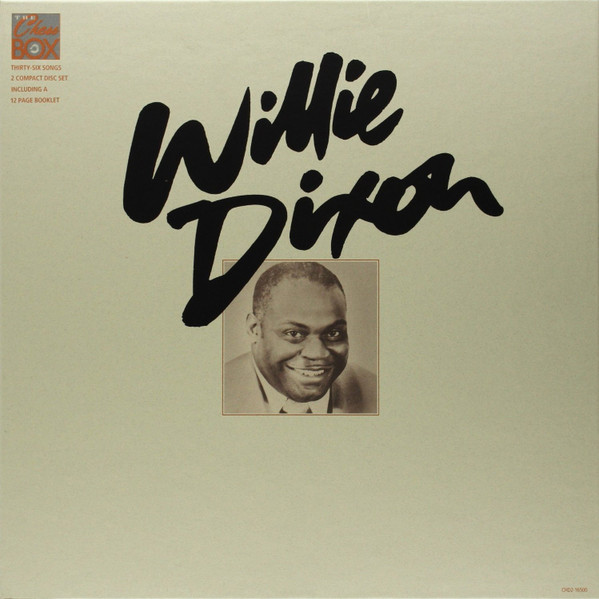
Willie Dixon The Chess Box released

The Chess Box

Willie Dixon


Released: November 22, 1988


Recorded: 1951-1969


Peak: --


Sales (in millions): --


Genre: blues


Tracks, Disc 1:

Song Title Performer (date of single release, chart peaks) Click for codes to charts.

  1. My Babe by Little Walter (3/12/55, 1 RB)
  2. Violent Love by The Big Three Trio (1951)
  3. Third Degree by Eddie Boyd (7/4/53, 3 RB)
  4. Seventh Son by Willie Mabon (1956)
  5. Crazy for My Baby by Willie Dixon (1955)
  6. Pain in My Heart by Willie Dixon (1955)
  7. Hoochie Coochie Man by Muddy Waters (3/13/54, 3 RB)
  8. Evil by Howlin’ Wolf (recorded 1954, charted 4/12/69, 43 RB)
  9. Mellow Down Easy by Little Walter (12/18/54, --)
  10. When the Lights Go Out by Jimmy Witherspoon (1954)
  11. Young Fashioned Ways by Muddy Waters (1955)
  12. Pretty Thing by Bo Diddley (1/7/56, 4 RB, 34 UK)
  13. I’m Ready by Muddy Waters (10/23/54, 4 RB)
  14. Do Me Right by Lowell Fulson (1955)
  15. I Just Want to Make Love to You by Muddy Waters (6/5/54, 4 RB)
  16. Tollin’ Bells by Lowell Fulson (1956)
  17. 29 Ways by Willie Dixon (1956)
  18. Walking the Blues by Willie Dixon (9/10/55, 10 BB, 6 RB)

Tracks, Disc 2:

  1. Spoonful by Howlin’ Wolf (6/30/60, --)
  2. You Know My Love by Otis Rush (1960)
  3. You Can’t Judge a Book by Its Cover by Bo Diddley (8/18/62, 48 BB, 68 CB, 63 HR, 21 RB)
  4. I Ain’t Superstitious by Howlin’ Wolf (5/62, --)
  5. You Need Love by Muddy Waters (1962)
  6. Little Red Rooster by Howlin’ Wolf (10/61, --)
  7. Back Door Man by Howlin’ Wolf (recorded 6/30/60)
  8. Dead Presidents by Little Walter (1964)
  9. Hidden Charms by Howlin’ Wolf (1962)
  10. You Shook Me by Muddy Waters (6/62, --)
  11. Bring It on Home by Sonny Boy Williamson II (recorded 1/11/63)
  12. Three Hundred Pounds of Joy by Howlin’ Wolf (recorded 8/14/63)
  13. Weak Brain, Narrow Mind by Willie Dixon (1964)
  14. Wang Dang Doodle by Koko Taylor (4/16/66, 58 BB, 4 RB)
  15. Same Thing [Live] by Muddy Waters (1/66)
  16. Built for Comfort by Howlin’ Wolf (recorded 8/14/63)
  17. I Can’t Quit You Baby by Little Milton (1969)
  18. Insane Asylum by Koko Taylor (1968)

Rating:

4.403 out of 5.00 (average of 15 ratings)


Awards:

(Click on award to learn more).

About the Album:

“Songwriter, producer, and talent scout, singer-bassist Willie Dixon essentially built Chicago's Cobra and Chess labels with his sweat.” AZ This collection features 13 different artists but with one unifying theme – all of these songs are written by Dixon, “a testament to his songwriting prowess” AZ that makes a case for Dixon to be crowned “king of the blues composers.” BF He also produces and plays bass on most of these tracks. Dixon “is the only blues songwriter to be honored by a major label with a retrospective of this type.” AMG

It makes for a variety of styles; “amplified Delta blues, big band, Mills Brothers-style harmony blues, jazz-influenced jump blues, and near-pop style R&B are all here; guitar pyrotechnics by Muddy Waters or Hubert Sumlin (on the Wolf’s records), vocal acrobatics by Little Walter, and rippling performances by Koko Taylor illuminate this set throughout.” AMG

“There's Howlin’ Wolf tearing through Spoonful, Little Red Rooster, Evil, and Back Door Man. There’s Muddy Waters belting You Shook Me, Hoochie Coochie Man, and I’m Ready. There’s Bo Diddley delivering You Can’t Judge a Book by Its Cover and Koko Taylor launching her career with Wang Dang Doodle.” AZ

“The six tracks featuring Dixon as vocalist are probably the least familiar to collectors. Crazy For My Baby and his Big Three Trio’s previously unreleased take of Violent Love, both from 1951, are the earliest recordings here.” BF These, as well as Pain in My Heart, “are great records, lacking perhaps only a slight measure of the energy that a Muddy Waters brought to recording.” AMG

“Dixon biographer Don Snowden’s informative 12-page booklet adds to the value and also includes a complete session discography for every track; note, however, that the 1965 date given for The Same Thing from the Fathers and Sons/i> album (one of the few tracks here where Dixon was not present as bassist or A&R director) should be 1969.” BF

Resources and Related Links:


First posted 3/19/2024.