Showing posts with label Cross Road Blues. Show all posts

Friday, July 22, 2022

Dave's Music Database Hall of Fame: Song Inductees (July 2022)

Originally posted July 22, 2022.

In honor of the 10th anniversary of the DMDB blog on January 22, 2019, Dave’s Music Database launched its own Hall of Fame. This is the 15th set of song inductees. These songs all appear in the Dave’s Music Database list of the Top 100 Blues Songs and have been inducted into the Blues Hall of Fame.

John Lee Hooker “Boogie Chillen’” (1949)

Inducted July 2022 as “Blues Songs”

John Lee Hooker “was born in 1917 at ground zero of the blues, Clarksdale, Mississippi.” TC He learned his playing style from his stepfather, Will Moore. He said of his first release, “Boogie Chillen,” that it was a guitar boogie like what his father played down south. BH It was the first “down-home electric blues record” to top the R&B charts. BH Read more.

John Lee Hooker “Boom Boom” (1962)

Inducted July 2022 as “Blues Songs”

Blues great John Lee Hooker first found success with 1949’s “Boogie Chillen,” a #1 R&B hit recorded at his first recording session. However, it wasn’t until 1962’s “Boom Boom” – a song on which he was accompanied by the famed Motown session men known as the Funk Brothers – that Hooker had his sole entry on the pop charts. It would also be his final appearance on the R&B charts. It was inspired by Luilla, a bartender at the Apex Bar in Detroit where Hooker used to play. She’d say, “Boom Boom, you’re late again” when he arrived. As he said, “She gave me a song but she didn’t know it.” SF Read more.

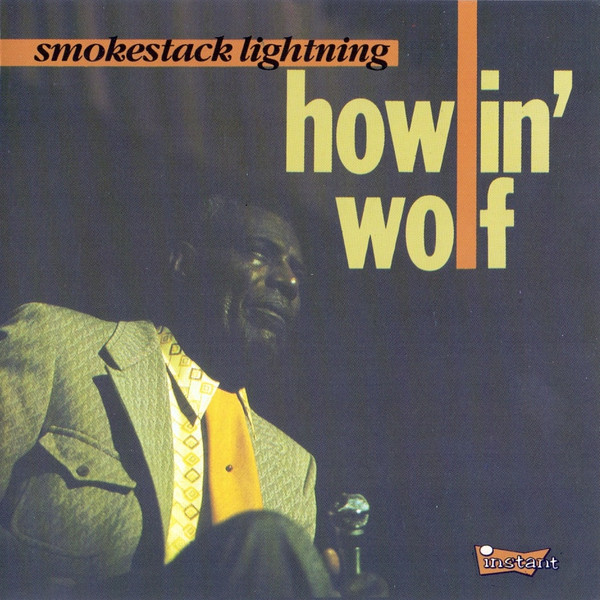
Howlin Wolf “Smokestack Lightnin’” (1956)

Inducted July 2022 as “Blues Songs”

Chester Arthur Burnett was nicknamed “Wolf” by his maternal grandmother; a title he would more than grow into with his menacing adult frame of 6’ 3” and 300 pounds and a voice which made it sound “like he subsisted on a diet of broken glass…washed down…with kerosene.” SS He first recorded “Smokestack Lightning” as “Crying at Daybreak” in 1951, but it was a song he’d performed since the early 1930s. Lightning finally struck for him when the re-recorded version hit the top 10 on the R&B charts in 1956. Read more.

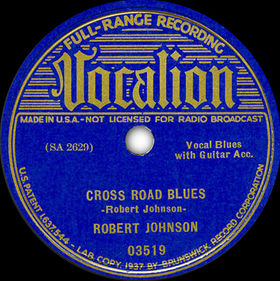
Robert Johnson “Cross Road Blues” (1936)

Inducted July 2022 as “Blues Songs”

Robert Johnson has often been called “The Father of the Blues.” His most important song may well be “Cross Road Blues,” not just because it became a staple for Eric Clapton but it promotes one of the greatest legends in rock and roll. According to the legend, Johnson acquired masterful guitar playing skills overnight, supposedly because he went to the crossroads (an intersection of rural roads) and sold his soul to the Devil. However, Johnson “sings nary a word about devil-dealing” BH in “Cross Road Blues;” rather he is trying unsuccessfully to hitch a ride at the crossroads. Read more.

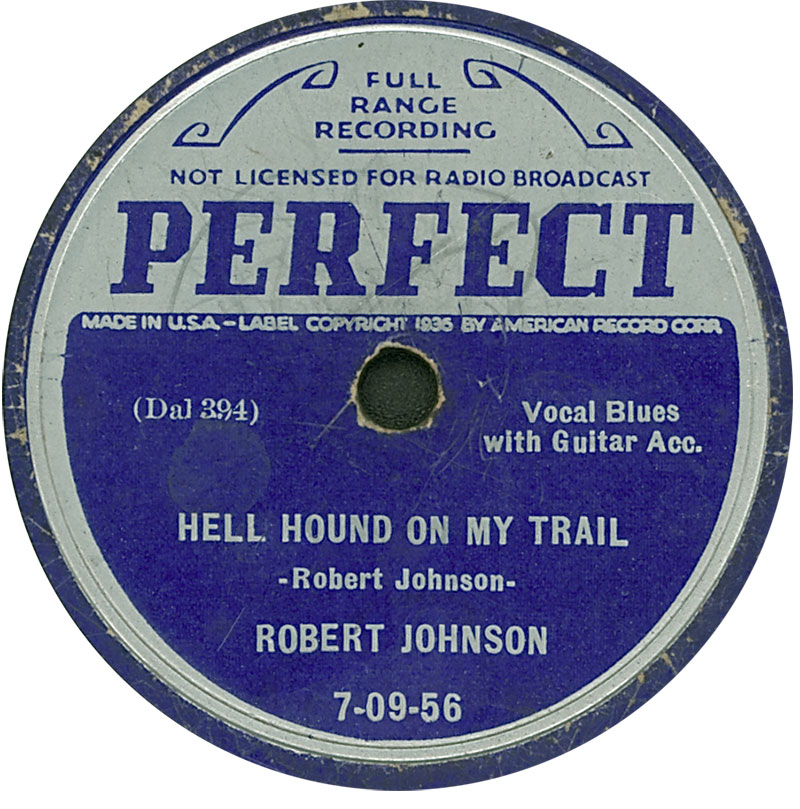
Robert Johnson “Hell Hound on My Trail” (1937)

Inducted July 2022 as “Blues Songs”

Blues historian Ted Gioia said “Hell Hound on My Trail” might be Johnson’s greatest work. WK This is a showcase for “a disturbing vision of a blues poet haunted by spirits, doomed to die before he would ever see the fruits of an alleged deal with the devil.” BH Johnson proved to be “a master synthesizer, pulling together bits and pieces of existing material and infusing them with something entirely his own.” SS Read more.

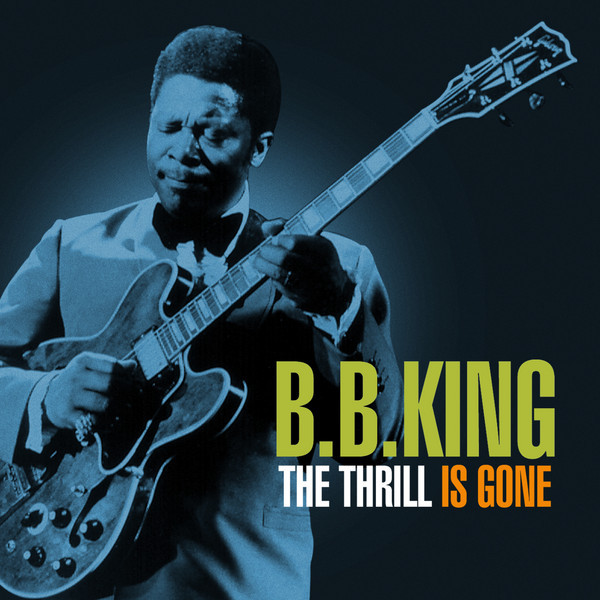
B.B. King “The Thrill Is Gone” (1969)

Inducted July 2022 as “Blues Songs”

Legendary blues singer and guitarist B.B. King reached the R&B charts 76 times from 1951 to 1992, including four chart-toppers early in his career. While he had a half dozen more successful R&B chart entries than “The Thrill Is Gone” it was his biggest hit on the Billboard Hot 10. The song is a cover of a 1951 slow, blues ballad by Roy Hawkins but in King’s hands it became “a modern blues epic.” SS Rock critic Dave Marsh speculated that it might be “the last great blues record.” DM Read more.

Clarence “Pine Top” Smith “Pine Top’s Boogie Woogie” (1929)

Inducted July 2022 as “Blues Songs”

This “rhythmical, driving piano tune” SS is credited “with laying the foundation for the boogie woogie craze.” BH The form is marked by “a bass melody…repeated over and over while the upper voice melody and chord structure change above it.” TY2 Clarence “Pine Top” Smith started playing “Pine Top’s Boogie Woogie” at rent-parties in the black ghettos of Chicago. TY2 He took the term “boogie woogie” from his background in dance. SS Read more.

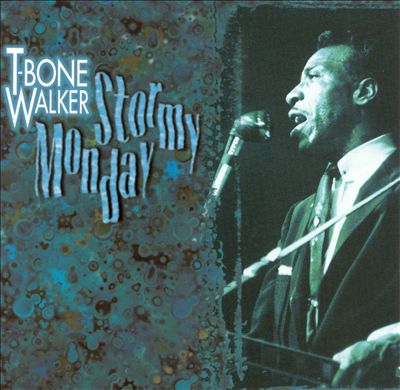
T-Bone Walker “Call It Stormy Monday” (1947)

Inducted July 2022 as “Blues Songs”

Aaron Thibeaux “T-Bone” Walker is often called “the father of electric blues.” SS He “deeply influenced virtually every guitarist during the decade following World War II” SS with his blend of blues and jazz guitar. UP It was “Call It Stormy Monday” “that made him a legend.” SS It is “one of the most influential records not only in blues history, but in guitar history.” BH “It became a song that virtually every blues band had to know; in fact, it was also required learning for countless jazz, soul, pop, and rock performers who may have had no other blues songs in their entire repertoires.” BH Read more.

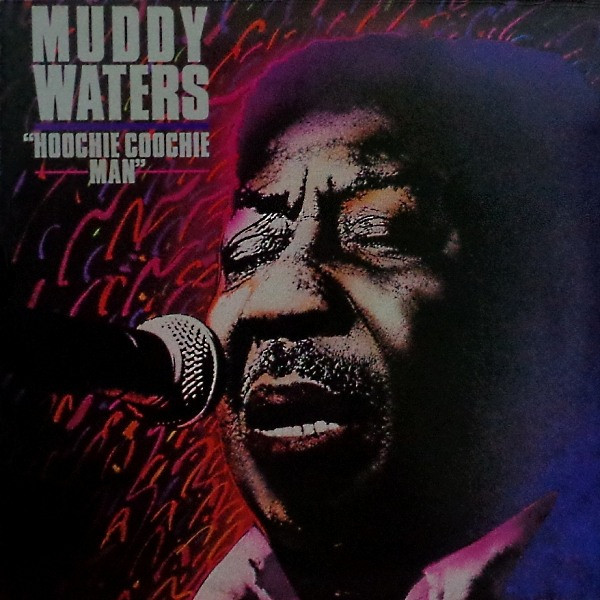
Muddy Waters “Hoochie Coochie Man” (1954)

Inducted July 2022 as “Blues Songs”

Music historian Steve Sullivan called Muddy Waters “the mighty rock upon which the foundation of postwar Chicago blues was constructed” SS and “Hoochie Coochie Man” was his “defining song.” SS It was the first of many Willie Dixon songs recorded by Waters. It was the biggest hit of Waters’ career, reaching #3 on the R&B chart, but “its influence on rock music in general is incalculable.” LW Read more.

Bo Diddley “I’m a Man” / Muddy Waters “Mannish Boy” (1955)

Inducted July 2022 as “Blues Songs”

“I’m a Man” was the first song recorded by Bo Diddley and it became the B-side of his debut single, the eponymous “Bo Diddley” which topped the R&B chart. The song was inspired by “Hoochie Coochie Man” by Muddy Waters, who then recorded “Mannish Boy” as a remake/answer song, mocking Diddley’s younger age. “Coming from Waters, a mature adult figure with a voice that booms like God’s, virtually the same words are far more leering and imposing. Waters isn’t kidding around; he is a man and his sexual boasts and demands aren’t fantasies, they’re real.” DM Read more.

Thursday, November 27, 1986

On This Day (1936): Robert Johnson recorded “Cross Road Blues”

Cross Road Blues (aka “Crossroads”)

Robert Johnson

Writer(s): -- (see lyrics here)


Released: May 1937


First Charted: November 27, 1936


Peak: 2 DF (Click for codes to charts.)


Sales (in millions): --


Airplay/Streaming (in millions): -- radio, 30.8 video, 41.18 streaming

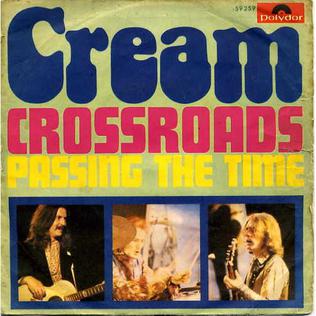
Crossroads

Cream


First Charted: January 25, 1969


Peak: 29 US, 17 CB, 17 HR, 2 CL, 13 CN, 45 AU, 2 DF (Click for codes to charts.)


Sales (in millions): --


Airplay/Streaming (in millions): -- radio, 13.9 video, 55.27 streaming

Awards (Robert Johnson):

Click on award for more details.


Awards (Cream):

About the Song:

Robert Johnson has often been called “The Father of the Blues,” which sort of makes him “The Grandfather of Rock and Roll.” This may be Johnson’s most celebrated work. It “is the sound most people mean today when they say ‘Delta blues.’” EW-156 The song has become legendary because of its connection to Southern folklore about meeting the devil at the crossroads (an intersection of rural roads) and trading one’s soul for musical genius. The myth says Johnson acquired masterful guitar playing skills overnight because he went to the crossroads and sold his soul to the devil.

In reality, Johnson set out touring all through the Delta for a year and when he returned home, his playing wowed audiences, contributing to the idea that he could only have acquired such talent via supernatural means. The story of Johnson selling his soul didn’t emerge until 1966 when Pete Welding wrote an article in Down Beat Music quoting blues man Son House saying “Johnson, in his months away from home, had ‘sold his soul to the devil in exchange for learning to play like that.’” SS Music critic Robert Palmer said, “some of Johnson’s satanic references were simply macho posturing.” SS

The lyrics actually contain no Satanic references, although the protagonist kneels down at the opening of the song to ask for God’s mercy and later worries that he is “sinkin’ down” as darkness approaches. WK Johnson does make references to the devil in two of his other songs. In “Hellhound on My Trail” he talks of trying to stay ahead of the demon hound pursuing him and in “Me and the Devil Blues” he sings, “Early this mornin’ when you knocked upon my door / And I said 'Hello Satan I believe it’s time to go.” WK

The legend has also developed because of another blues singer, Tommy Johnson. He wasn’t related to Robert, but claimed he made a deal with the devil. It was a good way to draw attention. Some people incorrectly attributed the story to Robert. WK

The term “crossroads” actually refers to an intersection of rural roads in the Mississippi Delta. Because cars slow down there, it is an ideal spot for hitchhikers. In Johnson’s song, he laments “being unable to catch a ride at the intersection before the sun sets.” WK Cream’s version adds the line “goin’ down to Rosedale” from Johnson’s “Traveling Riverside Blues.” This has led some to believe that the legendary crossroads are in Rosedale, Mississippi. BH

Johnson may have performed the song as early as 1932. It has become a blues standard “as well as an important piece in the repertoires of blues-inspired rock musicians.” The song shows Johnson’s “mastery of his mentor Son House’s style, particularly in his slide guitar work.” WK

Melodic precedents may include Leroy Carr and Scrapper Blackwell’s “Straight Alky Blues” (1929) and Roosevelt Sykes’ “Black River Blues” (1930). “Johnson infuses their relaxed urban approach with a more forceful rural one.” Johnson creates inconsistent verses ranging from fourteen to fifteen bars in length instead of imploring the well-defined twelve-bar blues technique. WK

The song was the third of eleven singles released during Johnson’s lifetime. They had little impact while he was alive, but after his death in 1938 at the age of 27, his songs became profoundly influential. The 1961 release of King of the Delta Blues Singers inspired notable British blues-rock acts such as Led Zeppelin and Cream, whose live recording of “Crossroads” was a top-40 hit. Rolling Stone named it the #3 greatest guitar song of all time in 2003 and one of the “500 Greatest Songs of All Time” in 2021.

Eric Clapton has developed a strong tie to the song, covering it not just Cream but also with Powerhouse and Derek & the Dominos. Clapton and Jeff Beck perform it on The Secret Policeman’s Other Ball, a compilation of live performances by various artists. It also became the name of Clapton’s 1988 box set, the Crossroads Centre he founded to help people recover from addiction, and the Crossroads Guitar Festival he created to raise money for the Centre.

Clapton said he envisioned “Crossroads” more as a rock song because it had a definitive riff and was played full-chorded with the slide. Clapton embellished it while also simplifying the guitar line and setting it to a straight eight-note or rock rhythm. WK


Resources:


Related Links:


First posted 8/24/2022; last updated 4/25/2025.