Showing posts with label Jerry Lee Lewis. Show all posts

Friday, October 27, 2023

Aural Fixation: What Is Rock and Roll?

Aural Fixation:

What Is Rock and Roll?

Aural Fixation” is a music-themed column I wrote for PopMatters.com from 2011-2013. They are no longer online there, but I have reformatted them here at the DMDB blog with additional videos, photos, and links, such as where to buy referenced albums. I have also used the title “Aural Fixation” for any essays I have written outside of PopMatters.com as well. To see the essays, check out the Dave’s Music Database Aural Fixation page. You can also purchase the essays in book format here.

Read the comments section of any Facebook post from the Rock and Roll Hall of Fame and you’ll be hammered with incessant whining about who has been overlooked for induction and, more annoyingly, who has been inducted that doesn’t belong. I challenged – politely, I might add – one of these complainers to offer his definition of rock and roll. This perfectly reasonable request worked him into a frenzy involving name-calling, trolling my Facebook page, and bashing hip-hop. You know what he didn’t do? Define rock and roll.

He isn’t alone in his hell-bent agenda to play gate keeper for admission to the rock and roll big top. His inability to explain his vetting criteria, sadly, is par for the course. The arguments are generally no more sophisticated than “rap isn’t rock and roll” or “well, you know it when you hear it.”

To be fair, the reason these self-appointed rock purists can’t offer a perfect definition is that one doesn’t exist. Rock and roll is generally defined as a genre which emerged out of the 1950s as an amalgam of R&B, country, blues, gospel, folk, and other genres. It is typically associated with a gravelly-voiced lead singer spitting out simple melodies and lyrics backed by electrically-amplified instruments such as guitar alongside a heavy beat provided by drums and bass.

However, the wheels then start falling off immediately. Let’s look at the very first class of Rock and Roll Hall of Fame inductees in 1986, which included architects of the genre such as Elvis Presley, Chuck Berry, and Buddy Holly. Would anyone argue they aren’t rock and roll? Of course not. Let’s key in on Elvis for a moment, however. He cranked out undisputed classics of the genre with songs like “Hound Dog,” “Don’t Be Cruel,” “Heartbreak Hotel,” and “Jailhouse Rock.”

Let’s analyze a few of his biggest post-‘50s songs, however. “It’s Now Or Never” was based on the Italian operatic song “O Sole Mio” from the 1890s. “Are You Lonesome Tonight” was a traditional pop ballad which originated in the 1920s. “Crying in the Chapel” was a country gospel song first recorded in 1953. These are just three songs by the undisputed King of Rock and Roll which taken individually might not fit the conventional idea of rock and roll.

How rigid are we going to be in adhering to the idea that rock is a guitar-driven genre? The first class of inductees included Jerry Lee Lewis and Little Richard whose instrument of choice was piano. Is anyone going to say “Great Balls of Fire” and “Tutti Frutti” aren’t quintessential rock songs?

Let’s analyze two other inductees that year – Jimmie Rodgers and Robert Johnson. The former has been called the Father of Country Music and the latter is a blues legend. The Hall sent an important message from the onset – rock music doesn’t exist in a vacuum. It was born – and continues to grow – out of multiple genres.

In the decades since the emergence of rock and roll, it became such a dominant force in shaping commercial music that the term “rock” became almost synonymous with the term “pop.” That means rock has absorbed pretty much every popular trend in music for roughly three quarters of a century.

So what can we conclude? Rock and roll is driven by guitar. Or not. It focuses on upbeat songs from the 1950s and later. Or not. It is a separate entity from other genres. Or not. The problem in defining any genre of music is there are no absolutes. Rock and roll, in fact, may defy boundaries more than any other genre. Part of its character since its infancy is its rebellious nature, its proclivity for not sticking to the rules. Whining and complaining about something not fitting into one’s conventional ideas is about as un-rock-and-roll as it gets.


For more essays, check out the Dave’s Music Database Aural Fixation page.

Resources and Related Links:


First posted 10/27/2023.

Wednesday, August 23, 2023

Sun Records: Top 50 Songs

Sun Records

Top 50 Songs

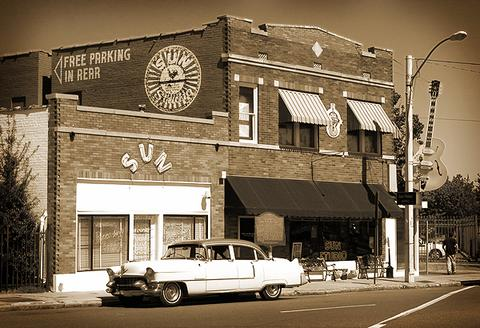
Sun Records has been called the birthplace of rock and roll. In January 1950, Sam Phillips opened Memphis Recording Service, which evolved into Sun Records in 1952. Located in Memphis, Tennessee, the studio focused on southern-rooted music like blues and country. It was the merger of these two genres which has largely been defined as the beginning of rock and roll. To that end, the studio birthed songs such as “Rocket 88” by Jackie Brenston & His Delta Cats and “That’s All Right” by Elvis Presley, which have both staked claims as the first rock and roll song.

Of course, the studio is best known as the launching pad for Elvis Presley, but it also served that purpose for B.B. King, Howlin’ Wolf, Little Junior Parker, Johnny Cash, Carl Perkins, Roy Orbison, Jerry Lee Lewis, and Charlie Rich.

Click here to see other genre-specific song lists.


Top 50 Songs


Dave’s Music Database lists are determined by song’s appearances on best-of lists, appearances on compilations and live albums by the featured act, and songs’ chart success, sales, radio airplay, streaming, and awards.

DMDB Top 1%:

1. Jerry Lee Lewis “Whole Lotta Shakin’ Goin’ On” (1957)
2. Jerry Lee Lewis “Great Balls of Fire” (1957)
3. Johnny Cash “I Walk the Line” (1956)
4. Carl Perkins “Blue Suede Shoes” (1956)
5. Elvis Presley “That’s All Right, Mama” (1954)
6. Jackie Brenston & His Delta Cats “Rocket 88” (1951)
7. Johnny Cash “Folsom Prison Blues” (1955)

DMDB Top 2%:

8. Elvis Presley “Mystery Train” (1955)

DMDB Top 5%:

9. Bill Justis “Raunchy” (1957)
10. Jerry Lee Lewis “Breathless” (1958)

DMDB Top 10%:

11. Jerry Lee Lewis “Crazy Arms” (1956)
12. Roy Orbison “Ooby Dooby” (1956)
13. Jerry Lee Lewis “High School Confidential” (1958)
14. Elvis Presley “Blue Moon” (1954)
15. Johnny Cash “Ballad of a Teenage Queen” (1957)
16. Elvis Presley “Blue Moon of Kentucky” (1954)
17. Howlin’ Wolf “How Many More Years” (1951)

DMDB Top 20%:

18. Elvis Presley “Baby Let’s Play House” (1955)
19. Johnny Cash “Guess Things Happen That Way” (1958)
20. Johnny Cash “Get Rhythm” (1956)

21. Carl Perkins “Honey Don’t” (1956)
22. Jerry Lee Lewis “What’d I Say” (1961)
23. Carl Mann “Mona Lisa” (1959)
24. Carl Perkins “Matchbox” (1957)
25. Elvis Presley “Good Rockin’ Tonight” (1954)
26. Rufus Thomas “Bear Cat” (1953)
27. Billy Riley & His Little Green Men “Flyin’ Saucers Rock & Roll” (1957)
28. Elvis Presley “I’m Left, You’re Right, She’s Gone” (1955)
29. Charlie Rich “Lonely Weekends” (1960)
30. Johnny Cash “Cry! Cry! Cry!” (1955)

31. Carl Perkins “Dixie Fried” (1956)

Beyond the DMDB Top 20%:

32. Johnny Cash “The Ways of a Woman in Love” (1958)
33. Little Junior Parker’s Blue Flames “Mystery Train” (1953)
34. Johnny Cash “There You Go” (1956)
35. Billy Riley & His Little Green Men “Red Hot” (1957)
36. Elvis Presley “I Don’t Care if the Sun Don’t Shine” (1954)
37. Little Junior Parker’s Blue Flames “Feelin’ Good” (1953)
38. Howlin’ Wolf “Moanin’ at Midnight” (1951)
39. Elvis Presley “I Forgot to Remember to Forget” (1955)
40. Johnny Cash “Give My Love to Rose” (1957)

41. Jerry Lee Lewis “You Win Again” (1957)
42. Carl Perkins “Boppin’ the Blues” (1956)
43. Elvis Presley “You’re a Heartbreaker” (1954)
44. Johnny Cash & the Tennessee Two “Big River” (1957)
45. Elvis Presley “Milkcow Blues Boogie” (1954)
46. Johnny Cash “Hey Porter” (1955)
47. Charlie Rich “Who Will the Next Fool Be” (1961)
48. Warren Smith “Red Cadillac and a Black Moustache” (1957)
49. Johnny Cash “Home of the Blues” (1957)
50. Little Junior Parker’s Blue Flames “Love My Baby” (1953)


Resources and Related Links:


First posted 8/21/2023; last updated 8/23/2023.

Thursday, November 3, 2022

Jerry Lee Lewis: Top 50 Songs

Jerry Lee Lewis

Top 50 Songs

Singer, songwriter, and pianist Jerry Leee Lewis was born on September 29, 1935, in Ferriday, Louisiana. He was considered a pionner of rock and roll with his aggressive piano-playing style and two classics (“Great Balls of Fire,” “Whole Lotta Shakin’ Goin’ On”) of early rock and roll. His career on the pop charts stalled in 1958 after it was revealed he’d married Myra Gale Brown, his first cousin, once-removed, when she was 13 years old. He continued to be a presence on the country charts, where he landed 65 chart entries from 1957 to 1989, six of which went to #1. He died on October 28, 2022 at 87 years old.

For a complete list of this act’s DMDB honors, check out the DMDB Music Maker Encyclopedia entry.

Click here to see other acts’ best-of lists.

Awards:


Top 50 Songs


Dave’s Music Database lists are determined by song’s appearances on best-of lists, appearances on compilations and live albums by the featured act, and songs’ chart success, sales, radio airplay, streaming, and awards. Songs which hit #1 on various charts are noted. (Click for codes to singles charts.)

DMDB Top 1%:

1. Great Balls of Fire (1957) #1 CW, 1 UK
2. Whole Lotta Shakin’ Goin’ On (1957) #1 CW, RB

DMDB Top 10%:

3. Breathless (1958)

DMDB Top 20%:

4. High School Confidential (1958)
5. Chantilly Lace (1972) #1 CW

Beyond the DMDB Top 20%:

6. What’d I Say (1961)
7. Another Place, Another Time (1968)
8. I’ll Make It All Up to You (1958)
9. What’s Made Milwaukee Famous Has Made a Loser Out of Me (1968)
10. Would You Take Another Chance on Me (1971) #1 CW

11. Sweet Little Sixteen (1962)
12. I’ll Sail My Ship Alone (1958)
13. Break-Up (1958)
14. There Must Be More to Love Than This (1970) #1 CW
15. To Make Love Sweeter for You (1968) #1 CW
16. I’m on Fire (1964)
17. Crazy Arms (1956)
18. She Even Woke Me Up to Say Goodbye (1969)
19. Drinking Wine Spo-dee O’dee (1973)
20. Lovin’ Up a Storm (1959)

21. Fools Like Me (1958)
22. Middle Age Crazy (1977)
23. Me and Bobby McGee (1971)
24. High Heel Sneakers (1964)
25. You Win Again (1957)
26. Baby Baby Bye Bye (1960)
27. Good Golly Miss Molly (1963)
28. She Still Comes Around to Love What’s Left of Me (1968)
29. Rockin’ My Life Away (1979)
30. Once More with Feeling (1970)

31. One Has My Name, the Other Has My Heart (1969)
32. Touching Home (1971)
33. I Can’t Seem to Say Goodbye (1970)
34. Boogie Woogie Country Man (1975)
35. Who Will the Next Fool Be (1979)
36. No Headstone on My Grave (1973)
37. Save the Last Dance for Me (1961)
38. Lewis Boogie (1958)
39. Cold, Cold Heart (1961)
40. When He Walks on You Like You Have Walked on Me (1971)

41. One Minute Past Eternity (1969)
42. Invitation to Your Party (1969)
43. Pen and Paper (1963)
44. 39 and Holding (1981)
45. Turn on Your Love Light (1972)
46. I Can Still Hear the Music in the Restroom (1975)
47. Sometimes a Memory Ain’t Enough (1973)
48. He Can’t Fill My Shoes (1974)
49. Let’s Put It Back Together (1976)
50. Come on In (1978)


Resources and Related Links:


First posted 11/3/2022.

Sunday, October 23, 2022

The Birth of Rock and Roll: The Top 100 Songs

Rock ‘n’ Roll’s Origins:

Top 100 Songs

The initial intent behind this list was to pinpoint a few key candidates in the birth of rock and roll. As one can see by the multiple resources at the bottom of this page (which includes an entire box set and book devoted to the topic), there is no definitive agreement. In addition, efforts to create a list of candidates for first rock song so regularly crossed over with lists of early rock and roll songs that this became an amalgamation of the two. In other words, this evolved from not just a look at the birth of rock and roll but a glimpse of its “toddler years,” if you will, as well. That leaves it up to you, the reader, to form your own opinions aout which songs are the most important in the early development of rock and roll.

Click here to see other genre-specific song lists.

  1. Bill Haley & the Comets “We’re Gonna Rock Around the Clock” (1954)
  2. Jackie Brenston & His Delta Cats “Rocket 88” (1951)
  3. Chuck Berry “Johnny B. Goode” (1958)
  4. Little Richard “Tutti Frutti” (1955)
  5. Elvis Presley “That’s All Right, Mama” (1954)
  6. Jerry Lee Lewis “Whole Lotta Shakin’ Goin’ On” (1957)
  7. Wynonie Harris “Good Rockin’ Tonight” (1948)
  8. Carl Perkins “Blue Suede Shoes” (1956)
  9. Elvis Presley “Hound Dog” (1956)
  10. Big Joe Turner “Shake, Rattle, and Roll” (1954)

  11. Little Richard “Good Golly Miss Molly” (1958)
  12. Buddy Holly & the Crickets “That’ll Be the Day” (1957)
  13. Ritchie Valens “La Bamba” (1958)
  14. Buddy Holly & the Crickets “Peggy Sue” (1957)
  15. Frankie Lymon & The Teenagers “Why Do Fools Fall in Love?” (1956)
  16. Jerry Lee Lewis “Great Balls of Fire” (1957)
  17. Chuck Berry “Maybellene” (1955)
  18. Fats Domino “The Fat Man” (1950)
  19. The Penguins “Earth Angel (Will You Be Mine)” (1954)
  20. Elvis Presley “Heartbreak Hotel” (1956)

  21. The Chords “Sh-Boom” (1954)
  22. The Everly Brothers “Wake Up Little Susie” (1957)
  23. Elvis Presley “Jailhouse Rock” (1957)
  24. Fats Domino “Blueberry Hill” (1956)
  25. Bo Diddley “Bo Diddley” (1955)
  26. Eddie Cochran “Summertime Blues” (1958)
  27. Lloyd Price “Lawdy Miss Clawdy” (1952)
  28. Chuck Berry “Rock and Roll Music” (1957)
  29. Fats Domino “Ain’t That a Shame” (1955)
  30. Danny & the Juniors “At the Hop” (1957)

  31. The Crows “Gee” (1954)
  32. Willie Mae “Big Mama” Thornton “Hound Dog” (1953)
  33. Johnny Cash “I Walk the Line” (1956)
  34. Trixie Smith “My Man Rocks with Me One Steady Roll” (1922)
  35. Jimmy Preston & His Prestonians “Rock the Joint” (1949)
  36. Elvis Presley “All Shook Up“ (1957)
  37. The Everly Brothers “Bye Bye Love” (1957)
  38. The Dominoes “Sixty Minute Man” (1951)
  39. The Platters “Only You (And You Alone)” (1955)
  40. Little Richard “Long Tall Sally” (1956)

  41. The Platters “The Great Pretender” (1955)
  42. The Big Bopper “Chantilly Lace” (1958)
  43. Dion & the Belmonts “A Teenager in Love” (1959)
  44. Arthur Crudup “That’s All Right, Mama” (1946)
  45. Elvis Presley “Don’t Be Cruel” (1956)
  46. Chuck Berry “Roll Over Beethoven” (1956)
  47. Sam Cooke “You Send Me” (1957)
  48. The Dell-Vikings “Come Go with Me” (1957)
  49. The Everly Brothers “All I Have to Do Is Dream” (1958)
  50. The Champs “Tequila” (1958)

  51. Louis Jordan “Saturday Night Fish Fry” (1949)
  52. Ray Charles “What’d I Say” (1959)
  53. Wild Bill Moore “We’re Gonna Rock, We’re Gonna Roll” (1947)
  54. The Flamingos “I Only Have Eyes for You” (1959)
  55. Freddie Slack & Ella Mae Morse “The House of Blue Lights” (1946)
  56. The Coasters “Yakety Yak” (1958)
  57. Gene Vincent & His Blue Caps “Be-Bop-A-Lula” (1956)
  58. Little Richard “Lucille” (1957)
  59. The Five Satins “In the Still of the Nite (I’ll Remember)” (1956)
  60. The Diamonds “Little Darlin’” (1957)

  61. Bobby Darin “Mack the Knife” (1959)
  62. John Lee Hooker “Boogie Chillen’” (1949)
  63. Hank Williams “Your Cheatin’ Heart” (1953)
  64. Les Paul & Mary Ford “How High the Moon” (1951)
  65. Bill Haley & His Saddlemen “Crazy Man Crazy” (1953)
  66. The Isley Brothers “Shout (Parts 1 and 2)” (1959)
  67. Ella Fitzgerald “Rock It for Me” (1938)
  68. Hank Williams “Move It on Over” (1947)
  69. Arthur Smith & His Cracker Jacks “Guitar Boogie” (1948)
  70. Chuck Berry “Sweet Little Sixteen” (1958)

  71. Joe Liggins & His Honeydrippers “The Honeydripper” (1945)
  72. Chuck Berry “School Days” (1957)
  73. Ray Charles “I Gotta Woman” (1955)
  74. Hank Ballard & the Midnighters “Work with Me, Annie” (1954)
  75. Del Shannon “Runaway” (1961)
  76. Johnny Cash “Folsom Prison Blues’ (1955)
  77. Huey “Piano” Smith & His Clowns “Rockin' Pneumonia and the Boogie-Woogie Flu” (1957)
  78. The Platters “Smoke Gets in Your Eyes” (1958)
  79. Roy Brown “Good Rockin’ Tonight” (1948)
  80. The Boswell Sisters “Rock and Roll” (1934)

  81. Stick MgGhee “Drinking Wine Spo-Dee-O-Dee” (1949)
  82. The Drifters “Money Honey” (1953)
  83. Tampa Red & Georgia Tom “It’s Tight Like That” (1928)
  84. Elvis Presley “Blue Suede Shoes” (1956)
  85. James Brown “Please, Please, Please” (1956)
  86. Bobby Day “Rockin’ Robin” (1958)
  87. Buddy Holly & the Cickets “Rave On” (1958)
  88. Lloyd Price “Stagger Lee” (1958)
  89. Shirley & Lee “Let the Good Times Roll” (1956)
  90. The Marcels “Blue Moon” (1961)

  91. The Clovers “Love Potion No. 9” (1959)
  92. The Monotones “Book of Love” (1958)
  93. Bobby Freeman “Do You Want to Dance?” (1958)
  94. Bobby Darin “Splish Splash” (1958)
  95. Phil Phillips & the Twilights “Sea of Love” (1959)
  96. Ruth Brown “Mama, He Treats Your Daughter Mean” (1953)
  97. Eddie Cochran “C’mon Everybody” (1958)
  98. Ritchie Valens “Donna” (1958)
  99. Conway Twitty “It’s Only Make Believe” (1958)
  100. Fats Domino “I’m Walkin’” (1957)

Resources/Related Links:


First posted 4/13/2020; last updated 10/23/2022.

Monday, October 26, 2020

Top 100 Songs from 1950-1959

First posted 5/3/2011; last updated 10/26/2020.

Top 100 Songs of the Decade:

1950-1959

These are the top 100 songs from the 1950s according to Dave’s Music Database. Rankings are figured by combining sales figures, chart data, radio airplay, video airplay, streaming figures, awards, and appearances on best-of lists.

Check out other “songs of the decade” lists here.

1. “We’re Gonna Rock Around the Clock” Bill Haley & His Comets (1954)
2. “Mack the Knife” Bobby Darin (1959)
3. “Don’t Be Cruel” Elvis Presley (1956)
4. “Heartbreak Hotel” Elvis Presley (1956)
5. “Hound Dog” Elvis Presley (1956)
6. “Jailhouse Rock” Elvis Presley (1957)
7. “Johnny B. Goode” Chuck Berry (1958)
8. “Tennessee Waltz” Patti Page (1950)
9. “All Shook Up” Elvis Presley (1957)
10. “What’d I Say” Ray Charles (1959)

11. “All I Have to Do Is Dream” The Everly Brothers (1958)
12. “That’ll Be the Day” Buddy Holly & the Crickets (1957)
13. “How High the Moon” Les Paul & Mary Ford (1951)
14. “Goodnight Irene” The Weavers with Gordon Jenkins’ Orchestra (1950)
15. “I Only Have Eyes for You” The Flamingos (1959)
16. “Great Balls of Fire” Jerry Lee Lewis (1957)
17. “Blue Suede Shoes” Carl Perkins (1956)
18. “Whole Lotta Shakin’ Goin’ On” Jerry Lee Lewis (1957)
19. “You Belong to Me” Jo Stafford (1952)
20. “Earth Angel (Will You Be Mine)” The Penguins (1954)

21. “Love Me Tender” Elvis Presley (1956)
22. “Mona Lisa” Nat “King” Cole (1950)
23. “Tutti Frutti” Little Richard (1955)
24. “Sixteen Tons” Tennessee Ernie Ford (1955)
25. “At the Hop” Danny & the Juniors (1957)
26. “Why Do Fools Fall in Love?” Frankie Lymon & the Teenagers (1956)
27. “Blueberry Hill” Fats Domino (1956)
28. “You Send Me” Sam Cooke (1957)
29. “La Bamba” Ritchie Valens (1958)
30. “Peggy Sue” Buddy Holly & the Crickets (1957)

31. “The Battle of New Orleans” Johnny Horton (1959)
32. “The Great Pretender” The Platters (1955)
33. “I Walk the Line” Johnny Cash (1956)
34. “Diana” Paul Anka (1957)
35. “Wake Up Little Susie” The Everly Brothers (1957)
36. “Volare (Nel Blu Dipinto Di Blue)” Domenico Modugno (1958)
37. “Maybellene” Chuck Berry (1955)
38. “Tom Dooley” The Kingston Trio (1958)
39. “In the Still of the Nite” The Five Satins (1956)
40. “The Little Drummer Boy” Harry Simeone Chorale (1958)

41. “Cry” Johnnie Ray & the Four Lads (1951)
42. “Only You (And You Alone)” The Platters (1955)
43. “Bye Bye Love” The Everly Brothers (1957)
44. “Tequila” The Champs (1958)
45. “Singing the Blues” Guy Mitchell (1956)
46. “Let Me Be Your Teddy Bear” Elvis Presley (1957)
47. “Vaya Con Dios (May God Be with You)” Les Paul & Mary Ford (1953)
48. “Summertime Blues” Eddie Cochran (1958)
49. “The Yellow Rose of Texas” Mitch Miller Chorus (1955)
50. “That’s All Right, Mama” Elvis Presley (1954)

51. “Secret Love” Doris Day (1954)
52. “Smoke Gets in Your Eyes” The Platters (1958)
53. “It’s All in the Game” Tommy Edwards (1951)
54. “The Third Man Theme” Anton Karas (1950)
55. Sh-Boom” The Chords (1954)
56. “Shout (Parts 1 and 2)” The Isley Brothers (1959)
57. “Mr. Sandman” The Chordettes (1954)
58. “April in Paris” Count Basie (1955)
59. “Where Is Your Heart (Song from ‘Moulin Rouge’)” Percy Faith with Felicia Sanders (1953)
60. “Love Letters in the Sand” Pat Boone (1957)

61. “Shake, Rattle and Roll” Big Joe Turner (1954)
62. “Be-Bop-A-Lula” Gene Vincent & His Blue Caps (1958)
63. “Ain’t That a Shame” Fats Domino (1955)
64. “Your Cheatin’ Heart” Hank Williams (1953)
65. “Bewitched, Bothered and Bewildered” Bill Snyder (1950)
66. “Long Tall Sally” Little Richard (1956)
67. “Sincerely” The McGuire Sisters (1954)
68. “Too Young” Nat “King” Cole (1951)
69. “Bo Diddley” Bo Diddley (1955)
70. “Little Things Mean a Lot” Kitty Kallen (1954)

71. “Because of You” Tony Bennett (1951)
72. “Cherry Pink and Apple Blossom White” Perez “Prez” Prado (1955)
73. “Kansas City” Wibert Harrison (1959)
74. “El Paso” Marty Robbins (1959)
75. “Crying in the Chapel” The Orioles (1953)
76. “Que Sera Sera (Whatever Will Be, Will Be)” Doris Day (1956)
77. “Love Is a Many-Splendored Thing” The Four Aces (1955)
78. “Auf Wiederseh’n Sweetheart” Vera Lynn (1952)
79. “I Saw Mommy Kissing Santa Claus” Jimmy Boyd (1952)
80. “He’ll Have to Go” Jim Reeves (1959)

81. “Wheel of Fortune” Kay Starr (1952)
82. “Take Five” Dave Brubeck (1959)
83. “Autumn Leaves” Roger Williams (1955)
84. “The Ballad of Davy Crocket” Bill Hayes (1955)
85. “Tenderly” Rosemary Clooney (1952)
86. “The Doggie in the Window” Patti Page (1953)
87. “Young Love” Sonny James (1956)
88. “Cold, Cold Heart” Hank Williams (1951)
89. “Donna” Ritchie Valens (1958)
90. “The Chipmunk Song (Christmas Don’t Be Late)” The Chipmunks (1958)

91. “Come Go with Me” The Dell-Vikings (1957)
92. “Hey There” Rosemary Clooney (1954)
93. “Chattanoogie Shoe Shine Boy” Red Foley (1950)
94. “Good Golly Miss Molly” Little Richard (1958)
95. “Roll Over Beethoven” Chuck Berry (1956)
96. “Wanted” Perry Como (1954)
97. “Rocket 88” Jackie Brenston & His Delta Cats (1951)
98. “My Prayer (Avant de Mourir)” The Platters (1956)
99. “Venus” Frankie Avalon (1959)
100. “Who’s Sorry Now?” Connie Francis (1958)

Friday, January 3, 2020

Today in Music (1950): Sun Records opened

January 3, 1950

Sun Records opened.

Sam Phillips opened the Memphis Recording Service in Memphis, Tennessee, on January 3, 1950. The building served as the headquarters for the failed Phillips Records and his later Sun Records label. He used the studio to record amateurs such as B.B. King, Howlin’ Wolf, and Junior Parker and then sold their performances to larger record labels. During its 16-year run, Sun produced 226 singles and more rock and roll records than any of its contemporary record labels. WK One of the most significant songs to come out of Sun was “Rocket 88” by Jackie Brenston & His Delta Cats. The song was released by Chess in 1951 and has been called the first rock and roll record by some historians.

Phillips was interested primarily in the blues, an art form which he thought both white and black people understood. As he said, it was how people “relieved the burden of what existed day in and day out.” WK In addition to the blues artists mentioned above, Bobby “Blue” Bland, Little Milton, and Rufus Thomas recorded there.

Part of the company’s appeal, however, was its broad range of genres. Sun has become most associated with launching the careers of more rockabilly-oriented artists like Johnny Cash, Jerry Lee Lewis, Carl Perkins, and Roy Orbison. Of course, the label benefited most from its discovery of Elvis Presley. When Sun was experiencing financial trouble in 1955, Phillips famously sold Elvis’ contract to RCA Records. The sale helped boost some of the other artists, most notably the distribution for Carl Perkins’ “Blue Suede Shoes”, the first national hit for Sun Records.

In 1959, Phillips Recording opened to replace the old facility. Phillips sold the label in 1969. Gary Hardy reopened the original building in 1987 as Sun Studio and attracted artists such as U2, Def Leppard, Ringo Starr, and Bonnie Raitt. In 2003, the building was recognized as a National Historic Landmark.


Resources:


First posted 1/3/2012; updated 12/30/2023.

Sunday, July 14, 2013

People’s Rock ‘n’ Roll Hall of Fame

People’s Rock ‘n’ Roll Hall of Fame:

2010-2013

There have been 20 induction classes (induction class noted in number in parentheses) since the People’s Rock ‘n’ Roll Hall of Fame was founded in 2010 by Ted Cogswell. It is really just his pet project and not an official organization. The blog is now defunct.

The concept was to announce a ballot of eligible performers once a month to align with the eligibility period of the Rock and Roll Hall of Fame. Consequently, those up for consideration on the first ballot had to be eligible for the Rock Hall in 1986 (meaning they had to have a record at least 25 years old at that time). The second ballot was for the 1987 eligibility year and so on. The general public was then allowed to vote on the nominees and those who received more than 50% of the popular vote were inducted.

See other Hall of Fames.


A


B


C


D


E-F


G


H


I-J


K


L


M


N-O-P


Q-R


S


T


U-V


W-X


Y-Z


Resources/Related Links:


First posted 7/14/2013; last updated 7/12/2025.

Thursday, May 31, 2012

Rock 'n' Roll Is Dead? Again?

Originally published in my "Aural Fixation" column on PopMatters.com on May 31, 2012. See original post here.

Dave Grohl and Jack Black, image from fooarchive.com


Actor Jack Black recently joined a long line of prognosticators shaking the death rattle for rock 'n' roll. However, Foo Fighter Dave Grohl says, "There will always be rock 'n' roll." If saltine crackers are any way of judging, I'm with Grohl on this.
In the past week I've had Jack White’s new Blunderbuss album on repeat, much to my 6YO's dismay. He groans when I belt out the line, "I eat sixteen saltine crackers / Then I lick my fingers."; I'll take my son's reaction to be a commentary on my cringe-worthy warbling instead of an assessment of one of today's leading rockers.

If prognosticators are to be believed, my offspring's generation will never experience rock music because the genre has departed to that great musical graveyard in the sky. Of course, rock 'n' roll has survived multiple death sentences practically since birth, making cats' nine lives look like nothing. As far back as 1956, the Maddox Brothers & Rose reshaped Ray Charles’ “I Gotta Woman” into a song rechristened “The Death of Rock and Roll”.

Musing about rock’s demise has become a clichéd and surefire method for sucking readers into publications ironically dependent on the genre’s survival. I would think the bite-the-hand-that-feeds-them approach would backfire, but it must work, because I continuously cross paths with variations of the “Rock and Roll Is Dead” headline.

The latest terminal-illness pronouncement comes from Jack Black, half of the jokey-rock duo Tenacious D and an actor known for rock ‘n’ roll-roles in movies like High Fidelity and School of Rock. Black is pushed to explain the title of the D’s new song, “Rock Is Dead” in a Rolling Stone interview (“Off the Cuff: Jack Black on ‘Bernie,’ Tenacious D and the Death of Rock”, 3 May 2012). He argues no one today has the capacity to rouse audiences like the Beatles. He contends Nirvana was the last band to come close. He concedes there are still worthwhile rockers today – including the Jack White and the Foo Fighters, fronted by none other than ex-Nirvana drummer Dave Grohl. He just doesn’t believe any of today’s bands can capture the hearts of a generation.

Since Black references Nirvana and the Foos, Grohl’s opinion on the matter seems particularly pertinent. In an interview with Billboard magazine (“Dave Grohl Q&A: Why Rock Will Never Die…”, 10 January 2012), he jokes that an article surfaces annually asking, “Is Rock Dead?” He responds “There’s always gonna be rock ‘n’ roll bands, there’s always gonna be kids that love rock ‘n’ roll records, and there will always be rock ‘n’ roll.”

Dave Grohl, image from PopMatters.com

I’m with Grohl. Black’s comments can be viewed as tongue-in-cheek, but they reveal a common belief that rock is dead because there are no bands now like there used to be. In a Musicthinktank.com article (“How Technology Killed Rock and Roll”, 17 January 2011), Corey Crossfield asserts that in the heyday of the Beatles and the Rolling Stones music had an urgency it now lacks.

Well, duh. Rock ‘n’ roll grew up. That baby who was born in the ‘50s is now eligible for AARP. Elvis was hailed as The King of Rock ‘n’ Roll because he was the first to ascend to the throne. The Beatles were at the forefront of the British Invasion because they led the takeover of the hearts of American teens. Girls wanted them and boys wanted to be them. These were landmark artists in the early days of rock ‘n’ roll precisely because they were spawned in the early days of rock ‘n’ roll.

The lack of modern-day superstars on par with The King or The Fab Four is actually an indicator of the genre’s continued influence. In the early days of any genre’s birth, a handful of names become the standard bearers. As the genre becomes more widespread, it is more difficult to stand out in the pack.

Audiences are now so saturated with avenues for discovering music that no genres or musicians can have the same level of impact as those long-ago glory days. Despite the larger-than-life personas of pop divas like Katy Perry, Rihanna, and Lady Gaga, they lack the cultural impact of the stars who launched rock.

Today’s focus on pop giants is often cited as evidence for why rock is on life support. Eric Been notes the absence of rock on the charts in The Atlantic (“10 Years After the White Stripes ‘Saved’ It, Rock Is Again in Crisis”, 5 July 2011). He points to Train’s “Hey, Soul Sister” as the only rock song in the top ten of Billboard’s Hot 100 songs of 2010. That didn’t impress The Village Voice, who deemed it the worst song of the year and “the whitest song to ever have the word ‘soul’ in it.”

An article in The Guardian (“RIP rock’n’ roll? Professor of pop reads the last rites”, 10 January 2011) professed a similar fate overseas that year. Only three rock tracks appeared in the top 100 best-selling hits in the UK. DJ Paul Gambaccini – who the article dubbed “the professor of pop” – stated, “It is the end of the rock era…That doesn’t mean there will be no more good rock musicians, but rock as a prevailing style is part of music history.”

Rock may no longer be a prevailing style or rule the roost on the charts, but that doesn’t justify reading last rites. In fact, if one wants to rely on hard numbers, look no further than the same article’s acknowledgement that rock was responsible for more than 1 out of 4 album sales during that same time frame.

Similar numbers surface when looking at top touring acts. In Billboard’s 2011 year-end issue (“2011 – The Year in Music: 25 Top Tours”), U2, Bon Jovi, and Roger Waters take the #1, #2, and #4 slots respectively. With the Eagles, Journey, and Iron Maiden also on the list, roughly a quarter of the list are rock acts.

image from glits.mx

However, even if the numbers are cast aside, it is difficult to argue that rock will never rule again just because it isn’t leading the pack right now. Black pointed to Nirvana as the kings of the hill 20 years ago. The Atlantic article pointed to the White Stripes as the saviors of rock and roll a decade ago. Who’s to say the next rock revolution isn’t right around the corner? 

In the Guardian article, NME associate editor Paul Stokes says, “Music is a cyclical business… We’ve been told rock was dead before, in the late 80s, late 90s, but it came back.”

Grohl voiced a similar sentiment in his Billboard interview. He sees today’s musical climate as similar to when Nirvana exploded in 1991. The late ‘80s was dominated by over-produced, formulaic pop and then a “bunch of bands with dirty kids got on MTV and rock ‘n’ roll became huge again.”

Amusingly, within all these articles’ death sentences, no one actually defines rock and roll. History-of-rock.com describes it as “a form of popular music that evolved in the ‘50s from rhythm and blues, characterized by the use of electric guitars, a strong rhythm with an accent on the offbeat, and youth-oriented lyrics.”

However, much like the English language always has exceptions to the rule, so does rock ‘n’ roll. One can’t even get past forefathers like Jerry Lee Lewis, Little Richard, and Fats Domino before admitting some of the greats made their names tickling the ivories instead of shredding on a six-string.

image from louisianamusicfactory.com

The Rock and Roll Hall of Fame itself has not adopted a strict definition, a point made clear by its wide musical range of inductees. It isn’t just that, though. Their requirements for induction don’t even mention rock music. Strange but true.

This lends credence to Crossfield’s assertion that rock ‘n’ roll is more than just a musical genre. It transcends lifestyle and is practically a religion. This viewpoint frames rock more as a force which grows out of its attitude and delivery more than its style.

I subscribe to a more traditional concept, but even rock purists can’t deny how rock has crept into other genres. This lends validity to the notion that rock will never die because it will continue to weave itself into the fabric of other genre’s tapestries.

When it comes to Jack Black vs. Dave Grohl, I’ll side with the Foo man, thank you very much. When my 6YO and his peers are the dominant music-buying force in a decade or so, they may not be buying Jack White albums, but there will still be the residue of White’s saltine crackers lingering on whatever music my son consumes.


Thursday, April 19, 2012

Goodbye, Dick Clark

image from evilbeetgossip.com

“America’s oldest teenager” will not be blowing out any more candles on birthday cakes. We’ll never ring in another new year with him. The man who helmed the original American Bandstand and gave us the famous catch phrase, “It’s got a good beat and you can dance to it” was stricken down at age 82. On Tuesday night, Dick Clark underwent an outpatient procedure at St. John’s Hospital in Santa Monica, California. He suffered a heart attack afterwards and could not be resuscitated. He is survived by three children and third wife, Kari Wigton, whom he married in 1977.

Clark’s career began in 1945 in the mail room at a radio station in Utica, New York when he was still in high school. In 1952, he went to Philadelphia to work for radio station WFIL and its affiliated television station. In 1956, he became the host of Bandstand, a Philadelphia dance show targeted to teens, and took it national the next year. It was a mainstay on ABC for thirty years becoming one of the most influential television shows in history as kids rushed home after school to see it every weekday afternoon. In its infancy, rock ‘n’ roll was perceived as a passing fancy; Clark legitimized it. The show marked the network television debuts of artists like Jerry Lee Lewis, The Doors, The Jackson Five, the Talking Heads, and Prince.

The Jackson 5 “I Want You Back”

While his clean-cut image and the sanitized American Bandstand had its critics, Clark was a defender of artistic freedom and condemned censorship. At a time when it was safer and more commercially viable to turn to white performers for cover versions of popular R&B hits by black artists, Clark played the original songs.

In 1972, Clark launched a tradition with his New Year’s Eve telecast. He also created the American Music Awards and hosted shows such as The $25,000 Pyramid and TV’s Bloopers and Practical Jokes. At one time during the 1980s, he had shows on all three networks. He suffered a stroke in 2004, but continued to be an iconic presence for events such as New Year’s Rockin’ Eve despite his impaired speech.


Resources and Related Links:

Dick Clark interviews Madonna

Friday, November 23, 2007

50 years ago: “Great Balls of Fire” charted

Great Balls of Fire

Jerry Lee Lewis

Writer(s): Otis Blackwell, Jack Hammer (see lyrics here)


First Charted: November 23, 1957


Peak: 2 US, 2 CB, 2 HR, 12 CW, 3 RB, 12 UK, 1 DF (Click for codes to charts.)


Sales (in millions): 1.0 US, -- UK, 5.0 world (includes US + UK)


Airplay/Streaming (in millions): 1.0 radio, 0.51 video, 98.8 streaming

Awards:

Click on award for more details.

About the Song:

Some of rock ‘n’ roll’s earliest architects walked a fine line between their religious Southern upbringings and the shockingly sexual and aggressive style that defined early rock music. With a musical prowess birthed as much from the black honky-tonks as the Assembly of God Church, AC Lewis concocted an uncomfortable blend of music inspired by God and the devil. He got booted from Bible college AC for “playing hymns boogie-woogie style.” TB His “onstage terrorization of the piano” FR earned him the nickname “The Killer.”

Nowhere was Lewis’ musical dichotomy more on display than with “Great Balls of Fire,” a song that “transcends everything doctrinaire and theoretical.” DM This is “nerve shaking, frame rattling, brain charring – rock ‘n’ roll at its most primal.” DT Jerry Lee’s signature song was “full of Southern Baptist hellfire turned into a near-blasphemous ode to pure lust.” RS500 Lewis realized the shock in 1957 of such sexual innuendo coming from a Southern music man SF and initially refused to sing the song. RS500 He argued with Sun Records’ founder Sam Phillips that “recording the song would send him straight to hell.” SS Phillips eventually won out, thanks to the ever-flowing liquor during the session. RS500

The song came to Lewis via songwriter Otis Blackwell. He was a poor kid from Brooklyn, New York, the first black man to really tap into the Nashville sound, dominating the country and rock charts in the mid to late-‘50s. AC He wrote “Don’t Be Cruel” and “All Shook Up” for Elvis Presley. After seeing Lewis perform on TV, he sent a demo of “Great Balls of Fire” to Sun Records. Both Phillips and Lewis knew it was a hit AH worthy of following Lewis’ breathrough hit “Whole Lotta Shakin’ Goin’ On.” Regarding Blackwell’s writing partner, Jack Hammer, several accounts say his sole contribution is coming up with the title and selling it to Blackwell. LW

The song was a “refinement of the ‘Whole Lotta Shakin’’ formula but it has a few differences that give the song far more impact.” AH “Great Balls of Fire” “has a much more dynamic opening, one that sets the tone for the whole record with its stop-start exclamations” AH that are reminiscent of Carl Perkins’ “Blue Suede Shoes.”

It wouldn’t be much longer before Lewis’ career would come crashing down in flames. In May 1958, he was in the UK for a tour and the press asked who the girl was with him. It emerged that it was his thirteen-year-old cousin Myra – and his bride. The tour was cancelled and Lewis returned home in disgrace. He would revive his career years later on the country charts, but would never again reclaim the pop and rock glory he had in the 1950s.


Resources:


Related Links:


Last updated 8/23/2023.