Showing posts with label Great Balls of Fire. Show all posts

Thursday, November 3, 2022

Jerry Lee Lewis: Top 50 Songs

Jerry Lee Lewis

Top 50 Songs

Singer, songwriter, and pianist Jerry Leee Lewis was born on September 29, 1935, in Ferriday, Louisiana. He was considered a pionner of rock and roll with his aggressive piano-playing style and two classics (“Great Balls of Fire,” “Whole Lotta Shakin’ Goin’ On”) of early rock and roll. His career on the pop charts stalled in 1958 after it was revealed he’d married Myra Gale Brown, his first cousin, once-removed, when she was 13 years old. He continued to be a presence on the country charts, where he landed 65 chart entries from 1957 to 1989, six of which went to #1. He died on October 28, 2022 at 87 years old.

For a complete list of this act’s DMDB honors, check out the DMDB Music Maker Encyclopedia entry.

Click here to see other acts’ best-of lists.

Awards:


Top 50 Songs


Dave’s Music Database lists are determined by song’s appearances on best-of lists, appearances on compilations and live albums by the featured act, and songs’ chart success, sales, radio airplay, streaming, and awards. Songs which hit #1 on various charts are noted. (Click for codes to singles charts.)

DMDB Top 1%:

1. Great Balls of Fire (1957) #1 CW, 1 UK
2. Whole Lotta Shakin’ Goin’ On (1957) #1 CW, RB

DMDB Top 10%:

3. Breathless (1958)

DMDB Top 20%:

4. High School Confidential (1958)
5. Chantilly Lace (1972) #1 CW

Beyond the DMDB Top 20%:

6. What’d I Say (1961)
7. Another Place, Another Time (1968)
8. I’ll Make It All Up to You (1958)
9. What’s Made Milwaukee Famous Has Made a Loser Out of Me (1968)
10. Would You Take Another Chance on Me (1971) #1 CW

11. Sweet Little Sixteen (1962)
12. I’ll Sail My Ship Alone (1958)
13. Break-Up (1958)
14. There Must Be More to Love Than This (1970) #1 CW
15. To Make Love Sweeter for You (1968) #1 CW
16. I’m on Fire (1964)
17. Crazy Arms (1956)
18. She Even Woke Me Up to Say Goodbye (1969)
19. Drinking Wine Spo-dee O’dee (1973)
20. Lovin’ Up a Storm (1959)

21. Fools Like Me (1958)
22. Middle Age Crazy (1977)
23. Me and Bobby McGee (1971)
24. High Heel Sneakers (1964)
25. You Win Again (1957)
26. Baby Baby Bye Bye (1960)
27. Good Golly Miss Molly (1963)
28. She Still Comes Around to Love What’s Left of Me (1968)
29. Rockin’ My Life Away (1979)
30. Once More with Feeling (1970)

31. One Has My Name, the Other Has My Heart (1969)
32. Touching Home (1971)
33. I Can’t Seem to Say Goodbye (1970)
34. Boogie Woogie Country Man (1975)
35. Who Will the Next Fool Be (1979)
36. No Headstone on My Grave (1973)
37. Save the Last Dance for Me (1961)
38. Lewis Boogie (1958)
39. Cold, Cold Heart (1961)
40. When He Walks on You Like You Have Walked on Me (1971)

41. One Minute Past Eternity (1969)
42. Invitation to Your Party (1969)
43. Pen and Paper (1963)
44. 39 and Holding (1981)
45. Turn on Your Love Light (1972)
46. I Can Still Hear the Music in the Restroom (1975)
47. Sometimes a Memory Ain’t Enough (1973)
48. He Can’t Fill My Shoes (1974)
49. Let’s Put It Back Together (1976)
50. Come on In (1978)


Resources and Related Links:


First posted 11/3/2022.

Wednesday, July 22, 2020

Dave's Music Database Hall of Fame: Song Inductees (July 2020)

Originally posted 7/22/2020.

In honor of the 10th anniversary of the DMDB blog on January 22, 2019, Dave’s Music Database launched its own Hall of Fame. This is the seventh set of song inductees. These are songs from the DMDB “rock and roll origin” list, which was created by aggregating more than 35 lists of songs instrumental to the onset of rock and roll. The top 20 songs on that list have been ranked based on overall points in Dave’s Music Database and the top ten (excluding previous inductee Bill Haley & the Comets’ “We’re Gonna Rock Around the Clock”) are being inducted here.

Chuck Berry “Johnny B. Goode” (1958)

Inducted July 2020 as “Rock and Roll Origin Song”

In “Johnny B. Goode,” Chuck Berry created a character who symbolizes an Elvis Presley-type who comes from humble beginnings and whose mother promises her son that his name will be in lights someday. MA Perhaps more than any other, the rags-to-riches song “established the sound of the rock and roll guitar.” WI Regarding the guitar intro which, ironically, is nearly a note-for-note copy of the opening solo in Louis Jordan’s 1946 “Ain’t That Just Like a Woman,” WK rock historian says “You can’t copyright guitar licks and maybe that’s good, because if you could, …we’d lose not just the Beach Boys, but essential elements of the Beatles, the Rolling Stones, Bob Dylan, Bob Seger, and Bruce Springsteen.” MA Read more.

Buddy Holly & the Crickets “That’ll Be the Day” (1957)

Inducted July 2020 as “Rock and Roll Origin Song”

“That’ll Be the Day” came about as the result of a John Wayne movie. Buddy Holly and drummer Jerry Allison went to see the Western The Searchers. Whenever a character would suggest something that wasn’t likely to happen, Wayne would proclaim, “That’ll be the day.” SF One night at Jerry’s house, Buddy suggested that it would be nice if they could record a hit song, to which Jerry replied, “That’ll be the day.” SF Holly recorded a more country-oriented version of the song in 1956 before reworking it in 1957 as the version which became one of early rock and roll’s most classic tunes. Read more.

Jerry Lee Lewis “Great Balls of Fire” (1957)

Inducted July 2020 as “Rock and Roll Origin Song”

With a musical prowess birthed as much from the black honky-tonks as the Assembly of God Church, CL Lewis concocted an uncomfortable blend of music inspired by God and the devil. Nowhere was Lewis’ musical dichotomy more on display than with “Great Balls of Fire.” Jerry Lee’s signature song was “full of Southern Baptist hellfire turned into a near-blasphemous ode to pure lust.” RS500 Read more.

Jerry Lee Lewis “Whole Lotta Shakin’ Goin’ On” (1957)

Inducted July 2020 as “Rock and Roll Origin Song”

This had been recorded four times, but had yet to meet with success. RS500 When producer “Cowboy” Jack Clement captured the manic energy of Lewis’ stage presence on his recording, it became “as perfect a rock and roll record as one could hope to find.” WI The blend of “a relentless, pounding boogie rhythm” AMG with lyrics that “were rather lascivious and quite shocking coming from a singer from the Bible Belt” SF made the case “that prudes really did have something to fear from rock and roll.” MA Read more.

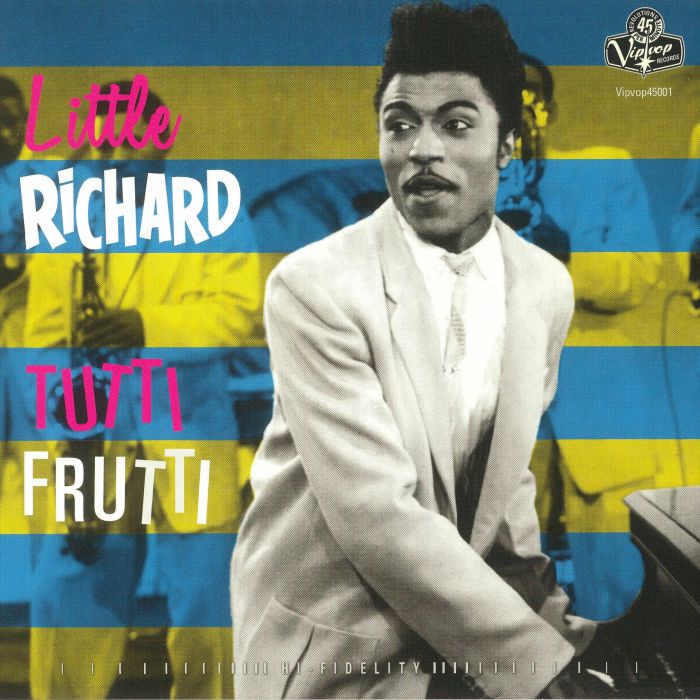
Little Richard “Tutti Frutti” (1955)

Inducted July 2020 as “Rock and Roll Origin Song”

The 22-year-old Richard Penniman, aka “Little Richard,” was looking for a breakthrough in 1955 when he went into a New Orleans recording studio to lay down his first tracks for Specialty Records. He “started extemporizing verses of ‘Tutti Frutti,’ a risque feature of his club sets.” NRR “Kids scrambled to decipher the meaning of the sounds emitted by the pompadoured piano dervish…but really, the words weren’t nearly as important as the remorselessly frenetic beat, the propulsive piano work and the primal, screaming vocal.” TM which made the song “barely eligible for radio airplay.” MA Read more.

Frankie Lymon & the Teenagers “Who Do Fools Fall in Love?” (1956)

Inducted July 2020 as “Rock and Roll Origin Song”

“Fools” has been called “the perfect combination of commercial pop and doo-wop music.” SJ At thirteen, Frankie Lymon became the youngest artist (at that time) to top the U.K. charts. SF He had a voice that had yet to succumb to puberty and the moves and personality which served as a model for future child pop stars like Michael Jackson. FR Read more.

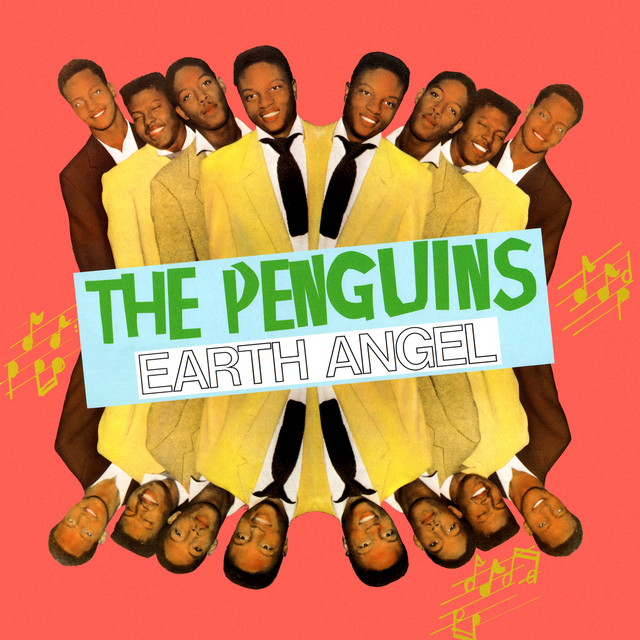
The Penguins “Earth Angel (Will You Be Mine)” (1954)

Inducted July 2020 as “Rock and Roll Origin Song”

In the 1950s, it was common practice to refashion an R&B hit as a “sanitized, big-label cover” RS500 which would be more palatable to mainstream white audiences. “Earth Angel” was no exception. The Crew-Cuts, a “schmaltzy white group” RS500 from Canada, took the song to #3 on the Billboard Hot 100 while the first version, by the Penguins, peaked at #8. Regardless of what the charts said, however, the Penguins’ version outsold the remake and outperformed it on jukeboxes. MA Billboard called this “the top R&B record of all time.” NRR Read more.

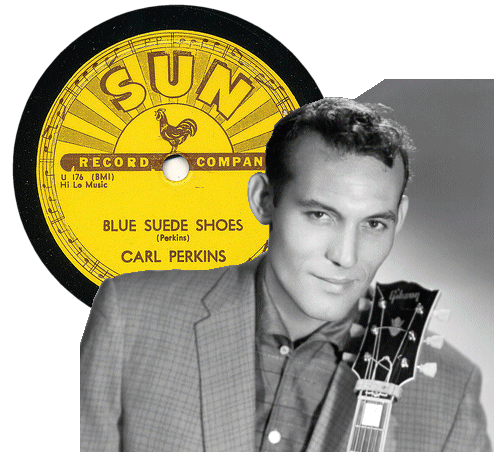
Carl Perkins “Blue Suede Shoes” (1956)

Inducted July 2020 as “Rock and Roll Origin Song”

The “most famous rockabilly record of all time” AMG owes its existence to Johnny Cash’s stint in the Air Force and a careless dancer. Cash was a Sun Records label mate with Perkins and told him the story of servicemen lining up for food or pay with freshly-polished shoes HL and warning each other, “Don’t step on my blue suede shoes.” CR A few weeks laterHL Perkins heard someone at a dance spit out a similar line CR to his date. SA Perkins supposedly scribbled down lyrics on an old potato sack after the dance. JA It became Perkins’ biggest hit and the first song to hit the pop, R&B, and country charts in the U.S. RS500 AMG Read more.

Elvis Presley “Heartbreak Hotel” (1956)

Inducted July 2020 as “Rock and Roll Origin Song”

RCA Records made a deal on November 22, 1955 that may be the best ever made in music history; for $40,000, an unprecedented amount at the time, they bought Elvis’ contract from Sun Records. BR1 “Heartbreak Hotel” was among the songs recorded at Elvis’ first RCA recording session in January 1956. BR1 RCA was looking for more rockabilly tunes in the vein of what he had recorded for Sun, but Presley delivered “this gloomy, downtempo number” RS500 which Sun Records founder Sam Phillips called “a morbid mess.” RS500 It went on to become the first number one song and first million-seller for Presley. RS500 Read more.

Elvis Presley “Hound Dog” (1956)

Inducted July 2020 as “Rock and Roll Origin Song”

During a Vegas stint in April and May 1956, Elvis Presley saw Freddie Bell and the Bellboys perform a cover of Big Mama Thornton’s “Hound Dog” and decided to work it into his own act. He performed it for a 40 million people on The Milton Berle Show on June 5, 1956. Critics mocked his controversial gyrations, calling him “Elvis the Pelvis.” However, Elvis had the last laugh. When released as the B-side of “Don’t Be Cruel,” both songs became hits and the song became his best-selling single, spending 11 weeks atop the pop chart, the longest reign of the rock era until 1992’s “End of the Road” by Boyz II Men spent 13 weeks at the pinnacle. Read more.

Friday, November 23, 2007

50 years ago: “Great Balls of Fire” charted

Great Balls of Fire

Jerry Lee Lewis

Writer(s): Otis Blackwell, Jack Hammer (see lyrics here)


First Charted: November 23, 1957


Peak: 2 US, 2 CB, 2 HR, 12 CW, 3 RB, 12 UK, 1 DF (Click for codes to charts.)


Sales (in millions): 1.0 US, -- UK, 5.0 world (includes US + UK)


Airplay/Streaming (in millions): 1.0 radio, 0.51 video, 98.8 streaming

Awards:

Click on award for more details.

About the Song:

Some of rock ‘n’ roll’s earliest architects walked a fine line between their religious Southern upbringings and the shockingly sexual and aggressive style that defined early rock music. With a musical prowess birthed as much from the black honky-tonks as the Assembly of God Church, AC Lewis concocted an uncomfortable blend of music inspired by God and the devil. He got booted from Bible college AC for “playing hymns boogie-woogie style.” TB His “onstage terrorization of the piano” FR earned him the nickname “The Killer.”

Nowhere was Lewis’ musical dichotomy more on display than with “Great Balls of Fire,” a song that “transcends everything doctrinaire and theoretical.” DM This is “nerve shaking, frame rattling, brain charring – rock ‘n’ roll at its most primal.” DT Jerry Lee’s signature song was “full of Southern Baptist hellfire turned into a near-blasphemous ode to pure lust.” RS500 Lewis realized the shock in 1957 of such sexual innuendo coming from a Southern music man SF and initially refused to sing the song. RS500 He argued with Sun Records’ founder Sam Phillips that “recording the song would send him straight to hell.” SS Phillips eventually won out, thanks to the ever-flowing liquor during the session. RS500

The song came to Lewis via songwriter Otis Blackwell. He was a poor kid from Brooklyn, New York, the first black man to really tap into the Nashville sound, dominating the country and rock charts in the mid to late-‘50s. AC He wrote “Don’t Be Cruel” and “All Shook Up” for Elvis Presley. After seeing Lewis perform on TV, he sent a demo of “Great Balls of Fire” to Sun Records. Both Phillips and Lewis knew it was a hit AH worthy of following Lewis’ breathrough hit “Whole Lotta Shakin’ Goin’ On.” Regarding Blackwell’s writing partner, Jack Hammer, several accounts say his sole contribution is coming up with the title and selling it to Blackwell. LW

The song was a “refinement of the ‘Whole Lotta Shakin’’ formula but it has a few differences that give the song far more impact.” AH “Great Balls of Fire” “has a much more dynamic opening, one that sets the tone for the whole record with its stop-start exclamations” AH that are reminiscent of Carl Perkins’ “Blue Suede Shoes.”

It wouldn’t be much longer before Lewis’ career would come crashing down in flames. In May 1958, he was in the UK for a tour and the press asked who the girl was with him. It emerged that it was his thirteen-year-old cousin Myra – and his bride. The tour was cancelled and Lewis returned home in disgrace. He would revive his career years later on the country charts, but would never again reclaim the pop and rock glory he had in the 1950s.


Resources:


Related Links:


Last updated 8/23/2023.