Showing posts with label Tutti Frutti. Show all posts

Sunday, November 6, 2022

Bob Dylan The Philosophy of Modern Song

Bob Dylan:

The Philosophy of Modern Song

Bob Dylan may well be the most celebrated songwriter of the 20th century, so his 2022 book The Philosophy of Song offers his fascinating observation of the songwriting craft. He offers essays on 66 songs covering an eighty-year span from 1924 to 2004. He delves into songs from artists as diverse as Johnny Cash, Ray Charles, Cher, the Clash, Elvis Costello, Bing Crosby, Bobby Darin, the Eagles, Judy Garland, Little Richard, Willie Nelson, Roy Orbison, the Platters, Elvis Presley, Pete Seeger, Nina Simone, Frank Sinatra, the Temptations, the Who, and Hank Williams. He explores some of the most acclaimed songwriters of all time, including Howard Arlen, Stephen Foster, Kenny Gamble, Lorenz Hart, Leon Huff, Alan Jay Lerner, Frederick Loewe, Barry Mann, Johnny Mercer, Richard Rodgers, Barrett Strong, Townes Van Zandt, Cynthia Weil, Norman Whitfield, and Jimmy Webb.

Note: the essays don’t appear to be in any kind of specific order. I have listed the songs chronologically with the recording artist first, followed by the song title, year of release, and songwriter(s) in parentheses.

Click here to see other lists from critics and individuals and here to see other lists from publications and/or organizations.

  • Uncle Dave Macon “Keep My Skillet Good and Greasy” (1924) Uncle Dave Macon
  • Harry McClintock “Jesse James” (1928) traditional
  • Charlie Poole “Old and Only in the Way (1928) Charlie Poole, Normal Woodlief
  • Bing Crosby “The Whiffenpoof Song” (1947) Meade Minngerode, George S. Pomeroy, Tod B. Galloway
  • Johnnie & Jack “Poison Love” (1950) Mrs. Elmer Laird
  • Perry Como “Without a Song” (1951) Vincent Youmans, Edward Eliscu
  • Rosemary Clooney “Come on-a My House” (1951) Ross Bagdasarian, William Saroyan
  • Tommy Edwards “It’s All in the Game” (1951) Charles G. Dawes, Carl Sigman
  • Johnnie Ray “The Little White Crowd That Cried” (1952) Johnnie Ray
  • Hank Williams “Your Cheatin’ Heart” (1953) Hank Williams
  • Webb Pierce “There Stands the Glass” (1953) Audrey Grisham, Mary Jean Schurz, Russ Hall
  • Ray Charles “I Gotta Woman” (1955) Ray Charles, Renald Richard

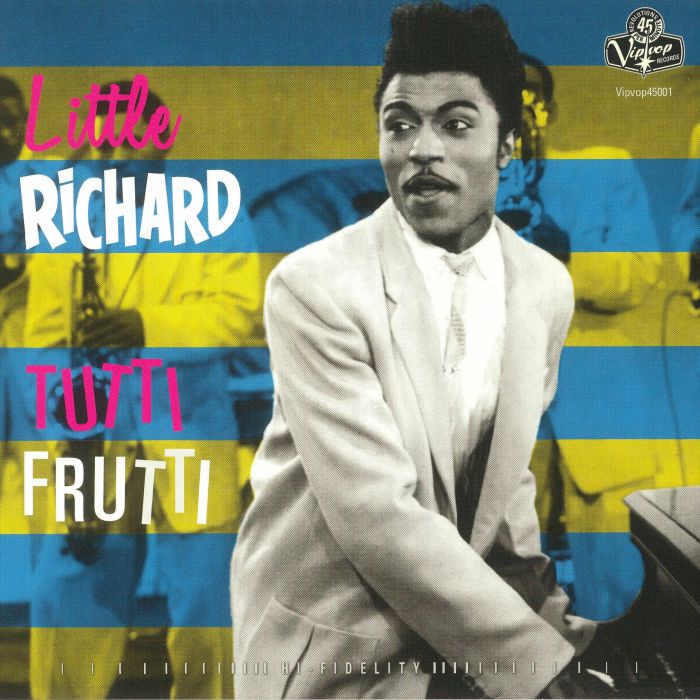
  • Little Richard “Tutti Frutti” (1955) Richard Penniman, D. LaBostroe, Joe Lubin
  • Eddy Arnold “You Don’t Know Me” (1956) Eddy Arnold, Cindy Walker
  • Vic Damone “On the Street Where You Live” (1956) Frederick Loewe, Alan Jay Lerner
  • Judy Garland “Come Rain or Come Shine” (1956) Harold Arlen, Johnny Mercer
  • Little Richard “Long Tall Sally” (1956) Robert Blackwell, Enotris Johnson, Richard Penniman
  • The Osborne Brothers “Ruby, Are You Mad?” (1956) Cynthia May Carver
  • Carl Perkins “Blue Suede Shoes” (1956) Carl Perkins

  • The Platters “My Prayer (Avant de Mourir)” (1956) Georges Boulanger, Carlos Goemz Barrera, Jimmy Kennedy
  • Elvis Presley “Money Honey” (1956) Jesse Stone
  • Jimmy Wages “Take Me from This Garden” (1956) Jimmy Wages
  • Sonny Burgess “Feel So Good” (1958) Herman Parker Jr.
  • Johnny Cash “Big River” (1958) J.R. Cash
  • Johnny Cash “Don’t Take Your Guns to Town” (1958) Johnny Cash
  • Little Walter “Key to the Highway” (1958) Big Bill Broonzy, Charles Segar
  • Domenico Modugno “Volare (Nel Blu Dipinto Di Blue)” (1958) Franco Migliacci, Domenico Modugno, Mitchell Parish
  • Ricky Nelson “Poor Little Fool” (1958) Sharon Sheeley
  • Bobby Darin “Mack the Knife” (1959) Kurt Weill, Mark Blitzstein, Berthold Brecht

  • Dion & the Belmonts “Where or When” (1959) Richard Rodgers, Lorenz Hart
  • Marty Robbins “El Paso” (1959) Marty Robbins
  • Bobby Darin “Beyond the Sea (La Mer)” (1960) Jack Lawrence, Charles Trent
  • Ernie K-Doe “A Certain Girl” (1961) Allen Toussaint
  • Jimmy Reed “Big Boss Man” (1961) Luther Dixon, Al Smith
  • Bobby Bare “Detroit City” (1963) Danny Dill, Mel Tillis
  • Roy Orbison “Blue Bayou” (1963) Roy Orbison, Joe Melson
  • The Drifters “Saturday Night at the Movies” (1964) Barry Mann, Cynthia Weil
  • Dean Martin “Blue Moon” (1964) Richard Rodgers, Lorenz Hart
  • Elvis Presley “Viva Las Vegas” (1964) Doc Pomus, Mort Shuman
  • Nina Simone “Don’t Let Me Be Misunderstood” (1964) Bennie Benjamin, Horace Ott, Sol Marcus
  • The Who “My Generation” (1965) Pete Townshend

  • Frank Sinatra “Strangers in the Night” (1966) Bert Kaempfert, Charles Singleton, Eddie Snyder
  • Glen Campbell “By the Time I Get to Phoenix” (1967) Jimmy Webb
  • The Fugs “Cia Man” (1967) Tuli Kupferberg
  • Pete Seeger “Waist Deep in the Big Muddy” (1967) Pete Seeger
  • Mose Allison “Everybody Cryin’ Mercy” (1968) Mose Allison
  • The Allman Brothers Band “Midnight Rider” (1970) Gregg Allman, Robert Kim Payne
  • The Grateful Dead “Truckin’” (1970) Jerry Garcia, Bob Weir, Phil Lesh, Robert Hunter
  • Santana “Black Magic Woman” (1970) Peter Green
  • Edwin Starr “War” (1970) Norman Whitfield, Barrett Strong
  • The Temptations “Ball of Confusion” (1970) Norman Whitfield, Barrett Strong
  • Cher “Gypsys, Tramps & Thieves” (1971) Bob Stone
  • Eagles “Witchy Woman” (1972) Don Henley, Bernie Leadon
  • Harold Melvin & the Blue Notes “If You Don’t Know Me by Now” (1972) Kenneth Gamble, Leon Huff
  • Billy Joe Shaver “Willy the Wandering Gypsy and Me” (1973) Billy Joel Shaver
  • Johnnie Taylor “Cheaper to Keep Her” (1973) Mack Rice
  • Jackson Browne “The Pretender” (1976) Jackson Browne
  • Elvis Costello & the Attractions “Pump It Up” (1978) Elvis Costello
  • Waylon Jennings “I’ve Always Been Crazy” (1978) Waylon Jennings
  • The Clash “London Calling” (1979) Joe Strummer, Mick Jones

  • Willie Nelson “On the Road Again” (1980) Willie Nelson
  • Willie Nelson & Merle Haggard “Pancho and Lefty” (1983) Townes Van Zandt
  • Johnny Paycheck “Old Violin” (1986) Johnny Paycheck
  • John Trudell “Doesn’t Hurt Anymore” (2001) John Trudell
  • Warren Zevon “Dirty Life and Times” (2003) Warren Zevon
  • Alvin Youngblood Hart “Nelly Was a Lady” (2004) Stephen Foster

Resources/Related Links:


First posted 11/1/2022; last updated 11/6/2022.

Wednesday, July 22, 2020

Dave's Music Database Hall of Fame: Song Inductees (July 2020)

Originally posted 7/22/2020.

In honor of the 10th anniversary of the DMDB blog on January 22, 2019, Dave’s Music Database launched its own Hall of Fame. This is the seventh set of song inductees. These are songs from the DMDB “rock and roll origin” list, which was created by aggregating more than 35 lists of songs instrumental to the onset of rock and roll. The top 20 songs on that list have been ranked based on overall points in Dave’s Music Database and the top ten (excluding previous inductee Bill Haley & the Comets’ “We’re Gonna Rock Around the Clock”) are being inducted here.

Chuck Berry “Johnny B. Goode” (1958)

Inducted July 2020 as “Rock and Roll Origin Song”

In “Johnny B. Goode,” Chuck Berry created a character who symbolizes an Elvis Presley-type who comes from humble beginnings and whose mother promises her son that his name will be in lights someday. MA Perhaps more than any other, the rags-to-riches song “established the sound of the rock and roll guitar.” WI Regarding the guitar intro which, ironically, is nearly a note-for-note copy of the opening solo in Louis Jordan’s 1946 “Ain’t That Just Like a Woman,” WK rock historian says “You can’t copyright guitar licks and maybe that’s good, because if you could, …we’d lose not just the Beach Boys, but essential elements of the Beatles, the Rolling Stones, Bob Dylan, Bob Seger, and Bruce Springsteen.” MA Read more.

Buddy Holly & the Crickets “That’ll Be the Day” (1957)

Inducted July 2020 as “Rock and Roll Origin Song”

“That’ll Be the Day” came about as the result of a John Wayne movie. Buddy Holly and drummer Jerry Allison went to see the Western The Searchers. Whenever a character would suggest something that wasn’t likely to happen, Wayne would proclaim, “That’ll be the day.” SF One night at Jerry’s house, Buddy suggested that it would be nice if they could record a hit song, to which Jerry replied, “That’ll be the day.” SF Holly recorded a more country-oriented version of the song in 1956 before reworking it in 1957 as the version which became one of early rock and roll’s most classic tunes. Read more.

Jerry Lee Lewis “Great Balls of Fire” (1957)

Inducted July 2020 as “Rock and Roll Origin Song”

With a musical prowess birthed as much from the black honky-tonks as the Assembly of God Church, CL Lewis concocted an uncomfortable blend of music inspired by God and the devil. Nowhere was Lewis’ musical dichotomy more on display than with “Great Balls of Fire.” Jerry Lee’s signature song was “full of Southern Baptist hellfire turned into a near-blasphemous ode to pure lust.” RS500 Read more.

Jerry Lee Lewis “Whole Lotta Shakin’ Goin’ On” (1957)

Inducted July 2020 as “Rock and Roll Origin Song”

This had been recorded four times, but had yet to meet with success. RS500 When producer “Cowboy” Jack Clement captured the manic energy of Lewis’ stage presence on his recording, it became “as perfect a rock and roll record as one could hope to find.” WI The blend of “a relentless, pounding boogie rhythm” AMG with lyrics that “were rather lascivious and quite shocking coming from a singer from the Bible Belt” SF made the case “that prudes really did have something to fear from rock and roll.” MA Read more.

Little Richard “Tutti Frutti” (1955)

Inducted July 2020 as “Rock and Roll Origin Song”

The 22-year-old Richard Penniman, aka “Little Richard,” was looking for a breakthrough in 1955 when he went into a New Orleans recording studio to lay down his first tracks for Specialty Records. He “started extemporizing verses of ‘Tutti Frutti,’ a risque feature of his club sets.” NRR “Kids scrambled to decipher the meaning of the sounds emitted by the pompadoured piano dervish…but really, the words weren’t nearly as important as the remorselessly frenetic beat, the propulsive piano work and the primal, screaming vocal.” TM which made the song “barely eligible for radio airplay.” MA Read more.

Frankie Lymon & the Teenagers “Who Do Fools Fall in Love?” (1956)

Inducted July 2020 as “Rock and Roll Origin Song”

“Fools” has been called “the perfect combination of commercial pop and doo-wop music.” SJ At thirteen, Frankie Lymon became the youngest artist (at that time) to top the U.K. charts. SF He had a voice that had yet to succumb to puberty and the moves and personality which served as a model for future child pop stars like Michael Jackson. FR Read more.

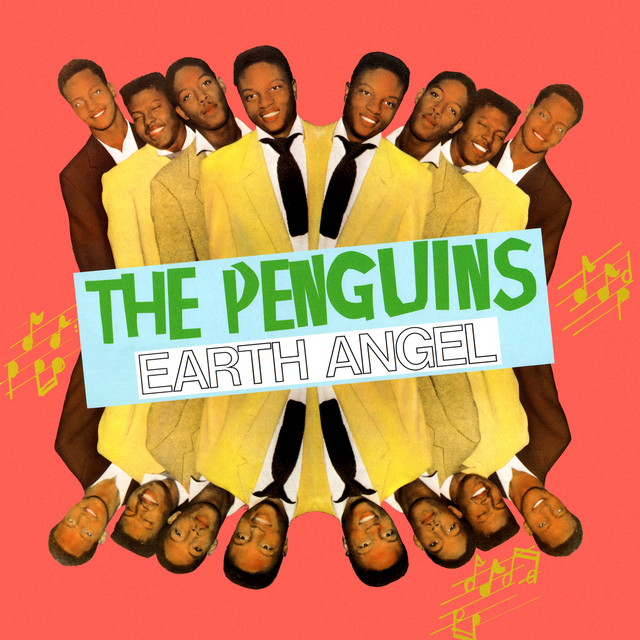
The Penguins “Earth Angel (Will You Be Mine)” (1954)

Inducted July 2020 as “Rock and Roll Origin Song”

In the 1950s, it was common practice to refashion an R&B hit as a “sanitized, big-label cover” RS500 which would be more palatable to mainstream white audiences. “Earth Angel” was no exception. The Crew-Cuts, a “schmaltzy white group” RS500 from Canada, took the song to #3 on the Billboard Hot 100 while the first version, by the Penguins, peaked at #8. Regardless of what the charts said, however, the Penguins’ version outsold the remake and outperformed it on jukeboxes. MA Billboard called this “the top R&B record of all time.” NRR Read more.

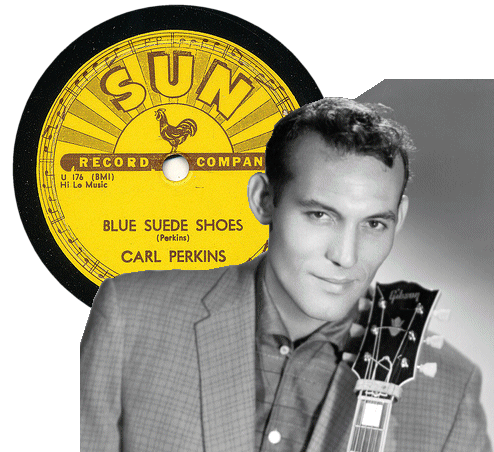
Carl Perkins “Blue Suede Shoes” (1956)

Inducted July 2020 as “Rock and Roll Origin Song”

The “most famous rockabilly record of all time” AMG owes its existence to Johnny Cash’s stint in the Air Force and a careless dancer. Cash was a Sun Records label mate with Perkins and told him the story of servicemen lining up for food or pay with freshly-polished shoes HL and warning each other, “Don’t step on my blue suede shoes.” CR A few weeks laterHL Perkins heard someone at a dance spit out a similar line CR to his date. SA Perkins supposedly scribbled down lyrics on an old potato sack after the dance. JA It became Perkins’ biggest hit and the first song to hit the pop, R&B, and country charts in the U.S. RS500 AMG Read more.

Elvis Presley “Heartbreak Hotel” (1956)

Inducted July 2020 as “Rock and Roll Origin Song”

RCA Records made a deal on November 22, 1955 that may be the best ever made in music history; for $40,000, an unprecedented amount at the time, they bought Elvis’ contract from Sun Records. BR1 “Heartbreak Hotel” was among the songs recorded at Elvis’ first RCA recording session in January 1956. BR1 RCA was looking for more rockabilly tunes in the vein of what he had recorded for Sun, but Presley delivered “this gloomy, downtempo number” RS500 which Sun Records founder Sam Phillips called “a morbid mess.” RS500 It went on to become the first number one song and first million-seller for Presley. RS500 Read more.

Elvis Presley “Hound Dog” (1956)

Inducted July 2020 as “Rock and Roll Origin Song”

During a Vegas stint in April and May 1956, Elvis Presley saw Freddie Bell and the Bellboys perform a cover of Big Mama Thornton’s “Hound Dog” and decided to work it into his own act. He performed it for a 40 million people on The Milton Berle Show on June 5, 1956. Critics mocked his controversial gyrations, calling him “Elvis the Pelvis.” However, Elvis had the last laugh. When released as the B-side of “Don’t Be Cruel,” both songs became hits and the song became his best-selling single, spending 11 weeks atop the pop chart, the longest reign of the rock era until 1992’s “End of the Road” by Boyz II Men spent 13 weeks at the pinnacle. Read more.

Saturday, November 26, 2005

50 years ago: Little Richard charted with “Tutti Frutti”

Tutti Frutti

Little Richard

Writer(s): Little Richard, Dorothy LaBostrie (see lyrics here)


Released: October 1955


First Charted: November 26, 1955


Peak: 17 US, 10 CB, 2 RB, 29 UK, 1 DF (Click for codes to charts.)


Sales (in millions): 0.5 US


Airplay/Streaming (in millions): -- radio, 31.53 video, 98.65 streaming

Awards:

Click on award for more details.

About the Song:

The 22-year-old Richard Penniman, aka “Little Richard,” was looking for a breakthrough in 1955 when he went into a New Orleans recording studio to lay down his first tracks for Specialty Records. After running through five songs without producing any gems, SS the “bizarrely pompadoured singer-pianist” TB “started extemporizing verses of ‘Tutti Frutti,’ a risque feature of his club sets” NRR that dated back to 1953. SS He said, “I’d been singing ‘Tutti-Frutti’ for years, but it never struck me as a song you’d record.” RS500

Bob Dylan said “Little Richard is the master of the double entendre.” BD He “took speaking in tongues right out of the sweat canvas tent and put it on the mainstream radio.” BD Lyrics like “Tutti frutti, loose booty/ If it don’t fit, don’t force it/ You can grease it, make it easy” were deemed too raunchy, so producer, Bumps Blackwell, tapped local songwriter Dorothy La Bostrie to clean up the lyrics. TB She gave Richard a gal named Sue (“She knows just what to do”) and another named Daisy (“She almost drive me crazy”). TM The results made the song “barely eligible for radio airplay.” DM Even then, “an inspid cover version” by “clean-cut teen crooner Pat Boone” TB was the more successful version on the Billboard pop charts, reaching #12.

“Kids scrambled to decipher the meaning of the sounds emitted by the pompadoured piano dervish…but really, the words weren’t nearly as important as the remorselessly frenetic beat, the propulsive piano work and the primal, screaming vocal.” TM Jimi Hendrix, who worked as a sideman for Richard in 1964, said, “I want to do with my guitar what Little Richard does with his voice.” TM

Little Richard “fused a unique falsetto and gospel scream that simultaneously oozed sexuality and spirituality. His performances and wardrobe were wild and outlandish. His androgynous stage persona would be reflected by Mick Jagger, David Bowie, Jimi Hendrix, and Prince. FR The man who’d grown up in the South “black, gay, and outrageous…was so far out he was in.” SA His first chart single became a “one of the handful of seminal records that created rock and roll as we know it.” SS


Resources:


Related Links:


First posted 3/6/2021; last updated 3/31/2023.