Showing posts with label PopMatters. Show all posts

Friday, June 28, 2013

Aural Fixation: Why Radio Still Matters

Aural Fixation:

Why Radio Still Matters

Aural Fixation” is a music-themed column I wrote for PopMatters.com from 2011-2013. They are no longer online there, but I have reformatted them here at the DMDB blog with additional videos, photos, and links, such as where to buy referenced albums. I have also used the title “Aural Fixation” for any essays I have written outside of PopMatters.com as well. To see the essays, check out the Dave’s Music Database Aural Fixation page.

The essays from PopMatters.com have been gathered in book form as Aural Fixation: Essays from a Music Obsessive. Essays written from 2009 to 2011 have been gathered in the book No One Needs 21 Versions of “Purple Haze”. You can purchase the essays in book format here.

My kids roused me out of bed on Father’s Day morning to come eat breakfast. I suspect my wife did all the cooking, but the handmade cards stuffed in the donut box were original work. Among my gifts was a book called The Hits Just Keep on Coming: The History of Top 40 Radio. Nary a holiday slips by without me shredding the wrapping paper from some music-related book. My family knows me well.

My history with radio began in the 1970s in my pre-teen years. Walt Bodine, a staple of Kansas City radio for more than 70 years before his death just a few months ago, did a call-in show on various topics. One night focused on left-handedness. I dialed in to share my earth-shattering talent for capably manipulating right-handed scissors despite being a Southpaw.

Before you scratch your head too much over why a kid was listening to an AM talk radio call-in show hosted by a guy more than four decades his senior, I blame my father. He faithfully listened to sports and talk radio. As a kid, I could have rattled off the entire rosters of the Royals late-‘70s and early ‘80s baseball teams. I still watch televised Chiefs football games with the sound turned down. Why? I subscribe to Dad’s philosophy of listening to the local (and biased) radio announcers instead of the national television broadcasters.

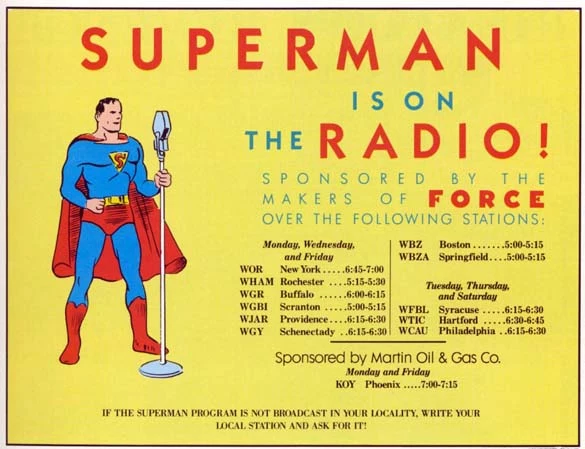
Radio was a staple of my dad’s young life in rural Georgia in the 1930s and ’40s. When my brother and I took him out for a barbeque dinner to celebrate Father’s Day, I asked him about his memories of radio. He recalled his mom listening to farm reports while he followed adventure-oriented serials like Jack Armstrong, the All-American Boy and The Adventures of Superman. At night he could pick up AM stations as far away as Chicago. Even today he follows University of Georgia football games via internet radio and webcasts.
While Walt Bodine made for my earliest radio memory, my focus shifted away from the talk, sports, weather, and news of AM radio. Before I made it to high school, I was a devotee of Q-104, the local top 40 FM station. My listening habits moved to my bedroom instead of the family’s living room. Now I could privately listen to whatever I wanted whenever I wanted.

In an era when radio is regularly proclaimed deceased, Terry O’Reilly of CBC argues that it is the ultimate survivor (cbc.ca, “Radio Is Dead. Long Live Radio.” 26 January 2013). It was the first-ever broadcast medium, launched in the United States in the 1920s. It has survived through competition from motion pictures, television, VCRs, and the Internet. Even as it now faces threats from streaming and satellite radio, traditional terrestrial radio offers what those other mediums can’t – an intimate experience listening to music spun by a local DJ.

As blogger Mark Edwards says, “Local matters. While customers may enjoy…creating custom music channels on Pandora, that doesn’t mean they’ve lost interest in what’s happening next door, down the street, and in the heart of where they live” (Markontheweb.blogspot.com, “Is Local Radio Dead? In Some Ways It Is, But Owners Don’t Know It Yet”, 7 November 2011).

Brett Moss, the gear & technology editor at Radio World, discusses how “stations where the content changes every day…can’t be replicated by a Pandora” (rwonline.com, “The Inside Debate: Is Radio Dead?”, 18 April 2011).

While his comments refer more to talk, sports, and news formats, they have relevancy for music-related stations as well. Even as stations are gobbled up by conglomerates like Cumulus and Clear Channel, their real flavor comes from local personalities. Companies like Pandora and I Heart Radio bank on the notion that people only listen to radio for the music. Another voice in the Radio World article notes that such thinking ignores what happens between songs. While streaming and satellite radio allow a listener to tailor song choices, they can’t deliver the local angle. The DJ on a music station serves as the ultimate party host, promoting and appearing at the hot upcoming events.

More than thirty years after my first radio appearance, I got another invite to the party. Last summer Slacker, the morning DJ at KCFX 101 The Fox, interviewed me (hear it here!) about my book, The Top 100 Songs of the Rock Era. I’d be hard-pressed to find a station more local. It is walking distance from my house.

Click to play my interview with Slacker at 101 The Fox

I enjoyed the off-air chatter more than the interview. We discussed the state of radio and how it has changed over the years. He confessed to being less than enthused at playing Led Zeppelin’s “Stairway to Heaven” and Lynyrd Skynyrd’s “Free Bird” ad infinitum, but acknowledged the importance in giving listeners what they want.

How successful radio meets listeners’ needs is ultimately what will determine its fate. However, before people are too hasty to declare radio’s demise, it should be noted that a Hollywood Reporter article from last August (“CBS Radio Chief Exec: Sorry, Radio Is Far From Dead”, 23 August 2013) cited that over 92% of the U.S. population still regularly listens to broadcast radio. Ryan Matthew Pierson reported at lockergnome.com that in 2011 radio listenership had increased by 2% in the UK (“Is Local Radio Dead?”, 3 November 2011).

The key is to use modern technology to enhance listeners’ interactive experience with traditional radio. Edwards reported that 60% of Pandora’s traffic comes from mobile devices. Local radio must recognize that its survival depends on providing customers access via iPods and iPads as well as the AM and FM dials. That also means enhancing a radio station’s social media presence, both for the overall brand and the individual personalities.

While it sounds contradictory, the idea is that a fan should be able to access the local station from anywhere in the world. That means a Kansas Citian uprooted from his native Georgia half a century ago better still be able listen to radio broadcasts of the Bulldogs college football games. It means that a Walt Bodine fan in Tokyo better have had a chance to hear the beloved radio personality’s final broadcast on KCUR last April.

The local radio station can form a lifelong bond with its listener. After Slacker interviewed me, I joked about how my nine-year-old son had begged me to bring him. “You should have!” Slacker responded.

A week later, I loaded my sons in the car one morning under the pretense that we were going out for breakfast. When we pulled into the radio station parking lot, their eyes lit up. Once inside, Slacker showed them the studio and then did something I hadn’t expected – he put my boys on the air. Levi shared that he would be seven in a week and Slacker jokingly asked if he was married and had kids. Evan got to talk about how he was going to the Olympics at summer’s end and then gave a shout out to his friends. Who knows, Slacker. Maybe forty years from now one of my sons will write an article where he references the time he was on the local radio station and talked to one of the city’s most cherished DJ’s. Top that, Pandora.

Click to play my kids' interview with Slacker


Resources and Related Links:


First posted 6/28/2013; updated 10/28/2023.

Friday, April 26, 2013

The Death Knell Sounds Again: The History of Music Industry Whining

Originally published in my "Aural Fixation" column on PopMatters.com on April 25, 2013. See original post here.

image from tumblr.com


If the Chicken Little music industry pundits are to be believed, the sky is falling. A business which makes billions of dollars a year can’t stop whining about how illegal downloading, streaming, and Internet radio are sending them to the poor house. There’s one problem with their complaints – we’ve been hearing them since the beginning of recorded music history more than a century ago.
I blame Thomas Edison. Thanks to his indefatigable curiosity and perpetual instinct to invent, he steered the world into the dawn of a new age: recorded music history. In 1877, he laid down a recitation of “Mary Had a Little Lamb”, and shortly thereafter, we fell down the rabbit hole.

If it weren’t for his voice-recording phonograph, we might not presently be enduring the horrible curse of being able to listen to any music we want anytime, anywhere, and any way we choose. Damn you, Mr. Edison! Look what fury you hath wrought!

Edison ruined the music industry – or at least how the form in which it was known 136 years ago. Before the invention of sound recording, the music business was built on sheet music sales. Once Edison let the cat out of the bag, the big bucks moved to recording music, away from sheet music distribution.

image from heykiki.com

Stuart Banner wrote a piece for Bloomberg.com (“The First Time Tech Ruined the Music Business”, 14 December 2012) stating:

“The music business was in turmoil at the turn of the century. Technological innovation had made songs much easier to copy, and established artists foresaw their sales plummeting. The companies that had once dominated the industry were rapidly losing ground to upstarts who produced new devices for playing music. The established companies urged Congress to tighten up the law to prohibit copying, while the innovators argued that any such change would only harm consumers.”

Here’s the kicker. While this sounds like a modern assessment of the music industry, it actually describes the state of the business in 1900. Record execs haven’t stopped griping since.

So let’s take a look at the current reasons why a multi-billion-dollar industry would have the public belief the whole system is falling apart – and when these supposedly new problems first surfaced.


The music industry can’t survive with competing formats or delivery systems.

We’ve heard for more than a decade how the compact disc is suffering a slow death at the hands of the MP3. Clearly this is a late-20th/early-21st century development, right? Uh, no. Try 19th century.

Edison's phonograph, image from wikipedia.org

Within roughly a decade of Edison’s invention of the phonograph, Emile Berliner thrust his alternative, the gramophone, upon the world in 1888. It relied on a disc instead of a cylinder, thus introducing the first “my format’s better than your format” battle.

Thankfully, the dilemma never reared its ugly head again – except for the introduction of piano rolls (1896), 78 RPM records (1906), 33 1/3 RPM records (1928), the LP (1948), the 7” single (1951), the cassette (1964), the 8-track (1966), the compact disc (1978), MTV (1981), the MP3 (1990), streaming (1995), Napster (1999), Pandora (2000), iTunes (2003), YouTube (2005), and Spotify (2008). If some of these dates sound earlier than you expected, well, let that be a lesson to you. These formats did not storm the industry and decimate them overnight.  (Source: PBS.org (““Chronology: Technology and the Music Industry”, 24 May 2004).

image from rateyourmusic.com


The industry can’t compete with free, or nearly free distribution of music.

Record companies have lobbed their legal heft at Internet radio and streaming services like Pandora and Spotify in the claim that such services are ruining the recording industry. However, radio first “threatened” the music business over 80 years ago.

image from thesociety.org.au

The ‘20s saw the mass-production of commercial radio. Record companies were so terrified of the new medium that they signed their major artists to contracts forbidding them from doing radio work. As we all know, once every household in America had a radio, recorded music went away forever.

image from sheltonstella.files.wordpress.com

Oh, wait. It didn’t. As has happened dozens of times, the music industry adapted – even if it had to get over its initially panicked reaction, first – and transformed radio into a means to promote music sales.

As for the effect of modern-day services like Pandora and Spotify, Hugo Vanessen notes in a Storify.com article (“The Effect of Spotify and Pandora on the Music Industry”, March 2013) that the International Federation of the Phonographic Industry (IFPI) said sales actually saw a slight rise in 2012 after 14 years of decline. The article suggests the industry may owe the turn of fortune to Spotify and Pandora. Spotify founder Daniel Ek is quoted in the article as saying, “Old media are always afraid of new media… because when a new media appears on the scene you have to change in order to keep up.” In other words, if the industry would stop panicking and embrace progress, it would be much better off.


No one will buy music if they can listen and share for free.

This brings us to the dumbest move in the music business in recent memory. After Napster hit in 1999, peer-to-peer file sharing exploded. Convinced illegal downloading would bring the industry to its knees, record companies screamed bloody murder and got the Recording Industry Association of America (RIAA) to take on the image-shattering move of suing everyday music fans. After all, if your customer is fleeing from your company, the best way to woo them back is to chase them down with a legal machete and mercilessly (and publicly) flog them, right?

image from news.cnet.com

As far back as the 1890s, the invention of the jukebox meant no one needed to buy music for their home ever again. At the height of its popularity in the ‘50s, the jukebox was a staple at diners and drive-ins. Teens could hang out with friends at the local burger joint and wait for someone else to drop a dime to listen to the latest rock ‘n’ roll chartbuster. Ah, that fateful day when the record companies announced they were closing up shop for good because no one was buying music, anymore.

Oh wait. That didn’t happen? Well, at least not until blank cassettes threatened to destroy the sale of the beloved LP. The record honchos got the 1909 Copyright Statute amended in 1971 so that those horrible teens who swapped albums with friends could be chased down with legal machetes and mercilessly (and publicly) flogged. Wait – is anyone else experiencing déjà vu?

image from theocmd.com

Don’t shed too many tears for those poor record execs. In the ‘80s, they pulled off a major coup: a percentage of the profits from the sale of every blank tape. Once again, they managed to weather the storm.


The availability of individual songs will kill the album.

In 1948, the 12” disc, better known as the LP, was introduced. Within three years, a 7” format – the single – hit the market. The funeral procession for the death of the music industry began immediately.

image from microcosmologist.com

Yeah, yeah. I think you see the pattern by now. The reality was that both formats stuck around for decades and gave customers choices. Of course, with billions of potential bucks to be made, the record company fat cats considered customer choice a negative factor on their bottom lines and set out to destroy the single.

In the ‘80s, blockbuster albums like Michael Jackson’s Thriller, Bruce Springsteen’s Born in the U.S.A., and Prince’s Purple Rain generated hit after hit and sent fans to record stores in droves. By the ‘90s, record company execs made a concentrated effort to squash the single, often creating massive radio hits (No Doubt’s “Don’t Speak”, Goo Goo Dolls’ “Iris”) which weren’t available as commercially available singles. Fans had no choice but to buy the more expensive album.

The CD Era: Death of the Single,
image from blogs.houstonpress.com

Think of it like this. If you go to the grocery store to buy potatoes, they are available individually or by the bag. In the digital age, the return of customer choice – and the ability to buy one song at a time – sent the music biz into a tizzy because it can no longer sell you a sack of potatoes when you only want one. Let the violins play.

* * *

I won’t deny that record companies have taken a hit in the 21st century. However, for all their finger-pointing, they may be pointing at the wrong culprits. In an ABC.net article (“The real reason why the music industry collapsed”, 25 May 2012), Nick Ross graphs the number of albums sold per person from 1973 to 2009. There’s an obvious spike in the ‘90s to more than five album purchases per person. The number peaked in 1994, so when Napster launched five years later, the numbers were already in decline. Numbers dipped back to pre-‘90s levels of two to four album purchases per person. The record industry didn’t so much tank as return to normalcy. 

Matthew Lasar acknowledges in an arstechnica.com article (“Did file-sharing cause recording industry collapse? Economists say no”, 23 March 2011) that global recorded music sales had dropped to about $15 billion in 2010 after being just shy of $27 billion in 2000. However, he argues, these numbers coincide with a global economic downturn in the ‘00s.

image from arstechnica.net

A graph at Ultimate-Guitar.com (“Why Music Industry Observations Suck”, 1 November 2011) looks at US sales dating back to 1999 up to projected sales for 2014. It suggests that since 2009, sales have practically leveled off to just shy of $6 billion a year.

Wake up, music industry folks. Technology and consumers are constantly evolving. Instead of fighting to derail technological advances in the music industry you are certain will destroy your livelihood. Figure out how to embrace change. Or don’t. It doesn’t matter. Music, and the way it is delivered and heard, will change whether you like it or not. If you want to blame anyone, though, I say it’s that evil Thomas Edison’s fault.

Thomas Edison with - an iPopd?,
image from farm4.staticflickr.com


Monday, March 18, 2013

Anatomy of a Viral Smash: Bauuer's "Harlem Shake"

Originally published in my "Aural Fixation" column on PopMatters.com on March 18, 2013. See original post here.

image from popmatters.com


So are you ready to gouge out your eyes and slice off your ears if forced to endure one more version of “Harlem Shake”? With 700 million views and counting, someone’s paying attention. The question is: What made it into such a viral smash?

“I love these videos. They’re great.”

“What are they doing?”

“My side is hurting.”

“What? What, what, what?”

“This is horrifying.”

“I think they’re all yucky.”

“It was very weird. It was awkward.”

“I just don’t understand.”

These are a few of the responses captured in the Fine Brothers’ Kids React online series in which the under-18 set is asked for opinions on “Harlem Shake” (10 March 2013).

Anyone who has escaped seeing a dozen or so clips of the song either a) has no connection to the Internet or b) no interaction whatsoever with other human beings. In a viral explosion unheard of since, well, the days of Psy’s “Gangnam Style” mere months ago, the song has become the go-to favorite for office drones needing a 30-second reprieve from cubicle life.

In fact, the workplace is a popular setting for fans to create their silly but simple clips to accompany the irrepressible earworm. For those just returning from long, tech-free sabbaticals, the premise of the homemade videos is that onlookers ignore a sole dancer, generally wardrobed in a helmet or mask, for about 15 seconds before joining in after a jump cut with their own crazy gyrations and costumes.

Exactly how did this sensation start and why did it get so big? According to The Daily Beast’s Marlow Stern, amateur comedian Filthy Frank uploaded the first version to YouTube on February 2 (“Meet Baauer, the Man Behind the Harlem Shake”, 18 February 2013). The satirical blogger, known for performing video skits decked out in a pink body suit, created a clip of himself grooving wildly to the song with three cohorts.

Filthy Frank version

It was quickly replicated by five Australian teens who called themselves Sunny Coast Skate. They created the template of one person dancing while the others ignored him, only to jump into the fray after the beat drops. Kevin Allocca, YouTube’s trend manager, reported that in just over a week about 12,000 “Harlem Shake” videos were posted (“The Harlem Shake Has Exploded”, 12 February 2013). Since then, more than 700 million people around the world have seen one of the 100,000 versions of the song (The Independent, “A brief history of the Harlem Shake”, 3 March 2013).

Sunny Coast Skate version

Among the most popular are renditions from The Simpsons, Jon Stewart, Jimmy Fallon, Playboy Playmates, the Norwegian Army, the University of Georgia swim team, and the Today show. Check out some of them here.  YouTube itself joined in the fun showing its logo dancing before the entire page busts a move (click here, and watch what happens to your screen). 

The explosion has been fueled by Billboard’s recent change in chart methodology. The immediate effect of the magazine’s decision to factor in YouTube plays alongside radio airplay, digital sales, and streaming was the song debuting at #1 on the Hot 100 chart (“Baauer’s ‘Harlem Shake’ Debuts Atop Revamped Hot 100”, 20 February 2013). Of course, the song’s digital sales were shaping up just fine by then as well – “Harlem Shake” was shown the love on Valentine’s Day when it nabbed the top slot on iTunes (TheVerge.com, “How the Harlem Shake went from viral sideshow to global phenomenon”, 18 February 2013). As of the March 23rd issue, the song had held on to the top spot on Billboard for four weeks.

The man behind the song is Harry Bauer Rodrigues. He was born in West Philadelphia, but his dad’s financial consultant job took him to Germany, London, and Connecticut before he went to New York for college. The now-23-year-old DJ/producer got signed last year to PR agency Biz3 who released the song as a free download in June (Billboard, “Movers and Shakers”, 2 March 2013).

Baauer's full version

Success hasn’t come without controversy. The New York Times’ James C. McKinley Jr. reported that “Harlem Shake” features unlicensed samples, including the famous “Do the Harlem Shake” admonition taken from rap group Plastic Little’s 2001 song “Miller Time” and the opening line “Con los terroristas” from Hector “El Father” Delgado’s 2006 single “Maldades.” Both are seeking compensation from Bauuer’s label, Mad Decent Records (“Surprise Hit Was a Shock for Artists Heard on It”, 10 March 2013).

A street interview with Harlem residents elicited strong responses that the dance associated with the song is not the Harlem Shake (“Harlem Reacts to ‘Harlem Shake’ Videos”, 18 February 2013).

Deadspin’s Emma Carmichael said the original dance “is really not much more than a little side-to-side shoulder shimmy” (TheBlaze.com, “If You’ve Been Hearing About the ‘Harlem Shake’ Video Craze, Here’s How It May Have All Started”, 14 February 2013). Here are instructions for the dance:

The New York Times reported that the dance originated in the ‘80s. Albert Leopold Boyce, aka Al B., performed it during streetball games in New York’s Rucker Park. The dance, which is much rawer and fluid than what is showcased in the videos, became known as the Harlem Shake when local teenagers started mimicking it. Specifically, the four-man dance crew Crazy Boyz, who used to hang out at Rucker Park and watch Al B., have been widely credited with taking the dance to the mainstream in the ‘90s (“It’s a Worldwide Dance Craze, but It’s Not the Real Harlem Shake”, 28 February 2013). In a documentary by Kien Quan, he goes so far as to call them the Original Harlem Shakers (26 February 2013).

How did “Harlem Shake” become so huge? In the Kids React series, kids said the videos were funny, easy to make, and made people want to be part of a new thing. StartUpNation.com’s Zeke Camusio says viral hits engage audiences, entertain or educate them, create memorable experiences, and are short and focused (“What Makes Videos Viral”, 2009).

Allocca did a TED talk identifying three reasons a video becomes a viral hit (“Why videos go viral,” November 2011). It takes off when a tastemaker, such as a talk show host or well-known blogger, picks it up. Next, the community participates by passing the video along or putting their own twist on it. Finally, video hits have unexpectedness – something which is unique and gets attention.

In dissecting why Psy’s “Gangnam Style” became the most-watched video in YouTube history with over a billion views, Chicago Tribune’s pop culture columnist Jae-Ha Kim said there was a kind of “freak-show mentality, where people are like, ‘This guy is funny’” (TheBlaze.com, “What the Heck Is This ‘Gangnam Style’ Video Craze You’re Hearing About? We Explain”, 19 September 2012).

In consolidating these criteria, several key elements emerge which explain the immense success of the “Harlem Shake” meme:

  1. The videos are funny and have a bit of freak-show element to them.
  2. They have a surprise element. Even though viewers know there will be an eruption of group dancing at the 15-second mark, they don’t know what to expect in the way of the crowd’s choice of costumes.
  3. Because the videos are short, they can be quickly viewed and passed on to others.
  4. When it starts to take hold with the general public, media stars will latch on to it as well, reporting about it and even mimicking it.
  5. Because of the ease in making the videos, the community actively participates by flooding the market with even more versions.
  6. In the end, whether people are making their own videos, passing them on to others, or just watching them endlessly on their own, they become part of the viral community.

Love Bauuer or hate him for inflicting “Harlem Shake” on the world, he has made a permanent stamp on pop culture. Of course, even if he’d been given this handy-dandy list prior to his song’s dominance, he couldn’t have manufactured such success. There’s an inexplicable X-factor behind unleashing a phenomenon. As one of the pre-teens in the Kids React video said, “I just don’t understand.” That’s okay. No matter how much science and analysis is applied to this phenomenon, I don’t understand, either.

Monday, February 18, 2013

Why the Grammys Matter

Originally published in my "Aural Fixation" column on PopMatters.com on February 18, 2013. See original post here.


So your favorites didn’t win, huh? Get over it. Bashing the Grammys is too easy. Try recognizing them as markers of what is happening in the music industry, not on your iPod.
The day after the 2012 Grammys, an NPR article debating the award ceremony’s merits found its way onto my Facebook feed (“Question of the Week: Be Honest – Do You Care About the Grammys?”, 11 February 2013). As Jacob Ganz notes, “cataloging the Grammys’ flubs has become easy sport,” yet he answers his question with “a surprising yes.”

Wait – what? How could any self-respecting journalist part with the widely-held belief that “the Grannys” are out of touch and irrelevant? Didn’t this guy get his Music Journalism 101 handbook? It clearly spells out what anyone writing about music is supposed to hate: pop music made for and by teens and tweens, the Rock and Roll Hall of Fame, bands that sell out and, most of all, the Grammys.

After all, this is the organization which made such notorious flubs as giving a Best New Artist trophy to Milli Vanilli and deciding to break in its hard rock category by bypassing Metallica in favor of Jethro Tull. The judges thought it made more sense to give Song of the Year to Roger Williams’ “Little Green Apples” than The Beatles’ “Hey Jude”. Heck, this is the organization which gave Tony Bennett’s 1994 MTV Unplugged the lofty Album of the Year prize.

Indeed, there are some embarrassing chapters in the Grammy history book. However, more often than not, the Grammys get it right. Well, maybe not 100 percent right, but more right than wrong. Let’s look at just the last decade’s Album of the Year winners (parentheses indicate year it won, not year of release):

  • Mumford & Sons Babel (2013)
  • Adele 21 (2012)
  • Arcade Fire The Suburbs (2011)
  • Taylor Swift Fearless (2010)
  • Robert Plant and Allison KraussRaising Sand (2009)
  • Herbie Hancock River: The Joni Letters (2008)
  • Dixie Chicks Taking the Long Way (2007)
  • U2 How to Dismantle an Atomic Bomb (2006)
  • Ray Charles Genius Loves Company (2005)
  • OutKast Speakerboxxx/The Love Below (2004)

The most popular criticism of the Grammys is that it leans toward safe, middle-of-the-road picks. Most of these albums can be spun at a dinner party without riling the guests. Even OutKast, arguably the edgiest act on this list, is bound to produce smiles when “Hey Ya!” kicks in.

However, this isn’t just a list of music for 40somethings and beyond. Adolescents caught with Arcade Fire and Mumford & Sons on their iPods aren’t going to become pariahs. No matter how mainstream Adele and Taylor Swift are, can anyone reasonably argue they don’t deserve golden trinkets to decorate their fireplace mantles?

Another common complaint levied specifically at the Album of the Year prize is that it’s more of a career achievement award. That certainly has happened – does anyone really think Hancock’s River or Charles’ Genius are the pinnacles of their careers? Doesn’t it seem silly that the former beat out Amy Winehouse’s Back to Black and Kanye West and that the latter triumphed over Green Day, Usher, Alicia Keys, and, well, Kanye West?

Sorry, Kanye. None of these are for Album of the Year;
image from smokingsecion.uproxx.com

However, most of these albums were significant releases representative of a surprisingly wide array of genres including folk, British blue-eyed soul, rock, country, Americana, jazz, R&B, and rap.

Cynics may whine that none of these albums represent their genre at its best. Sure, Taylor Swift may be categorized as country, but she’s more pop. U2 may be the biggest rock band in the world, but they hardly represent the edgiest stuff the genre has to offer. These albums, however, may well open up the average music fan to stretch his or her music palette.

Detractors are fond of screaming “The Grammys are just a popularity contest!” Uh, yeah. That’s kind of the point. The Recording Academy isn’t generally trying to tout the next big thing – unless it’s crowning Esperanza Spalding Best New Artist like a couple years ago. Its members are understandably looking to boost the profiles of already familiar properties. The ideal candidates mix critical acclaim and an “it” factor along with commercial clout. It should be no surprise that the Grammy powers-that-be aren’t aiming to spotlight your local club’s favorite Saturday night bar band as the best in its field.

One of the biggest flaws behind the average person’s arguments regarding awards shows, the Rock and Roll Hall of Fame, or assessments of who should and shouldn’t get radio airplay comes down to this: people are baffled when the rest of the world doesn’t share their musical tastes.

It also wouldn’t hurt to remember that when Mumford & Sons takes home the big one, their fans who have been with them since the beginning had their dreams come true – the rest of the world did catch on to their personal tastes. 

Reflect on the Grammys of yesteryear and there are signs that things have changed. Look at the ‘80s. It was the decade of the blockbuster and the Grammys were doled out accordingly. Phil Collins, Whitney Houston, Michael Jackson, George Michael, Lionel Richie, and U2 all produced memorable Album of the Year pop chestnuts, but were far from edgy picks which would challenge the average music listener to open up to a “new” kind of music.   

Maybe you didn’t root for Mumford & Sons or Adele the last couple years. Maybe you have no use for them at all. However, they are flag bearers for some of the most significant directions for music in recent years. Along with success for the Mumfords comes exposure for The Lumineers, Alabama Shakes, The Avett Brothers, and The Decemberists – and maybe a dip of the toe into the musical folk-rock pond which spawned them. People who champion Adele might also try Amy Winehouse, Duffy, Joss Stone, Florence + the Machine, or other artists indebted to the blue-eyed soul of Dusty Springfield a generation ago. 

That’s the context in which to judge the Grammys. They are markers of what is popular today and what is trending for tomorrow, but they can also serve as links to the musical past. Complain and whine about the awards if you wish, but as for Jacob Ganz’s question “Do You Care About the Grammys?” I reply with a resounding Yes!


Sunday, December 2, 2012

Rock Memoirs Aren’t All About the Rich and Famous

Originally written for my PopMatters.com "Aural Fixation" column, but not published.

image from nytimes.com


Summary: This fall several superstars added their autobiographies to the ever-increasing market of rock memoirs. However, there’s a lesser-told story deserving of an audience as well: the life of working-class musicians who travel by van instead of private jet, tour clubs instead of stadiums, and are staying in dives instead of suites. Here’s one of their tales.
Music fans salivating for self-penned tales of debauchery and stardom from their favorite rock gods can dive into recent autobiographies from Pete Townshend (Who I Am: A Memoir, Harper), Neil Young (Waging Heavy Peace, Blue Rider Press), and Rod Stewart (Rod: The Autobiography, Crown Archetype). There’s an understandable appeal to getting a (hopefully) unguarded glimpse into the life of a legend. These are musical giants who have lived lives we mere mortals cannot imagine and likely could not have survived.

The bigger the star and the more sordid the life, the better. It shouldn’t be a surprise that Keith Richards’ Life did as well as it did. The guy personifies rock-n-roll at its baddest and best – arguably better than anyone else in history.

When unpacking the personal accounts of a superstar, however, fans aren’t just curious about how these legends achieved immortal status. Readers also want to peak behind the mask to see larger-than-life superheroes drop their oversized personas and reveal their humanity. People want to know that those who have attained unfathomable success have been plagued by fear and failure along the way.

A few months ago, Rob Sheffield put together a list for Rolling Stone on the best rock tomes (“The 25 Greatest Rock Memoirs of All Time,” 13 August 2012). Sheffield acknowledged the all-too-familiar rags-to-riches (and sometimes back to rags) blueprint of the rock memoir.

Unsurprisingly Sheffield’s list is populated with books on Bob Dylan, Paul McCartney, Keith Richards, Chuck Berry, and David Bowie. The more intriguing titles, however, are those about more unfamiliar names like Nick Kent and Kristin Hersch. As Sheffield says, “Great rock memoirs don’t always come from great artists: sometimes it takes one-hit wonders, losers, hacks, junkies, crooks.”

In that spirit, the book which caught my attention was Black Postcards (Penguin Books, 2008) by Dean Wareham.

Who?

Exactly. Readers keyed in to the indie-rock scene of the 1980s and ‘90s may know him as the frontman of Galaxie 500 and Luna, but if you’re like me you’d heard of him or his bands.

This seemed like more fertile soil than digging through the conventional bio of one of rock’s elite. For every superstar living a life of stadium tours, private jets, and hotel suites, there are hundreds of working-class musicians gigging in dives, traveling in cramped vans, and crashing in cheap motels.

Wareham actually achieved a measure of success many would be overjoyed to have – albums with tens of thousands in sales, appearances on national talk shows, and videos aired on MTV, even if only on a limited basis.

Still, there’s something which differentiates the Dean Warehams from the Keith Richards of the world. What motivates the musicians who have to keep their day jobs to keep slogging it out? Do they still believe they’ll make it big someday? Did they never dream of stardom in the first place?

For the uninitiated, here’s a brief overview of Wareham’s career. He tells how in the summer of 1987 he was in New York playing with Speedy and the Castanets. “There I was under the lights at CBGB for the first time in my life, just now realizing that I was onstage with a fool and that I needed to quit the band immediately” (p. 32).

After a summer of moping over a lost girlfriend and listening to Jonathan Richman and the Modern Lovers’ Back in your Life, he hooked up with Damon and Naomi, a pair of Harvard grad students who had dated since high school. As Wareham says, “You can spend your time placing ads…and sifting through messages left on your answering machine by idiot musicians…but the best thing is to start a band with your friends” (33). Galaxie 500, named after an old car, was born. As stated in their All Music bio, “their minimalist dirges presaged the rise of both the shoegazer and slowcore movements of the 1990s.”

However, when Wareham tired of butting heads with the voting block of his coupled rhythm section, he dissolved the band in 1990. After a solo EP in 1991, he formed Luna. With musical influences like Wire, Joy Division, New Order, and Sonic Youth, Wareham wasn’t exactly going to overcome what he cited as one of the dream-pop outfit’s biggest obstacles: they weren’t grunge. Nonetheless, Luna survived personnel changes over a twelve-year career which saw the release of seven studio albums.

I sought out a compilation and was a click away from buying it before opting to explore YouTube first. With apologies to Wareham disciples, I was unimpressed and the album remained on the virtual shelf.

The book left me with a similar dissatisfaction. Wareham chronicles nearly two decades of a life of touring small clubs in the U.S. and Europe. While there are the requisite tales of sexual conquests and drug binges, they are delivered with an aloofness suggesting nothing really excites him. The book cover says it all – a head shot of Wareham with a blank look on his face.

He reports celebrity run-ins with rapper Flavor Flav and Red Hot Chili Peppers’ lead singer Anthony Kiedis with a ho-hum detachment and a mere paragraph or two when seemingly a chapter’s worth of insight could be offered.

There’s also a quality of self-absorption. He was in New York in 2001 when terrorists brought down the twin towers. However, instead of offering moving insight into the immense tragedy happening right in front of him, he focuses on the personal turmoil of leaving his wife for Britta, the bassist in Luna.

The distance Wareham puts between himself and his lifestyle does provide the benefit of preventing this book from becoming a why-didn’t-we-make-it-big whine fest. Wareham confesses he’d “never lain awake at night dreaming of being a big rock star” (106) and that he wasn’t interested in shoehorning catchy choruses into his songs in return for radio airplay. He relayed a meeting in which he said, to the disappointment of the record executive, that he just wanted to make records. “It never occurred to me to want to be a household name.”

Dean Wareham lacked the necessary ambition and possibly talent to ever make it big. He was never destined to be a Pete Townshend, Neil Young, or Rod Stewart. He never dreamed of stardom, but Black Postcards offers an account of someone who succeeded. His life wasn’t necessarily one filled with passion, but Wareham seemed to live the life he wanted – and that’s all anyone can hope for.

Tuesday, November 13, 2012

Today's "New" Music Is All Folked Up

Originally published in my "Aural Fixation" column on PopMatters.com on November 1, 2012. See original post here.

Mumford & Sons press photo, image from PopMatters.com


One of todays biggest musical trends owes a debt to one of musics oldest traditions: buddies gathered on a front porch jamming with guitars, banjos, and mandolins. Some of today's most popular groups sound like they belong in the Appalachian Mountains in the 1920s, not on alternative radio of the 2010s.

With the year 80 percent over, it seems an appropriate time to reflect on 2012's biggest albums before the slew of impending big-label seasonal blockbusters get a choke hold on the music-buying public. Out of the four biggest 2012 US chart debuts, two owe their success to career longevity, another can attribute his massive first week outing to a stranglehold on the teen and tween market, and a fourth is successful for…well, who knows for sure why.

In April, Madonna scored her fifth consecutive #1 album and eighth overall when MDNA topped the Billboard album charts. With 359,000 units sold, she set the bar early as the year’s biggest debut (cnn.com, “‘MDNA’ gives Madonna biggest album debut of 2012,” 4 April 2012).

It lasted but a few months, though. Summer was marked by a Canadian teen sensation who eclipsed the 53-year-old Madge with 374,000 copies of his official sophomore release. Perhaps you’ve heard of Justin Bieber? He not only outdid the Queen of Pop but himself, considering it was his best sales week ever (popdust.com, “Justin Bieber’s ‘Believe’ Records Biggest Debut of the Year,” 27 June 2012). In the record industry heyday of the ‘90s, the album would likely have moved a million copies in a week. However, in the digital age, Bieber’s sales were still impressive.

In September, the Dave Matthews Band became the first group in history to land six straight studio albums atop the Billboard album chart (mtv.com, “Dave Matthews Band’s Away From the World Debuts At #1,” 19 September 2012). While they’d proved themselves a model of consistency, their 266,000-unit week wasn’t enough to dislodge the Bieb. Certainly if veterans like Madonna and Dave Matthews Band couldn’t outdo Canada’s finest, then no one could, right?

Except that someone did – and with a sound that owed more to the music of the Appalachian Mountains nearly a hundred years ago than any of today’s current trends. Relying on instruments like banjo and accordion, Mumford & Sons logged more than 600,000 in first-week sales of Babel, their sophomore release (Rolling Stone, “On the Charts: Mumford & Sons’ ‘Babel’ Scores Biggest Debut of 2012,” 3 October 2012).

The group emerged from the West London folk scene when their 2009 debut, Sigh No More, became a slow-burning hit, eventually hitting #2 and selling two million copies in the US. However, it had to be a fluke, right? How could their next effort even hope to come close?

There was precedent for such a decidedly niche group picking up an even bigger audience the second time out. The Fleet Foxes, a Seattle-based folk band, garnered enough critical acclaim with their 2008 eponymous debut to start life on the Billboard chart at #4 with 2011's Helplessness Blues.

It's important to note that the digital age has afforded some flexibility to niche acts. In an era when six-figure sales are no longer a necessity to top the charts, more modestly successful acts can boast about racking up #1 albums.

For example, with Sigh No More still a top-ten album in early 2011, the folk-rock group The Decemberists debuted at #1 with their third album, The King Is Dead. As an article in Billboard noted, the album moved 94,000 copies (“Decemberists’ ‘King Is Dead’ Is No. 1 on Billboard 200,’ 26 January 2011). While that bested any previous efforts by the Decemberists, it was a so-so figure for the top-selling album."

Mumford & Sons, however, didn’t just scratch the top ten with an album selling south of six figures. They landed a gold record in a mere seven days. This wasn’t just a sales bonanza, either – the crew also stormed radio with first single, “I Will Wait”, topping the Alternative Songs and Rock Songs charts.

When taken along with the success of the Fleet Foxes and Decemberists, the Mumfords’ triumph looks more like a trend than a fluke. Sure enough, Mumford & Sons aren’t the only group topping the Rock Songs chart with a decidedly un-rock mix of instruments like mandolin and strings. The Lumineers, a group out of Colorado, also hit #1 with their song "Ho Hey."

Last year’s Grammys acknowledged the new trend by putting Mumford & Sons and the Avett Brothers on stage alongside Bob Dylan, arguably the most important figure in the history of folk music. Just a few weeks ago, the Avett Brothers debuted at #4 on the Billboard charts with The Carpenter, one notch behind Dylan’s Tempest.

They weren’t the only new folk stars to emerge from those Grammys. Bon Iver surprised everyone when they stormed out of the gates to a #2 start on the album chart. Even more people were surprised when the Justin Vernon-led crew landed a slew of Grammy nominations, including Song and Record of the Year for "Holocene."

However, in a move which embarrassingly demonstrated the Grammys’ misunderstanding of the word “new”, Bon Iver was also nominated as Best New Artist, an award they ended up taking home. It didn’t matter that the folk group’s self-titled album was their second release. Apparently since the public had largely ignored 2007’s self-released For Emma, Forever Ago, the brilliant minds behind the Grammy selections figured they could as well.

By also taking home the prize for Best Alternative Album, Bon Iver demonstrated the full-fledged acceptance by the alternative rock crowd of a new segment of indie-rock bands – those inspired not by being at the forefront of what was new with music, but tapping into what was old.

The move arguably began a year earlier when Arcade Fire’s mix of indie-rock with baroque pop took home the prize for Album of the Year with The Suburbs. Suddenly the idea of string-drenched rock ‘n’ roll didn’t seem so odd for radio, sales, or awards.

It’s never a simple task to nail down when a movement starts and why. However, the message sent by the widespread acceptance of these folk acts as more than just niche groups suggests a desire to return to music of a simpler time. In a world where enough dollars and proper Auto-tuning can seemingly turn any pretty face into a superstar, perhaps enough cynics cried, "Enough!" to allow for music from a simpler era to take hold.

Interestingly, it also signals a return to rock ‘n’ roll or, more accurately, the roots of rock ‘n’ roll. Music historians largely peg the ‘50s as the birth of rock music, or at least its explosion. The sound, however, grew out of the blues and country sounds from the decades before. In the United States, both of those genres were rooted in the folk music of the early part of the 20th century.

Certainly Mumford & Sons, the Fleet Foxes, the Lumineers, the Avett Brothers, Bon Iver, and Arcade Fire have done more than just mimic the music of a century ago. No, they’ve done what any good artist does – tap into what has come before to point us in a new direction entirely.


Dave Whitaker is the author of The Top 100 Songs of the Rock Era, 1954-1999 and No One Needs 21 Versions of “Purple Haze”…And Other Essays from a Musical Obesessive. He maintains a website (DavesMusicDatabase.com), blog, and Facebook page (all music related) with followers in more than 40 countries.

Monday, October 1, 2012

Music in the '90s: When Alternative Became Mainstream

Originally published in my "Aural Fixation" column on PopMatters.com on October 1, 2012. See original post here.

image from mylot.com


The genre once tied to college radio and indie record companies became mainstream in the '90s. Some of those icons of “alternative” are making comebacks – or never went away. Is this 2012 or 1996?

I’m a Billboard magazine junkie. Every week I peruse the charts, eager to track music’s latest hitmakers. Lately, however, I’ve experienced a heavy dose of déjà vu. Among the pop and rock entries are songs and albums by Green Day, Matchbox 20, the Dave Matthews Band, Alanis Morissette, No Doubt, the Offspring, and Soundgarden.

Others who’ve unleashed new product this year include Fiona Apple, the Counting Crows, the Cranberries, Eve 6, Everclear, Garbage, Smashing Pumpkins, and Soul Asylum. Look for new stuff from Alice in Chains and the Wallflowers by year’s end. That would be the year 2012, not 1996.

It’s enough to make one believe the ‘90s never ended. Oh sure, most of those acts peaked over a decade ago, but their refusal to go away hints at a still-present passion for the alternative scene which became the mainstream music of the ‘90s.

That decade, a mere dozen years in the rear view mirror, proved a particularly productive era for sending album sales into the stratosphere. Less than 200 albums have sold 15 million or more worldwide (Dave’s Music Database blog, “The World’s Top 100 All-Time Best-Selling Albums,” 20 February 2012), but an astounding eighty albums released in the ‘90s make the cut. They cross multiple genres including rap (MC Hammer, Vanilla Ice, Kid Rock), country (Garth Brooks, Shania Twain), R&B (Boyz II Men, TLC), pop (Michael Jackson, Madonna), bubblegum (Britney Spears, Backstreet Boys), adult contemporary (Celine Dion, Michael Bolton), and rock (Metallica, Guns N’ Roses).

However, the decade’s most dynamic trend was the rise of alternative rock. If there’s any doubt as to the genre’s impact, check out this list of the “Top 100 Albums of the 1990s” (Dave’s Music Database Facebook page, 16 February 2011) in which albums are ranked by aggregating multiple best-of lists alongside sales figures, chart data, awards, and ratings; 9 of the top 10 albums and more than half the overall list fall under the alternative rock banner.

In the ‘80s, the genre was as a niche market confined to airplay on college radio stations. However, at the dawn of the ‘90s, genre stalwarts like U2 and R.E.M. had surfaced as bands capable of selling out major arenas and racking up millions in album sales (both have albums from the ‘90s on the list).

In 1991 and 1992, Nirvana and Pearl Jam (also on the list with ‘90s albums) didn’t just become the flagbearers for grunge, but the entire alternative rock scene. When Nirvana’s Nevermind toppled Michael Jackson on the album chart in early 1992, it was clear the “alternative” tag was looking a little silly. A once niche market had become the market.

However, the moniker remained – and a multitude of other “alternative” albums comfortably found a home in the 15-million club. Here’s a glimpse at five of the acts who joined the club via 1990s releases and how they are still impacting the charts today.


GREEN DAY

Then:
In 1996, Green Day were just putting the chart run of Insomniac to bed. While the album generated a couple #3 alt-rock hits, it was a let down from 1994’s Dookie. Three #1 alternative hits (“Longview,” “Basket Case,” and “When I Come Around”) sent the album into the stratosphere, hitting 20 million in sales worldwide.

Now:
Two more albums followed before Green Day woke up and reasserted itself with a pair of rock operas (American Idiot, 21st Century Breakdown). The group now has the #1 rock song (“Oh Love”) as they prepare to launch a triple-album extravaganza.


MATCHBOX 20

Then:
Matchbox 20 released its debut album, Yourself or Someone Like You, in 1996. Over two years, they milked it for five songs (including “Push,” “3 A.M.,” and “”Real World”) which hit the top ten on one chart or another. The album peaked at #4 and sold 15 million worldwide.

Now:
After a couple more outings, Matchbox 20 went on hiatus for a decade. They trotted out an obligatory anthology and frontman Rob Thomas had a successful stint as a solo act. However, the 22 September 2012 issue of Billboard loudly trumpeted the band’s return – with the #1 debut of new album, North.


ALANIS MORISSETTE

Then:
Alanis began 1996 with “Ironic,” the fourth single from Jagged Little Pill. It became her third #1 on the alternative charts (after “You Oughta Know” and “Hand in My Pocket”) and was a #2 pop airplay hit. “You Learn” topped the airplay chart and “Head Over Feet” went to #3. Pill secured a dozen weeks atop the Billboard album chart on its way to 33 million sales worldwide.

Now:
A week before Matchbox 20 topped the Billboard album chart, Alanis made her own entrance into 2012 with the #5 debut of Havoc and Bright Lights. It is her fifth studio release since Pill. All have been top ten efforts.


NO DOUBT

Then:
Gwen Stefani and Co. closed out 1996 with the #1 album (Tragic Kingdom) in the country. Their blend of ska and pop landed three top-ten alternative hits, but it was the ballad, “Don’t Speak,” which exploded at pop radio and topped the pop airplay chart for 16 weeks.

Now:
The group followed with two more studio albums before going into hibernation. In the interim, the group followed the Matchbox 20 blueprint. Stefani released a couple solo albums while the group appeased fans with a hits collection. No Doubt is back on the charts now with “Settle Down,” the song preceding their Push and Shove album, another September 2012 release.


RED HOT CHILI PEPPERS

Then:
In 1996, the Peppers were working singles from One Hot Minute, the follow-up to their breakthrough, Blood Sugar Sex Magik.  When that album launched – coincidentally on the same day as Nirvana’s Nevermind (24 September 1991) – the Peppers blend of funk, metal, and rap had built a small but loyal audience over the course of three albums in the 1980s. Thanks to “Give It Away” (#1 alternative), “Under the Bridge” (#2 pop), and other hits, Magik racked up 15 million in sales worldwide. 

Now:
Six studio albums have followed since Magik. All have been multi-platinum top-five efforts. 1999’s Californication was another entry into the 15-million-selling club. Proving they still have clout, their 2011 album, I’m With You, hit #2 and produced the group’s twelfth #1 modern rock hit (“The Adventures of Rain Dance Maggie”) and two more top ten hits this year.

Whether it’s the Peppers or Alanis, the continued presence of ‘90s icons in today’s musical landscape makes the case that the decade was more than grunge. It was the decade when the music once on the fringes became the soundtrack for the masses. Sure, they aren’t selling 15 million albums anymore, but no one else is either these days. Well, except Adele. Tune back in 15 years or so for my reflection on how Adele helmed the neo-soul movement of the early 21st century.

Friday, September 28, 2012

Counterbalance – Top 100 Albums

Counterbalance:

The Top 100 Albums

Counterbalance” was a weekly column featured at PopMatters.com which dissected the top 100 albums of all time, as determined by AcclaimedMusic.net. The first post was on September 9, 2010. Number 100 was posted on September 28, 2012. Writers Jason Mendelsohn and Eric Klinger debated the merits of the albums with some of the most entertaining and insightful critiques I’ve seen. Here are the top 100.

Check out other publications and organizations’ best-of album lists here.

1. The Beach Boys Pet Sounds (1966)
2. The Beatles Revolver (1966)
3. Nirvana Nevermind (1991)
4. The Velvet Underground & Nico Velvet Underground & Nico (1967)
5. The Beatles Sgt. Pepper’s Lonely Hearts Club Band (1967)
6. Marvin Gaye What’s Going On (1971)
7. Bob Dylan Blonde on Blonde (1966)
8. The Rolling Stones Exile on Main Street (1972)
9. The Clash London Calling (1979)
10. The Sex Pistols Never Mind the Bollocks, Here’s the Sex Pistols (1977)

11. Bob Dylan Highway 61 Revisited (1965)
12. Jimi Hendrix Experience Are You Experienced? (1967)
13. Radiohead OK Computer (1997)
14. The Beatles The Beatles (aka “The White Album”) (1968)
15. Van Morrison Astral Weeks (1968)
16. David Bowie The Rise and Fall of Ziggy Stardust and the Spiders from Mars (1972)
17. Public Enemy It Takes a Nation of Millions to Hold Us Back (1988)
18. Bruce Springsteen Born to Run (1975)
19. Patti Smith Horses (1975)
20. The Beatles Abbey Road (1969)

21. Pink Floyd Dark Side of the Moon (1973)
22. The Jimi Hendrix Experience Electric Ladyland (1968)
23. Bob Dylan Blood on the Tracks (1975)
24. The Doors The Doors (1967)
25. Television Marquee Moon (1977)
26. Prince Sign ‘O’ the Times (1987)
27. Michael Jackson Thriller (1982)
28. The Smiths The Queen Is Dead (1986)
29. The Beatles Rubber Soul (1965)
30. The Rolling Stones Beggars Banquet (1968)

31. Led Zeppelin Led Zeppelin IV (1971)
32. Massive Attack Blue Lines (1991)
33. The Who Who’s Next (1971)
34. Arcade Fire Funeral (2004)
35. Talking Heads Remain in Light (1980)
36. The Rolling Stones Let It Bleed (1969)
37. Ramones Ramones (1976)
38. U2 The Joshua Tree (1987)
39. Miles Davis Kind of Blue (1959)
40. James Brown Live at the Apollo Volume 1 (live, 1962)

41. Joy Division Closer (1980)
42. Stevie Wonder Innervisions (1973)
43. The Rolling Stones Sticky Fingers (1971)
44. Neil Young After the Gold Rush (1970)
45. The Strokes Is This It (2001)
46. Stevie Wonder Songs in the Key of Life (1976)
47. The Band The Band (1969)
48. Joni Mitchell Blue (1971)
49. Love Forever Changes (1967)
50. Prince & the Revolution Purple Rain (soundtrack, 1984)

51. Sly & the Family Stone There’s a Riot Goin’ On (1971)
52. Radiohead Kid A (2000)
53. R.E.M. Automatic for the People (1992)
54. Captain Beefheart & His Magic Band Trout Mask Replica (1969)
55. The Stone Roses The Stone Roses (1989)
56. The Clash The Clash (1977)
57. Beck Odelay (1996)
58. Fleetwood Mac Rumours (1977)
59. Pixies Doolittle (1989)
60. Guns N’ Roses Appetite for Destruction (1987)

61. Otis Redding Otis Blue (1965)
62. David Bowie Hunky Dory (1971)
63. Led Zeppelin Led Zeppelin II (1969)
64. Joy Division Unknown Pleasures (1979)
65. R.E.M. Murmur (1983)
66. Carole King Tapestry (1971)
67. John Coltrane A Love Supreme (1965)
68. John Lennon Plastic Ono Band (1970)
69. Jeff Buckley Grace (1994)
70. Portishead Dummy (1994)

71. Wilco Yankee Hotel Foxtrot (2001)
72. Sonic Youth Daydream Nation (1988)
73. Bob Dylan Bringing It All Back Home (1965)
74. My Bloody Valentine Loveless (1991)
75. Derek and the Dominos Layla & Other Assorted Love Songs (1970)
76. Paul Simon Graceland (1986)
77. De La Soul 3 Feet High and Rising (1989)
78. Lou Reed Transformer (1972)
79. Elvis Costello & The Attractions This Year’s Model (1978)
80. The Band Music from Big Pink (1968)

81. Aretha Franklin I Never Loved a Man the Way I Love You (1967)
82. U2 Achtung Baby (1991)
The Stooges Fun House (1970)
83. Jesus and Mary Chain Psychocandy (1985)
84. Primal Scream Screamadelica (1991)
85. Radiohead The Bends (1995)
86. Oasis (What’s the Story) Morning Glory (1995)
87. Miles Davis Bitches Brew (1970)
88. David Bowie Low (1/14/77)
89. The Stooges Raw Power (1973)

90. DJ Shadow Endtroducing… (1996)
91. Kraftwerk Trans-Europa Express (Trans Europe Express) (1977)
92. John Lennon Imagine (1971)
93. Van Morrison Moondance (1970)
94. AC/DC Back in Black (1980)
95. Pixies Surfer Rosa (1988)
96. Neil Young Harvest (1972)
97. Led Zeppelin Physical Graffiti (1975)
98. Pink Floyd The Piper at the Gates of Dawn (1967)
99. Tom Waits Swordfishtrombones (1983)


Resources and Related Links:


First posted 9/28/2012; last updated 11/10/2022.

Wednesday, August 29, 2012

Generation X Wants Its MTV, But It’s a VEVO World Now

Originally published in my "Aural Fixation" column on PopMatters.com on August 29, 2012. See original post here.

image from imageshack.us


Gen X’ers may still want their MTV, but the version they loved is as distant a memory as Valley Girl speak, parachute pants, and leg warmers. Wake up and smell the VEVO.
In the summer of 1981, I was psyching myself up for the treacherous journey known as high school. With my geek identity already firmly in place, my adolescence would not be marked by dances, football games, and parties. No, I was destined to wile away my teen years in my parents’ basement consumed by television, music, and crushes on unattainable celebrities.

Luckily, a source for satisfying all three of those needs entered the world that same summer. MTV, born on the 1st of August in 1981, soundtracked not just my youth, but an entire generation. Kids finally saw what some of their favorite artists looked like and were exposed to new music absent from radio playlists. The channel’s programming was dominated by three-to-four minute music promos designed to steer kids directly to the latest mall to unload their allowances at Musicland, Sam Goody, and Camelot.

Martha Quinn, Mark Goodman, Nina Blackwood, J.J. Jackson, and Alan Hunter served as navigators and heartthrobs, ushering in a new era where the jockeys who plugged the hits didn’t just have to sound good, but look good. They became stars as big as the musicians they touted.

Fast forward 30 years and the music video’s homeland has shifted from television to the Internet. The territory once staked by MTV has been snatched up by YouTube – with a huge caveat. Much to the dismay of record companies, the Web belongs to everyone. The dawn of the digital age put illegal downloads in the hard drives of anyone with a browser. YouTube allows any owner of a smart phone to post content which may or may not be copyrighted.

Along came VEVO to serve as the delivery system for “official” videos. To pat themselves on the back, they introduced certified awards this past summer. The awards, modeled after gold and platinum records for albums and singles, recognizes VEVO videos seen by more than 100 million pairs of eyeballs.

Being a list addict, I lapped it up. However, the average Gen X’er might be more inclined to throw up. This isn’t a list populated by early classics like Duran Duran’s “Hungry Like the Wolf” or Def Leppard’s “Photograph”. In today’s YouTube world, Justin Bieber’s “Baby” and Lady Gaga’s “Bad Romance” rule the roost.

Justin Bieber's "Baby", #1 on the VEVO list

In fact, as of mid-August, 79 of the 100 videos on the VEVO list are from 2009 on. Only two videos date back to the 20th century: Michael Jackson’s “Thriller” (1983) and Guns N’ Roses’ “November Rain” (1992).

Those two videos could bookend what Craig Marks and Rob Tannenbaum call the “Golden Age” of MTV (1981-1992) in their book, I Want My MTV: The Uncensored Story of the Music Video Revolution (Dutton, 2011). On my Dave’s Music Database blog, I aggregated more than 50 sources into a post on the Top 100 Videos of All Time. It serves as a vivid walk down memory lane for anyone who spent the Golden Age plopped in front of the tube. More than half the videos stem from that era and a mere 13 hail from the 21st century. The newest song on the list, Beyonce’s “Single Ladies (Put a Ring on It)” from 2008, is ancient by VEVO standards.

Why such a drastic change? Among Marks and Tannenbaum’s rationale for capping the Golden Age at 1992 was the birth of reality programming. That year’s show The Real World signified a move away from music videos which, in the minds of Gen X’ers, destroyed MTV.

Check out the comments section on YouTube videos for MTV ads and promos of yesteryear. The scathing attacks start with the observation that the “M” used to stand for music. A mix of resentment and reminiscing follows – it reads like someone recalling good times with an ex before things went sour. A colorful array of profanities generally spices up the bitter diatribes.

It may seem unfathomable that the station once renowned for cutting edge videos like Peter Gabriel’s “Sledgehammer” and Aha’s “Take on Me” now champions reality-TV stars like Snooki and The Situation. However, here’s something my fellow 40-somethings forget: you aren’t 14, anymore.

It’s okay to fondly remember vegging out to music videos for hours at a time or hanging out at the mall and buying the latest cassettes by Journey and Styx. However, even if MTV, malls, and cassettes were still pillars of modern society, they wouldn’t be central to your life anymore. As soon as marriage, mortgages, and mini-versions of yourself (aka children) entered the picture, MTV was jettisoned. It’s hard to make a priority of seeing a Madonna world premiere video when Junior is screeching at the top of his lungs for his bottle.

You outgrew MTV’s demographic 15-20 years ago. Whereas they haven’t aged in that they maintain an ever-vigilant pursuit of the youth market. Ehow.com says today’s MTV is targeted toward ages 12 to 25 (“What Are the Demographics of MTV Viewers?”, 17 May 2009). When the kids started turning to other sources for music, MTV had to overhaul its programming to stay relevant and profitable. Duran Duran’s Nick Rhodes is quoted in I Want My MTV as saying “at some point the ‘M’ in MTV changed from ‘Music’ to ‘Money.’” Network executives aren’t going to alienate their teen and twentysomething base just because Generation X feels nostalgic.

Once upon a time you may have huddled around the lockers in high school halls to profess Tawny Kitaen’s hotness in Whitesnake’s “Here I Go Again”. Today’s adolescent whips out a smart phone to show off her homemade video of her singing Miley Cyrus’ “Party in the U.S.A.” with her BFF. Meanwhile ,you now gather around the water cooler with co-workers to spout lines like, “Here we go again” when someone asks which political party you’re backing in the USA’s Presidential election.

Even if MTV had never strayed from music, Katy Perry’s “Firework” and LMFAO’s “Party Rock Anthem” would rule the roost these days, not Dire Straits’ “Money for Nothing” and Nirvana’s “Smells Like Teen Spirit”. As proclaimed in the Buggles’ “Video Killed the Radio Star”, the first video to air on MTV, “We can’t rewind, we’ve gone too far / Pictures came and broke your heart.”

It’s time to let go, Generation X – and get your VEVO on.