Showing posts with label Virgin Radio. Show all posts

Saturday, June 11, 2016

50 years ago: The Rolling Stones’ “Paint It Black” hit #1

Paint It Black

The Rolling Stones

Writer(s): Mick Jagger, Keith Richards (see lyrics here)


Released: May 7, 1966


First Charted: May 14, 1966


Peak: 12 US, 11 CB, 11 HR, 1 CL, 11 UK, 11 CN, 13 AU, 1 DF (Click for codes to singles charts.)


Sales (in millions): --


Airplay/Streaming (in millions): -- radio, 188.0 video, 641.81 streaming

Awards:

Click on award for more details.

About the Song:

This was the sixth #1 hit for the Rolling Stones in the UK and their third in the United States. The song was featured on the U.S. version of Aftermath and the UK version of the Big Hits (High Tides and Green Grass) compilation. The song “broke free of the blues and R&B influences” AMG of previous hits, showcasing singer Mick Jagger and guitarist Keith Richards as “versatile, growing writers who could compete head-to-head with the best rock composers of the era, such as their chief rivals, the Beatles, of course.” AMG

The song holds the distinction as the first number-one hit to feature a sitar WK and “perhaps the most effective use of the Indian instrument in a rock song.” AMG Brian Jones started exploring eastern instruments out of frustration from being overshadowed by Jagger and Richards. WK Jones used the sitar to arrange the basic arrangements for “Paint It Black” after a discussion with George Harrison, who had recently used the sitar on the Beatles’ “Norwegian Wood.” WK It may have been Jones’ “greatest musical achievement,” AMG but he got no songwriting credit for it. Richards explained that Jones never presented a finished song to the group, hence his omission from the credits. SF

The intent of the song lyrically was to use color-based metaphors to describe the grief one suffers after the loss of a spouse or partner, WK reportedly inspired by the death of a former girlfriend of Jagger’s. AMG There are also claims Jagger drew on the 1922 novel Ulysses by James Joyce and its themes of desperation and depression. WK Jagger explained that the song’s exploration of a character “so entrenched in his depression and rage that he has lost all hope” WK fit with the theme of Aftermath, where each song offered insight into “the darkness of his psyche.” WK When Jagger sings that he wants to “see the sun blotted out from the sky, [it is] surely one of the most despairing images in popular music.” AMG

Amusingly, the song was originally released as “Paint It, Black.” The comma, however, was an error on the part of Decca Records and not meant to be part of the title. The incorrect title implied that a person named “Black” was being encouraged to do the painting. AMG Some fans interpreted it as a statement on racial relations. WK


Resources:


Related Links:


First posted 10/19/2020; last updated 11/3/2022.

Sunday, December 31, 2006

Virgin Radio: Top 100 Songs

Virgin Radio:

Top 100 Songs

Virgin Radio has done listeners’ polls to determine the Top 100 Tracks/Songs of All Time. Here is an exclusive Dave’s Music Database in which three of those lists from 2001, 2005, and 2006 have been aggregated into one list. The original lists don’t appear to be online anymore.

Click here to see other lists from publications and/or organizations.

1. The Beatles “Hey Jude” (1968)
2. U2 “One” (1992)
3. Queen “Bohemian Rhapsody” (1975)
4. John Lennon “Imagine” (1971)
5. Robbie Williams “Angels” (1997)
6. Oasis “Wonderwall” (1995)
7. The Police “Every Breath You Take” (1983)
8. R.E.M. “Losing My Religion” (1991)
9. The Rolling Stones “(I Can’t Get No) Satisfaction” (1965)
10. Led Zeppelin “Stairway to Heaven” (1971)

11. The Beatles “Yesterday” (1965)
12. Oasis” Don’t Look Back in Anger” (1995)
13. The Verve “Bitter Sweet Symphony” (1997)
14. The Beatles “Let It Be” (1970)
15. Eagles “Hotel California” (1977)
16. R.E.M. “Everybody Hurts” (1992)
17. The Jam “A Town Called Malice” (1982)
18. U2 “Pride (In the Name of Love)” (1984)
19. David Bowie “Space Oddity” (1969)
20. Coldplay “Yellow” (2000)

21. Pink Floyd “Another Brick in the Wall Part II” (1979)
22. Madness “It Must Be Love” (1981)
23. Queen “We Will Rock You” (1977)
24. Derek & the Dominos “Layla” (1971)
25. The Stranglers “Golden Brown” (1982)
26. Guns N’ Roses “Sweet Child O’ Mine” (1988)
27. Van Morrison “Brown-Eyed Girl” (1967)
28. Bob Marley & the Wailers “No Woman, No Cry” (1975)
29. Oasis “Live Forever” (1994)
30. David Gray “Babylon” (2000)

31. U2 “I Still Haven’t Found What I’m Looking For” (1987)
32. Free “All Right Now” (1970)
33. The Police “Roxanne” (1979)
34. The Clash “Should I Stay Or Should I Go” (1982)
35. Meat Loaf “Bat Out of Hell” (1979)
36. The Jam “Going Underground” (1980)
37. Tracy Chapman “Fast Car” (1988)
38. The Human League “Don’t You Want Me?” (1981)
39. The Rolling Stones “Paint It Black” (1966)
40. The Rolling Stones “Jumpin’ Jack Flash” (1968)

41. Dire Straits “Romeo and Juliet” (1981)
42. T-Rex “Get It On (Bang a Gong)” (1971)
43. Crowded House “Don’t Dream It’s Over” (1987)
44. Red Hot Chili Peppers “Under the Bridge” (1992)
45. The Kinks “Lola” (1970)
46. The Jam “That’s Entertainment” (1981)
47. Eurythmics “Sweet Dreams Are Made of This” (1983)
48. Coldplay “Trouble” (2000)
49. U2 “With Or Without You” (1987)
50. Oasis “Champagne Supernova” (1995)

51. Queen “Killer Queen” (1974)
52. Dexy’s Midnight Runners “Come on Eileen” (1982)
53. U2 “Where the Streets Have No Name” (1987)
54. The Beatles “Strawberry Fields Forever” (1967)
55. David Bowie “Ashes to Ashes” (1980)
56. The Specials “Ghost Town” (1981)
57. Blondie “Sunday Girl” (1979)
58. Guns N’ Roses “November Rain” (1992)
59. Bon Jovi “Livin’ on a Prayer” (1986)
60. Stealers Wheel “Stuck in the Middle with You” (1973)

61. The Who “My Generation” (1966)
62. The Beatles “Help!” (1964)
63. Madness “My Girl” (1980)
64. Queen with David Bowie “Under Pressure” (1981)
65. U2 “Beautiful Day” (2000)
66. The Beatles “All You Need Is Love” (1967)
67. Electric Light Orchestra “Mr. Blue Sky” (1978)
68. Queen “Don’t Stop Me Now” (1979)
69. David Bowie “Starman” (1972)
70. The Beatles “A Day in the Life” (1967)

71. The Animals “The House of the Rising Sun” (1964)
72. The Beach Boys “God Only Knows” (1966)
73. Paul Weller “Wild Wood” (1993)
74. Lynyrd Skynyrd “Sweet Home Alabama” (1974)
75. George Harrison “My Sweet Lord” (1970)
76. Blondie “Heart of Glass” (1978)
77. Rod Stewart “Maggie May” (1971)
78. Bob Dylan “Like a Rolling Stone” (1965)
79. James Blunt “You’re Beautiful” (2005)
80. The Rolling Stones “Brown Sugar” (1971)

81. The Doors “Light My Fire” (1967)
82. Bruce Springsteen “Born to Run” (1975)
83. Soft Cell “Tainted Love” (1981)
84. The Kinks “Waterloo Sunset” (1967)
85. Steve Harley with Cockney Rebel “Make Me Smile (Come Up and See Me)” (1975)
86. The Beach Boys “Good Vibrations” (1966)
87. Goo Goo Dolls “Iris” (1998)
88. Simon & Garfunkel “Bridge Over Troubled Water” (1970)
89. New Order “Blue Monday” (1983)
90. The Jimi Hendrix Experience “All Along the Watchtower” (1968)

91. Joy Division “Love Will Tear Us Apart” (1980)
92. Frankie Goes to Hollywood “Relax” (1983)
93. The Who “Substitute” (1966)
94. David Bowie “Heroes” (1977)
95. Simon & Garfunkel “Mrs. Robinson” (1968)
96. Elvis Costello “Oliver’s Army” (1979)
97. The Police “Message in a Bottle” (1979)
98. Keane “Somewhere Only We Know” (2004)
99. Snow Patrol “Run” (2004)
100. The Verve “The Drugs Don’t Work” (1997)


Resources/Related Links:


First posted 4/4/2011; last updated 11/12/2023.

Saturday, December 27, 2003

Virgin Records: Top 100 Albums

Virgin Records:

The Top 100 Albums

Through a variety of media outlets, including radio and publishing, Virgin Records has put out a variety of best-of album lists through the years. This exclusive DMDB list consolidates four Virgin lists (see sources at bottom of page) into one top 100.

Check out other publications and organizations’ best-of album lists here.

1. Nirvana Nevermind (1991)
2. Pink Floyd Dark Side of the Moon (1973)
3. Led Zeppelin Led Zeppelin IV (1971)
4. The Rolling Stones Exile on Main Street (1972)
5. Queen A Night at the Opera (1975)
6. Meat Loaf Bat Out of Hell (1977)
7. Eagles Hotel California (1976)
8. Guns N’ Roses Appetite for Destruction (1987)
9. Dire Straits Brothers in Arms (1985)
10. The Beatles Revolver (1966)

11. R.E.M. Automatic for the People (1992)
12. The Beatles Sgt. Peppers Lonely Hearts Club Band (1967)
13. The Beatles Abbey Road (1969)
14. The Beach Boys Pet Sounds (1966)
15. Oasis (What’s the Story) Morning Glory (1995)
16. U2 The Joshua Tree (1987)
17. The Beatles The Beatles (aka “The White Album”) (1968)
18. David Bowie The Rise and Fall of Ziggy Stardust and the Spiders from Mars (1972)
19. The Smiths The Queen Is Dead (1986)
20. David Bowie Hunky Dory (1971)

21. Fleetwood Mac Rumours (1977)
22. U2 Achtung Baby (1991)
23. Sex Pistols Never Mind the Bollocks, Here’s the Sex Pistols (1977)
24. The Beatles Rubber Soul (1965)
25. Bruce Springsteen Born to Run (1975)
26. Bob Dylan Blonde on Blonde (1966)
27. Paul Simon Graceland (1986)
28. Alanis Morissette Jagged Little Pill (1995)
29. The Doors The Doors (1967)
30. The Jimi Hendrix Experience Are You Experienced? (1967)

31. Blur Parklife (1994)
32. Pearl Jam Ten (1991)
33. Crowded House Woodface (1991)
34. The Who Who’s Next (1971)
35. Stevie Wonder Songs in the Key of Life (1976)
36. Blondie Parallel Lines (1978)
37. Manic Street Preachers Everything Must Go (1996)
38. The Verve Urban Hymns (1997)
39. Red Hot Chili Peppers Blood Sugar Sex Magik (1991)
40. Elton John Goodbye Yellow Brick Road (1973)

41. Metallica Master of Puppets (1986)
42. AC/DC Back in Black (1980)
43. The Jam All Mod Cons (1978)
44. Derek and the Dominos Layla & Other Assorted Love Songs (1970)
45. The Police Synchronicity (1983)
46. Elvis Costello My Aim Is True (1977)
47. Elvis Costello & The Attractions Imperial Bedroom (1982)
48. Bon Jovi Slippery When Wet (1986)
49. The Rolling Stones Aftermath (1966)
50. Sting Ten Summoner’s Tales (1993)

51. Def Leppard Pyromania (1983)
52. The Cars The Cars (1978)
53. ZZ Top Eliminator (1983)
54. Radiohead The Bends (1995)
55. Radiohead OK Computer (1997)
56. The Stone Roses The Stone Roses (1989)
57. Van Morrison Astral Weeks (1968)
58. Bob Dylan Blood on the Tracks (1975)
59. Velvet Underground & Nico Velvet Underground & Nico (1967)
60. The Jimi Hendrix Experience Electric Ladyland (1968)

61. Love Forever Changes (1967)
62. Bob Dylan Highway 61 Revisited (1965)
63. Miles Davis Kind of Blue (1959)
64. Prince Sign ‘O’ the Times (1987)
65. The Clash London Calling (1979)
66. Pink Floyd Wish You Were Here (1975)
67. Oasis Definitely Maybe (1994)
68. Marvin Gaye What’s Going On (1971)
69. Massive Attack Blue Lines (1991)
70. Portishead Dummy (1994)

71. Pink Floyd The Wall (1979)
72. Joni Mitchell Blue (1971)
73. The Rolling Stones Let It Bleed (1969)
74. The Band The Band (1969)
75. R.E.M. Out of Time (1991)
76. Beck Odelay (1996)
77. Captain Beefheart & His Magic Band Trout Mask Replica (1969)
78. Travis The Man Who (1999)
79. Simon & Garfunkel Bridge Over Troubled Water (1970)
80. Michael Jackson Thriller (1982)

81. Lou Reed Transformer (1972)
82. Neil Young After the Gold Rush (1970)
83. Leftfield Leftism (1995)
84. Bob Marley & the Wailers Legend (compilation: 1973-83, released 1984)
85. Kate Bush Hounds of Love (1985)
86. Smashing Pumpkins Mellon Collie and the Infinite Sadness (1995)
87. Prince & the Revolution Purple Rain (soundtrack, 1984)
88. Television Marquee Moon (1977)
89. Led Zeppelin Physical Graffiti (1975)
90. Björk Debut (1993)

91. The Beatles A Hard Day’s Night (soundtrack, 1964)
92. David Bowie Low (1977)
93. The Smiths The Smiths (1984)
94. Tori Amos Little Earthquakes (1992)
95. Primal Scream Screamadelica (1991)
96. Carole King Tapestry (1971)
97. Mike Oldfield Tubular Bells (1973)
98. Jeff Buckley Grace (1994)
99. U2 The Unforgettable Fire (1984)
100. Neil Young Harvest (1972)


Resources and Related Links:


First posted 12/27/2003; last updated 9/4/2026.

Monday, December 1, 1997

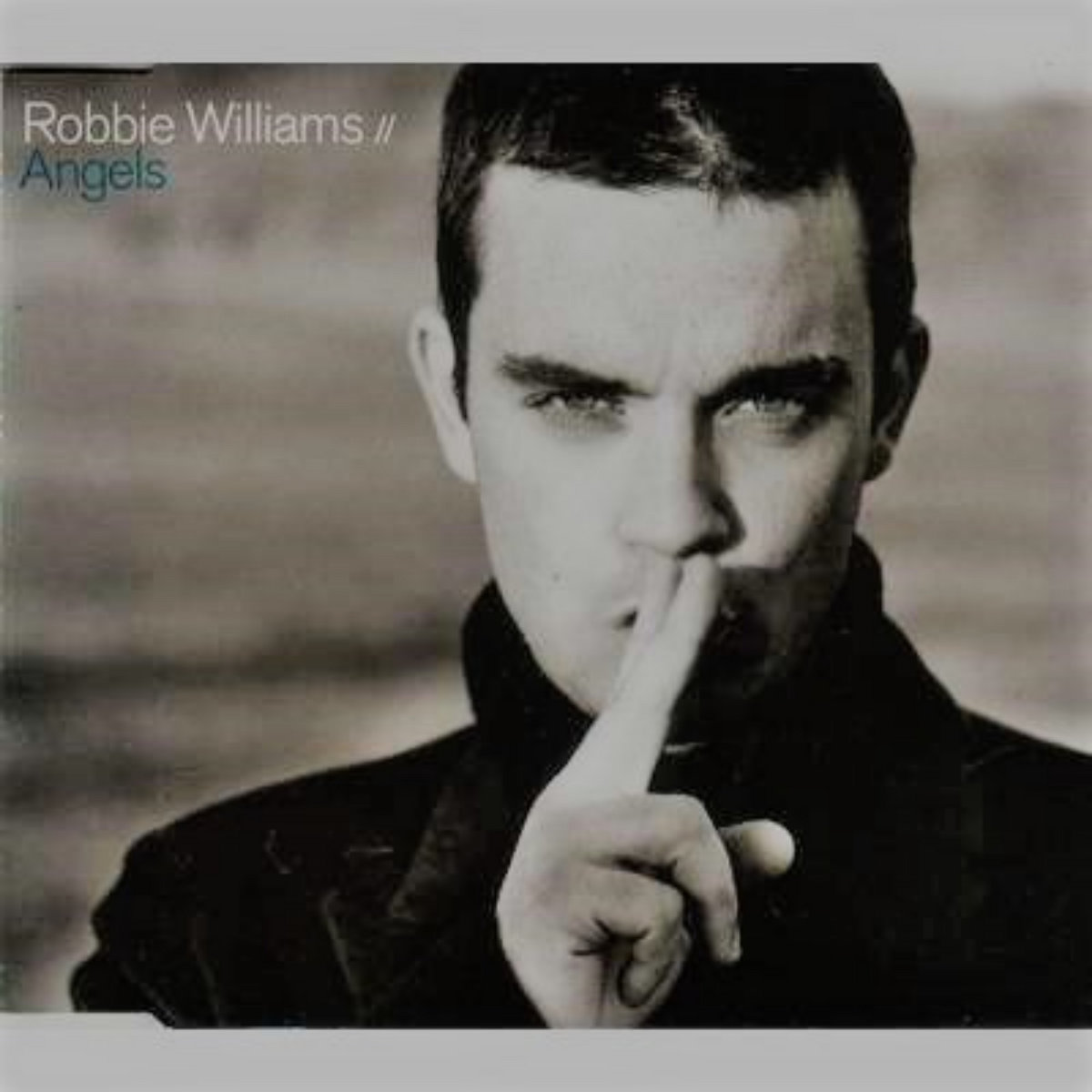
Robbie Williams charted with “Angels”

Angels

Robbie Williams

Writer(s): Robbie Williams, Guy Chambers, Ray Heffernan (see lyrics here)


Released: December 1, 1997


First Charted: December 13, 1997


Peak: 53 US, 25 RR, 10 AC, 21 A40, 4 UK, 18 CN, 40 AU (Click for codes to singles charts.)


Sales (in millions): -- US, 1.8 UK, 2.13 world (includes US + UK)


Airplay/Streaming (in millions): -- radio, 260.61 video, 309.32 streaming

Awards:

Click on award for more details.

About the Song:

Robbie Williams first gained fame in the British boy band Take That in the early ‘90s before striking out on his own in 1996. As a solo artist, he has topped the UK singles chart seven times. However, “Angels,” which peaked at #4, is his best-selling single. In a VH1 poll in the UK, this was voted the best song which should have topped the charts. SF At the 2005 Brit Awards, it was voted the best song of the previous 25 years. WK

Irish Independent called it an “epic ballad” WK and ShortList’s Dave Fawbert called it a “genuinely brilliant song.” WK Billboard magazine’s Larry Flick praised the song as a “sweet ballad that never gets sappy.” He said “the lyric is thoughtful and ear-grabbing, and his smoky, crisp vocal is a sheer delight. All that and a chorus to kill for.” WK

The song is about loved ones who’ve died and come back as guardian angels to offer protection and affection. In 2005, Britons voted it the song they most wanted played at their funerals. WK Detractors referred to Williams as “a glorified cabaret singer” and attacked this song as his attempt at a mainstream song in a Britpop style. SF

Williams claimed he wrote the song with collaborator Guy Chambers about his aunt and uncle. He said they were inspired to write the chorus by watching a water fountain while sitting outside a café. However, Irish singer/songwriter Ray Heffernan says he wrote the son in 1996 after his partner had a miscarriage. By chance, he met Williams in a Dublin pub and showed him the song and the two of them recorded a demo of the song. Williams then said and Chambers significantly rewrote the song. Williams’ management paid Heffernan £7,500 (about $10,000 in U.S. dollars) for the rights to the song.


Resources:


Related Links:


First posted 10/15/2021.

Monday, October 20, 1986

Crowded House released “Don’t Dream It’s Over”

Don’t Dream It’s Over

Crowded House

Writer(s): Neil Finn (see lyrics here)


Released: October 20, 1986


Peak: 2 US, 3 CB, 3 GR, 3 RR, 9 AC, 11 AR, 1 CO, 25 UK, 1 CN, 8 AU, 1 DF (Click for codes to singles charts.)


Sales (in millions): -- US, 0.4 UK, 0.4 world (includes US + UK)


Airplay/Streaming (in millions): 2.0 radio, 211.3 video, 252.92 streaming

Awards:

Click on award for more details.

About the Song:

New Zealand-born singer/songwriter Neil Finn got his big break in the late ‘70s when older brother Tim invited him to join his band Split Enz. Over the next few years, Neil assumed co-frontman duties (most notably on 1980’s “I Got You”) and even led the band briefly before its demise when Tim left for a solo career. Neil and the drummer from Split Enz then formed the Mullanes in 1984, which later became Crowded House rounded out by bassist Nick Seymour, whose older brother was Mark, leader of Hunters & Collectors.

The trio released their self-titled debut in August 1986. It was preceded by singles “Mean to Me” and “World Where You Live,” which were minor hits in Australia. Third single “Now We’re Getting Somewhere,” sadly, went nowhere and it looked like Crowded House might be nothing more than an afterthought to the more successful Split Enz. However, the fourth single from the album was a hit. “Don’t Dream It’s Over” reached #2 in the U.S. in April 1987. It also went to #1 in New Zealand and Canada. It was a top-10 hit in Australia, Norway, and the Netherlands.

Finn said he wrote the “majestic ballad” WK on his brother’s piano and that it was “about, on the one hand feeling kind of lost, and on the other sort of urging myself on.” SF In 2016, he said “I’m super pleased and proud that the song that is almost the most identiable for us is, I think, one of my best songs.” SF Seymour said it was “about not giving up hope and succumbing to the effects of the mass media and consumerism.” WK Naturally it was used in commercials for the New Zealand Tourism Commission. SF

The video featured surreal images of household objects floating in the air. Finn plays guitar and walks through the house while his bandmates are doing chores or playing background instruments. At the 1987 MTV Video Music Awards, it earned the group a Best New Artist award. It was also nominated for Best Group Video and Best Direction.


Resources:


Related Links:


First posted 10/23/2020; last updated 12/23/2022.


Saturday, July 11, 1981

The Specials’ “Ghost Town” hit #1 in the UK

Ghost Town

The Specials

Writer(s): Jerry Dammers (see lyrics here)


Released: June 12, 1981


First Charted: June 20, 1981


Peak: 17 CL, 2 CO, 13 UK, 68 AU, 10 DF (Click for codes to singles charts.)


Sales (in millions): -- US, -- UK, -- world (includes US + UK)


Airplay/Streaming (in millions): -- radio, 22.2 video, 38.33 streaming

Awards:

Click on award for more details.

About the Song:

The Specials formed in England in 1977. They presented a unique mix of ska and punk which clicked with British audiences. From 1979 to 1981, The Specials landed seven consecutive top-10 hits, including the #1 hits “Too Much Too Young” in 1980 and “Ghost Town” in 1981. “Ghost Town” came at a time that the ska-punk scene was starting to wane. The song, however, showed a willingness on The Specials’ part to embrace new sounds. It was “a downbeat, doom-laden, politically-fired track” XFM which demonstrated the band’s openness to “exploring genres such as new wave, lounge – even muzak.” XFM

“Jerry Dammers’ keyboards are eerily atmospheric throughout and a chanting vocal provides a damning appraisal of inner-city life.” XFM The song grew out of a difficult time in the UK marked by riots sparked by race relations, a police raid, and unemployment. Dammers told Mojo magazine “In Liverpool, all the shops were shuttered up, everything was closing down. In Glasgow there were little old ladies on the street selling their household goods – it was clear something was wrong.” KL

There was unrest amongst the band as well. This was the last single released by the original seven members. WK Right before “Ghost Town” topped the charts, Neville Staples, Lynval Golding, and Terry Hall resigned from the band. Dammers continued with Horace Panter, John Bradbury, and new lead singer Rhoda Dakur, who’d formerly been with the Bodysnatchers. Under the band’s original name of The Special A.K.A., they continued to chart, but only reached the top 10 once more with “Free Nelson Mandela” in 1984.

In the UK music press, “Ghost Town” was hailed “as a major piece of popular social commentary.” WK It was named “Single of the Year” by Melody Maker, NME, and Sounds – the three top weekly UK magazines at the time. All Music Guide’s Michael Waynick called “Ghost Town” the band’s “crowning achievement.” AMG


Resources:

  • DMDB encyclopedia entry for The Specials
  • AMG All Music Guide review by Michael Waynick
  • KL Jon Kutner and Spencer Leigh (2005). 1000 UK Number One Hits: The Stories Behind Every Number One Single Since 1952. London, Great Britain: Omnibus Press. Page 271.
  • WK Wikipedia
  • XFM Mike Walsh (editor) (2010). The XFM Top 1000 Songs of All Time. Elliott & Thompson Limited: London, England. Page 394.


First posted 10/13/2021; last updated 9/26/2022.