Showing posts with label best new wave songs. Show all posts

Friday, June 17, 2022

Kate Bush hit #1 with “Running Up That Hill” 37 years after release

Running Up That Hill (A Deal with God)

Kate Bush

Writer(s): Kate Bush (see lyrics here)


First Charted: August 5, 1985


Peak: 3 US, 14 BA, 13 ST, 28 CB, GR 36, 33 RR, 9 AC, 5 A40, 24 AA, 34 AR, 2 MR, 13 UK, 2 CN, 19 AU, 3 DF (Click for codes to charts.)


Sales (in millions): -- US, 2.05 UK, 2.75 world (includes US + UK)


Airplay/Streaming (in millions): -- radio, 265.68 video, 1018.47 streaming

Awards:

Click on award for more details.

About the Song:

“Running Up That Hill” was released as the lead single for Kate Bush’s fifth album, Hounds of Love. In her native UK, the song reached #3 on the charts, her fifth single to make the top 10. She’d had much less success in the United States where her only chart hit on the Billboard Hot 100 had been 1978’s “The Man with the Child in His Eyes” reaching #85. However, “Hill” gave Bush her solitary top 40 hit in the U.S., going to #30.

The song wasn’t done, though. 37 years later, it was prominently featured in the Netflix TV series Stranger Things as the favorite song of the character Max. This renewed interest in the song and it reached new chart peaks around the globe, hitting #1 in the United Kingdom, Australia, and other countries. In the United States the song climbed all the way to #4 and topped Billboard’s streaming and digital sales charts.

The song was originally called “A Deal with God,” but representatives at EMI Records hesitated to release a song with the word “God” in it. Bush changed the title, but subtitled the song “A Deal with God” on the Hounds of Love album. Executives were also more interested in releasing “Cloudbursting” as the first single but Bush pushed for “Hill” because it was the first song she wrote for the album and she thought it better represented the album. WK

Thematically, the “brutally truthful, painfully sensual song” AMG isn’t about religion, but the differences between men and women. Bush said, “If we could actually swap each others’ roles, if we could actually be in each other’s place for a while, I think we’d both be very surprised! And I think it would lead to a greater understanding.” WK She conceived the idea that “if they could make a deal with God to change places…they’d understand what it’s like to be the other person.” SF The “concept is a flip on the Faustian bargain where one makes a deal with the devil.” SF


Resources:


Related Links:


First posted 6/15/2022; last updated 7/28/2023.

Monday, February 5, 1990

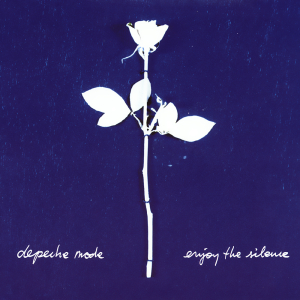
Depeche Mode “Enjoy the Silence” released

Enjoy the Silence

Depeche Mode

Writer(s): Martin Gore (see lyrics here)


Released: February 5, 1990


First Charted: February 17, 1990


Peak: 8 US, 2 CB, 5 GR, 4 RR, 13 MR, 6 UK, 14 CN, 71 AU, 5 DF (Click for codes to charts.)


Sales (in millions): 0.5 US, 0.6 UK, 1.84 world (includes US + UK)


Airplay/Streaming (in millions): 2.0 radio, 738.72 video, 629.48 streaming

Awards:

Click on award for more details.

About the Song:

Depeche Mode formed in Basildon, Essex, in 1980. At the core of the English electronic band are singer/songwriter Dave Gahan and keyboardist, guitarist, and songwriter Martin Gore. They were pivotal in shaping the new wave scene of the early 1980s. In the UK, all fourteen of their studio albums from 1980 to 2017 hit the top 10. However, it was the group’s seventh studio release, Violator, which gave the group their first taste of the top 10 in the United States.

Not only was Violator the first US top 10 album for Depeche Mode, but it gave them their first top 10 on the Billboard Hot 100 with “Enjoy the Silence.” Prior to that, their only top 40 hits were “People Are People” (#13, 1985) and “Personal Jesus” (#28, 1989). The latter was the first single from Violator. Third single, “Policy of Truth,” also reached the top 40, peaking at #15.

In the song “Enjoy the Silence,” “the singer is in a relationship where thoughts and feelings are all that matter. He feels words are unnecessary and can even be harmful, so he prefers to enjoy the relationship in silence.” SF The song was originally written as a ballad, but then sped up with a beat and guitar riff added. SF Gahan said, “I think we knew between us that there was something very special about it, but we had no idea what a huge hit it was going to be.” SF

Billboard magazine’s Bill Coleman called “Enjoy the Silence” an “engaging charmer” WK that blends [the] quintet’s recognizable techno-pop melodies with trendy house grooves.” WK It is “propelled along by neat, sequenced bass and drums and foreboding mock-choral synthesizer chords.” TB David Giles from Music Week declared it “the best Depeche Mode single in years” WK noting that it “heralds a return to the classic pop approach of their early Eighties hits…in contrast to the electro beat obsession of recent recordings.” WK


Resources:


Related Links:


First posted 9/30/2022; last updated 5/2/2024.

Saturday, August 26, 1989

The B-52’s “Love Shack” charted

Love Shack

The B-52’s

Writer(s): Kate Pierson, Fred Schneider, Keith Strickland, Cindy Wilson (see lyrics here)


Released: June 20, 1989


First Charted: August 26, 1989


Peak: 3 US, 4 CB, 6 GR, 5 RR, 14 MR, 2 UK, 5 CN, 19 AU, 3 DF (Click for codes to charts.)


Sales (in millions): 0.5 US, 0.6 UK, 1.24 world (includes US + UK)


Airplay/Streaming (in millions): 1.0 radio, 87.05 video, 244.05 streaming

Awards:

Click on award for more details.

About the Song:

The B-52’s arrived on the scene a decade earlier with their debut album and became a definitive band of the new wave/post-punk era. They had a cult following primarily comprised of the gay community and college radio listeners. However, their relevance declined and in 1985, they considered calling it quits after guitarist Ricky Wilson died of AIDS. Instead, they soldiered on with drummer Keith Strickland recording guitar parts in Wilson’s style. SF

In 1989, they came back on the scene in a big way. The band wanted Nile Rodgers (best known for his band Chic) to produce their Cosmic Thing album, but he wasn’t available. They turned to Don Was who had his own group Was (Not Was), but had also worked with Bob Dylan, Elton John, and the Rolling Stones. Kate Pierson, one of the singers in the band, credits Was for making the song a hit. The band used to perform songs live before recording them, but Was helped them structure “Love Shack” and record it in the studio. SF

“The gorgeously infectious ‘Love Shack’” TB didn’t just put the “perennially eccentric B-52’s” TB back on the radar, but gave them their first taste of mainstream success and became their signature song. It topped the charts in Australia, Ireland, and New Zealand and hit the top 5 in the U.S., UK, and Canada. WK

The band was inspired by the club in the movie The Color Purple, as well as Hawaiian Ha-Le, a real club outside Athens, Georgia where the band hung out. The club drew a wide variety of hippies, scenesters, and University of Georgia students. Cindy Wilson, another of the band’s singers, described the club as “a really cool place – a run-down love shack kind of thing…It was a really interesting place.” SF The concept for the song was that the Love Shack was “a place where people of all stripes come together for a groovy time.” SF

The song was additionally inspired by a tin-roofed cabin – also in the Athens, Georgia area – where Pierson lived in the ‘70s. The band conceived their 1979 hit “Rock Lobster,” probably their best-known song prior to “Love Shack,” at the cabin. Wilson’s memorable line about “tin roof rusted” was actually an outtake from a jamming session. WK The line has been famously misinterpreted as “Hennn-ry, busted.” SF Wilson has said she was thinking of the rusty roof from the Hawaiian Ha-Le club. SF


Resources:


First posted 11/16/2019; last updated 5/2/2024.

Saturday, January 30, 1988

INXS top the chart with “Need You Tonight”

Need You Tonight

INXS

Writer(s): Andrew Farriss, Michael Hutchence (see lyrics here)


Released: September 23, 1987


First Charted: October 24, 1987


Peak: 11 US, 11 CB, 11 RR, 73 RB, 12 AR, 1 CO, 2 UK, 1 CN, 3 AU, 5 DF (Click for codes to singles charts.)


Sales (in millions): -- US, 0.4 UK, 0.44 world (includes US + UK)


Airplay/Streaming (in millions): -- radio, 45.4 video, 282.19 streaming

Awards:

Click on award for more details.

About the Song:

INXS had been around for a decade when “Need You Tonight” became their one and only U.S. chart-topper. In the early ‘80s, they started gaining attention on college rock with songs like “Don’t Change” and “Original Sin.” They landed squarely in the pop arena with the #5 hit “What You Need” in 1985, which set them up for their 1987 Kick album to be the biggest of their career. In addition to the success of “Need You Tonight,” the album generated three more top-10 hits in America.

While it has “arguably become the band’s signature song,” WK it didn’t reach #1 in INXS’s native Australia where their only #1 was “Original Sin.” In the UK, the song climbed to #2, but only after the release of a remix a year later. In its original run, it stalled at #58.

The lyrics, written by Michael Hutchence in one night, were “basically a musical booty call.” SF The song’s famous riff also came quickly. Andrew Farris was about to catch a taxi to the airport when it came to him. He asked the cabbie to wait while he recorded the riff. The driver was not happy when it took an hour. WK

The video combined “Need You Tonight” with “Mediate;” the first segued into the other on the album. It combined different forms of animation with live action with visual effects creating by cutting up 35mm film and relayering photcopied images over the original footage. The video portion for “Mediate” is an homage to “Subterranean Homesick Blues” by Bob Dylan, in which the artist flips cards showing the song’s lyrics. At the 1988 MTV Video Music Awards, the video took home Video of the Year and four other awards.


Resources:


Related Links:


First posted 10/23/2020; last updated 9/25/2022.