Showing posts with label Martin Gore. Show all posts

Monday, March 19, 1990

Depeche Mode released Violator

First posted 2/21/2012; updated 2/15/2020.

Violator

Depeche Mode


Buy Here:


Released: March 19, 1990


Peak: 7 US, 2 UK, 5 CN, 42 AU


Sales (in millions): 3.0 US, 0.1 UK, 8.0 world (includes US and UK)


Genre: synth-pop


Tracks: (Click for codes to singles charts.)

  1. World in My Eyes [4:26] (9/17/90, #52 US, 17 MR, 17 UK)
  2. Sweetest Perfection [4:43]
  3. Personal Jesus [4:56] (8/28/89, #28 US, 31 CB, 3 MR, 13 UK, 44 CN)
  4. Halo [4:30]
  5. Waiting for the Night [6:07]
  6. Enjoy the Silence [6:12] (2/5/90, #8 US, 1 MR, 6 UK, 14 CN, 71 AU)
  7. Policy of Truth [4:55] (5/7/90, #15 US, 1 MR, 16 UK)
  8. Blue Dress [5:41]
  9. Clean [5:32]
  10. Song (Writers) [time] (date of single release, chart peaks)

All tracks written by Martin Gore.


Total Running Time: 47:02


The Players:

  • Andrew Fletcher (keyboards)
  • David Gahan (vocals)
  • Martin Gore (vocals, guitar, keyboards)
  • Alan Wilder (keyboards)

Rating:

3.929 out of 5.00 (average of 14 ratings)


Quotable: --


Awards:

About the Album:

Violator was Depeche Mode’s “most mainstream chart-climbing album” AZ and, “the crowning glory of the boys’ black-leather period” RS as far as many DM fans are concerned. It “is a quintessential benchmark of pop, rock and electronic music…because it [seamlessly] marries dance, goth-rock and synth-pop with good ol’ fashioned Motown funk and rock n’ roll.” SL

The group originally came out of the new romantic period in the early ‘80s, but soon veered toward a darker sound. Violator “continued in the general vein of the previous two studio efforts by Depeche Mode: Martin Gore’s upfront lyrical emotional extremism and knack for a catchy hook filtered through Alan Wilder’s ear for perfect arrangements, ably assisted by top English producer Flood,” AMG who also produced and engineered albums for U2, Erasure, and Nick Cave & the Bad Seeds. TB

Violator “was slicker and more accessible than the band’s previous efforts” SL and “song for song…[is] simply the best, most consistent effort yet from the band.” AMG It was “heavily influenced by techno-pop” AZ with half of the tracks “tailor-made for the dance floor.” AZ It was “conceived when dance-club DJs were gaining recognition alongside original composers.” AZ

Lead single Personal Jesus was “the group’s most striking single yet” TB yet was also “the unlikeliest of pop hits.” SL It is “a cynical jab at organized religion and televangelism.” SL Musically, it as “perversely simplistic, with a stiff, arcane funk/hip-hop beat and basic blues guitar chords, and tremendous, thanks to sharp production touches and David Gahan’s echoed, snaky vocals.” AMG “The bluesy guitar line Martin Gore lays down on top of the synth-dominated grooves” AZ is “a particular highlight on this fantastic album.” AZ

Enjoy the Silence was “a nothing-else-remains-but-us ballad pumped up into a huge, dramatic romance/dance number, commanding in its mock orchestral/choir scope.” AMG It remains the group’s only U.S. top ten pop hit. “Beneath its grand synth-pop exterior, though, lay a gloomy pessimism that’s strung throughout the whole of Violator,” SL “like a corpse with a passionate pulse.” ZS

Third single Policy of Truth was “a low-key Motown funk number for the modern day with a sharp love/hate lyric to boot.” AMG A “theme of lies and consequence continue, but this time Gahan/Gore is less compassionate than he is outright jaded: ‘You’ll see your problems multiplied/ If you continually decide/ To faithfully pursue/ The policy of truth.’” SL

“The shuffling beat of Sweetest Perfection (well sung by Gore)” AMG “intertwines sex and addiction” SL and “the guilt-ridden-and-loving-it Halo build[s] into a string-swept pounder.” AMG “When Gahan takes the mic, it’s hard to believe he didn’t write the words coming out of his mouth: ‘You wear guilt…like a halo in reverse.’” SL

On World in My Eyes, “chief songwriter Martin Gore’s voice pads lead vocalist Dave Gahan’s, and then quickly mimes him.” SL That song, as well as “Sweetest Perfection” and “Halo”, “turn teen angst and sexual obsession into grand synth-pop melodrama.” RS

The ethereal Waiting for the NightAMG features “cyclical tinkling bleeps and a minimalist pulsing backbeat percolat[ing] underneath layered voices and haunting vocal harmonies.” SL The “electronic swing number” SL Blue Dress “is at once profoundly sad, sexy and creepy, as Gore croons ‘put it on’ (referring to the titular dress) repeatedly throughout. ‘Something so worthless serves a purpose,’ he sings. ‘It makes me a happy man.’” SL

“The cinematic final track” SLClean wraps up Violator on an eerie note, all ominous bass notes and odd atmospherics carrying the song. Goth without ever being stupidly hammy, synth without sounding like the clinical stereotype of synth music, rock without ever sounding like a ‘rock’ band, Depeche here reach astounding heights indeed.” AMG “No other Depeche Mode album has been this captivating and sophisticated.” SL It “remains the group’s defining work.” TB


Notes:

A 2006 reissue added tracks “Dangerous,” “Memphisto,” “Sibeling,” “Kaleid,” “Happiest Girl,” and “Sea of Sin.”

Review Sources:

Monday, February 5, 1990

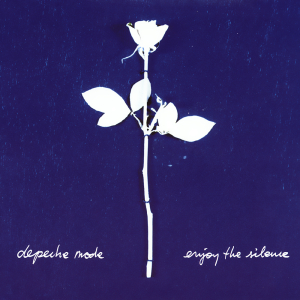
Depeche Mode “Enjoy the Silence” released

Enjoy the Silence

Depeche Mode

Writer(s): Martin Gore (see lyrics here)


Released: February 5, 1990


First Charted: February 17, 1990


Peak: 8 US, 2 CB, 5 GR, 4 RR, 13 MR, 6 UK, 14 CN, 71 AU, 5 DF (Click for codes to charts.)


Sales (in millions): 0.5 US, 0.6 UK, 1.84 world (includes US + UK)


Airplay/Streaming (in millions): 2.0 radio, 738.72 video, 629.48 streaming

Awards:

Click on award for more details.

About the Song:

Depeche Mode formed in Basildon, Essex, in 1980. At the core of the English electronic band are singer/songwriter Dave Gahan and keyboardist, guitarist, and songwriter Martin Gore. They were pivotal in shaping the new wave scene of the early 1980s. In the UK, all fourteen of their studio albums from 1980 to 2017 hit the top 10. However, it was the group’s seventh studio release, Violator, which gave the group their first taste of the top 10 in the United States.

Not only was Violator the first US top 10 album for Depeche Mode, but it gave them their first top 10 on the Billboard Hot 100 with “Enjoy the Silence.” Prior to that, their only top 40 hits were “People Are People” (#13, 1985) and “Personal Jesus” (#28, 1989). The latter was the first single from Violator. Third single, “Policy of Truth,” also reached the top 40, peaking at #15.

In the song “Enjoy the Silence,” “the singer is in a relationship where thoughts and feelings are all that matter. He feels words are unnecessary and can even be harmful, so he prefers to enjoy the relationship in silence.” SF The song was originally written as a ballad, but then sped up with a beat and guitar riff added. SF Gahan said, “I think we knew between us that there was something very special about it, but we had no idea what a huge hit it was going to be.” SF

Billboard magazine’s Bill Coleman called “Enjoy the Silence” an “engaging charmer” WK that blends [the] quintet’s recognizable techno-pop melodies with trendy house grooves.” WK It is “propelled along by neat, sequenced bass and drums and foreboding mock-choral synthesizer chords.” TB David Giles from Music Week declared it “the best Depeche Mode single in years” WK noting that it “heralds a return to the classic pop approach of their early Eighties hits…in contrast to the electro beat obsession of recent recordings.” WK


Resources:


Related Links:


First posted 9/30/2022; last updated 5/2/2024.

Tuesday, August 29, 1989

Depeche Mode “Personal Jesus” charted

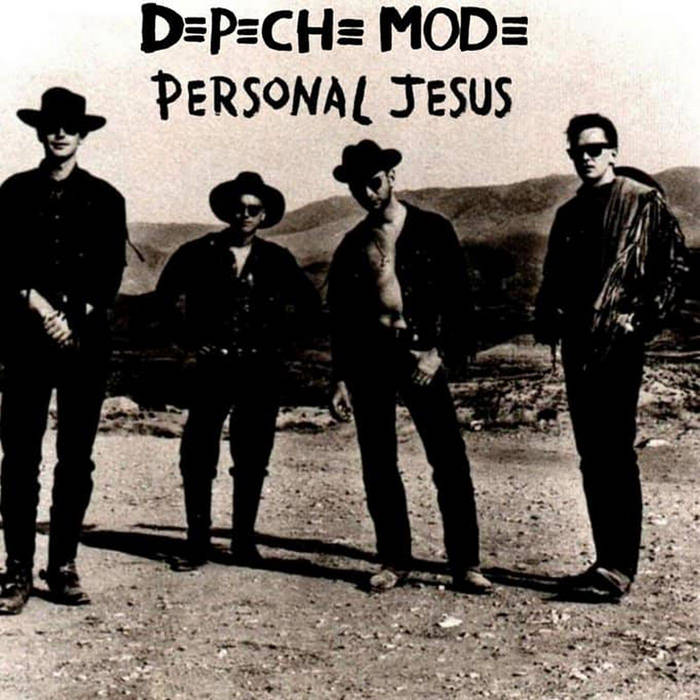
Personal Jesus

Depeche Mode

Writer(s): Martin L. Gore (see lyrics here)


First Charted: August 29, 1989


Peak: 28 BB, 31 CB, 3 MR, 13 UK, 44 CN, 7 DF (Click for codes to charts.)


Sales (in millions): 2.0 US, 0.4 UK, 2.86 world (includes US + UK)


Airplay/Streaming (in millions): 1.0 radio, 369.59 video, 435.80 streaming

Awards:

Click on award for more details.

About the Song:

Depeche Mode formed in England in 1980. The original quartet consisted of Dave Gahan, Martin Gore, Andy Fletcher, and Vince Clarke (later of Yazoo and Erasure). They “blossomed from a cheerful synth pop band into one of the biggest alternative bands in the world. By the end of the decade, they were a stadium group in the United States.” RX They became part of the British new wave scene with the release of their first album in 1981 and would also be associated with he Second British Invasion associated with the rise of MTV. In the UK, they landed five top-ten hits from 1981 to 1984; they finally charted on the Billboard Hot 100 in 1984 with “People Are People” (#13).

“The group managed to get some of the most introspective and troubling lyrics onto America’s airwaves…This was never more obvious than on the single ‘Personal Jesus.’” RX The song was the first single released fom 1990’s Violator, the group’s first top 10 album in the U.S., after reaching the top 10 in the UK with all six of their studio albums released in the 1980s. The album also featured Depeche Mode’s best-known song, “Enjoy the Silence.”

“With a stomping drumbeat and the unusual – for Depeche Mode – sound of a twanging guitar – the song extolled the virtues of ‘Your own personal Jesus – someone to hear your prayers, someone who cares.’” RX Johnny Cash famously recorded the song for his 2002 album American IV: The Man Comes Around. He said, “I heard that as a gospel song…I don’t know that the writer ever meant it to be that, but that’s what it is.” RX

Some suspected the song “was about the commercialization of religion” RX but Martin Gore said he was actually inspired to write the lyrics because of Priscilla Presley’s autobiography Elvis and Me. RX He said, “It’s a song about being a Jesus fo somebody else, someone to give you hope and care. It’s about how Elvis was her man and her mentor and how often that happens in love relationships.” RX


Resources:


Related Links:


First posted 1/22/2026.

Monday, October 29, 1984

Depeche Mode “Somebody” released

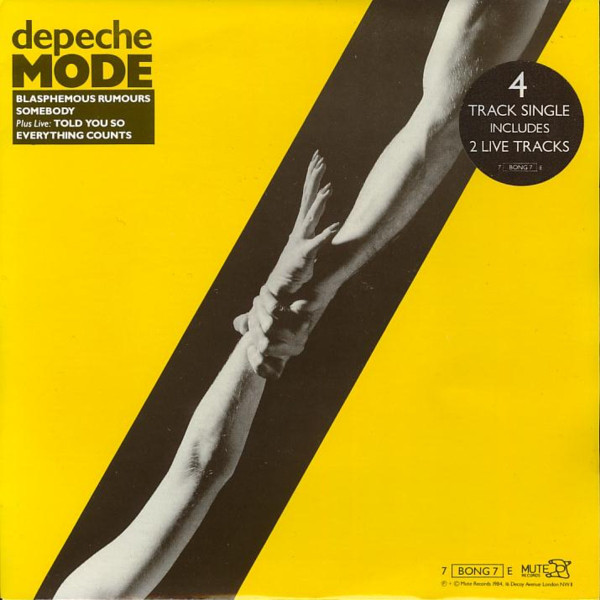
Somebody

Depeche Mode

Writer(s): Martin Gore (see lyrics here)


Released: October 29, 1984


First Charted: November 10, 1984


Peak: 20 CO, 16 UK, 87 AU, 2 DF (Click for codes to charts.)


Sales (in millions): --


Airplay/Streaming (in millions): -- radio, 10.3 video, -- streaming

Awards:

Click on award for more details.

About the Song:

Depeche Mode formed in Basildon, Essex, England, in 1980. They became one of the pivotal synth-pop acts of the 1980s, shaping new wave, college rock, and electronica. Their debut album, 1981’s Speak & Spell, was a top 10 in the UK – a feat matched by all fourteen of the band’s studio albums. They wouldn’t find similar success in the U.S. until 1990’s Violator.

The band achieved its first chart success on the Billboard Hot 100 with “People Are People.” The #13 hit was from Depeche Mode’s fourth album, Some Great Reward. The song reached #4 in the UK and was followed up by “Master and Servant,” a #9 hit in the UK. Neither that single nor “Blasphemous Rumours” / “Somebody,” the double-A-sided third single, cracked the Billboard Hot 100.

The decision to release the band’s first double-A-sided single grew from controversy around the song “Blasphemous Rumours.” The song was about a 16-year-old girl who attempts suicide, experiences a religious revival, and then ends up on life support after being hit by a car. The religious community weren’t enamored with the song and its lyrics that “God’s got a sick sense of humour.” WK

“Somebody” was Martin Gore’s “first ever solo appearance” AMG on lead vocals, something which happened more often after this. He wrote the “painfully honest piece” AMG about “longing for someone to be with, someone that doesn’t have to agree with his views. She just needs to be there and understand him.” SF All Music Guide’s Dave Thompson called it “a cunning confection” that “was defiantly different from all that had come before” AMG citing the song’s “lack of effervenscent keyboards or opulent synths, the introspective atmosphere and the down-beat mileu.” AMG Instead, he was accompanied “only by his majestic piano playing.” AMG However, the song takes a twist at the end when he sings “Though things like this make me sick / In a case like this I’ll get away with it.” WK


Resources:


Related Links:


First posted 12/22/2022; last updated 12/29/2022.