Showing posts with label Richard Rodgers. Show all posts

Tuesday, May 5, 2026

Pulitzer Prize

Pulitzer Prize:

Special Awards and Citations for Musicians

The Pulitzer is an award best known for honoring excellence in journalism, but they also award excellence in the arts. Just over a dozen musicians have been honored through the years with special awards. While this page has been updated through 2026, the most recent recipient is Aretha Franklin in 2019.

See other lifetime achievement awards.


Resources/Related Links:


First posted 4/12/2010; last updated 5/4/2026.

Wednesday, January 26, 2022

Top 50 Composers from Broadway and the Early 20th Century

Broadway/Early 20th Century Composers:

Top 50

This list was first posted on March 22, 2012 in honor of the births of two of Broadway’s most celebrated composers (Stephen Sondheim: March 22, 1930; Andrew Lloyd Webber: March 22, 1948). This list focused on the top composers from Broadway and the early 20th century. A separate list produced around the same time focused on The Top 100 Songwriters of the Rock Era.

See other lists of Acts/Music Makers by Categories.

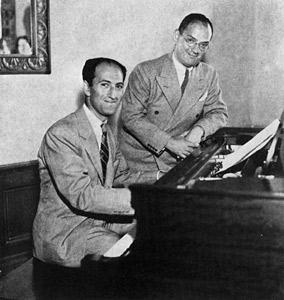
George and Ira Gershwin, image from wmky.org

1. George Gershwin
2. Richard Rodgers
3. Stephen Sondheim
4. Andrew Lloyd Webber
5. Oscar Hammerstein II

Richard Rodgers & Oscar Hammerstein II

6. Irving Berlin
7. Cole Porter
8. Leonard Bernstein
9. Jerry Herman
10. Alan Jay Lerner

Stephen Sondheim

11. Tim Rice
12. Frederick Loewe
13. Cy Coleman
14. Frank Loesser
15. Stephen Schwartz

Andrew Lloyd Webber & Tim Rice

16. Jerome Kern
17. Sheldon Harnick
18. John Kander
19. Charles Strouse
20. Lee Adams

Irving Berlin

21. Marvin Hamlisch
22. Harold Arlen
23. Jerry Bock
24. Betty Comden
25. Adolph Green

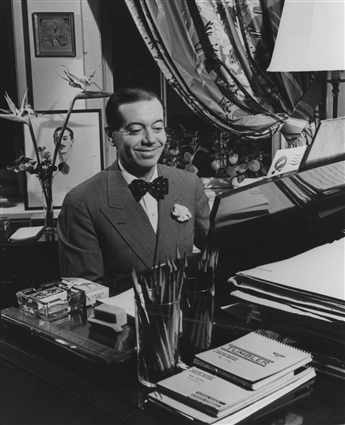
Cole Porter, image from pbs.org

26. Jule Styne
27. Ira Gershwin
28. Richard Adler
29. Jerry Ross
30. Fred Ebb

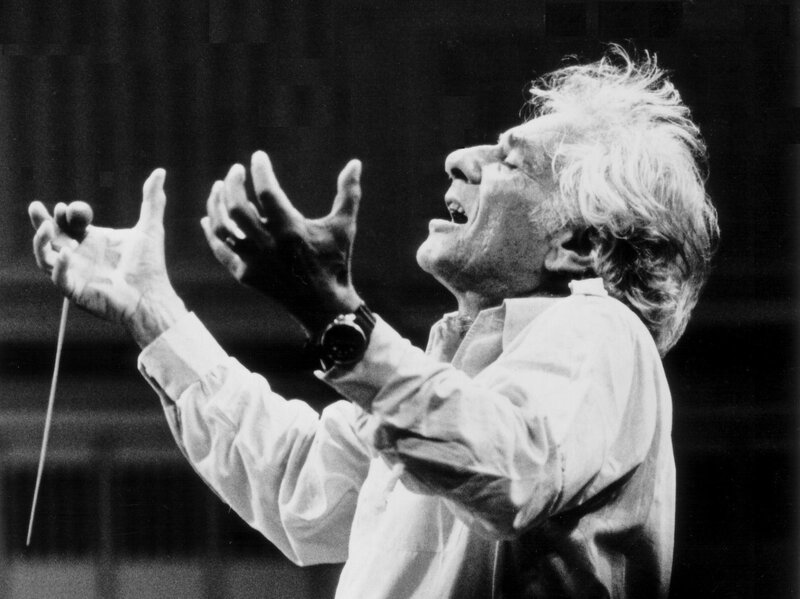
Leonard Bernstein, image from npr.org

31. Woody Guthrie
32. Lorenz Hart
33. E.Y. “Yip” Harburg
34. John Phillip Sousa
35. Burton Lane

Jerry Herman, image from theargyros.org

36. Harold Rome
37. Kurt Weill
38. Johnny Mercer
39. Bob Merrill
40. Noel Coward

Alan Jay Lerner & Frederick Loewe

41. George M. Cohan
42. Alan Menken
43. Richard Sherman
44. Robert Sherman
45. Dorothy Fields

Jerome Kern, image from discogs.com

46. Pete Seeger
47. Jonathan Larson
48. Huddie “Leadbelly” Ledbetter
49. Fats Waller
50. Irving Caesar


Resources/Related Links:


First posted 3/22/2012; last updated 1/26/2022.

Saturday, April 17, 2021

Tin Pan Alley: Top 100 Songs

Tin Pan Alley:

Top 100 Songs

Tin Pan Alley is a reference to a collection of late 19th century and early 20th century music publishers and songwriters in New York City, specifically West 28th Street between Fifth and Sixth Avenues in Manhattan. The era is generally marked as starting in 1885 when a number of music publishers first set up shop in the area. Some consider the start of the Great Depression in the 1930s to mark the ending – a time when sheet music was no longer the driving force for American popular music, but a time when the phonograph, radio, and movies had more influence. Others consider the movement to have lasted into the 1950s when it was upstated by the rise of rock & roll and the subsequent influence of writers from the Brill Building. Some of the the most significant Tin Pan Alley writers were Harold Arlen, Irving Berlin, George M. Cohan, George Gershwin, Ira Gershwin, Oscar Hammerstein II, Jerome Kern, Frank Loesser, Cole Porter, Richard Rodgers, and Albert Von Tilzer. The phrase, however, has come to be associated more broadly with commercially successful music of the early 20th century.

This list was creating by aggregating 18 lists and giving extra weight to songs which fell between 1885 and 1933 and were written by one of the significant songwriters specifically associated with the Tin Pan Alley era. Songs are listed with the songwriters and first year the song emerged. These songs have largely become standards; more than half of them appear on the DMDB list of the top 100 American Songbook Standards .

Click here to see other genre-specific song lists.

1. Irving Berlin “Alexander’s Ragtime Band” (1911)
2. Jack Norworth and Albert von Tilzer “Take Me Out to the Ball Game” (1908)
3. Jack Norworth and Nora Bayes “Shine on, Harvest Moon” (1908)
4. Shelton Brooks “Some of These Days” (1910)
5. Milton Ager and Jack Yellen “Ain’t She Sweet?” (1927)
6. Leo Friedman and Beth Slater Whitson “Let Me Call You Sweetheart” (1910)
7. Shelton Brooks “Darktown Strutters’ Ball” (1917)
8. Ren Shields and George Evans “In the Good Old Summertime” (1902)
9. Irving Berlin “God Bless America” (1939)
10. Charles K. Harris “After the Ball” (1892)

11. George M. Cohan “Give My Regards to Broadway” (1904)
12. Edward Madden and Gus Edwards “By the Light of the Silvery Moon” (1909)
13. Joseph E. Howard and Ida Emerson “Hello Ma Baby” (1899)
14. Alfred Bryan and Fred Fisher “Peg O’ My Heart” (1913)
15. George Gershwin and Irving Caesar “Swanee” (1920)
16. George M. Cohan “Over There” (1917)
17. John Schonberger, Richard Coburn, and Vincent Rose “Whispering” (1920)
18. Milton Ager and Jack Yellen “Happy Days Are Here Again” (1930)
19. Hughie Cannon and Johnnie Queen “Bill Bailey, Won’t You Please Come Home” (1902)
20. Harry Von Tilzer and William Dillon “I Want a Girl Just Like the Girl Who Married Dear Old Dad” (1911)

21. Seymour Simons and Gerald Marks “All of Me” (1931)
22. Walter Donaldson and George A. Whiting “My Blue Heaven” (1927)
23. Edward Madden and Percy Wenrich “Moonlight Bay” (1912)
24. Jimmy McHugh and Dorothy Fields “On the Sunny Side of the Street” (1930)
25. Spencer Williams and Jack Palmer “Everybody Loves My Baby” (1924)
26. Jimmy Monaco and Joseph McCarthy “You Made Me Love You (I Didn't Want to Do It)” (1913)
27. Irving Berlin “Cheek to Cheek” (1935)
28. Hoagy Carmichael and Mitchell Parish “Stardust” (1927)
29. W.C. Handy “St. Louis Blues” (1914)
30. Theodore August Metz and Joe Hayden “A Hot Time in the Old Town” (1896)

31. Ben Bernie, Kenneth Casey, and Maceo Pinkard “Sweet Georgia Brown” (1925)
32. Hoagy Carmichael and Stuart Gorrell “Georgia on My Mind” (1930)
33. Irving Berlin “Always” (1926)
34. Harry Akst, Sam M. Lewis, and Joe Young “Dinah” (1932)
35. Ray Henderson and Mort Dixon “Bye Bye Blackbird” (1926)
36. Joseph E. Howard, Harold Orlob, Frank R. Adams, and Will M. Hough “I Wonder Who’s Kissing Her Now” (1909)
37. Fred Fisher and Alfred Bryan “Come Josephine in My Flying Machine” (1910)
38. Jimmy McHugh and Dorothy Fields “I Can’t Give You Anything But Love” (1928)
39. Nat D. Ayer and Seymour Brown “Oh You Beautiful Doll” (1911)
40. George Meyer, Edgar Leslie, and E. Ray Goetz “For Me and My Gal” (1917)

41. Harry Von Tilzer and Andrew B. Sterling “Wait Till the Sun Shines, Nellie” (1905)
42. Chris Smith and Jim (James Henry) Burris “Ballin’ the Jack” (1913)
43. Scott Joplin “The Entertainer” (1902)
44. Harry Von Tilzer and Arthur J. Lamb “A Bird in a Gilded Cage” (1900)
45. Cole Porter “Night and Day” (1932)
46. George and Ira Gershwin “I Got Rhythm” (1930)
47. Charles B. Lawlor and James W. Blake “The Sidewalks of New York” (1894)
48. Johnny Green, Eddie Heyman, Robert Sour, and Frank Eyton “Body and Soul” (1930)
49. Gus Kahn and Walter Donaldson “Carolina in the Morning” (1923)
50. Paul Dresser “On the Banks of the Wabash” (1897)

51. Harold Arlen and Ted Koehler “Stormy Weather (Keeps Rainin' All the Time)” (1933)
52. Frank Silver and Irving Cohn “Yes! We Have No Bananas” (1923)
53. Turner Layton and Henry Creamer “After You’ve Gone” (1918)
54. W.C. Handy, George A. Norton, Charles Tobias, and Peter DeRose “The Memphis Blues” (1912)
55. Alfred Bryan and Al Piantadosi “I Didn’t Raise My Boy to Be a Soldier” (1915)
56. Ray Henderson, Sam Lewis, and Joe Young “Five Foot Two, Eyes of Blue” (1926)
57. Turner Layton and Henry Creamer “Way Down Yonder in New Orleans” (1922)
58. Gus Edwards and Will D. Cobb “School Days (When We Were a Couple of Kids)” (1907)
59. Buddy DeSylva and Louis Silvers “April Showers” (1922)
60. Tell Taylor “Down by the Old Mill Stream” (1910)

61. Joe Burke and Al Dubin “Tip Toe Through the Tulips” (1929)
62. Walter Donaldson and Gus Kahn “Yes Sir! That’s My Baby” (1925)
63. Cole Porter “I’ve Got You Under My Skin” (1936)
64. The Original Dixieland Jazz Band, Harry DeCosta “Tiger Rag” (1918)
65. George M. Cohan “You’re a Grand Old Flag (aka “The Grand Old Rag”)” (1906)
66. Isham Jones and Gus Kahn “I’ll See You in My Dreams” (1925)
67. Arthur B Sterling and Kerry Mills “Meet Me in St. Louis, Louis” (1904)
68. Cole Porter “I Get a Kick Out of You” (1934)
69. Mark Fisher, Joe Goodwin, and Larry Shay “When You’re Smiling, the Whole World Smiles with You” (1928)
70. Gus Edwards and Vincent Bryan “In My Merry Oldsmobile” (1902)

71. Victor Young and Will Harris “Sweet Sue, Just You” (1928)
72. George M. Cohan “Yankee Doodle Boy” (1905)
73. Fred Fisher “Chicago (That Toddlin’ Town)” (1922)
74. Johnny S. Black “Paper Doll” (1942)
75. Vincent Youmans and Irving Caesar “Tea for Two” (1925)
76. Walter Donaldson and Gus Kahn “Makin’ Whoopee” (1928)
77. Richard Rodgers and Lorenz Hart “Blue Moon” (1935)
78. Arthur Johnson and Johnny Burke “Pennies from Heaven” (1936)
79. Irving Berlin “White Christmas” (1942)
80. Jean Kenbrovin and John William Kellette “I’m Forever Blowing Bubbles” (1919)

81. Richard H. Gerard and Harry Armstrong “Sweet Adeline (You’re the Flower of My Heart)” (1903)
82. Isham Jones and Gus Kahn “It Had to Be You” (1924)
83. Jerome Kern and Otto Harbach “Smoke Gets in Your Eyes” (1933)
84. Irving Berlin “Puttin’ on the Ritz” (1930)
85. Henry J. Sayers “Ta-Ra-Ra Boom-De-Ay” (1891)
86. Scott Joplin “Maple Leaf Rag” (1899)
87. Herman Hupfield “As Time Goes By” (1931)
88. Daniel Decatur Emmett “Dixie” (1860)
89. Euday L. Bowman “Twelfth Street Rag” (1916)
90. George & Ira Gershwin “Summertime” (1935)

91. Jerome Kern and Oscar Hammerstein II “Ol’ Man River” (1927)
92. Cole Porter “Begin the Beguine” (1935)
93. Sam M. Lewis, Joe Young, and Jean Schwartz “Rock-a-Bye Your Baby with a Dixie Melody” (1918)
94. Irving Berlin “Blue Skies” (1927)
95. Gus Kahn, Ernie Erdman, and Dan Russo “Toot Toot Tootsie (Goo-Bye!)” (1922)
96. Harry M. Woods “Side by Side” (1927)
97. Richard Rodgers and Lorenz Hart “My Funny Valentine” (1937)
98. George & Ira Gershwin “They Can’t Take That Away from Me” (1937)
99. Harold Arlen and E.Y. “Yip” Harburg “Over the Rainbow” (1939)
100. Hoagy Carmichael and Sidney Arodin “Lazy River” (1931)


Resources and Related Links:

First posted 4/17/2021.

Sunday, December 22, 2019

Dave's Music Database Hall of Fame: Music Maker Inductees (December 2019)

Originally posted 12/22/2019; last updated 5/21/2021.

January 22, 2019 marked the 10-year anniversary of the DMDB blog! To honor that, Dave’s Music Database announced its own Hall of Fame. This fourth batch of music maker inductees celebrates the top 10 music makers who made their names primarily as songwriters in the pre-rock era. See the full list of music maker inductees here.

Harold Arlen (1905-1986)

Inducted December 2019 as a “Top 10 Songwriter.”

A highly regarded contributor the Great American Songbook. He composed more than 500 songs, most notably with lyricsts Ted Koehler (“Get Happy,” “Let’s Fall in Love,” “Stormy Weather”), E.Y. “Yip” Harburg (“Over the Rainbow,” “I’ve Got the World on a String”), and Johnny Mercer (“Blues in the Night,” “That Old Black Magic,” “Ac-Cent-Tchu-ate the Positive,” “One for My Baby”). Read more.

Irving Berlin (1888-1989)

Inducted December 2019 as a “Top 10 Songwriter.”

Russian-born composer and lyricist. George Gershwin called him “the greatest songwriter who ever lived.” Jerome Kern said, “Irving Berlin has no place in American music – he is American music.” A 2001 Time magazine article estimated Berlin wrote around 1250 songs (“Alexander’s Ragtime Band,” “Always,” “Blue Skies,” “God Bless America,” “White Christmas”). 25 have reached #1 on the pop charts. He wrote 17 complete scores for Broadway musicals and revues including Call Me Madam and Annie Get Your Gun. List of Berlin songs here. Read more.

George Gershwin (1898-1937)

Inducted December 2019 as a “Top 10 Songwriter.”

Brooklyn-born composer and pianist who wrote popular and classical music (“Swanee,” “Rhapsody in Blue,” “I Got Rhythm,” “Summertime,” “Someone to Watch Over Me”), often with his brother, lyricist Ira Gershwin. Wrote more than a dozen Broadway shows (Porgy and Bess) and had work featured in movies (An American in Paris). Read more.

Ira Gershwin (1896-1983)

Inducted December 2019 as a “Top 10 Songwriter.”

New York-born classical and musical theater composer (“Someone to Watch Over Me,” “I Got Rhythm,” “I Can't Get Started,” “Summertime”). Often worked with his brother, George Gershwin, including the Broadway show Porgy and Bess and the movie An American in Paris. Read more.

Oscar Hammerstein II (1895-1960)

Inducted December 2019 as a “Top 10 Songwriter.”

New York-born musical theater composer who co-wrote 850 songs, most notably with Jerome Kern (“Ol’ Man River,” “All the Things You Are”) and Richard Rodgers (“Oh, What a Beautiful Mornin’,” “You’ll Never Walk Alone,” “Some Enchanted Evening”). He won eight Tony Awards and two Academy Awards for Best Original Song. Co-wrote musicals Show Boat, Oklahoma!, Carousel, South Pacific, The King and I, The Sound of Music. Read more.

Lorenz Hart (1895-1943)

Inducted December 2019 as a “Top 10 Songwriter.”

New York-born musical theater lyricist (“Blue Moon”, “Isn’t It Romantic?”, “My Funny Valentine,” “The Lady Is a Tramp”, “Bewitched, Bothered and Bewildered”, “My Funny Valentine”). Often worked with Richard Rodgers (Babes in Arms, The Boys from Syracuse, Pal Joey, On Your Toes). Read more.

Jerome Kern (1885-1945)

Inducted December 2019 as a “Top 10 Songwriter.”

New York-born musical theater composer of more than 700 songs (“They Didn't Believe Me,” “Ol’ Man River,” “Smoke Gets in Your Eyes,” “The Way You Look Tonight,” “All the Things You Are”) used in more than 100 stage works. Collaborated with many of his era’s greatest lyricists, including Ira Gershwin, Oscar Hammerstein II, Otto Harbach, Yip Harburg, and Johnny Mercer. Created dozens of Broadway musicals (Show Boat) and Hollywood films over a career lasting more than four decades. Read more.

Johnny Mercer (1909-1976)

Inducted December 2019 as a “Top 10 Songwriter.”

Singer (“On the Atchison, Topeka and Santa Fe,” “Ac-Cent-Tchu-ate the Positive,” “Zip-a-Dee-Doo-Dah,” “Baby, It’s Cold Outside”) songwriter (“Blues in the Night,” “That Old Black Magic,” “One for My Baby,” “Moon River”) who wrote lyrics to more than 1500 songs and more popular songs than any other songwriter in history. Worked in the legendary Brill Building, known for housing some of pop music history’s most famous songwriters and publishers. Received 19 Academy Award nominations. Also a co-founder of Capitol Records. Read more.

Cole Porter (1891-1964)

Inducted December 2019 as a “Top 10 Songwriter.”

Musical theater composer born in Indiana. Songs included “Love for Sale,” “Night and Day,” “You’re the Top,” “I Get a Kick Out of You,” “I’ve Got You Under My Skin,” and “Begin the Beguine.” Musicals included Anything Goes, Kiss Me, Kate, and High Society. Read more.

Richard Rodgers (1902-1979)

Inducted December 2019 as a “Top 10 Songwriter.”

Musical theater songwriter born in New York who composed over 900 songs and 43 Broadway musicals. He worked with lyricist Lorenz Hart (“Blue Moon,” “My Funny Valentine,” “Bewitched, Bothered, and Bewildered,” Pal Joey) in the 1920s and ‘30s and Oscar Hammerstein II (, “You’ll Never Walk Alone,” “Some Enchanted Evening,” Oklahoma!, Carousel, South Pacific, The King and I, The Sound of Music) in the ‘40s and ‘50s. He was the first person to win the four top American entertainment awards – an Emmy, a Grammy, an Oscar, and a Tony Award. He also won a Pulitzer Prize, making him and Marvin Hamlisch the only two people to do so. Read more.

Tuesday, April 3, 2012

The Marcels hit #1 with “Blue Moon”: April 3, 1961


Richard Rodgers and Lorenz Hart made their names as giants of musical theater having written The Garrick Gaieties (1925), A Connecticut Yankee (1927), and Present Arms (1928). Ironically, though, their biggest-selling song TY didn’t become a hit because of an appearance in a musical or movie. The pair wrote a song intended for a 1933 Jean Harlow film which has been said to be called “The Prayer” TY and “Make Me a Star.” BR1 It underwent several revisions, becoming “The Bad in Every Man” and “Act One,” but continued to be passed over for movies.

Jack Robbins, the head of MGM’s musical publishing division, heard the song and said he’d promote it if the lyrics were rewritten to be more commercial. KL The resulting “Blue Moon” became a #1 hit for Glen Gray in 1935. That same year, Benny Goodman had a #2 hit with it and Al Bowlly and Ray Noble took it to #5. In 1949, the song charted again thanks to its appearance in the 1948 film Words and Music. Mel Torme took it to #20 and Billy Eckstine got to #21.

After that, it was featured in movies frequently, including With a Song in My Heart (1952), This Could Be the Night (1957), New York, New York (1977), and An American Werewolf in London (1981). Elvis Presley recorded the song while at Sun Records and had a minor hit with it. However, the song got its biggest boost from a quintet from Pittsburgh who were named after a popular hairstyle. BR1

The Marcels went into the studio to record four songs. One was “Blue Moon,” a song which only one of the members knew, but he’d taught to the rest of the group in an hour. In their final eight minutes of recording time, they recorded two takes of the song. The vocal arrangement was borrowed from The Collegians’ 1957 doo-wop classic “Zoom Zoom Zoom,” TB a move which Richard Rodgers called “an abomination.” KL After New York DJ Murray the K played the Marcels’ recording 26 times one one show at WINS radio, BR1 became a hit, launching a doo-wop revival. TB It hit #1 in the U.S. on the pop and R&B charts and also topped the charts in the UK.

Blue Moon


Awards:


Resources and Related Links:
  • DMDB page for “Blue Moon”
  • Richard Rodgers’ DMDB Music Maker Encyclopedia entry
  • Lorenz Hart’s DMDB Music Maker Encyclopedia entry
  • BR1 Fred Bronson (2003). The Billboard Book of Number One Hits (5th edition). New York, NY: Billboard Books. Page 87.
  • JA David A. Jasen. (2002). A Century of American Popular Music: 2000 Best-Loved and Remembered Songs (1899-1999). Routledge: Taylor & Francis, Inc. Page 24.
  • KL Jon Kutner/Spencer Leigh (2005). 1000 UK Number One Hits: The Stories Behind Every Number One Single Since 1952. London, Great Britain: Omnibus Press. Page 74.
  • TB Thunder Bay Press (2006). Singles: Six Decades of Hot Hits & Classic Cuts. Outline Press Ltd.: San Diego, CA. Page 50.
  • TY Don Tyler (1985). Hit Parade 1920-1955. New York, NY: Quill. Pages 72-3.
  • PM Joel Whitburn (1986). Pop Memories 1890-1954. Menomonee Falls, WI; Record Research, Inc. Page 478.

Monday, November 16, 2009

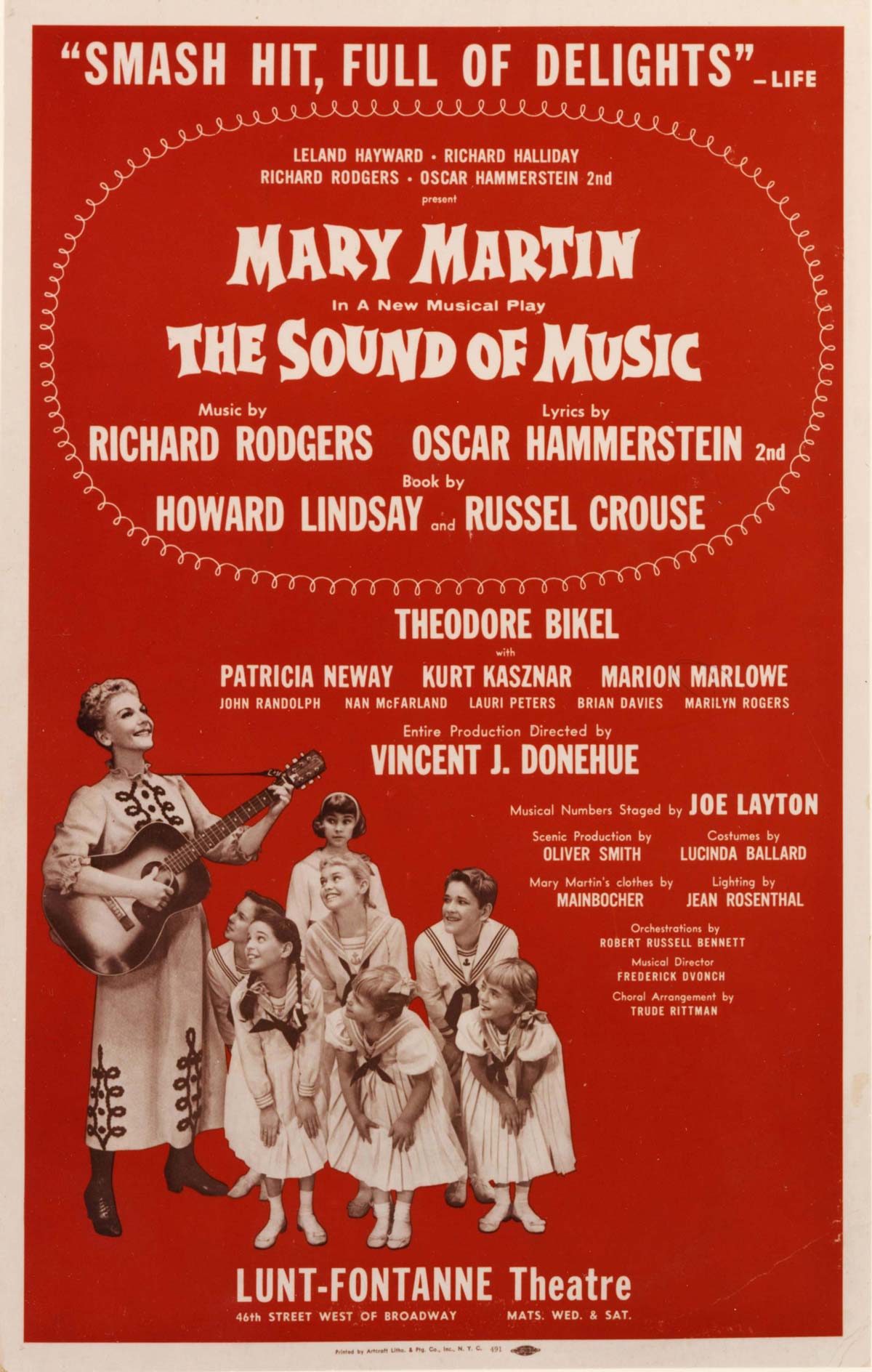
Today in Music (1959): The Sound of Music opened on Broadway

The Sound of Music

Richard Rodgers (music), Oscar Hammerstein II (lyrics)

The Musical


Opened on Broadway: November 16, 1959


Number of Performances: 1443


Opened at London’s West End: May 18, 1961


Number of Performances: 2386


Movie Release: March 29, 1965


Cast Album


Charted: December 21, 1959


Peak: 116 US


Sales (in millions): 2.5 US


Genre: show tunes


Soundtrack


Charted: March 20, 1965


Peak: 12 US, 170 UK


Sales (in millions): 15.0 US, 2.44 UK, 22.0 world (includes US and UK)


Genre: show tunes


Songs on Cast Album:

  1. Preludium
  2. The Sound of Music
  3. Maria
  4. My Favorite Things
  5. Do-Re-Mi
  6. Sixteen Going on Seventeen
  7. The Lonely Goatherd
  8. How Can Love Survive?
  9. The Sound of Music (Reprise)
  10. Laendler
  11. So Long, Farewell
  12. Climb Ev’ry Mountain
  13. No Way to Stop It
  14. An Ordinary Couple
  15. Processional
  16. Sixteen Going on Seventeen (Reprise)
  17. Edelweiss
  18. Climb Ev’ry Mountain (Reprise)


Songs on Soundtrack:

  1. Prelude/The Sound of Music
  2. Overture/Preludium (Dixet Dominus)
  3. Morning Hymn/Alleluia
  4. Maria
  5. I Have Confidence
  6. Sixteen Going on Seventeen
  7. My Favorite Things
  8. Do-Re-Mi
  9. The Sound of Music
  10. The Lonely Goatherd
  11. So Long, Farewell
  12. Climb Ev’ry Mountain
  13. Something Good
  14. Processional/Maria
  15. Edelweiss
  16. Climb Ev’ry Mountain (Reprise)


Singles/Hit Songs:

These were covers of songs from this musical which became hits:
  • “The Sound of Music” – Patti Page (#90 BB, 1959)
  • “My Favorite Things” – Herb Alpert (#45 BB, 1968)
  • “Do-Re-Mi” – Mitch Miller (#70, 1959), Anita Bryant (#94 BB, 1959)
  • “Climb Ev’ry Mountain” – Tony Bennett (#74 BB, 1959), Hesitations (#90 BB, 1968)

Rating:

4.439 out of 5.00 (average of 14 ratings for cast album and soundtrack combined)


Awards (Cast Album): (Click on award to learn more).


Awards (Soundtrack): (Click on award to learn more).

The Show’s Status

The Sound of Music was the final work for the famous musical theater team of Richard Rodgers and Oscar Hammerstein II. (The latter died in 1960). “It’s part of the fabric of musical theater, championed as an artistic triumph in some quarters and regarded, no less affectionately, as kitsch in others.” TM

The pair previously worked on iconic musicals like South Pacific and The King and I. Like those, this was “set in a foreign locale, it starred a female lead in charge of children, it concerned an unlikely romance between an older man and a younger woman, it had a social/political element, and it featured a stirring anthem for a soprano (in this case, ‘Climb Ev’ry Mountain’).” AM-C

The Story

The musical was based on a book by Howard Lindsay and Russell Crouse. It drew heavily from Maria Von Trapp’s autobiography. TB She was a nun in Austria prior to World War II. She became a governess for Captain George Von Trapp, left to raise seven children on his own after the death of his wife. Maria falls in love and marries him. “The musical’s first section offers a glimpse of prewar European upper-crust family life, while the second act provides a human perspective on the tumultuous events of 1930s Europe.” TM

The Songs

The musical introduced “a series of earworms that just won’t take no for an answer.” TM “All of the show’s major motifs can be appreciated not just as plot devices but hymns to the glory of music.” TM

“The Sound of Music”
They include standards such as the title song, which “has a majestic and graceful sweep – it’s exactly the series of notes you’d expect to burst forth from nature as some idealistic young heroine passes by.” TM

“My Favorite Things”
“To appreciate just how strong Sound of Music’s individual songs are, seek out a few of the many interpretations that followed in the show’s wake.” TM Fore example, My Favorite Things became both a Christmas and jazz standard, such as with John “Coltrane and his group reinventing the song, while exhibiting a deep reverence for the musical invention.” TM

“Do-Re-Mi”
Do-Re-Mi has become a favorite sing-a-long for children to “effortelessly learn the notes of the major scale.” TM It was also the center of one of the earliest flash mob viral videos.


The Cast Album

The cast album went to #1 and sold more than 2 million copies in the United States, but “has been so overshadowed by the spectacularly popular film soundtrack album that it’s difficult to judge it on its own merits.” CA The original stage cast featured a 45-year-old Mary Martin playing the 21-year-old Maria. Despite the age discrepancy, She “seems perfectly matched to the material, yet her interpretation of the character differs greatly from that offered by Julie Andrews” CA in the 1965 movie version. “Martin is more wistful, delivering the title song with a deeper, plaintive quality.” CA

Theodore Bikel is a strong presence as Captain Von Trapp. Kurt Kasznar and Marion Marlowe as Max Detweiler and Elsa Schraeder are also standouts; they perform How Can Love Survive? and No Way to Stop It delightfully. The children, including Lauri Peters as Liesl, exude warmth. From a technical and musical standpoint, this Sound of Music album is highly commendable, and as a record of the final Rodgers and Hammerstein score, it’s a must for serious collectors of transcendent musical theater.” CA

As conducted by Frederick Dvonch, the score in general has a more legit tone here than it does on the soundtrack recording, and Patricia Neway brings full operatic beauty and power to the role of the Mother Abbess.” CA


The Movie and Soundtrack

The movie version of The Sound of Music came six years after the original stage musical. It became the highest-grossing movie of all-time up to that point and won the Oscar for Best Picture. The soundtrack was a #1 in the United States and United Kingdom, spending a whopping 70 weeks at the pinnacle in the UK. It also sold more than 22 million copies worldwide, making it one of the top 100 best-sellers of all time.

“One of the principal reasons for the enduring appeal…is the fresh approach given to the material.” CA The star, Julie Andrews, had starred in the musical My Fair Lady and was fresh from an Academy Award for her title role in Mary Poppins, another story about a children’s nanny. She “brings wit, spirit, and buoyancy to the role of Maria. Perfectly sung and brilliantly acted, Andrews’ great performance is also notable for her clear but unaffected diction, and she knows exactly which lines to sing, which ones to exclaim.” CA

“The songs of the Captain and the Mother Abbess are very well sung by Bill Lee and Margery McKay, respectively, dubbing for Christopher Plummer and Peggy Wood. McKay’s rendition of ‘Climb Every Mountain’ is notably stirring. Charmian Carr does her own singing as Liesl; she’s charming in Sixteen Going on Seventeen with Dan Truhitte as Rolf, and in all of her tracks with the children…The arrangements and orchestrations of the film’s music overall are bright, uplifting, and thoroughly delightful from beginning to end.” CA

Resources and Related Links:


Other Related DMDB Pages:


First posted 11/13/2011; last updated 8/15/2024.