Showing posts with label Oscar Hammerstein. Show all posts

Wednesday, July 1, 2026

Top 50 Musical Theater Composers

Musical Theater Composers:

Top 50

This list was first posted on March 22, 2012 in honor of the births of two of musical theater’s most celebrated composers (Stephen Sondheim: March 22, 1930; Andrew Lloyd Webber: March 22, 1948). While this list focused on musical theater, a separate list produced around the same time focused on The Top 100 Songwriters of the Rock Era.

See other lists of Acts/Music Makers by Categories.

Richard Rodgers & Oscar Hammerstein II

1. Richard Rodgers
2. Oscar Hammerstein II
3. Stephen Sondheim
4. Andrew Lloyd Webber
5. George Gershwin

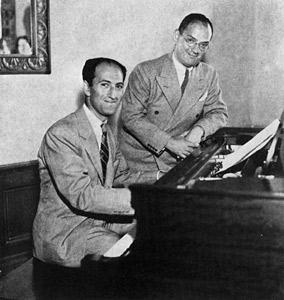
George and Ira Gershwin, image from wmky.org

6. Leonard Bernstein
7. Cole Porter
8. Irving Berlin
9. John Kander
10. Stephen Schwartz

Stephen Sondheim

11. Jerry Herman
12. Frank Loesser
13. Frederick Loewe
14. Ira Gershwin
15. Alan Jay Lerner

Andrew Lloyd Webber & Tim Rice

16. Tim Rice
17. Fred Ebb
18. Jonathan Larson
19. Jerome Kern
20. Harold Arlen

Irving Berlin

21. Lorenz Hart
22. Alan Menken
23. Charles Strouse
24. Marvin Hamlisch
25. Lee Adams

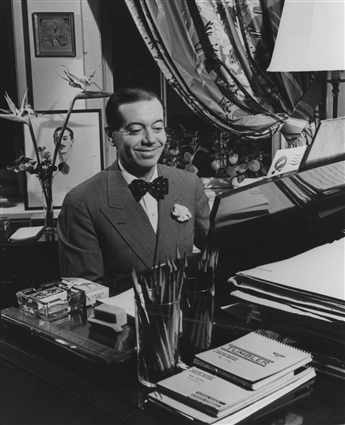
Cole Porter, image from hometownstohollywood.com

26. Cy Coleman
27. Jason Robert Brown
28. Jeanine Tesori
29. Dorothy Fields
30. Jerry Ross

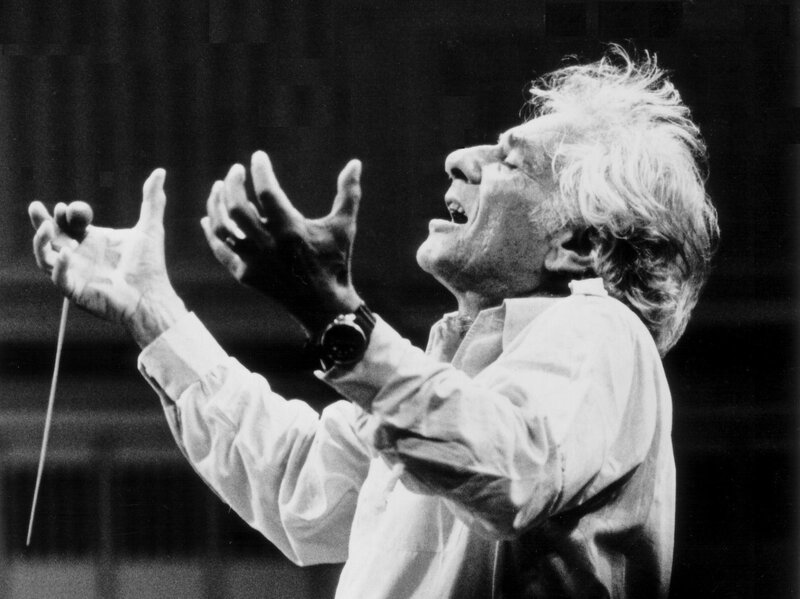
Leonard Bernstein, image from npr.org

31. Jule Styne
32. Richard Adler
33. Sheldon Harnick
34. Jerry Bock
35. Lin-Manuel Miranda

Jerry Herman, image from jerryherman.com

36. Kurt Weill
37. Betty Comden
38. Adolph Green
39. Harold Rome
40. Elton John

Alan Jay Lerner & Frederick Loewe

41. E.Y. “Yip” Harburg
42. Burton Lane
43. Richard Sherman
44. Robert Sherman
45. Claude-Michel Schönberg

Jerome Kern, image from discogs.com

46. Mel Brooks
47. Lynn Ahrens
48. Bob Merrill
49. Johnny Mercer
50. Noël Coward


Resources/Related Links:


First posted 3/22/2012; last updated 7/1/2026.

Tuesday, May 5, 2026

Pulitzer Prize

Pulitzer Prize:

Special Awards and Citations for Musicians

The Pulitzer is an award best known for honoring excellence in journalism, but they also award excellence in the arts. Just over a dozen musicians have been honored through the years with special awards. While this page has been updated through 2026, the most recent recipient is Aretha Franklin in 2019.

See other lifetime achievement awards.


Resources/Related Links:


First posted 4/12/2010; last updated 5/4/2026.

Sunday, December 22, 2019

Dave's Music Database Hall of Fame: Music Maker Inductees (December 2019)

Originally posted 12/22/2019; last updated 5/21/2021.

January 22, 2019 marked the 10-year anniversary of the DMDB blog! To honor that, Dave’s Music Database announced its own Hall of Fame. This fourth batch of music maker inductees celebrates the top 10 music makers who made their names primarily as songwriters in the pre-rock era. See the full list of music maker inductees here.

Harold Arlen (1905-1986)

Inducted December 2019 as a “Top 10 Songwriter.”

A highly regarded contributor the Great American Songbook. He composed more than 500 songs, most notably with lyricsts Ted Koehler (“Get Happy,” “Let’s Fall in Love,” “Stormy Weather”), E.Y. “Yip” Harburg (“Over the Rainbow,” “I’ve Got the World on a String”), and Johnny Mercer (“Blues in the Night,” “That Old Black Magic,” “Ac-Cent-Tchu-ate the Positive,” “One for My Baby”). Read more.

Irving Berlin (1888-1989)

Inducted December 2019 as a “Top 10 Songwriter.”

Russian-born composer and lyricist. George Gershwin called him “the greatest songwriter who ever lived.” Jerome Kern said, “Irving Berlin has no place in American music – he is American music.” A 2001 Time magazine article estimated Berlin wrote around 1250 songs (“Alexander’s Ragtime Band,” “Always,” “Blue Skies,” “God Bless America,” “White Christmas”). 25 have reached #1 on the pop charts. He wrote 17 complete scores for Broadway musicals and revues including Call Me Madam and Annie Get Your Gun. List of Berlin songs here. Read more.

George Gershwin (1898-1937)

Inducted December 2019 as a “Top 10 Songwriter.”

Brooklyn-born composer and pianist who wrote popular and classical music (“Swanee,” “Rhapsody in Blue,” “I Got Rhythm,” “Summertime,” “Someone to Watch Over Me”), often with his brother, lyricist Ira Gershwin. Wrote more than a dozen Broadway shows (Porgy and Bess) and had work featured in movies (An American in Paris). Read more.

Ira Gershwin (1896-1983)

Inducted December 2019 as a “Top 10 Songwriter.”

New York-born classical and musical theater composer (“Someone to Watch Over Me,” “I Got Rhythm,” “I Can't Get Started,” “Summertime”). Often worked with his brother, George Gershwin, including the Broadway show Porgy and Bess and the movie An American in Paris. Read more.

Oscar Hammerstein II (1895-1960)

Inducted December 2019 as a “Top 10 Songwriter.”

New York-born musical theater composer who co-wrote 850 songs, most notably with Jerome Kern (“Ol’ Man River,” “All the Things You Are”) and Richard Rodgers (“Oh, What a Beautiful Mornin’,” “You’ll Never Walk Alone,” “Some Enchanted Evening”). He won eight Tony Awards and two Academy Awards for Best Original Song. Co-wrote musicals Show Boat, Oklahoma!, Carousel, South Pacific, The King and I, The Sound of Music. Read more.

Lorenz Hart (1895-1943)

Inducted December 2019 as a “Top 10 Songwriter.”

New York-born musical theater lyricist (“Blue Moon”, “Isn’t It Romantic?”, “My Funny Valentine,” “The Lady Is a Tramp”, “Bewitched, Bothered and Bewildered”, “My Funny Valentine”). Often worked with Richard Rodgers (Babes in Arms, The Boys from Syracuse, Pal Joey, On Your Toes). Read more.

Jerome Kern (1885-1945)

Inducted December 2019 as a “Top 10 Songwriter.”

New York-born musical theater composer of more than 700 songs (“They Didn't Believe Me,” “Ol’ Man River,” “Smoke Gets in Your Eyes,” “The Way You Look Tonight,” “All the Things You Are”) used in more than 100 stage works. Collaborated with many of his era’s greatest lyricists, including Ira Gershwin, Oscar Hammerstein II, Otto Harbach, Yip Harburg, and Johnny Mercer. Created dozens of Broadway musicals (Show Boat) and Hollywood films over a career lasting more than four decades. Read more.

Johnny Mercer (1909-1976)

Inducted December 2019 as a “Top 10 Songwriter.”

Singer (“On the Atchison, Topeka and Santa Fe,” “Ac-Cent-Tchu-ate the Positive,” “Zip-a-Dee-Doo-Dah,” “Baby, It’s Cold Outside”) songwriter (“Blues in the Night,” “That Old Black Magic,” “One for My Baby,” “Moon River”) who wrote lyrics to more than 1500 songs and more popular songs than any other songwriter in history. Worked in the legendary Brill Building, known for housing some of pop music history’s most famous songwriters and publishers. Received 19 Academy Award nominations. Also a co-founder of Capitol Records. Read more.

Cole Porter (1891-1964)

Inducted December 2019 as a “Top 10 Songwriter.”

Musical theater composer born in Indiana. Songs included “Love for Sale,” “Night and Day,” “You’re the Top,” “I Get a Kick Out of You,” “I’ve Got You Under My Skin,” and “Begin the Beguine.” Musicals included Anything Goes, Kiss Me, Kate, and High Society. Read more.

Richard Rodgers (1902-1979)

Inducted December 2019 as a “Top 10 Songwriter.”

Musical theater songwriter born in New York who composed over 900 songs and 43 Broadway musicals. He worked with lyricist Lorenz Hart (“Blue Moon,” “My Funny Valentine,” “Bewitched, Bothered, and Bewildered,” Pal Joey) in the 1920s and ‘30s and Oscar Hammerstein II (, “You’ll Never Walk Alone,” “Some Enchanted Evening,” Oklahoma!, Carousel, South Pacific, The King and I, The Sound of Music) in the ‘40s and ‘50s. He was the first person to win the four top American entertainment awards – an Emmy, a Grammy, an Oscar, and a Tony Award. He also won a Pulitzer Prize, making him and Marvin Hamlisch the only two people to do so. Read more.

Monday, November 16, 2009

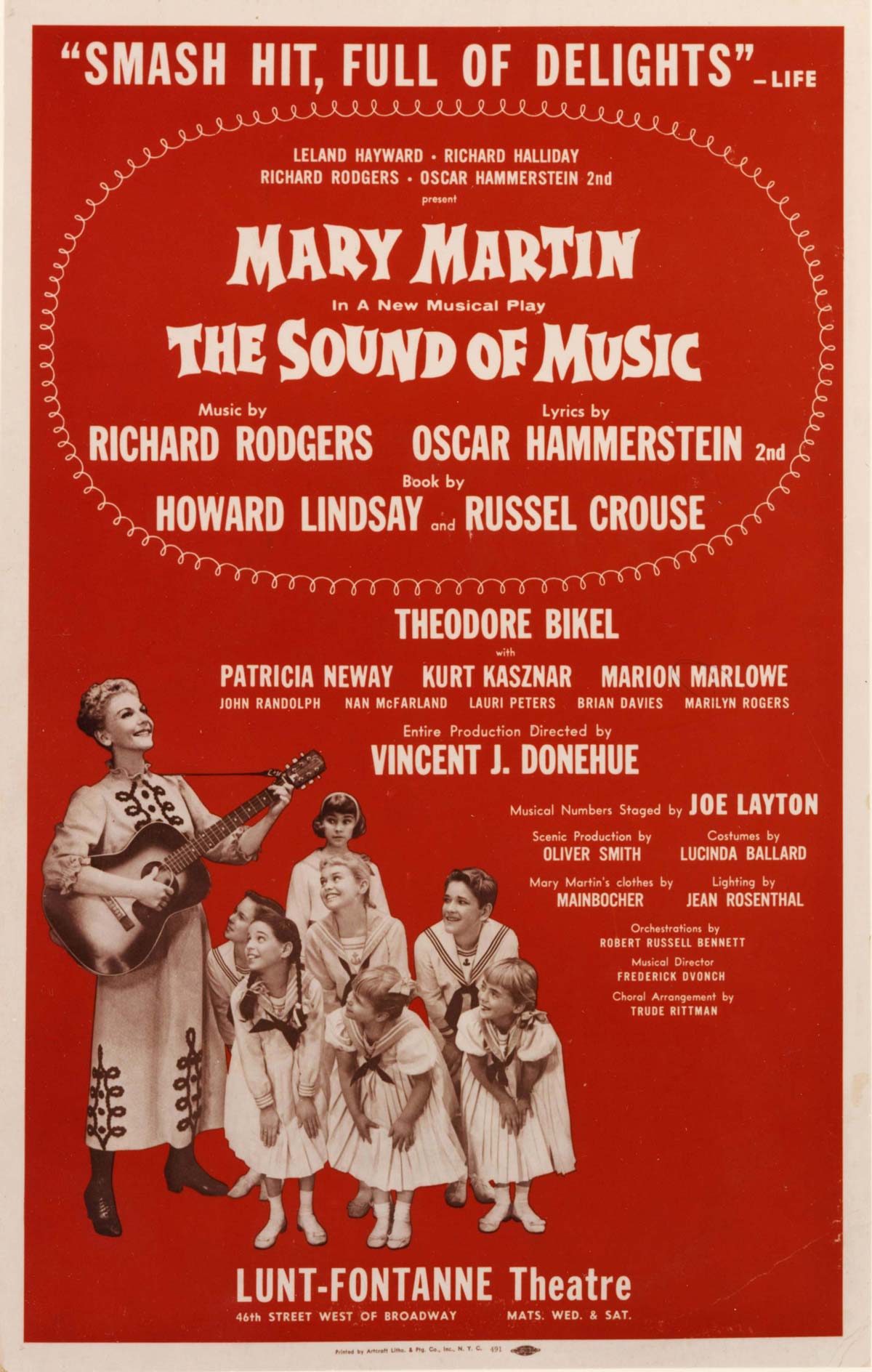
Today in Music (1959): The Sound of Music opened on Broadway

The Sound of Music

Richard Rodgers (music), Oscar Hammerstein II (lyrics)

The Musical


Opened on Broadway: November 16, 1959


Number of Performances: 1443


Opened at London’s West End: May 18, 1961


Number of Performances: 2386


Movie Release: March 29, 1965


Cast Album


Charted: December 21, 1959


Peak: 116 US


Sales (in millions): 2.5 US


Genre: show tunes


Soundtrack


Charted: March 20, 1965


Peak: 12 US, 170 UK


Sales (in millions): 15.0 US, 2.44 UK, 22.0 world (includes US and UK)


Genre: show tunes


Songs on Cast Album:

  1. Preludium
  2. The Sound of Music
  3. Maria
  4. My Favorite Things
  5. Do-Re-Mi
  6. Sixteen Going on Seventeen
  7. The Lonely Goatherd
  8. How Can Love Survive?
  9. The Sound of Music (Reprise)
  10. Laendler
  11. So Long, Farewell
  12. Climb Ev’ry Mountain
  13. No Way to Stop It
  14. An Ordinary Couple
  15. Processional
  16. Sixteen Going on Seventeen (Reprise)
  17. Edelweiss
  18. Climb Ev’ry Mountain (Reprise)


Songs on Soundtrack:

  1. Prelude/The Sound of Music
  2. Overture/Preludium (Dixet Dominus)
  3. Morning Hymn/Alleluia
  4. Maria
  5. I Have Confidence
  6. Sixteen Going on Seventeen
  7. My Favorite Things
  8. Do-Re-Mi
  9. The Sound of Music
  10. The Lonely Goatherd
  11. So Long, Farewell
  12. Climb Ev’ry Mountain
  13. Something Good
  14. Processional/Maria
  15. Edelweiss
  16. Climb Ev’ry Mountain (Reprise)


Singles/Hit Songs:

These were covers of songs from this musical which became hits:
  • “The Sound of Music” – Patti Page (#90 BB, 1959)
  • “My Favorite Things” – Herb Alpert (#45 BB, 1968)
  • “Do-Re-Mi” – Mitch Miller (#70, 1959), Anita Bryant (#94 BB, 1959)
  • “Climb Ev’ry Mountain” – Tony Bennett (#74 BB, 1959), Hesitations (#90 BB, 1968)

Rating:

4.439 out of 5.00 (average of 14 ratings for cast album and soundtrack combined)


Awards (Cast Album): (Click on award to learn more).


Awards (Soundtrack): (Click on award to learn more).

The Show’s Status

The Sound of Music was the final work for the famous musical theater team of Richard Rodgers and Oscar Hammerstein II. (The latter died in 1960). “It’s part of the fabric of musical theater, championed as an artistic triumph in some quarters and regarded, no less affectionately, as kitsch in others.” TM

The pair previously worked on iconic musicals like South Pacific and The King and I. Like those, this was “set in a foreign locale, it starred a female lead in charge of children, it concerned an unlikely romance between an older man and a younger woman, it had a social/political element, and it featured a stirring anthem for a soprano (in this case, ‘Climb Ev’ry Mountain’).” AM-C

The Story

The musical was based on a book by Howard Lindsay and Russell Crouse. It drew heavily from Maria Von Trapp’s autobiography. TB She was a nun in Austria prior to World War II. She became a governess for Captain George Von Trapp, left to raise seven children on his own after the death of his wife. Maria falls in love and marries him. “The musical’s first section offers a glimpse of prewar European upper-crust family life, while the second act provides a human perspective on the tumultuous events of 1930s Europe.” TM

The Songs

The musical introduced “a series of earworms that just won’t take no for an answer.” TM “All of the show’s major motifs can be appreciated not just as plot devices but hymns to the glory of music.” TM

“The Sound of Music”
They include standards such as the title song, which “has a majestic and graceful sweep – it’s exactly the series of notes you’d expect to burst forth from nature as some idealistic young heroine passes by.” TM

“My Favorite Things”
“To appreciate just how strong Sound of Music’s individual songs are, seek out a few of the many interpretations that followed in the show’s wake.” TM Fore example, My Favorite Things became both a Christmas and jazz standard, such as with John “Coltrane and his group reinventing the song, while exhibiting a deep reverence for the musical invention.” TM

“Do-Re-Mi”
Do-Re-Mi has become a favorite sing-a-long for children to “effortelessly learn the notes of the major scale.” TM It was also the center of one of the earliest flash mob viral videos.


The Cast Album

The cast album went to #1 and sold more than 2 million copies in the United States, but “has been so overshadowed by the spectacularly popular film soundtrack album that it’s difficult to judge it on its own merits.” CA The original stage cast featured a 45-year-old Mary Martin playing the 21-year-old Maria. Despite the age discrepancy, She “seems perfectly matched to the material, yet her interpretation of the character differs greatly from that offered by Julie Andrews” CA in the 1965 movie version. “Martin is more wistful, delivering the title song with a deeper, plaintive quality.” CA

Theodore Bikel is a strong presence as Captain Von Trapp. Kurt Kasznar and Marion Marlowe as Max Detweiler and Elsa Schraeder are also standouts; they perform How Can Love Survive? and No Way to Stop It delightfully. The children, including Lauri Peters as Liesl, exude warmth. From a technical and musical standpoint, this Sound of Music album is highly commendable, and as a record of the final Rodgers and Hammerstein score, it’s a must for serious collectors of transcendent musical theater.” CA

As conducted by Frederick Dvonch, the score in general has a more legit tone here than it does on the soundtrack recording, and Patricia Neway brings full operatic beauty and power to the role of the Mother Abbess.” CA


The Movie and Soundtrack

The movie version of The Sound of Music came six years after the original stage musical. It became the highest-grossing movie of all-time up to that point and won the Oscar for Best Picture. The soundtrack was a #1 in the United States and United Kingdom, spending a whopping 70 weeks at the pinnacle in the UK. It also sold more than 22 million copies worldwide, making it one of the top 100 best-sellers of all time.

“One of the principal reasons for the enduring appeal…is the fresh approach given to the material.” CA The star, Julie Andrews, had starred in the musical My Fair Lady and was fresh from an Academy Award for her title role in Mary Poppins, another story about a children’s nanny. She “brings wit, spirit, and buoyancy to the role of Maria. Perfectly sung and brilliantly acted, Andrews’ great performance is also notable for her clear but unaffected diction, and she knows exactly which lines to sing, which ones to exclaim.” CA

“The songs of the Captain and the Mother Abbess are very well sung by Bill Lee and Margery McKay, respectively, dubbing for Christopher Plummer and Peggy Wood. McKay’s rendition of ‘Climb Every Mountain’ is notably stirring. Charmian Carr does her own singing as Liesl; she’s charming in Sixteen Going on Seventeen with Dan Truhitte as Rolf, and in all of her tracks with the children…The arrangements and orchestrations of the film’s music overall are bright, uplifting, and thoroughly delightful from beginning to end.” CA

Resources and Related Links:


Other Related DMDB Pages:


First posted 11/13/2011; last updated 8/15/2024.