Showing posts with label Cole Porter. Show all posts

Wednesday, July 1, 2026

Top 50 Musical Theater Composers

Musical Theater Composers:

Top 50

This list was first posted on March 22, 2012 in honor of the births of two of musical theater’s most celebrated composers (Stephen Sondheim: March 22, 1930; Andrew Lloyd Webber: March 22, 1948). While this list focused on musical theater, a separate list produced around the same time focused on The Top 100 Songwriters of the Rock Era.

See other lists of Acts/Music Makers by Categories.

Richard Rodgers & Oscar Hammerstein II

1. Richard Rodgers
2. Oscar Hammerstein II
3. Stephen Sondheim
4. Andrew Lloyd Webber
5. George Gershwin

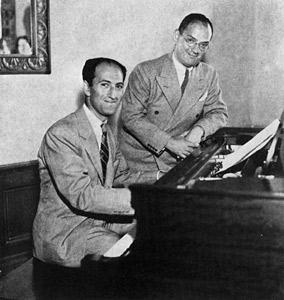
George and Ira Gershwin, image from wmky.org

6. Leonard Bernstein
7. Cole Porter
8. Irving Berlin
9. John Kander
10. Stephen Schwartz

Stephen Sondheim

11. Jerry Herman
12. Frank Loesser
13. Frederick Loewe
14. Ira Gershwin
15. Alan Jay Lerner

Andrew Lloyd Webber & Tim Rice

16. Tim Rice
17. Fred Ebb
18. Jonathan Larson
19. Jerome Kern
20. Harold Arlen

Irving Berlin

21. Lorenz Hart
22. Alan Menken
23. Charles Strouse
24. Marvin Hamlisch
25. Lee Adams

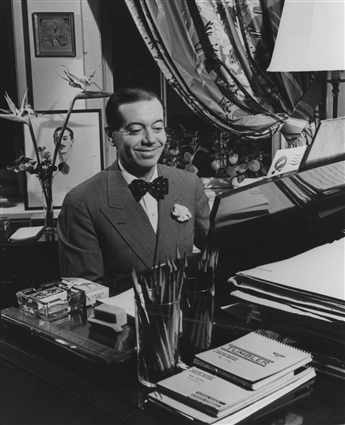
Cole Porter, image from hometownstohollywood.com

26. Cy Coleman
27. Jason Robert Brown
28. Jeanine Tesori
29. Dorothy Fields
30. Jerry Ross

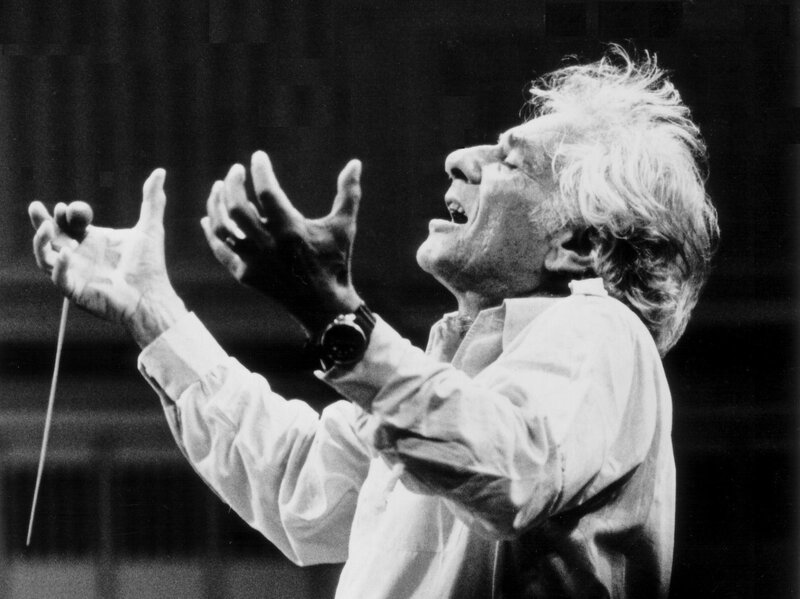
Leonard Bernstein, image from npr.org

31. Jule Styne
32. Richard Adler
33. Sheldon Harnick
34. Jerry Bock
35. Lin-Manuel Miranda

Jerry Herman, image from jerryherman.com

36. Kurt Weill
37. Betty Comden
38. Adolph Green
39. Harold Rome
40. Elton John

Alan Jay Lerner & Frederick Loewe

41. E.Y. “Yip” Harburg
42. Burton Lane
43. Richard Sherman
44. Robert Sherman
45. Claude-Michel Schönberg

Jerome Kern, image from discogs.com

46. Mel Brooks
47. Lynn Ahrens
48. Bob Merrill
49. Johnny Mercer
50. Noël Coward


Resources/Related Links:


First posted 3/22/2012; last updated 7/1/2026.

Saturday, April 17, 2021

Tin Pan Alley: Top 100 Songs

Tin Pan Alley:

Top 100 Songs

Tin Pan Alley is a reference to a collection of late 19th century and early 20th century music publishers and songwriters in New York City, specifically West 28th Street between Fifth and Sixth Avenues in Manhattan. The era is generally marked as starting in 1885 when a number of music publishers first set up shop in the area. Some consider the start of the Great Depression in the 1930s to mark the ending – a time when sheet music was no longer the driving force for American popular music, but a time when the phonograph, radio, and movies had more influence. Others consider the movement to have lasted into the 1950s when it was upstated by the rise of rock & roll and the subsequent influence of writers from the Brill Building. Some of the the most significant Tin Pan Alley writers were Harold Arlen, Irving Berlin, George M. Cohan, George Gershwin, Ira Gershwin, Oscar Hammerstein II, Jerome Kern, Frank Loesser, Cole Porter, Richard Rodgers, and Albert Von Tilzer. The phrase, however, has come to be associated more broadly with commercially successful music of the early 20th century.

This list was creating by aggregating 18 lists and giving extra weight to songs which fell between 1885 and 1933 and were written by one of the significant songwriters specifically associated with the Tin Pan Alley era. Songs are listed with the songwriters and first year the song emerged. These songs have largely become standards; more than half of them appear on the DMDB list of the top 100 American Songbook Standards .

Click here to see other genre-specific song lists.

1. Irving Berlin “Alexander’s Ragtime Band” (1911)
2. Jack Norworth and Albert von Tilzer “Take Me Out to the Ball Game” (1908)
3. Jack Norworth and Nora Bayes “Shine on, Harvest Moon” (1908)
4. Shelton Brooks “Some of These Days” (1910)
5. Milton Ager and Jack Yellen “Ain’t She Sweet?” (1927)
6. Leo Friedman and Beth Slater Whitson “Let Me Call You Sweetheart” (1910)
7. Shelton Brooks “Darktown Strutters’ Ball” (1917)
8. Ren Shields and George Evans “In the Good Old Summertime” (1902)
9. Irving Berlin “God Bless America” (1939)
10. Charles K. Harris “After the Ball” (1892)

11. George M. Cohan “Give My Regards to Broadway” (1904)
12. Edward Madden and Gus Edwards “By the Light of the Silvery Moon” (1909)
13. Joseph E. Howard and Ida Emerson “Hello Ma Baby” (1899)
14. Alfred Bryan and Fred Fisher “Peg O’ My Heart” (1913)
15. George Gershwin and Irving Caesar “Swanee” (1920)
16. George M. Cohan “Over There” (1917)
17. John Schonberger, Richard Coburn, and Vincent Rose “Whispering” (1920)
18. Milton Ager and Jack Yellen “Happy Days Are Here Again” (1930)
19. Hughie Cannon and Johnnie Queen “Bill Bailey, Won’t You Please Come Home” (1902)
20. Harry Von Tilzer and William Dillon “I Want a Girl Just Like the Girl Who Married Dear Old Dad” (1911)

21. Seymour Simons and Gerald Marks “All of Me” (1931)
22. Walter Donaldson and George A. Whiting “My Blue Heaven” (1927)
23. Edward Madden and Percy Wenrich “Moonlight Bay” (1912)
24. Jimmy McHugh and Dorothy Fields “On the Sunny Side of the Street” (1930)
25. Spencer Williams and Jack Palmer “Everybody Loves My Baby” (1924)
26. Jimmy Monaco and Joseph McCarthy “You Made Me Love You (I Didn't Want to Do It)” (1913)
27. Irving Berlin “Cheek to Cheek” (1935)
28. Hoagy Carmichael and Mitchell Parish “Stardust” (1927)
29. W.C. Handy “St. Louis Blues” (1914)
30. Theodore August Metz and Joe Hayden “A Hot Time in the Old Town” (1896)

31. Ben Bernie, Kenneth Casey, and Maceo Pinkard “Sweet Georgia Brown” (1925)
32. Hoagy Carmichael and Stuart Gorrell “Georgia on My Mind” (1930)
33. Irving Berlin “Always” (1926)
34. Harry Akst, Sam M. Lewis, and Joe Young “Dinah” (1932)
35. Ray Henderson and Mort Dixon “Bye Bye Blackbird” (1926)
36. Joseph E. Howard, Harold Orlob, Frank R. Adams, and Will M. Hough “I Wonder Who’s Kissing Her Now” (1909)
37. Fred Fisher and Alfred Bryan “Come Josephine in My Flying Machine” (1910)
38. Jimmy McHugh and Dorothy Fields “I Can’t Give You Anything But Love” (1928)
39. Nat D. Ayer and Seymour Brown “Oh You Beautiful Doll” (1911)
40. George Meyer, Edgar Leslie, and E. Ray Goetz “For Me and My Gal” (1917)

41. Harry Von Tilzer and Andrew B. Sterling “Wait Till the Sun Shines, Nellie” (1905)
42. Chris Smith and Jim (James Henry) Burris “Ballin’ the Jack” (1913)
43. Scott Joplin “The Entertainer” (1902)
44. Harry Von Tilzer and Arthur J. Lamb “A Bird in a Gilded Cage” (1900)
45. Cole Porter “Night and Day” (1932)
46. George and Ira Gershwin “I Got Rhythm” (1930)
47. Charles B. Lawlor and James W. Blake “The Sidewalks of New York” (1894)
48. Johnny Green, Eddie Heyman, Robert Sour, and Frank Eyton “Body and Soul” (1930)
49. Gus Kahn and Walter Donaldson “Carolina in the Morning” (1923)
50. Paul Dresser “On the Banks of the Wabash” (1897)

51. Harold Arlen and Ted Koehler “Stormy Weather (Keeps Rainin' All the Time)” (1933)
52. Frank Silver and Irving Cohn “Yes! We Have No Bananas” (1923)
53. Turner Layton and Henry Creamer “After You’ve Gone” (1918)
54. W.C. Handy, George A. Norton, Charles Tobias, and Peter DeRose “The Memphis Blues” (1912)
55. Alfred Bryan and Al Piantadosi “I Didn’t Raise My Boy to Be a Soldier” (1915)
56. Ray Henderson, Sam Lewis, and Joe Young “Five Foot Two, Eyes of Blue” (1926)
57. Turner Layton and Henry Creamer “Way Down Yonder in New Orleans” (1922)
58. Gus Edwards and Will D. Cobb “School Days (When We Were a Couple of Kids)” (1907)
59. Buddy DeSylva and Louis Silvers “April Showers” (1922)
60. Tell Taylor “Down by the Old Mill Stream” (1910)

61. Joe Burke and Al Dubin “Tip Toe Through the Tulips” (1929)
62. Walter Donaldson and Gus Kahn “Yes Sir! That’s My Baby” (1925)
63. Cole Porter “I’ve Got You Under My Skin” (1936)
64. The Original Dixieland Jazz Band, Harry DeCosta “Tiger Rag” (1918)
65. George M. Cohan “You’re a Grand Old Flag (aka “The Grand Old Rag”)” (1906)
66. Isham Jones and Gus Kahn “I’ll See You in My Dreams” (1925)
67. Arthur B Sterling and Kerry Mills “Meet Me in St. Louis, Louis” (1904)
68. Cole Porter “I Get a Kick Out of You” (1934)
69. Mark Fisher, Joe Goodwin, and Larry Shay “When You’re Smiling, the Whole World Smiles with You” (1928)
70. Gus Edwards and Vincent Bryan “In My Merry Oldsmobile” (1902)

71. Victor Young and Will Harris “Sweet Sue, Just You” (1928)
72. George M. Cohan “Yankee Doodle Boy” (1905)
73. Fred Fisher “Chicago (That Toddlin’ Town)” (1922)
74. Johnny S. Black “Paper Doll” (1942)
75. Vincent Youmans and Irving Caesar “Tea for Two” (1925)
76. Walter Donaldson and Gus Kahn “Makin’ Whoopee” (1928)
77. Richard Rodgers and Lorenz Hart “Blue Moon” (1935)
78. Arthur Johnson and Johnny Burke “Pennies from Heaven” (1936)
79. Irving Berlin “White Christmas” (1942)
80. Jean Kenbrovin and John William Kellette “I’m Forever Blowing Bubbles” (1919)

81. Richard H. Gerard and Harry Armstrong “Sweet Adeline (You’re the Flower of My Heart)” (1903)
82. Isham Jones and Gus Kahn “It Had to Be You” (1924)
83. Jerome Kern and Otto Harbach “Smoke Gets in Your Eyes” (1933)
84. Irving Berlin “Puttin’ on the Ritz” (1930)
85. Henry J. Sayers “Ta-Ra-Ra Boom-De-Ay” (1891)
86. Scott Joplin “Maple Leaf Rag” (1899)
87. Herman Hupfield “As Time Goes By” (1931)
88. Daniel Decatur Emmett “Dixie” (1860)
89. Euday L. Bowman “Twelfth Street Rag” (1916)
90. George & Ira Gershwin “Summertime” (1935)

91. Jerome Kern and Oscar Hammerstein II “Ol’ Man River” (1927)
92. Cole Porter “Begin the Beguine” (1935)
93. Sam M. Lewis, Joe Young, and Jean Schwartz “Rock-a-Bye Your Baby with a Dixie Melody” (1918)
94. Irving Berlin “Blue Skies” (1927)
95. Gus Kahn, Ernie Erdman, and Dan Russo “Toot Toot Tootsie (Goo-Bye!)” (1922)
96. Harry M. Woods “Side by Side” (1927)
97. Richard Rodgers and Lorenz Hart “My Funny Valentine” (1937)
98. George & Ira Gershwin “They Can’t Take That Away from Me” (1937)
99. Harold Arlen and E.Y. “Yip” Harburg “Over the Rainbow” (1939)
100. Hoagy Carmichael and Sidney Arodin “Lazy River” (1931)


Resources and Related Links:

First posted 4/17/2021.

Monday, November 5, 2018

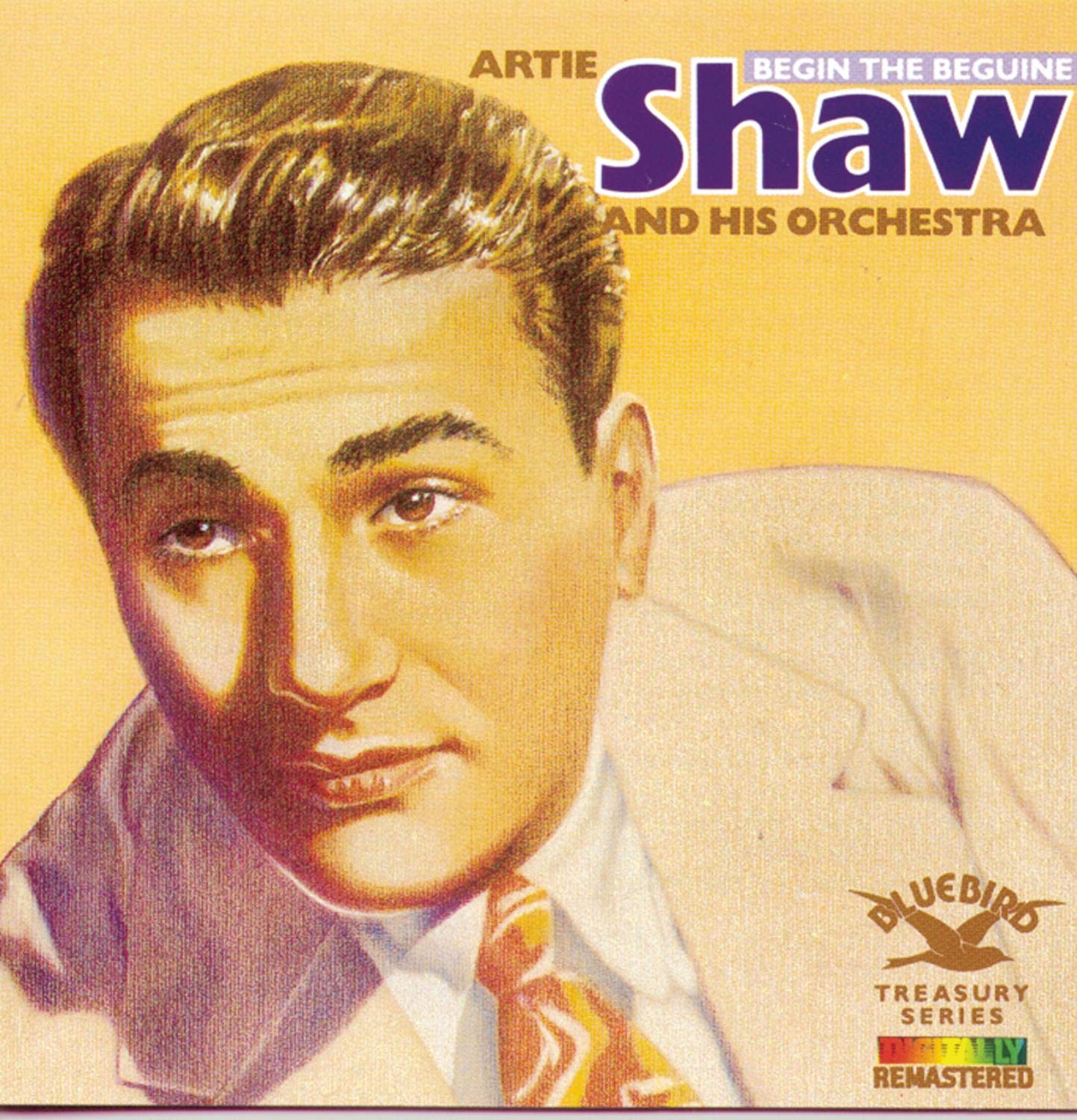
Today in Music (1938): Artie Shaw’s “Beguin the Beguine” hit #1

Begin the Beguine

Artie Shaw

Writer(s): Cole Porter (see lyrics here)


First Charted: September 3, 1938


Peak: 16 US, 12 GA (Click for codes to charts.)


Sales (in millions): 2.0 US, -- UK, 2.0 world (includes US + UK)


Airplay/Streaming (in millions): -- radio, 2.85 video, -- streaming

Awards:

Click on award for more details.

About the Song:

“Beguine” refers to a 1930s’ Cuban dance similar to a rumba. The moves, however, are slower and performed slowly and deliberately. Depending on the account one chooses to believe, songwriter Cole Porter experienced it for the first time on a luxury cruise during a stop in Martinique or a Paris dance hall frequented by Martinique imigrants. He adopted the dance’s rhythm for a big production number for Jubilee, a musical comedy which debuted in 1935. SB The show only lasted 169 performances, which reportedly didn’t upset Porter. He was, however, annoyed that people preferred “Beguine” to “Just One of Those Things,” another song from the show. He’d not anticipated “Beguine” being a hit. SB

That’s not surprising. Although “Porter was a musical master and his songs are among the cream of the musical crop,” PS “Begin the Beguine,” didn’t follow conventional hit-making wisdom. Standards typically had thirty-two measures, but “Beguine” stretched to a whopping 108, making it the longest popular song ever written. SB The piece also had a lot of words, “a chord progression that goes through several modes and keys, [and] a vocal span three steps beyond the octave.” MM

Xavier Cugat recorded the song and had a #13 hit with it in 1935. However, it was Artie Shaw’s version three years later which became a #1 PM hit and “one of the most popular jazz standards.” SB His recording came about when fans kept asking him to play it. He gave it more of a swing feel and debuted it at the Roseland State Ballroom. According to guitarist Al Avola, “The first time we played it we could just feel the vibrations. We knew it was going to be big.” SB When Shaw was contracted to record a swing version of Rudolf Friml’s “Indian Love Call,” he did so with the stipulation that he record “Beguine” as the B-side. His hunch paid off; the song became one of the largest-selling instrumental recordings by an American band. TY1

Shaw charted with it again in 1942 and Eddie Heywood and Frank Sinatra followed with charting versions in 1945 and 1946 respectively. PM The song has also been recorded by Sammy Davis Jr., the Andrews Sisters, the Flamingos, and Johnny Mathis. It was included in the 1946 Cole Porter biopic Night and Day. MM In a Billboard Disc Jockey poll, it was rated as the number 5 song of all-time. PM


Resources:


Related Links:


Last updated 10/29/2023.

Wednesday, December 19, 2012

Popular Music Hall of Fame

Popular Music Hall of Fame:

years unknown

This Hall seems to be defunct now. Web searches only turn up the more recent America’s Pop Music Hall of Fame and the pophall.org link is now dead. The Hall had 25 inductees from the pre-rock era.

See other Hall of Fames.

Wednesday, December 30, 1998

50 years ago: Kiss Me, Kate opened on Broadway

Kiss Me, Kate

Cole Porter (music & lyrics)

Cast Album


Stage Debut: December 30, 1948


Charted: February 26, 1949


Peak: 110 US


Sales (in millions): -- US, -- UK, -- world (includes US and UK)


Genre: show tunes


Soundtrack


Charted: January 23, 1954


Peak: 7 US


Sales (in millions): --


Genre: show tunes


Songs on Cast Album:

Song Title (Performers)

  1. Overture c
  2. Another Op’nin’, Another Show (ANNABELLEL HILL) c
  3. Why Can’t You Behave? (LISA KIRK/ HAROLD LANG)
  4. Wunderbar (PATRICIA MORISON/ ALFRED DRAKE)
  5. So in Love (PATRICIA MORISON)
  6. We Open in Venice (ALFRED DRAKE/ PATRICA MORISON/ LISA KIRK)
  7. Tom, Dick or Harry (LISA KIRK/ HAROLD LANG/ EDWIN CLAY)
  8. I’ve Come to Wive It Wealthily in Padua (ALFRED DRAKE/ MEN’S CHORUS)
  9. I Hate Men (PATRICIA MORISON)
  10. Were Thine That Special Face (ALFRED DRAKE)
  11. Too Darn Hot (LORENZO FULLER/ EDDIE SLEDGE/ FRED DAVIS)
  12. Where is the Life That Late I Led? (ALFRED DRAKE)
  13. Always True to You in My Fashion (LISA KIRK)
  14. Bianca (HAROLD LANG) c
  15. So in Love (Reprise) (ALFRED DRAKE) c
  16. Brush Up Your Shakespeare (HARRY CLARK/ JACK DIAMOND)
  17. I Am Ashamed That Women Are So Simple (PATRICA MORISON)
  18. Finale: Kiss Me, Kate (ALFRED DRAKE/ PATRICIA MORISON)
c on cast album only


Songs on Soundtrack:

Song Title (Performers)

  1. Too Darn Hot (ANN MILLER)
  2. So in Love (KATHRYN GRAYSON/ HOWARD KEEL)
  3. We Open in Venice (KATHRYN GRAYSON/ HOWARD KEEL/ ANN MILLER)
  4. Why Can’t You Behave? (ANN MILLER)
  5. Were Thine That Special Face (HOWARD KEEL)
  6. Tom, Dick or Harry (ANN MILLER/ BOBBY VAN/ TOMMY RALL)
  7. Wunderbar (KATHRYN GRAYSON/ HOWARD KEEL)
  8. Always True to You in My Fashion (ANN MILLER/ TOMMY RALL)
  9. I Hate Men (KATHRYN GRAYSON)
  10. I’ve Come to Wive It Wealthily in Padua (HOWARD KEEL)
  11. From This Moment On (TOMMY RALL/ ANN MILLER/ BOBBY VAN) s
  12. Where is the Life That Late I Led? (HOWARD KEEL)
  13. Brush Up Your Shakespeare KEENAN WYNN/ JAMES WHITMORE)
  14. Kiss Me, Kate (KATHRYN GRAYSON/ HOWARD KEEL)
s on soundtrack only


Singles/Hit Songs:

As was common in the pre-rock era, songs from musicals were often recorded by artists not associated with the musical and released as singles. Here are some of the most notable hit singles resulting from the show:

  • “So in Love” – Patti Page (#13, 1949), Gordon MacRae (#20, 1949), Dinah Shore (#20, 1949)

Rating:

4.487 out of 5.00 (average of 11 ratings for cast album and soundtrack combined)


Awards (Cast Album and Soundtrack): (Click on award to learn more).

About the Show:

Kiss Me, Kate was the most successful Broadway musical of Cole Porter’s career, much to his and everyone else’s surprise. Porter was thought to be in decline in the late ‘40s, having suffered such recent failures as Around the World in Eighty Days on-stage and The Pirate in movie theaters.” R-C

“Like Irving Berlin before Annie Get Your Gun, he was apprehensive about…writing character songs for a book musical in the manner of Rodgers & Hammerstein, having come out of a tradition in which the songs in a musical were more ornamental than substantive. And he was initially resistant to the idea for Kiss Me, Kate, a musical version of Shakespeare’s The Taming of the Shrew.” R-C

“Some credit for that no doubt went to the clever book by Bella and Samuel Spewack, which gave the plot a backstage, show-within-a-show framework in which the actors were playing actors who were appearing in a musical version of The Taming of the Shrew, allowing Porter to write in both contemporary and Elizabethan modes. And the actors themselves – Alfred Drake and Patricia Morison in the leading roles, Lisa Kirk and Harold Lang in the secondary ones – added to the success of the work.” R-C

“But the main drawing card was still Porter, who turned in one of his most tuneful and witty collections of songs.” R-C “The lyrics were full of puns and sly sexual references, also Porter hallmarks. This was a score that not only featured an excellent romantic ballad, So in Love…but also a parody of operetta, Wunderbar, that began with the geographic joke ‘Gazing down on the Jungfrau/From our secret chalet for two,’ an impossibility, since the Jungfrau is a mountain in the Swiss Alps that tops 13,000 feet!” R-C

The show opened on December 30, 1948 and had a run of 1077 performances. It also won the Tony for Best Musical. When Columbia Records went to record the cast album, they opted for their new 12” LP format instead of the usually ten-inch records. This gave them room for 48 minutes of music. The result was “a commercial success that rivaled the stage production.” R-C

The soundtrack for the 1954 film was mostly “inferior to the…cast album,” R-S although there were exceptions. Howard Keel’s performance as Fred Graham was “the equal of Alfred Drake, who took the part on Broadway, and Ann Miller, as Lois Lane and Bianca, is at least as effective as Lisa Kirk was on-stage and gets more to do as well, having been given the song Too Darn Hot, which was sung by a different character on Broadway.” R-S

On the flip side, the censors “made themselves felt heavily in the song lyrics… [excising parts of the score which were] very suggestive [and] full of sexual innuendos, puns, references, and mildly naughty words.” R-S “Maybe this is what had to be done to get a film into movie theaters in 1953, but music fans can only be disappointed at the airbrushing of a classic score.” R-S


Notes: A 1998 reissue of the cast album “restored the play's original overture (left off of the original recording), from a recording of the piece made a decade later. Unfortunately, its presence is also a reminder of the fidelity, warmth, and crispness that is lacking in the original cast material.” BE

The 1990 CBS Special Products reissue “lengthened the album from 39 to 51 minutes. Six years later, Rhino stretched that out to 63 minutes [and 27 songs] by including more instrumentals and underscoring, and the reissue producers stripped off the sound effects.” R-S

Resources and Related Links:


Other Related DMDB Pages:


First posted 5/19/2011; last updated 12/21/2021.