Showing posts with label Andrew Lloyd Webber. Show all posts

Wednesday, July 1, 2026

Top 50 Musical Theater Composers

Musical Theater Composers:

Top 50

This list was first posted on March 22, 2012 in honor of the births of two of musical theater’s most celebrated composers (Stephen Sondheim: March 22, 1930; Andrew Lloyd Webber: March 22, 1948). While this list focused on musical theater, a separate list produced around the same time focused on The Top 100 Songwriters of the Rock Era.

See other lists of Acts/Music Makers by Categories.

Richard Rodgers & Oscar Hammerstein II

1. Richard Rodgers
2. Oscar Hammerstein II
3. Stephen Sondheim
4. Andrew Lloyd Webber
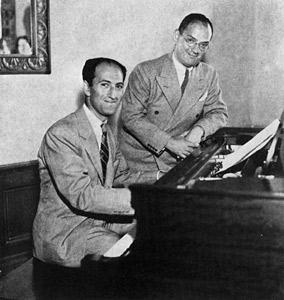
5. George Gershwin

George and Ira Gershwin, image from wmky.org

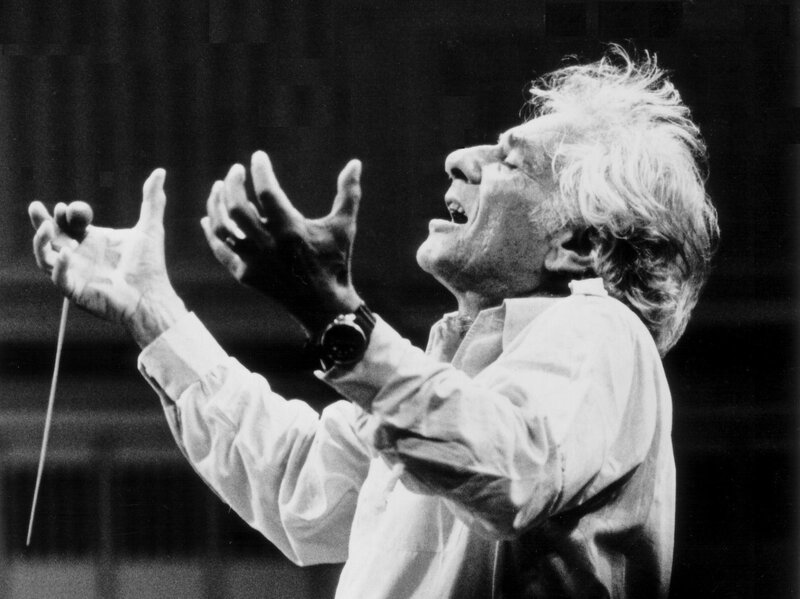
6. Leonard Bernstein
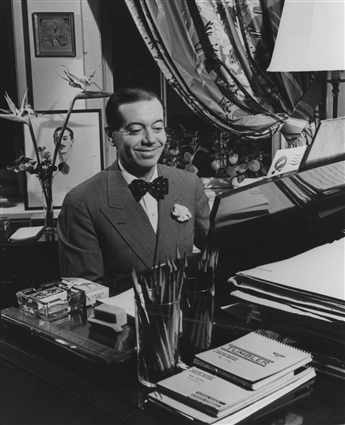
7. Cole Porter
8. Irving Berlin
9. John Kander
10. Stephen Schwartz

Stephen Sondheim

11. Jerry Herman
12. Frank Loesser
13. Frederick Loewe
14. Ira Gershwin
15. Alan Jay Lerner

Andrew Lloyd Webber & Tim Rice

16. Tim Rice
17. Fred Ebb
18. Jonathan Larson
19. Jerome Kern
20. Harold Arlen

Irving Berlin

21. Lorenz Hart
22. Alan Menken
23. Charles Strouse
24. Marvin Hamlisch
25. Lee Adams

Cole Porter, image from hometownstohollywood.com

26. Cy Coleman
27. Jason Robert Brown
28. Jeanine Tesori
29. Dorothy Fields
30. Jerry Ross

Leonard Bernstein, image from npr.org

31. Jule Styne
32. Richard Adler
33. Sheldon Harnick
34. Jerry Bock
35. Lin-Manuel Miranda

Jerry Herman, image from jerryherman.com

36. Kurt Weill
37. Betty Comden
38. Adolph Green
39. Harold Rome
40. Elton John

Alan Jay Lerner & Frederick Loewe

41. E.Y. “Yip” Harburg
42. Burton Lane
43. Richard Sherman
44. Robert Sherman
45. Claude-Michel Schönberg

Jerome Kern, image from discogs.com

46. Mel Brooks
47. Lynn Ahrens
48. Bob Merrill
49. Johnny Mercer
50. Noël Coward


Resources/Related Links:


First posted 3/22/2012; last updated 7/1/2026.

Saturday, September 27, 1986

Phantom of the Opera opened in London

Phantom of the Opera

Andrew Lloyd Webber (music), Charles Hart & Richard Stilgoe (lyrics)

The Musical


Opened at London’s West End: September 27, 1986


Number of Performances: 15,236

Opened on Broadway: January 26, 1988


Number of Performances: 13,981


Movie Release: December 10, 2004

Cast Album


Released: April 20, 1987


Peak: 33 US, 13 UK, -- CN, -- AU


Sales (in millions): 4.0 US, 0.9 UK, 4.9 world (includes US and UK)


Genre: show tunes


Soundtrack


Released: November 23, 2004


Peak: 16 US, 40 UK


Sales (in millions): 1.0 US


Genre: show tunes


Songs:

  1. Prologue
  2. Overture h, s
  3. Think of Me h, s
  4. Angel of Music h, s
  5. The Mirror (Angel of Music) h, s
  6. The Phantom of the Opera (Sarah Brightman, 1/11/86, #7 UK) h, s
  7. The Music of the Night h, s
  8. I Remember/ Stranger Than You Dream
  9. Magical Lasso
  10. Prima Donna h, s
  11. Poor Fool, He Makes Me Laugh
  12. Why Have You Brought Me Here/
  13. All I Ask of You (Sarah Brightman & Steve Harley, 10/4/86, 7 UK) s
  14. All I Ask of You (Reprise) h, s
  15. Entr’acte h
  16. Masquerade h, s
  17. Notes/ Twisted Every Way
  18. Wishing You Were Here Somehow Here Again (Sarah Brightman, 1/10/87, 7 UK) h, s
  19. Wandering Child/ Bravo Monsieur
  20. The Point of No Return h, s
  21. Down Once More/ Track Down This Murderer h, s

h songs on one-disc highlight version
s songs on one-disc soundtrack version

The soundtrack also adds the brand new “Learn to Be Lonely,” performed by Minnie Driver. A special edition, double-disc version of the soundtrack includes film dialogue.

Rating (cast album):

4.669 out of 5.00 (average of 11 ratings for cast album and soundtrack combined)


Rating (soundtrack):

3.866 out of 5.00 (average of 9 ratings for cast album and soundtrack combined)


Awards (Cast Album and Soundtrack): (Click on award to learn more).

About the Work:

The Phantom of the Opera was originally a 1911 gothic mystery novel by French novelist Gaston Leroux. Ken Hill did a musical version of the book in 1976; ten years later it was adapted again by Andrew Lloyd Webber. “The musical focuses on a beautiful soprano, Christine Daaé, who becomes the obsession of a mysterious, disfigured musical genius known as ‘The Phantom of the Opera’, who terrorizes the Paris Opera House.” WK

Initially Webber approached Jim Steinman, best known for collaborating with Meat Loaf on Bat Out of Hell, to write the lyrics because of his “dark obsessive side.” WK When Steinman declined because of commitments to working on Bonnie Tyler’s album, he recruited Alan Jay Lerner (My Fair Lady, Camelot ), who unfortunately died soon after starting on the project. WK Next up was Richard Stilgoe, who also wrote lyrics for Webber’s Starlight Express. However, Webber deemed his lyrics “too witty and clever, rather than romantic” WK so Charles Hart was brought in to rewrite the lyrics. Stilgoe and Hart both got credit on the final version. WK

Phantom opened on October 9, 1986 at Her Majesty’s Theatre in London. It became “the second-longest-running West End musical of all time, behind Les Miserables.” WK It had similar success after opening in New York in January 1988, becoming “the longest-running Broadway musical of all time, breaking the record held by Lloyd Webber’s Cats.” WK Its final performance was on April 16, 2023. It “won both the Olivier Award and Tony Award as the best musical in its debut years on the West End and Broadway.” WK

The musical has also been named “the highest-grossing entertainment event of all time.” WK The New York production is the “most financially successful Broadway show in history” WK with $600 million grossed. WK The show has played to over 100 million people in 124 cities in 25 countries. WK

Michael Crawford and Sarah Brightman, who starred in the West End production as the titular character and Christine respectively, also launched the Broadway debut. As such, the London cast album became the official recording and no Broadway version was made. WR Both a two-disc set and a single-disc “highlights” set were made available, each selling 4 million copies in the U.S.

In 2004, Phantom was made into a movie starring Gerard Butler as the Phantom and Emily Rossum as Christine Daaé. It was also released in two editions – the double-disc version was the “the complete, unedited film soundtrack, including dialogue, incidental background music, and sound effects,” WR while the single-disc version was billed as the standard release.

Webber wrote “some extra background music here and there, as well as one new song, and that’s an oddity, too. Minnie Driver, who plays the prima donna Carlotta, had her singing dubbed by Margaret Preece, but she turns up at the end and, over the closing credits, sings Learn to Be Lonely, an irrelevant and musically out-of-place song clearly composed just to have a new tune that would be Academy Award-eligible. The film’s other singers are adequate but no competition to Crawford, Brightman, and their colleagues, and the initial recording remains the one to buy.” WR

Reviews:


Related DMDB Links:


First posted 1/26/2012; last updated 7/19/2025.

Friday, November 19, 1976

Nov. 19, 1976: studio album of Evita released

First posted November 14, 2010. Last updated September 4, 2018.

Evita (studio/cast/soundtrack)

Andrew Lloyd Webber/Tim Rice (composers)

Studio Album Released: Nov. 19, 1976

First Stage Production: June 21, 1978

Soundtrack Released: Nov. 12, 1996


Sales (in millions):
US: 1.0 C, 5.0 S
UK: 0.3 SR, 0.6 S
IFPI: 2.0 S
World (estimated): 1.3 C, 18.0 S


Peak:
US: 105 C, 2 S
UK: 4 SR, 11-S
Canada: --
Australia: --

SR Studio Album
C Cast Album
S Soundtrack

Quotable: --


Genre: show tunes


Album Tracks – Studio/Cast Album:

  1. Cinema in Buenos Aires, 26 July 1952
  2. Requiem for Evita / Oh What a Circus
  3. On This Night of a Thousand Stars / Eva and Magaldi / Eva Beware of the City
  4. Buenos Aires
  5. Goodnight and Thank You
  6. The Lady's Got Potential **
  7. Charity Concert / I’d Be Surprisingly Good for You
  8. Another Suitcase in Another Hall
  9. Dangerous Jade *
  10. A New Argentina
  11. On the Balcony of the Casa Rosada / Don’t Cry for Me Argentina
  12. High Flying, Adored
  13. Rainbow High
  14. Rainbow Tour
  15. The Actress Hasn’t Learned the Lines (You’d Like to Hear)
  16. And the Money Kept Rolling (In and Out)
  17. Santa Evita
  18. Waltz for Eva and Che
  19. She Is a Diamond
  20. Dice Are Rolling * / Eva’s Sonnet *
  21. Eva’s Final Broadcast
  22. Montage *
  23. Lament
* Unique to cast album
** Unique to studio album

Album Tracks – Soundtrack:

Disc 1:

  1. Cinema in Buenos Aires, 26 July 1952
  2. Requiem for Evita
  3. Oh What a Circus (ANTONIO BANDERAS / MADONNA)
  4. On This Night of a Thousand Stars (JIMMY NAIL)
  5. Eva and Magaldi / Eva Beware of the City (MADONNA / JIMMY NAIL / ANTONIO BANDERAS)
  6. Buenos Aires (MADONNA)
  7. Another Suitcase in Another Hall (MADONNA)
  8. Goodnight and Thank You (MADONNA / ANTONIO BANDERAS)
  9. The Lady's Got Potential (ANTONIO BANDERAS)
  10. Charity Concert / The Art of the Possible (MADONNA / JIMMY NAIL / ANTONIO BANDERAS) **
  11. I’d Be Surprisingly Good for You (MADONNA / JONATHAN PRYCE)
  12. Hello and Goodbye (MADONNA / JONATHAN PRYCE / ANDREA CORR) **
  13. Peron’s Latest Flame (MADONNA / ANTONIO BANDERAS) **
  14. A New Argentina (MADONNA / ANTONIO BANDERAS / JONATHAN PRYCE)
Disc 2:
  1. On the Balcony of the Casa Rosada 1 (JONATHAN PRYCE)
  2. Don’t Cry for Me Argentina (MADONNA)
  3. On the Balcony of the Casa Rosada 2 (MADONNA) **
  4. High Flying, Adored (ANTONIO BANDERAS / MADONNA)
  5. Rainbow High (MADONNA)
  6. Rainbow Tour (ANTONIO BANDERAS / GARY BROOKER / MADONNA)
  7. The Actress Hasn’t Learned the Lines (You’d Like to Hear) (MADONNA / ANTONIO BANDERAS)
  8. And the Money Kept Rolling (In and Out) (ANTONIO BANDERAS)
  9. Partido Feminista (MADONNA) **
  10. She Is a Diamond (JONATHAN PRYCE)
  11. Santa Evita
  12. Waltz for Eva and Che (MADONNA / ANTONIO BANDERAS)
  13. Your Little Body Is Slowly Breaking Down (MADONNA / JONATHAN PRYCE) **
  14. You Must Love Me (MADONNA) **
  15. Eva’s Final Broadcast (MADONNA)
  16. Latin Chant **
  17. Lament (MADONNA / ANTONIO BANDERAS)
** Unique to soundtrack.

Singles/Hit Songs:

  • Don’t Cry for Me Argentina (JULIE COVINGTON) c (11/12/76) #1 UK
  • Another Suitcase in Another Hall (BARBARA DICKSON) c (2/7/77) #18 UK
  • Don’t Cry for Me Argentina (SHADOWS) c (12/78) #5 UK
  • You Must Love Me s (11/2/96) #18 US, #10 UK, #15 AC, gold single
  • Don’t Cry for Me Argentina (MADONNA) s (12/28/96) #8 US, #3 UK, #21 AC
  • Another Suitcase in Another Hall (MADONNA) s (3/29/97) #7 UK

Click here for the chart codes for singles/hit songs.

Review:

Like they had with Jesus Christ Superstar, Andrew Lloyd Webber presented Evita first as a studio album and then developed it into a stage production. It wasn’t a monstrous hit in the U.S. like the studio version of Superstar had been, but in the UK, it spawned a #1 hit with Don’t Cry for Me Argentina and a top 20 hit with Another Suitcase in Another Hall. R-C

For the opera based on the real-life Eva Peron, Webber “naturally drew upon Latin themes, at least of an ersatz sort (On This Night of a Thousand Stars aped Pérez Prado’s 1955 hit ‘Cherry Pink and Apple Blossom White’), to add to his taste in pop/rock and affection for Puccini.” R-C For his part, Rice “had a big, rich story to tell about a social-climbing peasant who achieves the highest rungs of power, only to succumb to early death.” R-C He used “the fictional Che (based on Latin American revolutionary Che Guevara), to challenge Evita’s ruthlessness. The subject matter attracted the criticism that it glamorized a fascist, but Rice’s very point was to present a cautionary tale about the deceptive appeal of such a person.” R-C

“The choice of Julie Covington, who could negotiate the musical range of the title role and sing without warmth, was perfect; no stage successor matched her willingness to make Evita unsympathetic C.T. (Colm) Wilkinson's Che was her match, and the rest of the cast sang effectively.” R-C

Twenty years later, Madonna took the lead in the film version. She gambled on it establishing her “as a proper movie star and respected actress.” R-S She “gives a startlingly accomplished and nuanced performance,” R-S but it “is impossible to listen to her without getting the impression that she is trying really hard to be credible.” R-S

As such, the soundtrack “remains curiously unengaging,” R-S although it is “an exquisitely produced and expertly rendered” R-S “audio document of the entire film, since there is no dialogue in the movie.” R-S “Even with the faults, Evita has its merits, including the written-for-film ballad You Must Love Me, and is worth investigating. It just isn't the definitive work that it wishes to be.” R-S


Review Sources:

Awards:


Related DMDB Link(s):


Tuesday, October 12, 1971

Jesus Christ Superstar opened on Broadway

Jesus Christ Superstar

Andrew Lloyd Webber/Tim Rice

The Studio Album:


Released: November 21, 1970


Peak: 13 US, -- UK, 13 CN, -- AU


Sales (in millions): 0.5 US


Genre: show tunes


The Cast Album:


Released: January 8, 1972


Peak: 31 US, -- UK, -- CN, 110 AU (1992 Australian cast album)


Sales (in millions): 6.0 US


The Soundtrack:


Released: June 30, 1973


Peak: 21 US, 23 UK, -- CN, -- AU


Sales (in millions): 1.0 US


Tracks:

Song Title (date of single release, chart peaks) Click for codes to charts.

  1. Overture
  2. Heaven on Their Minds
  3. What’s the Buzz/Strange Thing Mystifying
  4. Then We Are Decided s
  5. Everything’s Alright
  6. This Jesus Must Die
  7. Hosanna
  8. Simon Zealotes/Poor Jerusalem
  9. Pilate’s Dream
  10. The Temple
  11. Everything’s Alright sr (The Kimberlys, 3/20/71, 99 US – medley of “I Don’t Know How to Love Him” and “Everything’s Alright”; Yvonne Elliman, 9/25/71, 92 US)
  12. I Don’t Know How to Love Him (Helen Reddy, 2/20/71, 13 US; Yvonne Elliman, 4/24/71, 28 US)
  13. Damned for All Time/Blood Money
  14. The Last Supper
  15. Gethsemane (I Only Want to Say)
  16. The Arrest
  17. Peter’s Denial
  18. Pilate and Christ
  19. King Herod’s Song (Try It and See)
  20. Could We Start Again, Please? s
  21. Judas’ Death
  22. Trial Before Pilate (Including the 39 Lashes)
  23. Superstar (Murray Head, 1/31/70, 14 US; Assembled Multitude, 2/6/71, 95 US)
  24. Crucifixion
  25. John Nineteen: Forty-One

Songs followed by sr (studio release), c (cast album), or s (soundtrack) indicate that the song was unique to that version of the album.

Rating (all versions combined):

4.570 out of 5.00 (average of 17 ratings)


Awards:

(Click on award to learn more).

About the Album:

Jesus Christ Superstar didn’t follow the usual route for successful musicals – a nice run on Broadway accompanied by a cast album and then a movie and soundtrack version a couple years later. It started out as a studio album which topped the U.S. charts before being staged in a theatrical context. Composer Andrew Lloyd Webber, 21, and lyricist Tim Rice, 25, conceived it as a stage work, but when they couldn’t get the funding, they opted “to use an album as the vehicle for introducing the piece.” BE

The success of the studio album opened the door for a stage production. It debuted on Broadway at the Mark Hellinger Theatre on October 12, 1971. It sarred Jeff Fenholt, Ben Vereen, and Bob Bingham. When Vereen fell ill, Carl Anderson stepped into the role of Judas. They later took turns playing the role. It was met with mixed reviews – even Webber himself criticized it – and closed after 18 months. WK

In 1972, the show opened at the Palace Theatre in London with Paul Nicholson starring as Jesus and Stephen Tate as Judas. It ran for eight years, making it the longest-running musical in England at the time. WK

“The action largely follows the canonical gospels’ accounts of the last weeks of Jesus’ life, beginning with Jesus and his followers arriving in Jerusalem and ending with the Crucifixion. Twentieth-century attitude and sensibilities as well as contemporary slang pervade the lyrics, and ironic allusions to modern life are scattered throughout the political depiction of the events. Stage and film productions accordingly feature many intentional anachronisms."WK

“Audiences from across the age and cultural spectrum responded. Teenagers who didn’t know from Jesus, opera, or oratorios liked the beat, the hard rock sounds, and the singing and bought the album, as did parents who felt that the record offered a chance to understand some aspects of this youth culture around them, and especially its music – and so did some more forward-thinking clergy and theologians, who saw any opportunity to spread the word about Jesus where it wasn’t previously going as intrinsically good.” BE

The story focuses on Judas and his “political and interpersonal struggles” WK with Jesus. Judas “is depicted as a conflicted, tragic figure” WK alarmed by Jesus’ lack of planning and “relatively recent claims of his divinity.” WK Such a point of view was “as daring as you could get” WR and “perhaps downright sacrilegious” BE but “it succeeds in all ways.” WR

The fact that this was “full-blown rock music” BE was as remarkable as the subject matter. Similar ground had been covered with Hair but that was “really a pop/show-music pastiche, not rock.” WR Jesus Christ Superstar, however, was a “fairly radical rock/theater hybrid” BE making it the first to “successfully put rock music in a theatrical context.” WR The Who created the template with their 1969 album Tommy but it would be 1992 before it became a stage musical. It should also be noted that Jesus Christ Superstar is technically an operetta as it was completely sung without any spoken dialogue.

Deep Purple’s lead singer Ian Gillan served as the singing voice of Jesus while Murray Head was Judas and Yvonne Elliman was Mary Magdalene. The latter two had pop hits with “Superstar” and “I Don’t Know How to Love Him.”

In 1973, it was made into a film directed by Norman Jewison. It “was shot in Israel and other Middle Eastern locations. Ted Neeley and Carl Anderson were both nominated for 1974 Golden Globe Awards for their portrayals of Jesus and Judas…Though it attracted criticism from some religious groups, the film was generally well received.” WK

Combined, the original studio recording, cast album, and soundtrack have sold more than 7.5 million copies, with the cast album moving the mast majority.

Resources and Related Links:


Other Related DMDB Pages:


First posted 10/12/2011; last updated 10/3/2023.