Showing posts with label Stephen Sondheim. Show all posts

Wednesday, July 1, 2026

Top 50 Musical Theater Composers

Musical Theater Composers:

Top 50

This list was first posted on March 22, 2012 in honor of the births of two of musical theater’s most celebrated composers (Stephen Sondheim: March 22, 1930; Andrew Lloyd Webber: March 22, 1948). While this list focused on musical theater, a separate list produced around the same time focused on The Top 100 Songwriters of the Rock Era.

See other lists of Acts/Music Makers by Categories.

Richard Rodgers & Oscar Hammerstein II

1. Richard Rodgers
2. Oscar Hammerstein II
3. Stephen Sondheim
4. Andrew Lloyd Webber
5. George Gershwin

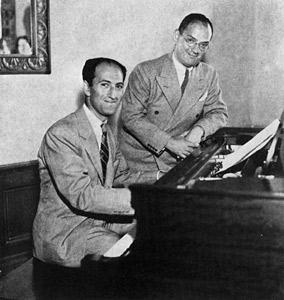
George and Ira Gershwin, image from wmky.org

6. Leonard Bernstein
7. Cole Porter
8. Irving Berlin
9. John Kander
10. Stephen Schwartz

Stephen Sondheim

11. Jerry Herman
12. Frank Loesser
13. Frederick Loewe
14. Ira Gershwin
15. Alan Jay Lerner

Andrew Lloyd Webber & Tim Rice

16. Tim Rice
17. Fred Ebb
18. Jonathan Larson
19. Jerome Kern
20. Harold Arlen

Irving Berlin

21. Lorenz Hart
22. Alan Menken
23. Charles Strouse
24. Marvin Hamlisch
25. Lee Adams

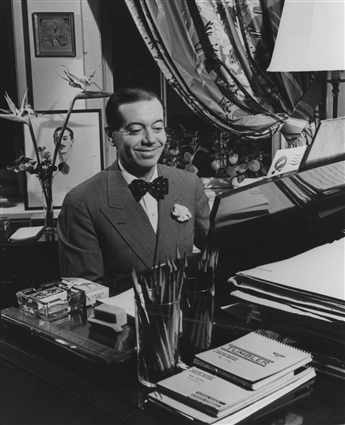
Cole Porter, image from hometownstohollywood.com

26. Cy Coleman
27. Jason Robert Brown
28. Jeanine Tesori
29. Dorothy Fields
30. Jerry Ross

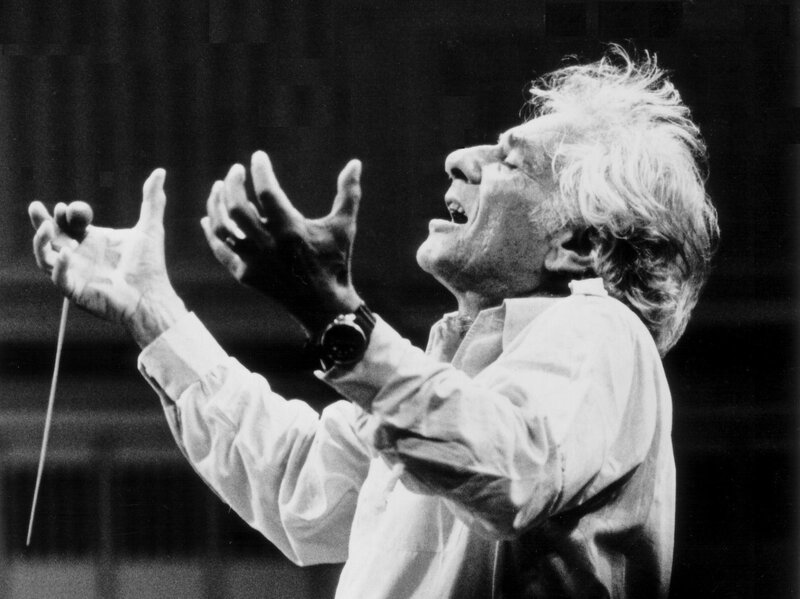
Leonard Bernstein, image from npr.org

31. Jule Styne
32. Richard Adler
33. Sheldon Harnick
34. Jerry Bock
35. Lin-Manuel Miranda

Jerry Herman, image from jerryherman.com

36. Kurt Weill
37. Betty Comden
38. Adolph Green
39. Harold Rome
40. Elton John

Alan Jay Lerner & Frederick Loewe

41. E.Y. “Yip” Harburg
42. Burton Lane
43. Richard Sherman
44. Robert Sherman
45. Claude-Michel Schönberg

Jerome Kern, image from discogs.com

46. Mel Brooks
47. Lynn Ahrens
48. Bob Merrill
49. Johnny Mercer
50. Noël Coward


Resources/Related Links:


First posted 3/22/2012; last updated 7/1/2026.

Thursday, May 21, 2009

50 years ago: Gypsy opened on Broadway

Gypsy

Jule Styne (music), Stephen Sondheim (lyrics)

The Musical

Opened on Broadway: May 21, 1959


Number of Performances: 702


Opened at London’s West End: May 29, 1973


Number of Performances: 300


Movie Release: November 1, 1962

Cast Album


Charted: July 20, 1959


Peak: 13 US


Sales (in millions): --


Genre: show tunes


Soundtrack


Charted: December 15, 1962


Peak: 10 US


Sales (in millions): --


Genre: show tunes


Songs on Cast Album:

Song Title (Performers)

  1. Overture
  2. Let Me Entertain You (JACQUELINE MAYRO/ KAREN MOORE/ ETHEL MERMAN)
  3. Some People (ETHEL MERMAN/ STEPHEN SONDHEIM)
  4. Small World (ETHEL MERMAN/ JACK KLUGMAN)
  5. Baby June and Her Newsboys
  6. Mr. Goldstone, I Love You (ETHEL MERMAN)
  7. Little Lamb (SANDRA CHURCH)
  8. You’ll Never Get Away from Me (ETHEL MERMAN/ JACK KLUGMAN)
  9. Dainty June and Her Farmboys
  10. If Momma Was Married (SANDRA CHURCH/ LANE BRADBURY)
  11. All I Need Is the Girl (PAUL WALLACE/ SANDRA CHURCH)
  12. Everything’s Coming Up Roses (ETHEL MERMAN)
  13. Together (Wherever We Go) (ETHEL MERMAN/ JACK KLUGMAN/ SANDRA CHURCH)
  14. You Gotta Get a Gimmick (FAITH DANE/ CHOTZI FOLEY/ MARIA KARNILOVA)
  15. Let Me Entertain You (SANDRA CHURCH)
  16. Rose’s Turn (ETHEL MERMAN)


Songs on Soundtrack:
  1. Overture
  2. Small World
  3. Some People
  4. Baby June And Her Newsboys (Let Me Entertain You)
  5. Mr. Goldstone, I Love You
  6. Little Lamb
  7. You'll Never Get Away From Me
  8. Dainty June And Her Farm Boys
  9. If Mama Was Married
  10. All I Need Is The Girl
  11. Everything's Coming Up Roses
  12. Together Wherever We Go
  13. You Gotta Have A Gimmick
  14. Let Me Entertain You
  15. Rose's Turn
  16. Finale

Rating:

4.502 out of 5.00 (average of 9 ratings for cast album and soundtrack combined)


Quotable: “One of the crowning achievements of the mid-20th century’s conventional musical theatre art form” – Wikipedia


Awards (Cast Album and Soundtrack): (Click on award to learn more).

About the Show:

Critic Ben Brantley said Gypsy may be the greatest of all American musicals.” WK-C Frank Rich said it was “Broadway’s own brassy, unlikely answer to King Lear.” WK-C This 1959 tribute to burlesque was loosely based on the 1957 memoirs of famed striptease artist Gypsy Rose Lee. The story “casts an affectionate eye on the hardships of show business life” WK-C by following Gypsy’s mother, Rose, and her efforts to raise her daughters as performers.

Producer David Merrick had read a selection of the memoirs in Harper’s Magazine and sought the rights, knowing Ethel Merman was looking for a starring vehicle. Arthur Laurents was tapped to write the book and Stephen Sondheim, with whom Laurents had worked on West Side Story, was brought in to write the lyrics after Irving Berlin and Cole Porter declined. Merman wanted Jule Styne to write the music, but Sondheim initially refused since he wanted to write the music and lyrics – that is, until he was persuaded to take the job by Oscar Hammerstein. WK-C

The talents of Styne, who represented broad show business entertainment, and Sondheim, who symbolized more “modern, dark, psychological drama,” MWR made for a perfect balance. It “was considered the definitive Merman performance and the crowning achievement of her long career.” MWR Theater critic Clive Barnes described Rose as “one of the few truly complex characters in the American musical.” WK-C

The musical, which ran for 702 performances, introduced “the Merman standard Everything’s Coming Up Roses, and the song that is invariably used to introduce anything having to do with the strip tease, Let Me Entertain You.” MWR

In 1962, it was made into a film directed by Mervyn LeRoy. In his book The Musical Film, Douglas McVay said, “Fine as West Side Story is…it is equaled and, arguably, surpassed – in a rather different idiom – by another filmed Broadway hit: Mervyn LeRoy’s Gypsy.” WK-S

Resources and Related Links:


Other Related DMDB Pages:


First posted 3/22/2011; last updated 12/23/2021.

Wednesday, September 26, 2007

Today in Music (1957): West Side Story debuted on Broadway

West Side Story

Leonard Bernstein (music), Stephen Sondheim (lyrics)

The Musical


Opened on Broadway: September 26, 1957


Number of Performances: 732


Opened at London’s West End: December 12, 1958


Number of Performances: 1040


Movie Release: December 23, 1961


Cast Album


Recorded: September 29, 1957


Charted: March 17, 1958


Peak: 5 US


Sales (in millions): 2.5 US, 0.6 UK, 3.1 world (includes US and UK)


Genre: show tunes


Soundtrack


Charted: October 23, 1961


Peak: 154 US, 113 UK, -- CN, -- AU


Sales (in millions): 8.0 US, 0.1 UK, 8.1 world (includes US and UK)


Genre: show tunes


Songs on Cast Album:

  1. Prologue
  2. Jet Song
  3. Something’s Coming
  4. The Dance at the Gym
  5. Maria
  6. Tonight
  7. America
  8. Cool
  9. One Hand, One Heart
  10. Tonight
  11. The Rumble
  12. I Feel Pretty
  13. Somewhere (Ballet)
  14. Gee, Officer Krupke!
  15. A Boy Like That/I Have a Love
  16. Finale

Songs on Soundtrack:

  1. Overture
  2. Prologue
  3. Jet Song
  4. Something’s Coming
  5. The Dance at the Gym
  6. Maria
  7. America
  8. Tonight
  9. Gee, Officer Krupke!
  10. I Feel Pretty
  11. One Hand, One Heart
  12. Quintet
  13. The Rumble
  14. Somewhere
  15. Cool
  16. A Boy Like That/I Have a Love
  17. Finale

Singles/Hit Songs:

These were covers of songs from this musical which became hits:
  • “Maria” – Johnny Mathis (#78, 1960), Roger Williams (#48, 1962)
  • ”Tonight” – Ferrante & Teicher (#8, 1961), Eddie Fisher (#44, 1961)
  • ”Somewhere” – P.J. Proby (#91, 1965), Len Barry (#26, 1966), Barbra Streisand (#43, 1986)

Rating:

4.675 out of 5.00 (average of 18 ratings for cast album and soundtrack combined)


Quotable:

“Takes up the American musical idiom where it was left when George Gershwin died.” – John Chapman, New York Daily News WK

Awards (Cast Album): (Click on award to learn more).


Awards (Soundtrack): (Click on award to learn more).

The Beginning

West Side Story is hailed as “one of the greatest musicals of all time.” AM-S “The appeal…lies in the way it integrates song, dance, and narrative, showing how the movie musical could still be relevant in a new decade.” TB

Choreographer and director Jerome Robbins first approached playwright Arthur Laurents with the idea of adapting Romeo and Juliet as a contemporary musical. A first draft called East Side Story focused on conflict between a Catholic family and a Jewish family living in Manhattan on the Lower East Side. It was shelved for its similarity to plays like Abie’s Irish Rose, WK but revived in 1955 when Laurents was approached to adapt the novel Serenade by James M. Cain. That project didn’t make it either, but it connected Laurents with Stephen Sondheim. Along with Bernstein and Robbins, they decided to return to the East Side Story. WK It became a “boisterous tale of a turf battle among young gangs in 1950s New York City.” TM

Bernstein and Sondheim

Laurents recruited Leonard Bernstein for the music and Stephen Sondheim for the lyrics in what would become his Broadway debut. “Work began in autumn 1955 and was completed in the summer of 1957, Bernstein having taken a six-month sabbatical in the middle to work on Candide.” TB

“The combination of young, thrusting…Sondheim and seasoned composer Leonard Bernstein was perfect. The music was almost entirely a joint venture.” TB Sondheim “doesn’t get bogged down in the details of the conflict,” TM instead “concentrating on the emotional undercurrents, and his tunes coalesce into a deeply moving portrait of kids who find romance and rivalry entertwined.” TM

Broadway

The musical faced understandably difficult challenges. Critics “said the score was too rangy for pop music” WK and with more dancing than any previous Broadway show WK it would be problematic to find a cast who could sing, dance, and act. Laurents wanted James Dean as Tony, but he died before even hearing about the role. WK

The eventual production was well received by audiences and critics. It “galvanized Broadway with its vivid reinvention as a parable of racial intolerance and generational conflict.” AZ-S “The story appealed to society’s undercurrent of rebellion from authority that surfaced in 1950s films like Rebel without a CauseWK and “the musical also made points in its description of troubled youth and the devastating effects of poverty and racism.” WK

“The dark theme, sophisticated music, extended dance scenes, and focus on social problems marked a turning point in American musical theatre.” WK Musically, Bernstein “integrated Latin percussion and jazz into his electrifying score” AZ-C alongside “symphonic grandeur” AM-S “and a rarely heard (in Broadway) toughness.” AM-S Bernstein’s efforts “dazzlingly translating New York’s unique vitality into a musical idiom.” AZ-C

It opened on Broadway on September 26, 1957 at the Winter Garden Theatre. It “wasn’t a massive hit right away – it closed after a respectable 732 performances, and then immediately hit the road. After that, the album took off, creating demand for a return Broadway engagement and, eventually, the 1961 film.” TM It won Tonys for choreography and scenic design and became a favorite of “schools, regional theatres, and occasionally by opera companies.” WK

The Story

Set in the mid-1950s in New York City, the story explores the rivalry between two street gangs of different ethnicities. The Sharks are Puerto Rican and the Jets are working-class white. The protagonist, Tony, is a Jet and falls in love with Maria, who is the sister of Bernardo, the Sharks’ leader.

During a challenge dance (Dance at the Gym) between the Jets and the Sharks, Tony meets Maria. Bernardo breaks up their attempted kiss and sends her home, but Tony serenades her outside her bedroom (Maria) and they profess their love to each other (Tonight). WK

The next day at the bridal shop where Maria works, she asks Tony to stop a planned fight between the Jets and Sharks. Tony tries to stop the fight (The Rumble), but when Riff, the leader of the Jets, is stabbed by Bernardo, Tony kills Bernardo in a rage. Maria is devastated when she hears, but still decides to run away with Tony. “As the walls of Maria’s bedroom disappear, they find themselves in a dreamlike world of peace (Somewhere).” WK

After Maria’s friend Anita is nearly raped by the Jets, she claims Chino killed Maria in jealousy. When Tony hears, he decides he has nothing to live for. He confronts Chino, begging to die, and is shot by him just as he sees that Maria is actually alive. The Jets now move towards the Sharks, wanting to avenge the death of another friend. With Chino’s gun in her hand, Maria tells everyone that hatred is what killed Tony and the others and that now she too can kill because she hates. However, she drops the gun in grief and gradually the gang members on both side “assemble on either side of Tony’s body, showing that the feud is over.” WK

About the Cast Album

The cast album was recorded three days after West Side Story opened on Broadway at the Winter Garden Theatre on September 26, 1957. It was recorded in New York City at CBS 30th Street Studio. Leonard Bernstein oversaw the orchestration and the cast included Carol Lawrence as Maria and Larry Kert as Tony. The album spent nearly four years on the Billboard album chart.

About the Soundtrack

A film adaptation, directed by Robbins and Robert Wise, was released on October 18, 1961. As ground-breaking as the show was on Broadway, it became another animal entirely when transferred to film. It was the second highest-grossing film of the year in the United States and won 10 Academy Awards, including Best Picture. Natalie Wood was cast as Maria and Richard Beymer as Tony. The singing was handled by Marni Nixon and Jimmy Bryant. The “lavish widescreen presentation broke fresh ground by taking the story to its most impressionable audience, the teenagers who could identify directly with Tony and Maria, and opened up Jerome Robbins’ kinetic choreography through bravura camera work.” AZ-S

While “the 1957 original Broadway cast recording still holds up today, …[it] isn’t as good as the movie soundtrack” AM-S which “was not merely a huge seller but a unique touchstone for an otherwise rock-oriented audience.” AZ-S It “spent more weeks at #1 in the charts (54) than any other album in history” AM-C and “made more money than any other album before it.” WK It also won the Grammy for Best Soundtrack or Cast Album. Like the cast album, the soundtrack spent almost four years on the Billboard album chart.


Notes:

The 1998 reissue of the cast album added nine instrumental tracks.

Resources and Related Links:


Other Related DMDB Pages:


First posted 3/7/2011; last updated 8/26/2024.