Tin Pan Alley is a reference to a collection of late 19th century and early 20th century music publishers and songwriters in New York City, specifically West 28th Street between Fifth and Sixth Avenues in Manhattan. The era is generally marked as starting in 1885 when a number of music publishers first set up shop in the area. Some consider the start of the Great Depression in the 1930s to mark the ending – a time when sheet music was no longer the driving force for American popular music, but a time when the phonograph, radio, and movies had more influence. Others consider the movement to have lasted into the 1950s when it was upstated by the rise of rock & roll and the subsequent influence of writers from the Brill Building. Some of the the most significant Tin Pan Alley writers were Harold Arlen, Irving Berlin, George M. Cohan, George Gershwin, Ira Gershwin, Oscar Hammerstein II, Jerome Kern, Frank Loesser, Cole Porter, Richard Rodgers, and Albert Von Tilzer. The phrase, however, has come to be associated more broadly with commercially successful music of the early 20th century.
This list was creating by aggregating 18 lists and giving extra weight to songs which fell between 1885 and 1933 and were written by one of the significant songwriters specifically associated with the Tin Pan Alley era. Songs are listed with the songwriters and first year the song emerged. These songs have largely become standards; more than half of them appear on the DMDB list of the top 100 American Songbook Standards .
Click here to see other genre-specific song lists.
1. Irving Berlin “Alexander’s Ragtime Band” (1911)
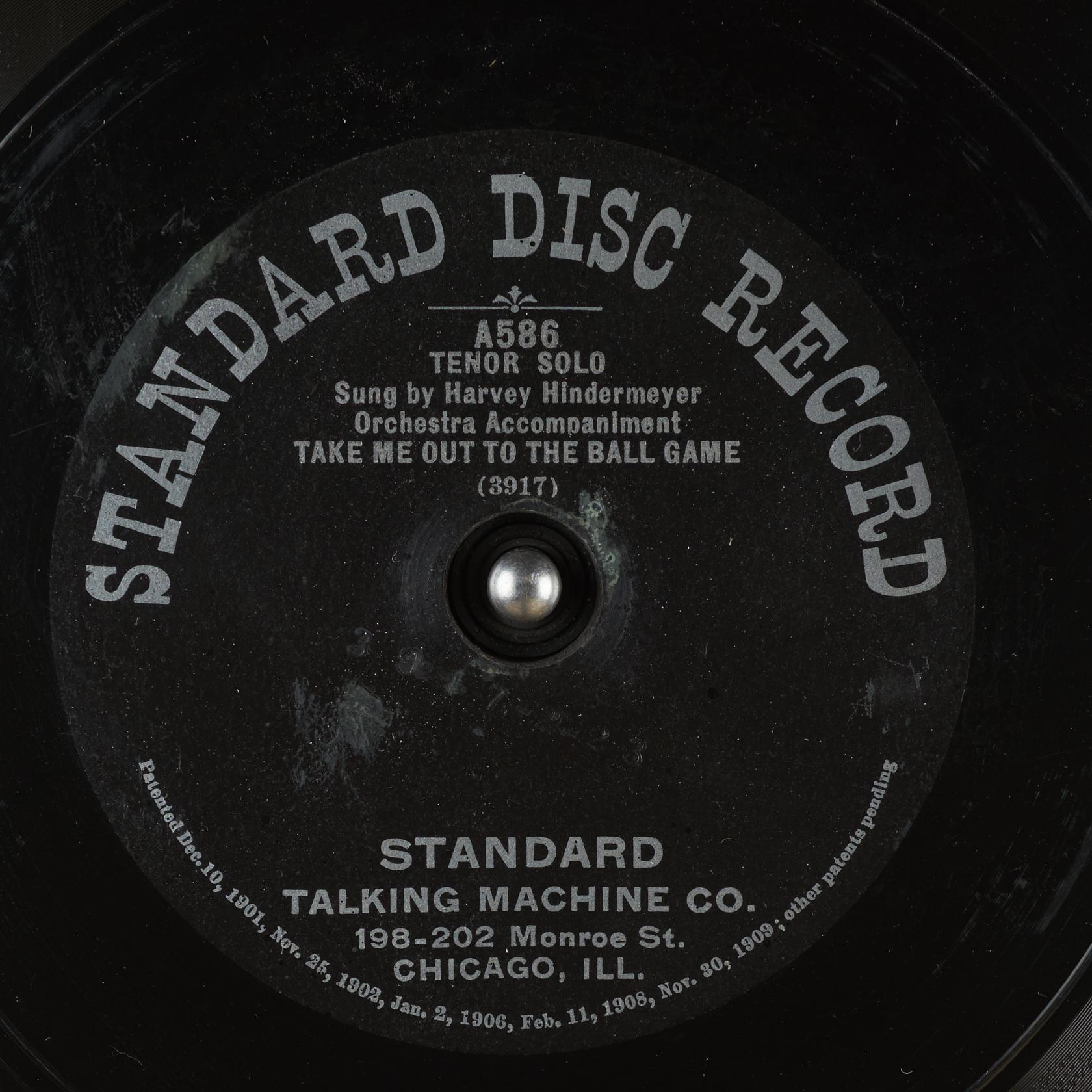
2. Jack Norworth and Albert von Tilzer “Take Me Out to the Ball Game” (1908)
3. Jack Norworth and Nora Bayes “Shine on, Harvest Moon” (1908)
4. Shelton Brooks “Some of These Days” (1910)
5. Milton Ager and Jack Yellen “Ain’t She Sweet?” (1927)
6. Leo Friedman and Beth Slater Whitson “Let Me Call You Sweetheart” (1910)
7. Shelton Brooks “Darktown Strutters’ Ball” (1917)
8. Ren Shields and George Evans “In the Good Old Summertime” (1902)
9. Irving Berlin “God Bless America” (1939)
10. Charles K. Harris “After the Ball” (1892)
11. George M. Cohan “Give My Regards to Broadway” (1904)
12. Edward Madden and Gus Edwards “By the Light of the Silvery Moon” (1909)
13. Joseph E. Howard and Ida Emerson “Hello Ma Baby” (1899)
14. Alfred Bryan and Fred Fisher “Peg O’ My Heart” (1913)
15. George Gershwin and Irving Caesar “Swanee” (1920)
16. George M. Cohan “Over There” (1917)
17. John Schonberger, Richard Coburn, and Vincent Rose “Whispering” (1920)
18. Milton Ager and Jack Yellen “Happy Days Are Here Again” (1930)
19. Hughie Cannon and Johnnie Queen “Bill Bailey, Won’t You Please Come Home” (1902)
20. Harry Von Tilzer and William Dillon “I Want a Girl Just Like the Girl Who Married Dear Old Dad” (1911)
21. Seymour Simons and Gerald Marks “All of Me” (1931)
22. Walter Donaldson and George A. Whiting “My Blue Heaven” (1927)
23. Edward Madden and Percy Wenrich “Moonlight Bay” (1912)
24. Jimmy McHugh and Dorothy Fields “On the Sunny Side of the Street” (1930)
25. Spencer Williams and Jack Palmer “Everybody Loves My Baby” (1924)
26. Jimmy Monaco and Joseph McCarthy “You Made Me Love You (I Didn't Want to Do It)” (1913)
27. Irving Berlin “Cheek to Cheek” (1935)
28. Hoagy Carmichael and Mitchell Parish “Stardust” (1927)
29. W.C. Handy “St. Louis Blues” (1914)
30. Theodore August Metz and Joe Hayden “A Hot Time in the Old Town” (1896)
31. Ben Bernie, Kenneth Casey, and Maceo Pinkard “Sweet Georgia Brown” (1925)
32. Hoagy Carmichael and Stuart Gorrell “Georgia on My Mind” (1930)
33. Irving Berlin “Always” (1926)
34. Harry Akst, Sam M. Lewis, and Joe Young “Dinah” (1932)
35. Ray Henderson and Mort Dixon “Bye Bye Blackbird” (1926)
36. Joseph E. Howard, Harold Orlob, Frank R. Adams, and Will M. Hough “I Wonder Who’s Kissing Her Now” (1909)
37. Fred Fisher and Alfred Bryan “Come Josephine in My Flying Machine” (1910)
38. Jimmy McHugh and Dorothy Fields “I Can’t Give You Anything But Love” (1928)
39. Nat D. Ayer and Seymour Brown “Oh You Beautiful Doll” (1911)
40. George Meyer, Edgar Leslie, and E. Ray Goetz “For Me and My Gal” (1917)
41. Harry Von Tilzer and Andrew B. Sterling “Wait Till the Sun Shines, Nellie” (1905)
42. Chris Smith and Jim (James Henry) Burris “Ballin’ the Jack” (1913)
43. Scott Joplin “The Entertainer” (1902)
44. Harry Von Tilzer and Arthur J. Lamb “A Bird in a Gilded Cage” (1900)
45. Cole Porter “Night and Day” (1932)
46. George and Ira Gershwin “I Got Rhythm” (1930)
47. Charles B. Lawlor and James W. Blake “The Sidewalks of New York” (1894)
48. Johnny Green, Eddie Heyman, Robert Sour, and Frank Eyton “Body and Soul” (1930)
49. Gus Kahn and Walter Donaldson “Carolina in the Morning” (1923)
50. Paul Dresser “On the Banks of the Wabash” (1897)
51. Harold Arlen and Ted Koehler “Stormy Weather (Keeps Rainin' All the Time)” (1933)
52. Frank Silver and Irving Cohn “Yes! We Have No Bananas” (1923)
53. Turner Layton and Henry Creamer “After You’ve Gone” (1918)
54. W.C. Handy, George A. Norton, Charles Tobias, and Peter DeRose “The Memphis Blues” (1912)
55. Alfred Bryan and Al Piantadosi “I Didn’t Raise My Boy to Be a Soldier” (1915)
56. Ray Henderson, Sam Lewis, and Joe Young “Five Foot Two, Eyes of Blue” (1926)
57. Turner Layton and Henry Creamer “Way Down Yonder in New Orleans” (1922)
58. Gus Edwards and Will D. Cobb “School Days (When We Were a Couple of Kids)” (1907)
59. Buddy DeSylva and Louis Silvers “April Showers” (1922)
60. Tell Taylor “Down by the Old Mill Stream” (1910)
61. Joe Burke and Al Dubin “Tip Toe Through the Tulips” (1929)
62. Walter Donaldson and Gus Kahn “Yes Sir! That’s My Baby” (1925)
63. Cole Porter “I’ve Got You Under My Skin” (1936)
64. The Original Dixieland Jazz Band, Harry DeCosta “Tiger Rag” (1918)
65. George M. Cohan “You’re a Grand Old Flag (aka “The Grand Old Rag”)” (1906)
66. Isham Jones and Gus Kahn “I’ll See You in My Dreams” (1925)
67. Arthur B Sterling and Kerry Mills “Meet Me in St. Louis, Louis” (1904)
68. Cole Porter “I Get a Kick Out of You” (1934)
69. Mark Fisher, Joe Goodwin, and Larry Shay “When You’re Smiling, the Whole World Smiles with You” (1928)
70. Gus Edwards and Vincent Bryan “In My Merry Oldsmobile” (1902)
71. Victor Young and Will Harris “Sweet Sue, Just You” (1928)
72. George M. Cohan “Yankee Doodle Boy” (1905)
73. Fred Fisher “Chicago (That Toddlin’ Town)” (1922)
74. Johnny S. Black “Paper Doll” (1942)
75. Vincent Youmans and Irving Caesar “Tea for Two” (1925)
76. Walter Donaldson and Gus Kahn “Makin’ Whoopee” (1928)
77. Richard Rodgers and Lorenz Hart “Blue Moon” (1935)
78. Arthur Johnson and Johnny Burke “Pennies from Heaven” (1936)
79. Irving Berlin “White Christmas” (1942)
80. Jean Kenbrovin and John William Kellette “I’m Forever Blowing Bubbles” (1919)
81. Richard H. Gerard and Harry Armstrong “Sweet Adeline (You’re the Flower of My Heart)” (1903)
82. Isham Jones and Gus Kahn “It Had to Be You” (1924)
83. Jerome Kern and Otto Harbach “Smoke Gets in Your Eyes” (1933)
84. Irving Berlin “Puttin’ on the Ritz” (1930)
85. Henry J. Sayers “Ta-Ra-Ra Boom-De-Ay” (1891)
86. Scott Joplin “Maple Leaf Rag” (1899)
87. Herman Hupfield “As Time Goes By” (1931)
88. Daniel Decatur Emmett “Dixie” (1860)
89. Euday L. Bowman “Twelfth Street Rag” (1916)
90. George & Ira Gershwin “Summertime” (1935)
91. Jerome Kern and Oscar Hammerstein II “Ol’ Man River” (1927)
92. Cole Porter “Begin the Beguine” (1935)
93. Sam M. Lewis, Joe Young, and Jean Schwartz “Rock-a-Bye Your Baby with a Dixie Melody” (1918)
94. Irving Berlin “Blue Skies” (1927)
95. Gus Kahn, Ernie Erdman, and Dan Russo “Toot Toot Tootsie (Goo-Bye!)” (1922)
96. Harry M. Woods “Side by Side” (1927)
97. Richard Rodgers and Lorenz Hart “My Funny Valentine” (1937)
98. George & Ira Gershwin “They Can’t Take That Away from Me” (1937)
99. Harold Arlen and E.Y. “Yip” Harburg “Over the Rainbow” (1939)
100. Hoagy Carmichael and Sidney Arodin “Lazy River” (1931)
Resources and Related Links:
First posted 4/17/2021. |