Showing posts with label most recorded songs. Show all posts

Tuesday, April 13, 2021

Most-Recorded Songs, 1890-1954: Top 100

Most-Recorded Songs, 1890-1954:

Top 100 Songs

This list comes from Joel Whitburn’s Pop Memories 1890-1954. As it says in the book, “During the pre-rock era, one of the most important indicators of a song’s enduring musical greatness was the number of artists to record it. This list represents the most comprehensive survey ever made of the pre-1955 songs which have been recorded by the most artists (multiple versions by an artist do not count). It encompasses: Edison and Columbia cylinders; all 78s in the extensive collections of the Library of Congress, the New York Public Library, and the Syracuse, Stanford and Yale Uniiversity Libraries; and all new Recordaid listings from the 1950s to the present. Songs written before 1955 but most popular later, such as ‘Misty’ and ‘Autumn Leaves,’ are not included. The year published and the songwriters are shown after the title.”

Note: click here to see other genre-specific song lists.

1. “Silent Night” (1818) by Joseph Muhr and Franz Gruber
2. “St. Louis Blues” (1914) by W.C. Handy
3. “Stardust” (1929) by Hoagy Carmichael and Mitchell Parish
4. “Body and Soul” (1930) by Johnny Green, Ed Heyman, Robert Sauer, and Frank Eyton
5. “Summertime” (1935) by George Gershwin and Dubose Heyward
6. “The Old Folks at Home (Swanee River)” (1851) by Stephen Foster
7. “Tea for Two” (1925) by Vincent Youmans and Irving Caesar
8. “White Christmas” (1942) by Irving Berlin
9. “All the Things You Are” (1939) by Jerome Kern and Oscar Hammerstein II
10. “Night and Day” (1932) by Cole Porter

11. “Begin the Beguine” (1935) by Cole Porter
12. “Danny Boy” (1913) by Fred Weatherly (adapted from “Londonberry Air”)
13. “Sweet Georgia Brown” (1925) by Maceo Pinkard, Keneth Casey, and Ben Bernie
14. “The Man I Love” (1924) by George Gershwin and Ira Gershwin
15. “Over the Rainbow” (1939) by Harold Arlen and E.Y. Harburg
16. “Caravan” (1937) by Duke Ellington, Juan Tizol, and Irving Mills
17. “After You’ve Gone” (1918) by Turner Layton and Harry Creamer
18. “Yesterdays” (1933) by Jerome Kern and Otto Harbach
19. “Ain’t Misbehavin’” (1929) by Fats Waller, Harry Brooks, and Andy Razaf
20. “Lover, Come Back to Me” (1928) by Sigmund Romberg and Oscar Hammerstein II

21. “What Is This Thing Called Love?” (1930) by Cole Porter
22. “I Can’t Get Started” (1936) by Vernon Duke and Ira Gershwin
23. “Jingle Bells” (1857) by J.S. Pierpont
24. “I Can’t Give You Anything But Love” (1928) by Jimmy McHugh and Dorothy Fields
25. “My Old Kentucky Home” (1853) by Stephen Foster
26. “When the Saints Go Marching In” (1896) by James Black and Katharine Purvis
27. “Tenderly” (1947) by Walter Gross and Jack Lawrence
28. “Blue Skies” (1927) by Irving Berlin
29. “September Song” (1938) by Kurt Weill and Maxwell Anderson
30. “My Blue Heaven” (1927) by Walter Donaldson and George Whiting

31. “Always” (1925) by Irving Berlin
32. “Tiger Rag” (1917) by Harry DeCosta and Original Dixieland Jazz Band
33. “The Rosary” (1898) by Ethelbert Nevins and Robert Cameron Rogers
34. “Home, Sweet Home” (1823) by Henry Bishop and John Howard Payne
35. Smoke Gets in Your Eyes (1933) by Jerome Kern and Otto Harbach
36. “These Foolish Things Remind Me of You” (1936) by Jack Strachey, Harry Link, and Holt Marvell
37. “Ol’ Man River” (1928) by Jerome Kern and Oscar Hammerstein II
38. “Limehouse Blues” (1924) by Philip Braham and Douglas Furber
39. “Sheik of Araby” (1923) by Ted Snyder, Harry B. Smith, and Francis Wheeler
40. “Embraceable You” (1930) by George Gershwin and Ira Gershwin

41. “My Funny Valentine” (1937) by Richard Rodgers and Lorenz Hart
42. “Stormy Weather (Keeps Rainin' All the Time)” (1933) by Harold Arlen and Ted Koehler
43. “Twelfth Street Rag” (1914) by Euday L. Bowman
44. “Blue Moon” (1935) by Richard Rodgers and Lorenz Hart
45. “The Battle Hymn of the Republic” (1863) by Julia Ward Howe and William Steffe
46. “My Melancholy Baby” (1913) by Ernie Burnett and George Norton
47. “I Got Rhythm” (1930) by George Gershwin and Ira Gershwin
48. “Honeysuckle Rose” (1929) by Fats Waller and Anzy Razaf
49. “Love’s Old Sweet Song” (1884) by G. Clifton Bingham and James Mulloy
50. “The Stars and Stripes Forever” (1896) by John Philip Sousa

51. “Where or When” (1937) by Richard Rodgers and Lorenz Hart
52. “Laura” (1945) by David Raskin and Johnny Mercer
53. “Mood Indigo” (1931) by Duke Ellington, Barney Bigard, and Irving Mills
54. “The Christmas Song (Chestnuts Roasting on an Open Fire)” (1946) by Mel Torme and Robert Wells
55. “Love for Sale” (1930) by Cole Porter
56. “Georgia on My Mind” (1930) by Hoagy Carmichael and Stuart Gorrell
57. “San Antonio Rose” (1938) by Bob Wills
58. “How High the Moon” (1940) by Morgan Lewis and Nancy Hamilton
59. “Someone to Watch Over Me” (1926) by George Gershwin and Ira Gerswhin
60. “I Only Have Eyes for You” (1934) by Harry Warren and Al Dublin

61. “Sweet Sue, Just You” (1928) by Victor Young and Will Harris
62. “The Darktown Strutters’ Ball” (1917) by Shelton Brooks
63. “On the Sunny Side of the Street” (1930) by Jimmy McHugh and Dorothy Fields
64. “Silver Threads Among the Gold” (1877) by Hart P. Danks and Eben Rexford
65. “I’m in the Mood for Love” (1935) by Jimmy McHugh and Dorothy Fields
66. “Deep Purple” (1933) by Peter DeRose and Mitchell Parish
67. “Sometimes I’m Happy” (1925) by Vincent Youmans and Irving Caesar
68. “I’ve Got You Under My Skin” (1934) by Cole Porter
69. “The Star-Spangled Banner” (1814) by Francis Scott Key
70. “Easy to Love” (1936) by Cole Porter

71. “Avalon” (1921) by B.G. DeSylva, Vincent Rose, and Al Jolson
72. “Willow Weep for Me” (1932) by Ann Ronell
73. “Dinah” (1925) by Harry Akst, Sam Lewis, and Joe Young
74. “Moonglow” (1934) by Will Hudson, Eddie DeLange, and Irving Mills
75. “Auld Lang Syne” (1711) adapted by Robert Burns
76. “Carry Me Back to Old Virginny” (1879) by James A. Bland
77. “Alexander’s Ragtime Band” (1911) by Irving Berlin
78. “Santa Claus Is Comin’ to Town” (1934) by J. Fred Coots and Haven Gillespie
79. “Basin Street Blues” (1929) by Spencer Williams
80. “Sweet Lorraine” (1935) by Clifford Burwell and Mitchell Parish

81. “I’ll Remember April” (1942) by Don Raye, Gene DePaul, and Patricia Johnston
82. “Rudolph, the Red-Nosed Reindeer” (1949) by Johnny Marks
83. “Solitude” (1934) by Duke Ellington
84. “Some of These Days” (1910) by Shelton Brooks
85. “Stella by Starlight” (1947) by Victor Young and Ned Washington
86. “Maple Leaf Rag” (1899) by Scott Joplin
87. “Lover” (1933) by Richard Rodgers and Lorenz Hart
88. “The Way You Look Tonight” (1936) by Jerome Kern and Dorothy Fields
89. “Pennies from Heaven” (1936) by Arthur Johnston and John Burke
90. “Dancing in the Dark” (1931) by Howard Dietz and Arthur Schwartz

91. “Indiana” (1917) by James Hanley and Ballad MacDonald
92. “April in Paris” (1932) by Vernon Duke
93. “As Time Goes By” (1931) by Herman Hupfield
94. “Royal Garden Blues” (1923) by Spencer Williams and Clarence Williams
95. “The Very Thought of You” (1934) by Ray Noble
96. “Lover Man” (1942) by Jimmy Davis, Roger Ramirez, and Jimmy Sherman
97. “Round Midnight” (1947) by Thelonious Monk and Cootie Williams
98. “Perdido” (1942) by Juan Tizol, Ervin Drake, and Hans Lengsfelder
99. “All of Me” (1931) by Seymour Simons and Gerald Marks
100. “What’s New?” (1939) by Johnny Burke and Robert Haggart


Resources and Related Links:
  • Dave’s Music Database: “Other Genre/Category Song Lists
  • Joel Whitburn (1986). Pop Memories 1890-1954. Menomonee Falls, WI; Record Research, Inc. Pages 632-33.

First posted 1/24/2020; last updated 4/13/2021.

Friday, July 31, 2015

Today in Music (1915): “Home Sweet Home” hit #1

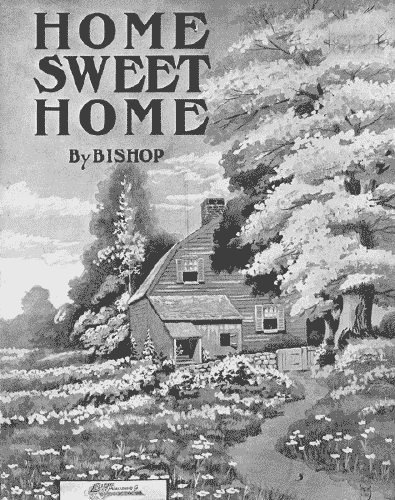
Home Sweet Home

Alice Nielsen

Writer(s): John Howard Payne (lyrics), Sir Henry Rowley Bishop (arranged) (see lyrics here)


Introduced: May 8, 1823


First Charted: October 17, 1891 (John Yorke Atlee)


Peak: 12 PM (Alice Nielsen) (Click for codes to charts.)


Sales (in millions): 0.1 million (sheet music)


Airplay/Streaming (in millions): -- radio, 0.68 video, -- streaming

Awards (Payne):

Click on award for more details.


Awards (John Yorke Atlee):

Click on award for more details.


Awards (Alice Nielsen):

Click on award for more details.

About the Song:

John Howard Payne was a descendent of one of the signers of the Declaration of Independence TY2 and a poet in New York City. SS He went to London to pursue acting, writing, and drama production. He teamed with Sir Henry Rowley Bishop to write an operetta called Clari or The Maid of Milan. It premiered on May 8, 1823, at Covent Garden. The production introduced the world to the song “Home, Sweet Home.” Maria Tree sang it at the end of the first act. TY2

It quickly became one of the most famous songs of the 19th century, spreading throughout England and the rest of Western civilization. TY2 Charles Hamm called it, “the most popular song of the entire century.” SS It definitely “cast an imposing shadow over all other sentimental ballads of the 1800s as perhaps the definitive symbol of nostalgia for one’s roots.” SS During the Civil War, the song was reportedly banned from Union Army camps because it might incite desertion. WK

In 1821 and 1822, Bishop published several volumes of folk songs and was known to create tunes of his own based on authentic melodies. He created a tune called “A Sicilian Air” that became the basis of the melody for “Home, Sweet Home.” TY2 Another source says Bishop first used the melody for a piece called ‘To the Home of My Childhood,” published in the collection Melodies of Other Nations. SS

The song charted multiple times in the pre-rock era with versions by John Yorke Atlee (#2, 1891), Harry MacDonough (#3, 1902), Richard Jose (#3, 1906), Alma Gluck (#6, 1912), Alice Nielsen (#1, 1915), and Elsie Baker (#10, 1915). PM The song has appeared in the musicals The Prodigal (1931), Let Freedom Ring (1938), First Love (1939), and Cairo (1942). In the Rodgers and Hammerstein musical The King and I, Anna teaches her students to sing the song. WK Disney’s 1958 animated film Lady and the Tramp features a “dog-howling rendition” of the song. WK


Resources:


First posted 6/27/2024.

Friday, April 3, 2015

Today in Music (1915): “Carry Me Back to Old Virginny” hit #1

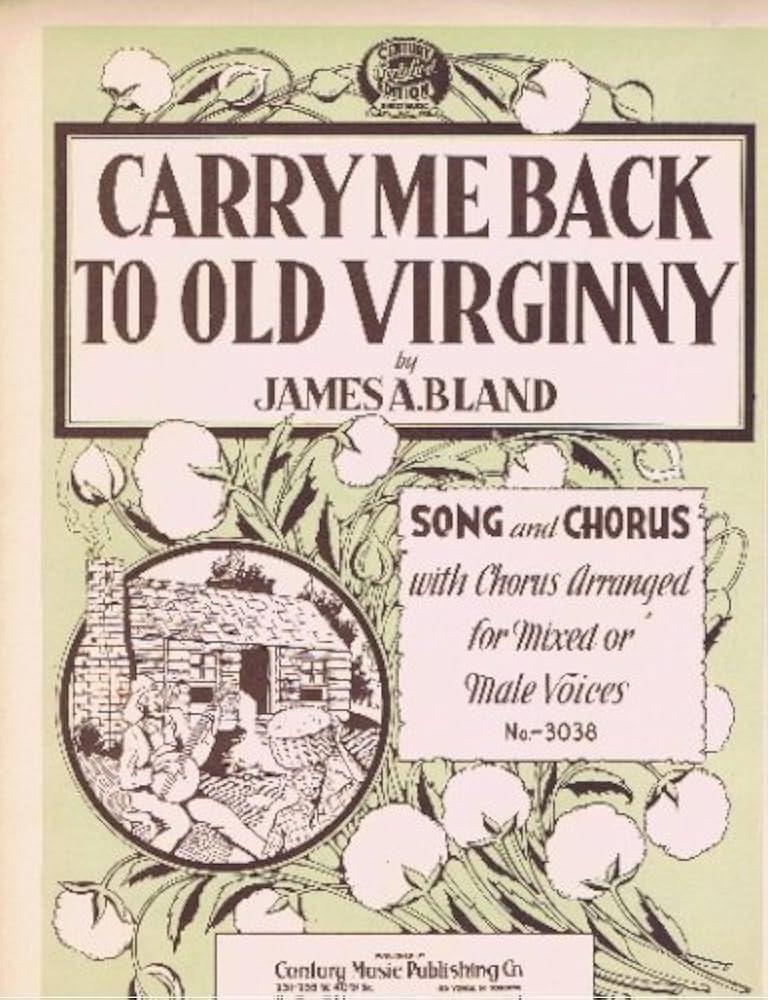
Carry Me Back to Old Virginny

Len Spencer

Writer(s): James A. Bland (see lyrics here)


First Charted: October 7, 1893


Peak: 2 PM (Click for codes to charts.)


Sales (in millions): --


Airplay/Streaming (in millions): -- radio, -- video, -- streaming

Carry Me Back to Old Virginny

Alma Gluck


Recorded: November 13, 1914


First Charted: February 20, 1915


Peak: 15 PM, 11 GA (Click for codes to charts.)


Sales (in millions): 1.0 US


Airplay/Streaming (in millions): -- radio, 0.10 video, 0.03 streaming

Awards (Spencer):

Click on award for more details.


Awards (Gluck):

Click on award for more details.

About the Song:

James Bland, an African American minstrel, wrote “Carry Me Back to Old Virginny” in approximately 1878. TY2 The song was reportedly inspired by “a peaceful scene on a plantation on the James River near Williamsburg, Virginia.” TY2 In addition, a female student at Howard University in Washington, D.C. told Bland that “a dream had carried her back home ‘to old Virginny.’” TY<2

The song was introduced by George Primorose and his minstrels and became a staple for most minstrel groups. TY2 In 1940, it became the state song of Virginia. However, because the lyrics contained “several pseudo-African American colloquialisms” TY2 that could be demmed “too racially sensitive,” TY2 the state legislature retired the song in 1997. GN

In 1893, Len Spencer took the song to #2. He was born February 12, 1867, in Washington D.C. He was “one of the giants of the pioneer recording era,” PM “America’s first nationally-known recording star in the 1890s.” PM He charted 45 times from 1891 to 1910, reaching #1 fifteen times. PM

In 1915, Alma Gluck went all the way to #1. Her version was only the fourth million-selling record in history. PM It was her most successful of her 19 chart entries. She was born in Romania and rose to fame with the New York Metropolitan Opera. PM

Ray Charles and Jerry Lee Lewis have also recorded the song.


Resources:


Related Links:


First posted 5/16/2025.

Friday, December 14, 2007

Today in Music (1907): “Auld Lang Syne” charted for first time

Auld Lang Syne

Frank Stanley

Writer(s): Robert Burns (lyrics adapted by), music (unknown) (see lyrics here)


First Published: 1796


First Charted: December 14, 1907 (Frank Stanley)


Peak: 2 BB, 1 DF (Stanley); 5 PM (Peerless Quartet, 1921); 18 DF (Chas & Dave, 1982); 7 BB, 40 R, 3 AC, 15 A40, 98 RB, 31 DF (Kenny G, 1998) (Click for codes to charts.)


Sales (in millions): --


Airplay/Streaming (in millions): -- radio, 47.07 video, 28.08 streaming (multiple versions)

Awards:

Click on award for more details.


Awards (Frank Stanley):

Click on award for more details.

About the Song:

Author Don Tyler asserts that along with “Happy Birthday” and “For He’s a Jolly Good Fellow,” “Auld Lang Syne” “may be one of the most well known and most often sung or performed songs in American history.” DT The title, when translated into standard English, is “Old Long Since,” which can be interpreted as “since long ago” or “for old times’ sake.” BR It was a commonly used expression as far back as the reign of King Charles I from 1625 to 1649. DT

Robert Burns, the national poet of Scotland, wrote the words for “Auld Lang Syne” in 1788. He claimed he adapted the words “from an old man’s singing.” BR Indeed, there have been similar poems that preceded Burns’ version. It has been cited as the inspiration for Burns’ version. BR In 1720, Scottish poet Allan Ramsay published a poem beginning with the line “should auld acquaintance be forgot” but otherwise it is dissimilar to Burns’ poem. BR

The poem did not appear in print until after Burns’ death when it was published in the fifth volume of James Johnson’s Scots Musical Museum in 1796. BR The lyrics are “about old friends having a drink and recalling adventures they had long ago.” BR

The words were set to a Scottish song by an unknown composer. The melody was first published in 1687. SS In 1782, the comic opera Rosina by William Shield used a similar tune. BR Another version of the tune was published in 1792 but with different words.BR George Thomson set the verses to an old Scottish tune which had been the basis fo several songs, including “I Fee’d a Lad at Michaelmas,” “The Miller’s Wedding,” and “The Miller’s Daughter.” DT In 1799, the words and music were published together as we now know them. BR

By at least the 1890s, the song was used as a New Year’s Eve celebratory song. SS In 1907, Frank Stanley recorded what may be the first and finest version of the standard. SS It “shows off the resonant, rumbling power of his voice.” SS Bandleader Guy Lombardo made it an annual tradition to perform the song for radio and television broadcasts, first doing so on December 31, 1929, BR and continuing to do so for more than 30 years. BR


Resources:


Related Links:


First posted 11/24/2025.

Thursday, February 12, 1998

Today in Music (1898): “My Old Kentucky Home” hit #1

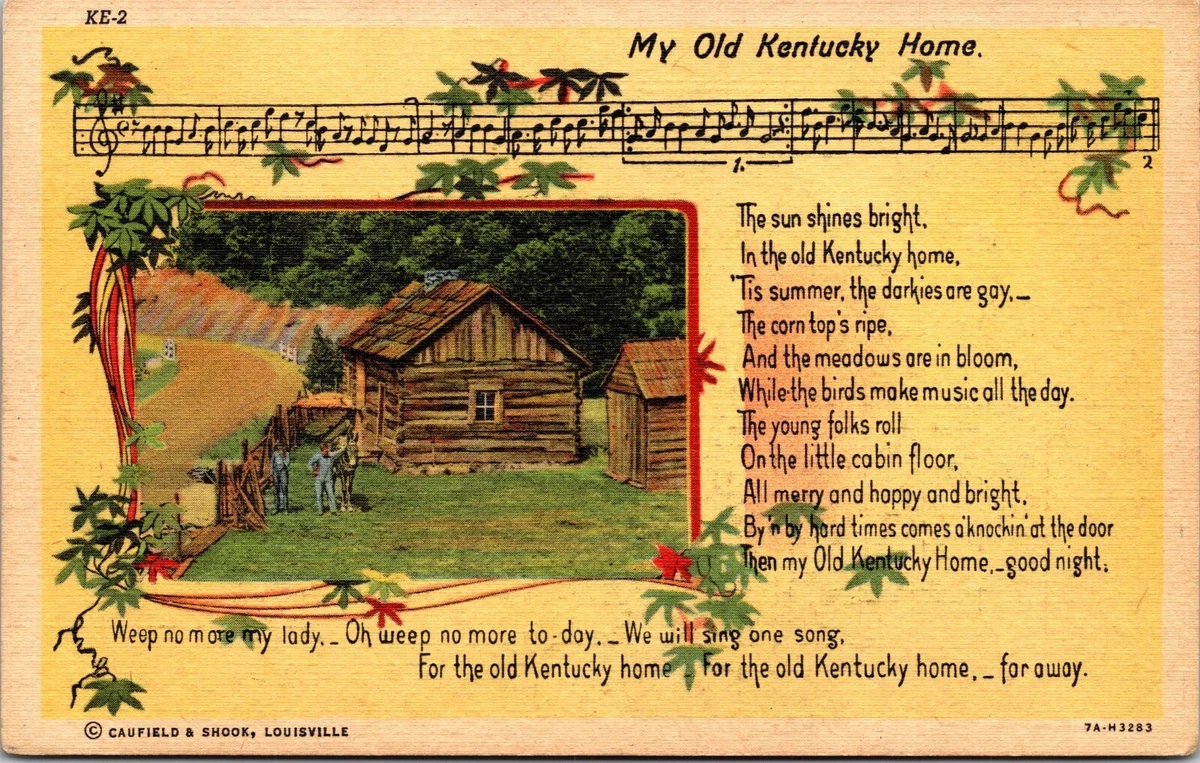
My Old Kentucky Home

Edison Male Quartette

Writer(s): Stephen Foster (music & lyrics) (see lyrics here)


Introduced: 1853


First Recorded: December 1897


First Charted: January 22, 1898


Peak: 13 PM (Click for codes to charts.)


Sales (in millions): 0.1 million (sheet music)


Airplay/Streaming (in millions): -- radio, 0.11 video, -- streaming

Awards (Stephen Foster):

Click on award for more details.


Awards (Edison Male Quartette):


Awards (Geraldine Farrar):

About the Song:

Even before “My Old Kentucky Home,” Songwriting Hall of Famer Stephen Foster had “established himself as America’s foremost popular composer with ‘Oh! Susanna’ (1847), ‘Camptown Races’ (1850), and ‘The Old Folks at Home’ (1851).” SS Legend suggests he was inspired to write “My Old Kentucky Home” while visiting his cousins in Bardstown, Kentucky, in January 1852. He was reportedly “inspired by the morning sounds of mockingbirds singing and slave children playing. TY2

However,, biographer Ken Emerson says Foster’s own sketch book confirms the inspiration was Harriet Beecher Stowe’s Uncle Tom’s Cabin, published in March 1852. SS The first draft of the song was called “Poor Uncle Tom, Good Night!,” which “aligns Foster's sympathies with the Abolitionist movement.” SA However, he wasn’t about to jeopardize sales of his song with Southerners by condemning slavery. SS Therefore, he dropped references to Uncle Tom and left out the original blackface dialect. SS While still inspired by Stowe’s novel, the revised song “had a broader poetic scope.” SS

Ed Christy and his minstrel troop introduced the song in 1853. TY2 The sheet music reportedly sold 100,000 copies, an astonishing figure for the 1850s. TY2 The song charted six times from 1898 to 1918. The first version, which hit #1, was by the Edison Male Quartette who were comprised of tenor John Bieling, baritone S.H. Dudley, bass singer William F. Hooley, and tenor Harry MacDonough. PM They later became the Haydn Quartet – who recorded the song in 1903. It went to #3. Other chart versions of the song came from Harry MacDonough (#3, 1906), Geraldine Farrar (#5, 1910), Alma Gluck (#3, 1916), and the Columbia Stellar Quartet with Lucy Gates (#9, 1918). PM

In 1928, this was made the official state song of Kentucky. It is also the official song for the Kentucky Derby at Churchill Downs. It has appeared in the musicals Harmony Lane (1935), Swanee River (1939), and I Dream of Jeannie (1952). The last two are screen biopics about Foster.


Resources:


Related Links:


First posted 6/27/2024.