Showing posts with label Frank Stanley. Show all posts

Wednesday, August 29, 2018

Byron Harlan: His Top 50 Songs

First posted 8/29/2013; updated 5/29/2019.

Tenor singer born Byron George Harlan on 8/29/1861 in Kansas. Died 9/11/1936. Worked as a ragtime and minstrel singer and balladeer, recording as a solo artist (1899-1919), in a duo with Arthur Collins (01-18), and with the Big Four Quartet (01) and Columbia Comedy Trio (07). He was friends and neighbors with Thomas Edison.

Harlan has five songs featured in the DMDB book The Top 100 Songs of the Pre-Rock Era, 1890-1953 – “Alexander’s Ragtime Band” and “The Darktown Strutters’ Ball” are duets with Arthur Collins while “School Days,” “My Gal Sal,” and “Wait Till the Sun Shines, Nellie” are solo recordings.

For a complete list of this act’s songs and albums honored by the DMDB, check out the DMDB Music Maker Encyclopedia entry.


Top 100 Songs

Dave’s Music Database lists are determined by song’s appearances on best-of lists as well as chart success, sales, radio airplay, streaming, and awards.

AC = Arthur Collins, FS = Frank Stanley. His 23 songs which peaked at #1 on the U.S. pop charts are noted.

DMDB Top 1%:

1. Alexander’s Ragtime Band (w/ AC, 1911) #1
2. School Days (When We Were a Couple of Kids) (1907) #1
3. My Gal Sal (1907) #1
4. Wait Till the Sun Shines, Nellie (1906) #1
5. Darktown Strutters’ Ball (w/ AC, 1918) #1
6. The Aba Daba Honeymoon (w/ AC, 1901) #1
7. Hello, Central, Give Me Heaven (1901) #1
8. Put Your Arms Around Me Honey (I Never Knew Any Girl Like You) (w/ AC, 1911) #1
9. Down Where the Wurzburger Flows (w/ AC, 1902) #1
10. Blue Bell (w/ FS, 1904) #1

DMDB Top 5%:

11. When the Midnight Choo Choo Leaves for Alabam’ (w/ AC, 1913)
12. The Right Church But the Wrong Pew (w/ AC, 1909) #1
13. The Good Old U.S.A. (1906) #1
14. Under the Yum Yum Tree (w/ AC, 1911) #1
15. Where the Morning Glories Twine Around the Door (1905) #1
16. Hurrah for Baffin’s Bay (w/ AC, 1903) #1
17. I Love the Ladies (w/ AC, 1914) #1
18. Everybody’s Doin’ It Now (w/ AC, 1912)
19. Always in the Way (1903)
20. Daddy’s Little Girl (1906)

21. Keep on the Sunny Side (1906)
22. Camp Meetin’ Time (w/ AC, 1906) #1
23. Oh How She Could Yacki Hacki Wicki Wachi Woo (That's Love in Honolulu) (w/ AC, 1916) #1
24. Alabama Jubilee (w/ AC, 1915)
25. Nobody’s Little Girl (1907) #1
26. Tammany (w/ AC, 1905)
27. Coax Me (w/ AC, 1905)
28. Would You Care? (1905)
29. Oh, You Circus Day (w/ AC, 1912)
30. All Aboard for Dreamland (1904) #1

31. Tramp! Tramp! Tramp! (The Boys Are Marching Along) (w/ FS, 1910) #1
32. The Old Grey Mare (Whiffle Tree) (w/ AC, 1918)
33. Tell Me Pretty Maiden (w/ FS, Joe Belmont, & Flordora Girls, 1901) #1
34. When the Harvest Days Are Over, Jessie, Dear (1901)
35. Melinda’s Wedding Day (w/ AC, 1913)
36. Down Among the Sugar Cane (w/ AC, 1909)
37. Down in Jungle Town (w/ AC, 1908)
38. They're Wearing 'Em Higher in Hawaii (w/ AC, 1917)
39. Snookey Ookums (w/ AC, 1913)
40. The Mansion of Aching Hearts (1902) #1

41. There Never Was a Girl Like You (1908)
42. In the Shadows of the Pines (with A.D. Madeira, 1900)
43. The Cubanola Glide (w/ AC, 1910)
44. The Wedding of Reuben and the Maid (w/ AC, 1901)
45. My Gal Irene (w/ AC, 1908)
46. The Battle Cry of Freedom (w/ FS, 1905)
47. Waiting for the Robert E. Lee (w/ AC, 1912)
48. Won’t You Come Over to My House? (1907)

DMDB Top 10%:

49. That Mesmerizing Mendelssohn Tune (w/ AC, 1910)
50. Two Blue Eyes (Two Little Baby Shoes) (1907)

51. Under the Anheuser Busch (w/ AC, 1904)
52. Two Rubes in a Tavern (w/ FS, 1902)
53. Under the Bamboo Tree (w/ AC, 1903)
54. Parody on “Hiawatha” (w/ AC, 1903)
55. The Blue and the Gray (The Mother’s Gift to Her Country) (1900)
56. The International Rag (w/ AC, 1913)
57. Put on Your Old Grey Bonnet (1910)
58. In My Merry Oldsmobile (w/ AC, 1905)
59. Please Mamma Buy Me a Baby (1903)
60. The Leader of the German Band (w/ AC, 1906)

61. There’s No Place Like Home (1903)
62. Longing for You (1905)
63. How Ya Gonna Keep ‘Em Down on the Farm After They’ve Seen Paree (1919)
64. Down in Chattanooga (w/ AC, 1914)
65. Sugar Moon (w/ AC, 1910)
66. Celebratin’ Day in Tennessee (w/ AC, 1914)
67. The Honeymoon Glide (w/ AC, 1911)
68. The Message of the Old Church Bell (1905)
69. And a Little Bit More (w/ AC, 1907)
70. Sunbonnet Sue (1908)

71. I’m Crazy ‘Bout It! (w/ AC, 1906)
72. I'm Going Back to Dixie (aka “I Want to Be in Dixie”) (w/ AC, 1912)
73. Meet Me in Rose-Time, Rosie (w/ FS, 1909)
74. The Birds (w/ Joe Belmont, 1902)
75. First Rehearsal for the Huskin’ Bee (w/ FS, 1902)
76. I’m a Twelve O’Clock Fellow in a Nine O’Clock Town (1917)

DMDB Top 20%:

77. Out in an Automobile (w/ AC, 1906)
78. It Makes Me Think of Home, Sweet Home (1905)
79. Casey Jones (w/ AC, 1910)
80. Are You Sincere? (1908)

81. It Looks Like a Big Night Tonight (w/ AC, 1908)
82. Chicken Reel (w/ FS, 1911)
83. Here Comes My Daddy Now (w/ AC, 1913)
84. The Memphis Blues (w/ AC, 1915)
85. On a Monkey Honeymoon (w/ AC, 1910)
86. Down Where the Big Bananas Grow (w/ AC, 1910)
87. Moonlight in Jungle Land (w/ AC, 1910)
88. Minstrel Parade (w/ AC, 1915)
89. Yip-I-Addy-I-Ay! (w/ AC, 1909)
90. Paddle Your Own Canoe (w/ AC, 1906)

91. Goodbye Little Girl Goodbye (1904)
92. Yaaka Hula Hickey Dula (w/ AC, 1916)
93. Long Boy (Goodbye, Ma! Goodbye, Pa! Goodbye, Mule) (w/ the Peerless Quartet, 1918)
94. A Picnic for Two (1905)
95. Camp Meeting Band (w/ AC, 1914)
96. By Heck (with Will Robbins, 1915)
97. My Wife’s Gone to the Country (Hurah! Hurah!) (w/ AC, 1909)
98. Down in Dear Old New Orleans (w/ AC, 1913)
99. School Mates (1909)
100. It’s Great to Be a Soldier Man (1907)


Awards:


Friday, April 10, 2009

100 years ago: “Shine on, Harvest Moon” hit #1

Shine on, Harvest Moon

Harry MacDonough with Miss Walton

Writer(s): Jack Norworth, Nora Bayes (see lyrics here)


First Charted: April 10, 1909


Peak: 19 US, 13 GA, 15 SM (Click for codes to singles charts.)


Sales (in millions): 1.0 (sheet music)


Airplay/Streaming (in millions): -- radio, -- video, -- streaming

Shine on, Harvest Moon

Ada Jones & Billy Murray


First Charted: May 15, 1909


Peak: 15 US, 13 GA (Click for codes to singles charts.)


Sales (in millions): 1.0 (sheet music)


Airplay/Streaming (in millions): -- radio, -- video, -- streaming

Awards (MacDonough):

Click on award for more details.


Awards (Jones/Murray):

About the Song:

Nora Bayes was a Broadway and vaudevillian performer in the early 1900s. In 1908, she married Jack Norworth, a singer, songwriter, and dancer, who also wrote “Take Me Out to the Ball Game.” The pair toured and composed together. The duo’s collaboration, “Shine on, Harvest Moon,” “became her musical trademark” TY2 and one of “the most recognized of the many ‘moon’ ballads.” RCG The song is about “a guy begging the harvest moon to shine brightly so he and his girl can ‘stay outdoors and spoon.’” TY2 It was “decidedly old-fashioned and a product of twentieth century innocence.” RCG She sang the song as a solo act SM in Ziegfeld Follies of 1908. The couple didn’t last, divorcing in 1913 (the second of five marriages for Bayes!), SF but the song survived. Both performed it the rest of their lives. RCG

It became a favorite for player pianos and barbershop quartets RCG and “remains a perennial among amateur singers everywhere.” DJ-172 It had an impressive chart life with seven takes on the song peaking in the top 20 over the next quarter century. The first, and most successful, was a duet between Harry MacDonough and Miss Walton (believed to be Elise Stevenson) in 1909. They took the song to #1 for 9 weeks. Their version used the verse, chorus, and a second verse while another popular duo version by Ada Jones and Billy Murray did just the first verse and chorus. SM That one also went to #1 while other versions that year, one by the duo of Frank Stanley and Henry Burr, another by Bob Roberts, went to #2 and #6 respectively. The following year, Arthur Pryor also went top 5 with the song.

“Harvest Moon” was revived by Ruth Etting in Ziegfeld Follies of 1931. DJ Ethel Waters took the song back to the top ten that same year. Two years later, Kate Smith took the song back to the top 20. Over the years, the song has also been sung by Judy Garland, Vera Lynn, Glenn Miller, and Liza Minnelli. RCG At age 8, Britney Spears sang it for her Mickey Mouse Club audition. WK

It has also appeared in at least a dozen films, most notably an eponymously titled 1944 biopic starring Ann Sheridan and Dennis Morgan as Bayes and Norworth. RCG A 1938 Roy Rogers western was named after the song and Laurel & Hardy performed it in their 1939 film The Flying Deuces. It was also used in A Tree Grows in Brooklyn (1945), Look for the Silver Lining (1949), Nancy Goes to Rio (1950), I’ll See You in My Dreams (1952), The Eddy Duchin Story (1957), TY2 and Pennies from Heaven (1978). WK


Resources:


Related Links:


First posted 4/10/2012; last updated 12/15/2022.

Friday, December 14, 2007

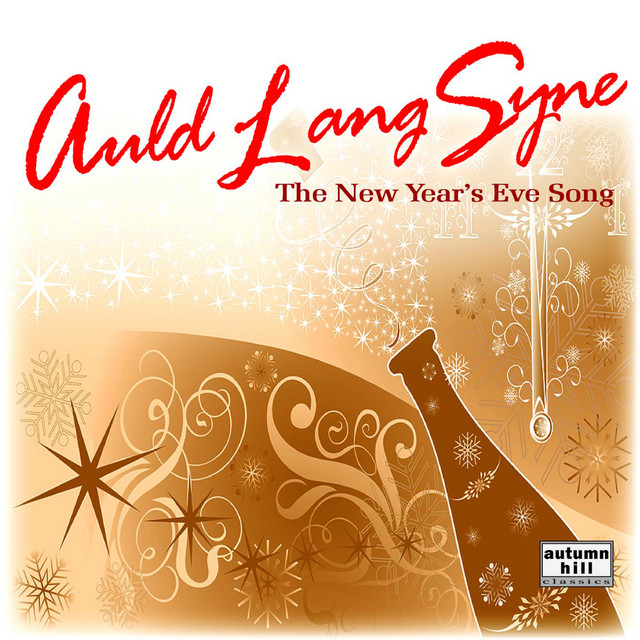
Today in Music (1907): “Auld Lang Syne” charted for first time

Auld Lang Syne

Frank Stanley

Writer(s): Robert Burns (lyrics adapted by), music (unknown) (see lyrics here)


First Published: 1796


First Charted: December 14, 1907 (Frank Stanley)


Peak: 2 BB, 1 DF (Stanley); 5 PM (Peerless Quartet, 1921); 18 DF (Chas & Dave, 1982); 7 BB, 40 R, 3 AC, 15 A40, 98 RB, 31 DF (Kenny G, 1998) (Click for codes to charts.)


Sales (in millions): --


Airplay/Streaming (in millions): -- radio, 47.07 video, 28.08 streaming (multiple versions)

Awards:

Click on award for more details.


Awards (Frank Stanley):

Click on award for more details.

About the Song:

Author Don Tyler asserts that along with “Happy Birthday” and “For He’s a Jolly Good Fellow,” “Auld Lang Syne” “may be one of the most well known and most often sung or performed songs in American history.” DT The title, when translated into standard English, is “Old Long Since,” which can be interpreted as “since long ago” or “for old times’ sake.” BR It was a commonly used expression as far back as the reign of King Charles I from 1625 to 1649. DT

Robert Burns, the national poet of Scotland, wrote the words for “Auld Lang Syne” in 1788. He claimed he adapted the words “from an old man’s singing.” BR Indeed, there have been similar poems that preceded Burns’ version. It has been cited as the inspiration for Burns’ version. BR In 1720, Scottish poet Allan Ramsay published a poem beginning with the line “should auld acquaintance be forgot” but otherwise it is dissimilar to Burns’ poem. BR

The poem did not appear in print until after Burns’ death when it was published in the fifth volume of James Johnson’s Scots Musical Museum in 1796. BR The lyrics are “about old friends having a drink and recalling adventures they had long ago.” BR

The words were set to a Scottish song by an unknown composer. The melody was first published in 1687. SS In 1782, the comic opera Rosina by William Shield used a similar tune. BR Another version of the tune was published in 1792 but with different words.BR George Thomson set the verses to an old Scottish tune which had been the basis fo several songs, including “I Fee’d a Lad at Michaelmas,” “The Miller’s Wedding,” and “The Miller’s Daughter.” DT In 1799, the words and music were published together as we now know them. BR

By at least the 1890s, the song was used as a New Year’s Eve celebratory song. SS In 1907, Frank Stanley recorded what may be the first and finest version of the standard. SS It “shows off the resonant, rumbling power of his voice.” SS Bandleader Guy Lombardo made it an annual tradition to perform the song for radio and television broadcasts, first doing so on December 31, 1929, BR and continuing to do so for more than 30 years. BR


Resources:


Related Links:


First posted 11/24/2025.