Showing posts with label Alma Gluck. Show all posts

Friday, April 3, 2015

Today in Music (1915): “Carry Me Back to Old Virginny” hit #1

Carry Me Back to Old Virginny

Len Spencer

Writer(s): James A. Bland (see lyrics here)


First Charted: October 7, 1893


Peak: 2 PM (Click for codes to charts.)


Sales (in millions): --


Airplay/Streaming (in millions): -- radio, -- video, -- streaming

Carry Me Back to Old Virginny

Alma Gluck


Recorded: November 13, 1914


First Charted: February 20, 1915


Peak: 15 PM, 11 GA (Click for codes to charts.)


Sales (in millions): 1.0 US


Airplay/Streaming (in millions): -- radio, 0.10 video, 0.03 streaming

Awards (Spencer):

Click on award for more details.


Awards (Gluck):

Click on award for more details.

About the Song:

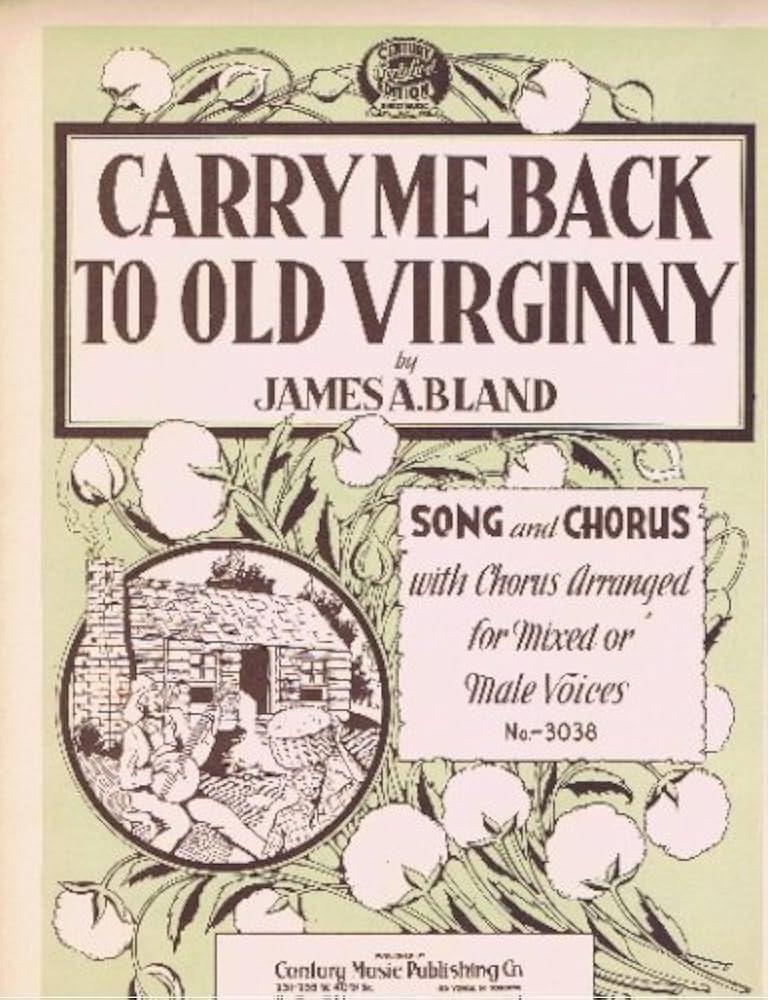
James Bland, an African American minstrel, wrote “Carry Me Back to Old Virginny” in approximately 1878. TY2 The song was reportedly inspired by “a peaceful scene on a plantation on the James River near Williamsburg, Virginia.” TY2 In addition, a female student at Howard University in Washington, D.C. told Bland that “a dream had carried her back home ‘to old Virginny.’” TY<2

The song was introduced by George Primorose and his minstrels and became a staple for most minstrel groups. TY2 In 1940, it became the state song of Virginia. However, because the lyrics contained “several pseudo-African American colloquialisms” TY2 that could be demmed “too racially sensitive,” TY2 the state legislature retired the song in 1997. GN

In 1893, Len Spencer took the song to #2. He was born February 12, 1867, in Washington D.C. He was “one of the giants of the pioneer recording era,” PM “America’s first nationally-known recording star in the 1890s.” PM He charted 45 times from 1891 to 1910, reaching #1 fifteen times. PM

In 1915, Alma Gluck went all the way to #1. Her version was only the fourth million-selling record in history. PM It was her most successful of her 19 chart entries. She was born in Romania and rose to fame with the New York Metropolitan Opera. PM

Ray Charles and Jerry Lee Lewis have also recorded the song.


Resources:


Related Links:


First posted 5/16/2025.

Thursday, August 13, 1992

Today in Music (1892): “The Old Folks at Home” charted for first time

The Old Folks at Home (Swanee River)

Stephen Foster

Writer(s): Stephen Foster (see lyrics here)


First Charted: August 13, 1892


Peak: 16 PM (Len Spencer), 2 PM, 17 DF (1900, Vess Ossman) (Click for codes to charts.)


Sales (in millions): 20.0 (sheet music)


Airplay/Streaming (in millions): -- radio, 1.68 video, 0.59 streaming (multiple versions)

Awards (overall):

Click on award for more details.


Awards (Spencer):


Awards (Ossman):

About the Song:

Stephen Foster was the pre-eminent songwriter of the 19th century in America. The Songwriter Hall of Fame inductee was born in 1826 and published hs first song in 1842. He had his first hit with “Oh! Susanna” in 1848 and “Camptown Races” in 1850. SS His “greatest triumph” was with “The Old Folks at Home,” also known as “Swanee River,” in 1851.

Ed P. Christy commissioned the minstrel song to be used by his troupe, Christy’s Minstrels. Christy was credited as the song’s creator on early sheet music printings WM because of a contractual agreement between him and Foster due to the latter’s concer that “an association with minstrel songs might damage his broader ambitions.” SS It meant Foster wasn’t credited (although he received royalties without recognition SS) from what became the most popular song ever published at that time WM with estimates as high as 20 million. PM Foster wouldn’t be credited until the copyright ran out in 1879, at which time he’d been dead sixteen years. SS

The melody was likely borrowed from “Annie Laurie” by Lady John Scott, a ballad published in Sir Thomas Moore’s classic Irish Melodies collection. SS Foster wrote most of the lyrics before settling in on the right name for the river in the opening line. His brother suggested the Yazoo River in Mississippi and the Pee Dee River in South Carolina before consulting an atlas and coming up with the Suwannee River in Florida. Foster said, “That’s it exactly!” WK He deliberately misspelled it as “Swanee” to fit the melody. WK

“For the first time, the two distinct categories of songs he had previously written, gentell parlor ballads and blackface-dialect numbers, merged into one.” SS The latter style involved writing in an exaggerated dialect to capture the language of the black slaves who worked cotton plantations before the Civil War, glorified antebellum Southern life. SFS “Swanee River” ended up sparking Florida tourism in the 1880s from people eager to see the “symbolic river and idyllic home” described by the song. WM Ironically, Foster himself never visited the state. WM In 1935, Florida named it their state song. The lyrics were revised in 2008 to eliminate racially offensive terms. SFS

It should be noted, though, that at the time Foster wrote the song, he was unusually sympathetic in his portrayal of a displaced slave, singing of loneliness and longing. He wrote the song about the slave’s feelings of isolation with enough vagueness that spoke to a wider, white audience. SS

The first charted version of the song came more than forty years after its publication when Len Spencer took it to #1 in 1892. It was one of nine versions to chart between 1892 and 1937. Other versions were by the Haydn Quartet (#4, 1904), Louise Homer (#6, 1905), Alma Gluck (#3, 1915), Taylor Trio (#4, 1916), Oscar Seagle (#8, 1919), Jimmie Lunceford (#19, 1936), and Bunny Berigan (#18, 1937). PM However, the highest ranked in Dave’s Music Database is the banjo instrumental by Vess Ossman. He was considered “The King of the Banjo” and “the foremost recorded ragtime musician of the original ragtime era.” PM


Resources:


Related Links:


First posted 1/24/2020; last updated 12/1/2025.

Thursday, August 22, 1991

On This Day in Music (1891): “Listen to the Mocking Bird” hit #1

Listen to the Mocking Bird (aka “The Mocking Bird”)

Septimus Winner as Alice Hawthorne (words), Richard Milburn (music)

Writer(s): Septimus Winner as Alice Hawthorne (words), Richard Milburn (music) (see lyrics here)


Published: 1855


First Charted: August 22, 1891 (John Yorke Atlee)


Peak: 16 US (Atlee) (Click for codes to charts.)


Sales (in millions): 20.0 (sheet music)


Airplay/Streaming (in millions): -- radio, 0.38 video, -- streaming

Awards: (Winner/Milburn)

Click on award for more details.


Awards (John Yorke Atlee):


Awards (Frank Stanley):

About the Song:

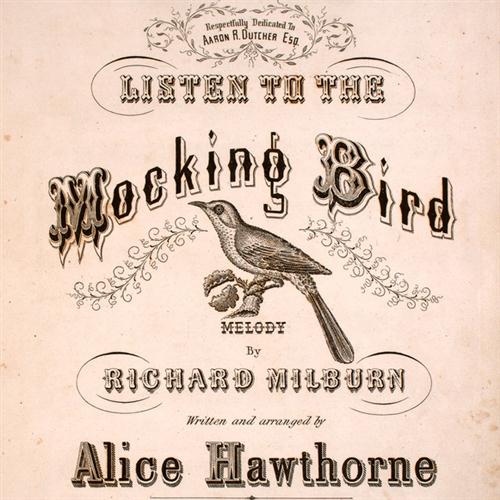
Septimus Winner, a Philadelphia songwriter, music teacher, publisher, and music store propietor, was inspired to write this tune in 1855 after hearing Richard “Whistling Dick” Milburn. The African American barber busked on the streets of Philadelphia, playing guitar and whistling. He sometimes imitated a mockingbird. Winner added lyrics about a narrator mourning the loss of his beloved Hally. He visits her grave and hears a mockingbird singing, which they often did when she was alive. JM

Soon after he published the song, Winner sold the copyright for five dollars, missing out on a huge windfall. Milburn, meanwhile, reportedly only received 20 copies of the song as payment SF and his name was later removed from the credits. In the early 20th century, a Philadelphia newspaper estimated that the song had sold 20 million copies of sheet music in America and Europe. JM That figure, however, has never been verified and is assumed to be wildly exaggerated. SS

In Yesterdays: Popular Song in America, Charles Hamm asserts that “Mocking Bird” was significant in popularizing the verse-chorus structure that would become nearly universal in popular music. SS Among the song’s fans were King Edward VII of England, who said he whistled the song as a boy, and Abraham Lincoln who called it “a real song…as sincere and sweet as the laughter of a little girl at play.” JM The cover of the sheet music calls the song “a sentimental Ethiopian ballad.” TY2

John Yorke Atlee, who was known as “the Artistic Whistler,” had the first charting version of the song in 1891, taking it to #1. It charted three more times, peaking at #3 each time. Joe Belmont did the trick in 1899, Frank Stanley with Corrine Morgan in 1904, and Alma Gluck in 1915. PM The verse of the song was used as an instrumental introduction to short films by the Three Stooges. WK It has also been used in TV cartoons Heckle and Jeckle, The Flintstones, and SpongeBob SquarePants. WK


Resources:


First posted 4/15/2021; last updated 9/2/2023.