Showing posts with label Len Spencer. Show all posts

Saturday, November 29, 2025

1890-1899: Top 100 Songs

Top 100 Songs of the Decade:

1890-1899

These are the songs which kicked off the recorded music era and the debut of charts to track the popularity of songs. Often a song’s popularity in this era had more to do with sheet music than specific recorded performances by individual artists. As such, there are multiple songs repeated here.

Rankings are figured by combining sales figures, chart data, airplay, awards, and appearances on best-of lists.

Check out other “songs of the decade” lists here.

DMDB Top 1%:

1. Katharine Lee Bates (lyrics) & Samuel A. Ward (music) “America the Beautiful” (1895)
2. George J. Gaskin “After the Ball” (1893)
3. James M. Black & Katharine E. Purvis (songwriters) “When the Saints Go Marching In” (1896)
4. Arthur Collins “Hello Ma Baby” (1899)
5. Patty S. Hill & Mildred J. Hill (composers) “Happy Birthday to You” (1893)
6. Scott Joplin “Maple Leaf Rag” (1899)
7. Billy Golden “Turkey in the Straw” (1891)
8. John Philip Sousa “The Stars and Stripes Forever” (1897)
9. Dan Quinn “Daisy Bell (A Bicycle Built for Two)” (1893)
10. Len Spencer “Ta-Ra-Ra Boom-De-Ay” (1892)

11. Dan Quinn “A Hot Time in the Old Town” (1896)
12. “I’ve Been Working on the Railroad” (1894)
13. Dan Quinn “The Sidewalks of New York” (1895)
14. Dan Quinn “The Band Played On” (1895)
15. Edison Male Quartette “My Old Kentucky Home” (1898)
16. George J. Gaskin “On the Banks of the Wabash” (1897)
17. Frank Kidson (first published by) “Scarborough Fair” (1891)
18. traditional “She’ll Be Coming ‘Round the Mountain” (1899)
19. John Yorke Atlee “Listen to the Mocking Bird (aka “The Mocking Bird”)” (1891)
20. Len Spencer “The Old Folks at Home (Swanee River)” (1892)

21. U.S. Marine Band “The Washington Post March” (1890)
22. Dan Quinn “At a Georgia Camp Meeting” (1898)
23. traditional “Red River Valley” (1896)
24. Silas Leachman “Dem Golden Slippers” (1894)
25. Vess Ossman “Yankee Doodle (aka ‘Yankee Doodle Went to Town’)” (1894)
26. Albert Campbell “My Wild Irish Rose” (1899)
27. Len Spencer “Hello Ma Baby” (1899)
28. Len Spencer “Mr. Johnson, Turn Me Loose” (1897)
29. John Yorke Atlee “After the Ball” (1893)
30. George J. Gaskin “Drill, Ye Terriers, Drill” (1891)

31. George Washington Johnson “The Laughing Song” (1891)
32. George J. Gaskin “Break the News to Mother” (1898)
33. U.S. Marine Band “Semper Fidelis” (1890)

DMDB Top 2%:

34. Arthur Collins “I’d Leave My Happy Home for You” (1899)
35. Jules Levy “My Country ‘Tis of Thee” (1893)
36. Len Spencer “A Hot Time in the Old Town” (1897)
37. George J. Gaskin “Oh Promise Me” (1893)
38. George J. Gaskin “My Old New Hampshire Home” (1898)
39. George J. Gaskin “The Fatal Wedding” (1893)
40. Gilmore’s Band “The Star-Spangled Banner” (1892)

41. Sousa’s Band “El Capitan March” (1895)
42. J.W. Myers “The Sidewalks of New York” (1895)
43. Dan Quinn “In the Baggage Coach Ahead” (1896)
44. George J. Gaskin “The Sidewalks of New York” (1895)
45. Tom Turpin (writer) “Harlem Rag” (1897)
46. Steve Porter “On the Banks of the Wabash” (1898)
47. United States Marine Band “The Liberty Bell” (1894)
48. Dan Quinn “The Little Lost Child” (1895)
49. J.W. Myers “Just Tell Them That You Saw Me” (1895)
50. Len Spencer “Smoky Mokes” (1899)

51. James Thornton (music/lyrics) “When You Were Sweet Sixteen” (1898)
52. George J. Gaskin “Sweet Rosie O’Grady” (1897)
53. George J. Gaskin “Down in Poverty Row” (1896)
54. John Yorke Atlee “Home Sweet Home” (1891)
55. U.S. Marine Band “The Thunderer” (1890)
56. Arthur Collins “I Guess I'll Have to Telegraph My Baby” (1899)
57. Dan Quinn “Curse of the Dreamer” (1899)
58. George Washington Johnson “The Whistling Coon” (1891)
59. Bill Dooley “Frankie and Johnny” (1899)
60. Vess Ossman “Yankee Doodle (aka ‘Yankee Doodle Went to Town’)” (new version, 1897)

61. George J. Gaskin “My Wild Irish Rose” (1899)
62. Eubie Blake “Charleston Rag” (1899)
63. George J. Gaskin “A Hot Time in the Old Town” (1897)
64. Sousa’s Band “The Star-Spangled Banner” (1898)
65. Len Spencer “The Bully (aka ‘Dat New Bully’)” (1895)
66. Emile Berliner “Twinkle Twinkle Little Star” (1890)
67. Len Spencer “Carry Me Back to Old Virginny” (1893)
68. Dan Quinn “Daddy Wouldn’t Buy Me a Bow Wow” (1892)
69. Edward M. Favor “Say Au Revoir, But Not Goodbye” (1894)
70. Manhansett Quartette “Sally in Our Alley” (1892)

71. Len Spencer “You’ve Been a Good Old Wagon But You’ve Done Broke Down” (1896)
72. Edward M. Favor “Daisy Bell (A Bicycle Built for Two)” (1894)
73. J.W. Myers “Goodbye Dolly Gray” (1897)
74. Emile Berliner “Auld Lang Syne” (1890)
75. Sousa’s Band “The Washington Post March” (1895)
76. Harry MacDonough & S.H. Dudley “Mid the Green Fields of Virginia” (1899)
77. Issler’s Orchestra “Tiger Rag” (1895)
78. Vess Ossman “At a Georgia Camp Meeting” (1898)
79. George J. Gaskin “Sweet Marie” (1894)
80. J.W. Myers “Two Little Girls in Blue” (1893)

81. Vess Ossman “Whistling Rufus” (1899)
82. Russell Hunting “Michael Casey Taking the Census” (1892)
83. Roger Harding “On the Banks of the Wabash” (1898)
84. Russell Hunting “Michael Casey at the Telephone” (1892)
85. Joe Belmont “Listen to the Mocking Bird (aka “The Mocking Bird”)” (1899)
86. Billy Golden “Bye Bye My Honey” (1898)
87. Len Spencer “My Gal Is a High-Born Lady” (1897)
88. Charles Marsh “Throw Him Down, McCloskey” (1892)
89. George J. Gaskin “The Sunshine of Paradise Valley” (1896)
90. George J. Gaskin “She Was Bred in Old Kentucky” (1898)

91. George J. Gaskin “She May Have Seen Better Days” (1896)
92. William F. Hooley “Gypsy Love Song (Slumber on, My Little Gypsy Sweetheart)” (1899)
93. Dan Quinn “The Bowery” (1893)

DMDB Top 5%:

94. Russell Hunting “Michael Casey As a Physician” (1891)
95. Dan Quinn “And Her Golden Hair Was Hanging Down Her Back” (1894)
96. Manhansett Quartette “The Picture Turned to the Wall” (1892)
97. Manhansett Quartette “The Old Oaken Bucket” (1894)
98. Dan Quinn “My Mother Was a Lady” (1897)
99. Thomas Bott “Love’s Old Sweet Song” (1892)
100. Steve Porter “My Creole Sue” (1899)


Resources/Related Links:


First posted 7/27/2018; last updated 11/29/2025.

Thursday, December 1, 2022

USA: #1 Pop Songs, 1890-1899

USA’s #1 Pop Songs:

1890-1899

These are the #1 pop songs in the history of the United States pop charts from 1890 to 1899. These songs topped the pre-Hot 100 pop charts, which ran from 1890-1955. Numbers in parentheses indicate the number of weeks at #1.

Click here to access a full list of #1 songs from 1890 to present. See other chart-based lists here.


1890:

  1. 8/2: U.S. Marine Band “Semper Fidelis” (2 weeks)
  2. 9/13: U.S. Marine Band “The Washington Post March” (6)
  3. 10/25: U.S. Marine Band “The Thunderer” (4)

1891:

  1. 3/7: Len Spencer “Little ‘Liza Loves You” (4)
  2. 4/4: George Washington Johnson “The Laughing Song” (10)
  3. 6/13: Russell Hunting “Michael Casey As a Physician” (4)
  4. 7;11: George Washington Johnson “The Whistling Coon” (5)
  5. 8/22: John Yorke Atlee “Listen to the Mocking Bird (aka “The Mocking Bird”)” (6)
  6. 9/19: Dan Kelly “Pat Kelly As a Police Justice” (4)
  7. 10/17: Billy Golden “Turkey in the Straw” (7)
  8. 12/5: George J. Gaskin “Drill, Ye Terriers, Drill” (5)


1892:

  1. 1/9: George J. Gaskin “Slide Kelly Slide” (3)
  2. 1/30: Len Spencer “Ta-Ra-Ra Boom-De-Ay” (8)
  3. 3/26: Manhansett Quartette “The Picture Turned to the Wall” (6)
  4. 5/7: Manhansett Quartette “Sally in Our Alley” (3)
  5. 5/28: Joe Natus “The Song That Reached My Heart” (3)
  6. 6/18: Charles Marsh “Throw Him Down, McCloskey” (3)
  7. 7/9: Russell Hunting “Michael Casey at the Telephone” (5)
  8. 8/13: Len Spencer “The Old Folks at Home (Swanee River)” (6)
  9. 9/24: Will Denny “The Pretty Red Rose” (2)
  10. 10/8: Russell Hunting “Michael Casey Taking the Census” (6)
  11. 11/19: Len Spencer “Near It” (2)
  12. 12/3: Thomas Bott “Love’s Old Sweet Song” (4)
  13. 12/31: Dan Quinn “Daddy Wouldn’t Buy Me a Bow Wow” (4)

1893:

  1. 1/28: Dan Quinn “The Bowery” (5)
  2. 3/4: George J. Gaskin “Oh Promise Me” (8)
  3. 4/29: George J. Gaskin “After the Ball” (10)
  4. 7/8: Jules Levy “My Country ‘Tis of Thee” (3)
  5. 7/29: Len Spencer “Mamie Come and Kiss Your Honey Boy” (3)
  6. 8/19: J.W. Myers “Two Little Girls in Blue” (4)
  7. 9/16: Dan Quinn “Daisy Bell (A Bicycle Built for Two)” (9)
  8. 11/18: George J. Gaskin “The Fatal Wedding” (8)


1894:

  1. 1/13: Russell Hunting “Casey As Insurance Agent” (3)
  2. 2/3: George J. Gaskin “Sweet Marie” (5)
  3. 3/10: U.S. Marine Band “The Liberty Bell” (5)
  4. 4/14: Edward M. Favor “Say Au Revoir, But Not Goodbye” (7)
  5. 6/2: Vess Ossman “Yankee Doodle” (4)
  6. 6/30: Silas Leachman “Dem Golden Slippers” (4)
  7. 7/28: George J. Gaskin “We Were Sweethearts, Nell and I” (3)
  8. 8/18: Dan Quinn “Lindley, Does You Love Me?” (3)
  9. 10/6: Dan Quinn “My Pearl Is a Bowery Girl” (4)
  10. 11/3: Russell Hunting “Casey at Denny Murphy’s Wake” (3)
  11. 11/24: Dan Quinn “And Her Golden Hair Was Hanging Down Her Back” (6)

1895:

  1. 1/5: Len Spencer “Little Alabama Coon” (5)
  2. 2/9: Dan Quinn “The Sidewalks of New York” (9)
  3. 3/21: Edward M. Favor “My Best Girl’s a New Yorker” (5)
  4. 4/13: J.W. Myers “The Sidewalks of New York” (4)
  5. 4/25: Len Spencer “The Bully (aka ‘Dat New Bully’)” (5)
  6. 5/30: Vess Ossman “Cocoanut Dance” (3)
  7. 6/15: Sousa’s Band “El Capitan March” (7)
  8. 8/1: J.W. Myers “Just Tell Them That You Saw Me” (6)
  9. 8/3: Sousa’s Band “The Washington Post March” (3)
  10. 8/24: Dan Quinn “The Band Played On” (10)
  11. 11/2: Dan Quinn “Little Lost Child” (5)


1896:

  1. 1/4: George J. Gaskin “The Sunshine of Paradise Alley” (6)
  2. 2/15: George J. Gaskin “She May Have Seen Better Days” (5)
  3. 6/20: Len Spencer with Vess Ossman “A Hot Time on the Levee” (3)
  4. 9/12: George J. Gaskin “Down in Poverty Roy” (4)
  5. 10/10: George J. Gaskin “On the Benches in the Park” (4)
  6. 11/7: Dan Quinn “In the Baggage Coach Ahead” (5)
  7. 12/12: Dan Quinn “A Hot Time in the Old Town” (7)

1897:

  1. 1/30: Len Spencer “A Hot Time in the Old Town” (3)
  2. 2/20: Len Spencer “Oh, Mr. Johnson, Turn Me Loose” (4)
  3. 3/20: Len Spencer “My Gal Is a Highborn Lady” (4)
  4. 4/17: Dan Quinn “My Mother Was a Lady” (5)
  5. 5/22: George J. Gaskin “Sweet Rosie O’Grady” (8)
  6. 7/17: Sousa’s Band “The Stars and Stripes Forever” (8)
  7. 9/11: Dan Quinn “There’s a Little Star Shining for You” (4)
  8. 11/6: George J. Gaskin “On the Banks of the Wabash” (10)


1898:

  1. 1/15: Steve Porter “On the Banks of the Wabash” (4)
  2. 2/12: Edison Male Quartette “My Old Kentucky Home” (3)
  3. 4/2: George J. Gaskin “Break the News to Mother” (7)
  4. 5/21: Cal Stewart “Uncle Josh’s Arriva in New York” (5)
  5. 6/25: Len Spencer “I Don’t Like No Cheap Man” (3)
  6. 7/16: George J. Gaskin “She Was Bred in Old Kentucky” (6)
  7. 8/27: Steve Porter “She’s More to Be Pitied Than Censured” (4)
  8. 9/24: Cal Stewart “I’m Old But I’m Awfully Tough (Laughing Song)” (3)
  9. 10/15: Dan Quinn “She Was Happy Till She Met You” (4)
  10. 11/12: Dan Quinn “At a Georgia Camp Meeting” (4)
  11. 12/10: George J. Gaskin “My Old New Hampshire Home” (10)

1899:

  1. 2/18: Arthur Collins “Kiss Me, Honey, Do” (4)
  2. 3/18: Arthur Collins “When you Ain’t Go No More Money, Well, You Needn’t Come Around” (2)
  3. 4/1: Arthur Collins “I Guess I’ll Have to Telegraph My Baby” (4)
  4. 4/29: Arthur Collins “Hello, Ma Baby” (4)
  5. 5/27: Len Spencer “Hello! Ma Baby” (6)
  6. 7/8: George J. Gaskin “My Wild Irish Rose” (3)
  7. 7/29: George J. Gaskin “My Wild Irish Rose” (6)
  8. 9/9: William F. Hooley “Gypsy Love Song” (5)
  9. 10/14: Steve Porter “A Picture No Artist Can Paint” (2)
  10. 10/28: Dan Quinn “Curse of the Dreamer” (7)
  11. 12/16: Arthur Collins “I’d Leave My Happy Home for You” (7)


Resources/Related Links:


First posted 2/24/2021; last updated 12/1/2022.

Friday, April 3, 2015

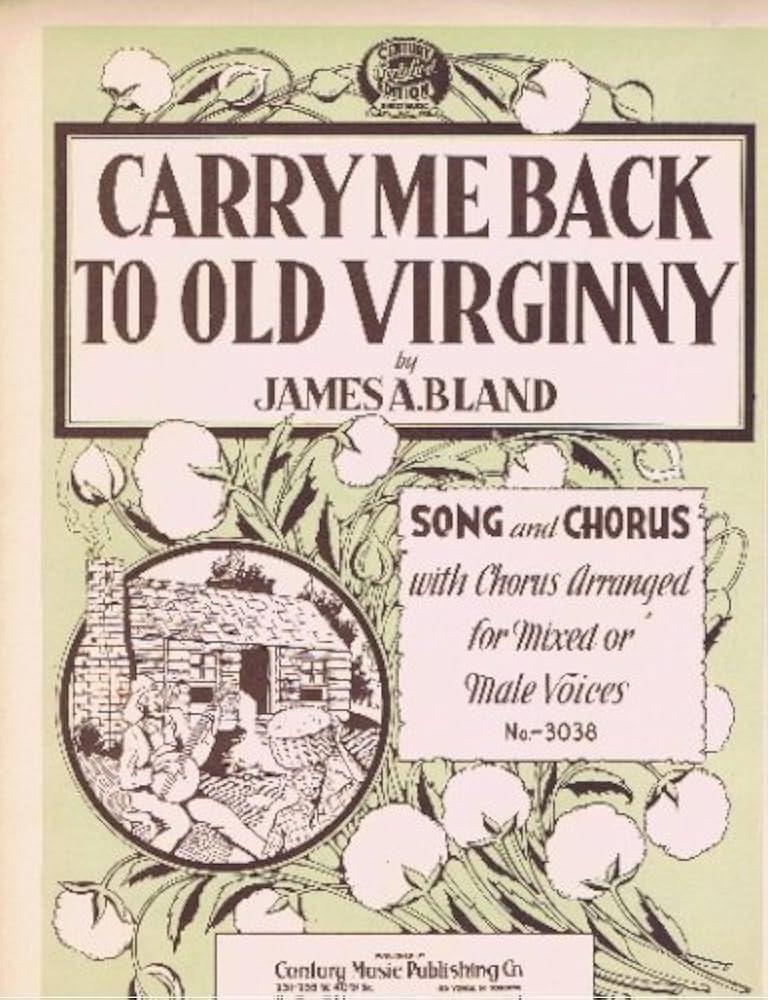
Today in Music (1915): “Carry Me Back to Old Virginny” hit #1

Carry Me Back to Old Virginny

Len Spencer

Writer(s): James A. Bland (see lyrics here)


First Charted: October 7, 1893


Peak: 2 PM (Click for codes to charts.)


Sales (in millions): --


Airplay/Streaming (in millions): -- radio, -- video, -- streaming

Carry Me Back to Old Virginny

Alma Gluck


Recorded: November 13, 1914


First Charted: February 20, 1915


Peak: 15 PM, 11 GA (Click for codes to charts.)


Sales (in millions): 1.0 US


Airplay/Streaming (in millions): -- radio, 0.10 video, 0.03 streaming

Awards (Spencer):

Click on award for more details.


Awards (Gluck):

Click on award for more details.

About the Song:

James Bland, an African American minstrel, wrote “Carry Me Back to Old Virginny” in approximately 1878. TY2 The song was reportedly inspired by “a peaceful scene on a plantation on the James River near Williamsburg, Virginia.” TY2 In addition, a female student at Howard University in Washington, D.C. told Bland that “a dream had carried her back home ‘to old Virginny.’” TY<2

The song was introduced by George Primorose and his minstrels and became a staple for most minstrel groups. TY2 In 1940, it became the state song of Virginia. However, because the lyrics contained “several pseudo-African American colloquialisms” TY2 that could be demmed “too racially sensitive,” TY2 the state legislature retired the song in 1997. GN

In 1893, Len Spencer took the song to #2. He was born February 12, 1867, in Washington D.C. He was “one of the giants of the pioneer recording era,” PM “America’s first nationally-known recording star in the 1890s.” PM He charted 45 times from 1891 to 1910, reaching #1 fifteen times. PM

In 1915, Alma Gluck went all the way to #1. Her version was only the fourth million-selling record in history. PM It was her most successful of her 19 chart entries. She was born in Romania and rose to fame with the New York Metropolitan Opera. PM

Ray Charles and Jerry Lee Lewis have also recorded the song.


Resources:


Related Links:


First posted 5/16/2025.

Friday, March 1, 2002

100 years ago: “Arkansaw Traveler” hit #1

The Arkansaw Traveler

Len Spencer

Writer(s): Sandford C. Faulkner, Joe Tasso (see lyrics here)


First Charted: March 1, 1902


Peak: 111 US (Click for codes to singles charts.)


Sales (in millions): --


Airplay/Streaming (in millions): -- radio, -- video, -- streaming

Awards:

Click on award for more details.

About the Song:

The origins of “The Arkansas Traveler” (aka “The Arkansaw Traveler”) are unclear. It was an anonymous folk song played by minstrel performers with some of its famous dialogue elements dating back to the planation era in the 1820s and ‘30s. It was first published in 1847 by W.C. Peters under the title “The Arkansas Traveller and Rackinsac Waltz.” WK

Mose Case, an albino African-American singer, guitarist, and stage musician TA has been credited with popularizing the song; WK his version from 1958 TY2 “has been called the gold standard.” TA Early versions of the tune feature comic dialogue “between the ‘Traveler’ and the backwoods fiddler” TA but no actual lyrics. SH The sheet music for Case’s version says “this piece is intended to represent an Easter man’s experience among the inhabitants of Arkansas, showing their hospitality and the mode of obtaining it.” TY2

Standford Faulkner is often cited as the composer, although it is more likely that he simply arranged the song. An 1887 newspaper article said Faulkner heard the tune in 1837 while working on a steamship on the Arkansas River. Waller Wright, a passenger, was playing the tune and Faulkner persuaded him to teach it to him. SH

Marie de los Angelos Jose Tosso (also known as Joe Tasso) TA has also been cited as the composer. He was a concert violinist, teacher and composer born in Mexico to Italian parents. TA In the sixty years that he lived in Cincinnati, the press often attributed “The Akansaw Traveler” to him. He was “renowned for his inimitable rendition of the comic dialogue between the Traveler and the squatter.” OH

Len Spencer recorded the first charted version of the song in 1900. It reached #2. He recorded it again in 1902 and that version spent 11 weeks on top of the charts. A 1922 version by native-Arkansan “Eck” Robertson was named to the National Recording Registry. Fiddlin’ John Carson & the Virginia Reelers charted with the song (#14) in 1924.

It has undergone several revisions with different sets of lyrics. In 1947, “official” lyrics were written by a committee in preparation for naming it as the official state song of Arkansas. The tune has also been used for the children’s novelty song “I’m Bringin’ Home a Baby Bumblebee.”


Resources:


First posted 12/10/2022.

Thursday, April 29, 1999

On This Day (1899): Arthur Collins hit #1 with “Hello Ma Baby”

Hello Ma Baby

Arthur Collins

Writer(s): Joseph E. Howard, Ida Emerson (see lyrics here)


First Charted: April 15, 1899


Peak: 14 PM (Click for codes to charts.)


Sales (in millions): --


Airplay/Streaming (in millions): -- radio, 0.51 video, 0.02 streaming

Awards (Arthur Collins):

Click on award for more details.


Awards (Len Spencer):

About the Song:

Joseph E. Howard and Ida Emerson were a husband-and-wife songwriting team who performed in vaudeville before becoming stars in Chicago and New York. SS Their “most celebrated song” SS was “Hello Ma Baby,” one of the first mainstream songs to use ragtime-styled syncopation. SS The melody is similar to a piano piece by Claude Debussy called “Le Petit Nègre.” WK

“Hello Ma Baby” was also notable as the first well-known song to refer to the telephone. The word “hello” was primarily associated with telephone use and the subject matter of the song regards a man who only knows his girlfriend via the telephone. WK Howard got the idea when he heard an African-American porter say the phrase when talking to his sweetheart on the phone. SF Less than 10% of American households owned phones at the time. WK

The song was recorded in 1899 by Len Spencer and Arthur Collins. Collins, “one of the most prolific and popular of pioneer recording artists,” SF was known as “King of the Ragtime Singers” SF and had the more successful version. The Music Trades declared it “one of the best coons songs that [has] been published in a long time.” SS Coon songs are “typically held in low regard from a modern perspective,” SS largely because of the racist nature of the lyrics and caricatures of African-Americans on the sheet music. WK Peter C. Muir, however, argues that it was “the first genre to develop in the commercial mainstream that makes extensive use of secular black music.” SS Music historian Steve Sullivan says “Hello Ma Baby” “finds the genre at its peak.” SS

It was also said it “can be heard in every flat in Harlem where there’s a piano, and on the street corners you can hear ‘Hello Ma Baby’ being sung by the boys who congregate there.” SS Alex Harms said it had “sold more rapidly than any other song that they had published.” SS The song experienced a revival when the character of Michigan J. Frog sang it in the 1955 Warner Bros. cartoon One Froggy Evening.


Resources:


First posted 4/16/2021; last updated 9/5/2023.

Thursday, August 13, 1992

Today in Music (1892): “The Old Folks at Home” charted for first time

The Old Folks at Home (Swanee River)

Stephen Foster

Writer(s): Stephen Foster (see lyrics here)


First Charted: August 13, 1892


Peak: 16 PM (Len Spencer), 2 PM, 17 DF (1900, Vess Ossman) (Click for codes to charts.)


Sales (in millions): 20.0 (sheet music)


Airplay/Streaming (in millions): -- radio, 1.68 video, 0.59 streaming (multiple versions)

Awards (overall):

Click on award for more details.


Awards (Spencer):


Awards (Ossman):

About the Song:

Stephen Foster was the pre-eminent songwriter of the 19th century in America. The Songwriter Hall of Fame inductee was born in 1826 and published hs first song in 1842. He had his first hit with “Oh! Susanna” in 1848 and “Camptown Races” in 1850. SS His “greatest triumph” was with “The Old Folks at Home,” also known as “Swanee River,” in 1851.

Ed P. Christy commissioned the minstrel song to be used by his troupe, Christy’s Minstrels. Christy was credited as the song’s creator on early sheet music printings WM because of a contractual agreement between him and Foster due to the latter’s concer that “an association with minstrel songs might damage his broader ambitions.” SS It meant Foster wasn’t credited (although he received royalties without recognition SS) from what became the most popular song ever published at that time WM with estimates as high as 20 million. PM Foster wouldn’t be credited until the copyright ran out in 1879, at which time he’d been dead sixteen years. SS

The melody was likely borrowed from “Annie Laurie” by Lady John Scott, a ballad published in Sir Thomas Moore’s classic Irish Melodies collection. SS Foster wrote most of the lyrics before settling in on the right name for the river in the opening line. His brother suggested the Yazoo River in Mississippi and the Pee Dee River in South Carolina before consulting an atlas and coming up with the Suwannee River in Florida. Foster said, “That’s it exactly!” WK He deliberately misspelled it as “Swanee” to fit the melody. WK

“For the first time, the two distinct categories of songs he had previously written, gentell parlor ballads and blackface-dialect numbers, merged into one.” SS The latter style involved writing in an exaggerated dialect to capture the language of the black slaves who worked cotton plantations before the Civil War, glorified antebellum Southern life. SFS “Swanee River” ended up sparking Florida tourism in the 1880s from people eager to see the “symbolic river and idyllic home” described by the song. WM Ironically, Foster himself never visited the state. WM In 1935, Florida named it their state song. The lyrics were revised in 2008 to eliminate racially offensive terms. SFS

It should be noted, though, that at the time Foster wrote the song, he was unusually sympathetic in his portrayal of a displaced slave, singing of loneliness and longing. He wrote the song about the slave’s feelings of isolation with enough vagueness that spoke to a wider, white audience. SS

The first charted version of the song came more than forty years after its publication when Len Spencer took it to #1 in 1892. It was one of nine versions to chart between 1892 and 1937. Other versions were by the Haydn Quartet (#4, 1904), Louise Homer (#6, 1905), Alma Gluck (#3, 1915), Taylor Trio (#4, 1916), Oscar Seagle (#8, 1919), Jimmie Lunceford (#19, 1936), and Bunny Berigan (#18, 1937). PM However, the highest ranked in Dave’s Music Database is the banjo instrumental by Vess Ossman. He was considered “The King of the Banjo” and “the foremost recorded ragtime musician of the original ragtime era.” PM


Resources:


Related Links:


First posted 1/24/2020; last updated 12/1/2025.