Showing posts with label How the Beatles. Show all posts

Sunday, January 1, 2023

Today in Music (1964): Top of the Pops aired for the first time

January 1, 1964

Top of the Pops launched in Britain.

The British music television show Top of the Pops launched on New Year’s Day in 1964. BBC producer Johnnie Stewart created TOTP, inspired by the Radio Luxembourg show Teen and Twenty Disc Club. Each show counted down the hits from the past week. The #1 song was featured every week, but otherwise a song did not generally appear if it had been on the previous week or was heading down the charts.

The inaugural show featured The Beatles, The Rolling Stones, The Hollies, and Dusty Springfield. The Beatles’ “I Want to Hold Your Hand” was the #1 song that week. Each week consisted of performances of some of the most popular music artists and counted down the week’s hit singles. While the show aired live, artists actually mimed to the songs. Over the show’s history, however, there were times when songs were performed at least partially live.

Traditionally TOTP aired on BBC 1 on Thursdays, but in 1996 it moved to Fridays and then in 2005 it moved to Sundays on BBC 2. The show was broadcast until July 30, 2006, becoming the world’s longest-running weekly music show. The show also aired an annual look at the best-selling singles of the year on Christmas Day. Even after the show’s cancellation, that tradition continued.


Resources:


First posted 1/1/2012; updated 12/30/2023.

Thursday, November 9, 2017

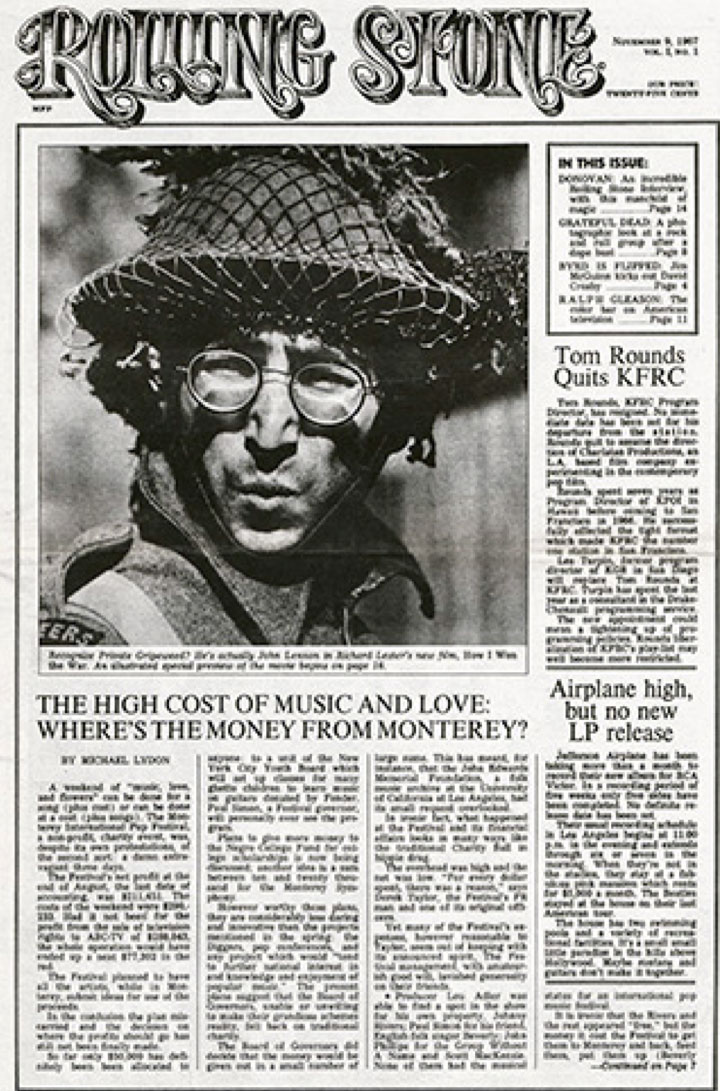
Today in Music (1967): Rolling Stone magazine hit the newsstands

November 9, 1967:

Rolling Stone magazine hit newsstands

The iconic magazine has become “a rock and roll institution” GB and “the most authoritative publication on rock and roll music.” ABC It was launched in San Francisco in 1967 by still-editor and publisher Jann Wenner along with music critic Ralph J. Gleason. Wenner was a transplanted New Yorker who’d moved west to go to Berkeley. As a student, he became a political activist and aspiring journalist. Gleason was a jazz critic with the San Francisco Chronicle who helped Wenner land a job after he dropped out of college in 1966.

In the first issue, Wenner described it as “sort of a magazine and sort of a newspaper” AG which was “not just about the music, but about the things and attitudes that music embraces.” GB The name for the magazine was inspired by the phrase “a rolling stone gathers no moss.” Of course, the famed British rock group of the same name also figured into the mix, as did the Muddy Waters’ song from which they took their name. In addition, Bob Dylan’s “first rock and roll record” was called “Like a Rolling Stone”. AG

The first issue featured a cover image of John Lennon from his movie How I Won the War. Some of the pieces in that issue included an investigation on what happened to profits from the Monterey Pop Festival, the split between the Byrds and David Crosby, Jefferson Airplane’s future plans, and a report that The Who’s “I Can See for Miles” was released that week.

The magazine has ironically received criticism for 1) a bias toward the 1960s and 1970, and 2) an attempt in more recent years to pander to younger audiences. Some bands, such as Led Zeppelin, were largely written off in their active years but celebrated years later. Also, some albums were rated as average or even poor initially (Nirvana’s Nevermind, The Beatles’ Let It Be), but in subsequent issues were celebrated as classics. In addition, the magazine’s liberal politics have occasionally come under fire.

The format has undergone several changes over the years. It started as a black-and-white print tabloid newspaper style publication. From 1973-1980, it was printed on newsprint paper size and then became a 10” x 12” magazine. In 2008, it switched to the smaller, standard-format size. As of April 19, 2010, it began featuring the entire collection archived online. It now operates under a subscription model meaning readers have to be paid members to access some content. The bi-weekly publication has done more than a thousand issues and has a circulation of 1.4 million.


Resources and Related Links:


First posted 11/9/2011; updated 11/5/2023.

Monday, April 1, 2013

The Top 100 Albums According to the BBC

First posted 3/26/2012; updated 8/3/2020.

BBC:

The Top 100 Albums

Over the years, the BBC has released a few best-of album lists. Five of those lists (details about each and links at bottom of page) have been aggregated into this list, unique to the DMDB.

Also, check out annual picks for album of the year.

1. The Beatles Sgt. Pepper’s Lonely Hearts Club Band (1967)
2. U2 The Joshua Tree (1987)
3. Oasis Definitely Maybe (1994)
4. Led Zeppelin Led Zeppelin IV (1971)
5. The Verve Urban Hymns (1997)
6. R.E.M. Automatic for the People (1992)
7. Pink Floyd Dark Side of the Moon (1973)
8. The Beatles The Beatles (aka “The White Album”) (1968)
9. Radiohead OK Computer (1997)
10. Michael Jackson Thriller (1982)

11. Simon & Garfunkel Bridge Over Troubled Water (1970)
12. The Beach Boys Pet Sounds (1966)
13. Paul Simon Graceland (1986)
14. Marvin Gaye What’s Going On (1971)
15. Bruce Springsteen Born to Run (1975)
16. Meat Loaf Bat Out of Hell(1977)
17. Elton John Goodbye Yellow Brick Road (1973)
18. The Beatles Revolver (1966)
19. Oasis What's the Story Morning Glory (1995)
20. Fleetwood Mac Rumours (1977)

21. The Sex Pistols Never Mind the Bollocks, Here’s the Sex Pistols (1977)
22. Pink Floyd Wish You Were Here (1975)
23. Queen A Night at the Opera (1975)
24. Dire Straits Brothers in Arms (1985)
25. The Beatles Abbey Road (1969)
26. The Smiths The Queen Is Dead (1986)
27. Dido No Angel (1999)
28. Bob Dylan Blood on the Tracks (1975)
29. Coldplay A Rush of Blood to the Head (2002)
30. Joni Mitchell Blue (1971)

31. David Bowie The Rise and Fall of Ziggy Stardust and the Spiders from Mars (1972)
32. Bob Dylan Blonde on Blonde (1966)
33. Van Morrison Astral Weeks (1968)
34. The Clash London Calling (1979)
35. The Who Who’s Next (1971)
36. Pulp Different Class (1995)
37. Kate Bush Hounds of Love (1985)
38. Velvet Underground & Nico Velvet Underground & Nico (1967)
39. The Jimi Hendrix Experience Electric Ladyland (1968)
40. Mike Oldfield Tubular Bells (1973)

41. Blur Parklife (1994)
42. Carole King Tapestry (1971)
43. George Harrison All Things Must Pass (1970)
44. Eagles Hotel California (1976)
45. The Stone Roses The Stone Roses (1989)
46. Radiohead The Bends (1995)
47. Nirvana Nevermind (1991)
48. Miles Davis Kind of Blue (1959)
49. Alanis Morissette Jagged Little Pill (1995)
50. Massive Attack Blue Lines (1991)

51. The Beatles Rubber Soul (1965)
52. Blondie Parallel Lines (1978)
53. Keane Hopes and Fears (2004)
54. The Rolling Stones Exile on Main Street (1972)
55. Primal Scream Screamadelica (1991)
56. Paul McCartney & Wings Band on the Run (1973)
57. George Michael Faith (1987)
58. Pink Floyd The Wall (1979)
59. Kylie Minogue Fever (2001)
60. The Rolling Stones Sticky Fingers (1971)

61. U2 Achtung Baby (1991)
62. Madonna True Blue (1986)
63. Stevie Wonder Songs in the Key of Life (1976)
64. Joy Division Closer (1980)
65. The Pixies Doolittle (1989)
66. Abba Arrival (10/11/76)
67. Neil Young Harvest (1972)
68. James Blunt Back to Bedlam (2004)
69. The Jimi Hendrix Experience Are You Experienced? (1967)
70. Leftfield Leftism (1995)

71. Led Zeppelin Led Zeppelin II (1969)
72. David Gray White Ladder (2000)
73. Madonna Ray of Light (1998)
74. Jeff Buckley Grace (1994)
75. Spice Girls Spice (1996)
76. Portishead Dummy (1994)
77. The Human League Dare! (1981)
78. David Bowie Let’s Dance (1983)
79. The Rolling Stones Let It Bleed (1969)
80. R.E.M. Out of Time (1991)

81. Roxy Music For Your Pleasure (1973)
82. The Beatles A Hard Day’s Night (1964)
83. Prince & the Revolution Purple Rain (soundtrack, 1984)
84. Love Forever Changes (1967)
85. David Bowie Hunky Dory (1971)
86. Lou Reed Transformer (1972)
87. AC/DC Back in Black (1980)
88. Nick Drake Bryter Layter (1970)
89. John Lennon Imagine (1971)
90. The Who Tommy (1969)

91. Maroon 5 Songs about Jane (2002)
92. The Clash The Clash (1977)
93. Led Zeppelin Physical Graffiti (1975)
94. Donald Fagen The Nightfly (1982)
95. Robbie Williams I’ve Been Expecting You (1998)
96. The Band The Band (1969)
97. Frank Sinatra Songs for Swingin’ Lovers! (1956)
98. Prince Sign ‘O’ the Times (1987)
99. Joy Division Unknown Pleasures (1979)
100. Patti Smith Horses (1975)


Resources and Related Links:

  • 4/1/2013: BBC Radio 2 “Listeners’ Poll

    BBC listeners were polled to determine the top 100 albums of all time.

  • 2006: Stuart Maconie’s “Critical List

    BBC radio show in which Maconie presented albums which he suggested every popular music aficionado should have in their collections.

  • 8/28/2006: BBC Radio 2 “Music Club Top 100 Albums

    Top 100 ranked list of voters’ favorite #1 albums on the UK Album Chart, in celebration of the 50th anniversary of the UK album chart.

  • June 2002: BBC News “Top 50 Albums of Last 50 Years

    Ranked list. No commentary. Link goes to an article about the list and includes a dead link which supposedly links to the entire list.

  • 1/24/1998: BBC News “The Music of the Millenium

    Top 100 ranked list. No commentary.

Saturday, August 26, 1995

On This Day in Music: The Battle of Britpop

August 26, 1995

The Battle of Britpop

1995 marked the pinnacle of Britpop in the U.K. The genre emerged from the British independent music scene in the early ‘90s and has been suggested to be the English response to the rise of grunge in the U.S.A. The form was characterized by its guitar-driven pop sound which recalled some of the country’s biggest bands from the 1960s and 1970s such as The Beatles and The Kinks. Groups from the 1980s and early 1990s such as The Smiths, The Stone Roses, and Happy Mondays were considered immediate predecessors to the movement. In the U.S., the genre was understandably less prevalent but many of the bands labeled as Britpop found homes on American alternative radio.

The genre’s two most popular bands were Blur and Oasis. In 1995, the former group was coming off the success of their highly acclaimed album Parklife while the latter band was coming off Definitely Maybe, which had set the record for the country’s fastest-selling debut album.

Both groups were prepping their follow-up albums and had grown antagonistic toward each other in the last year. By the time they were ready to release their new singles, the record companies made the most of the marketing opportunity and released the singles (“Country House” for Blur, “Roll with It” for Oasis) on the same day.

The release date, August 14, was cited by NME magazine as the day of the big chart showdown – or “The Battle of Britpop” as it was commonly referred to by the press. However, it wasn’t until the official UK chart for the week ending August 26, 1995, that an official winner could be declared. Blur debuted at #1 on the chart with 274,000 copies while Oasis’ sales of 216,000 landed them at #2. However, while Blur won the battle, Oasis won the war. Their album (What’s the Story) Morning Glory? became the third-best-selling album in British history and found much greater success in the U.S. than Blur.


For more important days in music history, check out the Dave’s Music Database history page.

Resources and Related Links:


Related Links:


First posted 8/26/2011; updated 8/24/2023.