Showing posts with label Jann Wenner. Show all posts

Friday, January 5, 2024

Jann Wenner: A Man of Influence and Controversy

Jann Wenner

A Man of Influence and Controversy

Overview:

While he has become a controversial figure, Jann Wenner is one of the most influential non-musicians in the history of music. He was born Jann Simon Wenner on January 7, 1946 in New York City, New York. He grew up in a secular Jewish family in the San Francisco Bay Area. He dropped out of the University of Berkeley in 1966 and founded Rolling Stone magazine the following year.

The first issue was published on November 9, 1967. It featured John Lennon on the cover. Wenner viewed it as a mix of a magazine and newspaper that covered music as well as other popular culture and current events. See the DMDB post about it here.
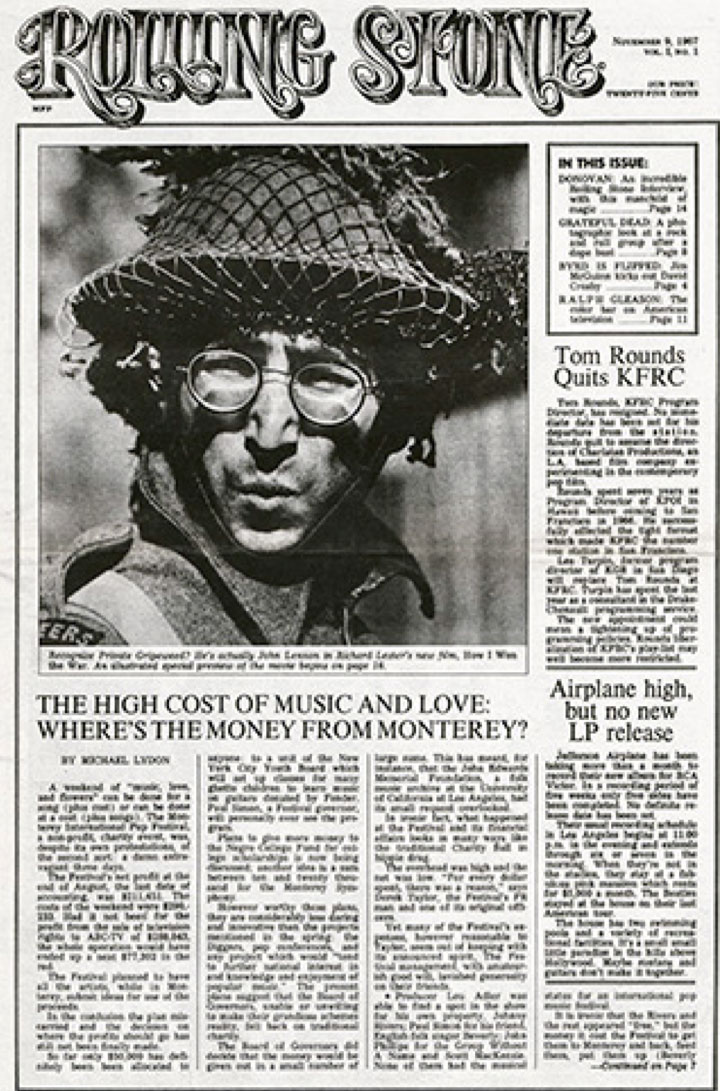
The magazine has published more than a thousand issues and has a circulation of 1.4 million. Wenner and the magazine played a role in launching the careers of journalist Hunter S. Thompson, critics Greil Marcus and Dave Marsh, movie director Cameron Crowe, and photographer Annie Liebovitz.

In 1983, Wenner and a small group of record company heads and music industry professionals founded the Rock and Roll Hall of Fame Foundation. The Rock and Roll Hall of Fame inducted its first class on January 23, 1986. See the DMDB post about it here. The Museum opened its doors on September 2, 1995. Read about it here.

The Rock and Roll Hall of Fame has faced criticism that a handful of people, including Jann Wenner, control the nomination process and focus on their personal tastes and nominating artists who will sell tickets to the dinner.

Wenner faced controversy in September 2023 after the publication of his book The Masters: Conversations with Dylan, Lennon, Jagger, Townshend, Garcia, Bono, and Springsteen. When asked about why no black or female artists were included, he said “none of them were articulate enough on this intellectual level.” WK The comments got him removed from the board of the Rock and Roll Hall of Fame Foundation.

Awards:

Resources and Related Links:


First posted 1/5/2024.

Friday, February 10, 2023

Aural Fixation: Why the Rock and Roll Hall of Fame isn't a Joke

Aural Fixation:

Why the Rock and Roll Hall of Fame Isn’t a Joke

Aural Fixation” is a music-themed column I wrote for PopMatters.com from 2011-2013. They are no longer online there, but I have reformatted them here at the DMDB blog with additional videos, photos, and links, such as where to buy referenced albums. I have also used the title “Aural Fixation” for any essays I have written outside of PopMatters.com as well. To see the essays, check out the Dave’s Music Database Aural Fixation page. You can also purchase the essays in book format here.

This post is a response to a question posted on Quora: “What is your opinion on the Rock and Roll Hall of Fame? Do you think it is a joke, or does it really matter who is inducted into it?”

To address this question, I’m posing the common arguments made that the Hall is a joke. Then I offer a rebuttal.

The Argument: They induct non-rock and roll acts.

The Rebuttal:
Rock and roll is not a pure genre without the influence of other genres. It is generally considered an amalgamation of R&B, country, jazz, folk, blues, and more. As such, the Hall has - since its beginning - acknowledged artists which some might not consider rock and roll because of the influence they’ve had in shaping rock and roll. The very first class saw inductees which people would call blues (Robert Johnson), country (Jimmie Rodgers), and R&B (James Brown, Ray Charles).

The Argument: Rap isn’t rock and doesn’t belong in the Hall.

The Rebuttal:
This is a variation on the first argument but I separate it here because rap is a genre which has emerged since rock and roll. The Hall has acknowledged its wide definition of rock in that it sees it more as the music that is an expression of youth culture. The development and growth of rap has followed a similar trajectory as rock. It is also a genre which has shaped the continued development of rock and roll. Inductees like the Red Hot Chili Peppers, nominees like Rage Against the Machine, and potential future inductees like Linkin Park all are generally defined as rock bands but show the influence of rap. Side note: for all those complaining about rap like it has taken over the Hall, there are - as of the 2022 class - less than 10 inductees which can probably be strictly defined as rap out of 365 inductees.

The Argument: Why not just call it the Music Hall of Fame?

The Rebuttal:
As much as some detractors would have you believe that any and all music can get in the Hall, that isn’t the case. The focus is on music which tends to be an expression of youth culture, specifically popular music which has emerged in generally English-speaking countries, primarily the United States, since the 1950s (as well as some early influencers). As such, as huge as names like Frank Sinatra and Bing Crosby are, they aren’t likely to get in the Rock and Roll Hall of Fame, but they’d be shoo-ins for a Music Hall of Fame (not to mention classical giants like Beethoven, Mozart, Bach, etc.)

The Argument: Jann Wenner calls the shots. If he likes the act, they’re in. If he doesn’t, they’re doomed.

The Rebuttal:
As the founder of the Hall, Wenner certainly has held significant influence and there are plenty of rumors about who couldn’t get in because of him. However, he hasn’t been on the nominating committee since 2006 and stepped down as the chair in 2019. I’m sure his voice still holds sway, but there have been acts like Kiss who got in despite Wenner’s stance against them. It’s also important to understand the process. The nominating committee selects the list of possible inductees each year, but they don’t vote on them. That decision is made by the 1000+ past inductees and other members of the music industry.

The Argument: The Hall sucks because (insert name of favorite band here) isn’t in.

The Rebuttal:
We all have our favorites. We may even have good arguments for why they belong in the Hall. However, people often fail to recognize that their individual opinions do not necessarily reflect a larger opinion shared by the masses. Also, with 365 inductees already, it’s hard to argue that any first-tier acts haven’t been inducted. Check out any social media post complaining about who isn’t in and it is a slew of possible names, many of which might get the reader thinking, “yeah, they oughta be in.” However, there isn’t one name that comes up over and over universally from every person who comments.

The Argument: The Hall just inducts high-profile names that will draw audiences (i.e. money) to the annual induction ceremony.

The Rebuttal:
Let’s be clear. The Rock and Roll Hall of Fame is technically a non-profit organization. Still, they do need to make money to stay afloat. Here's the thing about attacking the Hall for trying to be financially viable - it's hypocritical. The people lobbying these accusations then turn around and whine that their favorite act isn't in - an act which has been a part of the music industry and, more likely than not, isn't some obscure act that has never made any money. They're likely to be high-profile acts who've been around for decades and made plenty of money BECAUSE of the music industry.
Conclusion:
I realize this was an incredibly long answer. I absolutely think the Hall has its flaws, but ultimately it remains a relevant way of recognizing some of music’s greatest contributors. It most assuredly is not a joke.


For more essays, check out the Dave’s Music Database Aural Fixation page.

Resources and Related Links:


First posted 2/10/2023; last updated 10/27/2023.

Thursday, November 9, 2017

Today in Music (1967): Rolling Stone magazine hit the newsstands

November 9, 1967:

Rolling Stone magazine hit newsstands

The iconic magazine has become “a rock and roll institution” GB and “the most authoritative publication on rock and roll music.” ABC It was launched in San Francisco in 1967 by still-editor and publisher Jann Wenner along with music critic Ralph J. Gleason. Wenner was a transplanted New Yorker who’d moved west to go to Berkeley. As a student, he became a political activist and aspiring journalist. Gleason was a jazz critic with the San Francisco Chronicle who helped Wenner land a job after he dropped out of college in 1966.

In the first issue, Wenner described it as “sort of a magazine and sort of a newspaper” AG which was “not just about the music, but about the things and attitudes that music embraces.” GB The name for the magazine was inspired by the phrase “a rolling stone gathers no moss.” Of course, the famed British rock group of the same name also figured into the mix, as did the Muddy Waters’ song from which they took their name. In addition, Bob Dylan’s “first rock and roll record” was called “Like a Rolling Stone”. AG

The first issue featured a cover image of John Lennon from his movie How I Won the War. Some of the pieces in that issue included an investigation on what happened to profits from the Monterey Pop Festival, the split between the Byrds and David Crosby, Jefferson Airplane’s future plans, and a report that The Who’s “I Can See for Miles” was released that week.

The magazine has ironically received criticism for 1) a bias toward the 1960s and 1970, and 2) an attempt in more recent years to pander to younger audiences. Some bands, such as Led Zeppelin, were largely written off in their active years but celebrated years later. Also, some albums were rated as average or even poor initially (Nirvana’s Nevermind, The Beatles’ Let It Be), but in subsequent issues were celebrated as classics. In addition, the magazine’s liberal politics have occasionally come under fire.

The format has undergone several changes over the years. It started as a black-and-white print tabloid newspaper style publication. From 1973-1980, it was printed on newsprint paper size and then became a 10” x 12” magazine. In 2008, it switched to the smaller, standard-format size. As of April 19, 2010, it began featuring the entire collection archived online. It now operates under a subscription model meaning readers have to be paid members to access some content. The bi-weekly publication has done more than a thousand issues and has a circulation of 1.4 million.


Resources and Related Links:


First posted 11/9/2011; updated 11/5/2023.