Showing posts with label music essays. Show all posts

Friday, February 10, 2023

Aural Fixation: Why the Rock and Roll Hall of Fame isn't a Joke

Aural Fixation:

Why the Rock and Roll Hall of Fame Isn’t a Joke

Aural Fixation” is a music-themed column I wrote for PopMatters.com from 2011-2013. They are no longer online there, but I have reformatted them here at the DMDB blog with additional videos, photos, and links, such as where to buy referenced albums. I have also used the title “Aural Fixation” for any essays I have written outside of PopMatters.com as well. To see the essays, check out the Dave’s Music Database Aural Fixation page. You can also purchase the essays in book format here.

This post is a response to a question posted on Quora: “What is your opinion on the Rock and Roll Hall of Fame? Do you think it is a joke, or does it really matter who is inducted into it?”

To address this question, I’m posing the common arguments made that the Hall is a joke. Then I offer a rebuttal.

The Argument: They induct non-rock and roll acts.

The Rebuttal:
Rock and roll is not a pure genre without the influence of other genres. It is generally considered an amalgamation of R&B, country, jazz, folk, blues, and more. As such, the Hall has - since its beginning - acknowledged artists which some might not consider rock and roll because of the influence they’ve had in shaping rock and roll. The very first class saw inductees which people would call blues (Robert Johnson), country (Jimmie Rodgers), and R&B (James Brown, Ray Charles).

The Argument: Rap isn’t rock and doesn’t belong in the Hall.

The Rebuttal:
This is a variation on the first argument but I separate it here because rap is a genre which has emerged since rock and roll. The Hall has acknowledged its wide definition of rock in that it sees it more as the music that is an expression of youth culture. The development and growth of rap has followed a similar trajectory as rock. It is also a genre which has shaped the continued development of rock and roll. Inductees like the Red Hot Chili Peppers, nominees like Rage Against the Machine, and potential future inductees like Linkin Park all are generally defined as rock bands but show the influence of rap. Side note: for all those complaining about rap like it has taken over the Hall, there are - as of the 2022 class - less than 10 inductees which can probably be strictly defined as rap out of 365 inductees.

The Argument: Why not just call it the Music Hall of Fame?

The Rebuttal:
As much as some detractors would have you believe that any and all music can get in the Hall, that isn’t the case. The focus is on music which tends to be an expression of youth culture, specifically popular music which has emerged in generally English-speaking countries, primarily the United States, since the 1950s (as well as some early influencers). As such, as huge as names like Frank Sinatra and Bing Crosby are, they aren’t likely to get in the Rock and Roll Hall of Fame, but they’d be shoo-ins for a Music Hall of Fame (not to mention classical giants like Beethoven, Mozart, Bach, etc.)

The Argument: Jann Wenner calls the shots. If he likes the act, they’re in. If he doesn’t, they’re doomed.

The Rebuttal:
As the founder of the Hall, Wenner certainly has held significant influence and there are plenty of rumors about who couldn’t get in because of him. However, he hasn’t been on the nominating committee since 2006 and stepped down as the chair in 2019. I’m sure his voice still holds sway, but there have been acts like Kiss who got in despite Wenner’s stance against them. It’s also important to understand the process. The nominating committee selects the list of possible inductees each year, but they don’t vote on them. That decision is made by the 1000+ past inductees and other members of the music industry.

The Argument: The Hall sucks because (insert name of favorite band here) isn’t in.

The Rebuttal:
We all have our favorites. We may even have good arguments for why they belong in the Hall. However, people often fail to recognize that their individual opinions do not necessarily reflect a larger opinion shared by the masses. Also, with 365 inductees already, it’s hard to argue that any first-tier acts haven’t been inducted. Check out any social media post complaining about who isn’t in and it is a slew of possible names, many of which might get the reader thinking, “yeah, they oughta be in.” However, there isn’t one name that comes up over and over universally from every person who comments.

The Argument: The Hall just inducts high-profile names that will draw audiences (i.e. money) to the annual induction ceremony.

The Rebuttal:
Let’s be clear. The Rock and Roll Hall of Fame is technically a non-profit organization. Still, they do need to make money to stay afloat. Here's the thing about attacking the Hall for trying to be financially viable - it's hypocritical. The people lobbying these accusations then turn around and whine that their favorite act isn't in - an act which has been a part of the music industry and, more likely than not, isn't some obscure act that has never made any money. They're likely to be high-profile acts who've been around for decades and made plenty of money BECAUSE of the music industry.
Conclusion:
I realize this was an incredibly long answer. I absolutely think the Hall has its flaws, but ultimately it remains a relevant way of recognizing some of music’s greatest contributors. It most assuredly is not a joke.


For more essays, check out the Dave’s Music Database Aural Fixation page.

Resources and Related Links:


First posted 2/10/2023; last updated 10/27/2023.

Monday, January 31, 2022

Aural Fixation: National Recording Registry - Kenny Loggins' "Footloose"

Aural Fixation:

National Recording Registry - “Footloose”

Aural Fixation” is a music-themed column I wrote for PopMatters.com from 2011-2013. They are no longer online there, but I have reformatted them here at the DMDB blog with additional videos, photos, and links, such as where to buy referenced albums. I have also used the title “Aural Fixation” for any essays I have written outside of PopMatters.com as well. To see the essays, check out the Dave’s Music Database Aural Fixation page.

The essays from PopMatters.com have been gathered in book form as Aural Fixation: Essays from a Music Obsessive. Essays written from 2009 to 2011 have been gathered in the book No One Needs 21 Versions of “Purple Haze”. You can purchase the essays in book format here.

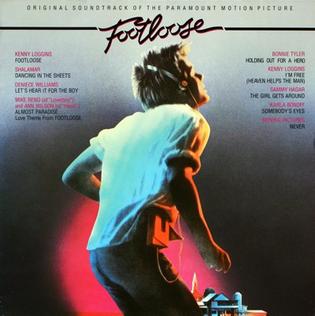
At the request of the Library of Congress, I wrote this piece in 2022 about Kenny Loggins’ song “Footloose,” a 2017 inductee into the National Recording Registry You can read the original here or read it below.

The Movie:

Kevin Bacon bounds into the prom in the closing scene of “Footloose” with his rouse-the troops proclamation “I thought this was a party! Let’s dance!” Audiences heeded the celebratory cry and the movie danced its way to the top of the box office for three weeks in early 1984. It raked in $80 million domestically, ranking #6 for the year. 1

Thematically, the movie traversed in the classic trope of puritanical adults bent on rescuing misguided, rebellious teens from their delinquent proclivities. When outsider Ren (Bacon) comes to town, he’s stunned by the antiquated no-dancing-allowed law and becomes a rebel with a cause. His effort to fight the system puts him at odds with the town council and local preacher (John Lithgow).

It may sound like a plot set in the emergence of rock-n-roll in the 1950s, but the seemingly eyerolling fiction was based on real events in the present day. In 1981, the high school junior class in the Oklahoma town of Elmore City petitioned to overturn an 1898 law outlawing dancing so they could hold a prom. Reverend F.R. Johnson, from the nearby town of Hennepin, declared, “No good has ever come from a dance… When boys and girls hold each other they get sexually aroused.” 2

Dean Pitchford turned it into a movie. He’d never penned a screenplay before but was no novice to songwriting. He won an Academy Award as the lyricist for the title song to the 1980 film Fame. Irene Cara turned it into a top-five hit. Pitchford would also co-write the nine songs which comprised the Footloose soundtrack.

The Soundtrack:

Nineteen eight-four was one of the most important years in the history of pop music. Michael Jackson’s Thriller wrapped up a record-breaking run of seven top-ten hits. Bruce Springsteen unleashed his own blockbuster with Born in the U.S.A., eventually matching Thriller’s enviable count. Prince, Madonna, Lionel Richie, Cyndi Lauper, Tina Turner, and Huey Lewis & the News all similarly milked albums for multiple top tens in 1984.

Only five titles topped the Billboard 200 album chart that year. In addition to Thriller and Born in the U.S.A., Prince reached the summit with his Purple Rain soundtrack and Huey Lewis & the News achieved the feat with their Sports album. The only other chart-topper that year was the Footloose soundtrack, which logged ten weeks at #1.

With sales certified by the Recording Industry Association of America (RIAA) for nine million, Footloose ranks as one of the ten best-selling soundtracks of all time. 3 In 2007, The National Association of Recording Merchandisers (NARM) and the Rock and Roll Hall of Fame listed the soundtrack among their “Definitive 200” list of albums. Dave’s Music Database ranked the album as one of the top 100 soundtracks of all time and one of the top 100 albums of the 1980s. Like its peers, the album sent a slew of ditties into the upper echelons of the Billboard Hot 100 charts. Six of the nine songs charted, most notably the Mike Reno and Ann Wilson ballad “Almost Paradise” (#7) and “Let’s Hear It for the Boy” by Deniece Williams (#1).

The Song:

Of course, the most memorable cut was the title song, co-written and performed by Kenny Loggins. Released as the first single, the toe-tapping “Footloose” ousted Van Halen’s “Jump” (itself fueled by a can’t-sit-still manic energy) from the pinnacle the week of March 31. The call-to-dance anthem ranked #4 for the year. 4

It was the biggest hit of Loggins’ career, but it wasn’t his first venture into top-ten territory. He’d reached #4 with the 1972 Loggins & Messina song “Your Mama Don’t Dance” and hit #5 in 1978 with “Whenever I Call You Friend,” a duet with Stevie Nicks. In 1980, Loggins proved his talents could translate to the movies when “I’m Alright,” from “Caddyshack,” got to #7.

However, being part of 1984’s cream of the crop isn’t an automatic pass into the National Recording Registry. Take a gander at the top 10 songs of 1984: 4

  1. Prince, “When Doves Cry”
  2. Tina Turner, “What’s Love Got to Do With It”
  3. Paul McCartney & Michael Jackson, “Say, Say, Say”
  4. Kenny Loggins, “Footloose”
  5. Phil Collins, “Against All Odds (Take a Look at Me Now)”
  6. Van Halen, “Jump”
  7. Lionel Richie, “Hello”
  8. Yes, “Owner of a Lonely Heart”
  9. Ray Parker, Jr., “Ghostbusters”
  10. Culture Club, “Karma Chameleon”
Other than Kenny Loggins’ “Footloose,” only Prince’s “When Doves Cry” and Tina Turner’s “What’s Love Got to Do with It,” both as part of their respective albums, have been inducted into the National Recording Registry. None of the other songs have been inducted as parts of albums or as individual songs. In fact (as of this writing), only six songs from the entire decade have been inducted (not including those as parts of albums). What makes “Footloose” so special?

The American Film Institute named it one of the top 100 movie songs. Dave’s Music Database also ranks it in its top 100 movie list, as well as lists for party songs and mainstream rock tracks. It also received an Academy Award nomination for Best Original Song.

Often the tunes that capture collective hearts and souls are those that elicit the listener to bump and grind, whether it be in the bedroom or on the dance floor. In the movie “Footloose,” music serves as a clarion call for the youthful spirit to kick back against the stodgy powers-that-be who would dare to squelch that need to groove, clothed or otherwise.

However, the lyrics and mood of the song “Footloose” don’t sound the alarm to unite in extending middle fingers to some oppressive authority. They don’t incite rebellion or have any political motivation. Like Kool & the Gang’s “Celebration,” one of the other National Recording Registry inductees from the ‘80s, the song is simply about having a good time and partying the night away. Like Bill Haley & the Comets’ “(We’re Gonna) Rock Around the Clock,” Chubby Checker’s “The Twist,” and Martha & the Vandellas’ “Dancing in the Street” (all National Recording Registry inductees) it comes down to Ren’s immortal words at the closing of “Footloose”: “Let’s dance!”


Dave Whitaker has authored more than 20 books including “Music of the 1980s” and “The Top 100 Songs of the Rock Era, 1954-1999.” His website, DavesMusicDatabase.com is devoted to ranking, rating, and reviewing music of all genres and eras. It has more than two million visits while his Dave’s Music Database podcast, available on Spotify, has reached listeners in over 50 countries.

Resources and Related Links:


First posted 1/31/2022; updated 10/28/2023.

Saturday, August 31, 2013

Aural Fixation: Every Generation Got Its Own Moniker - Music in the iGeneration

Aural Fixation:

Every Generation Got Its Own Moniker: Music in the iGeneration

Aural Fixation” is a music-themed column I wrote for PopMatters.com from 2011-2013. They are no longer online there, but I have reformatted them here at the DMDB blog with additional videos, photos, and links, such as where to buy referenced albums. I have also used the title “Aural Fixation” for any essays I have written outside of PopMatters.com as well. To see the essays, check out the Dave’s Music Database Aural Fixation page. You can also purchase the essays in book format here.

Music geeks from my era might recall the song, “Every Generation Got Its Own Disease,” by Fury in the Slaughterhouse. It was a minor rock hit in 1994 – obscure enough, in fact, to make the granting of “one-hit wonder” status an iffy proposition.

When I first heard the tune, I had limited choices for accessing it again. I could plop down ten bucks or so for the entire album at a music store – if they had it in stock. I could watch endless hours of MTV or listen incessantly to my local alternative radio station and keep my fingers crossed that it might get played.

Today’s music fan can rip the song illegally, stream it, watch it on YouTube, hear it on a subscription music service, find it on satellite radio, or download it for 99 cents through from iTunes, Amazon, or any of a myriad of online stores. Oh, and they might stumble across some article or blog which has posted the song – you know, like here.

If nay-sayers are to be believed, the expectation that anything can be accessed anytime anywhere is at the heart of the disease plaguing the iGeneration. Blanche Clark and Catherine Lambert note that today’s tech-obsessed youth are ripped for their short attention spans, illiterate texting, and ignorance of privacy on social media. This is a group of young people who “choose YouTube over newspapers” and “smartphones over telephones” (Herald SunGlued to smartphones and YouTube, the oldest of the tech-obsessed iGeneration turn 18 this year”, 3 March 2013).

Before the teenage eUniverse launches a social media cyberspace attack upon me, let me attempt a feeble peace offering. There’s a long-established precedent of older generations lambasting “the youth of today.” In a Boise Weekly article, Ted Rall notes that Millenials were lambasted as narcissists. Generation X’ers were called “shallow, apolitical, unambitious shoe-gazers” (“Turn Up That Music: The Gen X-Millenial generation gap”, 12 June 2013). In fact, the article notes the Strauss & Howe book Generations which traces the tradition back to American colonial times.

I have no intention of trying to reach back 200 years. Some definitions may be in order. There’s surprisingly little consensus on when each generation ends and begins – or even how they should be labeled. For my purposes, I’m not going back any further than Baby Boomers (1946-64), the era which birthed rock and roll and many of the music trends we still see today. Then we have Generation X (1965-79), Millenials (1980-95), and the iGeneration (1995-2013).

So back to the problem with kids today. First of all, it is important to understand that iGeners never knew a life without electronic communication via the Internet, email, mobile phones, texting, blogging, laptops, tablets, Skype, YouTube, Facebook, Twitter, Pandora, Spotify, iTunes, iPods, iPads, and iTouch.

In his book, Rewired: Understanding the iGeneration and the Way They Learn. Larry Rosen identified a slew of characteristics of iGeners, including adeptness at multitasking, desire for immediacy, and the ability to use technology to create a vast array of content. He told Sharon Jayson in a USA Today interview (“Tech-savvy ‘iGeneration’ kids multi-task, connect”, 10 February 2010), that today’s young people “expect innovation.” Anything they want will “be tailored to their own needs and wishes and desires.” That also means, as child and adolescent psychologist Dave Verhaagen says in the USA Today article, that kids “know almost every piece of information they want is at their disposal whenever they need it.”

He identifies portability as key.

An article in Psychology Today (“Welcome to the iGeneration!”, 26 March 2010) noted that today’s typical teenager sends and receives more than 3000 texts per month, compared to 191 phone calls. The USA Today article cited a study by Rosen showing that more than half of 9 to 12 year olds have cellphones.

For those who can actually recall such antiquated devices as land-line-based telephones, pre-World Wide Web home computers, and televisions which only picked up a handful of channels, this new-fangled technology is often welcomed if not entirely understood.

With new technology comes change, both good and bad. On the plus side, who from my era didn’t appreciate the advent of remote controls to eliminate the need to keep getting off the couch to change channels? Who didn’t like when cordless technology eliminated the need to be tethered to the phone in the kitchen, where Mom and Dad could easily hear your conversations?

What, however, has technology done to how the iGeneration experiences music? What is their level of appreciation for it?

Perhaps the clearest change in behavior is that of multi-tasking. Today’s children will grow up in an attention deficit world which cannot carry on a five-minute conversation without an interruption from a chiming mobile phone to alert its user that some friend three-times removed has posted a new funny cat picture on Facebook.

This is a direct result of a world in which it is possible to ALWAYS be available. With a mobile device at their fingertips, today’s children are always accessible. That means music is ALWAYS available. As a teen, I saved my allowance so I could buy cassette tapes at the mall from chains like Musicland and Camelot. In my twenties, I made weekly excursions to the local CD store or department stores like Best Buy. Now new music is never more than a few clicks away.

I also had to “discover” music via the radio or MTV. Today’s kids send YouTube video links back and forth and can stream seemingly any music they want, anytime, anywhere.

In his own article in Neiman Reports for Harvard (“Understanding the iGeneration – Before the Next Mini-Generation Arrives”, Summer 2010), Rosen noted that even the pre-teen set average more than 1000 tweets per month.

Rosen identifies these characteristics of the iGeneration in the Harvard article:

  • increased media consumption
  • multitasking
  • e-communication (IMing, skyping, texting). A phone isn’t a phone but a computer
  • socializing
  • creativity
  • writing
  • motivation
On the ZD Net blog (“Defining the iGeneration: Not just a geeky bunch of kids”, 20 June 2010), Zack Whittaker says the iGeneration “represents a change in not only methods but attitudes and values.”

Whittaker would say one of the characteristics of the iGeneration is “isolated socialization” – meaning one can access people and their social lives from their desk or laptop. This group can also self publicize and be exposed like no other generation before it.

In Herald Sun article, social researcher Mark McCrindle notes that the generation is defined by how rapidly they integrate technology into their lives. He notes that baby boomers had vinyl while today’s teens have grown up with MP3 players, smartphones, and storing music in iCloud.

The article also notes that YouTube, with four million views per day, is second only to Google as search engines go. The iGeneration has grown up in a world of rapid social, culture, and economic change. They are adaptable and ready for change.

Being connected has become a huge part of their identity. Social networking allows teens to form surrogate extended families and work collaboratively and co-operatively. Psychologist and social researcher Professor Hugh Mackay notes that kids use their mobile devices “like an electronic security blanket.”


For more “Aural Fixation” essays, check out the Dave’s Music Database Aural Fixation page page.

Resources and Related Links:


First posted 8/31/2013; updated 10/27/2023.

Tuesday, September 13, 2011

Aural Fixation: The Music Never Stopped

Aural Fixation:

The Music Never Stopped

Aural Fixation” is a music-themed column I wrote for PopMatters.com from 2011-2013. They are no longer online there, but I have reformatted them here at the DMDB blog with additional videos, photos, and links, such as where to buy referenced albums. I have also used the title “Aural Fixation” for any essays I have written outside of PopMatters.com as well. To see the essays, check out the Dave’s Music Database Aural Fixation page.

The essays from PopMatters.com have been gathered in book form as Aural Fixation: Essays from a Music Obsessive. Essays written from 2009 to 2011 have been gathered in the book No One Needs 21 Versions of “Purple Haze”. You can purchase the essays in book format here.

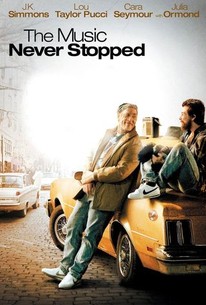
I just finished watching the movie The Music Never Stopped. Wow. It was even more powerful than I'd hoped. I don't know that I've ever felt like I really have been able to explain to anyone why music matters so much to me. I'm not sure myself. This movie touches on some of it, though. Music has a power to connect people, to bridge generation gaps. If people are open-minded to other people's tastes, they can discover whole new worlds.

People speak often of how music touches their souls. How great a gift is it, then, to respect someone's music? To listen to it? To cherish it? To make an attempt to understand it - even if it may not be one's personal taste? It shows a respect for that person, for his soul, for his very essence.

J.K. Simmons plays a dad (Henry) desperate to reconnect with his son Gabriel (Lou Taylor Pucci). It is 1986, but Gabriel is stuck in the late ‘60s. A month shy of his high school graduation, Gabriel left home for good. 20 years later, he is found wandering the streets, having long suffered the effects of a brain tumor. It is benign, but because it was left unchecked for so long, it has seemingly destroyed his ability to form new memories.

When he is checked into the hospital, he answers basic questions like his name and when he was born, but can’t identify what year it is now or who is president. When a musical therapist plays the piece of music that opens the Beatles’ “All You Need Is Love,” Gabriel comes alive. He breaks into detailed conversation about how much he loves the song, the album, the group.

Initially, Dad is angry and resentful that the music therapist is bringing Gabriel back to what, for Henry, was a time of pain. He wants to play his music for Gabriel, the songs he personally connected with and songs he thought bore a connection between himself and his son. The movie offers flashbacks where Henry quizzes his young son on songs like “Till There Was You” and “Young at Heart.” Henry certainly doesn’t want to listen to the Grateful Dead, Bob Dylan, Cream, and Buffalo Springfield. But he eventually does.

In a touching scene, he even trades in his vintage records for “anything loud that was made after 1958”. He starts to listen to his son’s music – more importantly, he starts to listen to his son. When he plays the music for his son, he listens to the stories and memories his son recounts. He reconnects with the son he’d lost twenty years earlier.

Henry becomes determined to take Gabriel to a Grateful Dead concert. Gabriel narrowly missed out on a chance to see them – on the same night he ended up leaving home for good. By now, the movie has reached the point that Henry isn’t just listening to the Dead and going to their concert for his son, but for himself. He has connected to the music. He has connected to his son.


Resources and Related Links:


First posted 9/13/2011; updated 10/28/2023.

Thursday, April 7, 2011

Aural Fixation: When the Rainmakers Came to Town

Aural Fixation:

When the Rainmakers Came to Town

Aural Fixation” is a music-themed column I wrote for PopMatters.com from 2011-2013. They are no longer online there, but I have reformatted them here at the DMDB blog with additional videos, photos, and links, such as where to buy referenced albums. I have also used the title “Aural Fixation” for any essays I have written outside of PopMatters.com as well. To see the essays, check out the Dave’s Music Database Aural Fixation page.

The essays from PopMatters.com have been gathered in book form as Aural Fixation: Essays from a Music Obsessive. Essays written from 2009 to 2011 have been gathered in the book No One Needs 21 Versions of “Purple Haze”. You can purchase the essays in book format here.

I was a latecomer to the whole concert-going experience. My first show was in college. The Rainmakers, a Kansas City-based band, did a campus gig. I don’t remember much other than going with a group of a half dozen friends or so, sitting in the balcony, and having Amy vent her disgust that we weren’t getting up and dancing.

I also plopped down the bucks for a concert tee which became my favorite shirt once I’d so thoroughly butchered the sleeves that way too much of my then-way-too-skinny frame was on display. More importantly, I became a huge fan of the band’s debut album (their only release at the time) – in fact, I now proclaim it my favorite of 1986 and one of my top 30 albums of all time. Forgive me – those who know me are well aware of my list-making obsession. I haven’t been institutionalized for it – yet.

The Rainmakers never gained a big following. Their audience was primarily, and understandably, based in the Midwest and, in a comment sure to evoke a chorus of “huhs?,” in Norway. I’m not sure what the Norwegians saw in this mix of roots-rock, rockabilly, and country, but it evidences their good taste.

Actually, pinning a label genre on the Rainmakers is no easy task. I read a recent review comparing them to Creedence Clearwater Revival. That is somewhat apt in that John Fogerty gave CCR a distinct voice much as the Rainmakers’ Bob Walkenhorst defines their sound. Both bands have decidedly regional feels to them, even if CCR’s homebase appears to be the swampy vibe of New Orleans when they actually were based in California. The Rainmakers also seem slightly displaced with a sound that owes more to Southern rock and Memphis’ Sun Records than to, well, whatever the hell the sound is that defines the Midwest.

Aside from their sound, much of the Rainmakers’ appeal comes in their witty and well-crafted lyrics. How does one not snicker and cringe simultaneously during “Little Tiny World,” which offers the poignant observation of the soap operatic nature of close-knit friends with the line “when I figured it all out, I figured I’d slept with myself”?

The debut album thrust itself upon the world with songs about Moses leading his people to redemption (“Let My People Go-Go”), Chuck Berry and Mark Twain cruising the Mississippi River in a row boat (“Downstream”), and an affection for not-so-skinny-boned women (“Big Fat Blonde”).

They weren’t a novelty band, though. The debut album also showcased the crew’s political side with a commentary on Welfare (“Government Cheese”) and, on the band’s 1997 release Skin, the group crafted an entire concept album about the subjugation of women.

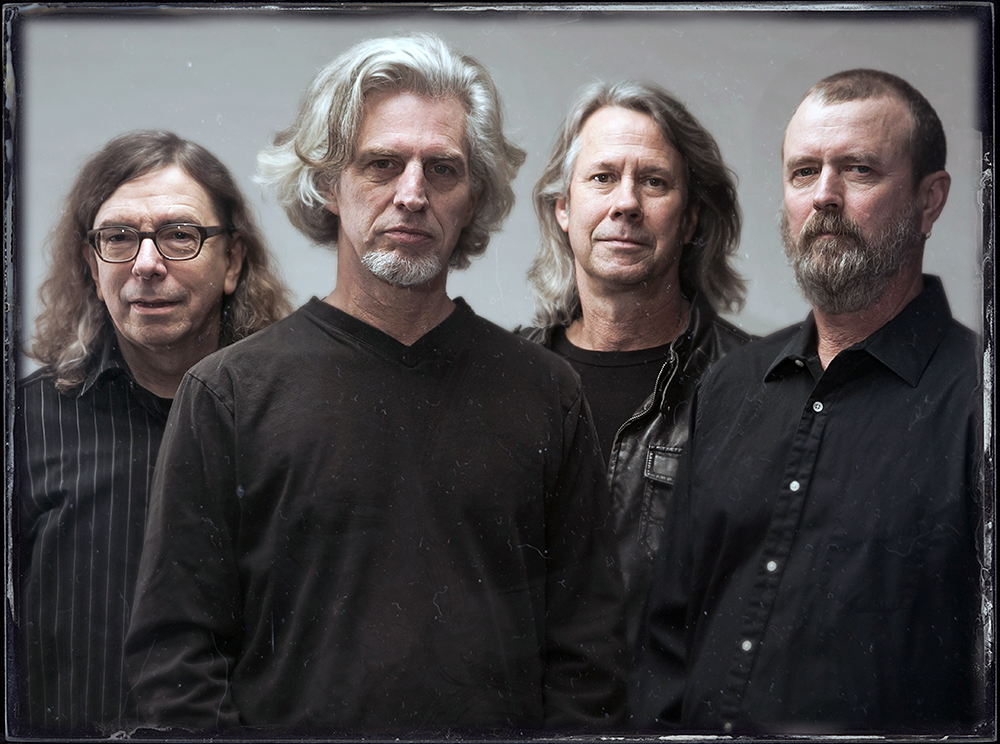
So why the nostalgia now, 25 years after that concert and album? Well, the quarter-century anniversary is precisely why. After a 14-year hiatus, Walkenhorst reconvened with Pat Tomek and Rich Ruth, the band’s original drummer and bassist, for a reunion tour and album. Subbing for original guitarist Steve Phillips, who was committed to his band the Elders, was Jeff Porter, who shared the stage with Walkenhorst at a standing weekly gig at Kansas City’s Record Bar.

The resulting album, 25 On (read more here), was released mid-March. Time will tell where it ultimate stands in my grand assessment, but the initial reaction is a thumbs-up. Now I’ll anxiously await their triumphant concert return to Kansas City in May and hope they don’t wait 14 years before another album.


Resources and Related Links:


First posted 4/7/2011; updated 10/28/2023.


Tuesday, April 5, 2011

Aural Fixation: The Art of List Making

Aural Fixation:

The Art of List Making

Aural Fixation” is a music-themed column I wrote for PopMatters.com from 2011-2013. They are no longer online there, but I have reformatted them here at the DMDB blog with additional videos, photos, and links, such as where to buy referenced albums. I have also used the title “Aural Fixation” for any essays I have written outside of PopMatters.com as well. To see the essays, check out the Dave’s Music Database Aural Fixation page.

The essays from PopMatters.com have been gathered in book form as Aural Fixation: Essays from a Music Obsessive. Essays written from 2009 to 2011 have been gathered in the book No One Needs 21 Versions of “Purple Haze”. You can purchase the essays in book format here.

For anyone paying attention, you’ll know that I like making lists. A lot. Obsessively so. Not to-do lists, mind you – I’m enthralled by making best-of music-related lists. In the music world, nothing seems to simultaneously disgust and delight so many – well, with the possible exception of Justin Bieber. Detractors whine over what doesn’t make it that should and what makes it that shouldn’t. Music elitists argue that a list degrades musical accomplishments to a subjective ranking. Fans like yours truly just say pfffft.

Consider best-of lists in the same light as, well, compilation albums. Album purists whine that such collections don’t represent artists’ work as originally intended. Sneer at anthologies if you wish, but they serve a purpose. For many people, such a package is the first exposure to an artist beyond a random song here and there. A greatest hits can be the first dip of the toe into the artist’s greater pool of work, prompting the listener to dive deeper.

Best-of lists serve the same purpose. They offer general overviews of whatever they’re specializing in. That may mean diddly to veterans, but it can be a game changer for novices. Years ago, I picked up Dave Marsh’s 1989 book The Heart of Rock and Soul: The 1001 Greatest Singles Ever Made. It was, as far as I can remember, my first foray into the world of best-of list making. While I certainly could nitpick over Marsh’s rankings, I instead relished the discovery of hundreds of songs previously unfamiliar to me. For example, if Marsh ranked Little Willie John’s “Need Your Love So Bad” as high as #49, it at least bore investigation.

So now, twenty years later, I’m trotting out my own book – The Top 100 Songs of the Rock Era 1954-1999, available now at Amazon.com. You can learn more about the book at here.

Yes, this blog entry is a shameless plug for said book. What can I say? With all the fake modesty and sincerity I can muster, I hereby proclaim it the best book ever written. Non-listers will build altars to the book that opened the musical door for them. Those who are already list believers will abandon all other lists, knowing they have found the one-and-only TRUE list. Uh huh. You can insert your favorite “swamp land in Florida”, “when pigs fly” or other “it’ll never happen” slam here.

In all seriousness, I cringe at the same thing that makes the skin of many list readers crawl. Who picked these? Even the most credible music sources – the Grammys, the Billboard charts, the Rock and Roll Hall of Fame, and Rolling Stone magazine – have built-in biases. No matter who generates the list, it is targeted toward that source’s specific audience, inevitably leaving important elements out of the list-making equation.

For example, Bruce Springsteen’s “Born to Run” and Pink Floyd’s “Another Brick in the Wall Part 2” aren’t in the Grammy Hall of Fame, despite being mainstays on any song list worth its salt. Check the list of the thousand songs to hit #1 on the Billboard Hot 100 and you won’t find John Lennon’s “Imagine” and Queen’s “Bohemian Rhapsody.” Even if you figure any Hot 100 charting song into the mix, Led Zeppelin’s “Stairway to Heaven” and Joy Division’s “Love Will Tear Us Apart” are still A.W.O.L. from the list. That’s right – neither even dented the U.S. pop charts, despite their presence on many a best-of list.

The Grammys and Billboard represent more middle-of-the-road tastes, hence the omission of classic rock gems from Led Zeppelin, Pink Floyd, and others. The problem, however, goes both ways. The Rock and Roll Hall of Fame generated a list of the “Songs That Shaped Rock and Roll,” and, apparently as punishment to songs not sporting guitar solos, showed no love to monster hits like Whitney Houston’s “I Will Always Love You” and Elton John’s “Candle in the Wind 1997.”

Use Rolling Stone magazine, arguably the leading U.S. rock rag, as your guide and their “500 Greatest Songs of All Time” list won’t leave you feeling like “Dancing in the Street” when you realize that the Martha & the Vandellas’ classic has been kicked to the curb. The absence of Don McLean’s “American Pie” is enough to make one drive his Chevy off the levee.

I could site more oversights from other major music publications, but you get the point. None of these lists capture everything. Maybe a list is slanted toward commercially successful songs. Perhaps it favors critical acclaim. It may be too acutely tuned in to one genre of music. These are the kinds of things that keep me up at night.

Actually, I should qualify that. Music lists have kept me up many a night, but it’s the mix of being a night owl and having a driving need to seek out lists ad infinitum that has led to pillow neglect. I’m fairly non-plussed by whatever a list maker chooses to include or not include. There’s always another list around the next Internet corner to make up the difference.

Out of my late-night excursions trolling the web for best-of lists, Dave’s Music Database was born. At the turn of the millennium, best-of lists were as common as Y2K panic. I have compiled one massive database in which I’ve averaged hundreds of these lists together, effectively weeding out the idiosyncrasies of individual lists and leaving behind one definitive, end-all be-all, no-questions-asked, granddaddy list of all lists. After all that work the next logical question is “Now what?”

I built a website (DavesMusicDatabase.com) around my endeavors and later a Facebook page so that I might connect with other similarly-minded fanatics. Ultimately my love of writing – and a pipe dream of making barrels and barrels of cash – led to The Top 100 Songs of the Rock Era 1954-1999. I keyed in on the rock era since even the plethora of lists in my database couldn’t erase the dominance of the second half of the 20th century.

In writing about the top 100 songs, I opted for an aggregate approach. Much as I’d consulted countless lists to create my definitive one, why not tap multiple sources for the ultimate consolidated capsules about those songs? After such an objective process to determine what made the cut, it would have been oddly inappropriate to suddenly go all personal with heartfelt essays and “I remember where I was when I first heard that” ramblings about each song. Heck, I can save that subjective, opinionated crap for my blog. No, the only acceptable angle was to harken back to the days of collegiate research-paper writing. I liberally footnoted, quoted, and referenced (see sample pages here). It won’t look like other best-of books, but then again, I never wanted it to anyway.

So the end result is, as it says on the back of the book, “the ultimate cream-of-the-crop list which will draw criticism from none and praise from all. Well, one can dream.”

Dreaming may be free, but the book is not. Point that browser toward Amazon.com and plunk down $16.95. Hey, I need to pay next month’s Internet bill so I can start surfing my way to the next project.

BTW, once you have that life-changer in hands head on over to the discussions section on the DMDB Facebook page to leave your comments of praise, worship, and devotion.


Resources and Related Links:


First posted 4/5/2011; updated 10/28/2023.